


Product name: Gardenoside
Synonym name:
Catalogue No.: BP0625
Cas No.: 24512-62-7
Formula: C17H24O11
Mol Weight: 404.368
Botanical Source: Gardenia jasminoides Ellis
Physical Description:
Type of Compound: Iridoids
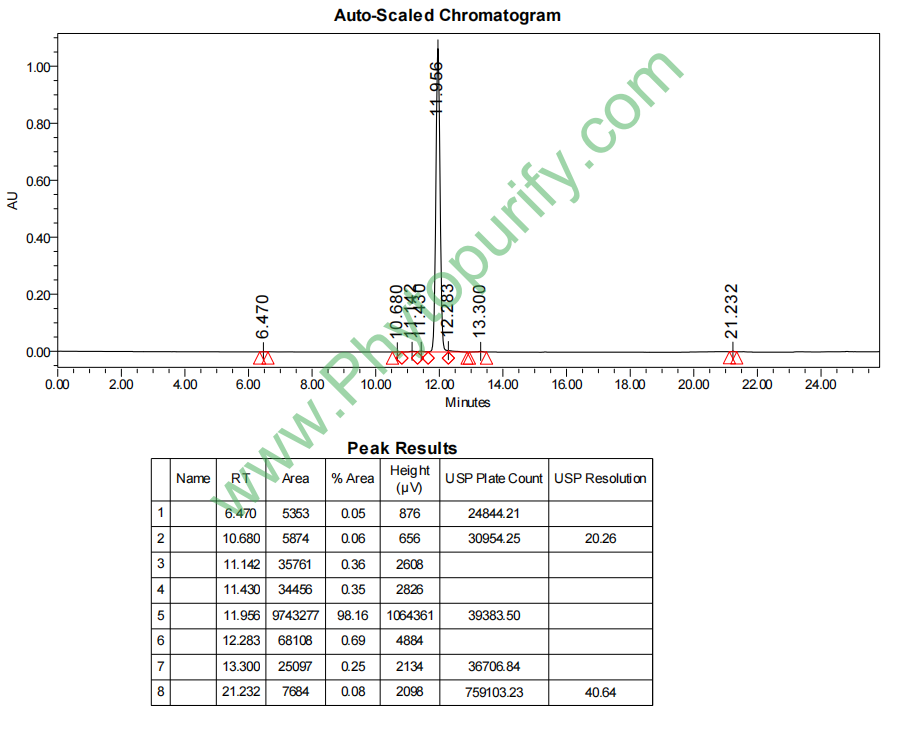
Purity: 95%~99%
Analysis Method: HPLC-DAD or/and HPLC-ELSD
Identification Method: Mass, NMR
Packing: Brown vial or HDPE plastic bottle
Storage: Store in a well closed container, protected from air and light. Put into refrigerate or freeze for long term storage.
Whenever possible, you should prepare and use solutions on the same day. However, if you need to make up stock solutions in advance, we recommend that you store the solution as aliquots in tightly sealed vials at -20℃. Generally, these will be useable for up to two weeks.
The product could be supplied from milligrams to grams
Inquire for bulk scale.
Description:
Gardenoside has hepatoprotective, pain‑relieving, and anti-mastitis effects. it may be a potential therapeutic herb against NASH by suppressed supernatant inflammatory cytokine production and intracellular NFkB activity. Gardenoside may be considered potential drug candidates that target P2X3 and P2X7 purine receptors.
References:
Chinese Journal of Information on Tcm, 2004, 11(6):500-502.
Effect of Concha Margatitifera Usta, Cholic Acid, Gardenoside, Baicalin on MCP-1 in the Ischemic Cerebral Tissue of Rats after Middle Cerebral Artery Occlusion.
To study the effect of Concha Margatitifera Usta, Cholic Acid, Gardenoside, Baicalin on the protein levels of monocyte chemoattractant protein (MCP-1) in the ischemic cerebral tissue of rats after middle cerebral artery occlusion in rats.
METHODS AND RESULTS:
The 110 male SD rats were randomly assigned to the normal group, middle cerebral artery occlusion for 12 hours group and Concha Margatitifera Usta, Cholic Acid, Gardenoside, Baicalin cure middle cerebral artery occlusion for 12 hours group, middle cerebral artery occlusion for 24 hours group and Concha Margatitifera Usta, Cholic Acid, Gardenoside, Baicalin cure middle cerebral artery occlusion for 24 hours group. The protein levels of MCP-1 were measured by enzyme linked immunosorbent assay (ELISA). The protein level of MCP-1 of the ischemic cerebral tissue of rats in the middle cerebral artery occlusion for 12 hours group was markedly increased than the normal group (P0.05). The protein level of MCP-1 of the ischemic cerebral tissue of rats in Concha Margatitifera Usta and Gardenoside cure middle cerebral artery occlusion for 12 hours group were significantly lower than it in the middle cerebral artery occlusion for 12 hours group (P0.01). There was no significant change on the protein level of MCP-1 in the ischemic cerebral tissue of rats between Cholic Acid, Baicalin cure middle cerebral artery occlusion for 12 hours group and the middle cerebral artery occlusion for 12 hours group. The protein level of MCP-1 of the ischemic cerebral tissue of rats in the middle cerebral artery occlusion for 24 hours group was markedly increased than the normal group (P0.05). The protein level of MCP-1 of the ischemic cerebral tissue of rats in the Concha Margatitifera Usta, Cholic Acid, Gardenoside ,Baicalin cure middle cerebral artery occlusion for 24 hours group were significantly lower than it in the middle cerebral artery occlusion for 24 hours group (P0.05 or P0.01).
CONCLUSIONS:
Reducing the level of MCP-1 of the ischemic cerebral tissue of rats after ischemia may be one of the most important ways for the neuroprotective effects the middle cerebral artery occlusion group.
Chinese Veterinary Science, 2013, 43(8):876-880.
Inhibited effects of gardenoside on the LPS-induced mice mastitis
METHODS AND RESULTS:
To investigate the protective effects of Gardenoside on the mice against mastitis,48 male and female mice were paired and randomly divided into 6 groups.Mouse mastitis models were established by pouring LPS into mammary gland after farrowing.Female mice with mastitis were treated with different concentrations of Gardenoside(25,50 and 100 mg/kg) and dexamethasone,respectively. Mammary glands of the mice were collected at 24 h after the treatment to study the effects of Gardenoside on the histopathology and the expression of myeloperoxidase(MPO),TNF-α,IL-6 and IL-1β. In result,the expression levels of TNF-α,IL-6 and IL-1β were significantly higher in the LPS group than the normal group,indicating the model of mastitis was established successfully in this study.Mammary gland pathological damages were significantly inhibited by Gardenoside treatment compared with the LPS group(P0.01).MPO expression levels were decreased with the treatment of low,medium and high doses of Gardenoside,and the expression levels of TNF-α,IL-6 and IL-1β were significantly lower in the Gardenoside group than the dexamethasone group.
CONCLUSIONS:
These results indicated that Gardenoside has inhibitory effect on mice mastitis,and the inhibitory effect exhibits a dose-dependent manner.
HPLC of Gardenoside
Storage conditions:Short-term storage at 2~8℃, long-term storage at -20 ~ -80℃
Gardenoside (CAS number: 24512-62-7) is a natural active ingredient derived from the fruit of Gardenia jasminoides Ellis, belonging to the flavonoid glycoside derivatives. As one of the main active ingredients of traditional Chinese medicine Gardenia jasminoides, hydroxyisogeniposide has attracted widespread attention in the field of natural product pharmacology in recent years due to its significant biological activity and multi-target mechanism of action. Research has shown that hydroxyisogeniposide has multiple pharmacological effects such as anti-inflammatory, analgesic, antioxidant, and neuroprotective effects, especially in alleviating chronic neuropathic pain and diseases related to abnormal fat metabolism, showing great potential for application.
This review aims to systematically summarize the chemical structure and physicochemical properties, plant sources, and extraction methods of hydroxyisogeniposide, with a focus on its pharmacological activity and mechanism of action, exploring its pharmacological properties and pharmacokinetic characteristics, and looking forward to its clinical application prospects, providing theoretical basis and research direction for subsequent basic research and clinical translation.
The molecular formula of hydroxyisogeniposide is C2H2O9, with a molecular weight of 404.3680, and it belongs to the flavonoid glycoside class. Its chemical structure consists of a flavonoid core and a glycoside moiety, connected by glycosidic bonds, exhibiting high polarity. The topological polar surface area (TPSA) of hydroxyisogeniposide is 175.37 Å ², with a LogP value of -1.4857, indicating strong hydrophilicity and a water solubility of 48.34 mg/mL, making it suitable for oral administration. Its physical and chemical properties limit its distribution in the body, especially with low blood-brain barrier permeability, suggesting that its neurological function may depend on peripheral or local target regulation.
In addition, hydroxyisogeniposide does not exhibit hERG channel inhibitory activity, and the Ames mutagenicity test results are negative, indicating its high safety and good drug safety foundation. The multiple hydroxyl groups in its molecular structure endow it with antioxidant activity, while the glycoside structure helps improve its water solubility and bioavailability.
Hydroxyisogeniposide mainly exists in the fruit of Gardenia jasminoides Ellis, a plant of the genus Gardenia in the family Rubiaceae, widely distributed in southern China and East Asia. Gardenia fruit has a long history of application in traditional Chinese medicine, with functions such as clearing heat, detoxifying, diuresis, and promoting diuresis.
The common methods for extracting hydroxyisogeniposide include:
Solvent extraction method Ethanol or methanol aqueous solution (usually 70% ethanol) is used for reflux extraction of gardenia fruit. The extract is concentrated and purified by liquid-liquid distribution or column chromatography to obtain hydroxyisogeniposide.
Ultrasound assisted extraction Using ultrasound to destroy cell walls, enhance solvent penetration, improve extraction efficiency, suitable for rapid extraction on a laboratory scale.
Separation and Purification by High Performance Liquid Chromatography (HPLC)High purity separation of hydroxyisogeniposide was achieved through reverse phase HPLC technology combined with UV detection.
In recent years, green extraction techniques such as supercritical CO ₂ extraction and microwave-assisted extraction have also been applied to the extraction of active ingredients from Gardenia jasminoides, aiming to improve extraction efficiency and reduce the use of organic solvents.
The pharmacological activity research of hydroxyisogeniposide covers multiple aspects such as neuroprotection, anti-inflammatory and analgesic effects, antioxidant properties, and lipid metabolism regulation, reflecting its multi-target and multi pathway pharmacological characteristics.
Hydroxyisogeniposide exhibits significant analgesic effects in the Chronic Constraint Injury (CCI) model. It alleviates neuropathic pain by regulating P2X3 and P2X7 receptors, inhibiting neuronal excitability and the release of inflammatory mediators. P2X3 receptors are mainly distributed in sensory neurons and participate in pain signal transduction; P2X7 receptors regulate inflammation in immune cells. Hydroxyisogeniposide reduces inflammation and nerve sensitization after nerve injury and promotes nerve function recovery through dual target regulation.
In addition, hydroxyisogeniposide can regulate the expression of various neuroprotective proteins, such as BCL2 (anti apoptotic protein), SIRT1 (deacetylase, involved in cellular stress response), NRF2 (antioxidant transcription factor), etc., reduce the generation of reactive oxygen species (ROS), alleviate oxidative stress damage, and protect neuronal survival.
Hydroxyisogeniposide reduces inflammation by inhibiting the expression of inflammatory factors such as TNF - α, IL-1 β, and IL-6. Its mechanism of action involves inhibition of the NF - κ B signaling pathway, reduced transcription of pro-inflammatory genes, and decreased release of inflammatory mediators. This anti-inflammatory effect not only helps alleviate neuropathic pain, but also has potential therapeutic value for liver inflammation and other chronic inflammatory diseases.
In the cellular steatosis model induced by free fatty acids (FFA), hydroxyisogeniposide exhibits significant inhibitory effects. It reduces fat accumulation and alleviates pathological changes in fatty liver by regulating lipid metabolism related enzymes and signaling pathways. This effect may be closely related to its antioxidant and anti-inflammatory properties, inhibiting excessive ROS production and preventing adipocyte damage.
Hydroxyisogeniposide has the ability to scavenge free radicals, significantly reduce ROS levels, and protect cells from oxidative stress damage. Its antioxidant mechanism may activate the NRF2-ARE signaling pathway, enhance intracellular antioxidant enzyme (such as SOD, CAT, GPx) activity, and maintain redox homeostasis.
The pharmacological effects of hydroxyisogeniposide involve multiple molecular targets and signaling pathways, reflecting its characteristic of multi-target synergistic regulation.
P2X3 and P2X7 are ATP gated ion channel receptors widely involved in pain conduction and inflammatory responses. Hydroxyisogeniposide alleviates neuropathic pain by inhibiting the excessive activation of these two receptors, reducing neuronal overexcitement and inflammatory cell activation.
Hydroxyisogeniposide regulates the expression of apoptosis related proteins such as BCL2 and CASP3, promoting the survival of nerve cells. It activates SIRT1, which helps regulate cellular metabolism and stress response, and delays neurodegenerative changes. The regulation of MAPK1 signaling pathway is involved in the balance between cell proliferation and inflammatory response.
Hydroxyisogeniposide activates the NRF2 pathway, promotes the expression of antioxidant enzyme genes, enhances cellular antioxidant capacity, reduces ROS accumulation, and protects cells from oxidative damage.
Hydroxyisogeniposide has a regulatory effect on Alzheimer's disease-related proteins such as APP, BACE1, MAPT, indicating its potential application value in neurodegenerative diseases. By inhibiting the production of β - amyloid protein and abnormal phosphorylation of tau protein, hydroxyisogeniposide may slow down the neuropathological process.
The pharmacological evaluation of hydroxyisogeniposide shows that it has good safety and drug compatibility.
Molecular weight and polarity The molecular weight is 404.37 and the TPSA is relatively high (175.37 Å ²), indicating strong polarity and good water solubility. However, its blood-brain barrier permeability is low, limiting its direct action on the central nervous system.
LogP value-1.4857 shows strong hydrophilicity, which is beneficial for oral absorption but may affect cell membrane penetration.
safety No hERG channel inhibition, Ames test negative, indicating low risk of cardiac toxicity and genetic toxicity.
Pharmacokinetic characteristics At present, there is limited research on the in vivo metabolism, absorption, distribution, and excretion (ADME) of hydroxyisogeniposide. Preliminary data suggests that its oral bioavailability is moderate and it is mainly metabolized through the liver. The excretion pathway still needs further clarification.
In the future, it is necessary to strengthen the pharmacokinetic and toxicological research of hydroxyisogeniposide, optimize the administration method, and improve its in vivo stability and targeting.
Hydroxyisogeniposide provides broad prospects for its clinical application due to its multiple pharmacological activities, especially its potential in neuroprotection, anti-inflammatory and analgesic effects, and lipid metabolism regulation.
Neurogenic pain treatment Hydroxyisogeniposide alleviates chronic neuropathic pain by regulating P2X receptors, and may be a candidate drug for neuropathic pain in the future, especially suitable for patients with refractory pain.
Neurodegenerative diseases Its regulation of APP, BACE1, and MAPT suggests potential disease modifying effects in neurodegenerative diseases such as Alzheimer's disease, which is worth further exploration.
Liver protection and metabolic diseases Inhibiting FFA induced steatosis and anti-inflammatory effects, making hydroxyisogeniposide valuable in the treatment of fatty liver and metabolic syndrome.
Good safety No significant toxicity or genetic toxicity risk, laying the foundation for clinical translation.
However, clinical research on hydroxyisogeniposide is still in its infancy and urgently requires systematic pharmacokinetic, toxicological, and clinical trial data support. In the future, efforts should be made to optimize its dosage form, conduct research on administration routes, and conduct multi center clinical validation to promote its transition from laboratory to clinical application.
Hydroxyisogeniposide, as an important natural active ingredient in gardenia fruit, has shown broad research and application prospects in the fields of neuroprotection, anti-inflammatory and analgesic effects, and fat metabolism regulation due to its multi-target and multi pathway pharmacological effects. Its good safety and physicochemical properties provide favorable conditions for the development of pharmaceuticals. In the future, by combining modern pharmacology, molecular biology, and medicinal chemistry techniques, we will deeply reveal the mechanism of action of hydroxyisogeniposide, improve its pharmacokinetics and toxicology evaluation, and lay a solid foundation for its clinical translation and new drug development. With the continuous advancement of related research, hydroxyisogeniposide is expected to become an important natural drug resource for the treatment of neurological and metabolic diseases.
