Introduction/Overview
Natural products have always been an important source of drug discovery and development, especially in the fields of anti-inflammatory, anti-tumor, and liver protection. Numerous compounds with unique chemical structures and significant biological activities provide valuable molecular templates for modern pharmacological research. Flavonoids, as a widely present class of secondary metabolites in nature, have attracted much attention due to their diverse pharmacological activities. Among numerous flavonoids, biflavonoids have become one of the hotspots in natural product chemistry and pharmacology research due to their unique dimer structure and complex biological activity spectrum. Ochnaflavone 4 '- methyl ether, as a typical flavonoid compound, has gradually entered the field of researchers in recent years due to its significant activities in inhibiting the secretion of phospholipase A2 (sPLA2-IIA) in IIA type and anti-inflammatory and hepatoprotective effects.
The discovery and research of 4 '- methyl flavonoids from Lonicera japonica var. chinensis are rooted in the traditional medicinal plant Lonicera japonica var. chinensis(Ochna Exploration of Chemistry and Pharmacology in Plants. Plants of the genus Primulaceae are often used in folk medicine to treat inflammation, infections, and liver diseases. The isolation and identification of their active ingredients provide a scientific basis for modern drug development. This compound not only exhibits highly efficient inhibitory activity against sPLA2-IIA (IC50=3.45 µ M), but also demonstrates strong liver protective effects by inhibiting the degradation of phosphatidylethanolamine (PE) and lipid peroxidation induced by carbon tetrachloride (CCl4) in rat liver. Its IC50 for lipid peroxidation is 7.16 µ M. These findings suggest that 4 '- methylberberine has potential clinical application value in the treatment of inflammatory diseases and liver injury.
This article will provide a systematic review of the research progress of 4 '- methyl berberine from multiple dimensions, including chemical structure and physicochemical properties, plant sources and extraction methods, pharmacological activity, mechanism of action, pharmacological evaluation, and clinical application prospects. The aim is to provide comprehensive scientific references for the in-depth development and transformation research of this compound.
Chemical structure and physicochemical properties
chemical structure
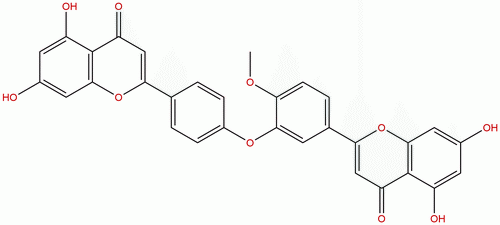
4 '- Methylberberine belongs to the class of flavonoids, and its core structure is composed of two flavonoid units connected by C-O-C bonds (ether bonds). Specifically, the compound is a derivative of Ochnaflavone, in which the 4 '- hydroxyl group is methylated and modified. Its chemical structure can be described as follows: an apigenin unit is connected to a luteolin unit through an ether bond between the C-4 'and C-6' 'positions, and there is a methyl substituent on the 4' - hydroxyl group of the apigenin unit. This structure endows the molecule with unique planarity and rigidity, while also affecting its interaction mode with biological targets.
From the molecular formula, the molecular formula of 4 '- methyl berberine is C31H20O10, with a molecular weight of 552.4910 g/mol. This molecule contains multiple phenolic hydroxyl groups (- OH) and one methoxy group (- OCH3), which are the key structural basis for its antioxidant activity, free radical scavenging, and binding to enzyme active sites. The conjugated system of the dual flavonoid skeleton gives it characteristic absorption in the UV visible region and is commonly used for its qualitative and quantitative analysis.
Physicochemical properties
The physicochemical properties of 4 '- methyl berberine determine its absorption, distribution, metabolism, and excretion (ADME) behavior in vivo. According to calculations and experimental data, the main physicochemical parameters are as follows:
- Fat solubility (LogP)The LogP value of this compound is 4.2385, indicating its strong lipid solubility. High lipid solubility is beneficial for its penetration through biological membranes, but it may also lead to lower solubility in aqueous environments, thereby affecting oral bioavailability.
- Water solubility Its water solubility is extremely low, only 0.0005 mg/mL. This characteristic is a common challenge faced by many flavonoids, limiting their administration through conventional oral or injection routes. Therefore, developing suitable drug delivery systems (such as liposomes, nanoparticles, cyclodextrin inclusion complexes, etc.) is a key strategy to improve their bioavailability.
- Topological Polarity Surface Area (TPSA)TPSA is 159.8000 Å ². TPSA is an important parameter for predicting drug oral absorption and blood-brain barrier penetration ability. Generally speaking, molecules with TPSA greater than 140 Å ² have poor oral absorption and are not easily able to penetrate the blood-brain barrier. The high TPSA value of 4 '- methyl berberine is related to its multiple polar hydroxyl and carbonyl groups in the molecule, which explains its low blood-brain barrier penetration ability.
- Blood-brain barrier penetrability Evaluated as' low '. This is consistent with high TPSA values, indicating that the compound primarily acts on peripheral tissues rather than the central nervous system. This to some extent reduces the risk of toxic side effects in the central nervous system, but also limits its potential application in brain diseases such as neuroinflammation.
- HERG inhibition Evaluated as' no '. HERG (human Ether - à - go Related Gene) potassium channel inhibition is one of the main causes of drug induced cardiac toxicity (QT interval prolongation). 4 '- Methylberberine does not inhibit hERG channels, indicating a low risk of cardiac toxicity, which is an important safety advantage.
- Ames test The result is 0.6. The Ames test is used to evaluate the mutagenicity of compounds. This value indicates a low risk of mutagenicity and low genetic toxicity.
In summary, 4 '- methyl berberine exhibits typical physicochemical characteristics of flavonoids, including high lipid solubility, low water solubility, high polar surface area, low blood-brain barrier penetration, as well as good cardiac safety and low genetic toxicity. These properties provide a foundation for its development as an anti-inflammatory and hepatoprotective drug, but also place high demands on formulation design.
Plant sources and extraction methods
Plant-based
4 '- Methyl Berberis flavonoids mainly come from the genus Berberis(Ochna)Plants, belonging to the Ochnaceae family. The plants of the genus Primulaceae are mainly distributed in tropical and subtropical regions of Africa, Asia, and the Americas, and many species have a long history of application in traditional medicine. For example,Ochna integerrima(Vietnamese Huangmei) and Ochna squarrosa The bark, roots, and leaves of plants are used to treat inflammation, diarrhea, malaria, and liver diseases.
Specifically, 4 '- methyl berberine was first introduced from Ochna squarrosa L. Separated from the root bark. In addition, in Ochna integerrima、Ochna beddomei and Ouratea The presence of this compound has also been detected in certain species belonging to another genus in the family Trolliaceae. These plants usually grow in tropical rainforests or monsoon forests, with abundant resources, providing a natural source for the acquisition of compounds.
extraction method
The extraction of 4 '- methyl berberine usually follows the classic process of natural product chemistry, which includes three main stages: extraction, separation, and purification.
1. Extraction stage:
Due to the high lipid solubility of 4 '- methyl berberine, organic solvents are usually used for extraction. Common extraction solvents include methanol, ethanol, acetone, or their aqueous solutions. In the specific operation, dry plant materials (such as root bark, stem bark, or leaves) are crushed and soaked or refluxed with 80% -95% ethanol or methanol at room temperature or heating conditions for extraction. To improve extraction efficiency, ultrasound assisted extraction or microwave-assisted extraction techniques can be used. After the extraction solution is concentrated under reduced pressure, the total extract is obtained.
2. Separation and purification stage:
The total extract contains a large amount of impurities, such as chlorophyll, tannins, sugars, and other flavonoids with different polarities. Therefore, a series of chromatographic techniques are required for separation and purification.
- Liquid-liquid extraction Firstly, suspend the total extract in water and extract it sequentially with solvents of different polarities such as petroleum ether, ethyl acetate, and n-butanol. 4 '- Methyl berberine is usually enriched in the ethyl acetate extraction layer due to its equipolarity.
- Column chromatography separation The ethyl acetate extract was further separated by silica gel column chromatography. Using gradient elution systems such as chloroform methanol or n-hexane ethyl acetate, collect the components in segments according to their polarity based on the results of thin-layer chromatography (TLC) detection.
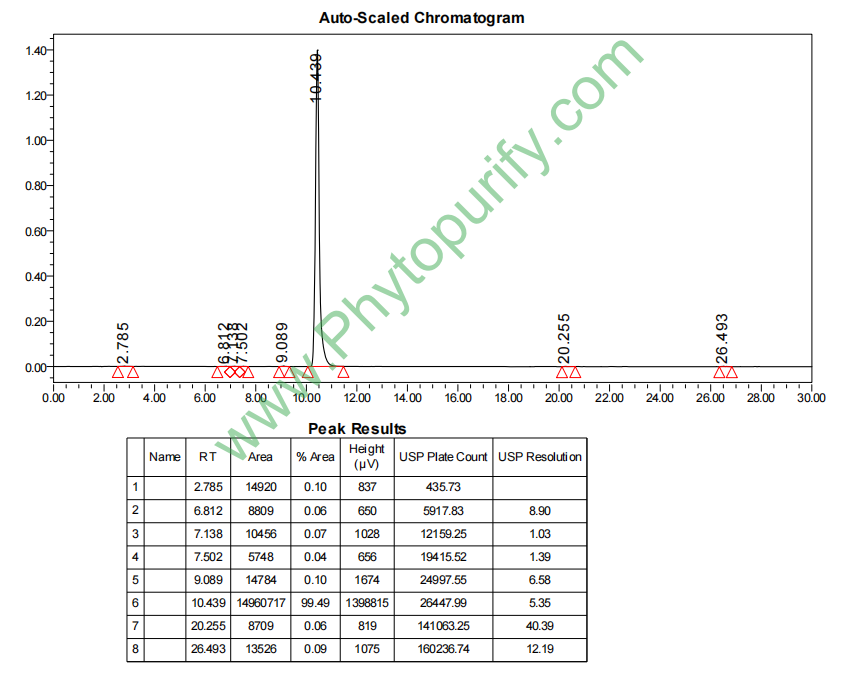
- High performance liquid chromatography (HPLC)For fractions containing the target compound, preparative HPLC can be used for purification. Usually, a reverse phase C18 column is used, with acetonitrile water or methanol water (containing 0.1% formic acid or acetic acid) as the mobile phase, for isocratic or gradient elution. Monitor at 254 nm or 330 nm using a UV detector, collect the target peak, and obtain high-purity 4 '- methyl berberine monomer after freeze-drying.
3. Structural identification:
The purified compound was structurally confirmed by nuclear magnetic resonance spectroscopy (NMR, including 1H-NMR, 13C-NMR, HMBC, HSQC, etc.), high-resolution mass spectrometry (HR-MS), as well as ultraviolet visible spectroscopy (UV Vis) and infrared spectroscopy (IR). By comparing with the spectral data reported in the literature, it was ultimately determined to be 4 '- methyl berberine.
In recent years, with the promotion of green chemistry concepts, researchers have also explored the use of environmentally friendly technologies such as deep eutectic solvents (DES) or supercritical fluid extraction (SFE) to extract flavonoids, in order to improve extraction efficiency and selectivity while reducing the use of organic solvents.
Pharmacological activity research
The pharmacological activity research of 4 '- methyl berberine mainly focuses on its anti-inflammatory and hepatoprotective effects, which are closely related to its regulation of key enzymes and signaling pathways.
anti-inflammatory activity
Inflammation is a defense response of the body against injury or infection, but excessive or persistent inflammation can lead to tissue damage and various chronic diseases. 4 '- Methylberberine exhibits significant anti-inflammatory activity, and one of its core mechanisms is its inhibitory effect on sPLA2-IIA.
- Inhibit sPLA2-IIA Secretory phospholipase A2 (sPLA2) is an enzyme that hydrolyzes the sn-2 fatty acids of cell membrane phospholipids, and its product arachidonic acid is a precursor for the synthesis of pro-inflammatory mediators such as prostaglandins and leukotrienes. The sPLA2-IIA subtype is highly expressed in inflammatory responses and is an important target for the development of anti-inflammatory drugs. Research has shown that 4 '- methyl berberine can effectively inhibit the activity of sPLA2-IIA, with an IC50 value of 3.45 µ M. This inhibitory effect directly reduces the release of arachidonic acid, thereby inhibiting the generation of downstream inflammatory mediators and exerting anti-inflammatory effects.
- Inhibit lipid peroxidation During the inflammatory process, activated immune cells produce a large amount of reactive oxygen species (ROS), leading to lipid peroxidation and further exacerbating tissue damage. 4 '- Methyl berberine itself has strong antioxidant capacity, can scavenge free radicals, and inhibit lipid peroxidation reactions. In the CCl4 induced rat liver injury model, the compound significantly inhibited the degradation of hepatic phosphatidylethanolamine (PE) and the generation of lipid peroxidation products, with an IC50 of 7.16 µ M. This indicates that its anti-inflammatory effect is not only due to direct inhibition of enzyme activity, but also related to its antioxidant properties.
Hepatoprotective activity
The liver is the central organ for metabolism and detoxification in the human body, and is susceptible to damage from drugs, toxins, and oxidative stress. 4 '- Methylberberine has shown protective effects in various liver injury models.
- Combat CCl4 induced liver injury CCl4 is a classic liver toxin that is metabolized by cytochrome P450 to generate trichloromethyl radicals (• CCl3), causing lipid peroxidation and liver cell necrosis. In a rat model, pretreatment with 4 '- methyl berberine can significantly reduce serum transaminase (ALT, AST) levels, alleviate liver tissue pathological damage (such as necrosis and steatosis), and inhibit the increase of lipid peroxidation products such as malondialdehyde (MDA) in the liver. These results indicate that the compound effectively protects the integrity of liver cell membranes by inhibiting oxidative stress and lipid peroxidation.
- Protecting phospholipid metabolism CCl4 induced liver injury is often accompanied by degradation of membrane phospholipids, especially a decrease in PE. 4 '- Methylberberine can reverse the degradation of PE caused by CCl4 and maintain the normal structure and function of the cell membrane. This effect is closely related to its inhibition of sPLA2-IIA activity, as sPLA2-IIA is the key enzyme for hydrolyzing membrane phospholipids.
Other potential activities
In addition to anti-inflammatory and hepatoprotective effects, based on the universal activity of flavonoids, 4 '- methyl berberine may also have other pharmacological effects, such as anti-tumor, antibacterial, antiviral, etc. However, research in these areas is not yet in-depth and needs further exploration.
Mechanism of action and molecular targets
The pharmacological activity of 4 '- methyl berberine is derived from its interaction with specific molecular targets. The most clearly identified target in current research is sPLA2-IIA, and its antioxidant activity also involves the regulation of multiple oxidative stress pathways.
Inhibition of sPLA2-IIA
SPLA2-IIA is a calcium dependent secreted phospholipase, whose active site contains a catalytic triad composed of histidine, aspartic acid, and tyrosine, as well as a calcium ion binding ring. 4 '- Methylberberine inhibits sPLA2-IIA through the following mechanisms:
- Competitive combination Molecular docking and dynamic simulation studies have shown that the dual flavonoid skeleton of 4 '- methyl berberine can insert into the hydrophobic channel of sPLA2-IIA, forming hydrogen bonds and π - π stacking interactions with amino acid residues near the active site (such as His48, Asp49, Tyr52, etc.). The methoxy group at its 4 '- position and multiple phenolic hydroxyl groups interact specifically with key residues of the enzyme, occupying substrate binding sites and preventing the entry of phospholipid substrates.
- Chelated calcium ions The activity of sPLA2-IIA is strictly dependent on calcium ions. The multiple phenolic hydroxyl and carbonyl groups in the 4 '- methyl berberine molecule have the ability to chelate metal ions, which may disrupt the catalytic conformation of the enzyme and inhibit its activity by chelating calcium ions near the active site.
- Interference membrane binding SPLA2-IIA needs to bind to the cell membrane in order to hydrolyze membrane phospholipids. The high lipid solubility of this compound allows it to insert into the cell membrane, altering its fluidity and physical properties, thereby interfering with the enzyme membrane binding process and indirectly inhibiting enzyme activity.
Antioxidant and anti lipid peroxidation mechanisms
The antioxidant activity of 4 '- methyl berberine is an important basis for its hepatoprotective effect. The mechanism includes:
- Directly eliminate free radicals Multiple phenolic hydroxyl groups in the molecule can act as hydrogen atom donors, directly neutralizing reactive oxygen species such as • CCl3 radicals, hydroxyl radicals (• OH), and superoxide anions (O2 •−) produced by CCl4 metabolism, blocking the initiation and propagation of lipid peroxidation chain reactions.
- Chelate transition metal ions Iron ions (Fe2+) and copper ions (Cu2+) are catalysts for the Fenton reaction, which can promote the generation of • OH. 4 '- Methyl berberine inhibits the Fenton reaction and reduces the production of free radicals by chelating these metal ions.
- Activate endogenous antioxidant system Research has shown that certain flavonoids can activate the nuclear factor E2 related factor 2 (Nrf2) signaling pathway and upregulate the expression of antioxidant enzymes such as superoxide dismutase (SOD), glutathione peroxidase (GPx), and catalase (CAT). Whether 4 '- methyl berberine exerts antioxidant effects through this pathway still needs experimental verification, but this is one of its potential important mechanisms.
Regulation of phospholipid metabolism
By inhibiting sPLA2-IIA, 4 '- methyl berberine directly reduces the hydrolysis of membrane phospholipids (especially PE), maintaining the integrity of the cell membrane. In addition, its antioxidant effect also protects the unsaturated fatty acids in membrane phospholipids from free radical attacks, thereby stabilizing the membrane structure. This dual protective effect on phospholipid metabolism is its unique advantage over simple antioxidants or enzyme inhibitors.
Evaluation of drug properties and pharmacokinetics
The development of 4 '- methyl berberine as a clinical drug requires a comprehensive evaluation of its drug like and pharmacokinetic (ADME) properties.
Drugability assessment
Based on the Lipinski Rule of Five, the molecular weight (552.49 Da) of 4 '- methyl genistein exceeds 500 Da, the LogP (4.24) is greater than 5, and the number of hydrogen bond donors (phenolic hydroxyl) and acceptors (carbonyl, ether oxygen) is also high, indicating that its oral bioavailability may be low. However, there are many examples of natural products that violate the "Five Rules" but still have good oral activity, so it is necessary to combine specific experimental data to make a judgment.
- Poor water solubility As mentioned earlier, its water solubility is extremely low (0.0005 mg/mL), which is the biggest obstacle to its medicinal properties. Low water solubility not only affects oral absorption, but also limits the development of injectable formulations. The use of solid dispersion, nanocrystals, liposomes, or phospholipid complexes as formulation technologies is a feasible strategy to improve their solubility.
- Metabolic stability Flavonoids are prone to undergo phase II metabolism (glucuronidation, sulfation) in the body, leading to rapid clearance. The multiple phenolic hydroxyl groups of 4 '- methyl berberine are good substrates for phase II metabolic enzymes, but their metabolic stability may be poor. Introducing methylation modifications (such as 4 '- methoxy) can protect this site to some extent, but other hydroxyl groups are still easily metabolized. Pre drug design or structural modification is a potential direction for improving metabolic stability.
- safety HERG inhibition negative and Ames test negative (0.6) indicate lower risks of cardiac and genetic toxicity, which is an important safety advantage. However, its long-term toxicity, reproductive toxicity, and other aspects still require systematic evaluation.
Pharmacokinetic characteristics
At present, there is limited experimental data on the pharmacokinetics of 4 '- methyl berberine in vivo, mainly based on computational predictions and inference of similar compounds.
- absorb Due to its high lipid solubility and low water solubility, oral absorption may be poor and bioavailability may be low. Absorption may mainly occur in the small intestine, and the influence of P-glycoprotein (P-gp) efflux is not yet clear. The high TPSA value also limits its ability to penetrate intestinal epithelial cells through passive diffusion.
- distribution A high LogP value suggests that it tends to distribute to lipid rich tissues such as liver and adipose tissue. The low blood-brain barrier penetration makes it mainly distributed in the periphery. The plasma protein binding rate may be high.
- Metabolism Mainly in the liver, glucuronidation and sulfation binding reactions are carried out through phase II metabolic enzymes (UGTs, SULTs). Phase I metabolism (such as hydroxylation and demethylation) may also occur, but the degree may be lower. Metabolites may lose or retain some activity.
- excretion Metabolites are mainly excreted through bile and urine. Due to its high molecular weight, bile excretion may be the main pathway.
Structural optimization strategy
In order to enhance the pharmacological properties of 4 '- methyl berberine, the following structural modification strategies can be considered:
- Introducing hydrophilic groups Introducing phosphate, amino acid, or sugar groups into molecules to enhance water solubility.
- Prodrug design Modify phenolic hydroxyl groups into phosphate esters, amino acid esters, or glycosides, and release the original drug after enzymatic hydrolysis in vivo.
- Simplify the skeleton Retain the core pharmacophore, simplify the molecular structure, reduce molecular weight, and improve compliance with the "Five Rules".
- Formulation technology Develop liposomes, nanoparticles, self microemulsifying drug delivery systems (SMEDS), etc. to improve solubility and bioavailability.
Clinical application prospects and prospects
Due to its unique pharmacological activity, 4 '- methyl berberine has potential clinical application prospects in the following disease fields:
Inflammatory diseases
Given its highly effective inhibitory activity against sPLA2-IIA, 4 '- methyl berberine is expected to be used in the treatment of various inflammatory diseases characterized by overexpression of sPLA2-IIA, such as:
- Rheumatoid arthritis SPLA2-IIA is highly expressed in joint synovial fluid and is involved in joint cartilage destruction and inflammatory response. This compound may alleviate joint inflammation and injury by inhibiting sPLA2-IIA.
- Acute pancreatitis SPLA2-IIA plays a critical role in acute pancreatitis, leading to pancreatic self digestion and systemic inflammatory response. This compound may become a candidate drug for the treatment of acute pancreatitis.
- sepsis During sepsis, sPLA2-IIA levels sharply increase, leading to multiple organ failure. Inhibiting sPLA2-IIA may become a new strategy for the treatment of sepsis.
- Atherosclerosis SPLA2-IIA is involved in the oxidative modification of low-density lipoprotein (LDL) and the formation of foam cells, and promotes the development of atherosclerotic plaque. This compound may have the potential of anti atherosclerosis.
liver disease
Its powerful hepatoprotective effect makes it valuable for the treatment of the following liver diseases:
- Drug-induced liver injury Liver damage caused by excessive use of acetaminophen (APAP) and anti tuberculosis drugs. This compound may protect liver cells by inhibiting oxidative stress and phospholipid degradation.
- Non alcoholic fatty liver disease (NAFLD)NAFLD is often accompanied by lipid peroxidation and inflammation. The anti-inflammatory and antioxidant activities of this compound may help improve liver steatosis and inflammation.
- viral hepatitis Although its antiviral activity is not yet clear, its anti-inflammatory and hepatoprotective effects may serve as adjuvant therapy to alleviate liver damage caused by hepatitis.
prospect
Despite the attractive pharmacological activity exhibited by 4 '- methyl berberine, its translation from laboratory to clinical trials still faces many challenges.
- Pharmacokinetic optimization The key is to solve the problems of poor water solubility and metabolic instability. It is necessary to combine medicinal chemistry and pharmaceutical methods to develop derivatives or new dosage forms with higher bioavailability.
- Target selectivity The sPLA2 family has multiple subtypes, and improving selectivity towards sPLA2-IIA while reducing inhibition of other subtypes is key to reducing toxic side effects.
- In vivo efficacy verification Current research is mostly based on in vitro experiments and acute animal models. It is necessary to validate its long-term efficacy and safety in chronic disease models that are closer to clinical practice, such as collagen induced arthritis models and high-fat diet induced NAFLD models.
- Toxicological research Systematic toxicological evaluations such as acute and chronic toxicity, reproductive toxicity, carcinogenicity, etc. are required to ensure the safety of its clinical use.
- Synthetic Biology and Green Production Due to limited plant sources, developing efficient chemical or biological synthesis methods (such as using engineering microorganisms for production) is a necessary way to ensure their large-scale supply.
Conclusion
4 '- Methylberberine, as a natural flavonoid compound, has gained a place in the field of natural product pharmacology due to its specific inhibition of sPLA2-IIA and significant anti-inflammatory and hepatoprotective activities. Its unique chemical structure - dual flavonoid skeleton and 4 '- methoxy modification - is the molecular basis for its biological activity. Although this compound has significant shortcomings in terms of drug properties, especially in terms of water solubility and metabolic stability, its clear target of action, good initial safety evaluation, and enormous therapeutic potential for inflammation and liver diseases make it a highly valuable and promising natural lead compound for research and development.
Future research should focus on overcoming ADME defects through structural modifications or advanced formulation techniques; Further validate its efficacy in more complex disease models; And systematically evaluate its long-term safety. With the continuous deepening of understanding of the role of sPLA2-IIA in diseases, as well as the continuous advancement of medicinal chemistry and formulation technology, 4 '- methyl berberine and its derivatives are expected to eventually be transformed into new drugs for the treatment of inflammation and liver diseases, contributing to the cause of human health.