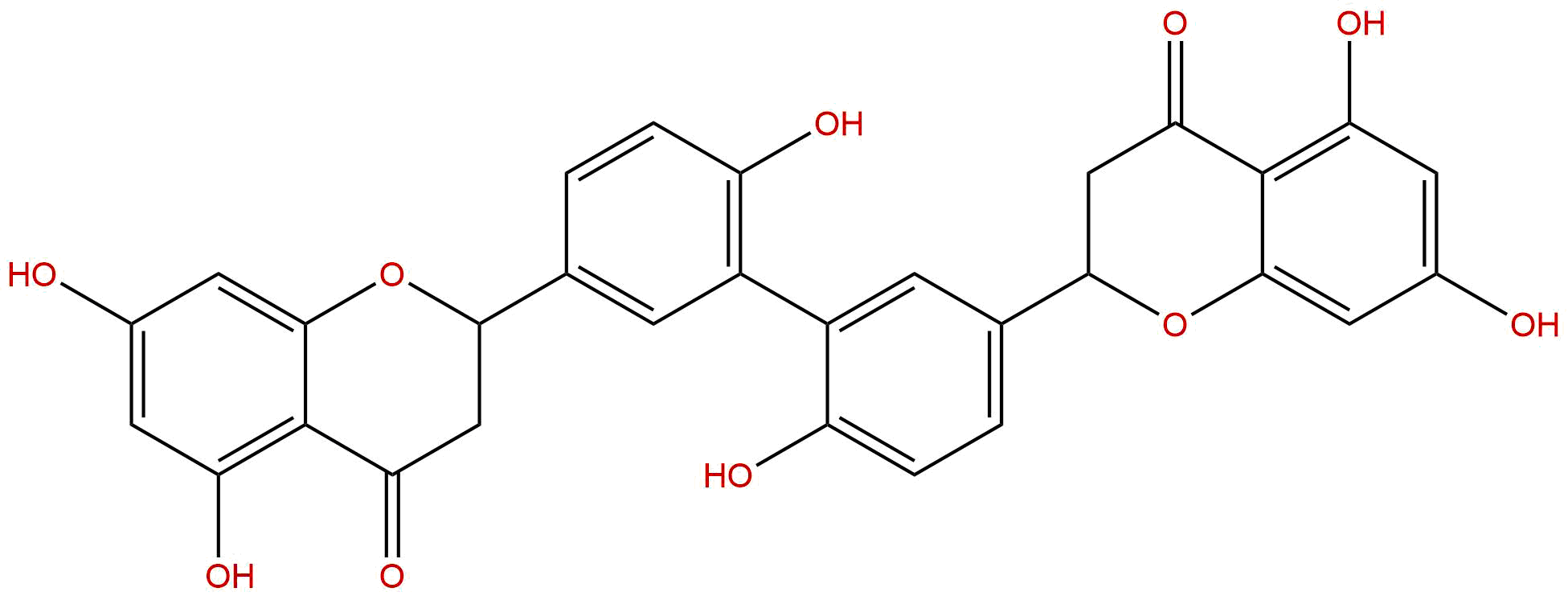


Product name: 3',3'''-Binaringenin
Synonym name:
Catalogue No.: BP2409
Cas No.: 145399-99-1
Formula: C30H22O10
Mol Weight: 542.496
Botanical Source: Selaginellae herba
Type of Compound: "Flavonoids,Biflavones"
Purity: 95%~99%
Analysis Method: HPLC-DAD or/and HPLC-ELSD
Identification Method: Mass, NMR
Packing: Brown vial or HDPE plastic bottle
Storage: Store in a well closed container, protected from air and light. Put into refrigerate or freeze for long term storage.
Whenever possible, you should prepare and use solutions on the same day. However, if you need to make up stock solutions in advance, we recommend that you store the solution as aliquots in tightly sealed vials at -20℃. Generally, these will be useable for up to two weeks.
The product could be supplied from milligrams to grams
Inquire for bulk scale.
For Reference Standard and R&D, Not for Human Use Directly.
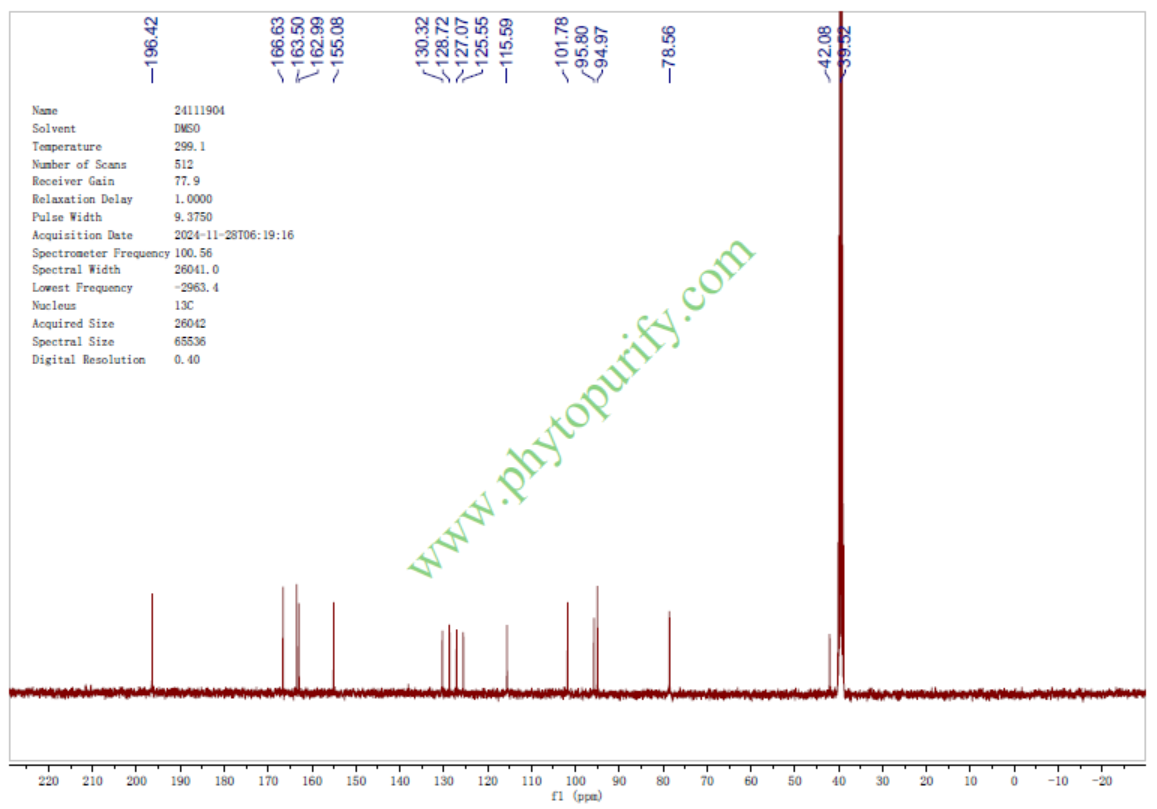
NMR of 3',3'''-Binaringenin
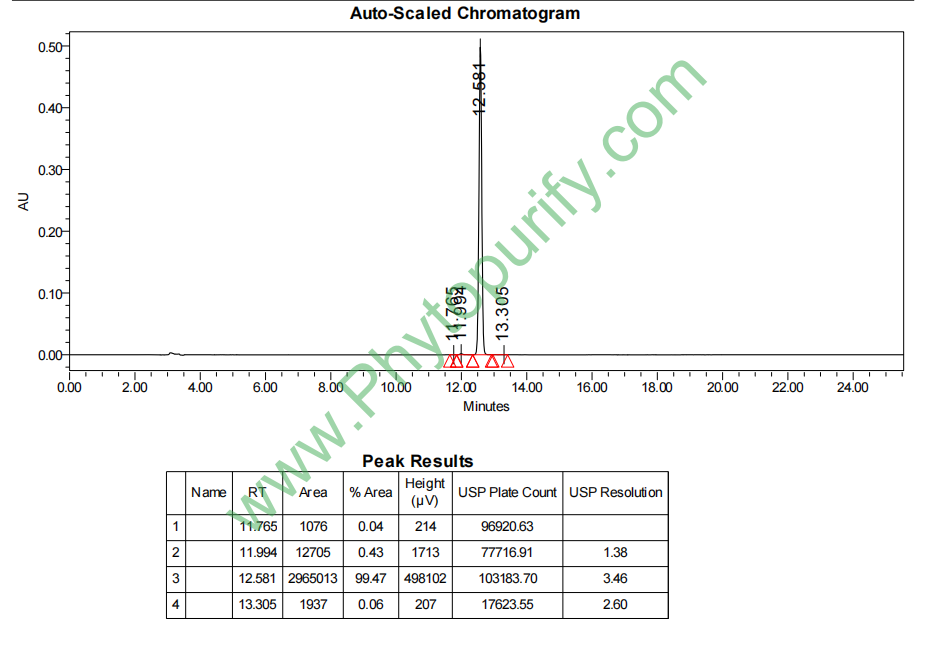
HPLC of 3',3'''-Binaringenin
Storage conditions:Short-term storage at 2~8℃, long-term storage at -20 ~ -80℃
173.9800
3.4245
2.8092
.0169
2.2819
5.1925
Low
92.2907
3.8239
No
No
No
No
Yes
No
0.6
Yes
No
Yes
No
Natural products, as an important source of drug discovery, have long played an irreplaceable role in the human fight against diseases. Among them, flavonoids have always been a hot topic in medicinal chemistry and pharmacology research due to their extensive biological activity and relatively low toxicity. Naringenin, as a typical representative of dihydroflavonoids, is widely present in citrus fruits and is known for its various pharmacological activities such as antioxidant, anti-inflammatory, anti-tumor, and hepatoprotective effects. However, the presence of flavonoid dimers in the natural world, especially biflavonoids connected by C-C bonds, has attracted great interest from researchers in recent years due to their more complex molecular structures and potential unique biological activities.
3 ', 3' '- Binarinnin (CAS number: 145399-99-1) is a structurally unique natural product of flavonoids. As the name suggests, it is a symmetrical dimer formed by directly connecting two molecules of naringin through the 3 '- and 3' '- carbon bonds on its B ring. This structural feature endows it with unique physicochemical properties and biological activities that differ from monomeric naringin and other linking modes (such as C-C/C-O-C) flavonoids. Although the content of 3 ', 3' '' - naringin may be lower in nature compared to its monomers or some more common flavonoids (such as ginkgo flavonoids), and research started relatively late, existing studies have revealed its enormous potential in antioxidant, anti-inflammatory, neuroprotective, and anti-tumor aspects.
This review aims to systematically review the research status of 3 ', 3' '- naringin, and explore its reported pharmacological activities, mechanisms of action, and molecular targets from its chemical structure, physicochemical properties, plant sources, and extraction methods. It also evaluates its pharmacokinetic characteristics and development prospects based on its pharmacological parameters. By integrating existing knowledge, this article aims to provide comprehensive scientific basis and forward-looking thinking for the in-depth research and potential drug development of this unique natural product.
The chemical structure of 3 ', 3' '- naringin is the basis for all its biological activities. From a chemical classification perspective, it belongs to the class of flavonoids, specifically composed of two naringin (5,7,4 '- trihydroxydihydroflavone) monomers connected by a C-C bond between the B rings. Its IUPAC name can be described as: 5,5 ', 7,7' - tetrahydroxy-2,2 '- bis (4-hydroxyphenyl) -2,2', 3,3 '- tetrahydro [3,3' - biphenyldihydropyran] -4,4 '- dione. The molecular formula is C30H22O10, with a molecular weight of 542.4960 g/mol.
Structural feature analysis:
1. Monomer unit Each monomer is a dihydroflavonoid skeleton, with a C6-C3-C6 structure, where the C ring is a saturated dihydropyranone ring. There is one hydroxyl group at positions 5 and 7 on ring A, and one hydroxyl group at position 4 'on ring B. These phenolic hydroxyl groups are the main contributing groups to antioxidant activity.
2. connection method Two monomers are connected by a carbon carbon single bond at the 3 'position (one monomer) and the 3' 'position (the other monomer) of the B ring. This connection method gives the entire molecule greater rigidity and a specific spatial conformation. Unlike flavonoids connected by C-O-C ether bonds, those connected by C-C bonds are more stable and less prone to hydrolysis.
3. Chiral center Each dihydroflavonoid monomer has a chiral center at the C2 and C3 positions. The naturally occurring naringin is usually in the (S) - configuration (i.e. 2S configuration), so theoretically, there may be multiple stereoisomers of 3 ', 3' '- dinaringin. The isolated natural products are usually single isomers or mixtures with specific stereoisomers, and their stereochemistry is crucial for their interaction with biological targets.
Physical and chemical property parameter analysis:
- Molecular weight and LogP The molecular weight is 542.5, which belongs to the category of medium to large molecules. The LogP value is 3.42, indicating moderate lipid solubility. This value is between hydrophilic and lipophilic, which is beneficial for its transmembrane transport and distribution in organisms, but may also affect its solubility in aqueous environments.
- TPSA (Topological Polarity Surface Area)The TPSA is as high as 173.98 Å ². This value is much higher than the recommended threshold for oral medication (about 140 Å ²), indicating that its oral absorption may be poor and cell membrane permeability may be limited. High TPSA mainly comes from up to 6 phenolic hydroxyl groups and 4 carbonyl oxygen atoms in the molecule.
- Water solubility Very low water solubility, only 0.0169 mg/mL. This is not completely contradictory to its high TPSA and moderate LogP values, as the hydrogen bonding interactions within and between molecules, as well as the influence of lattice energy, result in poor solubility in water. This is one of the main challenges facing the in vivo research and formulation development of this compound.
- Blood-brain barrier (BBB) permeability Predicted as low. High TPSA and molecular weight are usually unfavorable for compounds to penetrate the blood-brain barrier. However, its LogP value is moderate and may be mediated by carriers, so the possibility of it reaching an effective concentration in the brain cannot be completely ruled out, especially in pathological states where the blood-brain barrier is damaged.
- HERG inhibition and Ames test The prediction results show no risk of hERG cardiac toxicity (No), and the Ames test mutagenicity prediction value is 0.6, indicating a low risk of genetic toxicity. These two parameters preliminarily indicate that it has a good security window.
In summary, 3 ', 3' '- naringin is a lipophilic flavonoid with a complex structure, multiple phenolic hydroxyl groups, and chiral centers. The main challenges facing its medicinal properties are poor water solubility and low oral bioavailability, but its lower toxicological risks provide a basis for further development.
The distribution of 3 ', 3' '- naringin in nature is relatively limited, and it is currently known to mainly exist in certain specific plant families and genera, especially in plants of the Guttiferae family (also known as Clusiaceae). For example, it has been found to exist in the genus Garcinia(Garcinia)In the roots, bark, or fruits of plants, such as Garcinia buchananii、Garcinia kola Wait. In addition, trace amounts are also present in certain species of Fabaceae plants. These plants often have a long history of folk medicinal use, used to treat inflammation, infections, digestive system diseases, etc. Their pharmacological substance basis may be partially attributed to flavonoids such as 3 ', 3' '- naringin.
Due to the low content of 3 ', 3' '' - naringin in plants and its coexistence with other structurally similar flavonoids or monomeric flavonoids, its extraction and purification process requires precise separation strategies.
extraction method:
1. Solvent extraction method This is the most commonly used preliminary extraction method. Given the moderate lipophilicity of the target compound, organic solvents with moderate polarity are usually chosen. Methanol, ethanol, or their aqueous solutions (such as 70% -95% ethanol) are commonly used extraction solvents. The extraction method can be cold soaking, percolation, or heating reflux. The heating reflux efficiency is relatively high, but it should be noted that the temperature should not be too high to prevent the degradation of heat sensitive components. Before extraction, plant materials usually need to be dried and crushed to increase the contact area.
2. Assisted Extraction Technology Modern auxiliary technologies have also been applied to improve extraction efficiency and reduce solvent usage. For example, ultrasound assisted extraction (UAE) utilizes cavitation effect to destroy cell walls and accelerate the dissolution of active ingredients; Microwave assisted extraction (MAE) utilizes microwave energy to selectively heat and improve extraction rate. These methods demonstrate advantages in extracting flavonoids.
Separation and purification methods:
1. Liquid-liquid extraction Suspend the crude extract in water and extract it sequentially with solvents of different polarities such as petroleum ether, ethyl acetate, n-butanol, etc. 3 ', 3' '- naringin is usually enriched in the ethyl acetate or n-butanol extraction layer due to the presence of its phenolic hydroxyl group.
2. Column chromatography method This is the core step of separation and purification.
- Positive phase silica gel column chromatography The use of solvent systems such as chloroform methanol and ethyl acetate methanol for gradient elution is a classic preliminary separation method.
- Reverse phase column chromatography The use of C18 or C8 bonded silica gel with methanol water or acetonitrile water system for elution has a significant effect on separating moderately polar flavonoids.
- Sephadex gel column chromatography (Sephadex LH-20)The dual action of molecular sieve and adsorption is very effective in removing pigments and separating flavonoids with different degrees of polymerization, and is often used as a step for fine purification.
3. High performance liquid chromatography (HPLC)For the final high-purity preparation, especially for separating chiral isomers, preparative HPLC is an essential tool. By using chiral chromatography columns or specific reverse phase chromatography columns, combined with optimized mobile phases (such as adding formic acid or trifluoroacetic acid), high purity (>98%) of 3 ', 3' '' - naringin can be achieved in milligrams or even grams.
Structural Identification The structure of purified compounds is usually confirmed by spectroscopic methods. UV spectroscopy shows the characteristic absorption of dihydroflavonoids (approximately 280-290 nm). Infrared spectroscopy (IR) can confirm the presence of hydroxyl and carbonyl groups. Nuclear magnetic resonance (NMR) spectroscopy (including 1H-NMR, 13C-NMR, DEPT, HMBC, HSQC, etc.) is the key to analyzing their connection modes and stereoconfigurations. High resolution mass spectrometry (HR-MS) is used to determine its precise molecular weight and formula.
Although the research history of 3 ', 3' '- naringin is not long, existing in vitro and in vivo experiments have revealed its multifaceted pharmacological activities, demonstrating its potential as a lead compound or candidate drug.
antioxidant activity As a polyphenolic compound, antioxidant activity is one of its most fundamental activities. Research has shown that 3 ', 3' '- naringin can effectively scavenge various free radicals, such as DPPH free radicals, ABTS cationic free radicals, and superoxide anion free radicals. Its activity is usually stronger than that of monomeric naringin, which may be attributed to the dual flavonoid structure providing more phenolic hydroxyl groups and a larger conjugated system, enabling it to more effectively stabilize free radical intermediates. In addition, it can chelate transition metal ions (such as Fe ² ⁺), thereby inhibiting the hydroxyl radicals produced by the Fenton reaction and upregulating the activity of intracellular antioxidant enzymes (such as superoxide dismutase (SOD) and glutathione peroxidase (GPx)).
anti-inflammatory activity Inflammation is the common pathological basis of various diseases. 3 ', 3' '- naringin has shown significant anti-inflammatory effects in various cell models. For example, in a macrophage model stimulated by lipopolysaccharide (LPS), it can significantly inhibit the production of pro-inflammatory factors such as nitric oxide (NO), prostaglandin E2 (PGE2), tumor necrosis factor - α (TNF - α), interleukin-6 (IL-6), and interleukin-1 β (IL-1 β). The mechanism is related to the inhibition of inducible nitric oxide synthase (iNOS) and cyclooxygenase-2 (COX-2) expression.
Neuroprotective activity Given its antioxidant and anti-inflammatory activities, 3 ', 3' '- naringin also exhibits protective effects in neurodegenerative disease models. In glutamate or hydrogen peroxide (H ₂ O ₂) - induced neuronal injury models, such as PC12 cells or primary cortical neurons, pretreatment with 3 ', 3' '- naringin can significantly improve cell survival, reduce lactate dehydrogenase (LDH) release, inhibit intracellular reactive oxygen species (ROS) accumulation, and maintain mitochondrial membrane potential. These results suggest that it may protect neurons by inhibiting oxidative stress and apoptosis pathways.
Antitumor activity Preliminary studies have shown that 3 ', 3' '- naringin has a proliferative inhibitory effect on certain tumor cell lines. For example, in breast cancer cells (MCF-7), liver cancer cells (HepG2) and colon cancer cells (HT-29), it can inhibit cell viability in a dose-dependent manner. Its mechanism of action may involve inducing cell cycle arrest (such as G0/G1 phase arrest) and apoptosis. Compared with monomeric naringin, its anti-tumor activity is stronger in certain cell lines, which may be related to its dual flavonoid structure being more effective in binding to DNA topoisomerases or certain kinase targets.
Other activities In addition, there are reports suggesting that 3 ', 3' '- naringin may have antibacterial (especially against Gram positive bacteria), antiviral (such as against influenza virus), and hepatoprotective activities. For example, in a mouse model of acute liver injury induced by carbon tetrachloride (CCl ₄), it can reduce serum transaminase (ALT, AST) levels, alleviate liver oxidative stress and inflammatory response.
The pharmacological activity of 3 ', 3' '- naringin is the result of multi-target and multi pathway synergistic effects. Its mechanism of action mainly revolves around the following aspects:
Directly eliminate free radicals and chelate metal ions This is the direct mechanism of its antioxidant activity. Multiple phenolic hydroxyl groups in the molecule (especially the 5,7-dihydroxy group in ring A and the 4 '- hydroxyl group in ring B) act as hydrogen atom donors, effectively neutralizing free radicals. At the same time, the adjacent phenolic hydroxyl structure (although the 3 ', 3' '- position of the B ring in naringin is used for connection, the 4' - hydroxyl is adjacent to the connection site) and the 5-hydroxy-4-carbonyl structure can chelate transition metal ions such as Fe ² ⁺ and Cu ² ⁺, block the Fenton reaction, and reduce the generation of free radicals from the source.
Regulating redox sensitive signaling pathways:
Regulating cell apoptosis and proliferation signals:
Direct interaction with specific protein targets:
Based on the provided pharmacological parameters and existing literature, a comprehensive evaluation of the pharmacological properties of 3 ', 3' '' - naringin is conducted.
Advantage:
- A good starting point for security Predicting the absence of hERG inhibition and lower risk of Ames mutagenicity indicates a lower risk of cardiac and genetic toxicity, which is an important prerequisite for drug development.
- Clear pharmacological activity It has shown potential in multiple therapeutic fields such as antioxidant, anti-inflammatory, and neuroprotective effects, and its activity is often superior to its monomers. It has the characteristics of "multi-target" drugs and is suitable for treating complex diseases.
- Potential for structural modification There are multiple phenolic hydroxyl groups present in the molecule, providing multiple sites for structural modifications such as prodrug design, salt formation, and introduction of specific functional groups, which are expected to improve its physicochemical and pharmacokinetic properties.
challenge:
- Extremely low water solubility The water solubility of 0.0169 mg/mL is the biggest obstacle. This directly leads to poor oral absorption and extremely low bioavailability, making it difficult to achieve effective blood drug concentrations in the body. This is the Achilles heel that limits its clinical translation.
- High TPSA and low permeability High TPSA (173.98 Å ²) indicates difficulty in passive diffusion through cell membranes, especially intestinal epithelial cells. Although there may be active transport mechanisms, their efficiency is usually not high.
- Metabolic stability unknown The abundant phenolic hydroxyl groups in the molecule are excellent substrates for phase II metabolic enzymes such as glucuronosyltransferase UGT and sulfotransferase SULT. After oral administration, it is likely to undergo strong first pass metabolism in the intestine and liver, resulting in glucuronidation or sulfation binding reactions that are quickly cleared, leading to extremely low systemic exposure.
- Lack of pharmacokinetic data At present, there is almost no research on the in vivo pharmacokinetics of 3 ', 3' '' - naringin. Its absorption, distribution, metabolism, and excretion (ADME) characteristics are not yet clear. For example, can it be metabolized by gut microbiota? Are metabolites active? How is its tissue distribution in the body? These are urgent questions that need to be answered.
Potential pharmacokinetic improvement strategies:
1. Formulation technology The adoption of modern formulation technology is the key to improving its bioavailability. For example, the preparation of nanoparticles, liposomes, phospholipid complexes, solid dispersions, cyclodextrin inclusion complexes, etc. can significantly improve their apparent solubility and dissolution rate, and may promote lymphatic absorption, bypassing the first pass effect of the liver.
2. Prodrug design Esterification or etherification modification of phenolic hydroxyl groups in molecules to prepare prodrugs. For example, phosphate ester prodrugs can greatly improve water solubility and be hydrolyzed by phosphatases in the body to release the original drug. Amino acid ester prodrugs may be absorbed through the intestinal peptide transporter (PepT1).
3. structural optimization Simplify or modify the molecule while retaining the core pharmacophores. For example, studying the activity of its monomers or simplified analogues, or balancing hydrophilicity and lipophilicity by introducing specific functional groups to reduce TPSA.
Although 3 ', 3' '' - naringin faces severe challenges in developing medicinal properties, its unique chemical structure and multifaceted pharmacological activities make it still have broad clinical application prospects in specific therapeutic fields.
Neurodegenerative diseases Given its strong antioxidant, anti-inflammatory, and neuroprotective activities, as well as its low BBB permeability prediction (which may indicate low concentrations in the brain, but it is still possible if targeted delivery through nanomaterials or utilizing the pathological window of BBB damage), 3 ', 3' '- naringin has potential in the treatment of diseases such as Alzheimer's disease and Parkinson's disease. Its mechanism of action is closely related to inhibiting neuroinflammation, clearing free radicals, and reducing the aggregation of β - amyloid protein (A β).
Chronic inflammatory diseases Its anti-inflammatory activity makes it possible to treat chronic inflammatory diseases such as rheumatoid arthritis, inflammatory bowel disease (IBD), atherosclerosis, etc. In these diseases, local or systemic inflammatory response is the core pathological link. By developing local drug formulations (such as enemas for IBD or topical patches for arthritis), it is possible to bypass the barrier of low oral bioavailability and directly act on the lesion site.
Metabolic diseases Naringin itself has been reported to have the effects of improving insulin resistance and regulating lipid metabolism. As a dimer, 3 ', 3' '' - naringin may have stronger activity. Its application in nonalcoholic fatty liver disease (NAFLD), type 2 diabetes and other metabolic syndrome related diseases is worth exploring. Its hepatoprotective and antioxidant properties are particularly suitable for NAFLD.
Antitumor adjuvant therapy Although its direct anti-tumor activity may not be sufficient to become a first-line chemotherapy drug, it has development value as a sensitizer for chemotherapy or radiotherapy, or as an adjuvant drug for reducing the toxic side effects of radiotherapy and chemotherapy (such as cardiotoxicity and hepatotoxicity). Its multi-target properties help overcome tumor drug resistance.
Future research directions:
1. In depth mechanism research Using modern molecular biology techniques such as CRISPR-Cas9, proteomics, transcriptomics, and bioinformatics methods, systematically identify the protein targets it directly acts on and elucidate the signaling network it regulates.
2. Pharmacokinetic study Conduct systematic in vivo ADME research, particularly establishing sensitive biological sample analysis methods (such as LC-MS/MS) to determine their blood drug concentration, tissue distribution, metabolites, and excretion pathways in animals. This is a crucial step in evaluating its pharmacological properties.
3. Formulation development Making pharmaceutical science one of the core research directions. Compare the improvement effects of different nano delivery systems (such as liposomes, PLGA nanoparticles, mesoporous silica nanoparticles) on their oral bioavailability, and explore targeted delivery strategies (such as brain targeting, liver targeting).
4. toxicological evaluation On the basis of pharmacological research, conduct systematic acute and chronic toxicity experiments to clarify the maximum tolerated dose, safe dose range, and possible target organ toxicity.
5. Structure Activity Relationship (SAR) Study Synthesize a series of derivatives and analogues of 3 ', 3' '' - naringin, systematically study the effects of different substituents, connection modes, and stereoconfigurations on their activity and drug properties, and search for candidate molecules with stronger activity and better drug properties.
3 ', 3' '- naringin, as a structurally unique natural flavonoid, represents an important direction for exploring from simple flavonoid monomers to complex dimers. It inherits multiple pharmacological activities of naringin and exhibits stronger efficacy and unique intermolecular interaction patterns due to its dimeric structure. Its research in antioxidant, anti-inflammatory, neuroprotective and other fields has preliminarily revealed its enormous potential as a lead compound.
However, the road from "natural products" to "clinical drugs" is full of thorns. The extremely low water solubility, high polar surface area, and resulting low expected oral bioavailability of 3 ', 3' '' - naringin are the most severe challenges it faces. Future research must prioritize addressing this core issue and transform this promising molecule from 'laboratory activity' to 'clinical usability' through innovative formulation techniques or clever prodrug/structural modification strategies. Meanwhile, a deeper understanding of its mechanism of action and internal fate will provide theoretical guidance for the design of these strategies.
In summary, 3 ', 3' '- naringin is a promising but still nascent natural product. In depth and systematic research on it not only helps to reveal the biological functions of flavonoids in nature, but also has the potential to provide new chemical entities and drug design ideas for tackling complex diseases such as neurodegenerative diseases and chronic inflammation. Despite the long road ahead, its unique chemical and biological charm deserves unremitting efforts from researchers.
