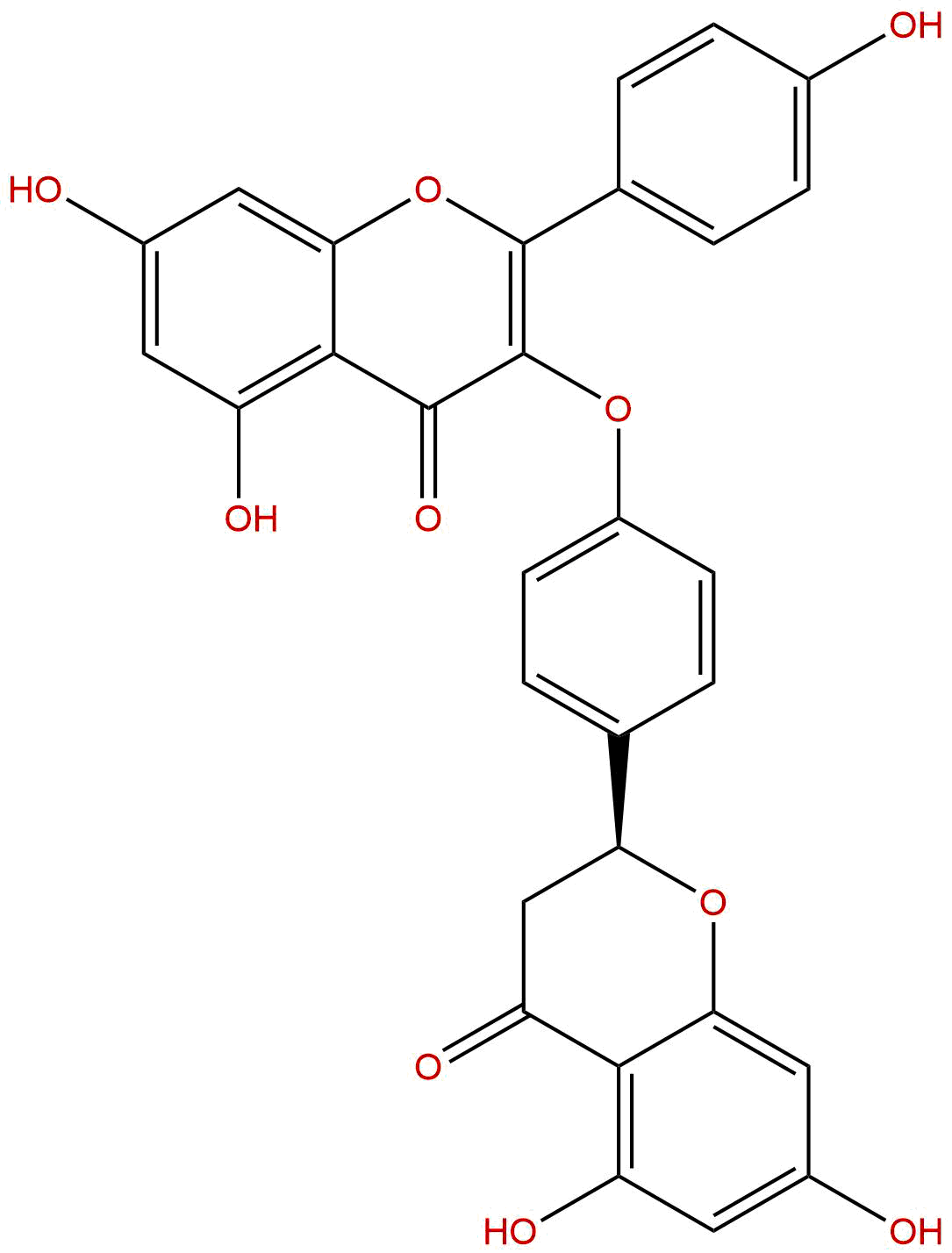


Product name: (2"S)-2",3"-Dihydrodelicaflavone
Synonym name:
Catalogue No.: BP2418
Cas No.: 3035699-17-0
Formula: C30H20O10
Mol Weight: 540.48
Botanical Source: Selaginellae herba
Type of Compound: Flavonoids
Purity: 95%~99%
Analysis Method: HPLC-DAD or/and HPLC-ELSD
Identification Method: Mass, NMR
Packing: Brown vial or HDPE plastic bottle
Storage: Store in a well closed container, protected from air and light. Put into refrigerate or freeze for long term storage.
Whenever possible, you should prepare and use solutions on the same day. However, if you need to make up stock solutions in advance, we recommend that you store the solution as aliquots in tightly sealed vials at -20℃. Generally, these will be useable for up to two weeks.
The product could be supplied from milligrams to grams
Inquire for bulk scale.
For Reference Standard and R&D, Not for Human Use Directly.
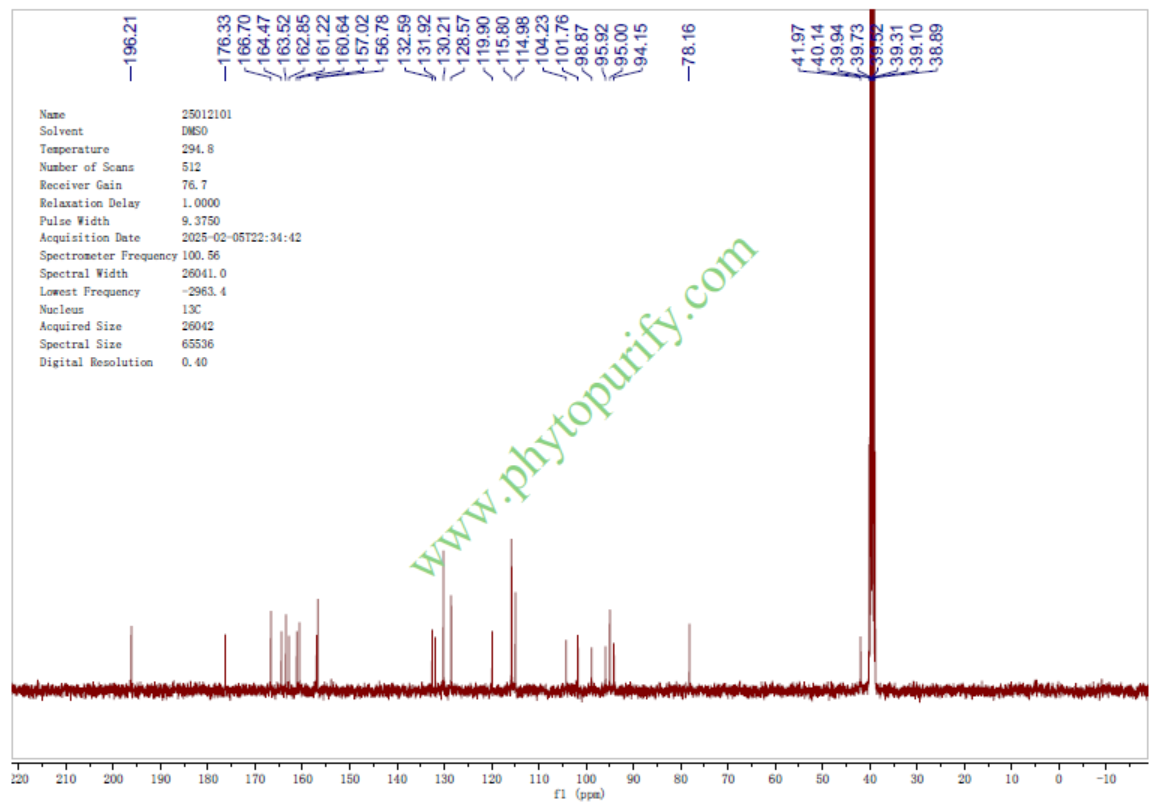
NMR of (2"S)-2",3"-Dihydrodelicaflavone
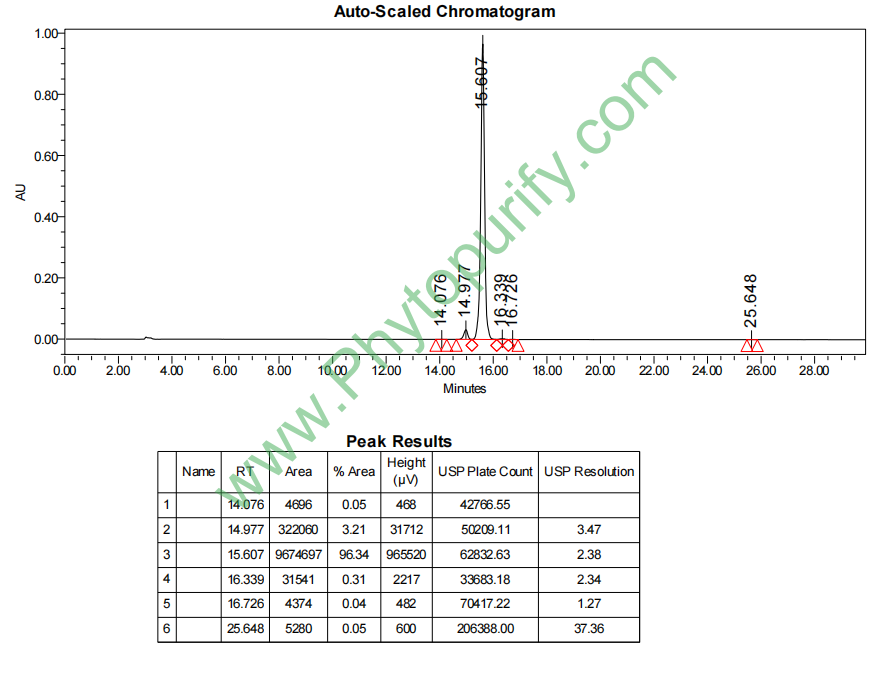
HPLC of (2"S)-2",3"-Dihydrodelicaflavone
Storage conditions:Short-term storage at 2~8℃, long-term storage at -20 ~ -80℃
166.8900
3.9023
3.2004
.0039
2.0401
4.6683
Low
92.6772
3.4010
No
No
Yes
No
Yes
No
0.6
Yes
No
Yes
No
Natural products, as an important source of drug discovery, play an irreplaceable role in the long history of human fight against diseases. Flavonoids, as a class of secondary metabolites widely present in the plant kingdom, have attracted much attention due to their structural diversity and rich biological activity. Among numerous flavonoids, biflavonoids have become a hot topic in natural product chemistry and pharmacology research due to their unique dimer structure and complex pharmacological activity spectrum. In recent years, with the advancement of separation technology and structural identification methods, a series of structurally novel flavonoids have been discovered, among which, (2"S)-2", 3 "- Dihydrodulicaflavone (2" S) -2 ", 3" - Dihydrodulicaflavone) is gradually entering the field of researchers as a dihydroflavonoid derivative with a special stereoconfiguration.
(2"S)-2", The discovery of 3 "- dihydrodicarbonamide flavonoids originated from the systematic exploration of active ingredients in traditional medicinal plants. Its parent nucleus structure belongs to the flavonoid family, but the chiral center at C-2" position and the double bond reduction characteristics at 2 ", 3" - positions endow the molecule with unique spatial conformation and biological activity. Preliminary studies have shown that this compound shows significant pharmacological potential in a variety of disease models, especially in the treatment of breast cancer. Its mechanism of acting through a multi-target regulatory network provides a valuable lead compound for the development of new anti-tumor drugs.
Breast cancer, as the highest incidence of malignant tumors in women in the world, its pathogenesis is complex, involving the abnormal activation of multiple signal pathways. Despite significant progress in endocrine therapy, targeted therapy, and immunotherapy, the development of drug resistance and tumor heterogeneity remain major challenges in clinical treatment. Therefore, it is an important strategy to find natural products with a new mechanism that can simultaneously regulate multiple key targets to overcome the bottleneck of breast cancer treatment. (2"S)-2", 3 "- Dihydrodicarboflavin shows its regulatory ability against multiple targets closely related to the occurrence, development, drug resistance and metastasis of breast cancer, such as AMPK, MCL1, BCL2, NOTCH1, STAT3, ESR2, TYR, ABCB1, ABCG2, PRKCA, making it a molecular probe and candidate drug with great research value.
This article will provide a systematic review of (2 "S) -2", 3 "- dihydrodicarbonamide flavonoids from multiple dimensions, including chemical structure and physicochemical properties, plant sources and extraction methods, pharmacological activity research, mechanism of action and molecular targets, pharmacological evaluation and pharmacokinetics, and clinical application prospects and prospects. The aim is to provide comprehensive academic references for the in-depth research and development of this compound.
(2"S)-2", The chemical structure of 3 "- dihydrodicarbonamide flavonoids belongs to the class of flavonoids, specifically, it is a dimer formed by two flavonoid units connected by C-C bonds. The core structural feature is that one of the flavonoid units has a specific S-configuration chiral center at the C-2 "position, and the double bond between C-2" and C-3 "in this unit is reduced to a single bond, forming a flavanone structural fragment. This structural modification significantly alters the overall conformation and electron distribution of the molecule, thereby affecting its interaction with biological targets.
From the molecular formula, the precise molecular weight of this compound is 540.4800 Da, which belongs to the category of medium-sized natural product molecules. Its LogP value is 3.9023, indicating that the molecule has moderate lipid solubility, which facilitates its penetration of the cell membrane and entry into the cell to exert its effects. However, higher LogP values also indicate lower solubility in water, with a measured water solubility of only 0.0039 mg/mL. This may be one of the key factors limiting its bioavailability and in vivo delivery efficiency. The topological polar surface area (TPSA) is 166.8900 Å ², which is a relatively high value mainly attributed to the presence of multiple polar groups such as hydroxyl and carbonyl groups in the molecule. A higher TPSA usually indicates a stronger hydrogen bonding ability between the molecule and solvent water, but it may also make it difficult to penetrate the blood-brain barrier (BBB). In fact, the blood-brain barrier penetration ability of this compound is evaluated as "low", which limits its application in the treatment of central nervous system diseases to some extent. However, for the treatment of peripheral solid tumors such as breast cancer, this characteristic may reduce the central neurotoxicity.
In terms of chemical stability, flavonoids are usually sensitive to light, heat, and oxygen, especially in solution. The presence of the 2 ", 3" - dihydrogen structure may result in higher chemical stability of the molecule compared to its unsaturated precursor, but it may also be more prone to oxidative degradation. In addition, the presence of multiple phenolic hydroxyl groups in the molecule endows it with certain antioxidant activity, but also makes it easy to ionize under alkaline conditions, thereby affecting its solubility and stability. From the perspective of medicinal chemistry, the molecule has multiple modifiable sites, such as phenolic hydroxyl groups that can undergo methylation, acetylation, or glycosylation modifications to improve its water solubility, metabolic stability, and targeting.
(2"S)-2", 3 "- Dihydrodicarbonamide flavonoids were initially isolated from plants in the Thymelaeaceae family. Rui Xiang family plants are known for their rich secondary metabolites and significant biological activity, many of which are used in traditional medicine to treat inflammation, pain, and tumors. Specifically, this compound mainly exists in Dilika Ruixiang(Daphne delavayi) In the roots, stems, or leaves. Dilikaruixiang is a shrub distributed in southwestern China (such as Yunnan and Sichuan) and adjacent areas. Its folk medicine has a long history and is commonly used to treat injuries from falls and rheumatism. In addition, in other Rui Xiang genera(Daphne)Plants such as Yuanhua(Daphne genkwa) or Golden waist arrow(Daphne odora) In China, there may also be structurally similar homologs, but the discovery of (2 "S) -2", 3 "- dihydrodikacin is species-specific, and its content and distribution are greatly influenced by plant growth environment, harvest season, and location.
The classical process for extracting this compound typically follows the general paradigm of natural product chemistry. Firstly, the dried plant material is crushed and subjected to cold soaking or hot reflux extraction using organic solvents. Given the moderate lipid solubility of the compound, commonly used extraction solvents include methanol, ethanol, acetone, or their aqueous solutions. For example, using a 70% -95% ethanol aqueous solution for percolation extraction can effectively dissolve flavonoids from plant substrates. After the extraction solution is concentrated under reduced pressure, the total extract is obtained. Subsequently, the total extract is preliminarily separated using liquid-liquid extraction method, usually using solvents of different polarities such as petroleum ether, ethyl acetate, n-butanol, etc. for sequential extraction to enrich the target compound. Due to the LogP value of approximately 3.9 for (2 "S) -2" and 3 "- dihydrodicarbonamide flavonoids, they tend to accumulate in the moderately polar ethyl acetate extraction sites.
Further separation and purification mainly rely on modern chromatographic techniques. Silica gel column chromatography is the most commonly used preliminary separation method, which uses gradient elution systems such as chloroform methanol or petroleum ether acetone to segment the ethyl acetate fraction. Then, combined with Sephadex LH-20 gel column chromatography, the pigment and impurities were removed and further purified by using molecular sieve effect and adsorption. For isomers with highly similar structures, high-performance liquid chromatography (HPLC) or preparative thin layer chromatography (PTLC) is an essential step. Especially, due to the presence of chiral centers in the compound, the use of chiral chromatography columns (such as the Chiralpak series) is crucial for the separation and confirmation of (2 "S) - enantiomers. The entire separation process usually requires real-time monitoring through thin layer chromatography (TLC) and ultraviolet detection, and structural confirmation through spectroscopic techniques such as nuclear magnetic resonance (NMR) and high-resolution mass spectrometry (HR-MS).
It is worth noting that due to the usually low content of this compound in plants (which may only be a few tens of thousands to a few hundred thousandths of dry weight), traditional extraction methods have limited efficiency. In recent years, some green and efficient extraction techniques such as supercritical fluid extraction (SFE), ultrasound assisted extraction (UAE), and microwave-assisted extraction (MAE) have also been attempted to be applied to the extraction of flavonoids. These methods have shown advantages in shortening extraction time, improving yield, and reducing solvent usage, but have not yet become the standard extraction scheme for this compound.
At present, the pharmacological activity research of (2 "S) -2" and 3 "- dihydrodicarbonamide flavonoids is still in its infancy, but existing in vitro and preliminary in vivo studies have revealed their multifaceted biological activities, especially in the field of anti-tumor, showing remarkable potential.
Anti breast cancer activity It is the core focus of current research. Several in vitro experiments show that this compound can significantly inhibit the proliferation of many breast cancer cell lines (including MCF-7, MDA-MB-231, T-47D, etc.), and its half inhibitory concentration (IC ≮₀) is usually at the micromolar level. It is worth noting that this compound shows activity on estrogen receptor positive (ER+) and triple negative breast cancer (TNBC) cells, suggesting that its mechanism of action may not depend on the classical estrogen receptor signaling pathway. Further cell function experiments showed that the compound could induce apoptosis of breast cancer cells, which was manifested by nuclear fragmentation, chromatin concentration and an increase in the proportion of Annexin V positive cells. At the same time, it can effectively inhibit the migration and invasion ability of cells, which has been confirmed in scratch experiments and Transwell experiments, indicating its potential for anti metastasis. In addition, the compound also showed an inhibitory effect on the self-renewal ability of breast cancer stem cell like cells (CSCs), which is of great significance in preventing tumor recurrence and metastasis.
Activity against other types of tumors Also in preliminary exploration. It is reported that this compound also shows certain growth inhibitory effects on liver cancer cells (HepG2), lung cancer cells (A549) and colon cancer cells (HT-29), but its sensitivity is generally lower than that of breast cancer cells. This suggests that the compound may have certain tumor selectivity, but its specific mechanism remains to be elucidated.
Other pharmacological activities On the one hand, based on the commonality of its flavonoid parent nucleus, this compound has also been found to have antioxidant and anti-inflammatory activities. In DPPH and ABTS radical scavenging experiments, it exhibited moderate antioxidant activity. In the lipopolysaccharide (LPS) - induced macrophage inflammation model, this compound can reduce the production of nitric oxide (NO) and prostaglandin E2 (PGE2), and inhibit the expression of pro-inflammatory cytokines such as TNF - α and IL-6. These activities may have a synergistic effect with their anti-tumor effects, as the chronic inflammatory microenvironment is an important promoting factor for tumor occurrence and development.
(2"S)-2", The pharmacological activity of 3 "- dihydrodirika flavone, especially its anti breast cancer effect, is rooted in its fine regulation of multiple key signaling pathways and molecular targets. This multi target mode of action is a significant advantage that distinguishes it from traditional single target chemotherapy drugs, and also a potential basis for its ability to overcome tumor heterogeneity and drug resistance. According to existing research, its main mechanism of action can be summarized as follows:
1. Regulating cell apoptosis and survival pathways:
This compound can simultaneously regulate the expression of pro apoptotic and anti apoptotic proteins. It significantly downregulates anti apoptotic proteins MCL1 and BCL2 At the same time, it may upregulate the expression of pro apoptotic proteins such as BAX, thereby breaking the stability of the mitochondrial outer membrane, promoting the release of cytochrome c, activating the Caspase cascade reaction, and ultimately inducing cell apoptosis. In addition, it can also inhibit STAT3 The level of phosphorylation. STAT3, as an important transcription factor, its sustained activation can promote cell proliferation, inhibit apoptosis, and induce angiogenesis. By blocking the STAT3 signaling pathway, this compound effectively weakened the survival advantage of tumor cells.
2. Intervention in energy metabolism and proliferation signals:
This compound is AMPK(PRKAA1) The stimulant. AMPK is a core sensor of cellular energy metabolism, and its activation can inhibit the mTOR signaling pathway, thereby suppressing protein synthesis and cell proliferation. Under energy stress conditions, the activation of AMPK can also promote catabolism and inhibit synthetic metabolism, thereby limiting the rapid growth of tumor cells. Meanwhile, this compound has an impact on PRKCA The regulation of protein kinase C alpha is also worth paying attention to. PRKCA is abnormally expressed in various cancers and is involved in cell proliferation, differentiation, and migration. This compound may further inhibit tumor cell proliferation by inhibiting the activity of PRKCA and interfering with its downstream MAPK/ERK signaling pathway.
3. Impact on tumor stem cells and drug resistance:
NOTCH1 Signal pathway plays a key role in maintaining self-renewal and differentiation of breast cancer stem cells. This compound can inhibit the activity of NOTCH1, thereby reducing the proportion of tumor stem cells and lowering the risk of tumor recurrence and metastasis. More importantly, the compound can reverse the multidrug resistance (MDR) phenotype of tumor cells. It inhibits ABCB1(P-glycoprotein, P-gp) and ABCG2 The function or expression of these two important ABC transporters (breast cancer resistance protein, BCRP) increases the accumulation of chemotherapy drugs in drug resistant cells, thus restoring the sensitivity of drug resistant cells to chemotherapy drugs. This finding is of great value in solving the common drug resistance problem in clinical treatment of breast cancer.
4. Interference with hormone signals and melanin synthesis:
This compound has an effect on ESR2 The estrogen receptor β has a regulatory effect. Although the role of ESR2 in breast cancer is complex, its activation is generally considered to have anti proliferative effect. This compound may exert its anti-tumor effect by selectively regulating the activity of ESR2 and balancing it with the classical ESR1 signaling pathway. In addition, it has an impact on TYR The inhibitory effect of tyrosinase, although mainly related to melanin synthesis, also suggests that this compound may have potential anti melanoma activity or be used to improve pigment metabolism abnormalities in the tumor microenvironment.
In conclusion, (2"S)-2", 3 "- Dihydrodicarbone exerts its anti breast cancer effect through a complex, multi node, multi-level signal network. It also acts on energy metabolism (AMPK), apoptosis (MCL1/BCL2/STAT3), stem cell characteristics (NOTCH1), drug resistance mechanism (ABCB1/ABCG2), and hormone signals (ESR2). This" multi pronged "strategy makes it difficult for tumor cells to avoid it through a single mutation, showing great potential as a new anti-tumor drug.
To push (2 "S) -2", 3 "- dihydrodicarbonamide flavonoids from laboratory research to clinical application, a systematic evaluation of their drug like and pharmacokinetic (ADME) properties is necessary. Based on existing computational predictions and preliminary experimental data, a preliminary judgment can be made on its potential for drug development.
Analysis of pharmacological parameters:
- Molecular weight and LogP The molecular weight of 540.48 Da is slightly higher than the classical "Lipinski Five Rules" (MW<500), while LogP 3.90 conforms to the rules (LogP<5). This suggests that the molecule may have good membrane permeability, but its higher molecular weight may affect its oral absorption and intestinal transport.
- Water solubility The extremely poor water solubility of 0.0039 mg/mL is one of the biggest challenges facing the development of this compound as a drug. Low water solubility not only affects oral bioavailability, but also poses difficulties for the development of injectable formulations. Pharmaceutical methods such as nanocrystals, liposomes, cyclodextrin inclusion complexes, or prodrug design are needed to significantly improve their apparent solubility.
- TPSA and blood-brain barrier The TPSA is 166.89 Å ², much higher than the threshold commonly believed for passive diffusion through the BBB (<90 Å ²), therefore its BBB penetration ability is predicted to be "low". For the treatment of brain metastasis of breast cancer, this characteristic is a disadvantage; However, for the treatment of peripheral breast cancer, low BBB penetration means a lower risk of central neurotoxicity, which is an important safety advantage.
- HERG inhibition and genotoxicity The prediction of hERG inhibition is' no ', indicating that the compound has a low risk of causing QT interval prolongation and arrhythmia in the heart, which is a positive signal. The Ames test result is 0.6, indicating a slight genetic toxicity risk, but this value is in the critical region and further in vivo mutagenicity experiments (such as micronucleus tests) are needed to confirm.
Pharmacokinetic characteristics (prediction and preliminary experiments):
- absorb Due to poor water solubility, oral absorption may be incomplete and highly variable. Its LogP value is moderate, theoretically favorable for passive diffusion, but actual absorption may be limited by dissolution rate. It is expected that its absolute oral bioavailability will be low.
- distribution High TPSA and multiple polar groups tend to bind highly to plasma proteins such as albumin. Its distribution volume may be moderate, mainly distributed in organs with abundant blood flow. Low BBB penetration limits its distribution in the central nervous system.
- Metabolism As a polyphenolic compound, this molecule is highly susceptible to phase II metabolism in the liver and intestines, mainly through glucuronidation and sulfation binding reactions. These metabolites typically have increased water solubility but decreased or disappeared activity. In addition, CYP450 enzyme mediated phase I oxidative metabolism may also occur, especially on the A and B rings of the flavonoid skeleton. The significant first pass effect is another major reason for the low oral bioavailability.
- excretion Metabolites are mainly excreted through bile and urine. The renal excretion of the prototype drug may be lower.
Summary of Medicinal Properties Overall, (2"S)-2", 3 "- Dihydrodikacin has a certain pharmacological basis, such as good target selectivity, low cardiac toxicity, and low central neurotoxicity. However, its poor water solubility, potential low oral bioavailability, and significant phase II metabolism are the" Achilles heel "of its development as an oral drug. Future pharmaceutical chemistry optimization and formulation development should focus on improving water solubility and metabolic stability. For example, introducing phosphate or amino acid ester prodrugs, or encapsulating them in nanocarriers, may be feasible strategies.
(2"S)-2", 3 "- dihydrodirika flavone, as a kind of biflavone natural product with unique structure and multi target mechanism of action, has shown broad application prospects in the field of breast cancer treatment, but also faces many challenges.
Clinical application prospects:
1. New candidate drugs for breast cancer: Since it is effective on ER+and TNBC cells, and can inhibit tumor stem cells and reverse multidrug resistance, the compound is expected to be developed into a broad-spectrum, low toxicity breast cancer treatment drug. Especially for patients who develop resistance to existing endocrine therapy or chemotherapy, this compound may provide a new treatment option.
2. Chemosensitizer Its ability to inhibit ABCB1 and ABCG2 makes it an ideal candidate for chemotherapy sensitizers. Combined use with classic chemotherapy drugs such as paclitaxel and doxorubicin may significantly improve efficacy, reduce effective doses, and alleviate the toxic side effects of chemotherapy.
3. Anti metastasis and anti recurrence drugs By inhibiting the NOTCH1 signaling pathway and the ability of cell migration and invasion, this compound has potential value in preventing postoperative metastasis and recurrence of breast cancer. The long-term application of it as an adjuvant therapy drug is worth exploring.
4. Combination therapy strategy Due to its mechanism of action involving multiple key nodes such as AMPK and STAT3, this compound can be studied in combination with novel drugs such as mTOR inhibitors and immune checkpoint inhibitors (such as PD-1/PD-L1 antibodies) to produce synergistic anti-tumor effects.
Challenges and future research directions:
1. Pharmacokinetic optimization Addressing the issues of poor water solubility and low bioavailability is currently the most urgent task. Future research should focus on: a) structural modification: synthesizing a series of derivatives through medicinal chemical methods, such as introducing hydrophilic groups (phosphate groups, amino acids, etc.) or preparing prodrugs; b) New formulations: Developing delivery systems such as liposomes, polymer micelles, and nanosuspensions to improve their solubility and targeted delivery efficiency.
2. In depth in vivo pharmacological and toxicological research Currently, research mostly remains at the in vitro level. It is necessary to establish a variety of breast cancer animal models (such as xenograft tumor models, orthotopic tumor models, drug-resistant tumor models), and systematically evaluate their anti-tumor activity, pharmacokinetics and long-term toxicity in vivo. Especially to evaluate its toxicity to normal tissues, especially its potential impact on the liver, kidneys, and heart.
3. Fine analysis of target network Although multiple targets have been identified, the primary secondary relationships and synergistic mechanisms between these targets are still unclear. It is necessary to use systems biology methods such as proteomics, phosphogenomics, and transcriptomics, combined with gene knockout/knock in techniques, to comprehensively analyze its functional network, clarify its core targets, and key signaling pathways.
4. Synthetic Biology and Green Synthesis Due to the extremely low content of natural sources, obtaining this compound on a large scale is a bottleneck for industrialization. In the future, it is necessary to study its total synthesis route or use biocatalysis, metabolic engineering and other methods to achieve heterologous synthesis in microorganisms such as yeast and Escherichia coli, in order to reduce costs and ensure supply.
5. Clinical translational research After completing sufficient preclinical studies, phase I clinical trials should be carefully designed to first evaluate their safety, tolerability, and pharmacokinetic characteristics in humans. Given its multi-target nature, the selection of biomarkers in clinical trials is crucial, and there is a need to develop alternative endpoints that reflect its target inhibition effect.
(2"S)-2", 3 "- Dihydrodirika flavone, a natural product pearl discovered from traditional medicinal plants, has provided a valuable lead molecule for modern drug discovery with its unique chemical structure and multi-target, multi-level anti breast cancer mechanism of action. It simultaneously regulates energy metabolism, cell apoptosis, stem cell characteristics, drug resistance and hormone signals. This" network "intervention mode represents an important direction for future anti-tumor drug development - from" single target strike "to" multi-target regulation "to deal with the high heterogeneity and adaptability of tumors.
Although the compound has significant shortcomings in terms of drug efficacy, especially in terms of water solubility and oral bioavailability, this is not an insurmountable obstacle. Through the collaborative innovation of modern medicinal chemistry, pharmacy, and biotechnology, these challenges are expected to be overcome one by one. The in-depth study of (2 "S) -2", 3 "- dihydrodirika flavonoids is not only expected to lead to a new class of anti breast cancer drugs, but more importantly, it reveals a paradigm based on the chemical skeleton of natural products to treat complex diseases through multi target synergy.
The road from the preliminary discovery in the laboratory to the transformation of clinical application is long and full of challenges, but the great potential of (2 "S) -2", 3 "- dihydrodirika flavone is worth our continuous efforts. In the future, with the further analysis of its mechanism of action, the gradual solution of drug resistance problems, and the advancement of clinical research, we have reason to expect that this molecule from nature can ultimately benefit the majority of breast cancer patients and contribute a unique force to the human journey to fight cancer.
