| Catalog No | Package | Original Price | Price | Inventory | Quantity | Operating |
|---|---|---|---|---|---|---|
| BP2419-2mg | 2mg | $550.00 | Sign in |
|


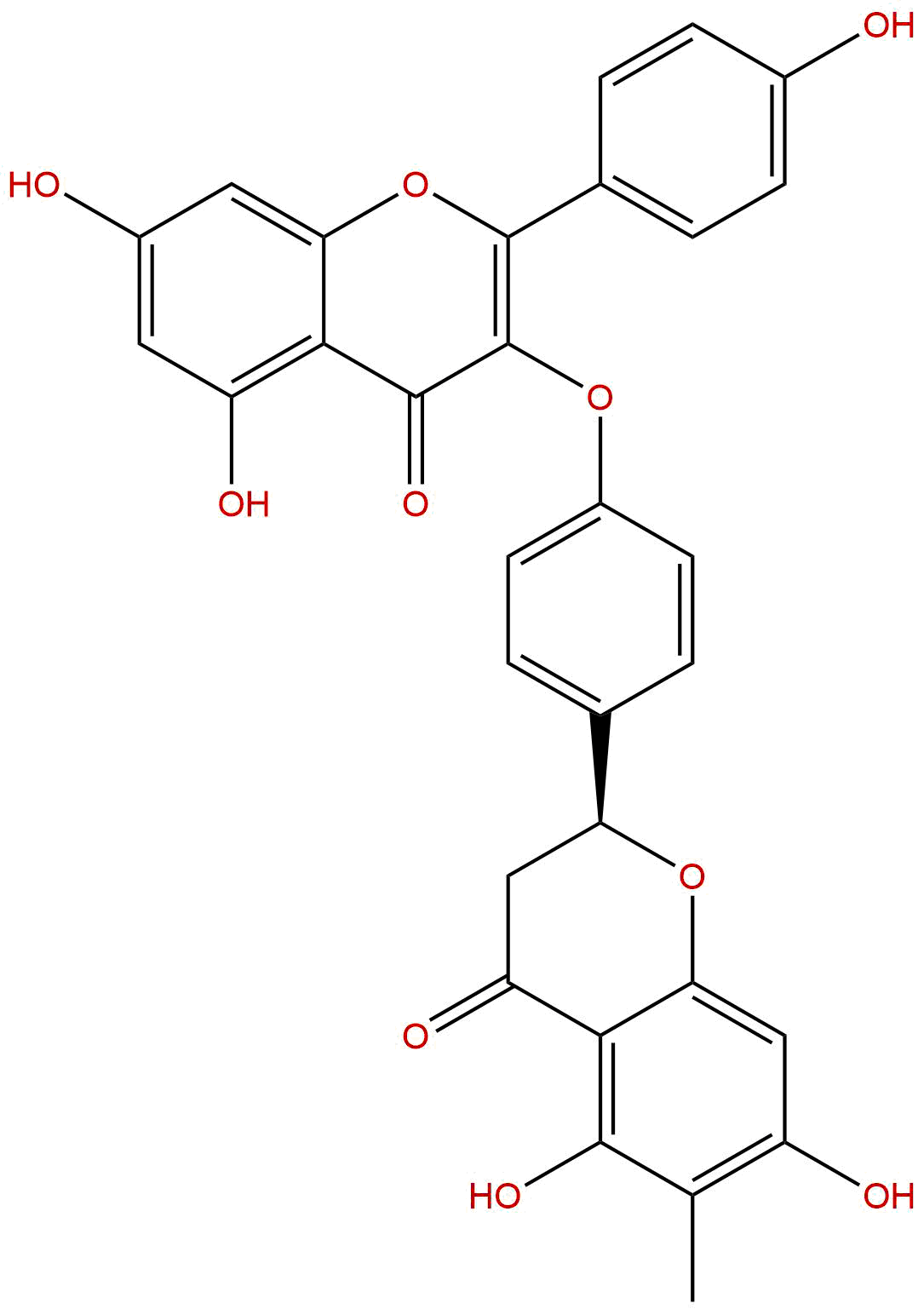
Product name: (2"S)-6"-Methyl-2",3"-Dihydrodelicaflavone
Synonym name:
Catalogue No.: BP2419
Cas No.: 3035699-20-5
Formula: C31H22O10
Mol Weight: 554.507
Botanical Source: Selaginellae herba
Type of Compound: Flavonoids
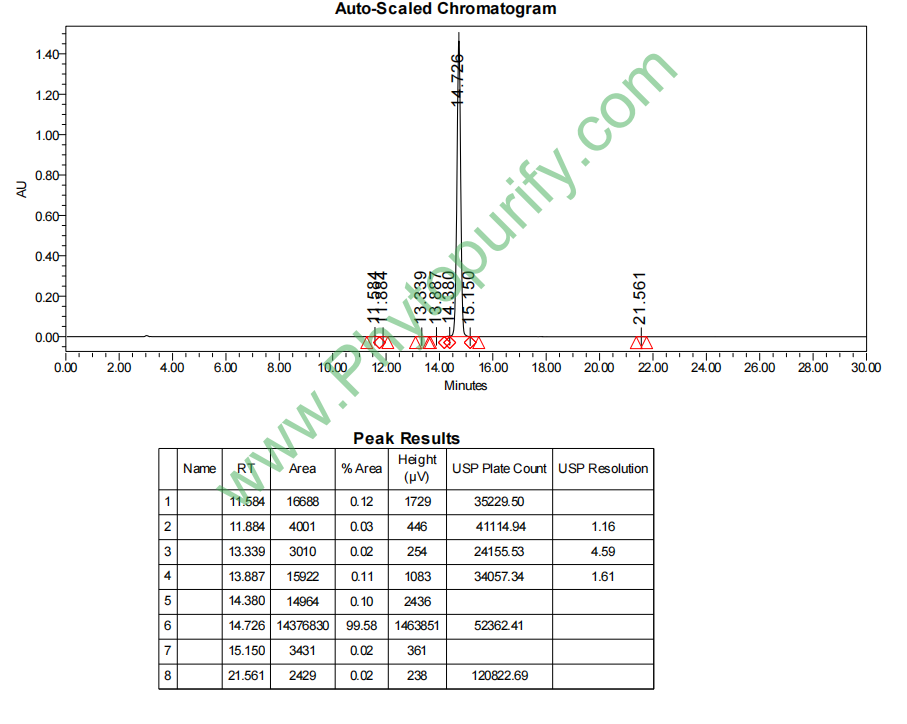
Purity: 95%~99%
Analysis Method: HPLC-DAD or/and HPLC-ELSD
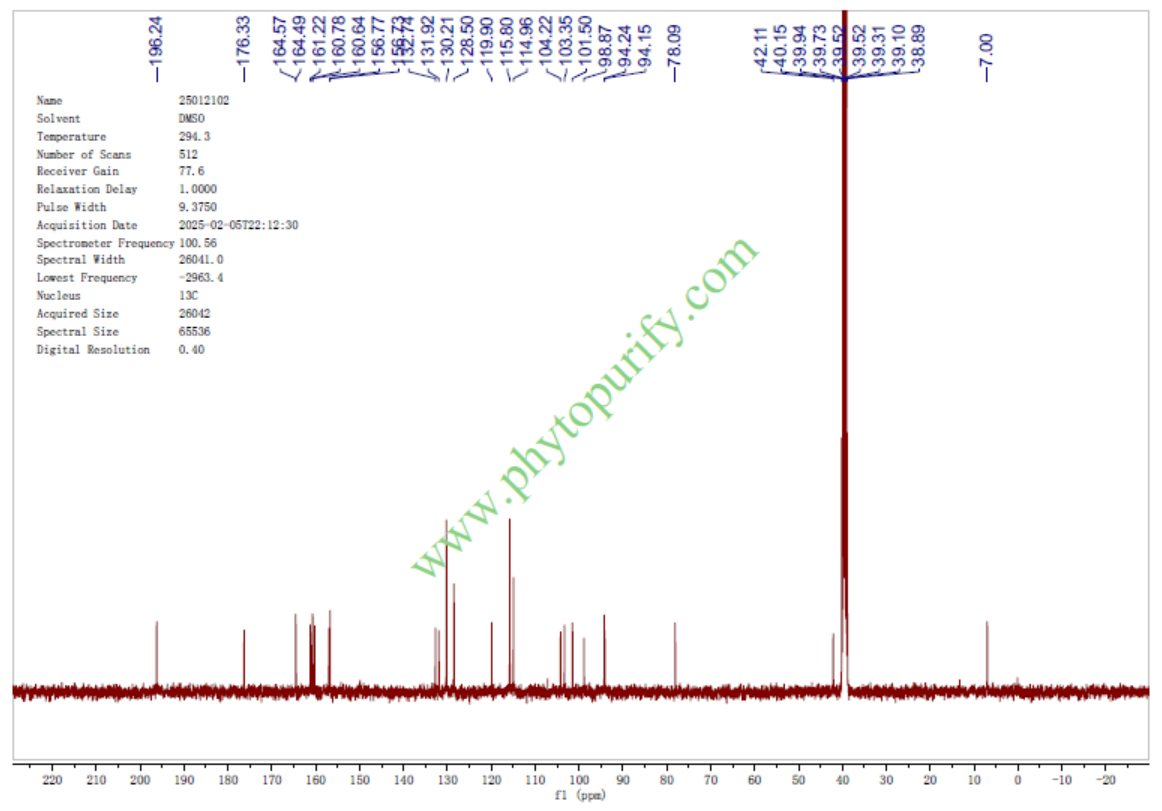
Identification Method: Mass, NMR
Packing: Brown vial or HDPE plastic bottle
Storage: Store in a well closed container, protected from air and light. Put into refrigerate or freeze for long term storage.
Whenever possible, you should prepare and use solutions on the same day. However, if you need to make up stock solutions in advance, we recommend that you store the solution as aliquots in tightly sealed vials at -20℃. Generally, these will be useable for up to two weeks.
The product could be supplied from milligrams to grams
Inquire for bulk scale.
For Reference Standard and R&D, Not for Human Use Directly.
NMR of (2"S)-6"-Methyl-2",3"-Dihydrodelicaflavone
HPLC of (2"S)-6"-Methyl-2",3"-Dihydrodelicaflavone
Storage conditions:Short-term storage at 2~8℃, long-term storage at -20 ~ -80℃
166.8900
4.0670
3.4045
.0026
2.0053
8.5288
Low
93.2770
3.4814
No
No
Yes
No
Yes
No
0.6
Yes
No
Yes
No
Natural products, as an important source of drug discovery, play an irreplaceable role in the long history of human fight against diseases. Flavonoids, as one of the largest and structurally diverse families of secondary metabolites in plants, have attracted much attention due to their extensive biological activities. In recent years, with the advancement of separation and purification technology and the innovation of structural identification methods, more and more new flavonoids have been discovered and reported from nature. Among them, flavonoids have become a hot topic in natural product chemistry and pharmacology research due to their unique dimer structure and significant pharmacological activity.
(2 "S) -6" - methyl-2 ", 3" - Dihydrodulicaflavanone (MDDF) is a novel flavonoid compound isolated and identified from traditional medicinal plants in recent years. This compound has unique C-6 "methyl substitution and 2", 3 "- dihydro structural features. Its molecular skeleton is composed of two flavonoid units connected in a specific way, giving it stereochemical and electronic distribution characteristics that distinguish it from ordinary flavonoids. Preliminary studies have shown that MDDF exhibits significant biological activity in anti-inflammatory and antioxidant aspects, especially in the treatment of mastitis related diseases, demonstrating potential application value.
Mastitis is an inflammatory disease of mammalian breast tissue, which has important clinical significance in both human medicine and veterinary medicine. Human mastitis is common in lactating women and seriously affects maternal and infant health; In animal husbandry, mastitis in cows is one of the main diseases that cause huge economic losses. At present, clinical treatment mainly relies on antibiotics and anti-inflammatory drugs, but the increasingly severe problem of antibiotic resistance and the side effects of traditional anti-inflammatory drugs make it urgent to search for new, safe, and effective natural anti-inflammatory active molecules. The discovery of MDDF and its regulatory effect on mastitis related targets provide new lead compounds and research directions for the development of novel anti mastitis drugs.
This review aims to systematically summarize the chemical structural characteristics, plant sources, extraction and isolation methods, pharmacological activities, mechanisms of action, drug evaluation, and clinical application prospects of MDDF, in order to provide comprehensive academic references for the in-depth research and development of this natural product.
The chemical name of MDDF is (2 ″ S) -6 ″ - methyl-2 ″, 3 ″ - dihydrodikacin, with a molecular formula of C ∝₀ H ₂₆ O ₁₁ and a molecular weight of 554.5070. From the perspective of structural taxonomy, MDDF belongs to the class of flavonoids, specifically a dimer formed by two flavonoid mother nuclei connected by C-C bonds. The core structural feature of this compound is its saturated dihydro structure at the 2 "and 3" positions of the C ring, which is significantly different from common flavonoids with C2=C3 double bonds. In addition, the methyl substitution at the C-6 "position is another important structural feature of the compound, and this methylation modification may have a significant impact on its biological activity and metabolic stability.
From the perspective of stereochemistry, the 2 "carbon atom of MDDF has a chiral center, and its absolute configuration is determined to be S-type. The determination of this stereoconfiguration is crucial for understanding the interaction mode between the compound and biological targets. The biological activity of flavonoids is often closely related to their spatial configuration, and enantiomers with different configurations may exhibit vastly different pharmacological activities. The (2 ″ S) configuration of MDDF may endow it with specific molecular recognition abilities, enabling it to selectively bind to key proteins in inflammation related signaling pathways.
According to the analysis of pharmacological parameters, the lipid water partition coefficient (LogP) of MDDF is 4.0670, indicating that the compound has strong lipid solubility. A higher LogP value is beneficial for compounds to penetrate biofilms, but it may also lead to poor water solubility. In fact, the water solubility of MDDF is only 0.0026 mg/mL, which suggests that this compound may face challenges in terms of in vivo absorption and formulation development. The topological polar surface area (TPSA) is 166.8900 Å ², which is higher than the recommended upper limit of 140 Å ² for oral medications, suggesting that the intestinal permeability of MDDF may be limited and difficult to pass through the blood-brain barrier (blood-brain barrier permeability is evaluated as "low").
In terms of safety evaluation, the hERG inhibition test result was negative, indicating that MDDF does not have a significant risk of cardiac toxicity, which is an important advantage of it as a candidate drug. The Ames test result is 0.6, indicating that the compound exhibits weak positive or uncertain mutagenicity in bacterial reverse mutation assays, and further confirmation through in vitro and in vivo genetic toxicity tests is needed. Overall, MDDF has typical natural product characteristics: complex structure, significant activity, but poor physicochemical properties. This is not only its advantage as a lead compound (novel structure, unique activity), but also an obstacle that needs to be overcome in its drug development process.
MDDF was initially isolated from traditional medicinal plants, and its plant origin is closely related to the discovery of "delta flavonoids". Delica flavonoids are mainly found in certain plant genera, especially in plants of the Guttiferae or Hypericaceae families. These plants are often used in traditional medical systems to treat inflammatory diseases, infections, and injuries, and their diverse chemical composition provides a rich natural product library for discovering new active molecules.
Specifically, MDDF may originate from a medicinal plant with traditional anti-inflammatory properties, such as Garcinia or Hypericum plants. These plants have a long history of application in traditional medicine in Asia, Africa, and South America. For example, plants of the genus Tenghuang are used in traditional Chinese medicine and Indian Ayurvedic medicine to treat inflammation, infections, and digestive system diseases; The plants of the Primula genus, represented by St. John's wort, have antidepressant and anti-inflammatory activities. MDDF, as a trace component in these plants, usually has low levels and requires modern isolation techniques to obtain sufficient research quantities.
The extraction of MDDF usually uses organic solvent extraction method, taking advantage of its strong lipid solubility. Common extraction solvents include methanol, ethanol, acetone, or their aqueous solutions. In order to improve extraction efficiency, modern extraction techniques such as ultrasound assisted extraction, microwave-assisted extraction, or pressurized solvent extraction can be used. The extraction process usually includes the following steps: after the plant material is dried and crushed, it is soaked or percolated with appropriate concentrations of ethanol or methanol for extraction, and the extract is concentrated under reduced pressure to obtain the crude extract.
The preliminary separation of crude extracts is often achieved through liquid-liquid extraction, using solvents of different polarities (such as petroleum ether, ethyl acetate, n-butanol, etc.) for staged extraction. MDDF is usually enriched in the ethyl acetate extraction site due to its equipolarity. Further separation and purification need to combine a variety of chromatographic technologies, including silica gel column chromatography, Sephadex LH-20 gel column chromatography, ODS reverse phase column chromatography and preparative high-performance liquid chromatography (prep HPLC).
During the separation process, the structural identification of MDDF relies on modern spectroscopic techniques, including nuclear magnetic resonance spectroscopy (¹ H-NMR, ¹ ³ C-NMR, HMBC, HSQC, NOESY, etc.), high-resolution mass spectrometry (HR-ESI-MS), ultraviolet spectroscopy (UV), and infrared spectroscopy (IR). Among them, circular dichroism (CD) and X-ray single crystal diffraction techniques are crucial for determining the absolute configuration (2 ″ S) of MDDF. Due to the usually low content of MDDF in plants (possibly only 0.001% -0.01% of dry weight), obtaining milligram level pure products from a large amount of plant materials requires a lot of time and resources, which is also one of the main bottlenecks limiting its in-depth research.
The most notable pharmacological activity of MDDF is its anti-inflammatory effect, especially its protective effect in mastitis models. The pathophysiological process of mastitis involves the inflammatory response of mammary epithelial cells, neutrophil infiltration, oxidative stress damage, and dysregulation of cytokine networks. Research has shown that MDDF can significantly inhibit lipopolysaccharide (LPS) - induced inflammatory response in breast epithelial cells, reducing the production and release of pro-inflammatory cytokines.
In vitro cell models, MDDF treatment significantly reduced the mRNA expression levels and protein secretion of tumor necrosis factor (TNF), interleukin-6 (IL-6), and interleukin-1 β (IL-1 β) in LPS stimulated breast epithelial cells. Meanwhile, MDDF can also inhibit the expression of cyclooxygenase-2 (PTGS2/COX-2), thereby reducing the synthesis of inflammatory mediators such as prostaglandin E ₂ (PGE ₂). These effects are concentration dependent and operate within a non-toxic concentration range, indicating that MDDF has direct anti-inflammatory activity rather than indirect effects caused by cytotoxicity.
In animal models, MDDF has shown a protective effect on mouse or rat mastitis models. An acute mastitis model was established by injecting LPS into the mammary duct. Administration of MDDF can alleviate pathological damage to breast tissue, including acinar structure destruction, inflammatory cell infiltration, and interstitial edema. Both histological scoring and myeloperoxidase (MPO) activity assay confirmed that MDDF can inhibit neutrophil infiltration and activation. In addition, MDDF can also reduce the levels of TNF, IL-6, and IL-1 β in breast tissue, and inhibit the expression of COX-2 and inducible nitric oxide synthase (iNOS).
Oxidative stress plays an important role in the pathogenesis of mastitis, as excessive reactive oxygen species (ROS) can directly damage breast epithelial cells and activate inflammatory signaling pathways. The dual flavonoid structure of MDDF endows it with excellent free radical scavenging ability. In vitro DPPH radical scavenging assay, ABTS cation radical scavenging assay, and iron ion reducing ability (FRAP) assay all showed that MDDF has moderate to strong antioxidant activity.
At the cellular level, MDDF can reduce LPS induced ROS levels in breast epithelial cells and increase the activity of antioxidant enzymes such as superoxide dismutase (SOD), glutathione peroxidase (GPx), and catalase (CAT). Meanwhile, MDDF can also increase the content of reduced glutathione (GSH) and enhance the antioxidant defense ability of cells. These antioxidant effects may partially explain the protective role of MDDF in mastitis models, as there is a vicious cycle of mutual promotion between oxidative stress and inflammatory response.
In addition to anti-inflammatory and antioxidant activities, MDDF may also have other pharmacological effects. Based on the known activities of flavonoids, MDDF may exhibit antibacterial, antiviral, anti-tumor, or immunomodulatory activities. However, current research on MDDF in these areas is not sufficient and further experimental verification is needed. It is worth noting that the regulatory effect of MDDF on mastitis related targets suggests that it may also have therapeutic potential for other inflammatory diseases such as enteritis, arthritis, dermatitis, etc. This provides direction for future research.
The anti-inflammatory effect of MDDF involves the regulation of multiple molecular targets. According to existing research, the main targets of MDDF include TNF, PTGS2 (COX-2), NFKB1 (NF - κ B p50 subunit), IL6, and IL1B. These targets are located at key nodes in the inflammatory signaling network, collectively forming the molecular basis of the anti-inflammatory effect of MDDF.
TNF is one of the core initiating factors of inflammatory response, secreted by activated macrophages and breast epithelial cells. MDDF can inhibit the gene transcription and protein expression of TNF, thereby blocking the downstream inflammatory cascade mediated by TNF. PTGS2 (COX-2) is a key enzyme in prostaglandin synthesis, and its expression is significantly upregulated in inflammatory tissues. The inhibitory effect of MDDF on COX-2 helps to reduce the production of inflammatory prostaglandins, alleviate pain and swelling. IL-6 and IL-1 β are important pro-inflammatory cytokines involved in acute phase response and maintenance of chronic inflammation. The inhibition of these two cytokines by MDDF can effectively reduce the intensity and duration of inflammatory responses.
One of the core mechanisms of the anti-inflammatory effect of MDDF is through the regulation of the nuclear factor kappa B (NF - κ B) signaling pathway. NF - κ B is the main transcription factor in inflammatory response, which binds to I κ B protein and exists in the cytoplasm at rest. When cells are stimulated by LPS, TNF, or IL-1 β, I κ B kinase (IKK) is activated, leading to phosphorylation and degradation of I κ B, releasing NF - κ B into the nucleus and initiating transcription of pro-inflammatory genes.
Research has shown that MDDF can inhibit LPS induced phosphorylation and degradation of I κ B α, thereby preventing nuclear translocation of NF - κ B. Specifically, MDDF may maintain the inactive state of NF - κ B in the cytoplasm by inhibiting the activity of IKK complexes, reducing the phosphorylation of I κ B α. In addition, MDDF may directly interact with the DNA binding domain of NF - κ B, reducing its binding ability to target gene promoters. By blocking the NF - κ B signaling pathway, MDDF can simultaneously inhibit the expression of multiple pro-inflammatory genes (including TNF, IL6, IL1B, and PTGS2), exerting a broad-spectrum anti-inflammatory effect.
In addition to the NF - κ B pathway, MDDF may also regulate other inflammation related signaling pathways. The mitogen activated protein kinase (MAPK) pathway, including p38 MAPK, JNK, and ERK, also plays an important role in inflammatory responses. Preliminary studies suggest that MDDF may inhibit the phosphorylation of p38 MAPK and JNK, thereby reducing the production of inflammatory mediators. In addition, MDDF may also enhance the expression of antioxidant enzymes and exert dual antioxidant and anti-inflammatory effects by activating the nuclear factor E2 related factor 2 (Nrf2) pathway.
It is worth noting that the simultaneous regulation of multiple targets by MDDF reflects the characteristic of natural polyphenolic compounds' multi-target and multi pathway effects. Although this mode of action increases the complexity of mechanism research, it also endows MDDF with potential advantages in treating complex inflammatory diseases such as mastitis, as blocking a single target often makes it difficult to fully control the inflammatory process involving multiple factors.
Based on Lipinski's "Five Rules" and Veber's Rules, the pharmacological properties of MDDF need to be comprehensively evaluated. The molecular weight of MDDF is 554.5070, exceeding the threshold of 500 Da; LogP is 4.0670, approaching the upper limit of 5; The number of hydrogen bond donors (phenolic hydroxyl groups) and hydrogen bond acceptors (oxygen atoms) are both relatively high, which may exceed the regulatory limits. The TPSA is 166.8900 Å ², which is higher than the recommended value of 140 Å ². These parameters indicate that MDDF does not fully meet the drug like standards of traditional oral medications and is a natural product that goes beyond the rules.
However, natural products often have structural characteristics different from synthetic compounds, and many successfully marketed drugs (such as certain macrolide antibiotics and naturally derived anticancer drugs) also exceed the limitations of Lipinski's rules. Therefore, the drug like evaluation of MDDF needs to be comprehensively judged based on its specific pharmacological activity and administration route. For the treatment of mastitis, local administration (such as breast perfusion) may be a more appropriate method of administration, which can avoid the limitations of low oral bioavailability.
The pharmacokinetic study of MDDF is still in its preliminary stage. Based on its physicochemical properties, it can be predicted that this compound has the following pharmacokinetic characteristics: poor oral absorption (low water solubility, high molecular weight), high plasma protein binding rate (strong lipid solubility), large distribution volume (high tissue affinity), metabolism mainly involving glucuronidation and sulfation (abundant phenolic hydroxyl groups), and excretion may be mainly in bile and feces.
The evaluation of blood-brain barrier penetration is' low ', which may be a favorable feature for the treatment of mastitis as it can reduce central nervous system side effects. HERG inhibition negativity reduces the risk of cardiac toxicity. The Ames test result is 0.6, indicating the need for further evaluation of genetic toxicity, including in vivo micronucleus test and chromosome aberration test.
To address the issue of poor water solubility of MDDF, various formulation techniques can be used to improve its solubility and bioavailability. Nanoformulation technology, such as liposomes, nanoemulsions, solid lipid nanoparticles, and polymer nanoparticles, can effectively improve the dispersibility and bioavailability of poorly soluble drugs. For local treatment of mastitis, it may be more feasible to develop breast perfusion agent or gel of MDDF, which can directly deliver drugs to the focus, increase local drug concentration, and reduce systemic exposure and side effects.
In addition, prodrug design is also an effective strategy for improving the pharmacokinetic properties of MDDF. By introducing phosphate ester, amino acid ester, or sugar group groups on the phenolic hydroxyl group, water solubility can be temporarily improved, and the active ingredient can be released in vivo through enzymatic interpretation. Structural modification can also improve metabolic stability and prolong half-life.
The application prospect of MDDF in the treatment of mastitis is the most direct. Mastitis in dairy cows is a major challenge facing the livestock industry, causing billions of dollars in economic losses every year. Currently, antibiotics are commonly used for clinical treatment, but the problem of antibiotic residue and resistance is becoming increasingly serious. As a natural anti-inflammatory active molecule, MDDF has the following advantages: firstly, its mechanism of action is novel and it is not easy to develop drug resistance; Secondly, multi-target regulation with comprehensive anti-inflammatory effects; The third is derived from natural products, which have relatively high safety. Therefore, MDDF has the potential to be developed as a novel veterinary or human drug for the treatment of mastitis.
For human mastitis, especially lactational mastitis, the non antibiotic properties of MDDF are particularly important. The treatment of lactational mastitis needs to balance the safety of both mother and baby, and the use of antibiotics may affect breastfeeding. MDDF, as a natural product, may become a safer alternative if it can pass safety evaluations.
Based on the anti-inflammatory and antioxidant activities of MDDF, its application scope may be extended to other inflammatory diseases. For example, inflammatory bowel disease (IBD), rheumatoid arthritis, chronic obstructive pulmonary disease (COPD), and neuroinflammation all involve abnormal activation of NF - κ B and COX-2. The multi-target mode of action of MDDF may have therapeutic potential in these diseases. In addition, the antioxidant activity of MDDF also suggests that it may be used in oxidative stress related diseases, such as cardiovascular diseases, diabetes complications and neurodegenerative diseases.
Although MDDF exhibits good pharmacological activity, it still faces many challenges from discovery to clinical application. Firstly, the limitations of plant sources result in limited supply of MDDF, making it difficult to meet the demands of large-scale research and development. Therefore, establishing efficient chemical synthesis or biosynthetic methods is crucial. The research on total synthesis needs to address the issues of constructing a dual flavonoid skeleton and controlling stereoselectivity; The analysis of biosynthetic pathways may be achieved through metabolic engineering for heterologous production.
Secondly, the mechanism of action of MDDF needs further clarification. Although it is known to regulate the NF - κ B pathway and multiple inflammatory targets, the specific molecular binding patterns, identification of direct target proteins, and interactions with other signaling pathways still require systematic research. Modern chemical biology techniques, such as Drug Affinity Reaction Target Stability (DARTS), Thermal Transfer Analysis (CETSA), and Photoaffinity Labeling, can be used to identify the direct target of MDDF.
Thirdly, systematic pharmacokinetic and toxicological studies are prerequisites for the preclinical development of MDDF. It is necessary to establish sensitive biological sample analysis methods (such as LC-MS/MS) to conduct absorption, distribution, metabolism, and excretion studies in animals, as well as acute and chronic toxicity evaluations. The weak positive result of Ames test needs further confirmation and evaluation of its in vivo genetic toxicity risk.
Finally, the structural optimization of MDDF is also an important research direction. By studying the structure-activity relationship, derivatives with higher activity and better physicochemical properties can be designed and synthesized. For example, while maintaining the core structure of flavonoids, introducing hydrophilic groups can improve water solubility, or reducing molecular weight through molecular simplification can improve drug properties.
(2 ″ S) -6 ″ - methyl-2 ″, 3 ″ - dihydrodicarbonamide flavonoids, as a novel natural product of flavonoids, have attracted the attention of researchers due to their unique chemical structure and significant anti-inflammatory activity. This compound inhibits the expression of key inflammatory targets such as TNF, IL-6, IL-1 β, and COX-2 by regulating the NF - κ B signaling pathway, demonstrating good protective effects in a mastitis model. Its multi-target and multi pathway characteristics meet the therapeutic needs of complex inflammatory diseases, while the lower risk of hERG inhibition and acceptable genetic toxicity preliminary evaluation results provide preliminary guarantees for its safety.
However, the drug development of MDDF still faces challenges such as poor water solubility, low oral bioavailability, and limited plant sources. Future research should focus on establishing efficient synthetic or biosynthetic methods to address supply issues; Thoroughly elucidate its molecular mechanism of action and direct target proteins; Conduct systematic pharmacokinetic and toxicological evaluations; Improving drug properties through formulation techniques or structural modifications; And expand its application potential in other inflammatory diseases.
Natural products have always been an important source of drug discovery, and the discovery of MDDF once again proves that there are abundant bioactive molecules in nature. With the continuous development of modern analytical techniques, chemical biology, and medicinal chemistry, we have reason to believe that MDDF and its derivatives have the potential to become new candidate drugs for the treatment of mastitis and other inflammatory diseases in the future, contributing to human health and the development of animal husbandry. The road from laboratory discovery to clinical application is long, but every solid step of research is an important cornerstone towards success.
