| Catalog No | Package | Original Price | Price | Inventory | Quantity | Operating |
|---|---|---|---|---|---|---|
| BP2421-2mg | 2mg | $550.00 | Sign in |
|


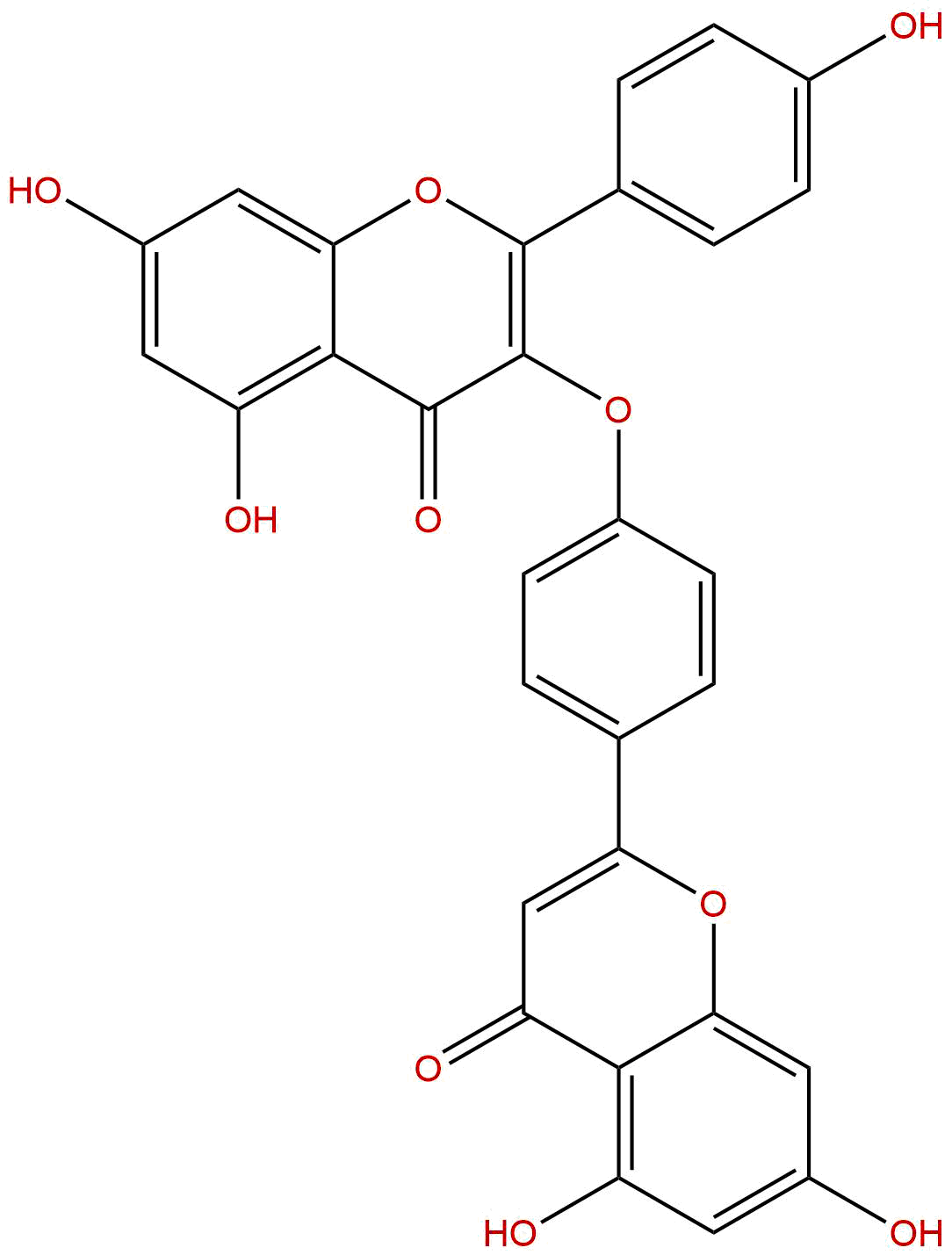
Product name: Delicaflavone
Synonym name:
Catalogue No.: BP2421
Cas No.: 343569-15-3
Formula: C30H18O10
Mol Weight: 538.464
Botanical Source: Selaginellae herba
Type of Compound: Flavonoids
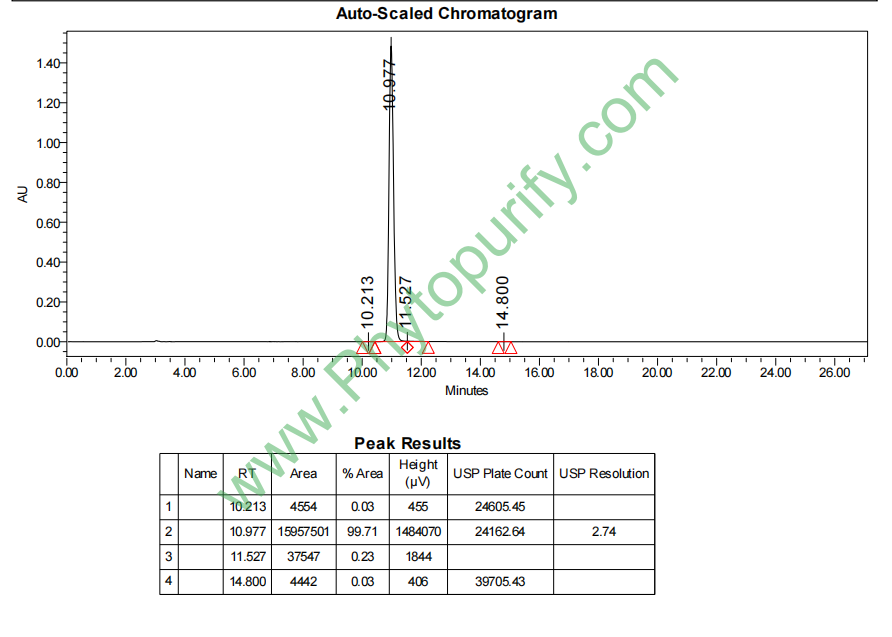
Purity: 95%~99%
Analysis Method: HPLC-DAD or/and HPLC-ELSD
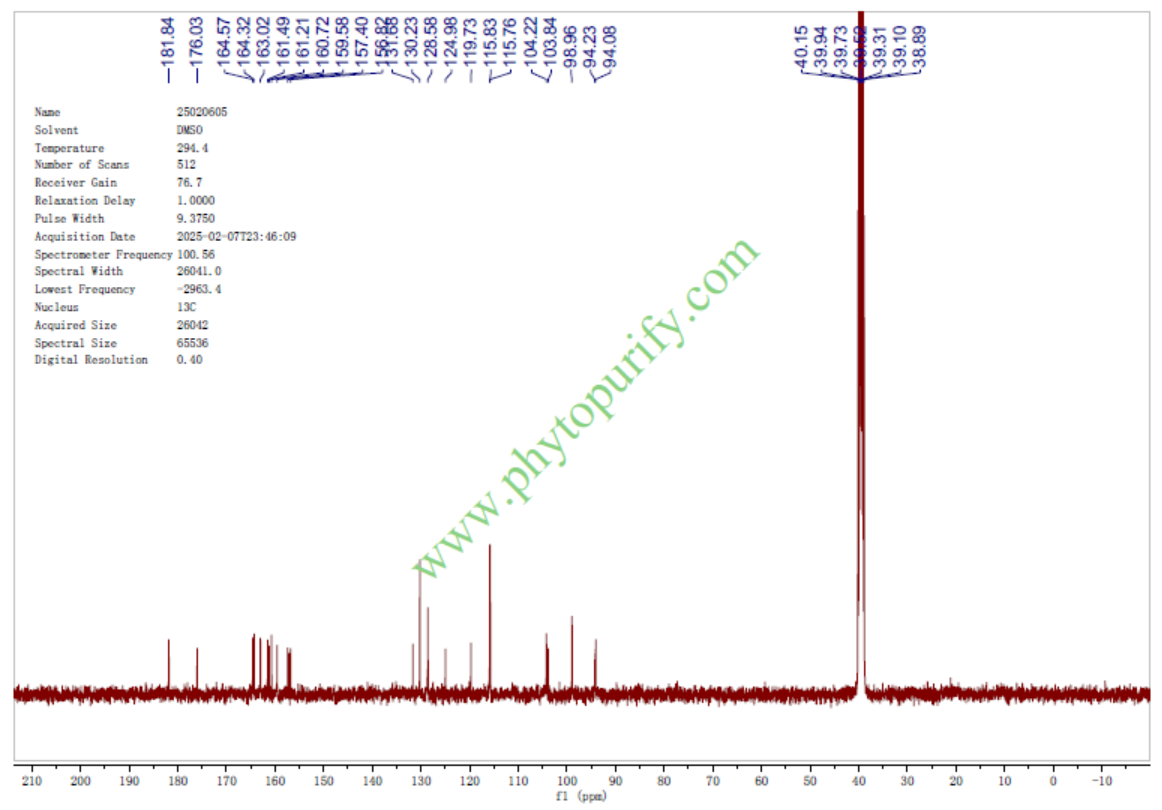
Identification Method: Mass, NMR
Packing: Brown vial or HDPE plastic bottle
Storage: Store in a well closed container, protected from air and light. Put into refrigerate or freeze for long term storage.
Whenever possible, you should prepare and use solutions on the same day. However, if you need to make up stock solutions in advance, we recommend that you store the solution as aliquots in tightly sealed vials at -20℃. Generally, these will be useable for up to two weeks.
The product could be supplied from milligrams to grams
Inquire for bulk scale.
For Reference Standard and R&D, Not for Human Use Directly.
NMR of Delicaflavone
HPLC of Delicaflavone
Storage conditions:Short-term storage at 2~8℃, long-term storage at -20 ~ -80℃
170.8000
3.7891
3.1917
.0005
1.6405
3.7095
Low
90.8512
2.9069
Yes
No
Yes
No
Yes
No
0.6
Yes
No
Yes
No
Natural products, as an important source of drug discovery, play an irreplaceable role in the long history of human fight against diseases. Flavonoids, as a widely present class of secondary metabolites in nature, have attracted much attention due to their structural diversity and extensive biological activity. Among numerous flavonoids, biflavonoids have become a notable subclass due to their unique dimer structure and enhanced biological effects. Delicavalone, as a unique chemical structure of flavonoids, has shown remarkable potential in the field of natural product pharmacology, especially in anti-tumor research, in recent years.
Dilicaflavanone (CAS number: 343569-15-3) was originally from the genus Juniperus(Selaginella)Isolation and identification in plants. Selaginella plants, commonly known as "resurrection grasses", are renowned for their strong drought resistance and recovery abilities. They have a long history of application in traditional medicine and are commonly used to treat various inflammations, tumors, and metabolic diseases. The discovery of Dirika flavonoids provides a new chemical and pharmacological basis for explaining these traditional therapeutic effects. Its molecular structure is composed of two flavonoid units connected by specific carbon carbon bonds, which endows it with unique physicochemical properties and biological activity distinct from monomeric flavonoids.
In recent years, there has been an exponential growth in research on the flavonoids of Dilika, especially in terms of their anti-tumor activity. The research focus is highly focused on triple negative breast cancer (TNBC). TNBC is a highly invasive subtype of breast cancer. Due to its lack of expression of estrogen receptor (ER), progesterone receptor (PR) and human epidermal growth factor receptor 2 (HER2), it is insensitive to endocrine therapy and targeted HER2 therapy, with extremely limited clinical treatment methods and poor prognosis. Dilicaflavanone exhibits significant proliferation inhibition, apoptosis induction, and metastasis inhibition in various TNBC cell lines and animal models. Its mechanism of action involves multiple key signaling pathways and targets, including MCL1, BCL2, NOTCH1, STAT3, ABCB1, NFE2L2, HIF1A, RELA, TOP2A, and MAPK1. This multi-target and multi pathway characteristic makes it an attractive lead compound for developing novel therapeutic drugs for complex diseases such as TNBC.
This review aims to comprehensively and systematically review the current research status of Dirika flavonoids. The article will start from its chemical structure and physicochemical properties, trace its plant origin and extraction methods, deeply explore its pharmacological activity, especially its anti TNBC activity, and analyze in detail its complex molecular mechanism of action. On this basis, combined with its pharmacological parameters, an objective evaluation and prospect of its pharmacokinetic characteristics and clinical application prospects are conducted, in order to provide valuable references for the subsequent research and development of this potential natural product.
Dilika flavonoids belong to the class of flavonoids, and their chemical structure is the basis of their biological functions. Structurally, it is a dimer formed by the polymerization of two apigenin units through a unique C-3 ′ - C-6 ′ bond. Specifically, the C-3 'site of one apigenin unit (Unit A) is directly connected to the C-6' site of another apigenin unit (Unit B) through a carbon carbon bond. This type of connection is relatively rare in flavonoids, unlike the common C-3 ′ - C-8 ′ connection (such as Amentoflavone) or C-3-C-8 connection (such as Ginkgo biloba). This unique connection method determines its specific spatial configuration and electron distribution, which in turn affects its interaction with biological targets.
The molecular formula of Dilicaflavanone is C ∝₀ H ₁₈ O ₁₀, with a molecular weight of 538.4640 Da. Its structure contains multiple phenolic hydroxyl groups (- OH), which are not only the active sites for its antioxidant function, but also the key groups for forming hydrogen bonds with biological macromolecules such as proteins and nucleic acids. The abundant conjugated systems (benzene ring, pyran ring, carbonyl group) in the molecule give it characteristic absorption in the UV visible region, which is commonly used for its qualitative and quantitative analysis.
In terms of physical and chemical properties, Delica flavonoids exhibit typical flavonoid characteristics, but also have specificity due to their dimeric structure. Its lipid water partition coefficient (LogP) is 3.7891, indicating that it has a certain lipophilicity, which is beneficial for it to penetrate the cell membrane and enter the cell to exert its function. However, its topologically polar surface area (TPSA) is as high as 170.8000 Å ², mainly attributed to the numerous phenolic hydroxyl and carbonyl groups in its molecules. A high TPSA value usually indicates poor water solubility, which is consistent with the calculated water solubility value (0.0005 mg/mL). The extremely low water solubility is one of the main challenges faced by the development of Dilicaflavanone as an oral drug, as it can seriously affect its dissolution and absorption in the gastrointestinal tract.
In addition, computational pharmacology evaluation showed that the blood-brain barrier (BBB) penetration ability of Dilicaflavanone is relatively low, indicating its limited potential in the treatment of central nervous system diseases, but it may also mean a lower risk of neurological side effects from peripheral medication. The prediction result of hERG inhibition is' no ', indicating a low risk of inducing QT interval prolongation and arrhythmia in the heart, which is a positive drug signal. The Ames test result is 0.6, indicating potential genetic toxicity, but further experimental verification is needed. Overall, Dilicaflavanone has a good backbone as a lead compound, but its poor water solubility and potential genetic toxicity are key issues that need to be addressed in subsequent drug chemical modification and development.
Dilicaflavanone is a naturally occurring dual flavonoid, and its discovery and main sources are concentrated in the genus Selaginella(Selaginella)Plants. The Selaginella genus is the largest genus of ferns, with over 700 species worldwide, widely distributed in tropical and subtropical regions. In China, the genus Selaginella is rich in plant resources, with various plants such as Selaginella(S. tamariscina)Cushioned Cypress(S. pulvinata)Jiangnan Curly Cypress(S. moellendorffii)All of them are used as herbs in folk medicine, which have the effects of promoting blood circulation, unblocking meridians, reducing inflammation, and relieving pain. Dilika flavonoids were originally derived from Selaginella doederleinii Separated from the deep green cypress, this is also the origin of its name "Delicavalone". Subsequently, in S. tamariscina、S. moellendorffii The presence of this compound has also been detected in various species of Juniperus, but its content is usually low and varies depending on factors such as plant species, place of origin, and harvest season.
Extracting and purifying flavonoids from plants of the Selaginella genus is a prerequisite for conducting their biological research. Due to its low water solubility and moderate lipophilicity, the extraction process usually uses organic solvent extraction. Common solvents include methanol, ethanol, or their aqueous solutions. In order to improve extraction efficiency, modern extraction techniques such as ultrasound assisted extraction, microwave-assisted extraction, and pressurized solvent extraction have also been widely used. The typical extraction process is as follows: after crushing the dried whole plant of Selaginella, it is repeatedly soaked or percolated with a certain concentration of ethanol (such as 70% -95%) at room temperature or heating conditions for extraction. Combine the extracts and concentrate under reduced pressure to obtain the total extract.
Due to the relatively low content of DiLiKa flavonoids in the total extract and the interference of a large number of structurally similar other flavonoids (such as Taxus fortunei flavonoids, Roberts flavonoids, etc.) and monomeric flavonoids, its separation and purification require the combination of multiple chromatographic techniques. Classic separation strategies include:
1. Liquid-liquid extraction Disperse the total extract in water and extract it sequentially with solvents of different polarities such as petroleum ether, ethyl acetate, n-butanol, etc. Dilika flavonoids are usually enriched in the ethyl acetate extraction layer.
2. column chromatography The ethyl acetate extract was subjected to silica gel column chromatography, and gradient elution was performed using solvent systems such as chloroform methanol or dichloromethane methanol to preliminarily separate the fraction containing Dilicaflavanone.
3. Gel column chromatography: Use Sephadex LH-20 gel column to elute with methanol or methanol water system, further remove impurities and enrich target compounds according to the difference of molecular size and adsorption.
4. High performance liquid chromatography As the final purification step, reverse phase C18 preparative high-performance liquid chromatography (Prep HPLC) was used, with acetonitrile water or methanol water (often with a small amount of formic acid or acetic acid added) as the mobile phase, and isocratic or gradient elution was performed to obtain high-purity Dilicaflavanone monomers.
The entire extraction and purification process takes a long time, is costly, and the yield is usually very low (often less than 0.1% of the plant dry weight). This greatly limits the large-scale supply and in-depth research of Dirika flavonoids. Therefore, the development of efficient chemical total synthesis or semi synthesis methods, as well as the use of biotechnology (such as plant cell culture, genetic engineering) to produce dailika flavonoids, will be the key direction to solve its source bottleneck.
The pharmacological activity of dirika flavone mainly focuses on its anti-tumor effect, especially its activity against triple negative breast cancer (TNBC). In addition, the study also revealed its potential in anti-inflammatory, antioxidant, and neuroprotective aspects.
TNBC is a core area of research in the field of flavonoids in Dilika. A large number of in vitro cell experiments and in vivo animal model studies have confirmed its strong anti TNBC activity.
In addition to its anti TNBC activity, Delica flavonoids also exhibit other beneficial biological effects.
* anti-inflammatory activity Research has shown that Dilicaflavanone can inhibit the production of nitric oxide (NO) and prostaglandin E2 (PGE2) in macrophages induced by lipopolysaccharide (LPS), and downregulate the expression of pro-inflammatory cytokines such as TNF - α, IL-6, IL-1 β. The mechanism may be related to the inhibition of the activation of the NF - κ B signaling pathway.
* antioxidant activity As a polyphenolic compound, Delica flavonoids have direct free radical scavenging ability. It can enhance the endogenous antioxidant defense ability of cells by activating the nuclear factor E2 related factor 2 (NFE2L2/Nrf2) signaling pathway, upregulating the expression of a series of antioxidant enzymes such as heme oxygenase-1 HO-1 and quinone oxidoreductase 1 NQO1.
* Neuroprotective effect Preliminary research suggests that Dirika flavonoids may have a protective effect on neurodegenerative diseases. For example, it can protect neurons from toxic damage induced by beta amyloid (A β) by inhibiting oxidative stress and neuroinflammation.
The pharmacological activity of Delica flavonoids, especially their anti TNBC effect, is not derived from the regulation of a single target, but is achieved through acting on a complex signaling network. This multi-target mode of action is its advantage, as it can simultaneously interfere with multiple stages of tumor cell survival, proliferation, metastasis, and drug resistance. According to existing research, its key molecular targets and signaling pathways are as follows:
Regulating apoptosis related proteins (MCL1, BCL2)This is one of the core mechanisms by which DiLiKa flavonoids induce apoptosis. MCL1 and BCL2 are key anti apoptotic proteins in the BCL2 family, highly expressed in various cancers, and closely related to tumor occurrence, development, and chemotherapy resistance. Dilicaflavanone can downregulate the expression of MCL1 and BCL2 proteins at transcriptional and translational levels, thereby breaking the balance between pro apoptotic and anti apoptotic proteins in cells and making it easier for cells to enter the apoptotic program. This is an important foundation for overcoming the resistance of certain tumor cells to conventional chemotherapy drugs.
Inhibition of NOTCH1 signaling pathway The NOTCH signaling pathway plays a crucial role in maintaining stem cell characteristics, promoting cell proliferation, and determining cell fate. The abnormally activated NOTCH1 signal is an important driving factor for invasive cancers such as TNBC. Delica flavonoids have been found to inhibit the cleavage and activation of NOTCH1 receptors, thereby downregulating the expression of downstream target genes (such as HES1, HEY1) and inhibiting the stemness and proliferation ability of tumor cells.
Inhibition of STAT3 signaling pathway Signal transduction and transcription activator 3 (STAT3) is a key oncogenic transcription factor, and sustained activation of STAT3 can promote cell proliferation, inhibit apoptosis, promote angiogenesis, and immune escape. Dilicaflavanone can inhibit the phosphorylation of STAT3 (Tyr705 site), prevent its dimerization and incorporation into the nucleus, thereby suppressing its transcriptional activity. The downstream target genes of STAT3, including Cyclin D1, Survivin, Vascular Endothelial Growth Factor (VEGF), and MCL1, are all inhibited in their expression by Dilicaflavanone.
Reversal of multidrug resistance (ABCB1)ABCB1 (also known as P-glycoprotein, P-gp) is an ATP binding cassette transporter that can pump multiple chemotherapy drugs out of the cell and is one of the main mechanisms of multidrug resistance (MDR). Dilika flavonoids have been found to inhibit the transport function of ABCB1, increase the accumulation of chemotherapy drugs in drug-resistant tumor cells, and thus reverse MDR. This provides a new strategy for improving chemotherapy efficacy through combination therapy.
Regulating oxidative stress and hypoxia signaling (NFE2L2, HIF1A)The tumor microenvironment is often accompanied by oxidative stress and hypoxia.
Inhibition of NF - κ B pathway (RELA)RELA (p65) is a subunit of the NF - κ B transcription factor complex. The NF - κ B pathway is a key bridge between inflammation and cancer, regulating a large number of genes related to inflammation, proliferation, anti apoptosis, and metastasis. Dilika flavonoids can inhibit the phosphorylation and degradation of I κ B α, thereby preventing the nuclear translocation of NF - κ B (p65), suppressing its transcriptional activity, and exerting anti-inflammatory and anti-tumor effects.
Inhibition of Topoisomerase II α (TOP2A)TOP2A is an enzyme essential for DNA replication and transcription, and is also a target of many chemotherapy drugs such as doxorubicin and etoposide. Dilika flavonoids have been found to inhibit the activity of TOP2A, leading to DNA damage and thus suppressing tumor cell proliferation. This suggests that it may have anti-tumor mechanisms similar to TOP2 inhibitors.
Regulating the MAPK signaling pathway (MAPK1)The mitogen activated protein kinase (MAPK) pathway, including ERK, JNK, and p38, plays a central role in regulating cell proliferation, differentiation, and apoptosis. The effects of Dirika flavonoids on the MAPK pathway are complex and may vary depending on cell type and stimulation conditions. Research has shown that it can inhibit cell proliferation by suppressing the phosphorylation of ERK (MAPK1), while possibly promoting apoptosis by activating JNK or p38.
In summary, Dilika flavonoids form a synergistic anti-tumor network by simultaneously acting on multiple key processes such as apoptosis, proliferation, metastasis, drug resistance, angiogenesis, and oxidative stress. This multi-target mechanism of action is the fundamental reason for its highly efficient anti TNBC activity, and also provides an example for the development of "multi-target drugs" for complex diseases.
To promote the clinical application of Dilicaflavanone from laboratory discovery, a comprehensive evaluation of its drug like and pharmacokinetic (ADME) properties is necessary. As mentioned earlier, its physicochemical properties reveal both opportunities and challenges.
Drugability assessment:
* Advantage The molecular weight is 538.46 Da, which is slightly higher than the limit of molecular weight<500 in Lipinski's Rule of Five, but still within an acceptable range. LogP is 3.79, which meets the requirement of<5, indicating moderate lipid solubility. The number of hydrogen bond donors (phenolic hydroxyl) and acceptors (carbonyl and ether oxygen) is relatively large, but also within a reasonable range. The low risk of hERG inhibition is an important safety advantage.
* challenge:Very poor water solubility(0.0005 mg/mL) is its biggest pharmaceutical barrier. The extremely low water solubility directly leads to low oral bioavailability, making it difficult to achieve effective therapeutic concentrations in the body.High TPSA(170.8 Å ²) is typically associated with low oral absorption and membrane permeability.Potential genetic toxicity The Ames test positive signal is a safety issue that requires high vigilance and must be rigorously validated and eliminated through in vitro and in vivo experiments in subsequent development.
pharmacokinetics:
At present, there is relatively limited research on the pharmacokinetics of Dilicaflavanone in vivo, but based on its physicochemical properties and preliminary animal experiments, it can be inferred that its ADME characteristics are:
* absorb Due to its extremely poor water solubility, oral absorption will be very difficult, and the expected bioavailability is extremely low. Intravenous injection or intraperitoneal injection may be the main ways to achieve effective exposure levels in current animal experiments. Developing suitable drug delivery systems (such as liposomes, nanoparticles, cyclodextrin inclusion complexes) is key to improving their solubility and oral absorption.
* distribution Its moderate lipophilicity facilitates its penetration of cell membranes and entry into tissues. But high TPSA and molecular weight may limit its entry into cells through passive diffusion. Its plasma protein binding rate may be high. Low BBB penetration implies limited distribution in the central nervous system.
* Metabolism As a polyphenolic compound, Dilicaflavanone is expected to undergo phase II metabolism in the liver, such as glucuronidation and sulfation. These metabolic processes can increase its polarity, making it easier to excrete from the body, but may also lead to a decrease or inactivation of its activity. CYP450 enzyme mediated phase I oxidative metabolism may also occur.
* excretion Metabolites and small amounts of prototype drugs may be mainly excreted through bile and urine.
Optimization Strategy:
In order to overcome the pharmacological defects of Dilicaflavanone, future medicinal chemistry research should focus on:
1. Prodrug design Modify phenolic hydroxyl groups (such as phosphorylation, amino acid esterification) to make prodrugs, in order to improve water solubility and oral absorption, and release the original drug after enzymatic hydrolysis or hydrolysis in vivo.
2. Structural modification On the basis of maintaining the core pharmacophore, hydrophilic groups (such as amino, carboxyl, sugar) are introduced, or specific positions are modified by alkylation, halogenation, etc., to balance hydrophilicity and lipophilicity, improve activity, and enhance ADME properties.
3. Development of new dosage forms Using nanotechnology (such as lipid nanoparticles, polymer micelles, nanocrystals) or phospholipid complex technology to encapsulate or disperse Dilicaflavanone, in order to improve its solubility and bioavailability.
As a natural biflavone derived from traditional medicinal plants, Dilika flavone has remarkable activity in the field of anti triple negative breast cancer (TNBC), which represents a promising prospect for its clinical application. However, from laboratory discoveries to clinical drug development, there are still many challenges that require systematic research and development.
Clinical application prospects:
1. New options for TNBC treatment Given the lack of effective targeted therapy drugs for TNBC, chemotherapy remains the main approach, but it has significant toxic side effects and is prone to developing drug resistance. The unique multi-target mechanism of action of Dilicaflavanone, especially its inhibition of key oncogenic targets such as MCL1, STAT3, NOTCH1, and its reversal effect on ABCB1 mediated multidrug resistance, makes it a potential new candidate drug for the treatment of TNBC, or as a chemotherapy sensitizer in combination with existing chemotherapy drugs such as paclitaxel, cisplatin, and doxorubicin to improve efficacy, reduce toxicity, and overcome drug resistance.
2. Combination therapy strategy Based on its mechanism of action, the combined use of Dilicaflavanone with other targeted drugs (such as BCL2 inhibitors, PARP inhibitors) or immune checkpoint inhibitors (such as PD-1/PD-L1 antibodies) is also worth exploring. For example, its downregulation of MCL1 may have a synergistic effect with BCL2 inhibitors such as Venetoclax; Its inhibition of the STAT3 signaling pathway may help improve the tumor immune microenvironment and enhance the efficacy of immunotherapy.
3. Potential in other disease areas In addition to TNBC, the anti-inflammatory, antioxidant, and neuroprotective activities of Delica flavonoids also provide preliminary scientific evidence for their application in inflammatory diseases, metabolic diseases, and neurodegenerative diseases (such as Alzheimer's disease), but research in these fields is still in a very early stage.
Future research directions and challenges:
1. In depth mechanism research Although multiple targets have been identified, further clarification is needed on the direct binding mode, binding affinity, and signaling network regulation details of Dilicaflavanone to these targets in different cellular environments. The use of chemical biology methods, such as drug affinity reaction target stability DARTS and cell thermal transition analysis CETSA, to identify the most direct and high affinity protein targets is an important direction for the future.
2. Resolve the bottleneck of drug development:This is currently the most urgent task It is necessary to invest a lot of effort in drug chemical modification and formulation research to significantly improve its water solubility and oral bioavailability. Developing derivatives or new dosage forms with good pharmacokinetic properties is the key to promoting their entry into preclinical and clinical research.
3. safety evaluation Systematic and comprehensive preclinical toxicology studies are required, including acute toxicity, long-term toxicity, reproductive toxicity, and genetic toxicity. Especially for the validation and interpretation of positive signals in Ames tests, it is crucial to clarify whether they have in vivo genetic toxicity and whether they can be eliminated through structural modifications.
4. Resources and Scale Production The yield of natural extraction is extremely low and cannot meet the needs of research and future clinical practice. It is necessary to develop efficient and economical chemical full synthesis or semi synthesis routes, or use synthetic biology techniques to construct engineering strains, in order to achieve large-scale production of Dilika flavonoids and their active derivatives.
5. clinical translation After solving the above basic problems, strict quality control, formulation development, pharmacokinetic studies, and clinical trials (phases I, II, III) need to be carried out in accordance with the standardized process of new drug research and development to ultimately verify its safety and efficacy in humans.
Dilika flavone, a double flavonoid natural product derived from Selaginella, has shown extraordinary potential in the field of natural product pharmacology, especially in the treatment of triple negative breast cancer (TNBC), by virtue of its unique chemical structure and multi-target mechanism of action. It achieves strong anti-tumor activity by simultaneously regulating a series of key targets and signaling pathways closely related to tumor occurrence, development, metastasis, and drug resistance, such as MCL1, BCL2, NOTCH1, STAT3, ABCB1, NFE2L2, HIF1A, RELA, TOP2A, and MAPK1, and demonstrates potential advantages over traditional single target drugs.
However, the clinical translation of Dilicaflavanones is not a smooth road. Its extremely poor water solubility and potential genetic toxicity constitute the core obstacles to its medicinal development. The future research focus must shift from simple activity discovery to systematic drug chemistry optimization and formulation innovation to overcome its ADME deficiencies. Meanwhile, in-depth analysis of its mechanism of action, comprehensive safety evaluation, and establishment of efficient synthesis methods are all indispensable steps in promoting its clinical application.
The research process of Delica flavonoids is a microcosm of the discovery of natural product drugs: from the inspiration of traditional medicinal plants, to the discovery of active ingredients, to the analysis of the mechanism of action, and finally back to the challenges of optimizing drug properties and clinical translation. Despite the long road ahead, the multi-target and multi pathway mode of action represented by Delica flavonoids provides new ideas and hope for overcoming complex diseases such as TNBC. With the interdisciplinary integration and collaborative research of chemistry, biology, pharmacology, and pharmacy, Dilicaflavanone or its optimized derivatives are expected to become another weapon in the arsenal of human cancer fighting in the future.
