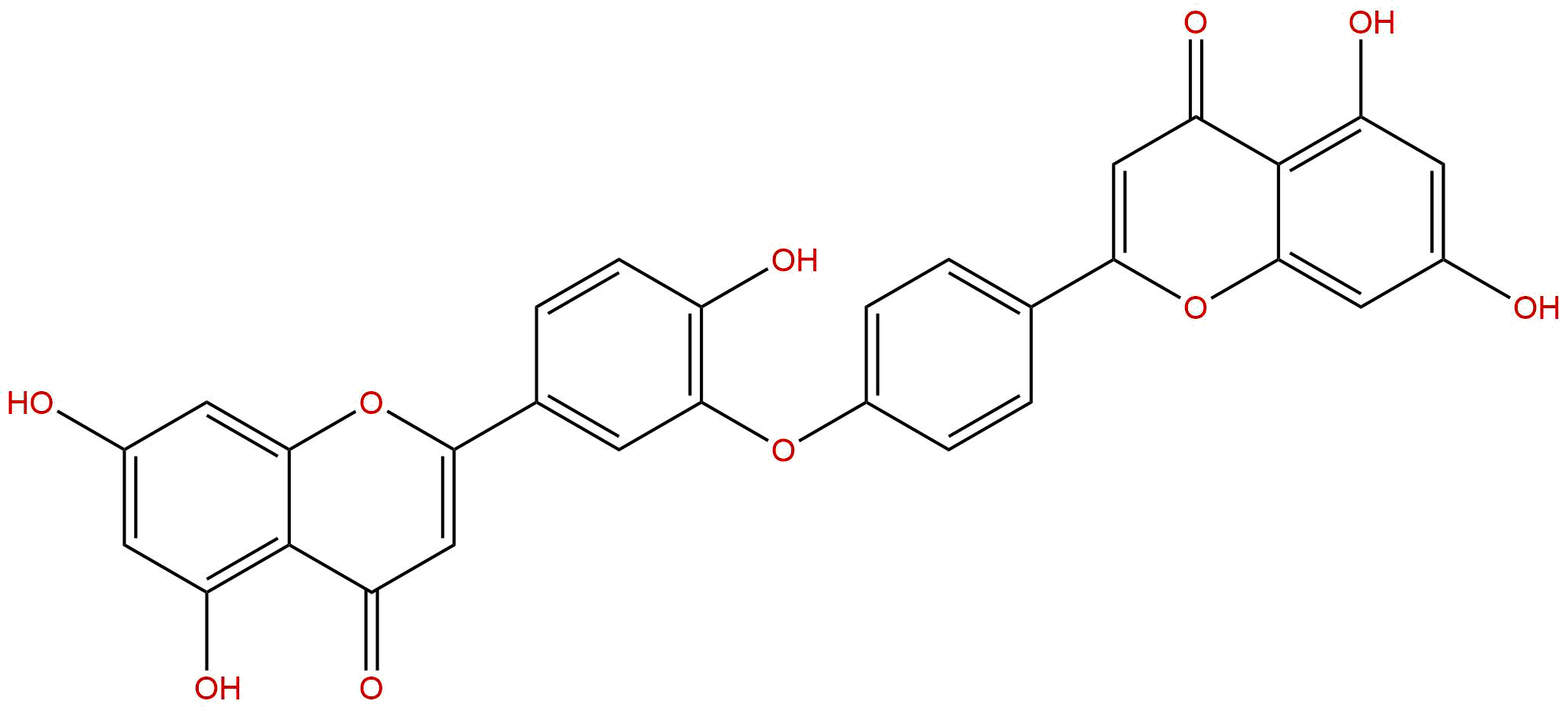


Product name: Ochnaflavone
Synonym name:
Catalogue No.: BP2410
Cas No.: 50276-96-5
Formula: C30H18O10
Mol Weight: 538.464
Botanical Source: Selaginellae herba
Type of Compound: "Flavonoids,Biflavones"
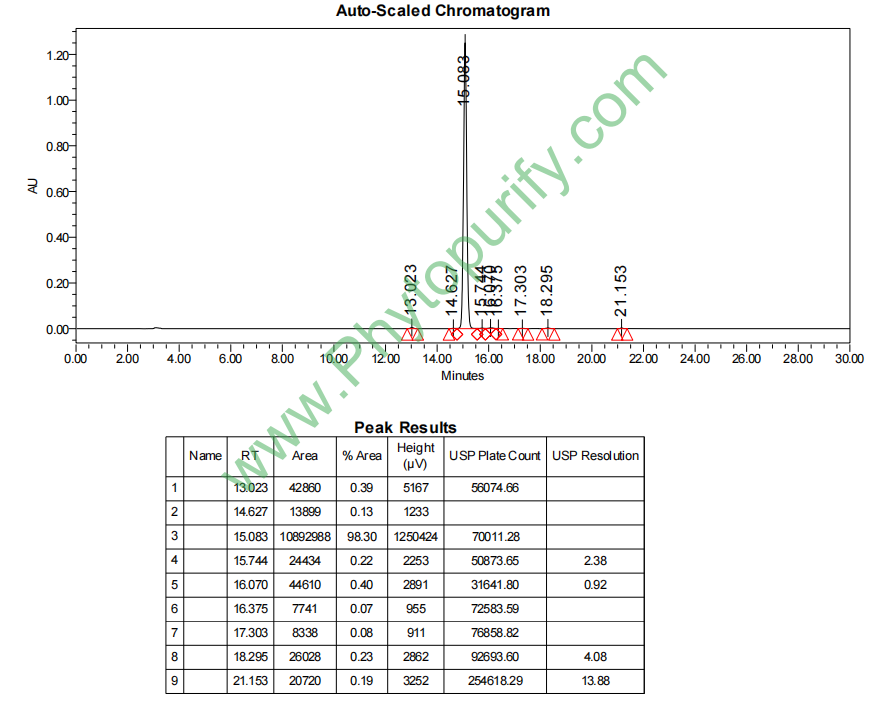
Purity: 95%~99%
Analysis Method: HPLC-DAD or/and HPLC-ELSD
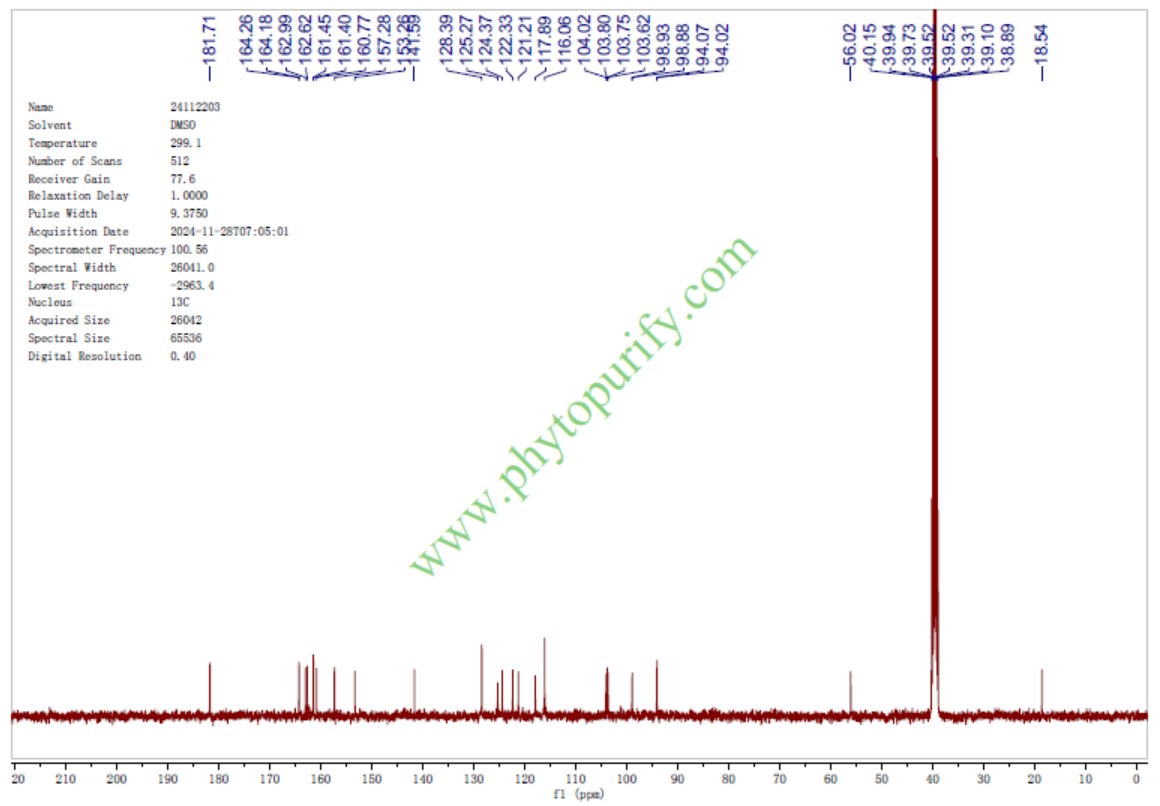
Identification Method: Mass, NMR
Packing: Brown vial or HDPE plastic bottle
Storage: Store in a well closed container, protected from air and light. Put into refrigerate or freeze for long term storage.
Whenever possible, you should prepare and use solutions on the same day. However, if you need to make up stock solutions in advance, we recommend that you store the solution as aliquots in tightly sealed vials at -20℃. Generally, these will be useable for up to two weeks.
The product could be supplied from milligrams to grams
Inquire for bulk scale.
For Reference Standard and R&D, Not for Human Use Directly.
NMR of Ochnaflavone
HPLC of Ochnaflavone
Storage conditions:Short-term storage at 2~8℃, long-term storage at -20 ~ -80℃
170.8000
3.9856
3.3380
.0003
2.1213
8.1656
Low
93.3703
2.9147
Yes
No
Yes
No
Yes
No
0.6
Yes
No
Yes
No
Natural products, as an important source of drug discovery, play an irreplaceable role in the long history of human fight against diseases. Flavonoids, as one of the main categories of secondary metabolites in plants, have attracted much attention due to their structural diversity and wide range of biological activities. Among numerous flavonoids, biflavonoids, as a special structure composed of two flavonoid units connected by C-C or C-O-C bonds, exhibit unique pharmacological properties. Ochnaflavone (CAS number: 50276-96-5) is an outstanding representative of this type of compound, with the chemical name 5,7,4 ', 5' - tetrahydroxy-3 '', 6 '' - dimethoxy - [3 '', 6 '' - flavonoids]. It was initially isolated and identified from the Ochna squarrosa plant and later discovered in the Lonicera japonica plant, hence the name.
The discovery history of honeysuckle flavonoids can be traced back to the 1970s, when researchers isolated the compound from plants of the genus Lonicera while conducting systematic chemical composition studies on traditional medicinal plants. Subsequent pharmacological studies revealed that honeysuckle flavonoids are highly efficient IIA type secreted phospholipase A2 (sPLA2-IIA) inhibitors, with a half maximal inhibitory concentration (IC50) of 3.45 µ M. This discovery lays the molecular foundation for their application in inflammatory diseases and liver protection. SPLA2-IIA is an important member of the phospholipase A2 family, involved in the hydrolysis of cell membrane phospholipids, releasing pro-inflammatory mediators such as arachidonic acid, and playing a key role in the occurrence and development of various inflammation related diseases. In addition, honeysuckle flavonoids also exhibit significant antioxidant activity, which can inhibit the degradation of phosphatidylethanolamine (PE) and lipid peroxidation induced by carbon tetrachloride (CCl4) in rat liver, with an IC50 of 7.16 µ M for lipid peroxidation.
In recent years, with the revival of interest in the development of natural product drugs, honeysuckle flavonoids have gradually become a research hotspot in the field of natural product pharmacology due to their unique chemical structure, clear molecular targets, and multiple pharmacological activities. This article will provide a systematic review of the research progress of honeysuckle flavonoids from the aspects of chemical structure, plant origin, pharmacological activity, mechanism of action, pharmacological evaluation, and clinical application prospects, in order to provide reference for the in-depth study and potential drug development of this compound.
Honeysuckle flavonoids belong to the class of flavonoids, and their basic skeleton is composed of two flavonoid units connected by C-C bonds. Specifically, the compound is formed by connecting two flavonoid subunits derived from apigenin and luteolin through a 3 '' -6 'carbon carbon bond. Its molecular formula is C30H18O10, with a molecular weight of 538.4640 g/mol. The structure contains multiple phenolic hydroxyl groups (5,7,4 ', 5' - tetrahydroxy) and two methoxy groups (3 '', 6 '' - dimethoxy), which endow it with unique chemical properties and biological activity.
From the perspective of structural chemistry, honeysuckle flavonoids have the following characteristics: (1) the flavonoid skeleton provides a large planar conjugated system, which is conducive to π - π stacking and interaction with biomolecules; (2) Multiple phenolic hydroxyl groups can serve as hydrogen bond donors and participate in the hydrogen bond network with target proteins; (3) The presence of methoxy groups increases the lipophilicity of molecules, affecting their membrane permeability and metabolic stability; (4) There are multiple chiral centers in the molecule, but naturally derived honeysuckle flavonoids usually exist in specific configurations.
According to the results of computational chemistry and experimental measurements, the main physicochemical properties of honeysuckle flavonoids are as follows:
These physical and chemical properties together outline the "pharmacological" profile of honeysuckle flavonoids: although they have clear targets and good preliminary safety data, their extremely low water solubility and high polar surface area are the key bottlenecks restricting their pharmacological properties, which need to be improved through formulation technology or structural modification.
Honeysuckle flavonoids were initially isolated from the plant Ochna squarrosa in the family Colubriaceae, which is also the origin of its English name Ochna flavone. Trollius plants are mainly distributed in tropical and subtropical areas, and are commonly used in traditional medicine to treat inflammation and infectious diseases. Subsequently, research found that the compound was also present in the Lonicera japonica Thunb. plant of the Lonicera family. As a precious traditional Chinese medicinal herb, Lonicera japonica has the effects of clearing heat, detoxifying, and dispersing wind and heat, and is widely used in the treatment of diseases such as colds, fever, and sore throat. In addition, the presence of honeysuckle flavonoids has also been detected in Garcinia species and Selaginella species of the Theaceae family.
It is worth noting that the content of honeysuckle flavonoids varies significantly among different plants. In honeysuckle, this compound usually exists in trace amounts, with a content of about 0.01% -0.05% of dry weight, while its content is relatively high in certain parts of plants in the genus Primulaceae, such as leaves and stem bark. The differences in plant sources not only affect extraction efficiency, but may also lead to subtle differences in the optical purity of the isolated compounds.
Given the low content and poor water solubility of honeysuckle flavonoids in plants, a systematic method strategy is needed for their extraction and purification. The commonly used extraction methods currently include:
1. Organic solvent extraction method Using the lipid solubility characteristics of honeysuckle flavonoids, organic solvents such as ethanol, methanol, or acetone are often used for extraction. The typical extraction process is to crush the dried plant material, soak it in 70% -95% ethanol at room temperature or heating conditions for extraction, and concentrate the extract under reduced pressure to obtain the crude extract. This method is easy to operate, but has poor selectivity and can simultaneously extract a large amount of fat soluble impurities.
2. Ultrasound assisted extraction Utilizing the cavitation effect of ultrasound to destroy plant cell walls and accelerate the dissolution of target compounds. Research has shown that under the conditions of 40-60 kHz ultrasound frequency and 30-50 ° C temperature, the extraction efficiency can be improved by 30% -50% compared to traditional soaking methods, and the extraction time is significantly shortened.
3. Supercritical fluid extraction Supercritical CO2 is used as the extraction solvent, and its solubility is changed by adjusting the pressure and temperature. This method has the advantages of green environmental protection and good selectivity, but the equipment cost is relatively high. Currently, it is mainly used for laboratory scale research.
The crude extract after extraction needs to undergo systematic separation and purification steps to obtain high-purity honeysuckle flavonoids. Common separation methods include:
Overall, the typical process for extracting honeysuckle flavonoids from plants is: plant material → ethanol extraction → concentration → solvent extraction (such as ethyl acetate) → silica gel column chromatography → polyamide column chromatography → recrystallization or HPLC purification. The overall yield of this process is usually between 0.001% and 0.01%, which is also the main reason why the compound is expensive and difficult to obtain on a large scale.
The anti-inflammatory activity of honeysuckle flavonoids is one of its most concerned pharmacological properties. Multiple in vitro and in vivo studies have confirmed that this compound can effectively inhibit various inflammatory responses.
In vitro research In a macrophage model stimulated by lipopolysaccharide (LPS), honeysuckle flavonoids (1-10 µ M) concentration dependently inhibit the production of nitric oxide (NO), while reducing the protein expression levels of inducible nitric oxide synthase (iNOS) and cyclooxygenase-2 (COX-2). In addition, the compound can significantly inhibit the release of pro-inflammatory cytokines such as tumor necrosis factor - α (TNF - α), interleukin-1 β (IL-1 β), and interleukin-6 (IL-6). In the acute inflammation model induced by carrageenan, honeysuckle flavonoids (10-50 mg/kg, intraperitoneal injection) can significantly reduce the degree of toe swelling in rats, and its effect is comparable to the positive control drug indomethacin.
Function characteristics It is worth noting that the anti-inflammatory effect of honeysuckle flavonoids has multi-target characteristics, not only acting on the upstream links of inflammatory mediators (such as inhibiting sPLA2-IIA activity), but also affecting the transmission of downstream inflammatory signaling pathways. This multi-target mode of action may result in better therapeutic efficacy and lower risk of drug resistance in complex inflammatory diseases.
Liver protection is another important pharmacological activity of honeysuckle flavonoids. The liver injury model induced by carbon tetrachloride (CCl4) is a classic model for evaluating liver protective effects. Its mechanism involves the metabolism of CCl4 into trichloromethyl free radicals (· CCl3) under the action of liver cytochrome P450 enzyme, which triggers a lipid peroxidation chain reaction, leading to liver cell membrane damage and necrosis.
Experimental evidence In the rat CCl4 liver injury model, pre-treatment with honeysuckle flavonoids (25-100 mg/kg, orally) can significantly reduce serum transaminase (ALT, AST) levels and alleviate liver tissue pathological damage. Further research has found that the compound can inhibit CCl4 induced degradation of hepatic phosphatidylethanolamine (PE), with an IC50 of 7.16 µ M. This effect is closely related to its inhibition of sPLA2-IIA activity, as sPLA2-IIA can hydrolyze cell membrane phospholipids, release hemolytic phospholipids and free fatty acids, disrupt membrane integrity, and promote oxidative stress.
Antioxidant mechanism In addition to inhibiting sPLA2-IIA, honeysuckle flavonoids also directly exert antioxidant effects. The multiple phenolic hydroxyl groups in its molecule can scavenge free radicals and chelate transition metal ions (such as Fe2+), thereby blocking the chain reaction of lipid peroxidation. Electron spin resonance (ESR) experiments have confirmed that honeysuckle flavonoids have significant scavenging activity against DPPH radicals and superoxide anion radicals.
Antitumor activity: Preliminary research shows that honeysuckle biflavone has proliferation inhibitory effect on many tumor cell lines (such as human liver cancer cell HepG2, human breast cancer cell MCF-7, human colon cancer cell HT-29), with IC50 value in the range of 10-50 µ M. Its anti-tumor mechanism may be related to inducing cell apoptosis, blocking the cell cycle in the G2/M phase, and inhibiting angiogenesis.
Antibacterial activity Honeysuckle flavonoids exhibit certain antibacterial activity against common pathogenic bacteria such as Staphylococcus aureus and Escherichia coli, with a minimum inhibitory concentration (MIC) between 50-200 µ g/mL. It is worth noting that this compound may have a synergistic effect when used in combination with conventional antibiotics, providing a new approach for overcoming bacterial resistance.
Neuroprotective effect Although honeysuckle flavonoids have low blood-brain barrier penetration, in an in vitro model of neuronal hypoxia/reoxygenation injury, this compound (1-10 µ M) can reduce lactate dehydrogenase (LDH) release and decrease intracellular reactive oxygen species (ROS) levels, suggesting that it may indirectly exert neuroprotective effects by protecting blood-brain barrier integrity.
The most clear molecular target of honeysuckle flavonoids is the IIA type secreted phospholipase A2 (sPLA2-IIA). SPLA2-IIA is a low molecular weight (approximately 14 kDa) secreted phospholipase that plays a critical role in inflammatory responses. This enzyme can hydrolyze the sn-2 ester bond of glycerophospholipids on the cell membrane, releasing arachidonic acid and lysophosphatids. Arachidonic acid is subsequently metabolized into potent inflammatory mediators such as prostaglandins and leukotrienes through the cyclooxygenase (COX) and lipoxygenase (LOX) pathways; Lysophosphatides have direct pro-inflammatory and cytotoxic effects.
Combined mode Molecular docking and dynamic simulation studies have revealed that the binding of honeysuckle flavonoids to sPLA2-IIA mainly relies on the following interactions: (1) the aromatic ring of the flavonoid skeleton and the hydrophobic channel of the enzyme (composed of residues such as Leu2, Phe5, Ile9, Ala18, Tyr52, etc.) form π - π stacking and hydrophobic interactions; (2) Phenolic hydroxyl groups form hydrogen bonding networks with key residues at enzyme active sites, such as His48, Asp49, Tyr52; (3) The methoxy group generates van der Waals forces with polar residues on the enzyme surface. This multimodal binding mechanism results in high affinity and selectivity (IC50=3.45 µ M) of honeysuckle flavonoids towards sPLA2-IIA, while their inhibitory effect on other members of the phospholipase family is weaker.
inhibitory effect By inhibiting sPLA2-IIA activity, honeysuckle flavonoids can block the initial step of arachidonic acid cascade reaction, thereby reducing the production of inflammatory mediators such as prostaglandins and leukotrienes. This explains its broad-spectrum anti-inflammatory effects in various inflammatory models. In addition, the inhibition of sPLA2-IIA also reduces the production of lysophosphatids, which helps maintain the integrity of cell membrane structure and is closely related to its liver protective effect.
In addition to directly targeting sPLA2-IIA, honeysuckle flavonoids also exert pharmacological effects by regulating multiple signaling pathways:
Nrf2/ARE pathway Honeysuckle flavonoids can activate nuclear factor E2 related factor 2 (Nrf2), promote its nuclear translocation and bind to antioxidant response elements (ARE), upregulate the expression of downstream antioxidant enzymes such as heme oxygenase-1 (HO-1), quinone oxidoreductase 1 (NQO1), and glutathione S-transferase (GST). This mechanism enhances the antioxidant defense ability of cells and is an important supplement to their direct free radical scavenging activity.
NF - κ B pathway Honeysuckle flavonoids inhibit the nuclear translocation and transcriptional activity of NF - κ B by suppressing the activity of I κ B kinase (IKK), preventing the phosphorylation and degradation of I κ B α. NF - κ B is the core transcription factor of inflammatory response, regulating the expression of various pro-inflammatory genes such as iNOS, COX-2, TNF - α, IL-6. The inhibition of NF - κ B pathway by honeysuckle flavonoids is another important mechanism of its anti-inflammatory effect.
MAPK pathway Research has shown that honeysuckle flavonoids can inhibit LPS induced phosphorylation of p38 MAPK and JNK, with little effect on ERK phosphorylation. The inhibition of the MAPK pathway further reduces the production of inflammatory mediators and forms a cross regulatory network with the NF - κ B pathway.
Apoptosis related proteins In terms of liver protection, honeysuckle flavonoids can upregulate the expression of anti apoptotic protein Bcl-2, downregulate the expression of pro apoptotic protein Bax, inhibit the activation of caspase-3, and thus reduce liver cell apoptosis. This effect is closely related to its inhibition of oxidative stress and inflammatory response.
Based on existing research, the pharmacological effects of honeysuckle flavonoids can be summarized as a complex network of multiple targets and pathways. Its core target is sPLA2-IIA, which inhibits the enzyme activity and blocks the arachidonic acid cascade reaction; At the same time, the compound enhances antioxidant defense by activating the Nrf2 pathway, inhibits the NF - κ B and MAPK pathways to reduce the production of inflammatory factors, and regulates apoptosis related proteins to maintain cell survival. This multi-target mode of action makes honeysuckle flavonoids potentially more effective and safe than single target drugs in treating complex diseases such as inflammatory liver disease.
Based on Lipinski's "Five Rules" and Veber's Rules, evaluate the pharmacological properties of honeysuckle flavonoids:
| parameter | Honeysuckle flavonoids | Recommended scope |
|---|---|---|
| molecular weight | 538.46 Da | ≤500 Da |
| LogP | 3.99 | ≤5 |
| Hbond donor | 4 | ≤5 |
| Number of hydrogen bond acceptors | 10 | ≤10 |
| Number of rotatable keys | 3 | ≤10 |
| TPSA | 170.80 Ų | ≤140 Ų |
From the above data, it can be seen that the molecular weight and TPSA of honeysuckle flavonoids exceed the recommended range, indicating that their oral bioavailability may be low. In fact, the water solubility of this compound is extremely poor (0.0003 mg/mL), belonging to BCS IV class drugs (low solubility, low permeability), which is the main challenge facing its drug development.
At present, the systematic study on the pharmacokinetics of honeysuckle flavonoids is not sufficient, but some preliminary data available provide important references:
absorb Due to poor water solubility, the oral absorption of honeysuckle flavonoids is poor. After oral administration to rats, the estimated absolute bioavailability is less than 5%. Intraperitoneal injection or intravenous administration may be more effective routes of administration. Formulation technologies such as nanoemulsions, liposomes, cyclodextrin inclusion complexes, etc. are expected to improve their oral absorption.
distribution After intravenous injection, honeysuckle flavonoids are widely distributed in the body and mainly accumulate in the liver, lungs, and kidneys. Its plasma protein binding rate is high (>95%), and its apparent distribution volume (Vd) is large, indicating widespread tissue distribution. The low penetration of the blood-brain barrier limits its application in the central nervous system.
Metabolism Honeysuckle flavonoids are mainly metabolized by the liver, involving II phase metabolic reactions such as glucuronidation and sulfation. CYP450 enzyme mediated phase I metabolism (such as demethylation and hydroxylation) is also involved in its metabolic process. Metabolites may retain some biological activity, but their activity is usually lower than that of the parent compound.
excretion Honeysuckle flavonoids and their metabolites are mainly excreted into the intestine through bile, with some being excreted through feces, and the amount excreted in urine is relatively small. Its half-life (t1/2) is about 4-8 hours and requires multiple daily doses to maintain effective blood drug concentration.
Preliminary safety evaluation shows that honeysuckle flavonoids have good safety characteristics:
However, there is still a lack of long-term toxicity and reproductive toxicity studies, which are data that must be supplemented before the compound enters clinical practice.
Based on the pharmacological activity characteristics of honeysuckle flavonoids, their potential clinical application directions mainly include:
1. Inflammatory liver disease Honeysuckle flavonoids protect liver cells by inhibiting sPLA2-IIA activity, antioxidant and anti apoptotic mechanisms, and have therapeutic potential in inflammatory liver diseases such as non-alcoholic steatohepatitis (NASH), drug-induced liver injury, and alcoholic liver disease. Especially its targeting effect on sPLA2-IIA provides new ideas for the development of novel liver protective drugs.
2. Acute inflammatory diseases In diseases characterized by excessive inflammatory response such as acute pancreatitis, acute lung injury, and sepsis, the broad-spectrum anti-inflammatory effect of honeysuckle flavonoids may have therapeutic value. The mechanism by which it inhibits sPLA2-IIA is different from existing anti-inflammatory drugs such as NSAIDs and glucocorticoids, which may provide new treatment options for these diseases.
3. Chronic inflammatory diseases Chronic inflammatory diseases such as rheumatoid arthritis and inflammatory bowel disease are also potential indications. The multi-target mode of action of honeysuckle flavonoids may help control disease progression and reduce recurrence.
4. Tumor adjuvant therapy Although its anti-tumor activity is relatively weak, the anti-inflammatory and antioxidant properties of honeysuckle flavonoids make it a potential adjuvant therapy for tumors, reducing the inflammatory response and oxidative stress damage caused by chemotherapy.
The main challenges faced in developing honeysuckle flavonoids as clinical drugs include:
1. Solubility and bioavailability Extremely low water solubility and oral bioavailability are the biggest obstacles. The solution strategy includes: (1) formulation technology: developing new drug delivery systems such as nanoemulsions, liposomes, solid dispersions, phospholipid complexes, etc; (2) Pre drug design: Introducing water-soluble groups such as phosphate esters and amino acid esters onto phenolic hydroxyl groups, and releasing the active drug through enzymatic interpretation in vivo; (3) Structural modification: Introducing polar groups or changing the position of methoxy groups while maintaining activity to improve water solubility.
2. Source and Cost The low content of natural sources and the difficulty in chemical synthesis result in high costs for obtaining honeysuckle flavonoids. The solution strategy includes: (1) biosynthesis: using genetic engineering methods to reconstruct the biosynthetic pathway of flavonoids in microorganisms such as Escherichia coli and yeast; (2) Semi synthetic: Using inexpensive flavonoids as raw materials, a dual flavonoid skeleton is constructed through chemical methods; (3) Organizational culture: Optimize plant cell culture conditions to increase the yield of target products.
3. Target selectivity Although honeysuckle flavonoids have good selectivity for sPLA2-IIA, their inhibitory effects on other members of the phospholipase family still need to be systematically evaluated to avoid potential off target effects.
4. Clinical translation Currently, all studies are in the preclinical stage and lack human pharmacokinetic and pharmacodynamic data. Standardized clinical trials are needed to verify its safety and effectiveness.
The future research on honeysuckle flavonoids should focus on the following directions:
Honeysuckle flavonoids, as outstanding representatives of natural flavonoids, have shown significant research value in the field of natural product drug development due to their unique chemical structure, clear molecular targets, and multi effect pharmacological activities. This compound exerts anti-inflammatory, hepatoprotective, and antioxidant effects by inhibiting sPLA2-IIA activity, regulating Nrf2/ARE and NF - κ B signaling pathways, and has potential applications in the treatment of inflammatory liver disease and acute inflammatory diseases.
However, the journey from natural products to clinical drugs is full of challenges. The extremely low water solubility and oral bioavailability of honeysuckle flavonoids are the main bottlenecks for their medicinal properties, which need to be overcome through formulation technology, prodrug design, or structural modification. Meanwhile, issues such as limited sources and incomplete preclinical data also need to be systematically addressed.
Looking ahead to the future, with advances in structural biology, computational chemistry, and biosynthetic technologies, honeysuckle flavonoids and their derivatives are expected to overcome current obstacles and become new drug candidates for treating inflammation related diseases. The research process of this natural product once again proves that nature is still the most abundant source of drug discovery, and modern science and technology provide powerful tools for excavating this treasure. In depth research on honeysuckle flavonoids will not only contribute to the development of new therapeutic drugs, but also provide valuable knowledge for understanding the structure-activity relationship and pharmacological mechanisms of flavonoids.
