


Synonym name:
Catalogue No.: BP0729
Cas No.: 19202-36-9
Formula: C30H18O10
Mol Weight: 538.464
Botanical Source: Obt. from leaves of Chamaecyparis obtusa. Also from Psilotum triquetrum. Present in the Cupressaceae, Cycadales and many other plants
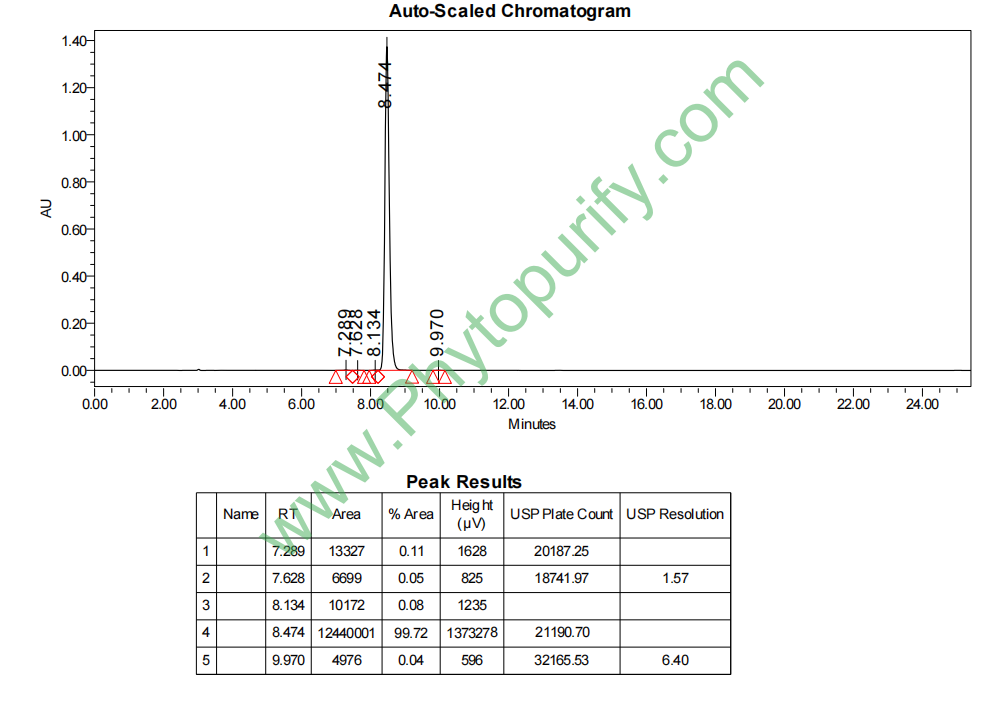
Purity: 95%~99%
Analysis Method: HPLC-DAD or/and HPLC-ELSD
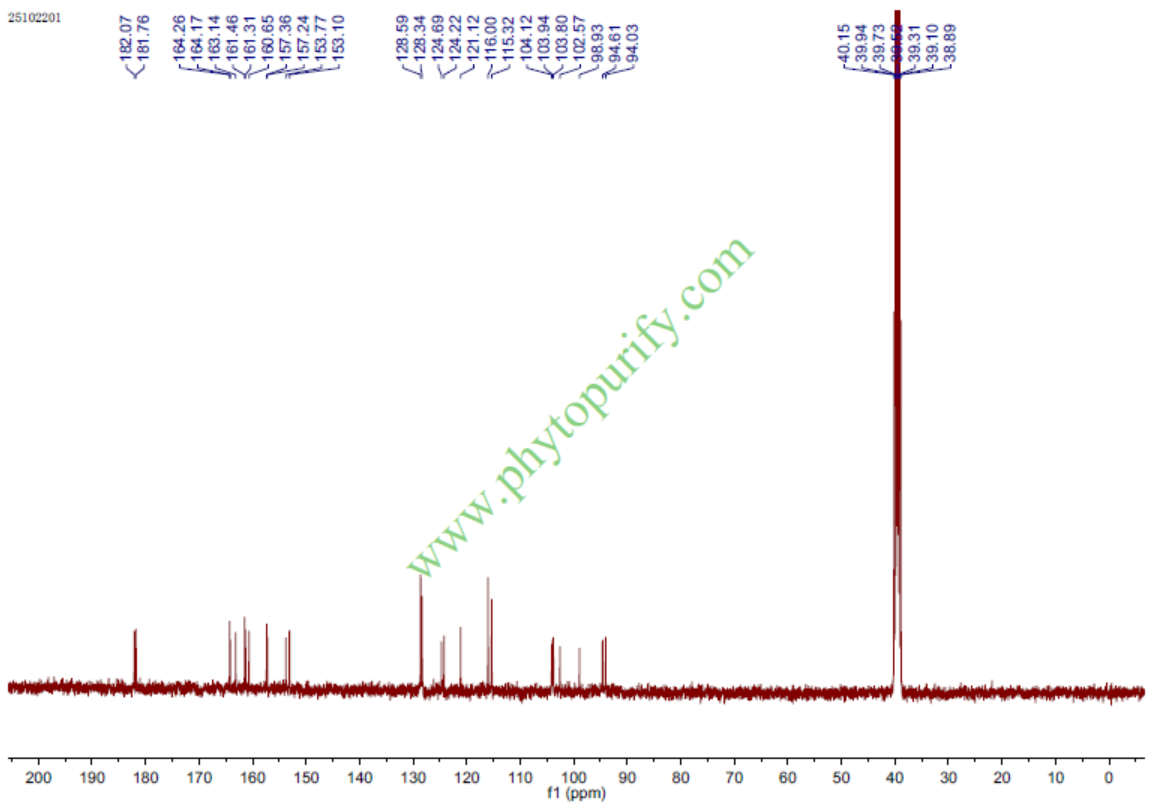
Identification Method: Mass, NMR
Packing: Brown vial or HDPE plastic bottle
Can be supplied from milligrams to grams.
For Reference Standard and R&D, Not for Human Use Directly.
Inquire for bulk scale.
Description:
Hinokiflavone has significant cytotoxicity, it has inhibition of MMP-9.
References:
Planta Med. 1989 Apr;55(2):166-8.
Hinokiflavone, a cytotoxic principle from Rhus succedanea and the cytotoxicity of the related biflavonoids.
Hinokiflavone (1) was isolated as the cytotoxic principle from the drupes of Rhus succedanea L.
METHODS AND RESULTS:
A comparison of the cytotoxicity of 1 and other related biflavonoids, including amentoflavone (2), robustaflavone (3), agathisflavone (4), rhusflavone (5), rhusflavanone (6) and its hexaacetate (7), succedaneaflavanone (8) and its hexaacetate (9), cupressuflavone (10), neorhusflavanone (11), volkensiflavone (12) and its hexamethyl ether (13), spicataside (14) and its nonaacetate (15), morelloflavone (16) and its heptaacetate (17) and heptamethyl ether (18), GB-1a (19) and its hexamethyl ether (20) and 7"-O-beta-glucoside (21), and GB-2a (22), indicates that an ether linkage between two units of apigenin as seen in 1 is structurally required for significant cytotoxicity. Compounds 13 and 20 also demonstrated significant cytotoxicity.
HPLC of Hinokiflavone
NMR of Hinokiflavone
Storage conditions:Short-term storage at 2~8℃, long-term storage at -20 ~ -80℃
170.8000
3.9234
2.9563
.0001
2.2494
7.1720
Low
92.6639
2.9465
Yes
No
Yes
No
Yes
No
0.6
Yes
No
Yes
No
Natural products have always been an important source of innovative drug discovery, among which flavonoids have attracted much attention due to their wide range of biological activities. Hinokiflavone, CAS number 19202-36-9, as a unique flavonoid compound, has gradually become a hot topic in pharmacological research in recent years due to its novel mechanism of action and diverse pharmacological activities. Early research mainly focused on its traditional flavonoid activities such as anti-inflammatory and antioxidant effects, while studies in the past decade have revealed its key roles in regulating pre mRNA splicing, inhibiting matrix metalloproteinases (MMPs), regulating protein SUMOylation modifications, and inducing tumor cell apoptosis. Especially in the fields of breast cancer, virus infection and bacterial drug resistance, Platycladus obtusifolia biflavone shows the potential of multi target and multi pathway intervention, providing a lead compound for the development of new therapeutic strategies. This article aims to systematically review the chemical properties, plant sources, pharmacological activities, molecular mechanisms of action, and medicinal properties of Platycodon grandiflorus flavonoids, and to explore their clinical application prospects.
Platycodon grandiflorus is a type of flavonoid compound composed of two flavonoid units connected by C-O-C ether bonds. Its molecular formula is C30H18O10 and its molecular weight is 538.4640. Its basic skeleton is composed of two apigenin or its derivative units, and this unique dimeric structure is the chemical basis that distinguishes it from flavonoids and produces special biological activities.
In terms of physicochemical properties, the lipid water partition coefficient (LogP) of Platycodon grandiflorus is 3.9234, indicating its moderate lipophilicity. Its topological polar surface area (TPSA) is 170.8000 Å ², reflecting the presence of multiple polar oxygen atoms (such as hydroxyl, carbonyl, and ether bonds) in the molecule. These parameters collectively determine its extremely low water solubility, approximately 0.0001 mg/mL, which poses a challenge for its formulation development. Preliminary pharmacological predictions indicate that its ability to cross the blood-brain barrier is low, suggesting that it may not be suitable for direct treatment of central nervous system diseases. In the preliminary safety screening, the compound did not show significant hERG potassium channel inhibitory activity (low risk of arrhythmia), and the Ames test result was 0.6, indicating that its mutagenic risk is low and has a preliminary safety basis for further development.
The biflavones of Platycladus orientalis mainly exist in the Cupressaceae and Arhat plants. Its name "Hinokiflavone" is derived from Chamaecyparis obtusa (Hinoki in Japanese). In addition, it has also been found in Platycladus orientalis, Juniperus spp., and some Selaginella plants. It is usually produced as a secondary metabolite in plants and may participate in plant defense responses.
Organic solvent extraction is commonly used to extract dihydroketone from plant materials. The classic process includes: reflux extraction or ultrasound assisted extraction of dried and crushed plant materials (such as branches and leaves) using methanol or ethanol. After vacuum concentration, the crude extract was subjected to gradient extraction using solvents such as petroleum ether and ethyl acetate. The flavonoids in Platycodon grandiflorus were mainly enriched in the ethyl acetate fraction. Further purification depends on various chromatographic techniques, such as silica gel column chromatography, Sephadex LH-20 column chromatography and high performance liquid chromatography (HPLC). In recent years, green extraction techniques such as supercritical fluid extraction have also been explored to improve extraction efficiency and selectivity. The extraction rate is influenced by various factors such as plant variety, location, harvest season, and extraction process.
Numerous in vitro and in vivo studies have confirmed that flavonoids from Platycodon grandiflorus have a wide range of pharmacological activities, mainly including the following aspects:
The multiple pharmacological activities of Platycodon grandiflorus flavonoids stem from their intervention in multiple key targets and pathways in cells, forming a multi-target action network.
Although the pharmacological activity of Platycodon grandiflorus is significant, its medicinal properties still face challenges, and related research is still in the preclinical stage.
As a multi-target natural product, Platycodon grandiflorus has broad clinical application prospects, but the transformation path still needs further exploration.
Platycodon grandiflorus is a unique plant derived flavonoid compound, whose value has surpassed the traditional antioxidant category. Modern pharmacological research has revealed its strong potential as a multi-target regulator, particularly playing an important role in regulating cutting-edge biological processes such as RNA splicing, protein SUMOylation modification, inducing tumor cell apoptosis, inhibiting transferases, and implementing "anti toxicity" antibacterial measures. Despite facing challenges in solubility and systemic pharmacokinetics, its rich pharmacological activity and novel mechanism of action make it an attractive drug lead compound and molecular probe. With a deeper understanding of the mechanism of action, rational modification of medicinal chemistry, and the application of new delivery technologies, Platycodon grandiflorus is expected to provide new weapons for the treatment of major diseases such as tumors and drug-resistant bacterial infections in the future, demonstrating the long-lasting vitality of natural products in innovative drug development.
