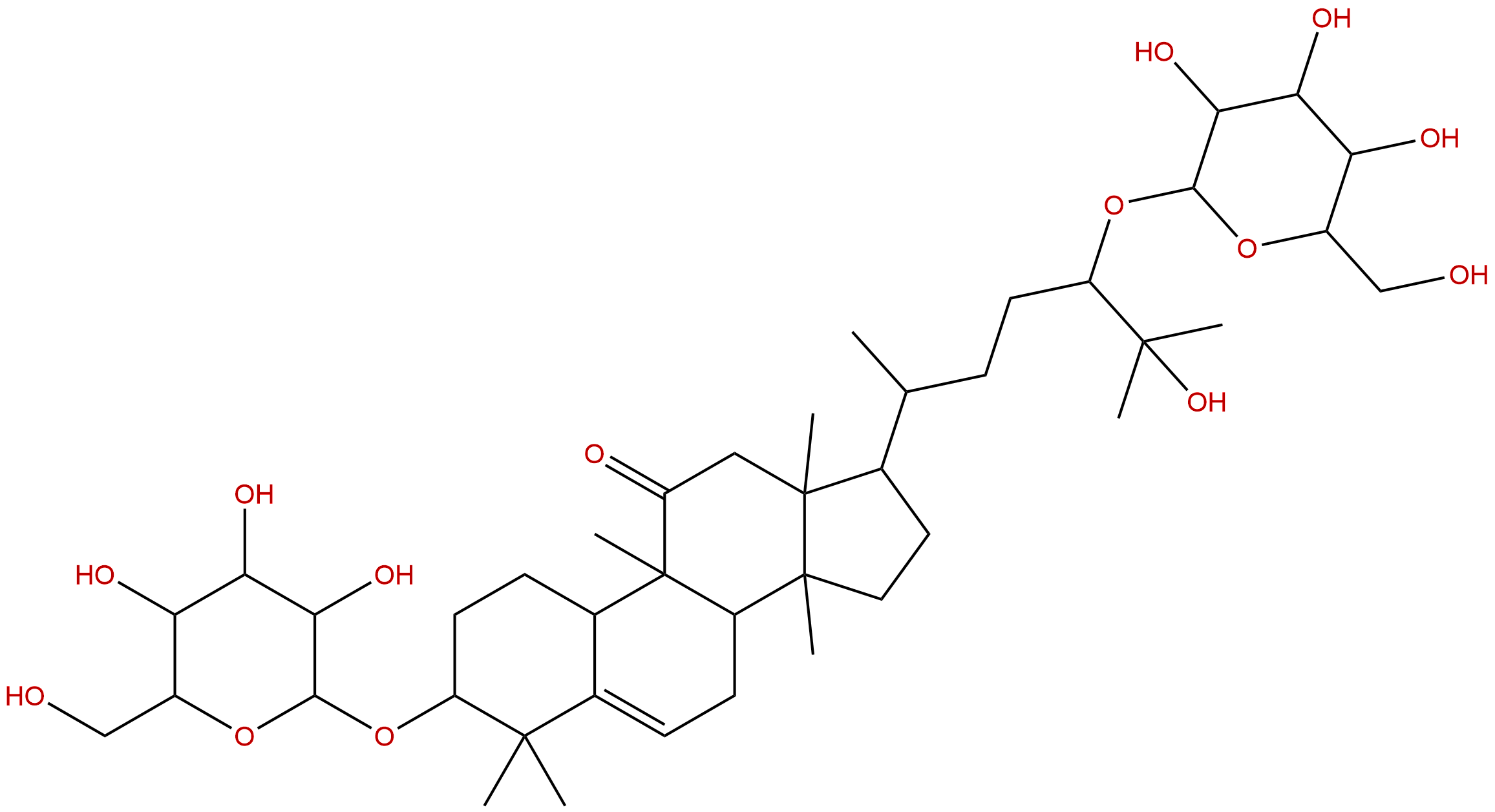
11-O - Arhat IIe: a natural anti diabetes candidate molecule derived from Siraitia grosvenorii
1. Overview
11-O - Arhat fruit glycoside IIe (11-Oxomogroside IIe) is a traditional medicinal plant monk fruit(Siraitia grosvenorii)Natural terpenoid glycosides isolated from the middle. Its CAS number is 918972-06-2, molecular formula is C42H70O14, and molecular weight is approximately 799.01 g/mol. As a member of the sweet ingredient family of Siraitia grosvenorii, this compound has attracted attention not only because of its unique sweet taste characteristics, but also because of its potential in pharmacological research Antidiabetic activity And it has become a research hotspot in the field of natural product medicinal chemistry.
Arhat grosvenorii glycosides are a kind of triterpene saponins rich in cucurbitaceae plant momordica grosvenorii, which are widely used as natural sweeteners because of their high sweetness and low calorie characteristics. In recent years, with the deepening of research, it has been found that these compounds have significant biological activities in regulating blood sugar and improving insulin resistance, and their value has far exceeded the scope of simple food additives. As one of the specific oxidation modified derivatives, 11-O - Arhat fruit glycoside IIe is attracting more and more scientific attention due to its regulatory effect on multiple diabetes related targets. The in-depth study on it not only helps to clarify the modern scientific connotation of the traditional efficacy of Momordica grosvenorii, but also provides valuable lead compounds and theoretical basis for the development of new, safe and natural diabetes drugs.
2. Chemical structure and physicochemical properties
The chemical structure of 11-O-neneneba arhat fruit glycoside IIe is highly oxidized Cucurbitane type triterpenoid saponins The SMILES string (CC (CCC (OC1OC (CO) C (O) C (O) C1O) C (C) (C) O) C1CCC2 (C) C3CC=C4C The source of 'o'. This oxidative modification may have a significant impact on its biological activity and physicochemical properties.
Analyzing its physicochemical properties from the parameters of drug properties:
- Molecular weight (MW):799.01 g/mol, Significantly exceeding the Lipinski five rule standard of "less than 500", which is a common characteristic of most natural glycoside compounds, indicating that their oral absorption may face challenges.
- Lipid water partition coefficient (LogP/LogD)Approximately 2.49. This value indicates that the compound has a certain degree of lipophilicity, but combined with its high molecular weight and multi hydroxyl structure, its overall properties are more inclined towards hydrophilicity.
- Topological Polarity Surface Area (TPSA)Up to 236.06 Å ², mainly attributed to the presence of multiple hydroxyl groups and oxygen atoms on the sugar ring in the molecule. High TPSA is usually associated with poor cell membrane permeability.
- Water solubility 0.0934 (usually measured in mg/mL or log mol/L, indicating relatively limited water solubility and belonging to the category of slightly soluble or poorly soluble).
- Caco-2 permeability 0.9937 (usually measured in units of 10 ⁻⁶ cm/s), which is at a moderately low level, confirms the negative impact of high TPSA and high molecular weight on its transmembrane transport.
In general, 11-O - Arhat fruit glycoside IIe is a typical High polarity, high molecular weight natural glycosides The multiple hydrophilic groups (hydroxyl, sugar) and large steric hindrance in its structure determine that it may have low membrane permeability and poor bioavailability in vivo, which is an important aspect to consider and optimize in subsequent drug development.
3. Plant sources and traditional applications
The plant origin of 11-O - Arhat fruit glycoside IIe is single and clear, namely monk fruit(Siraitia grosvenorii (Swingle) C. Jeffrey), It is often referred to as the 'immortal fruit' in folk culture. Momordica grosvenorii is a perennial vine of Cucurbitaceae, which is native to subtropical mountains in Guangxi, Guangdong, Hunan and other places in China.
The medicinal history of Siraitia grosvenorii has been hundreds of years in China. In the traditional Chinese medicine theory, siraitia grosvenorii is cool in nature, sweet in taste, and belongs to the lung and large intestine meridians. Its main effects are Clearing heat and moistening lungs, promoting throat and opening sounds, smoothing intestines and promoting bowel movements It is commonly used to treat symptoms such as lung heat, dry cough, sore throat, loss of voice, and intestinal dryness and constipation. It has various forms of use, including decoction for oral consumption, direct soaking in water for drinking, etc. In major production areas such as Guangxi, it is often used as a daily refreshing drink by the people to prevent and treat summer heat and thirst.
Modern research has found that the sweetness and pharmacological activity of Momordica grosvenorii mainly come from the rich Arhat in its fruits. These compounds have extremely high sweetness (up to hundreds of times that of sucrose) and almost no heat production, and do not participate in human metabolism, making them ideal natural sugar substitutes. However, traditional applications mainly focus on its lung moistening and cough relieving effects, and there is little record of its potential role in regulating blood sugar. In recent years, with the progress of chemical separation technology and pharmacological research methods, micro active ingredients with specific modifications such as 11-O - Arhat IIe can be identified and studied, thus expanding the traditional application value of Siraitia grosvenorii to the modern medical frontier of metabolic disease prevention. This reflects the classic research path from traditional experience to modern scientific verification.
4. Pharmacological activity and mechanism of action
The existing research data strongly suggest that the core pharmacological activity of 11-O - Arhat fruit glycoside IIe lies in its anti-diabetic Potential. Its function is not through a single pathway, but manifested as multidimensional and networked regulation of multiple key targets closely related to glucose metabolism and insulin signaling pathways. Analyze based on its known five targets:
-
Indirect promotion of insulin (INS) secretion and action:
- Target INS Represents insulin itself. Compounds may indirectly optimize the endogenous secretion and functional performance of insulin by protecting pancreatic beta cells, reducing their apoptosis, or improving the insulin sensitivity of peripheral tissues, rather than directly replacing insulin.
-
Enhance insulin signaling transduction:
- Target IRS1 (insulin receptor substrate 1)IRS1 is the most critical downstream adaptor protein after insulin receptor activation. After insulin binds to the receptor, phosphorylation activates IRS1, which in turn initiates core signaling pathways such as PI3K/Akt. 11-O-neneneba arhat fruit glycoside IIe may enhance the transmission efficiency of insulin signal and improve insulin resistance by increasing the expression of IRS 1 or inhibiting its serine phosphorylation (a negative feedback mechanism leading to insulin resistance).
-
Promote the intake and utilization of glucose:
- Target SLC2A4 (glucose transporter 4, GLUT4)GLUT4 is the main insulin sensitive glucose transporter in adipocytes and skeletal muscle cells. Under insulin stimulation, GLUT4 translocates from intracellular vesicles to the cell membrane, accelerating glucose uptake. This compound may promote GLUT4 translocation and membrane expression by activating AMPK or enhancing the PI3K/Akt pathway, thereby directly accelerating peripheral tissue clearance of blood glucose.
- Target GCK (Glucokinase)GCK is a "sensor" and rate limiting enzyme for glucose metabolism in the liver and pancreatic beta cells. In the liver, it catalyzes glucose phosphorylation, determining whether glucose is stored as glycogen or enters glycolysis; In beta cells, it senses blood glucose concentration and regulates insulin secretion. Activating GCK can simulate the effect of "glucose promoting insulin secretion" and promote liver glucose metabolism, which is recognized as a therapeutic target for diabetes. 11-O - Arhat fruit glycoside IIe may play a role as an allosteric activator of GCK.
-
Regulating fat metabolism and whole-body energy homeostasis:
- Target PPARG (peroxisome proliferator activated receptor gamma)PPAR γ is a member of the nuclear receptor superfamily and a core regulatory factor for adipocyte differentiation and lipid metabolism. Thiazolidinediones (TZDs) insulin sensitizers (such as Rosiglitazone) are agonists of PPAR γ. Activation of PPAR γ can promote adipocyte differentiation, increase the uptake and storage of free fatty acids, reduce the concentration of free fatty acids in the blood, and indirectly improve insulin sensitivity in muscles and liver. 11-O - Arhat fruit glycoside IIe may have partial PPAR γ agonist activity, but as a natural product, its activity intensity and side effect spectrum may be different from those of synthetic drugs.
Mechanism of Action Integration Hypothesis:
In combination with the above targets, 11-O - Arhat fruit glycoside IIe may play an anti diabetes role through a multi target synergistic mechanism: on the one hand, through activation PPARγImprove overall lipid metabolism and insulin sensitivity; On the other hand, by enhancing IRS1 Mediated insulin signaling and promotion GLUT4 Membrane translocation directly accelerates glucose uptake in muscles and adipose tissue. Meanwhile, in the liver and pancreas, through activation GCK To optimize hepatic glucose metabolism and glucose stimulated insulin secretion (GSIS). These effects collectively point to the core pathophysiological link of improving type 2 diabetes——insulin resistance and Dysfunction of beta cells。
5. Evaluation of drug properties
Based on the provided pharmaceutical parameters, we preliminarily evaluated the development potential of 11-O - Arhat fruit glycoside IIe as an oral drug, and referred to Lipinski's Five Rules(Mainly used to evaluate the drug properties of small molecule oral drugs) for analysis:
Comprehensive Assessment:
11-O - Arhat fruit glycoside IIe is a leading compound with clear multi target anti diabetes pharmacological activity, but its Poor drug similarity Especially the development path of oral administration faces enormous challenges. Its advantages lie in natural sources, multi-target effects, and preliminary positive signals of safety (without genetic toxicity and hERG inhibition). Future drug development strategies may require:
1. Change the route of administration Consider developing non oral formulations, such as injections (but address their solubility and stability issues).
2. Prodrug modification Chemical modification of its sugar or hydroxyl groups to produce prodrugs, in order to improve lipid solubility and membrane permeability, and then hydrolyzed into active forms in vivo.
3. Simplification and optimization of structure Based on the triterpenoid parent nucleus or active pharmacophore, simplify the structure and synthesize analogs with smaller molecular weight, lower polarity, and in accordance with the "five rules".
4. As a dietary supplement/functional food development In view of its natural source and preliminary safety, it can be used in health care products for auxiliary management of diabetes at a lower dose.
6. Research Status and Application Prospects
Research status:
At present, the research on 11-O - Arhat fruit glycoside IIe is still in progress Early discovery and mechanism exploration stage The existing data mainly comes from the separation and identification of natural product chemistry, as well as target prediction/validation based on databases or preliminary in vitro experiments. There are still many gaps that need to be filled in the specific hypoglycemic efficacy, dose-response relationship, pharmacokinetic characteristics, and long-term safety data in cell and animal models. The study of higher content components such as momordicin V, which is homologous with it, is more extensive, which provides a certain reference for the study of 11-O - Arhat IIe, but also highlights its uniqueness and challenges as a trace component.
Application Prospects:
1. New lead compounds of anti diabetes drugs Despite the challenges in drug development, its unique multi-target mechanism of action (involving GCK, PPAR γ, and insulin signaling pathways) holds significant value. Through Rational Design and Modification of Medicinal Chemistry It is expected to develop new anti diabetes candidate drugs with stronger activity, better pharmacokinetic properties and less side effects.
2. Natural medicine compound components In the research of modernization of traditional Chinese medicine, it can be used to clarify the efficacy of Luohanguo compound (such as compatibility with astragalus, rehmannia, etc.) in the treatment of diabetes Key material foundation Conduct research to promote standardization and quality control of compound preparations.
3. Functional food and specialty food additives: Directly use its natural properties as a functional sweetener to add to foods and drinks for diabetes or obese people, and play a health function of assisting in regulating blood sugar while providing sweetness. This is the closest path to marketization.
4. Mechanism of Action Research Tool This compound can serve as a probe molecule for in-depth study of the network pharmacology mechanism of the combined action of GCK activators and PPAR γ modulators, providing a new tool for understanding the complex regulatory network of metabolic diseases.
Summary:
11-O-neneneba Siraitin IIe is a treasure molecule excavated from the traditional Chinese medicine Siraitia grosvenorii, which bridges the gap between traditional medicinal wisdom and modern treatment of metabolic diseases. The multi-target anti diabetes mechanism revealed by it is encouraging, but the pharmaceutical defects caused by its natural glycoside structure are also obvious. Future research needs to be conducted in Thoroughly elucidate its in vivo pharmacological effects and mechanisms On the basis of, focus on Innovations in Pharmacy and Medicinal Chemistry Overcoming its delivery difficulties. Whether it is ultimately going to innovative drugs or as a functional food ingredient, the continuous exploration of 11-O - Arhat fruit glycoside IIe will contribute to the value improvement of natural products and the development of new strategies for the treatment of diabetes.