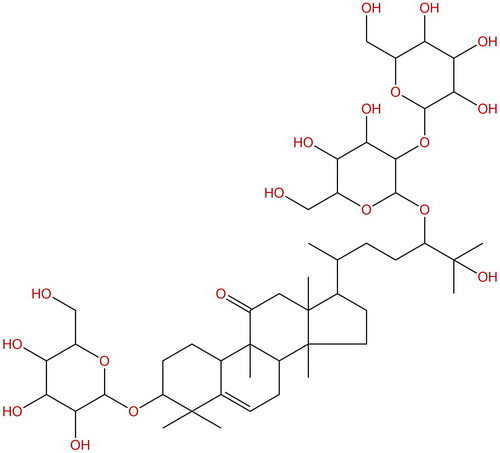


Product name: 11-Oxomogroside IIIe
Synonym name:
Catalogue No.: BP2024
Cas No.: 2096516-68-4
Formula: C48H80O19
Mol Weight: 961.149
Botanical Source:
Physical Description:
Type of Compound: Triterpenoids
Purity: 95%~99%
Analysis Method: HPLC-DAD or/and HPLC-ELSD
Identification Method: Mass, NMR
Packing: Brown vial or HDPE plastic bottle
Storage: Store in a well closed container, protected from air and light. Put into refrigerate or freeze for long term storage.
Whenever possible, you should prepare and use solutions on the same day. However, if you need to make up stock solutions in advance, we recommend that you store the solution as aliquots in tightly sealed vials at -20℃. Generally, these will be useable for up to two weeks.
The product could be supplied from milligrams to grams
Inquire for bulk scale.
For Reference Standard and R&D, Not for Human Use Directly.
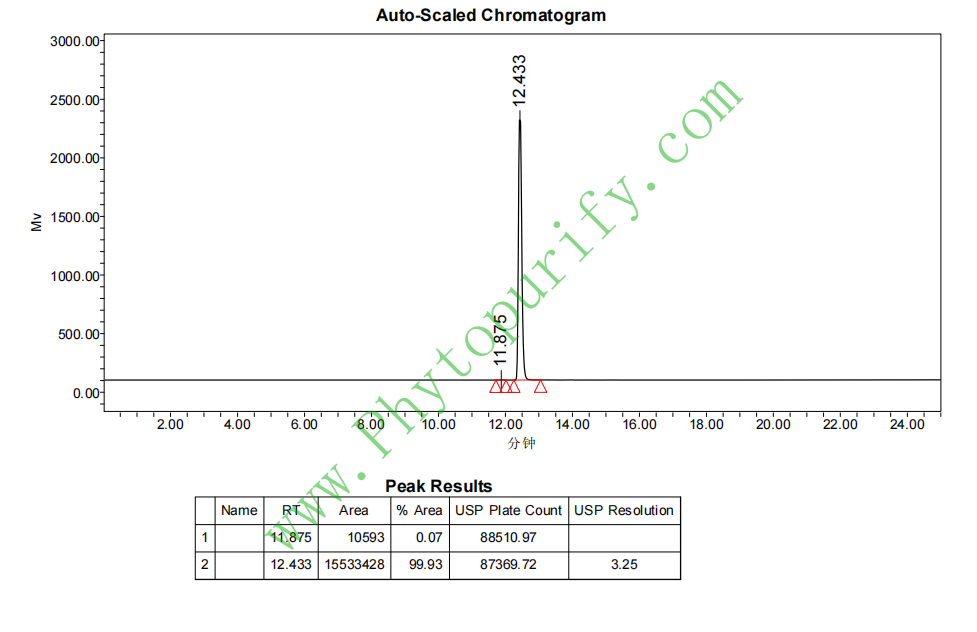
HPLC of 11-Oxomogroside IIIe
Storage conditions:Short-term storage at 2~8℃, long-term storage at -20 ~ -80℃
As the incidence rate of diabetes continues to rise, finding safe and effective anti diabetes drugs has become an important topic of global medical research. Natural products have become valuable resources for the development of new drugs due to their structural diversity and rich biological activity. Siraitia grosvenori, as a traditional Chinese medicine and natural sweetener, has attracted much attention due to its unique triterpene glycosides. 11-O - Arhat roside IIIe (11- Oxomogroside IIIe) is a citrulline triterpene glycoside isolated from Momordica grosvenorii, which has shown significant potential in the field of anti diabetes in recent years. This article will systematically review the chemical structure, pharmacological activity, mechanism of action, and drug performance evaluation of 11-O - Arhat fruit glycoside IIIe, in order to provide theoretical basis and research direction for its clinical application and new drug development.
11-O - Arhat fruit glycoside IIIe belongs to the citrulline type triterpene glycoside compound, with a complex molecular formula and a molecular weight of 961.1490. Its structural core is a pentacyclic triterpenoid skeleton, and the 11th hydroxyl group is oxidized to form a ketone group, hence it is named 11 Oxomogroside IIIe. This compound contains multiple sugar side chains, giving it high polarity and water solubility. The physicochemical property data shows that its LogP value is 1.8230, indicating that it has moderate lipid solubility and is conducive to cell membrane permeability. The polar surface area (TPSA) is as high as 315.2100, indicating strong molecular polarity that may affect its oral absorption and bioavailability. The water solubility is 0.2288, indicating that it has a certain solubility in water, which is beneficial for the development of formulations. The low permeability of the blood-brain barrier reduces the risk of central nervous system side effects. The hERG channel inhibition experiment was negative, indicating a low risk of cardiac toxicity; The Ames mutagenicity test result is 0.0, indicating that its genetic toxicity risk is extremely low and its safety is good.
11-O - Arhat grosvenori is mainly derived from Siraitia grosvenori, a perennial vine of Cucurbitaceae, native to southern China. Momordica grosvenorii fruits are widely cultivated and utilized for their natural sweetness and medicinal value. 11-O-neneneba Siraitin IIIe, as one of the main triterpene glycosides in Siraitia grosvenorii, is usually extracted and separated by the following steps:
This extraction method has high selectivity and purity, meeting the needs of subsequent pharmacological and pharmacokinetic studies.
The pharmacological activity of 11-O - Arhat fruit glycoside IIIe in the field of anti diabetes mainly focuses on its regulation of blood glucose metabolism, improvement of insulin resistance and protection of islet beta cell function.
Both in vitro and in vivo experiments showed that 11-O - Arhat fruit glycoside IIIe could significantly reduce blood glucose levels. It regulates glucose metabolism related enzymes and signaling pathways through multiple targets, promotes glucose uptake and utilization, inhibits gluconeogenesis processes, and thus exerts hypoglycemic effects.
11-O - Arhat fruit glycoside IIIe can enhance insulin signal transduction and improve insulin resistance. Research has shown that this compound promotes phosphorylation of insulin receptor substrate 1 (IRS1), activates the PI3K/AKT signaling pathway, promotes translocation of glucose transporter SLC2A4 (GLUT4) to the cell membrane, and enhances glucose uptake.
Chronic inflammation and oxidative stress are important pathological mechanisms of diabetes. 11-O - Arhat fruit glycoside IIIe shows certain anti-inflammatory and antioxidant activities, can reduce the expression of proinflammatory factors, reduce oxidative damage, and protect the function of pancreatic islet β cells.
Some studies also found that 11-O - Arhat fruit glycoside IIIe can regulate lipid metabolism, improve the function of adipose tissue, assist in controlling the disorder of glucose and lipid metabolism, and has a potential role in comprehensive metabolic regulation.
The anti diabetes effect of 11-O - Arhat fruit glycoside IIIe involves multiple signal pathways and key molecular targets, and the specific mechanism is as follows:
AMP activated protein kinase (AMPK) serves as an "energy sensor" for cellular energy metabolism, playing a central role in regulating glucose and lipid metabolism. 11-O-neneneba arhat fruit glycoside IIIe can activate AMPK (including PRKAA1 subunit), promote glucose uptake and fatty acid oxidation, inhibit gluconeogenesis and fat synthesis, and thus improve metabolic status.
Sodium glucose cotransporter 2 (SGLT2) is a key target for glucose reabsorption in the renal proximal tubules. 11-O - Arhat fruit glycoside IIIe shows inhibitory effect on SGLT2, reduces renal glucose reabsorption, promotes urine glucose excretion, and reduces blood sugar.
Glucokinase (GCK) is the rate limiting enzyme for glucose metabolism in liver and pancreatic beta cells. 11-O - Arhat fruit glycoside III enhances glucose phosphorylation rate, glucose metabolism and insulin secretion by activating GCK.
Peroxisome proliferator activated receptor gamma (PPARG) is a key regulatory factor in lipid metabolism and insulin sensitivity. 11-O - Arhat fruit glycoside IIIe can regulate the expression of PPARG, improve lipid metabolism, and alleviate insulin resistance.
11-O - Arhat fruit glycoside IIIe promotes the activation of AKT1 and PIK3R1, enhances the activity of PI3K/AKT signaling pathway, promotes glucose transport and metabolism, and maintains cell energy balance.
Dipeptidyl peptidase 4 (DPP4) is involved in the degradation of glucagon like peptide-1 (GLP-1). 11-O - Arhat fruit glycoside IIIe has a certain inhibitory effect on DPP4, prolongs the action time of GLP-1, promotes insulin secretion, and inhibits gluconeogenesis.
By promoting the phosphorylation of IRS1 and the expression of SLC2A4, 11-O-neneneba arhat fruit glycoside IIIe enhances insulin signal transduction and glucose uptake, and improves glucose metabolism disorder.
To sum up, 11-O - Arhat fruit glycoside IIIe regulates glucose and lipid metabolism and insulin signal through multi target and multi-channel synergistic action, and plays an anti diabetes effect.
The pharmaceutical evaluation of 11-O - Arhat fruit glycoside IIIe shows that it has good safety and potential drug development value.
Its molecular weight is relatively high (961.1490) and TPSA is high, indicating that oral bioavailability may be limited, but a moderate LogP value (1.8230) is beneficial for cell membrane penetration. Moderate water solubility (0.2288) is beneficial for formulation design. Low blood-brain barrier permeability reduces the risk of central nervous system side effects.
The hERG channel inhibition experiment was negative, indicating a low risk of cardiac toxicity. The Ames mutagenicity test result is 0.0, indicating extremely low genetic toxicity risk and good safety.
At present, the pharmacokinetic studies on 11-O - Arhat glycoside IIIe are relatively limited. Preliminary in vivo experiments suggest that its oral absorption is slow and its bioavailability is limited, which may be related to its high polarity and high molecular weight. Liver metabolism mainly occurs through glycoside hydrolysis and oxidation reactions, and the activity of metabolites needs further investigation. The main excretion pathways are bile and urine.
In the future, it is necessary to conduct systematic pharmacokinetic and toxicological studies, optimize administration methods and dosage forms, and enhance their clinical application potential.
As a natural triterpene glycoside, 11-O - Arhat fruit glycoside IIIe shows multi target anti diabetes activity and good safety, and has great clinical transformation potential.
11-O-neneneba Siraitin IIIe, as an important citrullitone triterpene glycoside compound in Siraitia grosvenorii, shows a broad prospect of drug development by virtue of its unique chemical structure and multi-target anti diabetes activity. It regulates glucose and lipid metabolism and insulin signaling through multiple mechanisms such as activating AMPK, inhibiting SGLT2, regulating PPARG and PI3K/AKT signaling pathways, and has good safety and potential clinical application value. In the future, it is necessary to strengthen its pharmacokinetics and clinical research, optimize its preparation technology, promote its transformation from natural products to clinical drugs, and provide new strategies and options for the treatment of diabetes and metabolic diseases.
