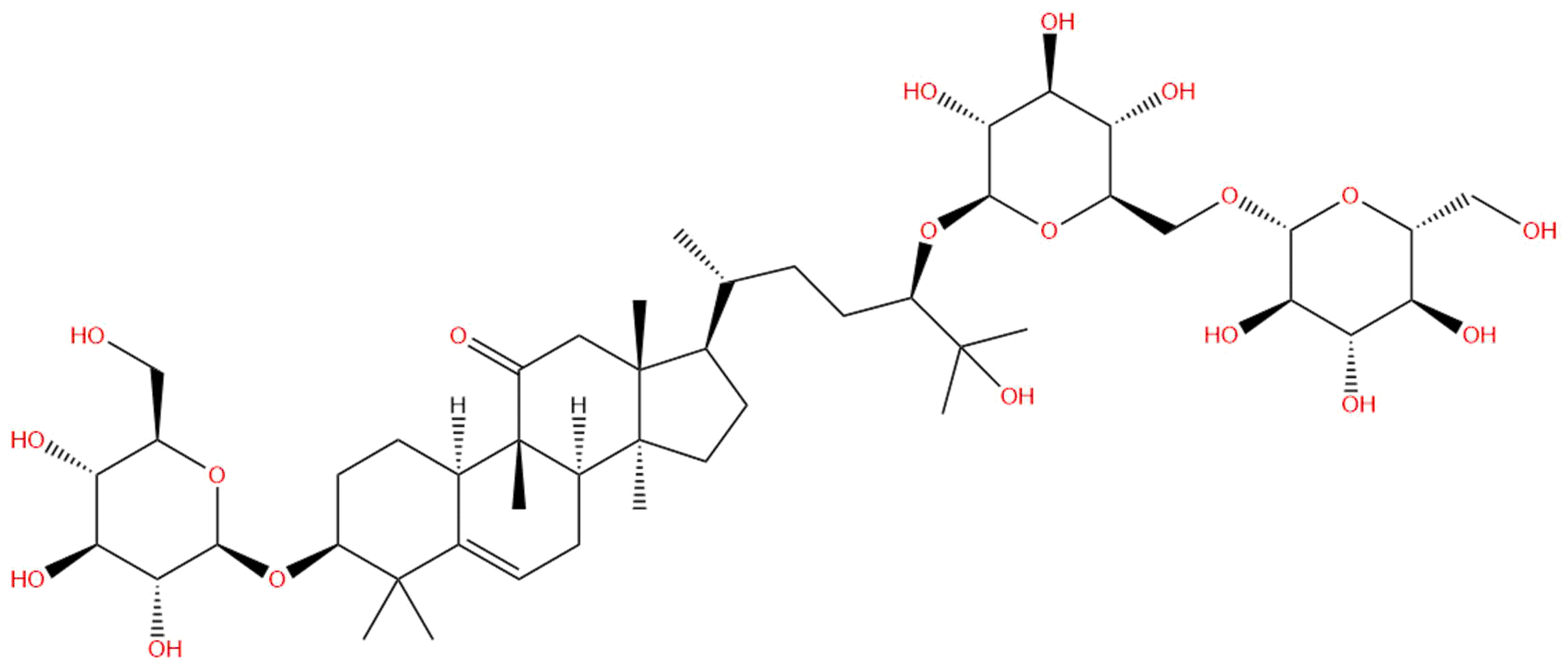


Product name: 11-Oxomogroside III
Synonym name:
Catalogue No.: BP1999
Cas No.: 952481-53-7
Formula: C48H80O19
Mol Weight: 961.149
Botanical Source: Siraitiae fructus
Physical Description:
Type of Compound: Triterpenoids
Purity: 95%~99%
Analysis Method: HPLC-DAD or/and HPLC-ELSD
Identification Method: Mass, NMR
Packing: Brown vial or HDPE plastic bottle
Storage: Store in a well closed container, protected from air and light. Put into refrigerate or freeze for long term storage.
Whenever possible, you should prepare and use solutions on the same day. However, if you need to make up stock solutions in advance, we recommend that you store the solution as aliquots in tightly sealed vials at -20℃. Generally, these will be useable for up to two weeks.
The product could be supplied from milligrams to grams
Inquire for bulk scale.
For Reference Standard and R&D, Not for Human Use Directly.
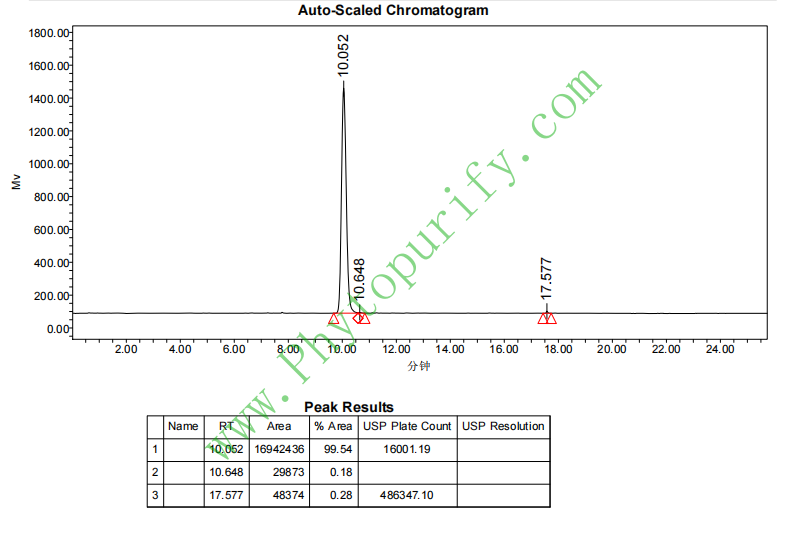
HPLC of 11-Oxomogroside III
Storage conditions:Short-term storage at 2~8℃, long-term storage at -20 ~ -80℃
315.2100
1.8858
1.8856
.2066
.4556
.6848
Low
68.7169
6.5085
No
No
No
No
No
No
0.0
Yes
No
No
Yes
Natural products, as an important source of drug discovery, play an irreplaceable role in the long struggle between humans and diseases. Among many natural products with biological activity, Momordica grosvenorii comes from cucurbitaceae plant(Siraitia grosvenorii)Arhat fruit glycosides have attracted much attention due to their unique sweet properties and significant biological activities. Momordica grosvenorii is native to Guangxi, Guangdong, Hunan and other places in China. Its fruit is not only used as a traditional sweetener, but also used in TCM theory to treat cough, sore throat and constipation. Modern pharmacological studies have revealed the great potential of Siraitia grosvenorii extract and its active components in anti-inflammatory, antioxidant, anti-tumor and metabolic disease regulation.
Among dozens of cucurbitane type triterpene glycosides contained in Momordica grosvenorii, 11-O-neneneba Momordica grosvenoride III is a member with unique structure and outstanding activity. Different from the more well-known mogroside V, 11-O-neneneba mogroside III contains a carbonyl (=O) rather than a hydroxyl (- OH) at the C-11 site. This structural difference endows it with unique physical and chemical properties and biological activity. As a cucurbitane type triterpene glycoside, 11-O-neneneba arhat fruit glycoside III has the molecular formula of C ₄₈₈₈₀₁₉₉₀₀₁₉, with a molecular weight of 961.1490, and belongs to a highly polar, macromolecular glycoside compound.
In recent years, with the global increase in the incidence rate of metabolic diseases, especially type 2 diabetes (T2DM), it has become a research hotspot to find effective and low toxic natural anti diabetes active ingredients. 11-O - Arhat fruit glycoside III has shown remarkable potential in the field of anti diabetes. Its mechanism of action involves multiple key signal pathways and targets, including AMP activated protein kinase (AMPK), sodium glucose cotransporter 2 (SGLT2), glucagon like peptide-1 (GLP-1) related enzyme dipeptidylpeptidase 4 (DPP4), and key molecules in the insulin signal pathway, such as AKT1, IRS 1, etc. This multi-target and multi pathway mode of action gives it unique advantages in treating complex metabolic syndrome.
This paper will systematically and thoroughly review 11-O-neneneba arhat fruit glycoside III from the aspects of chemical structure and physicochemical properties, plant sources and extraction methods, pharmacological activity, mechanism of action, pharmaceutical evaluation and clinical application prospects, aiming to provide a comprehensive academic reference for the in-depth research and development of this compound.
11-O-neneneba arhat fruit glycoside III belongs to cucurbitane type tetracyclic triterpene glycosides. Its glycoside skeleton is Cucurbitane, which is 19- (10 → 9 β) - abeo-10 α - lanost-5-ene and has highly oxidized characteristics. The most remarkable structural feature of this compound is that the C-11 position is carbonyl (C=O), rather than the β - hydroxy (- OH) common in most Arhat (such as siraitin V, IV). This structural difference not only affects the polarity distribution of the molecule, but also directly relates to its interaction mode with biological targets.
From the perspective of the sugar base, the glycoside C-3 and C-24 of 11-O - Arhat fruit glycoside III are connected with sugar chains respectively. Usually, the C-3 position is connected to a glucose group (Glc), while the C-24 position is connected to a disaccharide chain composed of two glucose groups (Glc Glc), forming a triple glycosidic structure. This glycosylation pattern endows the compound with extremely high water solubility (LogS of approximately 0.2066, belonging to moderate water solubility) and a large polar surface area (TPSA of 315.21 Å ²), making it difficult to penetrate the blood-brain barrier (BBB permeability is low), which to some extent reduces the risk of central nervous system toxicity.
In terms of physical and chemical properties, the molecular weight of 11-O - Arhat fruit glycoside III is 961.1490, and the lipid water partition coefficient LogP is 1.8858, indicating that it has a certain lipophilicity, but it is generally hydrophilic. This characteristic allows it to dissolve well in the gastrointestinal tract, but its transmembrane absorption capacity may be limited. It is worth noting that the compound showed a negative result (0.0) in the Ames test, indicating that it does not exhibit significant mutagenicity and has a low risk of genetic toxicity. Meanwhile, the hERG inhibition test result was negative, indicating a low risk of causing QT interval prolongation and arrhythmia in the heart, which is an important safety indicator for a candidate drug.
In summary, the chemical structure of 11-O-neneneba arhat fruit glycoside III determines its basic properties as a natural glycoside compound: high polarity, low toxicity, good water solubility and limited brain exposure. These properties lay the foundation for its application in the field of metabolic diseases (especially diabetes), and also suggest that the optimization of its oral bioavailability may need to be concerned in drug development.
The main natural source of 11-O-neneneba Siraitin III is the cucurbitaceae plant Siraitia grosvenorii(Siraitia grosvenorii (Swingle) C. Jeffrey ex A. M. Lu et Z. Y. Zhang)。 Momordica grosvenorii is a perennial vine, and its fruit is the main medicinal and edible part. Among the mature fruits of Arhat grosvenorii, the content of Siraitia grosvenorii glycosides is the most abundant, of which Siraitia grosvenorii glycoside V is the highest sweet ingredient, while 11-O - Arhat grosvenorii glycoside III is relatively low, belonging to micro active ingredients.
From the perspective of phytochemical classification, the distribution of 11-O-neneneba Siraitin III in Siraitia grosvenorii is tissue specific. Research has shown that the compound is mainly present in the flesh and peel of the fruit, with extremely low levels in the seeds. In addition, different origins, harvesting periods, and processing methods (such as fresh and dried fruits) can all affect its content. In general, due to enzymatic oxidation or thermal degradation, some siraitin V may be converted into 11-O-neneneba Siraitin III or other oxidation products in dried siraitin fruits with traditional drying process.
In terms of extraction methods, researchers usually adopt the following strategies for the high polarity and heat sensitivity of 11-O - Arhat fruit glycoside III:
Solvent extraction method The most commonly used method is to extract using water or ethanol water solutions of different concentrations. Because the LogP of 11-O-neneneba arhat fruit glycoside III is low (1.8858), water or low concentration ethanol (such as 50% -70% ethanol) has a good solubility. Usually, reflux extraction or ultrasound assisted extraction is used to improve efficiency and reduce thermal degradation. The extraction temperature is generally controlled at 60-80 ° C for 1-3 hours.
Modern extraction techniques In order to further improve extraction efficiency and selectivity, various new extraction methods have emerged in recent years. For example, microwave-assisted extraction (MAE) utilizes microwave energy to rapidly heat solvents, causing cell wall rupture and accelerating the dissolution of target substances; Enzyme assisted extraction (EAE) utilizes cellulases, pectinases, and other enzymes to disrupt the cell wall structure and increase the release rate of glycoside compounds. These methods significantly shorten the extraction time while maintaining the structural integrity of the compound.
Separation and purification: Since the extract of momordica grosvenorii contains a variety of Arhat fruit glycosides with similar structures (such as Arhat fruit glycoside IV, V, III, IIE, etc.), as well as a large number of sugars and pigments, the crude extract needs to be multi-step purified to obtain high-purity 11-O-nenenebc momordica fruit glycoside III. Common separation methods include:
It is worth noting that due to the low content of 11-O - Arhat fruit glycoside III in natural products, its large-scale preparation still faces challenges. In recent years, preliminary progress has also been made through biological transformation (such as hydrolysis of siraitin V by specific glycosidase) or chemical synthesis, which provides a material basis for subsequent pharmacological research.
The pharmacological activity of 11-O - Arhat fruit glycoside III mainly focuses on the field of anti diabetes, and also involves anti-inflammatory, antioxidant and other auxiliary effects. Its anti diabetes activity has been verified by a variety of in vitro and in vivo models.
In the cell model, 11-O-neneneba arhat fruit glycoside III can significantly promote glucose uptake by insulin resistant HepG2 hepatocytes. Research has shown that this compound can dose dependently increase glucose consumption within the concentration range of 10-50 μ M, and its effect is comparable to that of the positive control drug metformin. In addition, in 3T3-L1 adipocytes, 11-O - Arhat fruit glycoside III can promote the translocation of glucose transporter 4 (GLUT4, encoded by SLC2A4 gene) to the cell membrane, thereby enhancing insulin sensitivity.
In the animal model, the model of diabetes mice induced by streptozotocin (STZ) or the model of diabetes mice induced by high-fat diet combined with low-dose STZ was used. After oral administration of 11-O - Arhat fruit glycoside III (50-200 mg/kg/d) for 4-6 weeks, it was observed that the fasting blood glucose level decreased significantly, the glucose tolerance improved, and the serum insulin level tended to normalize. It is worth noting that this compound did not cause hypoglycemic reactions while lowering blood sugar levels, demonstrating good safety.
Insulin resistance is the core pathological link of type 2 diabetes. 11-O-neneneba arhat fruit glycoside III can improve insulin resistance by activating insulin signaling pathway. In HepG2 cells with insulin resistance induced by palmitic acid, this compound can restore AKT1 phosphorylation levels under insulin stimulation, upregulate IRS1 expression, and inhibit the release of inflammatory factors such as TNF - α and IL-6. This indicates that it not only directly affects glucose metabolism, but also indirectly improves insulin sensitivity through anti-inflammatory pathways.
In addition to the hypoglycemic effect, 11-O-neneneba arhat fruit glycoside III also showed the activity of regulating lipid metabolism. In the obese diabetes mouse model, the compound can reduce the levels of serum total cholesterol (TC), triglyceride (TG) and low-density lipoprotein cholesterol (LDL-C), while increasing the level of high-density lipoprotein cholesterol (HDL-C). Liver histological analysis shows that it can alleviate hepatic steatosis and reduce lipid droplet accumulation. This effect is closely related to its activation of the AMPK signaling pathway, inhibition of fatty acid synthase (FAS) and acetyl CoA carboxylase (ACC) activity.
The decline of islet beta cell function is a key factor in the progress of diabetes. 11-O-neneneba arhat fruit glycoside III can protect MIN6 pancreatic islet β cells from apoptosis induced by high glucose or oxidative stress in vitro. By reducing intracellular reactive oxygen species (ROS) levels, upregulating the expression of anti apoptotic protein Bcl-2, and inhibiting the activation of caspase-3, this compound effectively maintains the survival rate and insulin secretion ability of beta cells.
Chronic low-grade inflammation and oxidative stress are the common soil of diabetes and its complications. 11-O-neneneba arhat fruit glycoside III can significantly inhibit the expression of proinflammatory factors (such as iNOS, COX-2) and reduce the production of NO in LPS stimulated macrophages. In DPPH and ABTS radical scavenging experiments, it also showed moderate antioxidant activity, although weaker than vitamin C. As a glycoside compound, its antioxidant effect may be amplified in vivo through metabolites or indirect pathways.
The anti diabetes effect of 11-O - Arhat fruit glycoside III is not achieved through a single target, but through a multi-target, multi-channel coordinated regulatory network. Based on existing research, its core mechanism of action can be summarized as follows:
AMP activated protein kinase (AMPK) is a core sensor of cellular energy metabolism, known as the "metabolic master switch". 11-O-neneneba arhat fruit glycoside III can directly or indirectly activate AMPK. In liver and muscle cells, this compound can increase the AMP/ATP ratio or promote phosphorylation of the Thr172 site of the AMPK α subunit through the upstream kinase LKB1. Activated AMPK subsequently phosphorylates and inhibits ACC, promoting fatty acid oxidation; Simultaneously inhibiting mTORC1 signaling and reducing lipid and protein synthesis. In addition, activation of AMPK can promote GLUT4 translocation and glucose uptake, improving insulin sensitivity. The target PRKAA1 (encoding AMPK α 1 catalytic subunit) is a key node in this pathway.
The integrity of the insulin signaling pathway is crucial for maintaining blood glucose homeostasis. 11-O-neneneba arhat fruit glycoside III can enhance insulin signal transduction. Specifically, it can upregulate the protein level of IRS1 (insulin receptor substrate 1) and promote its tyrosine phosphorylation, thereby enhancing the activation of PI3K (phosphatidylinositol 3-kinase). The activation of PI3K leads to an increase in PIP3 production, which in turn recruits and activates AKT1 (protein kinase B). Activated AKT1 promotes the translocation of GLUT4 (SLC2A4) to the cell membrane and increases glucose uptake; On the other hand, inhibiting the expression of key gluconeogenic enzymes such as PEPCK and G6Pase reduces liver glucose output. PIK3R1 (encoding the regulatory subunit p85 α of PI3K) is also an important target in this pathway.
Sodium glucose cotransporter 2 (SGLT2) is mainly distributed in the renal proximal tubules and is responsible for reabsorbing approximately 90% of filtered glucose. 11-O-neneneba arhat fruit glycoside III was found to inhibit the activity of SGLT2. Molecular docking and dynamic simulation studies have shown that the compound can bind to the active site of SGLT2, competitively inhibiting glucose reabsorption, thereby increasing urinary glucose excretion and lowering blood glucose levels. This mechanism is similar to marketed SGLT2 inhibitors such as dapagliflozin and empagliflozin, but as a natural product, it may have different binding modes and side effect profiles.
Dipeptidyl peptidase 4 (DPP4) is a key enzyme in the degradation of glucagon like peptide-1 (GLP-1) in vivo. GLP-1 can promote insulin secretion, inhibit glucagon release, delay gastric emptying, and increase satiety. 11-O-neneneba arhat fruit glycoside III has been proved to be able to inhibit the enzyme activity of DPP4. In vitro enzymatic experiments, its IC ₅₀ value is in the micromolar range. By inhibiting DPP4, this compound can prolong the half-life of endogenous GLP-1, enhance its biological effects, and promote insulin secretion in a glucose dependent manner, thereby reducing postprandial blood glucose.
Glucokinase (GCK) is a glucose sensor in liver and pancreatic beta cells, catalyzing the phosphorylation of glucose to 6-phosphate glucose, which is the first step in glucose metabolism. 11-O-neneneba arhat fruit glycoside III can activate GCK and reduce its Michaelis constant (Km), so that it can play a catalytic role at a lower glucose concentration. In liver cells, activation of GCK promotes glycogen synthesis; In beta cells, glucose stimulated insulin secretion is enhanced. The regulation of the target PPARG (peroxisome proliferator activated receptor gamma) may also be involved, indirectly affecting systemic glucose metabolism by improving insulin sensitivity in adipose tissue.
In conclusion, 11-O - Arhat fruit glycoside III forms a systemic blood glucose regulation network from liver, muscle, fat to kidney and pancreas by simultaneously acting on multiple key targets such as AMPK, insulin signal, SGLT2, DPP4 and GCK. This multi target synergy mode has potential advantages in the treatment of complex type 2 diabetes, which can simultaneously improve insulin resistance, promote insulin secretion, reduce liver sugar output and increase urine sugar excretion.
To convert 11-O-neneneba arhat fruit glycoside III from a natural active ingredient to a clinical candidate drug, its drug potency and pharmacokinetics (ADME) properties need to be systematically evaluated.
According to Lipinski's "Rule of Five", the molecular weight of 11-O-neneneba arhat fruit glycoside III (961.15 Da) is far more than 500 Da, LogP (1.8858) is within the acceptable range, and the number of hydrogen bond donors (about 12 hydroxyl groups) and receptors (19 oxygen atoms) both exceed 5. Therefore, this compound strictly violates the Lipinski rule and belongs to the category of compounds that exceed the rule. However, many successful natural product drugs, such as cyclosporine and rapamycin, also do not comply with this rule, indicating the need for more flexible evaluation criteria for natural glycoside compounds.
From other parameters, TPSA is as high as 315.21 Å ², far above the threshold of 140 Å ², indicating poor oral absorption. However, it also means that it is not easy to penetrate the blood-brain barrier and has a low risk of central neurotoxicity. Water solubility (LogS=0.2066) is moderate and acceptable. The hERG inhibition and Ames test were both negative, indicating a low risk of cardiac and genetic toxicity and good safety.
At present, the systematic study on the pharmacokinetics of 11-O - Arhat III in vivo is not sufficient, but it can be reasonably inferred based on the studies of similar Arhat (such as mogroside V).
Given its potential low oral bioavailability, developing appropriate formulation techniques is key to enhancing its drug efficacy. Possible strategies include:
- nano-formulation Such as liposomes, nanoemulsions, solid lipid nanoparticles, etc., can improve their solubility and membrane permeability.
- Prodrug design By chemical modification, such as esterification of hydroxyl groups, lipid solubility can be improved, allowing it to release the original drug after enzymatic hydrolysis in the body.
- Absorption enhancer Combined with P-glycoprotein inhibitors or penetration enhancers to enhance intestinal absorption.
- Intestinal targeted delivery Design colon targeted formulations to be released in areas rich in gut microbiota, utilizing microbial metabolism to produce active metabolites.
As a natural product with multi target anti diabetes activity, 11-O-neneneba arhat fruit glycoside III has broad clinical application prospects, but also faces many challenges.
Type 2 diabetes is a complex metabolic disease. Drugs with a single target are often difficult to effectively control the disease for a long time, and often accompanied by side effects. The multi-target action mode (AMPK, SGLT2, DPP4, GCK, insulin pathway) of 11-O - Arhat fruit glycoside III makes it have the potential to develop into a "multi-target anti diabetes drug". It may achieve multiple effects of lowering blood sugar, reducing weight, improving insulin resistance, and protecting pancreatic beta cell function simultaneously, similar to the effect of combination therapy, but with fewer side effects.
In addition, its natural source and good safety (no genetic toxicity, no hERG inhibition) are significant advantages over synthetic drugs. Under the health concept of "returning to nature", the development of natural health products or functional foods based on siraitia grosvenorii for the intervention of pre diabetes population also has important market value.
Complications of diabetes (such as nephropathy, retinopathy, neuropathy) are the main causes of disability and death. The anti-inflammatory and antioxidant activities of 11-O - Arhat fruit glycoside III, as well as its inhibitory effect on SGLT2, suggest that it may have a protective effect in diabetes nephropathy (DKD). SGLT2 inhibitors have been proved to be able to delay the progress of DKD, while 11-O - Arhat fruit glycoside III may have a synergistic renal protective effect if it can simultaneously inhibit SGLT2 and activate AMPK. In addition, its protective effect on vascular endothelial function is also worth exploring in the cardiovascular complications of diabetes.
Considering its multi target characteristics, 11-O - Arhat fruit glycoside III may have synergistic effect when used in combination with other anti diabetes drugs (such as metformin, GLP-1 receptor agonist, DPP4 inhibitor). For example, when combined with metformin, it can simultaneously activate AMPK (the main mechanism of metformin) and inhibit SGLT2/DPP4, achieving complementary mechanisms. This combination therapy strategy is expected to improve efficacy and reduce side effects while reducing drug dosage.
Despite the bright prospect, the clinical transformation of 11-O-neneneba arhat fruit glycoside III still faces the following challenges:
- The issue of bioavailability Poor oral absorption is the biggest bottleneck. In the future, it is necessary to focus on studying its intestinal metabolism patterns and developing efficient delivery systems or prodrugs.
- Large scale preparation Low natural content, high extraction and purification costs. It is necessary to develop biosynthesis (such as yeast cell factories) or chemical enzymatic synthesis technologies to achieve large-scale production.
- In depth pharmacological research At present, most studies focus on the field of anti diabetes, and its potential in anti-inflammatory, anti-tumor, neuroprotective and other aspects has not been fully exploited. In addition, its impact on gut microbiota and its interaction with host metabolism is a new direction worth exploring in depth.
- Preclinical safety evaluation Although the initial toxicity is low, systematic evaluations of long-term toxicity, reproductive toxicity, carcinogenicity, and other factors still need to be improved.
11-O-neneneba Siraitin III, as a unique citrullitone triterpenoid glycoside in Siraitia grosvenorii, shows a multi-target anti diabetes activity beyond its homologues by virtue of its unique structure of the C-11 carbonyl group. It synergistically regulates glucose and lipid metabolism, improves insulin resistance, and protects pancreatic beta cell function by activating AMPK, enhancing insulin signaling, inhibiting SGLT2 and DPP4, activating GCK, and other mechanisms. Its excellent safety features (low genetic toxicity, low cardiac toxicity) have laid the foundation for its further development.
Although there are still challenges in oral bioavailability and large-scale preparation, with the deepening of modern drug delivery technology, biosynthesis technology and systematic pharmacology research, 11-O - Arhat fruit glycoside III is expected to move from laboratory to clinical and become a new natural drug lead compound for the treatment of type 2 diabetes and its complications. At the same time, it also provides a successful example for mining multi-target active ingredients from traditional medicinal and edible plants, highlighting the eternal value of natural products in modern drug discovery. Future research should focus on addressing the bottleneck of drug development and systematically exploring its therapeutic potential in metabolic syndrome and related diseases.
