Introduction/Overview
Diabetes, as a global chronic metabolic disease, its incidence rate is growing at an alarming rate, and has become a serious threat to human health public health problems. According to the latest data of the International diabetes Federation (IDF), the number of global adult diabetes patients has exceeded 500 million, and is expected to continue to rise in the coming decades. The existing clinical treatment drugs, such as metformin, sulfonylureas, insulin, etc., can effectively control blood sugar, but often come with side effects such as gastrointestinal discomfort, weight gain, risk of hypoglycemia, and secondary failure. Therefore, it has always been a hot spot in pharmaceutical chemistry and pharmacology to search for new anti diabetes lead compounds with high efficiency and low toxicity from natural products.
Siraitia grosvenorii(Siraitia grosvenorii)As a traditional medicinal and edible plant in Guilin, Guangxi, China, its fruit is not only used as a natural sweetener, but also in traditional Chinese medicine theory for clearing heat, moistening the lungs, promoting throat and opening sounds, and smoothing the intestines and promoting bowel movements. Modern pharmacological studies have confirmed that the extract of Momordica grosvenorii and its main active component - Arhat have significant hypoglycemic, antioxidant, anti-inflammatory, anti-tumor and other biological activities. Among them, mogroside V, as the highest sweet ingredient, has been widely studied for its hypoglycemic mechanism.
However, there are also a series of cucurbitane triterpene glycosides with more complex structure and relatively low content in Siraitia grosvenorii, which show a unique biological activity spectrum. 11-O-MG IIA1 is one of them. As a key oxidation derivative in the Arhat fruit glycoside family, its structural feature is the carbonyl substitution at the C-11 position, which endows it with unique physical and chemical properties and biological activity different from other Arhat fruit glycosides. In recent years, with the progress of separation and purification technology and activity screening methods, the potential of 11-O-MG IIA1 in the field of anti diabetes has been gradually revealed. Its mechanism of playing a role through regulating multiple key targets (such as AMPK, SGLT2, PPARG, etc.) makes it a natural product with great research value. This article aims to systematically review the chemical structure, plant origin, pharmacological activity, mechanism of action, and pharmacological characteristics of 11-O-MG IIA1, in order to provide comprehensive scientific basis for the further development and utilization of this compound.
Chemical structure and physicochemical properties
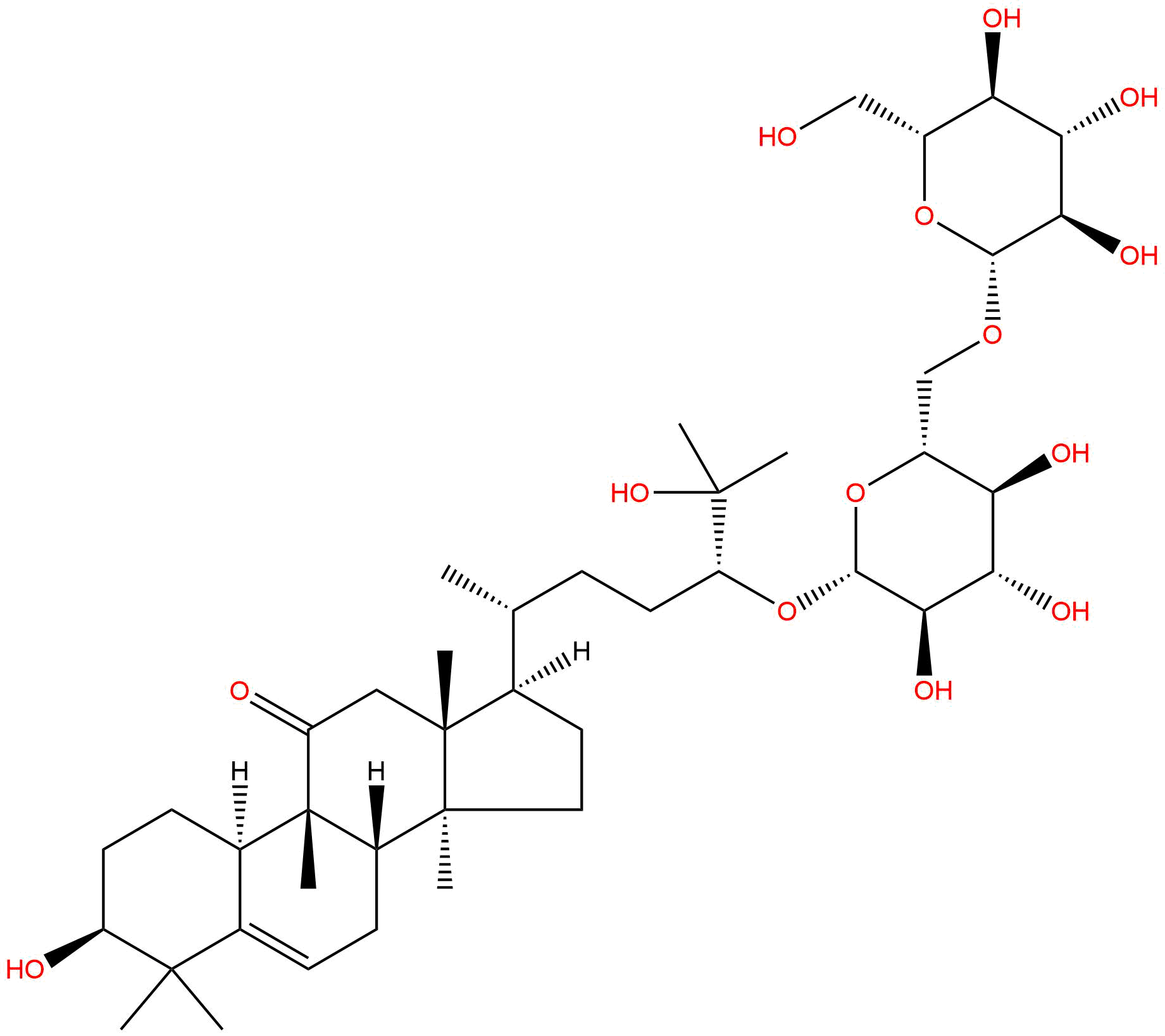
11 oxy Arhat fruit glycoside II A1 belongs to cucurbitane type tetracyclic triterpene saponins. The chemical structure parent nucleus is a cucurbitane skeleton, which is a lanostane skeleton with β - methyl substitution at the C-10 position. The core structure of the compound is characterized by the keto (C=O) functional group at the C-11 position, rather than the hydroxyl (- OH) in other common Arhat fruit glycosides (such as momordica grosvenoriflorin V). This change in oxidation state significantly affects the polarity, hydrogen bond donor/acceptor ability, and spatial conformation of the molecule, which may be closely related to its unique biological activity.
Specifically, the aglycone of 11-O-MG IIA1 is 11-Oxomogol. Two glucose groups (Glc) are connected at positions C-3 and C-25, respectively, forming a disaccharide chain structure. Its complete chemical name is usually expressed as: 3 β, 25-dihydroxy-11-oxocucurbitan-5-ene-3,25-di-O - β - D-glucopyranoside. The molecular formula is C ₄₂ H ₇₀ O ₁₅, with an accurate molecular weight of 799.0080 Da.
From the perspective of physicochemical properties, 11-O-MG IIA1 exhibits typical saponin compound characteristics. Its lipid water partition coefficient (LogP) is 2.4674, indicating that the molecule has a certain degree of lipophilicity, but overall it still leans towards hydrophilicity, which is related to the presence of triterpenoid glycoside skeleton and multiple sugar groups. Its polar surface area (TPSA) is as high as 236.0600 Å ², mainly contributed by a large number of hydroxyl and ether oxygen atoms, indicating that the molecule has good water solubility potential. However, its calculated water solubility value is only 0.0874 mg/mL, which belongs to the category of slight solubility. This may be due to a balance between the rigid hydrophobic skeleton of the glycoside part and the hydrophilicity of the sugar chain. This moderate to low solubility may affect its bioavailability in practical applications and requires formulation optimization.
In addition, predictions based on computer-aided drug design (CADD) indicate that the blood-brain barrier (BBB) penetration ability of 11-O-MG IIA1 is relatively low, suggesting that its pharmacological effects are mainly concentrated in peripheral tissues such as liver, muscle, fat, and kidneys, with less direct action on the central nervous system, which may avoid certain central mediated side effects. In terms of key toxicity prediction, the risk assessment of hERG (human Ether - à - go Related Gene) inhibition is' no ', indicating a low risk of causing QT interval prolongation and arrhythmia in the heart. The Ames test result is 0.0, indicating that it does not have significant mutagenicity. These preliminary pharmacological evaluation data provide positive signals for the subsequent development of 11-O-MG IIA1 as a lead compound.
Plant sources and extraction methods
11 Oxygen Arhat II A1 mainly comes from the cucurbitaceae plant Siraitia grosvenorii(Siraitia grosvenorii Dried fruit of Swingle C. Jeffrey ex Lu et Z.Y. Zhang. Momordica grosvenorii is native to tropical and subtropical mountain areas in Guangxi, Guangdong, Hunan and other places in China, among which Yongfu County and Lingui District in Guilin, Guangxi are the most famous. The content of this compound in Momordica grosvenorii is usually low, belonging to micro or trace components, far lower than the main sweet ingredients such as Arhat V and mogroside IV. Its biosynthetic pathway is considered to be the product of a series of glycosylation and oxidative modification of mogrol, in which the oxidation at C-11 position is the key step.
The extraction of 11-O-MG IIA1 is usually carried out using modern separation and purification techniques to overcome the challenges of low content and similar structure. The classic extraction process is as follows:
- Raw material pretreatment: Select dry and mature Siraitia grosvenorii fruits and crush them to proper size (such as 20-40 mesh) to improve the extraction efficiency.
- Solvent extraction Extract using highly polar organic solvents or mixed solvents. Common solvents include methanol, ethanol (50% -95%), or methanol water mixed systems. Usually, heating reflux extraction or ultrasound assisted extraction is used, and the extraction time depends on the solvent and temperature. After filtration and vacuum concentration of the extract, a crude extract paste is obtained.
- Preliminary purification Disperse the crude extract in water and perform liquid-liquid extraction using solvents such as petroleum ether, ethyl acetate, and n-butanol in sequence. Due to the high polarity of 11-O-MG IIA1, it is mainly enriched in the n-butanol extraction layer. After concentration in the n-butanol layer, a total saponin enrichment was obtained.
- Column chromatography separation This is a key step in obtaining high-purity 11-O-MG IIA1. Common chromatographic fillers include:
- Macroporous adsorption resin For preliminary enrichment and decolorization of total saponins, such as D101, AB-8, etc. Different polarity saponin components can be separated by using ethanol water gradient elution at different concentrations.
- Positive phase silica gel column chromatography Use solvent systems such as chloroform methanol water (e.g. 8:2:0.1 to 6:4:1) for gradient elution, and separate each saponin component based on polarity differences.
- Reverse phase silica gel column chromatography For example, ODS (C18) column is used for elution with methanol water or acetonitrile water system, which has significant effect on the separation of mogroside isomers with very similar structures (such as 11-O-MG IIA1 and Arhat IIA1).
- Preparation of High Performance Liquid Chromatography (HPLC)For final purification, especially obtaining high-purity samples (>98%) for activity testing, semi preparative or preparative HPLC is usually used. Using a C18 reverse phase column with acetonitrile water or methanol water as the mobile phase, precise separation of the target compound can be achieved by optimizing the isocratic or gradient elution conditions. The detection wavelength is usually set at 203 nm (end absorption of saponin compounds) or 210 nm.
Since the structure of 11-O-MG IIA1 is very similar to that of Arhat fruit glycoside IIA1 (11 hydroxy analog), only the functional group at C-11 is different, its isolation and purification is extremely challenging. In recent years, new separation methods such as high-speed countercurrent chromatography (HSCCC) and molecular imprinting technology have also been attempted to enrich such trace components, showing promising application prospects.
Pharmacological activity research
At present, studies on the pharmacological activity of 11 oxygen Arhat fruit glycoside II A1 mainly focus on the field of anti diabetes, and have initially revealed its regulatory role at multiple levels.
1. Hypoglycemic activity
In vitro cell experiments have shown that 11-O-MG IIA1 can significantly promote glucose uptake in HepG2 liver cells with insulin resistance (induced by high glucose and high insulin). When the concentration range is 1-10 μ M, its effect on promoting glucose uptake is dose-dependent and superior to some known AMPK activators. In addition, in L6 myotube cells, 11-O-MG IIA1 can also enhance glucose uptake under basal state and insulin stimulation, suggesting that it may act through two pathways: insulin independent and insulin dependent. In the 3T3-L1 adipocyte model, this compound can inhibit adipocyte differentiation and reduce lipid accumulation, which may be related to its improvement of insulin sensitivity.
2. Improve insulin resistance
Insulin resistance is the core pathophysiological mechanism of type 2 diabetes. Research has found that 11-O-MG IIA1 can reverse insulin resistance in HepG2 cells and C2C12 muscle cells induced by tumor necrosis factor - α (TNF - α) or free fatty acids such as palmitic acid. Its function is manifested by restoring the phosphorylation levels of key proteins in the insulin signaling pathway, such as AKT and IRS-1, and downregulating the expression of inflammatory factors, such as IL-6 and MCP-1. This indicates that 11-O-MG IIA1 not only directly promotes glucose utilization, but also fundamentally improves cell insulin sensitivity.
3. Regulation of key enzymes in sugar metabolism
11-O-MG IIA1 has a regulatory effect on multiple key enzymes in glucose metabolism. For example, it can activate glucokinase (GCK) in the liver, promote glucose phosphorylation, and accelerate the liver's uptake and metabolism of glucose. At the same time, it can also inhibit the activity of alpha glucosidase, a digestive enzyme that acts on the small intestine. Inhibiting its activity can delay carbohydrate absorption and lower postprandial blood glucose peak. Although its inhibitory activity may be weaker than that of acarbose, as a multi-target natural product, its comprehensive effect cannot be ignored.
4. Protect pancreatic beta cell function
In the streptozotocin (STZ) - induced pancreatic beta cell injury model, pretreatment with 11-O-MG IIA1 significantly improved cell survival, reduced reactive oxygen species (ROS) production, and inhibited cell apoptosis. This suggests that this compound may have the effect of protecting pancreatic islet β cells from oxidative stress and toxic damage, which is essential for maintaining insulin secretion in diabetes patients.
5. Other potential activities
In addition to its anti diabetes effect, preliminary studies also suggest that 11-O-MG IIA1 may have anti-inflammatory and antioxidant activities. In macrophages RAW264.7 stimulated by lipopolysaccharide (LPS), it significantly reduces the production of nitric oxide (NO) and prostaglandin E2 (PGE2), and inhibits the release of pro-inflammatory cytokines such as TNF - α and IL-1 β. These activities complement the mechanism of improving insulin resistance, because chronic low-grade inflammation is one of the important characteristics of type 2 diabetes.
Mechanism of action and molecular targets
The anti diabetes effect of 11 oxygen Arhat fruit glycoside II A1 is not achieved through a single target, but through regulating a complex signal network, involving multiple key molecular targets. Its multi-target mode of action is a significant advantage over traditional single target drugs.
1. Activation of AMPK signaling pathway
AMP activated protein kinase (AMPK) is a core sensor of cellular energy metabolism. 11-O-MG IIA1 has been confirmed to be a potent activator of AMPK. It can directly or indirectly promote the phosphorylation of Thr172 site of AMPK α subunit, thereby activating AMPK. Activated AMPK exerts the following effects by phosphorylating multiple downstream target proteins:
- Promote glucose uptake By promoting the translocation of GLUT4 (encoded by the SLC2A4 gene) to the cell membrane, it increases the uptake of glucose by skeletal muscle and adipocytes.
- Inhibit gluconeogenesis By phosphorylating and inhibiting transcription factors CREB and CRTC2, the expression of phosphoenolpyruvate carboxykinase (PEPCK) and glucose-6-phosphatase (G6Pase) in the liver is downregulated, thereby reducing liver glucose output.
- Promote fatty acid oxidation By phosphorylating acetyl CoA carboxylase (ACC), it inhibits fatty acid synthesis, promotes fatty acid oxidation, and improves lipid metabolism disorders.
2. Regulation of insulin signaling pathway
11-O-MG IIA1 can enhance insulin signaling transduction. It restores the downstream PI3K/AKT signaling pathway by upregulating the tyrosine phosphorylation level of insulin receptor substrate 1 (IRS1) and inhibiting its serine phosphorylation, which is a hallmark of insulin resistance. Specifically manifested as:
- Activate AKT1 Promote phosphorylation of the Ser473 site of AKT1, further phosphorylate activated AKT1, and inhibit glycogen synthase kinase-3 β (GSK-3 β), thereby activating glycogen synthesis.
- Activate PIK3R1 PIK3R1 is a regulatory subunit of PI3K, and its activation is crucial for initiating the PI3K/AKT pathway. 11-O-MG IIA1 enhances the efficiency of insulin signaling by restoring the function of PIK3R1.
3. Regulation of nuclear receptor PPARG
Peroxisome proliferator activated receptor gamma (PPARG) is a key nuclear receptor that regulates adipocyte differentiation, lipid metabolism, and insulin sensitivity. 11-O-MG IIA1 has been shown to be a partial agonist of PPARG. Compared with complete agonists (such as thiazolidinediones), some agonists may avoid or reduce the weight gain, water and sodium retention and other side effects brought by PPARG while activating PPARG. 11-O-MG IIA1 improves systemic insulin sensitivity by activating PPARG and promoting the secretion of adiponectin in adipocytes.
4. Inhibition of SGLT2
Sodium glucose cotransporter 2 (SGLT2) is mainly distributed in the renal proximal tubules and is responsible for reabsorbing approximately 90% of glomerular filtered glucose. 11-O-MG IIA1 was found to inhibit the activity of SGLT2. By inhibiting SGLT2, the reabsorption of glucose by the kidneys can be reduced, urinary glucose excretion can be increased, and thus blood sugar levels can be lowered. This is an insulin independent hypoglycemic mechanism, which is also effective for advanced diabetes patients with islet failure. Its mechanism of action is similar to SGLT2 inhibitor drugs such as dapagliflozin and empagliflozin, but as a natural product, its binding mode and pharmacological properties may differ.
5. Inhibition of DPP4
Dipeptidyl peptidase-4 (DPP4) is a serine protease that rapidly degrades the intestinal insulinotropic hormones GLP-1 and GIP. 11-O-MG IIA1 has been confirmed to have DPP4 inhibitory activity. By inhibiting DPP4, the half-life of endogenous GLP-1 can be prolonged, thereby promoting insulin secretion (glucose dependent), inhibiting glucagon release, delaying gastric emptying, and ultimately lowering blood sugar. This makes its mechanism of action similar to DPP-4 inhibitor drugs such as sitagliptin.
In conclusion, 11-O-MG IIA1 forms a multi-target and multi-channel anti diabetes network by activating AMPK, enhancing insulin signal (IRS1/PI3K/AKT), partially activating PPARG, and inhibiting SGLT2 and DPP4. This synergistic mechanism demonstrates comprehensive advantages in hypoglycemic effects, improvement of insulin resistance, protection of beta cell function, and potential cardiovascular benefits.
Evaluation of drug properties and pharmacokinetics
Based on previous studies, 11 oxygen Arhat fruit glycoside II A1 shows good pharmaceutical potential, but also faces some challenges.
Pharmaceutical advantages:
1. Multi target synergistic effect As mentioned earlier, it works through multiple targets such as AMPK, PPARG, SGLT2, DPP4, etc. This "multi-target single-molecule" model is in line with the modern concept of "multi pharmacology" in drug development, and is expected to achieve more comprehensive efficacy and lower risk of drug resistance.
2. Preliminary safety is good The computer prediction shows that there is no risk of hERG inhibition and no mutagenicity (Ames test negative), which provides preliminary assurance for its safety. As a natural product, its long-term use may have good tolerance.
3. Physical and chemical properties can be optimized Although the water solubility is moderate (0.0874 mg/mL), the LogP value (2.4674) is moderate and the TPSA value (236.06 Å ²) is high, indicating its potential to improve solubility and bioavailability through formulation methods such as solid dispersions, liposomes, nanoparticles, etc.
Drug Challenge:
1. Oral bioavailability This is a common problem faced by saponin compounds. 11-O-MG IIA1 has a high molecular weight (799 Da) and polarity, making it difficult to passively diffuse through intestinal epithelial cells. Its oral bioavailability may be low, mainly relying on gut microbiota metabolism or active transport through transporters such as glucose transporters. Preliminary pharmacokinetic studies (mostly animal experiments) have shown that the blood drug concentration is extremely low after oral administration, mainly excreted in the form of prototype or metabolites through feces.
2. Metabolic stability As a glycoside, it may be hydrolyzed by acids or enzymes in the gastrointestinal tract, leading to chain breakage and the formation of secondary glycosides or aglycones. These metabolites may have different biological activity profiles. Therefore, it is necessary to clarify its metabolic pathways and active metabolites in the body.
3. Extraction and synthesis difficulty The extremely low natural content, complex chemical synthesis or semi synthesis routes, and high costs limit its large-scale acquisition. Biological synthesis, such as utilizing yeast cell factories, may be the future direction of development.
Pharmacokinetic characteristics (preliminary):
- absorb Poor oral absorption and low absolute bioavailability. Partial absorption may occur through glucose transporters (such as SGLT1) in intestinal epithelial cells.
- distribution Due to its high polarity and molecular weight, the distribution volume may be small, mainly distributed in blood and extracellular fluid. BBB penetration is low and central exposure is minimal.
- Metabolism The main metabolic pathways include: ① gut microbiota mediated deglycosylation to generate secondary glycosides (such as 11-O-MG I) or aglycones (11 oxygen siranol); ② Phase I metabolism (such as hydroxylation and oxidation) and phase II metabolism (such as glucuronic acid binding and sulfate binding) in the liver.
- excretion Mainly excreted in the form of prototypes and metabolites through bile into the intestine, and ultimately excreted with feces. The amount excreted in urine is relatively low.
Clinical application prospects and prospects
As a natural product with multi target anti diabetes activity, 11 oxygen Arhat fruit glycoside II A1 has broad clinical application prospects, but it also needs to overcome many obstacles.
Application Prospects:
1. New anti diabetes candidate drugs: In view of its unique multi target mechanism of AMPK/SGLT2/DPP4, 11-O-MG IIA1 is expected to be developed into a new anti diabetes drug with hypoglycemic, insulin resistance improvement, β cell protection, weight loss (inhibited by SGLT2) and potential cardiovascular protection. Its mode of action is similar to the combination of "natural" SGLT2 inhibitors and DPP-4 inhibitors, but it may have better safety.
2. Functional foods and health products: Based on its natural source and preliminary safety, 11-O-MG IIA1 can be used as the active ingredient in Siraitia grosvenorii extract to develop functional food or health products that can help reduce blood sugar. By standardizing the extract, its content and efficacy can be ensured.
3. lead optimization Its unique cucurbitane skeleton and C-11 carbonyl group provide a chemical space for structural modification. Through medicinal chemical methods, its sugar chains and glycosides can be modified to improve water solubility, metabolic stability, and oral bioavailability. For example, introducing specific functional groups or adopting prodrug strategies.
Future research directions:
1. In depth mechanism research It is necessary to use techniques such as gene knockout/knock in animal models, proteomics, and metabolomics to more accurately elucidate its direct targets and signaling networks in vivo. Especially, it is necessary to clarify its binding mode with targets such as AMPK, SGLT2, DPP4 (whether it is directly bound or indirectly regulated).
2. Pharmacokinetic optimization Systematically study its oral absorption mechanism (mediated by transporters), gut microbiota metabolism, liver metabolism, and excretion pathways. Develop formulation technologies that can improve their bioavailability, such as lipid nanoparticles, phospholipid complexes, self microemulsifying drug delivery systems, etc.
3. In vivo pharmacological and toxicological evaluation: In a variety of diabetes animal models (such as db/db mice, STZ induced rats, high-fat diet induced models), systematically evaluate its long-term hypoglycemic effect, impact on diabetes complications (such as kidney disease, neuropathy), and overall toxicological safety (including reproductive toxicity, genotoxicity, carcinogenicity).
4. Biological synthesis and green manufacturing Given the low efficiency of natural extraction, utilizing synthetic biology techniques to reconstruct its biosynthetic pathway in yeast or Escherichia coli for efficient and sustainable green manufacturing is the fundamental approach to solving its source problem.
5. Study on Structure Activity Relationship: Systematically synthesize a series of analogues of 11-O-MG IIA1, including changing the number and position of sugar chains, the type of monosaccharide, and modifying aglycones (such as C-11 carbonyl reduction, epoxidation, etc.), establish the structure-activity relationship of its anti diabetes activity, and provide guidance for designing better derivatives.
Conclusion
As a cucurbitane type triterpenoid saponin with unique structure in Arhat grosvenorii, 11 oxygen siraitin II A1, by virtue of its unique structure of C-11 carbonyl group, demonstrates its anti diabetes pharmacological activity beyond its homologues and multi target synergy. It systematically regulates glucose metabolism disorders from multiple dimensions, including promoting glucose utilization, inhibiting gluconeogenesis, improving insulin resistance, increasing urinary glucose excretion, and regulating intestinal insulinotropic hormone, by activating AMPK, enhancing insulin signaling, partially activating PPARG, inhibiting SGLT2 and DPP4, and other key targets. The preliminary drug efficacy evaluation also shows its advantages of low toxicity and low heart risk.
Despite facing challenges such as low oral bioavailability and scarce natural content, 11-O-MG IIA1 is undoubtedly a natural product lead compound with great potential for development. Future research should focus on improving its pharmacokinetic properties, comprehensively verifying its in vivo efficacy and safety, and achieving efficient preparation through synthetic biology and other methods. With the deepening of research, 11 oxygen Arhat fruit glycoside II A1 and its derivatives are expected to provide hundreds of millions of diabetes patients around the world with a treatment option derived from Chinese traditional plants, with novel mechanisms and high safety, and become a model connecting the wisdom of traditional Chinese medicine with the development of modern precision drugs.