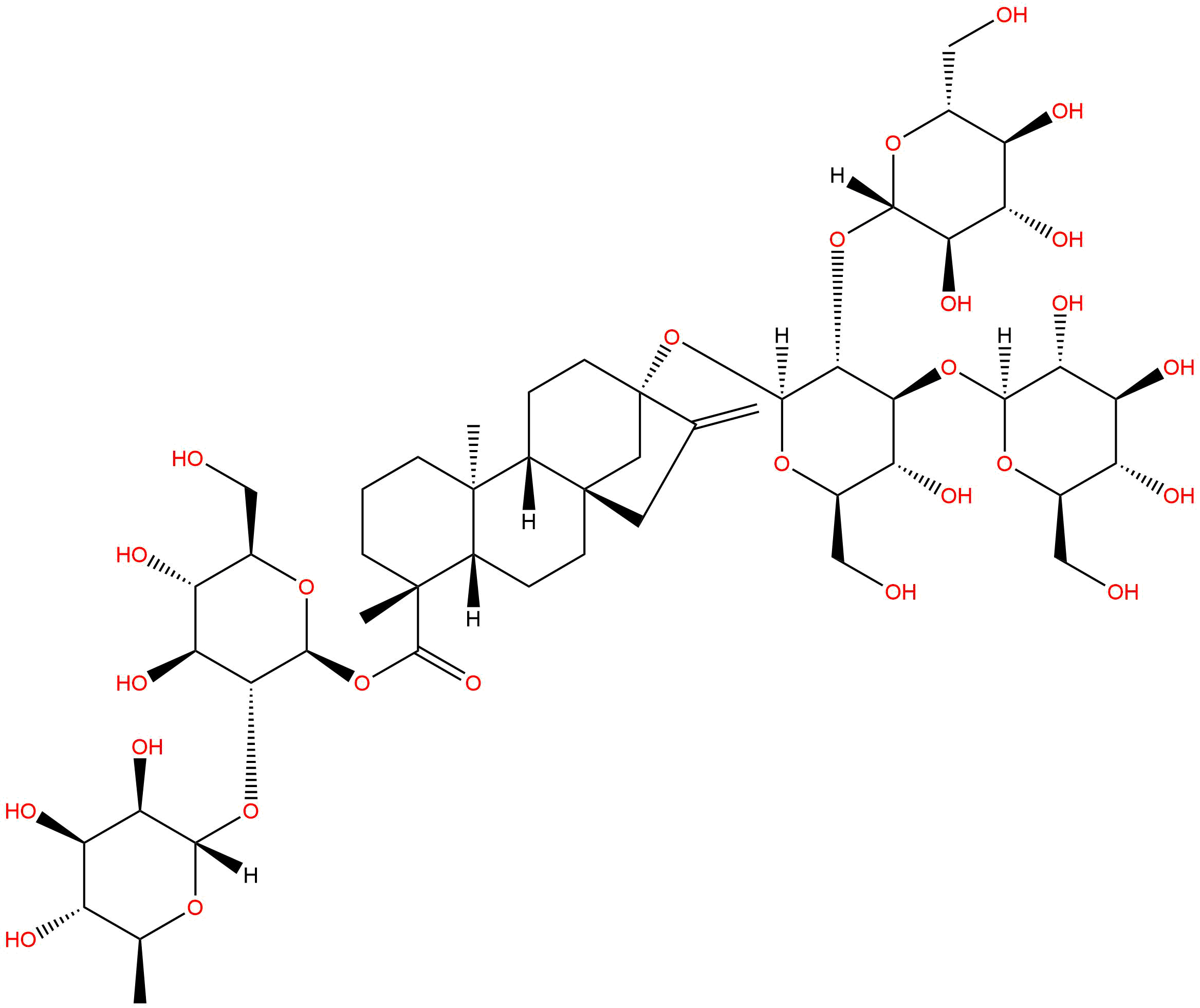


Product name: Rebaudioside J
Synonym name:
Catalogue No.: BP2089
Cas No.: 1313049-59-0
Formula: C50H80O27
Mol Weight: 1113.16
Botanical Source: Stevia rebaudiana (Bertoni) Hemsl.
Physical Description:
Type of Compound: Diterpenoids
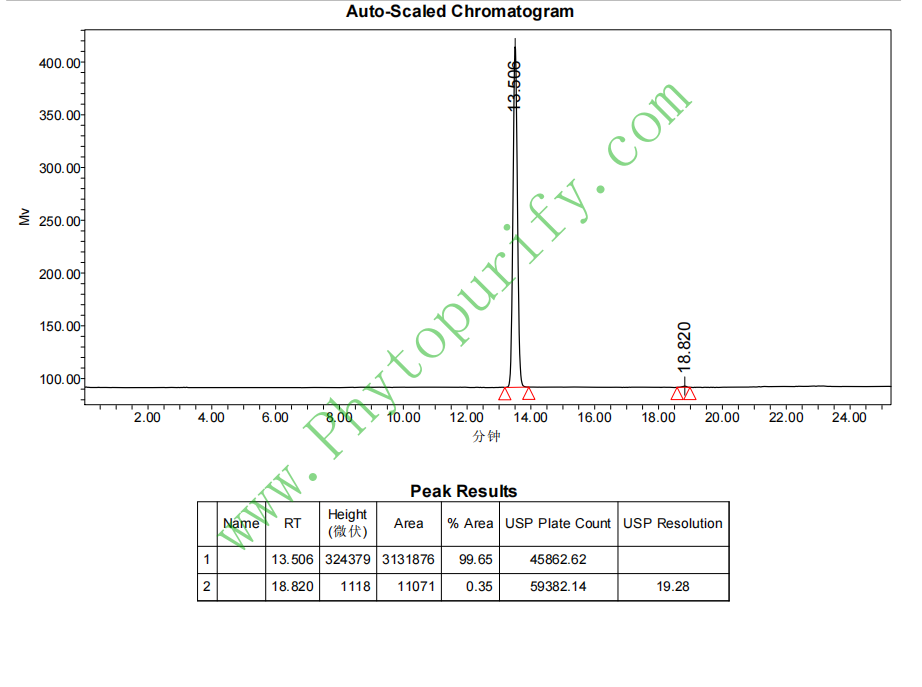
Purity: 95%~99%
Analysis Method: HPLC-DAD or/and HPLC-ELSD
Identification Method: Mass, NMR
Packing: Brown vial or HDPE plastic bottle
Storage: Store in a well closed container, protected from air and light. Put into refrigerate or freeze for long term storage.
Whenever possible, you should prepare and use solutions on the same day. However, if you need to make up stock solutions in advance, we recommend that you store the solution as aliquots in tightly sealed vials at -20℃. Generally, these will be useable for up to two weeks.
The product could be supplied from milligrams to grams
Inquire for bulk scale.
For Reference Standard and R&D, Not for Human Use Directly.
HPLC of Rebaudioside J
Storage conditions:Short-term storage at 2~8℃, long-term storage at -20 ~ -80℃
433.0500
-.5489
-.5492
3.6066
.4055
.3389
Low
53.8103
5.0594
No
No
No
No
Yes
No
0.0
Yes
No
No
Yes
Rebaudioside J (hereinafter referred to as Reb J) is a substance derived from Stevia rebaudiana(Stevia rebaudiana)Natural diterpenoid glycosides have become a hot topic in natural product pharmacology research in recent years due to their potential pharmacological activity and safety advantages. As a traditional natural sweetener source, stevia contains various active ingredients such as Reb J, which has attracted widespread attention due to its unique chemical structure and biological activity. At present, the high incidence of diabetes and its related metabolic diseases makes it a research focus to find safe and effective natural anti diabetes drugs. Reb J shows good anti diabetes potential because of its regulatory effect on a variety of diabetes related targets.
This article will provide a systematic review of the chemical structure and physicochemical properties, plant sources, and extraction methods of rebaudin J, with a focus on its pharmacological activity and mechanism of action. A comprehensive evaluation will be conducted based on its pharmacological parameters, and the prospects and challenges of its clinical application will be explored. The aim is to provide scientific basis and theoretical support for the pharmacological research and drug development of this natural product.
Ruibaodi glycoside J belongs to the diterpenoid glycoside class, with a molecular formula of C50H80O27 and a molecular weight of 1113.1630. Its chemical structure is based on the diterpenoid skeleton of stevia, connecting multiple sugar units to form a highly polar glycoside structure. The LogP value of Reb J is approximately -0.5489, indicating its strong hydrophilicity, which is closely related to its polysaccharide structure. The extremely high polar surface area (TPSA) of 433.05 Å ² further supports its good water solubility, with a water solubility index of 3.6066.
Structurally, Reb J contains multiple β - D-glucose and other glycosidic bonds, giving it a unique sweetness and biological activity. Its low fat solubility and high polarity limit its distribution in the body, especially manifested as low blood-brain barrier permeability, which has a positive significance for reducing central nervous system side effects. The hERG channel inhibition experiment showed a negative result, indicating a low risk of cardiac toxicity. The Ames mutagenicity test result is 0, indicating that its genotoxicity risk is extremely low and its safety is good.
Ruibaodi glycoside J mainly exists in Stevia rebaudiana(Stevia rebaudiana)Among the leaves, stevia is a perennial herbaceous plant native to South America and widely cultivated due to its natural sweetener properties. Stevia leaves contain various rebaudin compounds, among which Reb J is the component with lower content but significant activity.
The traditional extraction methods include water extraction, alcohol extraction, and their combinations, followed by multi-step separation and purification through liquid-liquid distribution, column chromatography, etc. to obtain high-purity Reb J. In recent years, the introduction of ultrasound assisted extraction, microwave-assisted extraction, and membrane separation technologies has improved extraction efficiency and purity, and reduced production costs. Chromatography techniques such as high-performance liquid chromatography (HPLC) and mass spectrometry (LC-MS) are widely used for qualitative and quantitative analysis of Reb J.
In addition, synthetic methods based on genetic engineering are also being explored, which provide new ideas for large-scale production by catalyzing the biosynthesis of Reb J through recombinase catalyzed glycosyltransferase.
Rabadioside J was initially studied as a natural sweetener because of its polysaccharide structure and sweet taste characteristics, but in recent years its potential to fight metabolic diseases such as diabetes has gradually emerged. Multiple in vitro and in vivo studies have shown that Reb J has significant effects in regulating blood glucose, improving insulin sensitivity, and anti-inflammatory effects.
Anti diabetes effect
Reb J promotes cellular energy metabolism and glucose uptake by activating the AMPK (5 'AMP activated protein kinase) signaling pathway, regulating the balance of glucose and lipid metabolism. Its activation effect on AMPK is reflected in both liver and skeletal muscle cells, promoting glucose oxidation and fatty acid oxidation, and reducing blood glucose levels.
Regulation of insulin signaling pathway
Research has shown that Reb J can enhance the activity of IRS1 (insulin receptor substrate 1) and PI3K/Akt pathways, promote the translocation of glucose transporter SLC2A4 (GLUT4) to the cell membrane, improve insulin sensitivity, and alleviate insulin resistance.
DPP4 inhibitory effect
As a dipeptidyl peptidase 4 (DPP4) inhibitor, Reb J delays GLP-1 (glucagon like peptide-1) degradation, enhances insulin secretion, and improves postprandial blood glucose control.
PPAR γ activation
Reb J has a regulatory effect on peroxisome proliferator activated receptor gamma (PPAR gamma), promoting adipocyte differentiation and lipid metabolism, and alleviating insulin resistance.
SGLT2 inhibition
Preliminary studies suggest that Reb J may inhibit sodium glucose cotransporter 2 (SGLT2), reduce renal glucose reabsorption, promote urinary glucose excretion, and assist in blood glucose regulation.
In addition, Reb J also shows antioxidant and anti-inflammatory activities, which helps to reduce chronic inflammation and oxidative stress related to diabetes and protect the function of pancreatic islet β cells.
The anti diabetes effect of Rabadioside J involves the coordinated regulation of multiple targets and pathways. The main targets and mechanisms are as follows:
AMPK (PRKAA1) activation
AMPK acts as a cellular energy sensor, regulating glucose and lipid metabolism. Reb J promotes AMPK phosphorylation, activates its downstream metabolic pathways, enhances glucose uptake and fatty acid oxidation, and improves metabolic disorders.
IRS1/PI3K/AKT signaling pathway
Reb J enhances IRS1 phosphorylation, activates PIK3R1 (PI3K regulatory subunit) and AKT1, promotes GLUT4 transport, improves insulin signaling efficiency, and alleviates insulin resistance.
DPP4 inhibition
By inhibiting DPP4 activity, prolonging GLP-1 half-life, promoting insulin secretion, and lowering blood sugar.
PPAR γ regulation
Reb J acts as a regulator of PPAR γ, affecting adipocyte function and insulin sensitivity, and regulating lipid metabolism.
SGLT2 inhibition
By inhibiting renal SGLT2, reducing glucose reabsorption, promoting urinary glucose excretion, and assisting in blood glucose control.
Other targets
Reb J may also regulate GCK (glucokinase) activity, promote glucose metabolism, and affect PIK3R1 and SLC2A4 expression to maintain glucose homeostasis.
These multi-target mechanisms of action enable RebJ to have potential advantages in anti diabetes treatment, and can intervene abnormal glucose metabolism from multiple aspects.
From the perspective of medicinal properties, Ribadine J has the following characteristics:
At present, there is limited pharmacokinetic research on Reb J. Preliminary data indicates that its oral absorption rate is relatively low, mainly through passive diffusion in the intestine and partial active transport absorption, with less liver metabolism and mainly excreted in the form of prototype or mild metabolites. Due to its large molecular weight and strong polarity, the intestinal bioavailability is limited, indicating the need to improve its in vivo absorption and distribution through pharmaceutical methods such as nanocarriers and liposomes.
In addition, Reb J's low blood-brain barrier permeability and no significant risk of cardiac toxicity provide assurance for its long-term safety.
As a natural diterpenoid glycoside, Rabadioside J shows broad clinical application potential with its multi-target anti diabetes effect and good safety. Its main application prospects include:
Natural anti diabetes drugs or adjuvant therapy
Combined with the existing treatment scheme for diabetes, Reb J can improve blood sugar control, reduce insulin resistance, and delay the progress of diabetes and its complications through multi target synergy.
Functional foods and nutritional supplements
As a sweetener, Reb J has dual functions of regulating sugar metabolism, which can be developed as a functional food for diabetes patients to meet the needs of health management.
Combination therapy strategy
Combining DPP4 inhibitors, PPAR γ agonists, or SGLT2 inhibitors to synergistically enhance efficacy, reduce monotherapy dosage, and minimize side effects.
However, the high molecular weight and low oral bioavailability of Reb J are the main challenges in its clinical development. Future research needs to focus on:
In addition, in-depth analysis of its molecular mechanism and target network can help discover more potential indications and broaden its clinical application fields.
As an important diterpene glycoside in Stevia rebaudioside J, it shows good pharmacological potential and safety by virtue of its unique chemical structure and multi-target anti diabetes activity. By activating AMPK, regulating insulin signaling pathway, inhibiting DPP4 and SGLT2 and other multiple mechanisms, it cooperatively improves glucose metabolism disorder and provides a new natural drug candidate for the treatment of diabetes.
Despite the challenges of high molecular weight and low bioavailability in drug development, the clinical translation prospects of Reb J are worth looking forward to with the advancement of extraction technology and pharmaceutical strategies. In the future, systematic pharmacokinetic, toxicological and clinical research will provide a solid foundation for its development and promote its development into a safe and effective natural anti diabetes drug or functional food ingredient.
In conclusion, Rabadioside J not only enriches the research scope of natural anti diabetes drugs, but also provides an example for the pharmacological development of natural diterpene glycosides, which has important scientific value and application potential.
