Introduction/Overview
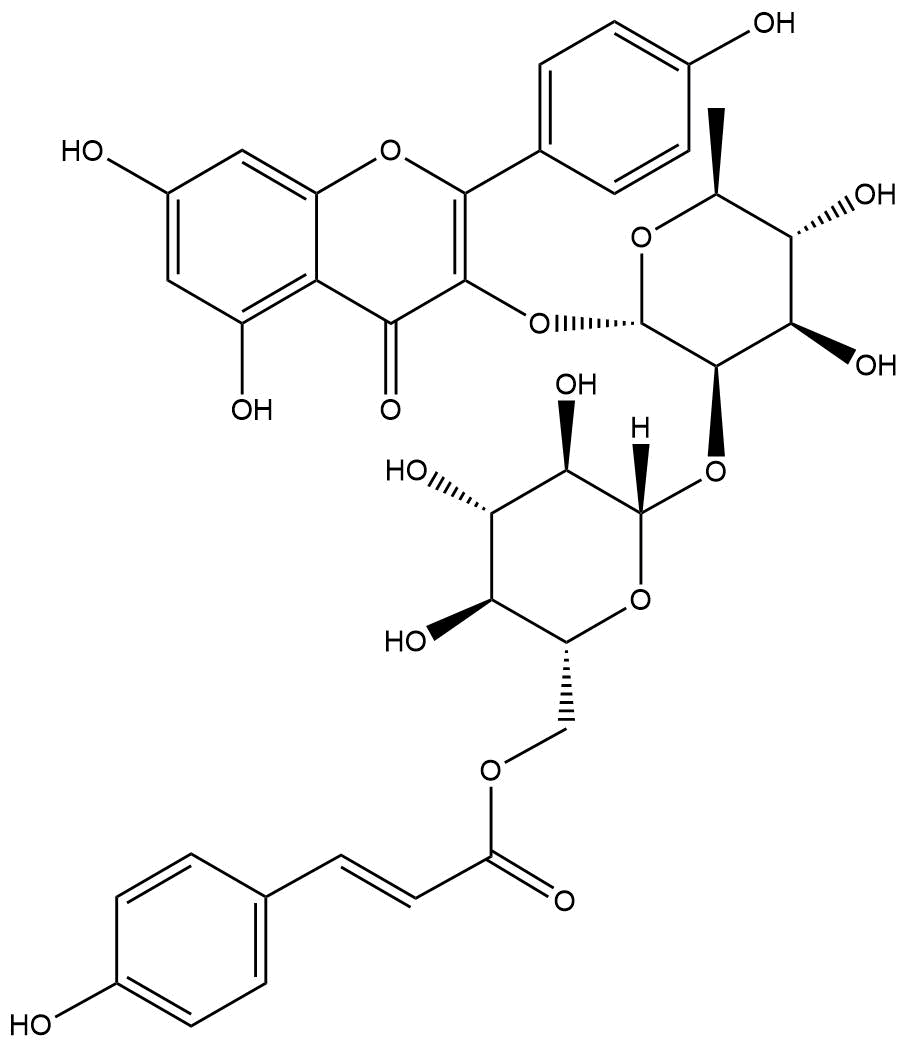
Natural products, as important resources for drug discovery, occupy a pivotal position in modern pharmacological research. Flavonoids have become a research hotspot due to their diverse biological activities and good safety. Kaempferol 3-O - β - D - (6 '' - p-coumaryl) glucopyranosyl (1-2) - α - L-rhamnopyranoside (hereinafter referred to as "Kaempferol 3-O-p-coumaroyl glucoside") is a typical glycosylated flavonoid that was initially isolated from Ginkgo biloba leaves. This compound not only exhibits significant antioxidant activity, but also demonstrates the potential for multi-target regulation, especially in the treatment research of inflammatory diseases such as asthma, showing good application prospects.
This article aims to provide a systematic review of the chemical structure and physicochemical properties, plant sources and extraction methods, pharmacological activity and mechanism of action, pharmacological evaluation, and clinical application prospects of kaempferol-3-O-p-coumaroyl diglycoside. It is expected to provide theoretical basis and reference for the in-depth research and drug development of this natural product.
Chemical structure and physicochemical properties
Kaempferol, also known as kaempferol, is a glycosylated flavonoid with the core structure of kaempferol. It is linked to a disaccharide (β - D-glucose and α - L-rhamnose) modified with kaempferol through a glycosidic bond via a hydroxyl group at position 3. This molecular structure combines the polyphenol skeleton of flavonoids with the aromatic ester groups of cinnamic esters, endowing it with unique biological activity.
In terms of physical and chemical properties, the molecular weight of the compound is 740.6670 Da, with a LogP value of 1.2548, indicating that it has moderate lipophilicity, which is conducive to cell membrane penetration but not too hydrophobic. Its topological polar surface area (TPSA) is as high as 275.5 Å ², demonstrating strong polarity and hydrogen bond donor acceptor ability, which is also the reason for its good water solubility (0.6117 mg/mL). The low permeability of the blood-brain barrier suggests that its function is mainly limited to peripheral tissues. The hERG channel inhibition test was negative, indicating a low risk of cardiac toxicity. The Ames test result is 0, indicating no mutagenicity and high safety.
Plant sources and extraction methods
Sankaempferol-3-O-p-coumaroyl glucoside is mainly isolated from Ginkgo biloba L. leaves. Ginkgo biloba leaves, as a traditional Chinese medicinal herb, contain abundant flavonoids and terpenoids, and their pharmacological activities have been widely studied. The extraction of flavonoids from Ginkgo biloba leaves is usually carried out using organic solvents (such as ethanol, methanol) extraction combined with ultrasound assisted extraction or reflux extraction techniques to improve extraction efficiency.
The specific extraction process includes: first, the dried ginkgo leaves are crushed, extracted with 70% ethanol, and combined with ultrasound assisted extraction to enhance cell wall rupture. After filtration and concentration of the extraction solution, liquid-liquid extraction is used to remove lipid soluble impurities. Subsequently, high-purity kaempferol-3-O-p-coumaroyl glucoside was obtained through separation and purification using silica gel column chromatography or high-performance liquid chromatography (HPLC). Purity and structural confirmation typically rely on techniques such as mass spectrometry (MS), nuclear magnetic resonance (NMR), and ultraviolet visible spectroscopy (UV Vis).
Pharmacological activity research
antioxidant activity
As a polyphenolic compound, kaempferol-3-O - exhibits significant antioxidant activity against coumarin diglycosides. The phenolic hydroxyl and cinnamic acid ester groups in its structure can effectively scavenge free radicals, inhibit lipid peroxidation, and protect cells from oxidative stress damage. Both in vitro DPPH radical scavenging experiments and ABTS cation radical scavenging experiments showed that the compound has good antioxidant effects. In addition, it can enhance the antioxidant defense ability of cells by activating the intracellular antioxidant enzyme system, such as superoxide dismutase (SOD) and glutathione peroxidase (GPx).
anti-inflammatory activity
Inflammatory response plays a central role in various diseases, and kaempferol-3-O-coumaroyl glucoside exhibits excellent anti-inflammatory activity through multi-target regulation. In vitro cell models have shown that the compound can inhibit the expression of pro-inflammatory cytokines such as TNF - α and IL-6, reduce the release of inflammatory mediators, and decrease the infiltration of inflammatory cells. In animal models, kaempferol-3-O-p-coumaroyl glucoside significantly alleviated asthma symptoms, reduced airway inflammation and airway hyperresponsiveness.
Anti asthma effect
Asthma is a chronic airway inflammatory disease involving multiple inflammatory mediators and signaling pathways. Research has shown that kaempferol-3-O-p-coumaroyl glucoside inhibits the synthesis of leukotrienes and prostaglandins by regulating the activity of key enzymes such as ALOX5, PLA2G2A, and PTGS1/2, thereby reducing airway inflammation. Meanwhile, the compound also affects the MAPK1 and NFKB1 signaling pathways, inhibiting the transcriptional expression of inflammatory genes. In addition, kaempferol-3-O-p-coumaroyl glucoside also has a certain regulatory effect on targets such as ADORA2B and PDE4D that regulate airway smooth muscle contraction, comprehensively improving airway function.
Other pharmacological effects
In addition to antioxidant and anti-inflammatory properties, preliminary studies have also found that this compound has certain anti-tumor, antibacterial, and neuroprotective potential, but the relevant mechanisms still need further clarification.
Mechanism of action and molecular targets
The biological activity of kaempferol-3-O-coumaroyl glucoside mainly relies on its regulatory effect on multiple molecular targets. Its targets mainly involve inflammatory mediators synthase, signal transduction molecules, and receptors, including:
- ALOX5 (5-lipoxygenase)Catalyze the generation of leukotrienes and participate in inflammatory reactions. This compound inhibits ALOX5 activity and reduces leukotriene mediated airway inflammation.
- PLA2G2A (phospholipase A2)Release fatty acid precursors and promote the synthesis of inflammatory mediators. Its inhibitory effect reduces the level of inflammatory mediators.
- PTGS1/2 (cyclooxygenase 1/2)Catalyze prostaglandin synthesis, regulate inflammation and immune response. Kaempferol-3-O-p-coumarin inhibits PTGS2 expression and reduces inflammation.
- MAPK1 (mitogen activated protein kinase 1)Participate in cell proliferation and inflammatory signaling. This compound blocks the MAPK signaling pathway and inhibits the expression of inflammatory genes.
- TNF (tumor necrosis factor)Key pro-inflammatory factors regulate immune responses. Kaempferol-3-O-downregulates TNF levels and alleviates inflammation in coumarin diglycosides.
- NFKB1 (nuclear factor kappa B)Transcription factors regulate various inflammatory genes. This compound inhibits the activation of NFKB and weakens the inflammatory response.
- ADORA2B (adenosine receptor A2B)and PDE4D (phosphodiesterase 4D)Regulating airway smooth muscle tone and inflammation, compounds can help alleviate airway spasms.
- CHRM3 (cholinergic receptor M3 type)Participate in airway smooth muscle contraction and regulate respiratory function.
In summary, kaempferol-3-O-p-coumaroyl glucoside exerts its anti-inflammatory, antioxidant, and airway protective functions through multi-target and multi pathway synergistic effects, demonstrating its potential value as a therapeutic drug for asthma and related inflammatory diseases.
Evaluation of drug properties and pharmacokinetics
The development of medicinal properties is an important consideration for the conversion of natural products into clinical drugs. The molecular weight of kaempferol-3-O-p-coumaroyl diglycoside is relatively high (740.6670 Da), exceeding the recommended upper limit of 500 Da by Lipinski rules, which may affect its oral bioavailability. Its LogP value is 1.2548, which is moderate, indicating that it has both lipophilicity for cell membrane penetration and water solubility for in vivo distribution. The TPSA value is relatively high (275.5 Å ²), which may limit its passive diffusion and affect absorption.
The water solubility is 0.6117 mg/mL, which belongs to moderate solubility and is beneficial for formulation development. The low permeability of the blood-brain barrier suggests that it is difficult for it to enter the central nervous system, reducing the risk of central side effects. HERG channel inhibition is negative, reducing the risk of cardiac toxicity. The Ames test is non mutagenic and has good safety.
In terms of pharmacokinetics, due to high molecular weight and polarity, oral absorption may be limited, and improved formulations or structural modifications are needed to enhance bioavailability. The metabolic pathways in the body have not been systematically studied, and it is speculated that they are mainly metabolized by the liver enzyme system, which may involve glycoside hydrolysis and redox reactions of the flavonoid skeleton. The main excretion pathways may be through the kidneys and bile.
Further in vivo pharmacokinetic studies are needed for future research to clarify its absorption, distribution, metabolism, and excretion (ADME) characteristics, providing a basis for clinical applications.
Clinical application prospects and prospects
Kaempferol-3-O-p-coumaroyl glucoside, with its multi-target anti-inflammatory and antioxidant effects, has shown broad application prospects in the field of asthma treatment. Asthma, as a complex chronic inflammatory disease, has side effects and drug resistance issues with existing treatment methods. The development of natural product drugs provides a new direction for the treatment of asthma.
The low toxicity and multi-target mechanism of action of this compound make it a potential candidate drug for asthma and other inflammation related diseases. In addition, its antioxidant properties also provide potential adjuvant therapeutic value for cardiovascular diseases, neurodegenerative diseases, and other conditions.
However, current research mostly remains at the in vitro and animal model stage, and systematic studies on preclinical safety, pharmacokinetics, and effective dosage are still lacking. In the future, research should be strengthened in the following areas:
- Pharmacokinetic and Toxicological Evaluation Clarify the metabolic pathway, half-life, and potential toxicity in the body.
- Structural optimization and formulation development Enhance bioavailability and improve pharmacokinetic properties.
- Preclinical and clinical trials Verify its safety and efficacy, and explore the scope of indications.
- In depth study of mechanisms Using multi omics techniques to analyze its functional network and discover new targets and pathways of action.
Through interdisciplinary collaboration, kaempferol-3-O-p-coumaroyl glucoside has the potential to become a model for natural product drug development.
Conclusion
As a structurally unique glycosyl oxyflavonoid, kaempferol-3-O-p-coumaroyl rhamnoside glucoside integrates the biological activity characteristics of flavonoids and cinnamic esters, exhibiting excellent antioxidant and anti-inflammatory effects, especially in the potential therapeutic value of chronic inflammatory diseases such as asthma. The multi-target and multi pathway mechanism of action provides rich scientific basis for the pharmacological research of natural products.
Despite challenges such as high molecular weight and pharmacokinetic limitations, this compound still has high potential for drug development through optimization of modern medicinal chemistry and formulation technology. The pharmacological, toxicological, and clinical research of future systems will further promote their translation into clinical applications, bringing new hope for the development of natural product drugs and the treatment of inflammatory diseases such as asthma.