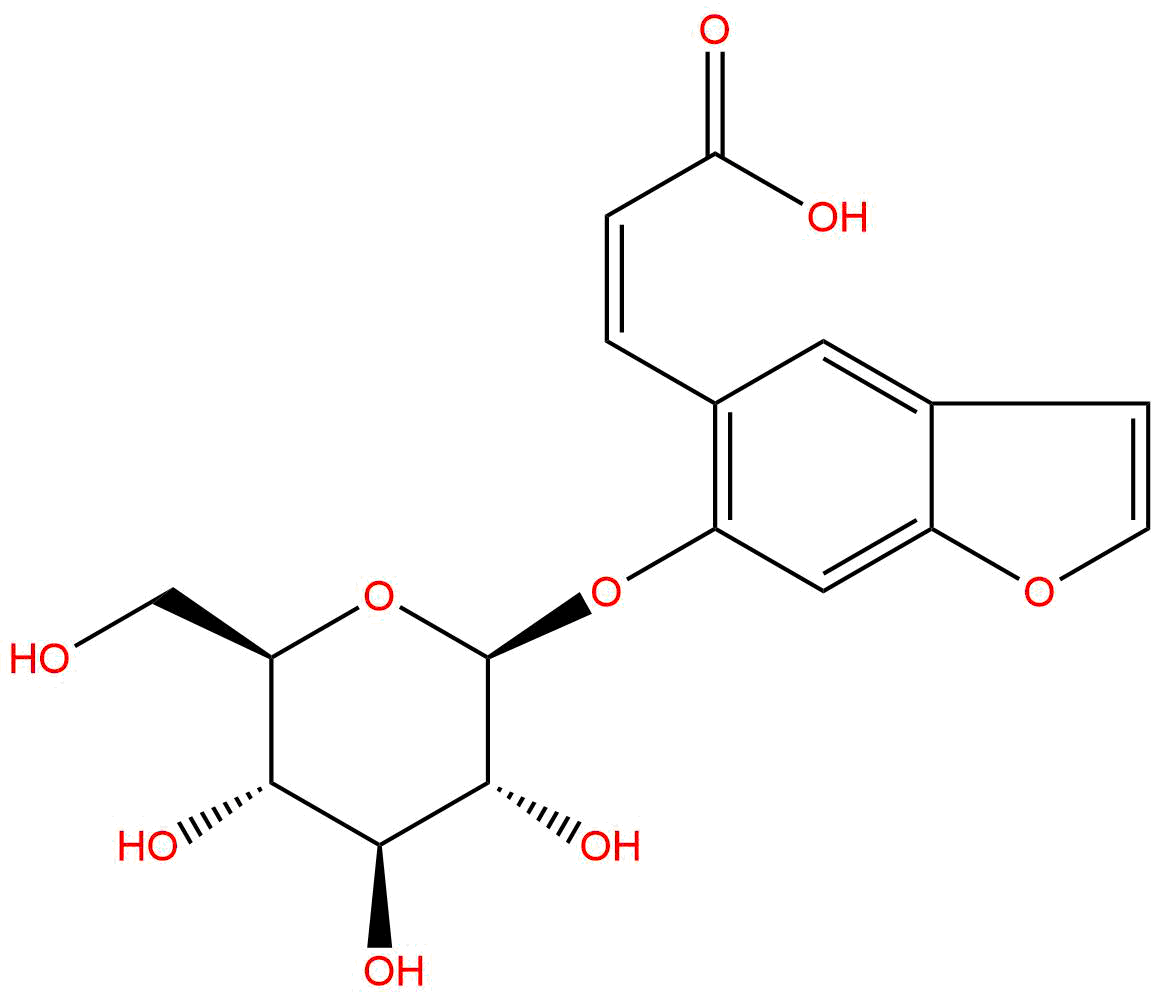


Product name: Psoralenoside
Synonym name:
Catalogue No.: BPF2224
Cas No.: 905954-17-8
Formula: C17H18O9
Mol Weight: 366.322
Botanical Source: Puerariae lobatae radix
Type of Compound: Phenols
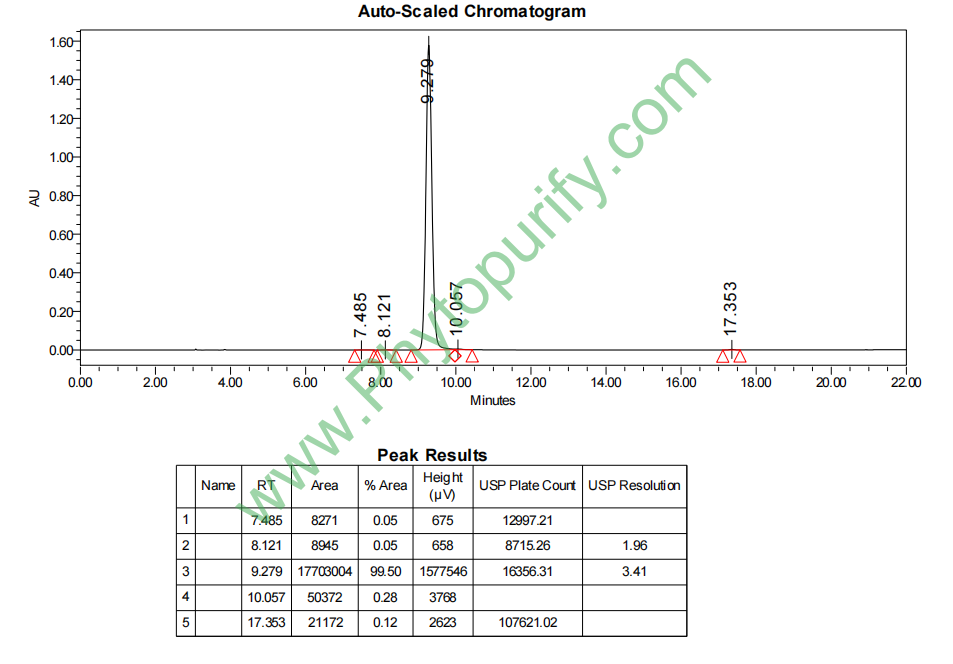
Purity: 95%~99%
Analysis Method: HPLC-DAD or/and HPLC-ELSD
Identification Method: Mass, NMR
Packing: Brown vial or HDPE plastic bottle
Storage: Store in a well closed container, protected from air and light. Put into refrigerate or freeze for long term storage.
Whenever possible, you should prepare and use solutions on the same day. However, if you need to make up stock solutions in advance, we recommend that you store the solution as aliquots in tightly sealed vials at -20℃. Generally, these will be useable for up to two weeks.
The product could be supplied from milligrams to grams
Inquire for bulk scale.
For Reference Standard and R&D, Not for Human Use Directly.
HPLC of Psoralenoside
Storage conditions:Short-term storage at 2~8℃, long-term storage at -20 ~ -80℃
149.8200
.2032
-2.3106
5.3633
.6100
.2591
Low
77.3024
3.9133
Yes
No
No
No
No
No
0.0
Yes
Yes
Yes
Yes
Natural products, as an important source of drug discovery, have long played an indispensable role in maintaining human health and treating diseases. One of the important directions in modern medicinal chemistry and pharmacology research is to isolate, identify, and elucidate the pharmacological effects of active ingredients from traditional medicinal plants. Fructus Psorale(Psoralea corylifolia L.), Also known as breaking old paper, it is a plant of the genus Psoralea in the legume family. Its dried and ripe fruit is a traditional Chinese medicine commonly used in clinical practice, which has the effects of warming the kidneys and promoting yang, regulating qi and relieving asthma, warming the spleen and stopping diarrhea. It is widely used to treat symptoms such as lower back and knee pain, impotence, nocturnal emissions, frequent enuresis and urination caused by insufficient kidney yang, and diarrhea caused by spleen and kidney yang deficiency. Modern pharmacological research has revealed that extracts of Fructus Psorale and their various chemical components, such as coumarins (such as psoralen and isopsoralen), flavonoids (such as dihydroflavones and isopsoralene chalcones), and monoterpene phenols (such as psoralenone), exhibit a variety of biological activities including estrogenic activity, anti-tumor activity, antibacterial activity, anti-inflammatory activity, and promotion of bone formation, which have attracted widespread attention from scholars at home and abroad.
In the complex chemical composition system of Fructus Psoraleae, Psoralenoside, as a benzofuran glycoside compound, has gradually become a research hotspot in recent years. Psoralea corylifolia glycoside is one of the unique active ingredients in Psoralea corylifolia. Its unique chemical structure and significant pharmacological activity make it show potential application value in the treatment of osteoporosis, tumor and infectious diseases. Especially its regulatory effect on the target network related to osteoporosis, as well as its comprehensive pharmacological effects exerted through multi-target mechanisms, make it one of the candidate lead compounds for developing novel bone metabolism regulating drugs. This article aims to systematically review the chemical structure, physicochemical properties, plant sources, extraction and separation methods, pharmacological activity, mechanism of action, pharmacological characteristics, and clinical application prospects of psoralen glycosides, in order to provide comprehensive and systematic scientific basis for the in-depth research and development of this natural product.
The chemical structure of Psoralenoside belongs to the benzofuran glycoside class. Its basic parent nucleus is a benzofuran ring, which is linked to a molecule of glucose through glycosidic bonds to form an oxyglycoside. According to existing literature reports, the chemical structure of psoralen glycoside can be systematically named as 1- (β - D-glucopyranosyl) -3-methoxy-6-hydroxybenzofuran. In this structure, the benzofuran ring endows the molecule with a certain degree of rigid planarity and aromaticity, while the introduction of glucose groups significantly increases the polarity and water solubility of the molecule. This classic combination of "aglycone sugar" is a common structural modification strategy in natural products, often closely related to improving the water solubility of compounds and affecting their in vivo absorption, distribution, metabolism, and excretion (ADME) properties.
From the perspective of physical and chemical properties, psoralen is a white or off white crystalline powder with certain hygroscopicity. Its molecular formula is C ₁₆ H ₁₈ O ₁₀, with a molecular weight of 366.3220 Da, belonging to the category of small molecule compounds. In terms of polarity, its calculated lipid water partition coefficient (LogP) is 0.2032, indicating that the compound has lower lipid solubility and is more inclined to be distributed in aqueous environments. This characteristic is highly consistent with the presence of polyhydroxy glucose groups in its structure. The topological polar surface area (TPSA) is 149.8200 Å ², which is a relatively high value and usually indicates that the compound has low membrane permeability, making it difficult to passively diffuse through the cell membrane, especially through the blood-brain barrier (BBB). In fact, the evaluation of pharmacological parameters also clearly indicates that its blood-brain barrier permeability is "low". In addition, the water solubility (LogS) of psoralen glycoside is 5.3633, indicating its good solubility in water, which provides favorable conditions for its dissolution and transport in the liquid environment of the body. In terms of stability, psoralen glycosides may undergo hydrolysis of their glycosidic bonds under acidic or alkaline conditions, or under the action of certain enzymes, releasing glycosides. Therefore, in the process of extraction, separation, storage, and formulation development, attention should be paid to controlling pH, temperature, and avoiding the presence of strong acids, strong bases, or specific enzymes to maintain their structural integrity.
The main plant source of psoralen is the leguminous plant Psoralea(Psoralea corylifolia L. Dry and ripe fruits. Psoralea is native to China, India, Myanmar, Sri Lanka and other places, and is mainly distributed in Yunnan, Sichuan, Guizhou, Henan, Shaanxi and other places in China. As a traditional Chinese medicine, Psoralea has a long history of medicinal use, and its fruit is rich in various secondary metabolites, among which Psoralide is one of the representative benzofuran glycosides. It is worth noting that psoralen does not exist in isolation in the plant body, and often coexists with another structurally similar benzofuran glycoside - Isopsoralenoside. The two are isomers of each other and together form the main component of benzofuran glycosides in Fructus Psorale.
The commonly used methods for extracting psoralen include solvent extraction, ultrasound assisted extraction, microwave-assisted extraction, and enzyme assisted extraction. The traditional solvent extraction method usually uses ethanol or methanol as the extraction solvent, and dissolves the glycoside components in the powder of Fructus Psorale through heating reflux or cold soaking. Due to the high polarity of psoralen glycosides, selecting a suitable concentration of alcohol water mixed solvent (such as 50% -70% ethanol) can often achieve higher extraction rates. The ultrasound assisted extraction method utilizes the cavitation effect and mechanical vibration of ultrasound to effectively destroy plant cell walls, accelerate solvent penetration and component dissolution, thereby achieving efficient extraction in a shorter period of time and at lower temperatures, which is beneficial for protecting thermosensitive components. The microwave-assisted extraction method utilizes the penetrability and selective heating of microwaves to rapidly increase the internal temperature and pressure of cells, leading to cell rupture and rapid release of target components. It also has the advantages of short extraction time and high efficiency.
After concentration of the extract, further separation and purification steps are required to obtain high-purity psoralen monomers. Common separation and purification techniques include: macroporous adsorption resin column chromatography (such as D101, AB-8 resin), which utilizes its adsorption desorption characteristics to preliminarily enrich and decolorize total glycosides of Fructus Psorale; Silica gel column chromatography is used to separate compounds based on their polarity differences, and gradient elution is often performed using solvent systems such as chloroform methanol water or ethyl acetate methanol water; And high-performance liquid chromatography (HPLC) or preparative high-performance liquid chromatography (Prep HPLC) are used for final purification to obtain monomer compounds with a purity of over 98%. In recent years, new liquid-liquid distribution chromatography techniques such as high-speed countercurrent chromatography (HSCCC) have also been successfully applied to the separation of benzofuran glycosides in Fructus Psorale, with advantages such as large sample size, high recovery rate, and irreversible adsorption. During the separation process, thin-layer chromatography (TLC) and HPLC-UV or HPLC-ELSD are commonly used for online monitoring to guide the collection and purity determination of fractions.
The pharmacological activity research of psoralen glycosides is currently a hot topic in this field, and its various biological activities have been preliminarily confirmed through in vivo and in vitro experiments, especially in the regulation of bone metabolism, anti-tumor and antibacterial effects.
1. Estrogen like activity and promotion of osteoblast proliferation activity
One of the most notable pharmacological activities of psoralen is its estrogen like effect. Multiple studies have shown that psoralen can bind to estrogen receptors (ER, especially ER α and ER β), activate downstream signaling pathways, and exert biological effects similar to estrogen. In vitro cell models, psoralen can significantly promote the proliferation and differentiation of human osteoblast like cells (such as MG-63, hFOB1.19). Specifically, it manifests as an increase in alkaline phosphatase (ALP) activity, which is a hallmark enzyme for early differentiation of osteoblasts; Upregulate the expression of osteogenic related genes such as osteopontin (OPN), osteocalcin (OCN), and type I collagen protein (COL1A1); Promote the formation of mineralized nodules. These effects are similar to those of the classical estrogen 17 β - estradiol and can be partially or completely blocked by the estrogen receptor antagonist ICI 182780, further confirming its dependence on the estrogen receptor pathway. Given the core role of estrogen in maintaining bone mass and inhibiting bone resorption, the estrogenic activity of psoralen glycosides makes it highly promising for the treatment of postmenopausal osteoporosis. In addition, psoralen can directly act on bone marrow mesenchymal stem cells (BMSCs), inducing their differentiation towards osteoblasts while inhibiting their differentiation towards adipocytes, thereby increasing bone formation and reducing bone marrow fat accumulation.
2. Antitumor activity
Psoralen has shown cytotoxic or proliferative inhibitory effects in various tumor cell lines. Preliminary studies have found that psoralen can inhibit the proliferation of human breast cancer cells (such as MCF-7, MDA MB-231), human liver cancer cells (such as HepG2), human lung cancer cells (such as A549) and human leukemia cells (such as HL-60). Its anti-tumor mechanism may involve multiple aspects: inducing cell cycle arrest (such as blocking cells in G0/G1 phase or G2/M phase); Inducing cell apoptosis through mitochondrial or death receptor pathways, manifested as activation of Caspase-3 and Caspase-9, as well as an increase in Bax/Bcl-2 ratio; Inhibiting the migration and invasion ability of tumor cells may be related to downregulating the expression of matrix metalloproteinases (MMPs). It is worth noting that psoralen has relatively low toxicity to certain normal cells, demonstrating a certain degree of selectivity, which provides a safety basis for its use as an anti-tumor candidate drug. However, current research on the anti-tumor activity of psoralen is still in the in vitro stage, and the anti-tumor effect and specific mechanism in vivo still need to be further explored.
3. Antibacterial activity
Psoralen also exhibits certain antibacterial activity. In vitro antibacterial experiments have shown that psoralen has an effect on certain Gram positive bacteria, such as Staphylococcus aureus Staphylococcus aureus)And Gram negative bacteria (such as Escherichia coli)Escherichia coli)It has inhibitory effects, but its minimum inhibitory concentration (MIC) is usually higher than traditional antibiotics. Its antibacterial mechanism may be related to the destruction of bacterial cell membrane integrity, inhibition of bacterial nucleic acid or protein synthesis. Although its antibacterial activity is relatively weak, considering the increasingly severe problem of antibiotic resistance, it is still of great significance to search for antibacterial lead compounds with new mechanisms of action from natural products. The antibacterial activity of psoralen glycosides may be related to the phenolic hydroxyl and benzofuran ring structures in their molecules, which are often associated with antibacterial activity.
The pharmacological activity of psoralen glycoside is the result of its interaction with multiple molecular targets in the body, exhibiting typical "multi-target, multi pathway" action characteristics. Based on existing research, especially molecular docking and network pharmacology analysis, its mechanism of action can be summarized as follows:
1. Estrogen receptor (ER) - mediated signaling pathway
This is the core mechanism by which psoralen exerts bone protection and partial anti-tumor effects. Psoralen, as a plant estrogen, can bind to estrogen receptors ER α and ER β to form ligand receptor complexes. The complex then enters the nucleus and binds to the estrogen response element (ERE) in the promoter region of the target gene, thereby regulating the transcription of downstream genes. In osteoblasts, activation of ER upregulates the expression of key osteogenic transcription factors such as Runx2 (Runt related transcription factor 2) and Osterix (Sp7), thereby promoting the synthesis of bone matrix proteins such as COL1A1, ALP, OCN, and ultimately promoting bone formation. Meanwhile, estrogen signaling can also inhibit the differentiation and activation of osteoclasts and reduce bone resorption by upregulating the expression of osteoprotegerin (OPG, encoded by the TNFRSF11B gene). The affinity of psoralen for ER, especially its molecular docking results (E-value ≥ -6.5 Kcal/mol), shows that it has high binding potential for ER α/β, which is the molecular basis for its estrogen like activity.
2. Anti apoptotic and pro survival signaling pathways
The protective effect of psoralen on osteoblasts is also reflected in its anti apoptotic effect. Research has shown that psoralen can inhibit osteoblast apoptosis induced by oxidative stress or glucocorticoids by activating the PI3K/Akt signaling pathway. Activated Akt can phosphorylate and inhibit the activity of pro apoptotic proteins Bad and Caspase-9, while upregulating the expression of anti apoptotic proteins Bcl-2 and Bcl xL (encoded by BCL2 and BCL2L1 genes) and downregulating the expression of pro apoptotic protein Bax, thereby maintaining the stability of mitochondrial membrane potential, preventing the release of cytochrome c, and blocking the apoptotic cascade reaction. In addition, psoralen may also affect cell survival by regulating the expression of MCL1 (myeloid leukemia factor 1). MCL1 is another important anti apoptotic member of the Bcl-2 family and regulates survival signals in a variety of cells. The potential regulatory effect of psoralen on targets such as MCL1 and BCL2 is an important link in its cellular protective effect.
3. Regulation of transcription factors related to bone metabolism
Runx2 and Sp7 (Osterix) are two of the most critical transcription factors in the process of osteoblast differentiation and bone formation. Psoralen can significantly upregulate the mRNA and protein levels of Runx2 and Sp7. Runx2, as the main controlling gene for osteogenic differentiation, activates the expression of a series of downstream osteogenic related genes; Sp7 plays a role downstream of Runx2, jointly driving the differentiation of pre osteoblasts into mature osteoblasts. In addition, psoralen may further promote Runx2 expression and osteogenic differentiation by regulating the Wnt/β - catenin signaling pathway. The activation of the Wnt signaling pathway can stabilize β - catenin, allowing it to enter the nucleus and bind to TCF/LEF transcription factors, synergistically promoting osteogenesis with Runx2.
4. Potential effects on metabolic enzymes and ion channels
The molecular docking results indicate that psoralen glycosides also have high affinity for aldose reductase (AKR1B1), lactate dehydrogenase A (LDHA), and voltage-gated L-type calcium channels (VGCC). AKR1B1 is a key enzyme of polyol pathway, and its over activation is related to complications of diabetes (such as osteoporosis). The inhibitory effect of psoralen on AKR1B1 may help to improve diabetes osteopathy. LDHA is a key enzyme in glycolysis, highly expressed in tumor cells and involved in the Warburg effect. The potential inhibition of LDHA by psoralen glycosides may exert anti-tumor effects by interfering with the energy metabolism of tumor cells. The affinity of VGCC suggests that psoralen may affect various functions of osteoblasts and osteoclasts, such as cell proliferation, differentiation, and signal transduction, by regulating calcium ion influx. In addition, its affinity for histamine H1 receptors may be related to its potential anti-inflammatory or anti allergic activity, but research in this direction is not yet sufficient.
Developing natural products into clinical drugs requires a systematic evaluation of their pharmacological properties, including pharmacokinetic (ADME) characteristics, safety, and preliminary toxicity assessment. The pharmacological parameters of psoralen have provided some key information.
1. Absorption and distribution
Psoralen has a moderate molecular weight (366 Da) and good water solubility (LogS=5.36), which is beneficial for its dissolution in the gastrointestinal tract. However, its high polarity (LogP=0.20) and large TPSA (149.82 Å ²) suggest poor passive transmembrane transport ability. Therefore, after oral administration of psoralen glycosides, their absorption may mainly rely on active transport or facilitated diffusion, or through the action of gut microbiota, hydrolysis into aglycones and absorption. Its blood-brain barrier permeability has been evaluated as' low ', which is an advantageous feature for developing drugs for treating diseases outside the central nervous system, such as osteoporosis, to avoid potential central side effects. In terms of distribution in the body, psoralen may be mainly distributed in tissues and organs such as blood, liver, kidneys, and bones.
2. Metabolism and excretion
As a glycoside compound, the metabolic pathways of psoralen in the body mainly include: hydrolysis into aglycones (i.e. benzofuran aglycones) under the action of gut microbiota or liver β - glucosidase; Glycosides undergo phase I metabolism (such as oxidation, reduction, hydrolysis) and phase II metabolism (such as glucuronidation, sulfation, methylation) in the liver, generating more polar metabolites that are ultimately excreted from the body through urine or bile. The excretion pathways of psoralen glycoside itself and its metabolites still need to be clarified through in vivo pharmacokinetic experiments.
3. Safety evaluation
Preliminary pharmacological parameters show that psoralen has no hERG (human ether - à - go go related gene) inhibitory activity (hERG inhibition: no), which means its risk of causing QT interval prolongation and apical torsion type ventricular tachycardia is low, which is an important indicator of drug cardiac safety. The Ames test result is 0.0, indicating that it did not show mutagenicity in the standard bacterial recovery mutation test, suggesting a low risk of genetic toxicity. However, this is only a preliminary safety assessment. The acute toxicity, long-term toxicity, reproductive toxicity, and effects on liver and kidney function of psoralen glycoside still need to be comprehensively evaluated through standardized preclinical toxicology studies. It is worth noting that the medicinal herb Psoralea has been reported to have certain hepatotoxicity, although this is mainly attributed to lipophilic components such as Psoralol. However, as one of its main water-soluble components, Psoralide still needs to be carefully evaluated for its long-term safety.
4. Pharmacokinetic characteristics
At present, there is no systematic report on the specific pharmacokinetic parameters of psoralen in vivo, such as peak time Tmax, peak concentration Cmax, half-life t1/2, bioavailability F, etc. Preliminary animal experiments suggest that oral absorption of psoralen glycosides is relatively fast, but their absolute bioavailability may not be high, which is consistent with their high polarity and poor membrane permeability. Further research is needed on key parameters such as plasma protein binding rate, apparent volume of distribution (Vd), and clearance rate (CL). Future research should focus on establishing sensitive and specific biological sample analysis methods (such as LC-MS/MS) to comprehensively elucidate the dynamic changes of psoralen glycosides and their metabolites in vivo.
Based on the unique pharmacological activity and preliminary pharmacological characteristics of psoralen, it has shown broad application prospects in the treatment of the following diseases:
1. Treatment of osteoporosis
This is the most promising application direction for the development of psoralen glycosides. It promotes osteoblast proliferation and differentiation, inhibits osteoclast activity, regulates key transcription factors of bone metabolism (Runx2, Sp7), and inhibits apoptosis through multiple mechanisms such as estrogen like activity. It can effectively promote bone formation and inhibit bone resorption, and has the potential to become an anabolic agent for bone formation. Compared with traditional estrogen replacement therapy, psoralen, as a phytoestrogen, may have a lower risk of hormone dependent tumors such as breast cancer and endometrial cancer. In the future, it can be developed as a novel oral drug or bone targeted delivery system for the treatment of postmenopausal osteoporosis, especially for the rapid loss of bone mass caused by decreased estrogen levels.
2. Adjuvant therapy for tumors
The proliferation inhibition and apoptosis induction effects of psoralen on various tumor cells make it a promising adjuvant drug in the comprehensive treatment of tumors. Its low toxicity and multi-target characteristics may help enhance the efficacy of conventional chemotherapy or radiotherapy while reducing its toxic side effects. Especially its potential inhibitory effect on LDHA suggests that it may exert anti-cancer effects by interfering with tumor energy metabolism, providing new ideas for the development of novel metabolic targeted anti-tumor drugs. However, its anti-tumor activity is relatively weak and may require structural modification or combination therapy to improve efficacy.
3. Development of antibacterial drugs
Although the antibacterial activity of psoralen glycoside is not strong, its unique chemical skeleton may provide a template for the development of novel antibacterial lead compounds. By modifying its structure, such as introducing other active groups or changing the sugar moiety, it is expected to obtain derivatives with stronger antibacterial activity and a wider antibacterial spectrum.
4. Challenges and Future Research Directions
Despite the bright prospects, the clinical translation of psoralen glycosides still faces many challenges. Firstly, its low oral bioavailability is the biggest bottleneck. Future research directions should include utilizing nanotechnology (such as liposomes, polymer nanoparticles), phospholipid complexes, or prodrug design (such as esterification modification of hydroxyl groups) to enhance their oral absorption and bioavailability. Secondly, its pharmacokinetic characteristics and long-term toxicity in vivo are not yet clear, and systematic and standardized preclinical studies are needed. Thirdly, although its multi-target mechanism of action brings about pleiotropy, it may also increase the risk of off target effects. Modern omics technologies (such as proteomics and metabolomics) and systems biology methods need to be used to comprehensively analyze its action network, clarify its key targets and signaling pathways. Finally, the interaction between psoralen and other drugs (especially anti osteoporosis drugs such as bisphosphonates, teriparatide, etc.) also needs to be further studied.
Psoralide, as an important benzofuran glycoside active ingredient in traditional Chinese medicine Psoralea, has become a highlight in the field of natural product pharmacology research due to its unique chemical structure and various pharmacological activities, especially significant estrogen like bone protection, anti-tumor activity, and antibacterial activity. It acts on multiple molecular targets closely related to osteoporosis, such as MCL1, BCL2, RUNX2, SP7, ESR1, by regulating multiple signaling pathways including ER, PI3K/Akt, Wnt/β - catenin, etc., demonstrating great development value as a bone metabolism regulator and potential anti-tumor drug. The preliminary pharmacological evaluation also suggests that it has good safety and acceptable theoretical properties. However, from laboratory discoveries to clinical applications, psoralen still faces key scientific issues such as low oral bioavailability, unclear pharmacokinetic characteristics, and unknown long-term toxicity. Future research should focus on improving its pharmacological properties through pharmaceutical methods or structural modifications, utilizing modern pharmacology and systems biology techniques to elucidate its mechanism of action, and conducting systematic and standardized preclinical safety evaluations. We have reason to believe that with the continuous deepening of research, psoralen and its derivatives are expected to play an important role in the treatment of major diseases such as osteoporosis and tumors, and contribute to human health.
