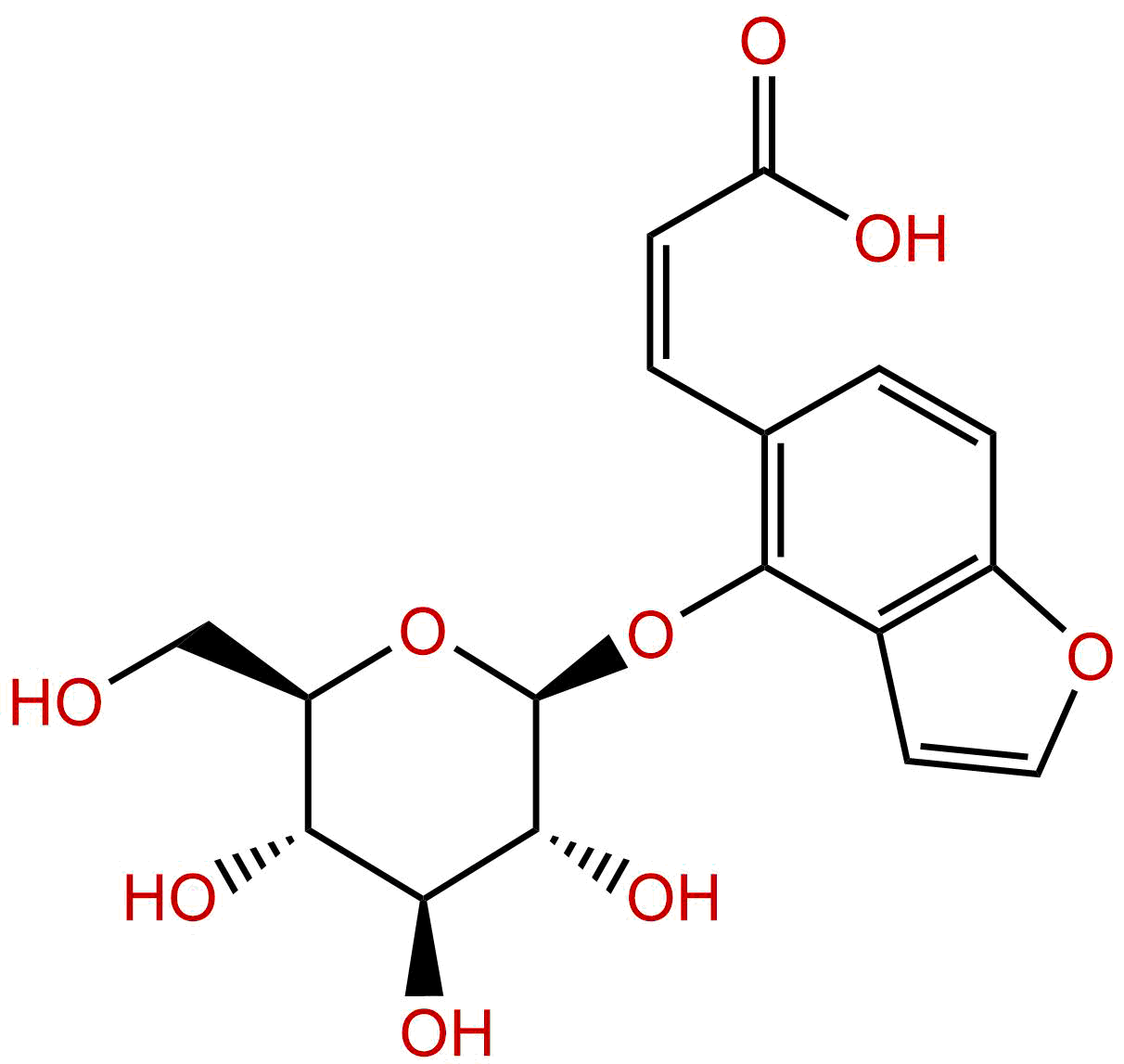


Product name: Isopsoralenoside
Synonym name:
Catalogue No.: BPF2225
Cas No.: 905954-18-9
Formula: C17H18O9
Mol Weight: 366.322
Botanical Source: Puerariae lobatae radix
Type of Compound: Phenols
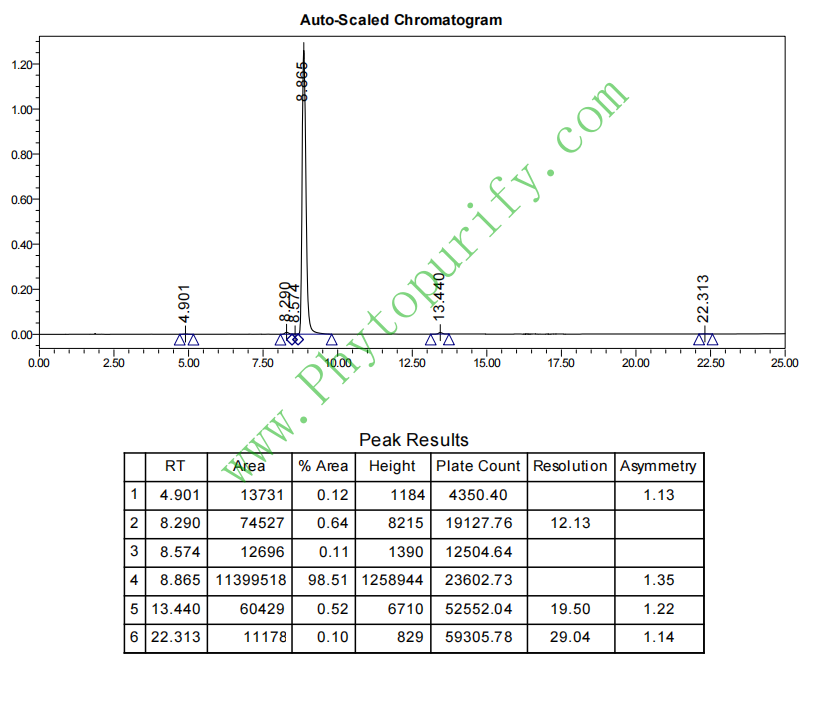
Purity: 95%~99%
Analysis Method: HPLC-DAD or/and HPLC-ELSD
Identification Method: Mass, NMR
Packing: Brown vial or HDPE plastic bottle
Storage: Store in a well closed container, protected from air and light. Put into refrigerate or freeze for long term storage.
Whenever possible, you should prepare and use solutions on the same day. However, if you need to make up stock solutions in advance, we recommend that you store the solution as aliquots in tightly sealed vials at -20℃. Generally, these will be useable for up to two weeks.
The product could be supplied from milligrams to grams
Inquire for bulk scale.
For Reference Standard and R&D, Not for Human Use Directly.
HPLC of Isopsoralenoside
Storage conditions:Short-term storage at 2~8℃, long-term storage at -20 ~ -80℃
149.8200
.1570
-2.3573
6.0636
.6844
.2748
Low
74.7632
3.9228
Yes
No
No
No
No
No
0.0
Yes
Yes
Yes
Yes
Natural products, as an important source of drug discovery, play an irreplaceable role in human health maintenance and disease treatment. Fructus Psorale(Psoralea corylifolia L.), Also known as broken paper, it is a plant of the genus Psoralea in the legume family. Its dried and ripe fruit is one of the medicinal herbs with a long history of application in traditional Chinese medicine. Psoralea is warm in nature, pungent and bitter in taste, and belongs to the kidney and spleen meridians. It has the effects of warming the kidney and promoting yang, regulating qi and relieving asthma, warming the spleen and stopping diarrhea. It is commonly used in clinical practice to treat impotence and nocturnal emissions caused by insufficient kidney yang, cold pain in the waist and knees, wheezing due to kidney deficiency, and diarrhea caused by the five changes. It is also used to treat skin diseases such as vitiligo and alopecia areata. Modern pharmacological research has confirmed that extracts of Fructus Psorale and their various chemical components, such as coumarins (such as psoralens and isopsoralens), flavonoids (such as dihydroflavones and isopsoralens), monoterpenes (such as psoralens), and benzofuran glycosides, exhibit a wide range of biological activities, including estrogenic effects, anti osteoporosis, anti-tumor, antibacterial, anti-inflammatory, and photosensitive activities.
In the complex chemical composition network of Fructus Psorale, benzofuran glycosides have gradually attracted the attention of researchers. Isopsoralenoside is one of the representative benzofuran glycosides. Psoralenoside, which is abundant in Fructus Psorale, is an isomer of Psoralenoside, which has a unique benzofuran nucleus and glycosyl moiety in its structure. It is worth noting that isopsoralen is not the direct form that ultimately exerts pharmacological activity, but rather an important natural prodrug. Research has shown that after oral administration, isopsoralen can rapidly undergo glycosidic bond hydrolysis under the action of digestive tract contents and intestinal microbiota, remove glycosides, and efficiently convert into its aglycone - psoralen. Psoralen, as one of the most extensively studied and widely active components in Fructus Psorale, is the core substance that mediates many pharmacological effects of isopsoralen. Therefore, a deep understanding of the chemical properties, metabolic conversion laws, pharmacological activity spectrum, and mechanism of action of isopsoralen is of great scientific significance for comprehensively elucidating the pharmacological substance basis of psoralen, guiding rational clinical drug use, and developing new drug lead compounds.
This article aims to systematically review the research progress of isopsoralen, covering its chemical structure and physicochemical properties, plant sources and extraction methods, pharmacological activity research, mechanism of action and molecular targets, pharmacological evaluation and pharmacokinetic characteristics, and prospects for its clinical application prospects, in order to provide comprehensive and in-depth references for the subsequent research and development of this natural product.
The chemical structure of Isopsoralenoside belongs to the class of benzofuran glycosides. The parent nucleus structure is benzofuran, which is a heterocyclic system formed by the fusion of furan ring and benzene ring. In the molecule of isopsoralen, a glucose group is connected to a specific hydroxyl group of the benzofuran nucleus through a β - glycosidic bond, forming a glycoside. Its system name is usually: 1- (β - D-glucopyranosyl) -1,2-dihydro-2- (1-hydroxymethylvinyl) - benzofuran. Compared with Psoralenoside, the difference between the two lies in the position of the glycosyl linkage or the stereoconfiguration of the aglycone, and they are isomers of each other. This subtle structural difference may lead to differences in their physicochemical properties, stability, and biotransformation efficiency.
From the perspective of physicochemical properties, the molecular formula of isopsoralen is C ₂₀ H ₂₂ O ₉, with a molecular weight of 366.3220 Da. Its lipid water partition coefficient (LogP) is 0.1570, which is a relatively low value, indicating that the compound has strong hydrophilicity but poor lipid solubility. This characteristic is closely related to the presence of multiple hydroxyl groups in its molecular structure (derived from the glucosyl and benzofuran parent nuclei). The high hydrophilicity results in good solubility of isopsoralen in water, with a predicted water solubility value of 6.0636 mg/mL. This facilitates its dissolution and dispersion in the gastrointestinal tract, providing a good physical and chemical basis for subsequent metabolic transformation. However, lower lipid solubility also means that its ability to passively diffuse through biological membranes such as intestinal epithelial cell membranes and the blood-brain barrier is weaker. Its topological polar surface area (TPSA) is 149.8200 Å ², which is a relatively high value (compounds with TPSA>140 Å ² are generally considered to have poor oral absorption), further confirming its difficulty in directly penetrating cell membranes. Therefore, the absorption and distribution of isopsoralen in the body may be highly dependent on transport proteins or through its glycoside form (psoralen). In addition, the predicted results indicate that isopsoralen has low permeability to the blood-brain barrier, suggesting a lower possibility of its direct pharmacological effects in the central nervous system. In terms of safety, the hERG inhibition prediction is "no", and the Ames test result is 0.0, indicating that the compound has a low risk of cardiac toxicity and mutagenicity, and has good safety potential.
The main plant source of isopsoralen is the leguminous plant psoralen(Psoralea corylifolia L. Dry and ripe fruits. Psoralea is native to China, India, Sri Lanka, and other regions, and is mainly distributed in provinces such as Yunnan, Sichuan, Guizhou, Henan, and Shaanxi in China. This plant is an annual herb with kidney shaped fruits that are rich in various secondary metabolites. Isopsoralen and psoralen together constitute the main benzofuran glycosides in Fructus Psorale. Their content in dried fruits varies depending on factors such as origin, harvesting time, and processing methods, and is usually equivalent to or slightly lower than that of psoralen.
For the extraction of isopsoralen, traditional methods often use solvent extraction. Due to its good water solubility, water extraction or different concentrations of alcohol extraction (such as methanol, ethanol) are commonly used methods. For example, by using reflux extraction method with 50% -70% ethanol as the solvent, under certain solid-liquid ratio and temperature, isopsoralen can be effectively extracted from plant raw materials. After concentration, the extract can be preliminarily purified by liquid-liquid extraction (such as using ethyl acetate, n-butanol, etc.) to remove lipid soluble impurities. Modern extraction techniques, such as ultrasound assisted extraction and microwave-assisted extraction, can accelerate cell wall fragmentation and solvent penetration by utilizing the cavitation effect of ultrasound or the heating effect of microwave, thereby improving extraction efficiency, shortening extraction time, and potentially reducing the degradation of thermosensitive components.
The crude extract after extraction needs to be further separated and purified to obtain high-purity isopsoralen monomers. Due to the complex composition of components in Fructus Psorale and the presence of isomers with a structure very similar to that of Psoralide, chromatographic separation technology has become crucial. Common methods include:
1. Column chromatography method Using silica gel, macroporous adsorption resins (such as D101, AB-8), polyamide, etc. as stationary phases, separation is carried out through gradient elution. Macroporous adsorption resin is often used for the initial enrichment of isopsoralen due to its large adsorption capacity, mild desorption conditions, and low cost. Silica gel column chromatography can be used for further fine separation.
2. High performance liquid chromatography method Preparation based high-performance liquid chromatography (Pre HPLC) is the most effective method for obtaining high-purity isopsoralen monomers. Usually, a reverse phase C18 chromatographic column is used, with acetonitrile water or methanol water system as the mobile phase. By optimizing the gradient elution program, baseline separation of isopsoralen, psoralen and other coexisting components can be achieved. UV detectors (usually detected at wavelengths of 240-260 nm) or evaporative light scattering detectors (ELSD) can be used to monitor the separation process.
3. High-speed countercurrent chromatography This is a chromatographic technique based on the liquid-liquid distribution principle, which does not require solid supports and avoids irreversible adsorption of samples on the stationary phase. It has the advantages of high sample recovery and large separation capacity, and has also been applied in the separation of glycosides in Fructus Psorale in recent years.
During the extraction and separation process, special attention should be paid to the stability of isopsoralen. Due to its tendency to undergo hydrolysis under acidic or specific enzyme conditions, it is necessary to control the pH value during operation, avoid prolonged high-temperature treatment, and consider adding enzyme inhibitors to prevent endogenous enzymatic hydrolysis, thereby ensuring the integrity of the target compound.
The pharmacological activity research of isopsoralen mainly revolves around its core feature as a prodrug of psoralen. Although some studies have directly observed the effects of isopsoralen, more evidence suggests that its in vitro and in vivo activities are largely attributed to its metabolite, psoralen. At present, the reported pharmacological activities related to isopsoralen mainly focus on the following aspects:
1. Estrogen like activity and promotion of osteoblast proliferation activity
The traditional efficacy of Fructus Psorale, "warming the kidneys and promoting yang," is closely related to its estrogen like effects in modern pharmacology. Research has shown that isopsoralen can bind to the estrogen receptor (ER) in vitro, especially exhibiting a certain affinity for the ER β subtype, thereby activating downstream signaling pathways and exerting estrogen like effects. This activity has potential therapeutic significance for postmenopausal women with osteoporosis caused by decreased estrogen levels. More specifically, isopsoralen or its metabolite psoralen can significantly promote the proliferation, differentiation, and mineralization of osteoblasts (such as MC3T3-E1 cell line). They can upregulate the expression of osteoblast specific transcription factors (such as RUNX2, SP7/Osterix) and promote the synthesis of bone matrix proteins (such as type I collagen, COL1A1). At the same time, they may inhibit the generation and activity of osteoclasts by regulating the ratio of osteoprotegerin (OPG, encoded by TNFRSF11B gene) to nuclear factor kappa B receptor activator ligand (RANKL), thereby playing a bidirectional regulatory role in bone metabolism balance, ultimately increasing bone density and improving bone microstructure.
2. Antitumor activity
Isopsoralen and its metabolite psoralen have shown inhibitory effects on proliferation, induction of apoptosis, and cell cycle arrest in various tumor cell lines. Its anti-tumor mechanism involves multiple aspects:
* Inducing cell apoptosis By regulating the expression of apoptosis related proteins, such as upregulating pro apoptotic proteins Bax and Bak, downregulating anti apoptotic proteins Bcl-2, Bcl xL (encoded by BCL2L1 gene), and Mcl-1 (encoded by MCL1 gene), activating the Caspase cascade reaction, ultimately leading to cell apoptosis.
* cell cycle arrest It can block the tumor cell cycle in G0/G1 phase or G2/M phase, inhibiting the unlimited proliferation of tumor cells.
* Inhibit angiogenesis Perhaps by downregulating the expression of vascular endothelial growth factor (VEGF), it can inhibit the formation of tumor neovascularization and cut off the nutritional supply to the tumor.
* Photodynamic effect Psoralen is a classic photosensitizer. Under specific wavelengths (such as long wave ultraviolet UVA) irradiation, psoralen can covalently crosslink with pyrimidine bases in DNA double strands, forming photo adducts that inhibit DNA replication and transcription, thereby exerting photochemical therapeutic effects. It is commonly used to treat diseases such as skin T-cell lymphoma. Isopsoralen itself has no photosensitivity, but when converted into psoralen, it can synergistically exert anti-tumor effects through phototherapy.
3. Antibacterial activity
Research reports that extracts and components of Fructus Psorale have inhibitory effects on various pathogenic bacteria. Isopsoralen/Psoralen exhibits certain antibacterial activity against common bacteria such as Staphylococcus aureus, Staphylococcus epidermidis, Escherichia coli, Pseudomonas aeruginosa, as well as certain fungi such as Candida albicans. The mechanism may involve disrupting the integrity of bacterial cell membranes, inhibiting the synthesis of bacterial nucleic acids or proteins, and so on. Although its antibacterial activity may not be as strong as traditional antibiotics, as a natural product, it has the potential advantage of multi-target and resistance, which is worth further exploration.
4. Other activities
In addition to the main activities mentioned above, isopsoralen/psoralen has also been reported to have anti-inflammatory, antioxidant, antidepressant, and immune regulating effects. For example, they can inhibit the production of inflammatory mediators such as NO, PGE2, TNF - α, IL-6, clear free radicals, regulate levels of monoamine neurotransmitters, and affect the function of T and B cells.
The pharmacological mechanism of action of isopsoralen is multi-layered and multi-target. Its core lies in its conversion as a prodrug into psoralen, which interacts with multiple intracellular targets to regulate complex signaling networks. By combining the provided target information, we can delve into its mechanism of action in diseases such as osteoporosis.
1. Estrogen receptor (ESR1) mediated signaling pathway
Isopsoralen/Psoralen has phytoestrogenic effects, and one of its mechanisms of action is through binding to estrogen receptors (mainly ESR1, i.e. ER α). After binding, the ligand receptor complex undergoes conformational changes, forming a dimer, which then binds to the estrogen response element (ERE) in the promoter region of the target gene or interacts with other transcription factors (such as AP-1, Sp-1) to regulate the transcription of downstream genes. In bone tissue, activated ER signals can:
* Promote osteogenic differentiation Directly upregulate the expression of key transcription factors RUNX2 and SP7 (Osterix) in osteoblast differentiation. RUNX2 is the main regulator of osteoblast differentiation, while SP7 is a downstream target of RUNX2, jointly driving bone marrow mesenchymal stem cells to differentiate towards osteoblasts.
* Regulating bone remodeling balance By upregulating the expression of TNFRSF11B (encoding OPG) and potentially downregulating the expression of RANKL, the ratio of OPG/RANKL can be increased. OPG, as a bait receptor for RANKL, can effectively block the binding of RANKL to RANK receptors on the surface of osteoclast precursor cells, thereby inhibiting the differentiation, activation, and survival of osteoclasts and reducing bone resorption.
* Promote bone matrix synthesis Upregulation of COL1A1 gene expression promotes the synthesis of type I collagen, which is the basis of bone matrix mineralization.
2. Regulating cell apoptosis and survival signaling pathways
The selective regulation of apoptosis in tumor cells and osteoblasts by isopsoralen/psoralen is closely related to its regulation of Bcl-2 family proteins.
* Downregulation of anti apoptotic proteins In tumor cells, psoralen can downregulate the expression of anti apoptotic proteins MCL1, BCL2, and BCL2L1 (Bcl xL). These proteins are located on the outer membrane of mitochondria and prevent cell apoptosis by inhibiting the oligomerization of pro apoptotic proteins such as Bax and Bak and mitochondrial outer membrane permeabilization (MOMP). Lowering them will release the inhibition of apoptosis.
* Activation of pro apoptotic proteins At the same time, psoralen may upregulate or activate pro apoptotic proteins such as Bax and Bak, leading to the release of apoptotic factors such as cytochrome c from mitochondria, activating Caspase-9 and Caspase-3, and ultimately executing the cell apoptosis program. This mechanism explains its anti-tumor activity.
* Protective effect on osteoblasts In osteoblasts, psoralen may activate survival signaling pathways such as ERK and Akt, upregulate anti apoptotic proteins, inhibit osteoblast apoptosis induced by oxidative stress or glucocorticoids, and protect bone forming cells.
3. Regulation of energy metabolism and oxidative stress
* Regulation of LDHA Lactate dehydrogenase A (LDHA) is a key enzyme in the glycolysis pathway, catalyzing the conversion of pyruvate to lactate. In tumor cells, LDHA is often highly expressed, supporting its vigorous glycolysis (Warburg effect). Psoralen may interfere with the energy metabolism of tumor cells and inhibit their proliferation by inhibiting the activity or expression of LDHA.
* Inhibition of AKR1B1 Aldose reductase (AKR1B1) is a key enzyme in the polyol pathway and plays an important role in the complications of diabetes, such as cataract and neuropathy. Inhibiting AKR1B1 activity can alleviate oxidative stress and cell damage in high glucose environments. Psoralen has been reported to be an inhibitor of AKR1B1, which may be related to its potential anti complications of diabetes.
In summary, isopsoralen is metabolized into psoralen, which acts on multiple molecular targets such as ESR1, Bcl-2 family members, RUNX2, SP7, TNFRSF11B, COL1A1, LDHA, AKR1B1, etc. It integrates and regulates multiple signaling pathways including estrogen signaling, cell apoptosis, bone metabolism, energy metabolism, and oxidative stress, thereby exerting its comprehensive pharmacological effects such as anti osteoporosis, anti-tumor, and antibacterial.
1. Evaluation of drug properties
Based on the provided physicochemical parameters, a preliminary evaluation of the pharmacological properties of isopsoralen can be conducted. Its molecular weight (366.32 Da) meets the requirements of Lipinski's Rule of Five (molecular weight<500). However, its LogP value (0.157) is far below the optimal range (usually considered 1-3), indicating its strong hydrophilicity and insufficient lipid solubility, which may lead to low passive absorption efficiency after oral administration. The high TPSA value (149.82 Å ²) also supports this viewpoint, indicating poor membrane permeability. Therefore, isopsoralen itself is not an ideal form of direct administration. But its design concept as a prodrug precisely fills this gap. After oral administration, hydrophilic isopsoralen has good solubility in the gastrointestinal tract and is easily in contact with gut microbiota and digestive enzymes. It quickly converts into a significantly lipophilic glycoside called psoralen (LogP of about 2.0-2.5, TPSA of about 50 Å ²), which has good membrane permeability and can be effectively absorbed into the systemic circulation. This conversion strategy of "prodrug active metabolite" is a common manifestation of wisdom in natural medicine. In addition, hERG inhibition negative (no risk of cardiac toxicity) and Ames test negative (no mutagenicity) provide strong support for its safety and are important pharmaceutical advantages.
2. Pharmacokinetic characteristics
The pharmacokinetic study of isopsoralen reveals its unique in vivo processes:
* absorb As mentioned earlier, isopsoralen itself is difficult to absorb directly through passive diffusion. After oral administration, it mainly undergoes hydrolysis in the upper part of the stomach and small intestine, especially under the action of β - glucosidase produced by intestinal contents and gut microbiota. Research has shown that isopsoralen is unstable in a simulated gastrointestinal environment and is almost completely converted to psoralen in the gut microbiota incubation system. Therefore, after oral administration of isopsoralen, the concentration of the original drug detected in the blood is extremely low, even undetectable, while its main metabolite, psoralen, rapidly appears and reaches a higher blood drug concentration. This indicates that the bioavailability of isopsoralen essentially depends on its conversion efficiency to psoralen and the absorption characteristics of psoralen itself.
* distribution Psoralen has high lipid solubility and can be widely distributed in various tissues throughout the body after absorption, including bone tissue, liver, kidney, skin, etc. Due to its small molecular weight and good lipid solubility, psoralen can theoretically pass through the blood-brain barrier. However, the blood-brain barrier permeability of isopsoralen itself is predicted to be "low", indicating that its pharmacological effects may mainly be in peripheral tissues.
* Metabolism The metabolism of isopsoralen mainly occurs in the intestine, where it undergoes deglycosylation to produce psoralen. After entering the systemic circulation, psoralen mainly undergoes further phase I and phase II metabolism in the liver, such as oxidation, reduction, and binding with glucuronic acid or sulfuric acid, generating various metabolites, which are ultimately excreted from the body through urine and feces.
* excretion Psoralen and its metabolites are mainly excreted through the kidneys (urine) and bile (feces). Its half-life is relatively short and requires multiple administrations to maintain an effective blood drug concentration.
Based on the unique pharmacological activity and pharmacokinetic characteristics of isopsoralen, it has shown promising clinical application prospects in the following fields:
1. Treatment of osteoporosis
This is the most promising application direction of isopsoralen/psoralen. Its dual regulatory mechanism of promoting osteogenesis and inhibiting osteoclastogenesis through estrogen like effects provides a natural drug choice for the treatment of postmenopausal osteoporosis. Compared with traditional estrogen replacement therapy, phytoestrogen has a lower risk of breast cancer and endometrial cancer. Developing formulations based on isopsoralen as a prodrug and utilizing its directional conversion to psoralen in vivo may achieve more stable and long-lasting anti osteoporosis effects. Future research can focus on:
* Formulation optimization Design enteric coated or sustained-release formulations to control the release and transformation of isopsoralen in specific parts of the intestine, and improve the bioavailability of psoralen.
* combination therapy Explore the synergistic effects with calcium supplements, vitamin D, or other anti osteoporosis drugs (such as bisphosphonates) in order to achieve the goal of enhancing efficacy and reducing toxicity.
* Long term safety assessment Conduct long-term animal and clinical trials to systematically evaluate the effects of long-term medication on estrogen sensitive tissues such as the reproductive system, breast, and endometrium.
2. Adjuvant therapy for tumors
Especially for diseases such as skin T-cell lymphoma that are sensitive to photodynamic therapy. As a prodrug of psoralen, isopsoralen can be converted into psoralen in the body after oral administration, and then combined with local or systemic UVA irradiation (PUVA therapy) to exert photochemical therapeutic effects. This administration method may have better gastrointestinal tolerance than direct oral administration of psoralen. In addition, its activity of inducing tumor cell apoptosis and cycle arrest also makes it potential as a sensitizer for chemotherapy or radiotherapy, for adjuvant therapy of other solid tumors.
3. Antibacterial and anti-inflammatory applications
Due to its antibacterial and anti-inflammatory activities, isopsoralen/psoralen can be developed as a topical formulation for the treatment of acne, skin infections, oral ulcers, etc. Its multi-target mechanism of action may help overcome the problem of antibiotic resistance. Meanwhile, its anti-inflammatory activity may also have potential value in the treatment of chronic inflammatory diseases such as arthritis and colitis, but more research is needed to validate its in vivo efficacy and safety.
Outlook and Challenges
Despite its broad prospects, the research and development of isopsoralen still face many challenges:
* Metabolic complexity The metabolic process in its body is greatly influenced by individual differences in gut microbiota, which may lead to individual differences in drug efficacy. Further research is needed on the factors that affect its metabolic transformation.
* Definition of active ingredients It is necessary to clarify whether isopsoralen itself has unique pharmacological activities other than prodrug functions, or whether all of its activities are attributed to psoralen.
* quality control Establish stable and reliable extraction, separation, and content determination methods to ensure the quality consistency of isopsoralen in medicinal materials and preparations.
* clinical translation At present, research mostly remains at the cellular and animal levels, lacking high-quality human clinical trial data to confirm its efficacy and safety.
As a key benzofuran glycoside component in Fructus Psorale, isopsoralen is one of the important material bases for the traditional Chinese medicine's "warming the kidney and promoting yang" effect. It, in its unique "prodrug" form, efficiently converts into the more active aglycone psoralen in the body, thereby exerting multiple pharmacological activities such as estrogen like, promoting osteogenesis, anti-tumor, antibacterial, etc. Its mechanism of action involves regulating multiple molecular targets closely related to osteoporosis and tumor development, such as ESR1, Bcl-2 family, RUNX2, SP7, TNFRSF11B, COL1A1, LDHA, AKR1B1, etc. The pharmacological evaluation shows that it has good safety potential, but its strong hydrophilicity and poor membrane permeability determine that it must rely on in vivo metabolic transformation to exert its efficacy. Future research should focus on elucidating its metabolic patterns in vivo, optimizing drug delivery systems to improve bioavailability, conducting rigorous clinical trials to validate its clinical value, and exploring its potential applications in areas such as osteoporosis and tumor photodynamic therapy. In depth research on isopsoralen not only helps to reveal the pharmacological substance basis of psoralen, but also provides valuable ideas and examples for discovering new prodrugs from traditional Chinese medicine and developing safe and effective innovative drugs.
