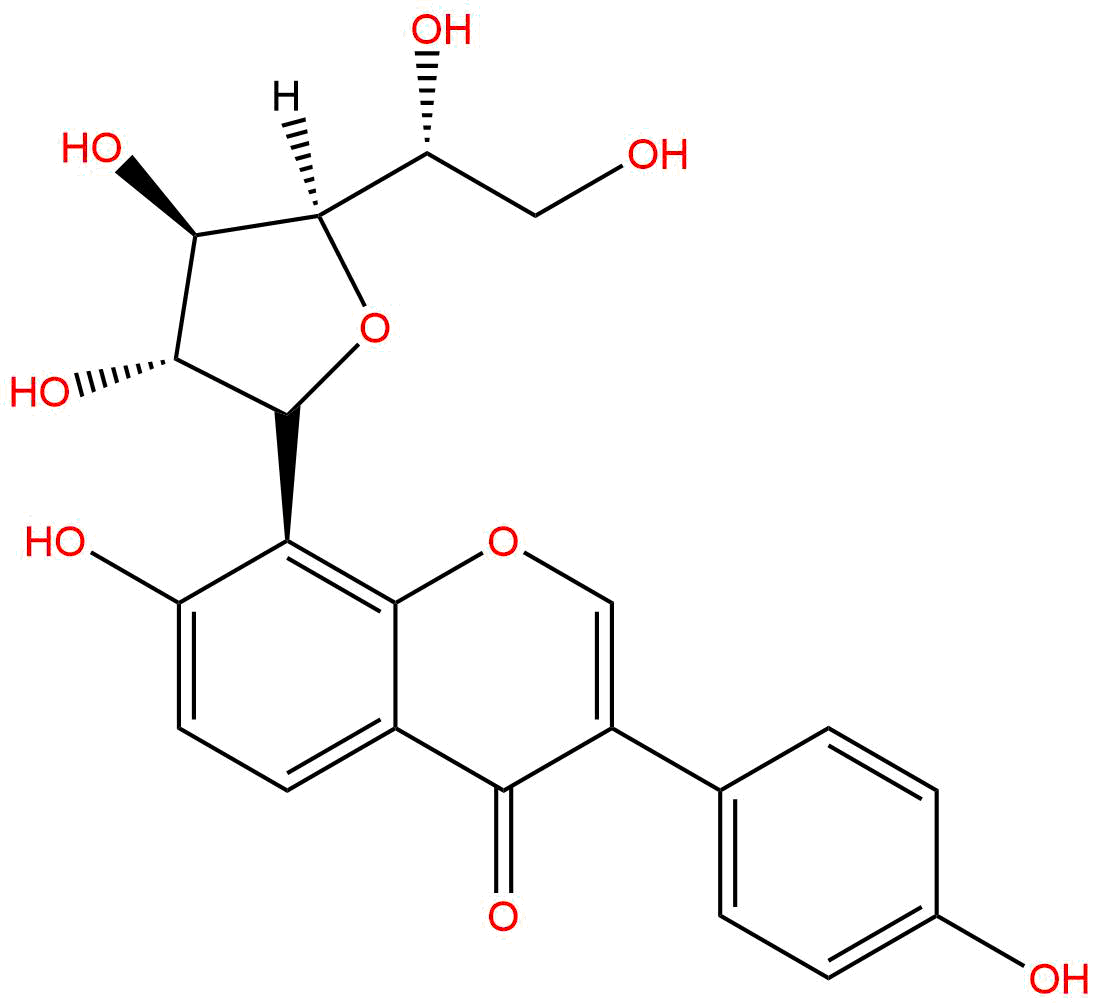


Product name: Neopuerarin B
Synonym name:
Catalogue No.: BP2148
Cas No.: 1150314-39-8
Formula: C21H20O9
Mol Weight: 416.382
Botanical Source:
Type of Compound: Flavonoids
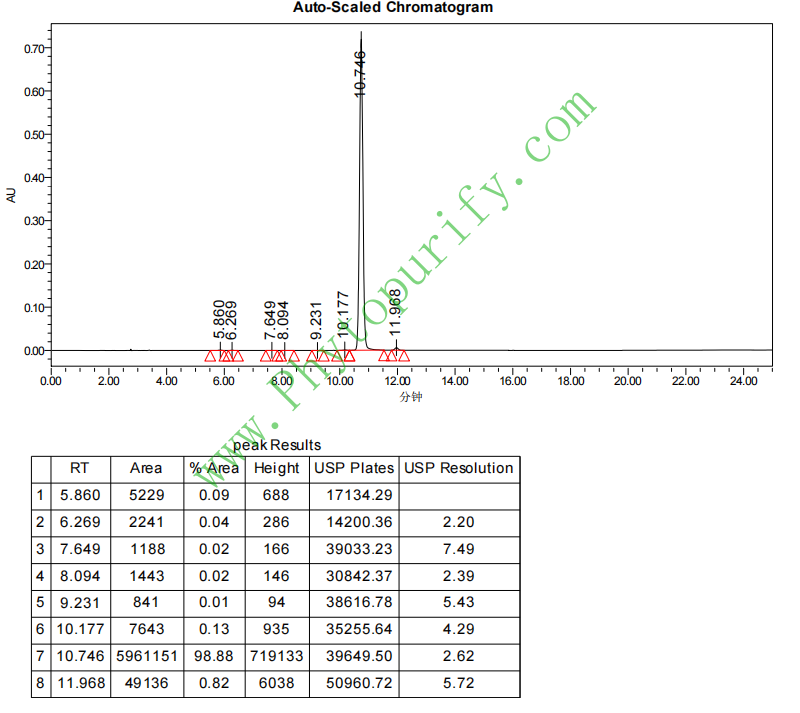
Purity: 95%~99%
Analysis Method: HPLC-DAD or/and HPLC-ELSD
Identification Method: Mass, NMR
Packing: Brown vial or HDPE plastic bottle
Storage: Store in a well closed container, protected from air and light. Put into refrigerate or freeze for long term storage.
Whenever possible, you should prepare and use solutions on the same day. However, if you need to make up stock solutions in advance, we recommend that you store the solution as aliquots in tightly sealed vials at -20℃. Generally, these will be useable for up to two weeks.
The product could be supplied from milligrams to grams
Inquire for bulk scale.
For Reference Standard and R&D, Not for Human Use Directly.
HPLC of Neopuerarin B
Storage conditions:Short-term storage at 2~8℃, long-term storage at -20 ~ -80℃
160.8200
.2774
.2551
1.1286
.5745
.8873
Low
82.1075
4.0170
Yes
No
No
No
Yes
Yes
1.2
Yes
Yes
Yes
No
Cardiovascular disease is the leading cause of death and disability worldwide, with myocardial ischemia and its severe consequence - myocardial infarction - posing a significant public health challenge. The current treatment strategies, such as percutaneous coronary intervention and drug therapy (including antiplatelet drugs, beta blockers, statins, etc.), can effectively alleviate symptoms and improve prognosis, but there are still problems such as reperfusion injury, drug side effects, and poor efficacy in some patients. Therefore, exploring new cardiac protective agents with multi-target, high efficiency and low toxicity characteristics from natural products has always been an important direction in drug development. Isoflavones have attracted much attention due to their wide range of biological activities. Neopuerarin B (CAS number: 1150314-39-8), as an isoflavone derivative isolated from the traditional Chinese medicine Pueraria lobata, has entered the field of researchers in recent years due to its reported hepatoprotective effects. However, further research reveals that it exhibits more complex and remarkable pharmacological potential in the field of myocardial ischemia. This article aims to provide a systematic review of the chemical properties, plant sources, pharmacological activities against myocardial ischemia, multi-target mechanisms of action, pharmacological evaluation of new puerarin, and prospects for its clinical application prospects, in order to provide comprehensive scientific references for the in-depth research and development of this compound.
New Puerarin B is a type of isoflavone carbon glycoside compound. Its chemical structure is similar to the classic active ingredient Puerarin in Pueraria lobata, both of which are 8-C-glucosyl-7-hydroxy-isoflavone structures. However, there may be differences in the configuration or substitution position of the sugar group, making it a novel analogue or isomer of Puerarin. Its molecular formula is C21H20O9 and its molecular weight is 416.3820. The molecular structure contains multiple phenolic hydroxyl groups, which determine some of its physicochemical properties. The calculated lipid water partition coefficient (LogP) is 0.2774, indicating that the compound has moderate lipophilicity but overall leans towards hydrophilicity. The topologically polar surface area (TPSA) is as high as 160.8200 Å ², which is mainly attributed to the multiple oxygen atoms (hydroxyl and ether bonds in the sugar ring) in the molecule. High TPSA values are usually unfavorable for passive diffusion across membranes. Its water solubility value is 1.1286 (usually measured in mg/mL or log mol/L, indicating a certain degree of water solubility), which is consistent with its glycoside structure and multi hydroxyl characteristics. These basic physicochemical parameters provide preliminary basis for its subsequent biological activity, in vivo metabolism, and formulation design.
New Puerarin B is mainly derived from the leguminous plant Pueraria lobata(Pueraria lobata The dried root of (Willd.) Ohwi, also known as the traditional Chinese medicine "kudzu root". In traditional Chinese medicine theory, kudzu root has the effects of relieving muscle and fever, generating fluids and quenching thirst, and activating meridians and collaterals. Modern research has isolated various isoflavone components such as puerarin, daidzein, and daidzein from it. New Puerarin B, as a relatively low content component, is usually isolated and purified from the water or alcohol water extract of Pueraria by modern chromatographic techniques.
The typical extraction and separation process is as follows: first, the dried powder of Pueraria lobata is heated and refluxed with methanol or ethanol water solution, or extracted with ultrasound assistance. The extracted liquids are combined and concentrated under reduced pressure to obtain the total extract. Subsequently, the extract was preliminarily enriched by macroporous adsorption resin columns (such as D101, AB-8), and gradient elution was performed with water and different concentrations of ethanol. Isoflavones were mainly concentrated in the elution sites of medium to high concentrations of ethanol. This part is further separated and purified repeatedly using various chromatographic techniques such as silica gel column chromatography, reverse phase silica gel column chromatography (such as ODS), and preparative high-performance liquid chromatography (HPLC). By means of nuclear magnetic resonance (NMR), mass spectrometry (MS), and comparison with known compounds, its structure was ultimately identified as neopuerarin. Optimizing the extraction solvent, temperature, time, and adopting new separation technologies such as high-speed countercurrent chromatography are key to improving its yield.
The new puerarin was initially discovered for its "effective liver protective effect", but subsequent research, especially based on its structural analogue puerarin's extensive cardiovascular protective effects, prompted researchers to explore its activity in the field of myocardial ischemia. Existing studies have shown that the new puerarin B exhibits significant cardioprotective effects in various experimental models.
At the cellular level, using a hypoxia/reoxygenation (H/R) injury model to simulate myocardial ischemia-reperfusion process, pretreatment with neopuerarin can significantly improve the survival rate of myocardial cells (such as H9c2 cells), reduce the leakage of lactate dehydrogenase (LDH) and creatine kinase isoenzyme (CK-MB), which are markers of cellular injury. Meanwhile, it can reduce hypoxia induced cardiomyocyte apoptosis.
At the animal model level, acute myocardial ischemia or ischemia-reperfusion injury models were constructed by ligating the left anterior descending coronary artery in rats or mice. Administration of puerarin (intraperitoneal injection or gavage) can significantly reduce the myocardial infarction area, improve ischemic ST segment elevation on electrocardiogram, and protect cardiac systolic and diastolic function, manifested as improvements in hemodynamic indicators such as left ventricular developing pressure (LVDP) and left ventricular systolic/diastolic rate (± dp/dt max). In addition, it can also alleviate myocardial tissue edema and inflammatory cell infiltration. These pieces of evidence collectively indicate that the new puerarin has a clear protective effect on experimental myocardial ischemic injury.
The cardioprotective effect of Puerarin B is not achieved through a single pathway, but involves the regulation of multiple pathways such as apoptosis, inflammation, oxidative stress, energy metabolism, and ion channels. Its action is related to the interaction of multiple key molecular targets. Based on the provided target information, its mechanism of action can be summarized as follows:
1. Inhibition of cardiomyocyte apoptosis Myocardial ischemia leading to cell apoptosis is the core link of myocardial injury. New puerarin may directly block the apoptotic pathway by upregulating the expression of anti apoptotic protein BCL2 and inhibiting the activation of apoptosis executor CASP3 (caspase-3). In addition, its activation of SIRT1 (Sirtuin 1 deacetylase) is crucial. SIRT1 exerts anti apoptotic, antioxidant, and autophagic regulatory effects by deacetylating various substrates such as p53 and FOXOs, and is a core regulatory factor in cellular stress response.
2. anti-inflammatory effect Acute inflammatory response caused by ischemia exacerbates tissue damage. New Puerarin B can significantly inhibit the production of pro-inflammatory cytokine IL-6 (interleukin-6). Meanwhile, it may alleviate the inflammatory response of myocardial tissue by regulating the MAPK1 (mitogen activated protein kinase 1, ERK2) signaling pathway, affecting the expression of downstream inflammation related genes.
3. Regulating oxidative stress and nitric oxide system During ischemia-reperfusion, a large amount of reactive oxygen species is produced. New Puerarin B may enhance the antioxidant capacity of cells through pathways such as SIRT1. It has a dual regulatory effect on the nitric oxide synthase system: on the one hand, it inhibits the expression of inducible nitric oxide synthase (NOS2, iNOS), reducing the cytotoxicity of excessive nitric oxide (NO) and its derivatives (such as peroxynitrite) under pathological conditions; On the other hand, it may have a stabilizing or activating effect on endothelial nitric oxide synthase (NOS3, eNOS) to maintain endothelial function. Angiotensin converting enzyme (ACE) is a key enzyme in the renin-angiotensin system. Inhibiting its activity can reduce the production of vasoconstrictor angiotensin II and improve myocardial blood supply. Neopuerarin may have an intervention effect on this target.
4. Adapt to hypoxia and energy metabolism Under hypoxic conditions, cells mediate a series of adaptive responses through HIF1A (hypoxia inducible factor-1 α). New Puerarin B may have a regulatory effect on the stability or activity of HIF1A, affecting the transcription of genes related to glycolysis and angiogenesis, and helping myocardial cells adapt to hypoxic environments.
5. Potential electrophysiological effects The potassium ion channel (KCNH2) encoded by the hERG gene is crucial for repolarization of cardiac action potentials, and its blockade may lead to QT interval prolongation and arrhythmia. New Puerarin B was indicated to have "hERG inhibition: No", indicating a low risk of direct cardiac electrophysiological toxicity, which provides favorable preliminary evidence for its safety. Its specific regulatory effect on KCNH2 targets still needs to be experimentally confirmed.
In summary, the new puerarin B acts on multiple targets such as BCL2, CASP3, SIRT1, IL-6, MAPK1, NOS2, NOS3, ACE, HIF1A, forming a synergistic network to alleviate myocardial ischemic injury from multiple links.
Based on the provided pharmacological parameters and the known characteristics of isoflavone glycosides, a preliminary evaluation of the pharmacological properties of new puerarin can be conducted
* Absorption and distribution The molecular weight of 416.38 belongs to the category of moderate to small, but its high TPSA (160.82) and strong polarity (polyhydroxy glycoside structure) may limit its ability to cross biofilms through passive diffusion, resulting in low oral bioavailability, similar to the poor oral absorption of puerarin. Its low blood-brain barrier penetration prediction is consistent with its high polarity, indicating that it mainly acts on the peripheral system and has a low risk of central nervous system side effects.
* Metabolism and excretion As an isoflavone glycoside, it is likely to be hydrolyzed into aglycones under the action of gut microbiota or intestinal mucosal enzymes. The aglycones are absorbed and then metabolized by the liver (such as glucuronidation and sulfation). The prototype drug and its metabolites are mainly excreted through the kidneys or bile. The detailed metabolic pathways, main metabolites, and enzyme systems involved in metabolism (such as CYP450 isoenzymes) need to be elucidated through in vitro liver microsomal experiments and in vivo pharmacokinetic studies.
* Preliminary Safety Assessment The Ames test is a standard method for evaluating the mutagenicity of compounds, with a value of 1.2 (usually referring to the ratio of the number of revertant colonies of the test strain to the spontaneous revertant number) close to 1, indicating that there is no significant mutagenicity and a low risk of genetic toxicity. Based on the information of "hERG inhibition: no", the new puerarin B shows good potential in early safety. However, comprehensive safety evaluation still requires preclinical studies on acute toxicity, long-term toxicity, reproductive toxicity, and other factors.
* Pharmaceutical considerations Its moderate LogP and certain water solubility provide the basis for dosage form design. To improve its potentially low oral bioavailability, formulation techniques such as phospholipid complexes, cyclodextrin inclusion complexes, nanocrystals, or solid dispersions may be required.
At present, there is a lack of publicly available literature on the pharmacokinetics of the new puerarin system (such as absolute bioavailability, tissue distribution, half-life, etc.), which is a key data gap that must be filled for its development.
As a natural compound derived from traditional Chinese medicine, Puerarin B exhibits unique advantages of multi-target and multi pathway synergistic effects in the treatment of myocardial ischemia, and has broad development prospects.
1. therapeutic potential It is expected to be developed as an innovative drug for the prevention and treatment of ischemic heart diseases such as acute myocardial infarction and unstable angina. It can be used alone or as an adjuvant to existing standard treatments to reduce reperfusion injury, inhibit ventricular remodeling, and improve long-term prognosis. The initial report on its liver protective effect also suggests its potential value in treating heart disease patients with concomitant liver injury.
2. Research and Development Direction and Challenges:
* structural optimization To address its potential drawbacks such as poor oral absorption and rapid metabolism, structural modifications can be made through medicinal chemical methods, such as methylation of hydroxyl groups or preparation of prodrugs, to improve its pharmacokinetic properties.
* Formulation development Developing new drug delivery systems, such as injectable liposomes and oral self microemulsions, is an important way to improve their efficacy and patient compliance.
* Deepening mechanism At present, although the mechanism network of its action has been preliminarily outlined, the primary secondary relationship, temporal sequence, and the existence of directly interacting proteins between each target still need to be further validated using techniques such as gene knockout/knockdown, molecular docking, and surface plasmon resonance.
* Preclinical and clinical research Completing the pharmacological (validation in different species and disease models), pharmacokinetic, and toxicological evaluations of the system is a prerequisite for advancing it into clinical trials. In the future, rigorous Phase I-III clinical trials should be designed to evaluate their safety, tolerability, and efficacy in humans.
* Exploring multiple diseases Given the important roles of targets such as SIRT1 and IL-6 in aging, neurodegenerative diseases, and metabolic disorders, research on new puerarin can be expanded to these related fields.
New Puerarin B is an important flavonoid compound with research value discovered from the traditional Chinese medicine Pueraria lobata. Although it initially entered the field of view with liver protective activity, in-depth research on myocardial ischemia has revealed its potential to exert multiple cardioprotective effects such as anti apoptosis, anti-inflammatory, antioxidant, and metabolic regulation by regulating multiple key targets such as BCL2, SIRT1, IL-6, MAPK1, and NOS. The preliminary pharmacological parameters suggest that it has a potential safety basis for development. However, there is still a lot of work to be done from lead compounds to candidate drugs and even clinical drugs, including comprehensively elucidating the details of their molecular mechanisms of action, systematically evaluating their pharmacokinetic characteristics, optimizing their physicochemical properties, and promoting standardized preclinical and clinical research. With the deepening of these studies, the new puerarin is expected to provide a new, multi-target natural drug selection for the treatment of ischemic heart disease, and also provide a useful example for innovative drug development based on traditional Chinese medicine resources.
