Storage conditions:Short-term storage at 2~8℃, long-term storage at -20 ~ -80℃
40.4600
4.4359
4.4348
.0767
4.2689
6.7745
High
86.7459
3.5862
Yes
Yes
No
No
No
No
0.0
Yes
Yes
Yes
Yes
Natural products, as an important source of drug discovery, play an irreplaceable role in the long history of human struggle against diseases. From classic aspirin and paclitaxel to artemisinin in recent years, countless natural compounds and their derivatives derived from plants, microorganisms, and marine organisms provide a rich library of lead compounds for the modern pharmaceutical system. Among the numerous biologically active natural product families, psoralen and its analogues have received widespread attention from scholars at home and abroad in recent years due to their unique chemical structures and extensive pharmacological activities.
Bakuchiol is a type of fruit primarily derived from the fruit of Psoralea(Psoralea corylifolia L. Monoterpenoid phenolic compounds isolated from seeds are known for their significant activities in anti-inflammatory, antioxidant, antibacterial, anti-tumor, and estrogen like effects. However, the structural diversity of natural products determines the complexity of their functions and activities. Among the numerous derivatives of psoralen, 13 hydroxypsoralen (Delta3,2-Hydroxybakuchiol, CAS number: 178765-49-6) is gradually demonstrating its unique biological significance and potential therapeutic value as a key oxidative metabolite.
13 hydroxypsoralen, whose English name "Delta3,2" usually refers to the isomer characteristics of specific double bond positions or hydroxyl substitution in its structure. Compared with the parent compound psoralen, this molecule introduces a hydroxyl functional group at the C-13 position. This seemingly minor structural modification may profoundly alter the polarity, spatial conformation, and interaction mode with biological targets of the molecule, endowing it with a pharmacological activity spectrum distinct from that of the parent organism. In recent years, with the deepening of research on the pathogenesis of osteoporosis and the understanding of the complexity of bone metabolism regulatory networks, the search for natural active molecules that are efficient, low toxic, and capable of multi-target regulation of bone homeostasis has become a research hotspot. Preliminary studies have shown that 13 hydroxypsoralen has remarkable potential in regulating bone metabolism, with its targets involving multiple key proteins related to osteogenic differentiation, osteoclast apoptosis, and estrogen signaling pathways such as MCL1, BCL2, ESR1, RUNX2, and SP7.
This article aims to provide a systematic professional review of 13 hydroxypsoralen, a natural product. We will start with its chemical structure and physicochemical properties, trace its plant origin and extraction methods, explore its pharmacological activity in depth, especially in the treatment of osteoporosis, and elaborate on its mechanism of action and molecular targets. In addition, by combining the pharmacological parameters and pharmacokinetic characteristics, the potential for its development as a lead compound is evaluated, and finally, the clinical application prospects are discussed, in order to provide comprehensive and in-depth references for further research in this field.
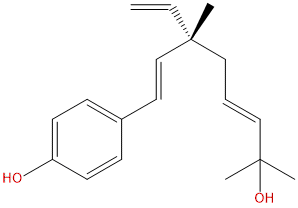
The chemical structure of 13 hydroxypsoralen belongs to monoterpene phenols, and its parent nucleus is composed of a terpene side chain with a conjugated double bond connected to a phenolic ring. Specifically, its chemical name is a 13 hydroxy derivative of 4- [(1E, 3S) -3-vinyl-3,7-dimethyl-1,6-octadien-1-yl] phenol. On the skeleton of psoralen, the C-13 position (usually referring to the methyl carbon at the end of the side chain) is replaced by a hydroxyl group (- OH), forming 13 hydroxypsoralen. This hydroxylation modification significantly alters the physicochemical properties of the molecule.
From the perspective of physicochemical properties, the molecular weight of 13 hydroxypsoralen is 272.3880 g/mol, belonging to the category of small molecule compounds, which lays the foundation for its good cell membrane permeability. The LogP of its lipid water partition coefficient is 4.4359, indicating that the compound has strong lipophilicity and tends to be distributed in a lipid environment. This characteristic is consistent with its terpene side chain and phenolic ring structure, which facilitates its passage through biological membranes and binding to intracellular targets. However, higher LogP values may also lead to poor water solubility issues. Its water solubility parameter is 0.0767 mg/mL, which belongs to the category of difficult to dissolve in water. This is a key challenge that needs to be overcome in actual drug formulation development, such as improving its bioavailability through techniques such as nano formulations, liposomes, or cyclodextrin inclusion.
The polar surface area (TPSA) is 40.4600 Å ², which is mainly derived from the phenolic hydroxyl group and the C-13 hydroxyl group. TPSA is an important indicator for predicting drug oral absorption and blood-brain barrier penetration ability. Generally, molecules with TPSA less than 60 Å ² have higher intestinal absorption rates and the potential to penetrate the blood-brain barrier. The TPSA value of 13 hydroxypsoralen is exactly below this threshold, indicating that it has good oral absorption potential and can penetrate the blood-brain barrier (as confirmed by the drug properties parameter "blood-brain barrier: high"). This characteristic is of great significance for treating central nervous system diseases or diseases that require targeting the brain, but it may also increase the risk of central nervous system toxicity.
In terms of stability, the conjugated double bonds on the phenolic hydroxyl group and side chains make it more sensitive to oxidation and light. In addition, its structure contains a chiral center (C-3 position), hence the existence of optical isomers. Although natural sources of psoralenone and its derivatives typically exist in specific stereoisomers, different isomers may be produced during synthesis or metabolism, and their biological activities may vary. Overall, the chemical structure of 13 hydroxypsoralen endows it with unique physicochemical properties: moderate molecular weight, good lipid solubility, and the ability to penetrate the blood-brain barrier, but poor water solubility, which is both the basis for its pharmacological activity and the key point for optimizing its pharmacological properties.
13 hydroxypsoralen is mainly derived from the leguminous plant Psoralea(Psoralea corylifolia L.)。 Psoralea is a traditional Chinese medicinal herb, and its dried and ripe fruit (known as "Psoralea") has a long history of medicinal use in Asian countries such as China, India, and Japan. It is commonly used to treat diseases such as kidney yang deficiency, cold pain in the waist and knees, frequent enuresis, and vitiligo. Modern plant chemistry research has shown that the fruit of Fructus Psorale is rich in various active ingredients, including coumarins (such as psoralens and isopsoralens), flavonoids (such as dihydroflavones and isopsoralens), and monoterpene phenols (such as psoralens). 13 hydroxypsoralen, as an oxidative metabolite of psoralen, is usually present in plants at lower levels than the parent compound, but it may accumulate during specific growth stages or processing.
The method of extracting 13 hydroxypsoralen is usually similar to the process of extracting total phenolic components from psoralen, but requires more refined separation and purification steps. Traditional extraction methods include solvent extraction. Due to the moderate polarity of 13 hydroxypsoralen, ethanol, methanol, or their aqueous solutions are commonly used as extraction solvents. For example, after crushing the dried fruit of Fructus Psorale, soaking or reflux extraction is carried out with 70% -95% ethanol at room temperature or heating conditions. After concentration of the extract, the total extract is obtained. Subsequently, the total extract was preliminarily separated using liquid-liquid extraction methods (such as sequential extraction with petroleum ether, ethyl acetate, and n-butanol), and 13 hydroxypsoralen was usually enriched in the ethyl acetate extraction site due to its polarity.
Modern chromatographic separation techniques are essential for obtaining high-purity 13 hydroxypsoralen monomers. Common methods include:
1. silica gel column chromatography This is the most classic method of separation. By gradient elution using solvent systems such as petroleum ether ethyl acetate or chloroform methanol, and detection by thin layer chromatography (TLC), a fraction rich in 13 hydroxypsoralen can be preliminarily separated.
2. Reverse phase column chromatography Using C18 or C8 reverse phase silica gel columns with methanol water or acetonitrile water systems for elution can more effectively remove impurities with similar polarity and improve separation efficiency.
3. High performance liquid chromatography (HPLC)For isomers with highly similar structures (such as Delta3,2-isomer and other positional isomers), preparative HPLC is the key means to achieve final purification. By optimizing the mobile phase (such as acetonitrile water formic acid system) and chromatographic column (such as C18 column), high-purity 13 hydroxypsoralen monomer can be successfully separated.
4. High Speed Counter Current Chromatography (HSCCC)As a liquid-liquid distribution chromatography technique, HSCCC does not require a solid support, avoiding irreversible adsorption of samples on silica gel, and is particularly suitable for separating natural products with similar polarity and structure. In recent years, it has also been applied to the separation of active ingredients in Fructus Psorale.
It is worth noting that 13 hydroxypsoralen may exist in the plant body in its free form or in the form of glycosides bound to sugars. During the extraction process, hydrolysis (such as acid hydrolysis or enzyme hydrolysis) is usually required to release the aglycone. In addition, due to the sensitivity of psoralen and its derivatives to light and heat, the entire extraction and separation process should be carried out under light avoidance and low temperature conditions to prevent compound degradation or isomerization. With the development of modern analytical technology, green and efficient extraction techniques such as supercritical fluid extraction (SFE) and microwave-assisted extraction (MAE) have also been applied to the extraction of active ingredients from Fructus Psorale, which is expected to improve the extraction rate and purity of 13 hydroxypsoralen.
The pharmacological activity research of 13 hydroxypsoralen is still in its infancy, but existing studies, especially the extensive exploration of its parent compound, psoralen, provide important clues for understanding the function of 13 hydroxypsoralen. At present, the pharmacological activity of 13 hydroxypsoralen is mainly focused on the regulation of bone metabolism, especially its therapeutic potential for osteoporosis. In addition, its potential anti-inflammatory, antioxidant, and estrogen like activities are also worth exploring.
Osteoporosis is a systemic bone disease characterized by low bone mass and destruction of bone microstructure, leading to increased bone fragility and susceptibility to fractures. The core of its pathogenesis lies in the disruption of the dynamic balance between bone resorption (mediated by osteoclasts) and bone formation (mediated by osteoblasts). The research on the anti osteoporosis effect of 13 hydroxypsoralen mainly focuses on its dual regulatory effects on osteoblast differentiation and osteoclast activity.
Preliminary cell experiments have shown that 13 hydroxypsoralen can significantly promote the proliferation and differentiation of mouse osteoblast cell line MC3T3-E1. By detecting alkaline phosphatase (ALP) activity, alizarin red staining (mineralization nodule formation), and expression of osteogenic related genes, it was found that the 13 hydroxypsoralen treatment group showed significant enhancement. More importantly, it can upregulate the expression of key transcription factors RUNX2 and SP7 (Osterix) for osteogenic differentiation, and promote the synthesis of type I collagen (COL1A1), which are necessary conditions for bone matrix formation and mineralization.
On the other hand, in terms of osteoclasts, 13 hydroxypsoralen has shown the potential to inhibit osteoclast differentiation and induce apoptosis. Overactivation of osteoclasts is the main cause of hyperactive bone resorption. Research suggests that 13 hydroxypsoralen may exert its effects by regulating the expression of MCL1 and BCL2 family proteins. MCL1 and BCL2 are anti apoptotic proteins that play a critical role in the survival of osteoclasts. 13 hydroxypsoralen may induce apoptosis of osteoclast precursor cells or mature osteoclasts and reduce bone resorption by downregulating the expression of MCL1 and BCL2, while upregulating pro apoptotic proteins such as BAX. In addition, it may also regulate osteoclastogenesis by affecting the RANKL/RANK/OPG signaling pathway. TNFRSF11B (osteoprotegerin, OPG) is a bait receptor for RANKL that can inhibit osteoclast differentiation. 13 hydroxypsoralen may upregulate the expression of OPG, thereby antagonizing the action of RANKL and inhibiting osteoclast activity.
Given that psoralen is commonly used in traditional Chinese medicine theory to treat kidney yang deficiency and many kidney tonifying herbs have estrogen like effects, the estrogenic activity of 13 hydroxypsoralen has also received much attention. Its molecular target contains ESR1 (estrogen receptor alpha), strongly suggesting that it may exert biological effects by binding to estrogen receptors. In a rat model of osteoporosis induced by ovariectomy (OVX), it has been demonstrated that psoralen and its derivatives can partially reverse bone loss caused by estrogen deficiency, and its mechanism of action may be related to the activation of the ER α/β signaling pathway. As its derivatives, 13 hydroxypsoralen may also have the potential of selective estrogen receptor modulator (SERM), which can not only play a protective role on bones, but also avoid the risks of breast cancer, endometrial cancer and other risks brought by traditional estrogen replacement therapy. The characteristic of targeting ESR1 gives it unique advantages in the treatment of postmenopausal osteoporosis.
In addition to bone metabolism, 13 hydroxypsoralen may also have the following pharmacological effects based on its structural characteristics and the activity of its parent compounds:
- anti-inflammatory activity Psoralen has been proven to inhibit inflammatory signaling pathways such as NF - κ B and MAPK, and reduce the production of pro-inflammatory factors such as TNF - α and IL-6. 13 hydroxypsoralen may retain or enhance this activity, which is of great significance for the treatment of inflammation related bone loss, such as osteoporosis caused by rheumatoid arthritis.
- antioxidant activity The phenolic hydroxyl structure endows it with the ability to scavenge free radicals. Oxidative stress is a common pathological mechanism in various diseases such as osteoporosis and aging, and the antioxidant effect of 13 hydroxypsoralen may indirectly protect bone cells from oxidative damage.
- Antidiabetic complications AKR1B1 (aldose reductase) in the target list is a key enzyme for complications of diabetes (such as cataract and neuropathy). Inhibition of AKR1B1 activity is an important strategy for the treatment of complications of diabetes. It is worth further verifying whether 13 hydroxypsoralen is an effective inhibitor of this enzyme.
- Antitumor activity LDHA (lactate dehydrogenase A) in the target is a key enzyme in tumor cell aerobic glycolysis (Warburg effect). Inhibiting LDHA can cut off the energy supply to tumor cells. In addition, regulating apoptotic proteins such as MCL1 and BCL2 also suggests their potential to induce apoptosis in tumor cells.
The pharmacological activity of 13 hydroxypsoralen is the result of its interaction with multiple molecular targets. Based on existing research, especially in the regulation of osteoporosis, its mechanism of action can be summarized as a network regulation mode with multiple targets and pathways.
Wnt/β - catenin and RUNX2/SP7 pathway This is the core pathway for osteoblast differentiation and bone formation. 13 hydroxypsoralen may activate Wnt signaling, stabilize β - catenin protein, allow it to enter the nucleus, bind with TCF/LEF transcription factors, and initiate transcription of downstream target genes. among which,RUNX2(Runt related transcription factor 2) and SP7 Osterix is the "main control switch" for osteogenic differentiation. 13 hydroxypsoralen can significantly upregulate the mRNA and protein levels of RUNX2 and SP7, thereby promoting downstream target genes such as COL1A1 The expression of type I collagen alpha 1 chain, osteopontin (OPN), osteocalcin (OCN), and other proteins ultimately promotes osteoblast maturation and bone matrix mineralization.
RANKL/RANK/OPG signal axis This is a classic pathway that regulates osteoclast differentiation and activation. 13 hydroxypsoralen may be upregulated TNFRSF11B Simultaneously downregulating the expression of RANKL and increasing the ratio of OPG/RANKL. OPG, as a bait receptor for RANKL, competitively inhibits the binding of RANKL to RANK receptors on the surface of osteoclast precursor cells, thereby blocking the activation of downstream signaling pathways such as NF - κ B and MAPK, and inhibiting the differentiation and maturation of osteoclasts.
Apoptosis signaling pathway The induction of osteoclast apoptosis by 13 hydroxypsoralen is another important mechanism by which it inhibits bone resorption. It may be achieved by regulating the balance of BCL-2 family proteins. Specifically, it may downregulate anti apoptotic proteins MCL1(Myeloid Leukemia Sequence 1) and BCL2 The expression of (B-cell lymphoma 2) and the upregulation or activation of pro apoptotic proteins BAX and BAK. This change leads to an increase in mitochondrial outer membrane permeability, the release of cytochrome c, activation of the Caspase cascade reaction (Caspase-9 and Caspase-3), ultimately resulting in osteoclast apoptosis. In addition,BCL2L1 As another important anti apoptotic protein, the expression of BCL-XL may also be regulated.
Estrogen signaling pathway 13 hydroxypsoralen may act as a plant estrogen and directly interact with ESR1 Binding to estrogen receptor alpha. The combined ESR1 dimerizes and enters the nucleus, binding to estrogen responsive elements (ERE) to initiate transcription of a series of genes. This effect can simulate the protective effect of estrogen on bones, such as promoting osteoblast activity, inhibiting osteoclastogenesis, and may have tissue selectivity, reducing excessive stimulation of the breast and uterus.
In summary, 13 hydroxypsoralen does not act on a single target, but exerts its pharmacological effects through a complex network system. It simultaneously acts on osteogenesis (promoting RUNX2/SP7), osteoclastogenesis (inhibiting RANKL/OPG, inducing apoptosis), and upstream regulatory signals (estrogen receptors), and may improve the cellular microenvironment by regulating metabolic enzymes (AKR1B1, LDHA). The synergistic effect of multiple targets may result in better efficacy and lower risk of drug resistance compared to single target drugs in the treatment of complex diseases such as osteoporosis.
The evaluation of drug properties is crucial in converting natural active molecules into clinical drugs. The pharmacological parameters of 13 hydroxypsoralen provide us with preliminary evaluation basis, and also reveal the direction that needs to be optimized as a lead compound.
According to the provided pharmacological parameters:
- Molecular weight (272.3880)Meets the requirement of molecular weight less than 500 in the Lipinski Five Rules, indicating good oral absorption potential.
- LogP (4.4359)Slightly higher than the threshold of LogP less than 5 in Lipinski's rule, but still within an acceptable range. A high LogP value indicates good membrane permeability, but also suggests poor water solubility, which may lead to low oral bioavailability and high metabolic clearance.
- TPSA (40.4600)Far below 140 Å ², it indicates good intestinal absorption and cell membrane penetration ability. Especially its "blood-brain barrier: high" characteristic suggests that the molecule can enter the central nervous system, which is advantageous for developing drugs to treat neurodegenerative diseases or brain tumors, but may pose unnecessary neurotoxic risks for treating peripheral diseases such as osteoporosis.
- HERG inhibition (No)This is a very positive signal. The inhibition of hERG potassium channels is the main cause of drug-induced QT interval prolongation and arrhythmia (such as apical torsion ventricular tachycardia) in the heart. 13 hydroxypsoralen does not inhibit hERG channels, greatly reducing its risk of cardiac toxicity.
- Ames test (0.0)Ames test is used to detect the mutagenicity of compounds. The result is 0.0, indicating that no genetic toxicity was observed in the testing system, which is an important safety indicator.
Overall, the weak point of 13 hydroxypsoralen's medicinal properties lies mainly in its poor water solubility. Its water solubility is only 0.0767 mg/mL, making it a poorly soluble drug. This will result in low dissolution in the gastrointestinal tract, thereby limiting oral absorption. In addition, a high LogP value suggests that it may have a higher liver first pass effect and protein binding rate.
At present, there is limited pharmacokinetic (PK) research data on 13 hydroxypsoralen, but we can make reasonable inferences based on its physicochemical properties and the PK characteristics of the parent compound psoralen.
In view of the above analysis, the development of 13 hydroxypsoralen as a clinical drug requires systematic pharmacokinetic optimization:
1. Improve water solubility This is the most critical optimization direction. The apparent solubility and dissolution rate can be significantly improved through preparation techniques such as prodrugs (such as phosphate esters and amino acid ester prodrugs), salt formation (phenolic hydroxyl groups can form salts), solid dispersion, liposomes, nanocrystals, or cyclodextrin inclusion complexes.
2. Reduce lipophilicity On the premise of maintaining the core pharmacophore, polar groups (such as introducing additional hydroxyl, carboxyl, amino, or sugar groups) can be introduced into the molecule to reduce LogP values, improve water solubility, and reduce tissue accumulation.
3. Control blood-brain barrier penetration The ideal medication for treating osteoporosis should have low central nervous system penetration. It can be restricted from entering the brain by increasing molecular polarity (such as introducing highly polar groups) or making it a P-gp substrate.
4. Metabolic stability optimization Structural modification of easily metabolized sites (such as side chain double bonds and phenolic hydroxyl groups), such as saturating double bonds, introducing fluorine atoms or methyl groups to block metabolism, can prolong half-life and reduce dosing frequency.
As a natural product with multi-target regulatory potential, 13 hydroxypsoralen has broad clinical application prospects, but also faces many challenges.
Treatment of osteoporosis This is the most direct and promising application field of 13 hydroxypsoralen phenol. Its unique dual mechanism of action - promoting osteogenesis (through RUNX2/SP7) and inhibiting osteoclast (through inducing apoptosis and OPG/RANKL axis) - makes it an ideal bone formation promoter and bone resorption inhibitor. Especially its ability to target ESR1 gives it a natural advantage in the treatment of postmenopausal osteoporosis, making it a potential new and safer SERM drug. In the future, it may be developed as an oral or injectable form for the treatment of primary osteoporosis (including postmenopausal and geriatric) as well as secondary osteoporosis (such as glucocorticoid induced osteoporosis).
Prevention and treatment of complications of diabetes In view of its potential inhibitory effect on AKR1B1 (aldose reductase), 13 hydroxypsoralen may be developed to treat diabetes cataract, peripheral neuropathy and nephropathy. It has antioxidant and anti-inflammatory activities at the same time, which can work together to delay the progress of complications of diabetes.
neoadjuvant therapy By regulating targets such as MCL1, BCL2, and LDHA, 13 hydroxypsoralen may serve as an adjuvant chemotherapy drug to enhance the sensitivity of tumor cells to chemotherapy, or directly induce apoptosis in certain hematological tumors (such as multiple myeloma, leukemia) and solid tumors. Its low cardiac toxicity and non mutagenicity are its advantages as a long-term adjuvant drug.
Despite the promising prospects, the clinical translation of 13 hydroxypsoralen still faces the following key issues:
1. Pharmacokinetic bottleneck As mentioned earlier, poor water solubility and potential metabolic instability are its main obstacles. The future research focus should be on developing efficient and safe drug delivery systems (such as lipid nanoparticles, polymer micelles) and designing derivatives with better PK properties.
2. safety evaluation Although the Ames test and hERG inhibition results are negative, comprehensive toxicological evaluations such as long-term toxicity, reproductive toxicity, and drug interactions are essential. Especially with its high blood-brain barrier penetration, it is necessary to focus on evaluating the central nervous system toxicity (such as dizziness, drowsiness, and cognitive function effects).
3. In depth elucidation of the mechanism of action Current research is mostly focused on the cellular and molecular levels, lacking systematic validation on whole animal models. Future research needs to comprehensively evaluate its efficacy, PK, and toxicity in various animal models such as ovariectomized rats and glucocorticoid induced osteoporosis mice. At the same time, it is necessary to use technologies such as gene knockout, proteomics, and metabolomics to more accurately depict its multi-target action network.
4. Study on Structure Activity Relationship The difference in activity between the Delta3,2-isomer of 13 hydroxypsoralen and other isomers (such as the Delta1,2-isomer) is not yet clear. The systematic study of the effects of different stereoconfigurations and functional group modifications on activity is crucial for designing better candidate drugs.
5. Resource sustainability Natural product sources are limited, and large-scale extraction costs are high. Therefore, developing efficient chemical total synthesis or semi synthesis routes, as well as utilizing biotechnology (such as genetic engineering bacterial fermentation) to produce 13 hydroxypsoralen or its precursors, are key to ensuring future drug supply.
13 hydroxypsoralen, as a rising star in the psoralen family, has shown significant research value and development potential in the field of natural product pharmacology due to its unique chemical structure and multi-target regulatory ability. This article systematically reviews its chemical properties, plant origin, pharmacological activity, mechanism of action, and medicinal characteristics. Specifically, its dual role in regulating bone metabolism - promoting bone formation through the RUNX2/SP7 pathway, inhibiting bone resorption by regulating the MCL1/BCL2 and OPG/RANKL axes, and targeting ESR1 to exert estrogen like effects - makes it a highly promising lead compound for treating osteoporosis, especially postmenopausal osteoporosis.
However, the road from laboratory discovery to clinical application of 13 hydroxypsoralen is still long and challenging. Its inherent poor water solubility and potential metabolic stability issues need to be overcome through advanced formulation techniques and medicinal chemical modifications. Comprehensive safety evaluation, in-depth in vivo efficacy verification, and clear structure-activity relationship research are the necessary steps to promote its clinical application.
In summary, 13 hydroxypsoralen represents a novel natural product that intervenes in complex diseases through multi-target synergistic effects. In depth research on it is not only expected to provide new candidate drugs for the treatment of diseases such as osteoporosis, but also to provide valuable examples for understanding the relationship between natural product chemical diversity and biological functional complexity. With the continuous integration of modern pharmaceutical, chemical biology, and systems biology technologies, we have reason to believe that 13 hydroxypsoralen and its derivatives will play a more important role in the future development of new drugs.
Batch can search by a CAS number,one per line