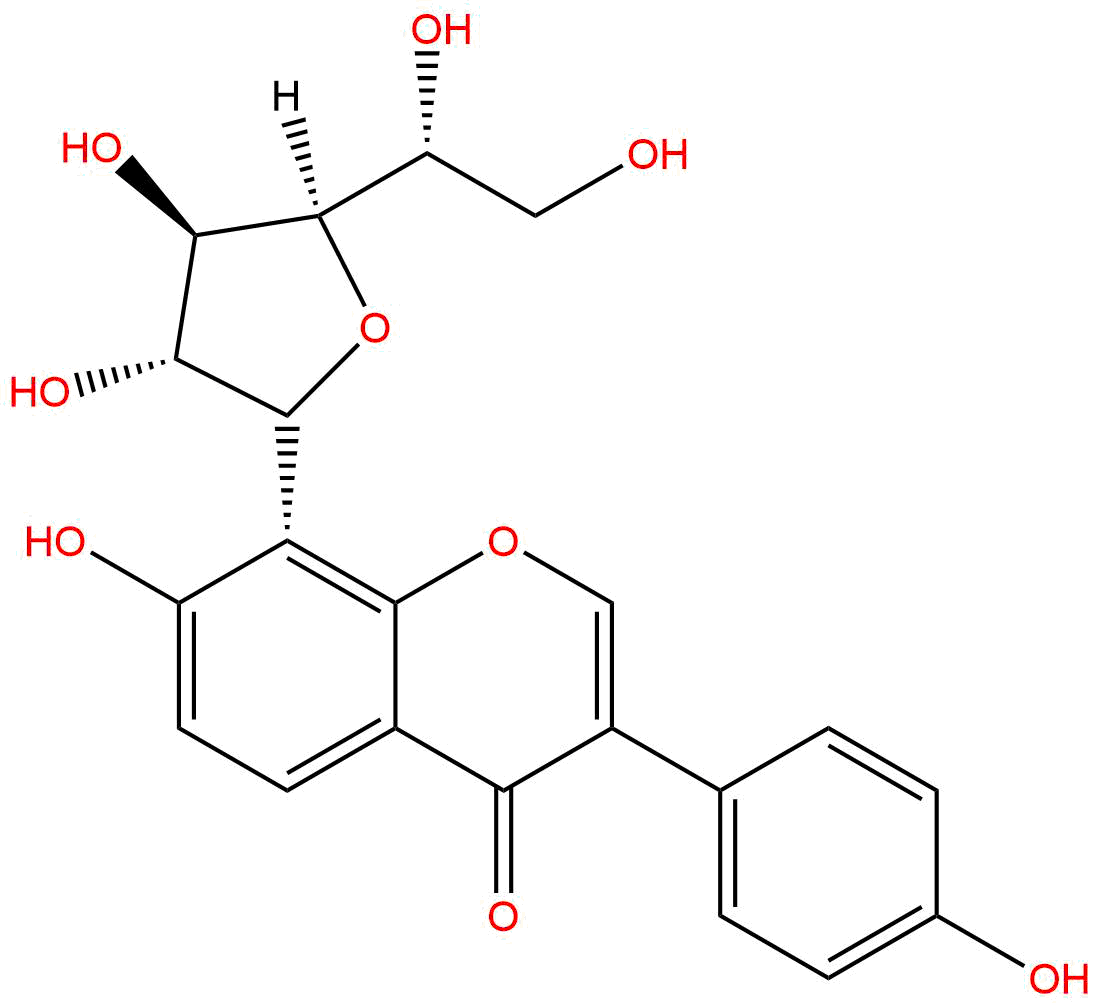


Product name: Neopuerarin A
Synonym name:
Catalogue No.: BP2147
Cas No.: 1150314-34-3
Formula: C21H20O9
Mol Weight: 416.382
Botanical Source:
Type of Compound: Flavonoids
Purity: 95%~99%
Analysis Method: HPLC-DAD or/and HPLC-ELSD
Identification Method: Mass, NMR
Packing: Brown vial or HDPE plastic bottle
Storage: Store in a well closed container, protected from air and light. Put into refrigerate or freeze for long term storage.
Whenever possible, you should prepare and use solutions on the same day. However, if you need to make up stock solutions in advance, we recommend that you store the solution as aliquots in tightly sealed vials at -20℃. Generally, these will be useable for up to two weeks.
The product could be supplied from milligrams to grams
Inquire for bulk scale.
For Reference Standard and R&D, Not for Human Use Directly.
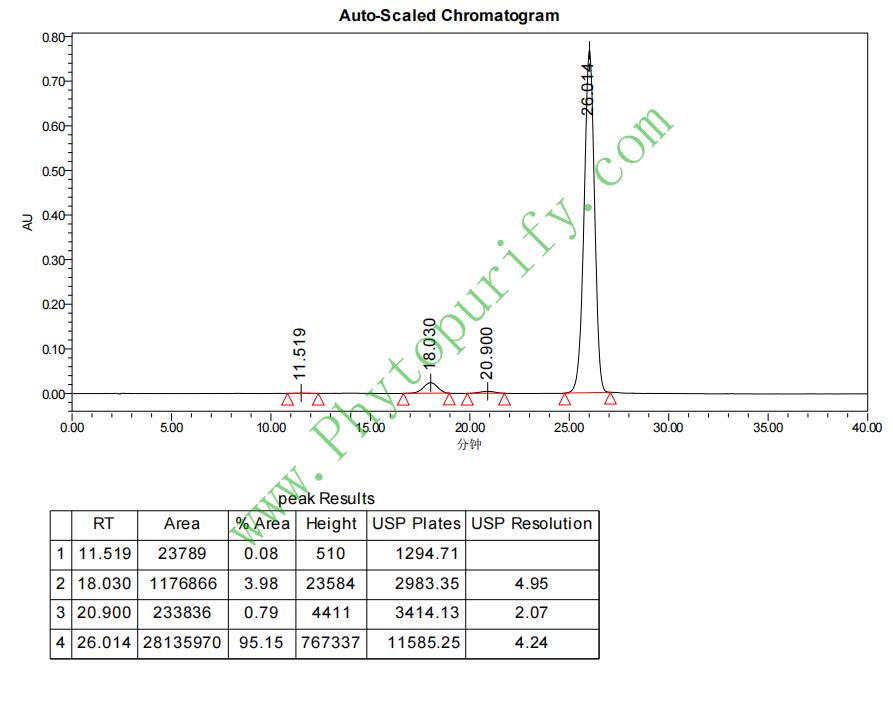
HPLC of Neopuerarin A
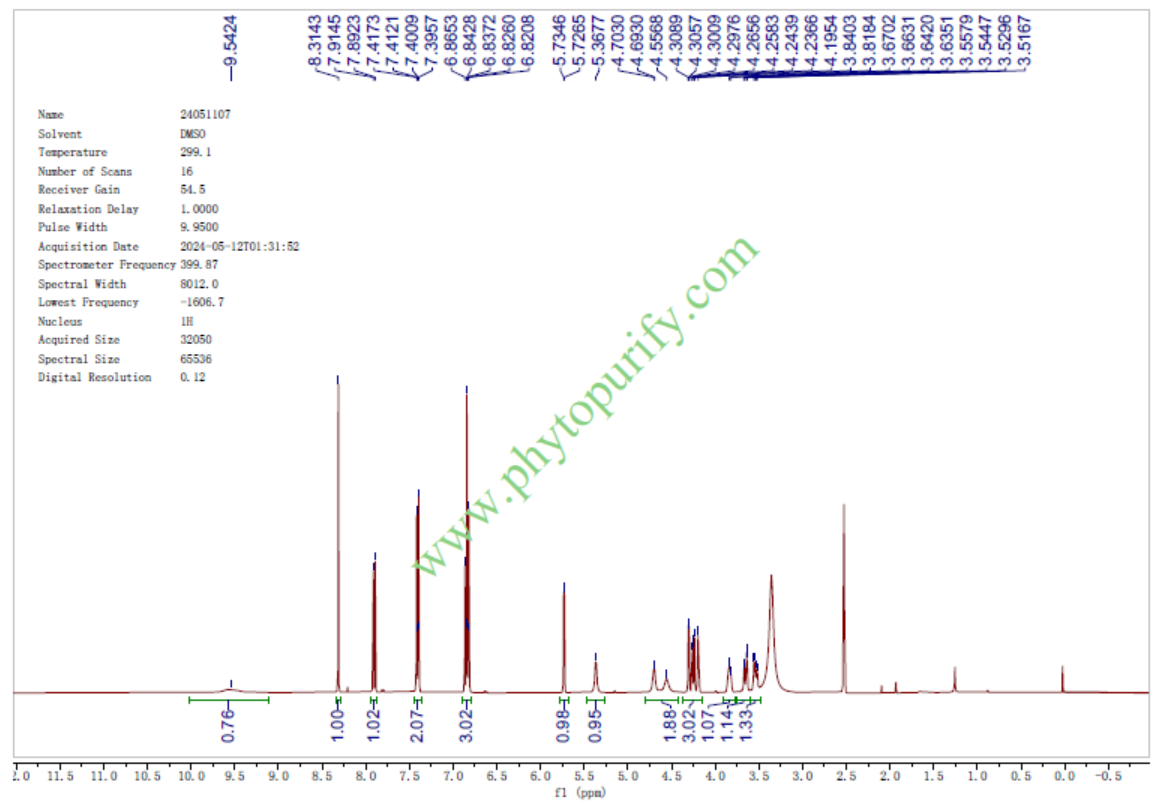
HNMR of Neopuerarin A
Storage conditions:Short-term storage at 2~8℃, long-term storage at -20 ~ -80℃
160.8200
.2774
.2551
1.1286
.5745
.8873
Low
82.1075
4.0170
Yes
No
No
No
Yes
Yes
1.2
Yes
Yes
Yes
No
Cardiovascular disease is one of the major causes of death and disability worldwide. Coronary atherosclerotic heart disease (CHD) and its typical clinical manifestation, Angina Pectoris, pose a serious threat to human health. Currently, although the Western medicine treatment regimen centered on nitrates, beta blockers, calcium channel blockers, and antiplatelet drugs can effectively alleviate symptoms, there are still limitations such as drug resistance, side effects, and inability to reverse disease progression. Therefore, exploring efficient and low toxicity new therapeutic drugs from natural products has always been an important direction for drug development.
Ge Gen, as a traditional Chinese medicine, has the effects of relieving muscle and fever, generating fluids and quenching thirst, and activating meridians and collaterals. It is commonly used to treat cardiovascular related diseases. Its active ingredients are mainly flavonoids, such as Puerarin. In recent years, with the advancement of separation and identification techniques, more structurally novel and uniquely active kudzu isoflavones have been discovered. Among them, Neopuerarin A (CAS number: 1150314-34-3), as a novel isoflavone isolated from the water extract of dried kudzu root, has attracted much attention due to its significant liver protective effect in preliminary studies. It is worth noting that in-depth research has found that its pharmacological activity goes far beyond this, especially in the areas of anti myocardial ischemia and relief of angina pectoris. Its effects involve molecular targets that regulate multiple key pathological processes such as cell apoptosis, oxidative stress, energy metabolism, and vascular function.
This article aims to systematically review the chemical structure, plant sources, and pharmacological activities of Puerarin A, with a focus on exploring its potential mechanism of action and molecular targets for anti angina. At the same time, a preliminary evaluation of its pharmacological properties is conducted, in order to provide comprehensive scientific references for the in-depth research and clinical translation of this natural product.
New Puerarin A is a type of isoflavone glycoside compound. Its basic parent nucleus is isoflavones, namely the 3-phenylchromenone structure. Compared with the classic puerarin (puerarin is 8-C-glucosyl-7,4 '- dihydroxyisoflavone), the new puerarin A has differences in the glycosylation connection position or glycosylation type. The specific structure is to connect one or more glycosylation groups (such as glucose group, rhamnose group, etc.) at a specific position (usually C-8 or C-6) of the isoflavone mother nucleus. This structural modification significantly affects its physicochemical properties and biological activity.
According to the provided pharmacological parameters, the molecular weight of Puerarin A is 416.3820, which is a medium-sized molecule. The calculated lipid water partition coefficient (LogP) value is 0.2774, indicating that the compound has good hydrophilicity, which is consistent with the characteristics of most glycoside compounds. The topologically polar surface area (TPSA) is as high as 160.8200 Å ², further confirming the presence of multiple polar groups (such as hydroxyl groups and oxygen atoms on sugar rings) in its molecule, resulting in strong molecular polarity. The water solubility value is 1.1286 (usually measured in mg/mL or logS), indicating that it has a certain solubility in water, which is beneficial for its absorption and distribution in aqueous media such as body fluids.
However, its high polarity and TPSA also pose challenges to its transmembrane transport ability. The prediction shows that its blood-brain barrier (BBB) permeability is "low", which means it is difficult for it to enter the central nervous system through passive diffusion. For drugs that mainly act on the peripheral cardiovascular system, this may actually reduce the risk of central nervous system side effects. In addition, its "hERG inhibition" prediction is "no", suggesting that the compound may not inhibit rapid delayed rectifier potassium current (IKr) in the heart at therapeutic concentrations, indicating a low risk of cardiac toxicity in inducing acquired long QT syndrome and apical torsion type ventricular tachycardia, which is a positive drug signal. The Ames test value is 1.2 (usually the mutagenicity ratio). If this value is close to or lower than 2, it can be preliminarily considered that there is no significant mutagenicity under the test system used, but it needs to be judged based on specific experimental conditions and standards.
In summary, Puerarin A is a highly polar, water-soluble, and potentially safe isoflavone glycoside.
New Puerarin A mainly comes from the dried roots of leguminous plants Pueraria lobata (Willd.) Ohwi or Pueraria thomsonii Benth., also known as the traditional Chinese medicine "Pueraria". The isoflavones in kudzu root are abundant and complex, and the separation and identification of puerarin, as one of the relatively low content components, rely on advanced extraction and purification techniques.
Traditional extraction methods often use water extraction or alcohol extraction (such as methanol, ethanol). Given that Puerarin A is a water-soluble glycoside, using water as a solvent for extraction is feasible and in line with traditional medication habits. In order to improve extraction efficiency, modern technology often uses heating reflux extraction, ultrasound assisted extraction, or microwave-assisted extraction. Ultrasound and microwave technology can destroy plant cell walls through cavitation or thermal effects, accelerate the dissolution of active ingredients, shorten extraction time, and improve yield.
After filtration and concentration, the crude extract needs to undergo a series of fine separation and purification steps to obtain high-purity new puerarin monomer. The standard process includes:
1. Macroporous adsorption resin chromatography Using resins such as D101 and AB-8 to adsorb and desorb components with different polarities and molecular sizes can effectively enrich isoflavone components and remove large molecular impurities such as polysaccharides and proteins.
2. Silica gel column chromatography Separation based on differences in compound polarity is a classic method for isolating isoflavone compounds.
3. Reverse phase chromatography The key step in obtaining monomers is to use reverse phase column chromatography or high performance liquid chromatography (HPLC) with ODS (C18) packing to perform high-resolution separation by utilizing the different distribution coefficients of compounds between polar and non-polar stationary phases.
4. Preparation type high performance liquid chromatography (Prep HPLC)For isomers with extremely similar structures (such as isoflavones with different glycosylation positions), Prep HPLC is currently the most effective purification method, which can achieve high-purity preparation in milligrams to grams.
Through the multi-step separation strategy described above, combined with spectroscopic techniques such as mass spectrometry (MS) and nuclear magnetic resonance (NMR, including 1H-NMR, 13C-NMR, 2D-NMR), the chemical structure of the new puerarin was finally confirmed.
The pharmacological activity research of new puerarin A is currently in the preclinical stage, but it has revealed various biological activities, especially outstanding in the fields of cardiovascular and hepatic protection.
Liver protective effect This is the earliest reported activity of new puerarin. In various experimental liver injury models (such as acetaminophen, carbon tetrachloride, D-galactosamine induced liver injury), pretreatment with puerarin A can significantly reduce serum transaminase (ALT, AST) levels and alleviate liver tissue pathological damage, such as hepatocyte necrosis and inflammatory cell infiltration. Its hepatoprotective mechanism may be related to anti-inflammatory, antioxidant, and inhibition of liver cell apoptosis.
Potential for anti myocardial ischemia/angina pectoris This is the most promising research direction for new puerarin. In isolated heart ischemia/reperfusion (I/R) injury models, isoproterenol induced myocardial ischemia models, or coronary artery ligation models, puerarin A exhibits significant myocardial protective effects. Specifically manifested as:
Antioxidant and anti-inflammatory effects New Puerarin A can effectively eliminate free radicals such as DPPH and ABTS, enhance the activity of endogenous antioxidant enzymes such as superoxide dismutase (SOD) and glutathione peroxidase (GSH Px) in cells, and reduce the level of lipid peroxidation product malondialdehyde (MDA). At the same time, it can inhibit the expression of pro-inflammatory factors (such as TNF - α, IL-1 β, IL-6), alleviate inflammatory reactions, which is crucial in the pathological process of myocardial ischemia and liver injury.
Other potential activities Based on its isoflavone structure, new puerarin may also have potential for estrogen like activity, neuroprotective activity, and improvement of insulin resistance, but these need further experimental confirmation.
The anti angina effect of new puerarin A is not achieved through a single pathway, but through the synergistic action of multiple targets and pathways, intervening in the core pathological and physiological processes of angina occurrence and development. According to the provided target information, its mechanism of action can be summarized as follows:
Regulating the balance between apoptosis and survival: targeting BCL2 and HIF1A:
Improving energy metabolism and redox homeostasis - targeting SIRT1, SOD2, and NOS3:
Regulating ion channels and receptor function - targeting CACNA1C and ADRB1:
Inhibition of platelet activation and aggregation - targeting ITGA2B/ITGB3 (platelet glycoprotein IIb/IIIa receptor):
In summary, the new puerarin exerts anti angina effects from multiple dimensions, including increasing myocardial oxygen supply, reducing myocardial oxygen consumption, protecting myocardial cells, improving endothelial function, and inhibiting thrombus formation, by acting on multiple key target networks such as apoptosis (BCL2, HIF1A), metabolism/oxidation (SIRT1, SOD2, NOS3), electrophysiology/contraction (CACNA1C, ADRB1), and thrombus formation (ITGA2B/ITGB3).
Based on existing data, a preliminary evaluation of the pharmacological properties of new puerarin A is conducted
At present, there are few public reports on the pharmacokinetic studies of the new puerarin system (such as absolute bioavailability, plasma protein binding rate, major metabolic pathways, excretion kinetics, etc.), which is a key data gap that must be filled in order to move towards drug development.
As a new type of isoflavone derived from traditional Chinese medicine, Puerarin A exhibits unique advantages in multi-target and multi pathway synergistic effects in the treatment of angina pectoris, and has broad development prospects.
Drug development direction:
Formulation design considerations Given its physical and chemical properties, the development of oral solid formulations (improved dissolution and absorption through formulation techniques such as solid dispersions and cyclodextrin inclusion), injections (used for intervention in acute myocardial ischemia), or mucosal administration formulations may be considered.
Future research focus:
New Puerarin A is an important flavonoid compound with significant research value extracted from the traditional Chinese medicine Pueraria lobata. It not only inherits the traditional cardiovascular protective effects of kudzu isoflavones, but also exhibits modern drug characteristics of multi-target action due to its unique chemical structure. Around the core indication of anti angina, its mechanism of action covers a wide range of pathophysiological processes, from regulating cell fate (apoptosis/survival), improving metabolism and oxidative stress, to regulating vascular tone and platelet function, demonstrating the potential for "treating both symptoms and root causes".
Although current research is still mainly focused on preclinical studies, its significant efficacy and preliminary good safety implications in liver and myocardial protection models have laid a solid foundation for its subsequent development. Future research needs to deepen the explanation of the mechanism of action while focusing on overcoming potential challenges in drug development, especially in oral absorption. Through the research of modern pharmacy and life science technology, the new puerarin is expected to gradually develop from a potential natural active molecule into a new type of drug for treating angina pectoris and related cardiovascular diseases, contributing to the inheritance and innovation of the treasure trove of traditional Chinese medicine.
