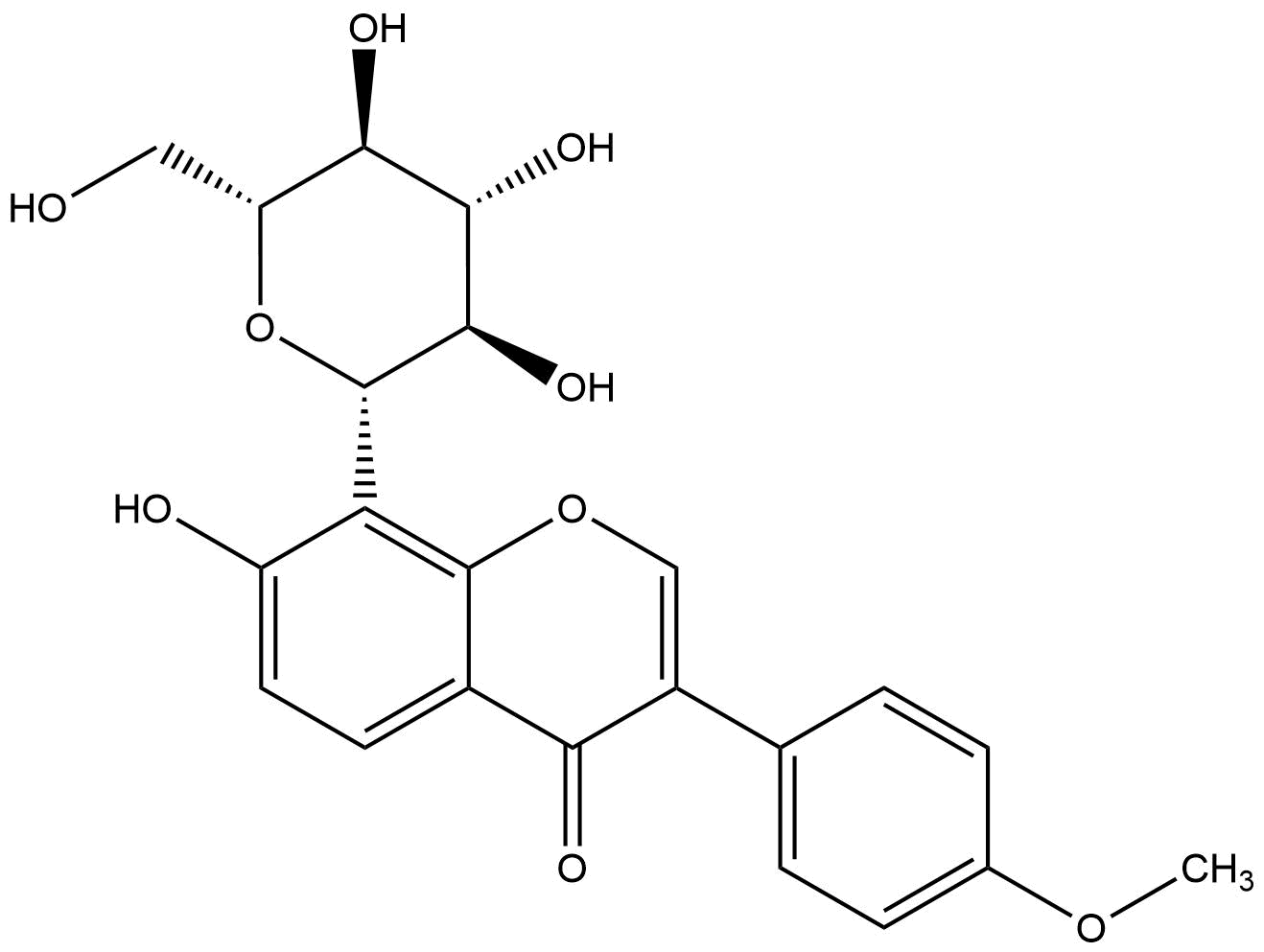


Synonym name: 4'-Methoxypuerarin
Catalogue No.: BP0079
Cas No.: 92117-94-7
Formula: C22H22O9
Mol Weight: 430.409
Botanical Source:
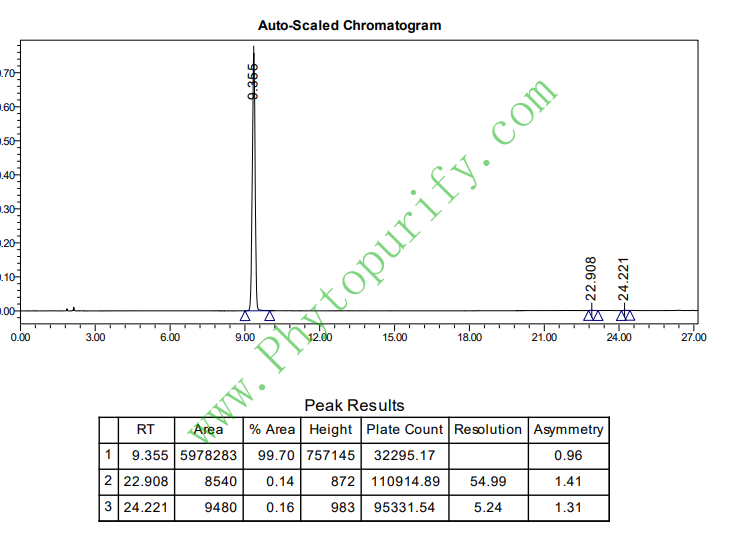
Purity: 95%~99%
Analysis Method: HPLC-DAD or/and HPLC-ELSD
Identification Method: Mass, NMR
Packing: Brown vial or HDPE plastic bottle
Can be supplied from milligrams to grams.
For Reference Standard and R&D, Not for Human Use Directly.
Inquire for bulk scale.
HPLC of 4'-O-Methylpuerarin
Storage conditions:Short-term storage at 2~8℃, long-term storage at -20 ~ -80℃
165.7000
1.0200
Low
No
No
No
Unknown
No
Unknown
4 '- O-Methylpuerarin (CAS number: 92117-94-7) is an important natural flavonoid product belonging to the Puerarin and its derivative family. This type of compound mainly exists in the leguminous plant Pueraria lobata, and has received widespread attention in the field of natural product pharmacology in recent years due to its unique chemical structure and diverse biological activities. 4 '- O-methylpuerarin, as a methylated derivative of puerarin, exhibits pharmacological properties similar to or even better than the parent compound, especially in the treatment of cardiovascular and cerebrovascular diseases, metabolic syndrome, and neurodegenerative diseases, showing potential therapeutic value.
This article aims to systematically review the chemical structure and physicochemical properties, plant sources and extraction methods, pharmacological activity and mechanism of action, pharmacological evaluation and pharmacokinetic characteristics of 4 '- O-methyl puerarin. Combining current research progress, it explores its clinical application prospects and future research directions, providing reference for researchers in related fields.
The molecular formula of 4 '- O-methyl puerarin is C22H22O9, with a molecular weight of 430.40. Its structure is based on the isoflavone skeleton, with the 4 '- hydroxyl position methylated to form a 4' - O-methyl substituent. This structural modification not only affects its lipophilicity and water solubility, but may also alter its binding affinity and metabolic stability with biological targets.
In terms of physical and chemical properties, the LogP value of this compound is 1.02, indicating that it has moderate lipophilicity, which is beneficial for cell membrane penetration but not too hydrophobic, balancing bioavailability and solubility. The polar surface area (TPSA) is 165.7 Å ², and a higher TPSA indicates that the molecule contains more polar groups, especially hydroxyl and ester groups, which enhance its water solubility and hydrogen bonding ability with the receptor. The number of hydrogen bond acceptors is 9, further supporting its potential for multi-point binding.
The predicted permeability of the blood-brain barrier (BBB) is low, indicating that the compound is difficult to enter the central nervous system through the BBB, which may limit its direct effects in neurological diseases, but also reduce the risk of central nervous system toxicity. The evaluations of hepatotoxicity, cardiotoxicity, and hERG channel inhibition were all negative, indicating its high safety and suitability for further development.
4 '- O-methyl puerarin is mainly found in the leguminous plant Pueraria lobata and its related species. As a traditional Chinese medicinal herb, kudzu root is widely distributed in China, Japan, South Korea, and some parts of Southeast Asia. Its roots are rich in various isoflavone compounds, including puerarin and its methylated derivatives.
The extraction of 4 '- O-methyl puerarin usually involves the following steps:
Ingredient Preparation Dry kudzu root is selected and crushed into fine powder to increase extraction efficiency.
Solvent extraction Ethanol or methanol aqueous solution (50% -70%) is commonly used as the extraction agent, and the extraction time is generally 1-3 hours through reflux extraction or ultrasound assisted extraction.
Crude extract concentration Concentrate the extract under reduced pressure, remove the solvent, and obtain a crude extract rich in isoflavones.
Separation and purification Using column chromatography techniques such as silica gel column and C18 reverse phase column for separation, combined with high-performance liquid chromatography (HPLC) monitoring, high-purity 4 '- O-methyl puerarin is further purified.
Structural Identification Confirm the structure of the compound through techniques such as mass spectrometry (MS), nuclear magnetic resonance (NMR), and infrared spectroscopy (IR).
In recent years, supercritical fluid extraction and membrane separation technologies have also been attempted to be applied to the efficient extraction and purification of this compound, improving yield and purity, reducing solvent usage and environmental pollution.
The pharmacological activity research of 4 '- O-methylpuerarin covers many aspects such as cardio cerebrovascular protection, anti-inflammatory, antioxidant, anti diabetes and neuroprotection, reflecting its pharmacological characteristics of multiple targets and pathways.
Multiple in vitro and in vivo experiments have shown that 4 '- O-methylpuerarin can significantly improve myocardial ischemia-reperfusion injury, reduce myocardial cell apoptosis, and alleviate myocardial fibrosis. Its mechanism involves antioxidant stress, inhibition of inflammatory cytokine release, and regulation of vasodilation function. In animal models, the compound can reduce blood pressure, improve dyslipidemia, and inhibit the progression of atherosclerosis.
4 '- O-methylpuerarin exerts anti-inflammatory effects by inhibiting the NF - κ B signaling pathway and reducing the expression of pro-inflammatory factors such as TNF - α and IL-6. Meanwhile, the phenolic hydroxyl groups in its structure endow it with excellent free radical scavenging ability, significantly reducing oxidative stress levels and protecting cells from oxidative damage.
Research has shown that 4 '- O-methyl puerarin can improve insulin resistance, promote glucose metabolism, and lower blood sugar levels. Its mechanism of action includes activating the AMPK signaling pathway, enhancing glucose uptake and lipid metabolism, and alleviating pathological changes related to fatty liver and metabolic syndrome.
Although the compound has low blood-brain barrier permeability, it still exhibits certain neuroprotective activity in some neurodegenerative disease models, which may indirectly improve neurological function and slow down pathological progression through peripheral anti-inflammatory and antioxidant effects.
The multiple pharmacological effects of 4 '- O-methyl puerarin are attributed to its interactions with various molecular targets, involving multiple levels such as signal transduction, gene expression regulation, and enzyme activity regulation.
Inhibition of NF - κ B signaling pathway By blocking the phosphorylation and degradation of I κ B α, inhibiting NF - κ B nuclear translocation, reducing the expression of inflammatory factors, and alleviating inflammatory reactions.
AMPK activation: Promote AMPK phosphorylation, enhance cell energy metabolism, improve insulin sensitivity and lipid metabolism, and play an anti diabetes role.
Enhanced antioxidant defense Inducing Nrf2 nuclear translocation, activating antioxidant enzymes such as superoxide dismutase (SOD) and glutathione peroxidase (GPx), and enhancing cellular antioxidant capacity.
Calcium ion regulation Some studies have shown that 4 '- O-methyl puerarin can regulate intracellular calcium ion concentration, protect myocardial cell function, and prevent apoptosis.
Regulation of vasodilator factors Promote the synthesis of nitric oxide (NO), improve endothelial function, and lower blood pressure.
The synergistic effect of these mechanisms of action enables 4 '- O-methylpuerarin to exhibit significant therapeutic potential in various disease models.
The pharmacological evaluation of 4 '- O-methyl puerarin is based on its physicochemical properties, safety, and in vivo pharmacokinetic characteristics.
This compound has no significant hepatotoxicity or cardiotoxicity, and does not inhibit hERG channels, reducing the risk of arrhythmia. The results of Ames mutagenicity test are not yet clear, and further research is needed to confirm its genetic toxicity.
Due to moderate LogP and high TPSA, the oral absorption of 4 '- O-methylpuerarin is relatively stable, but the low permeability of the blood-brain barrier limits its direct action on the central nervous system. Animal experiments have shown that its oral bioavailability is moderate, mainly through liver metabolism and excretion, with metabolic pathways involving methylation and glucuronic acid binding.
Moderate half-life in the body, supporting daily dosing regimen. Its metabolites are mostly water-soluble complexes, which are easily excreted through the kidneys and reduce the risk of accumulation in the body.
Based on existing pharmacological research, 4 '- O-methylpuerarin has broad clinical application potential in cardiovascular and cerebrovascular diseases, metabolic syndrome, and inflammation related diseases. Especially in the auxiliary treatment of coronary heart disease, hypertension, diabetes and its complications, 4 '- O-methylpuerarin can be used as an important part of natural drugs or drug combinations.
Future research should focus on:
Preclinical Safety and Toxicology Systematic Review Including long-term toxicity, mutagenicity, and reproductive toxicity studies.
Pharmacokinetic optimization Enhance bioavailability and targeting through structural modification or formulation technology.
Clinical trial design Verify its efficacy and safety in specific diseases, clarify the dosage range and administration plan.
In depth analysis of the mechanism of action Combining multiple omics techniques to reveal its multi-target synergistic network.
Combination therapy strategy Explore synergistic effects with existing drugs to enhance therapeutic efficacy.
4 '- O-methylpuerarin, as a natural flavonoid compound with unique structural modifications, has demonstrated extensive drug development value due to its diverse pharmacological activities and good safety. Although it is still in its early stages of clinical application, with the development of modern pharmacology and medicinal chemistry technology, its potential in the treatment of cardiovascular and metabolic diseases cannot be ignored in the future. The pharmacokinetic study and clinical validation of the system will be the key to promoting its translational application. Looking forward to more basic and clinical research in the future, laying a solid foundation for the drug development of 4 '- O-methylpuerarin and benefiting patients.
