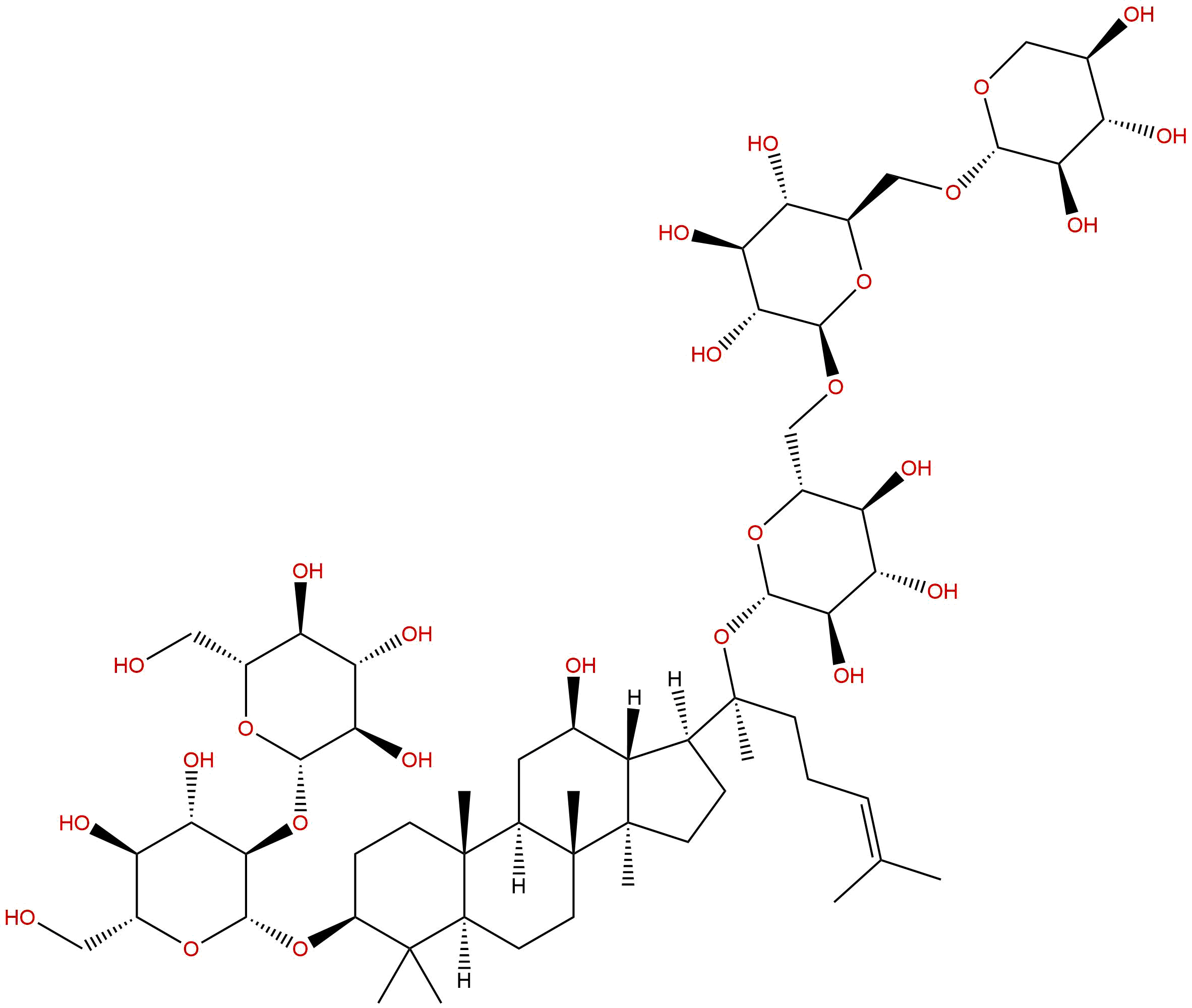


Product name: Notoginsenoside R4
Synonym name:
Catalogue No.: BP5263
Cas No.: 87741-77-3
Formula: C59H100O27
Mol Weight: 1241.42
Botanical Source:
Type of Compound: Triterpenoids
Purity: 95%~99%
Analysis Method: HPLC-DAD or/and HPLC-ELSD
Identification Method: Mass, NMR
Packing: Brown vial or HDPE plastic bottle
Storage: Store in a well closed container, protected from air and light. Put into refrigerate or freeze for long term storage.
Whenever possible, you should prepare and use solutions on the same day. However, if you need to make up stock solutions in advance, we recommend that you store the solution as aliquots in tightly sealed vials at -20℃. Generally, these will be useable for up to two weeks.
The product could be supplied from milligrams to grams
Inquire for bulk scale.
For Reference Standard and R&D, Not for Human Use Directly.
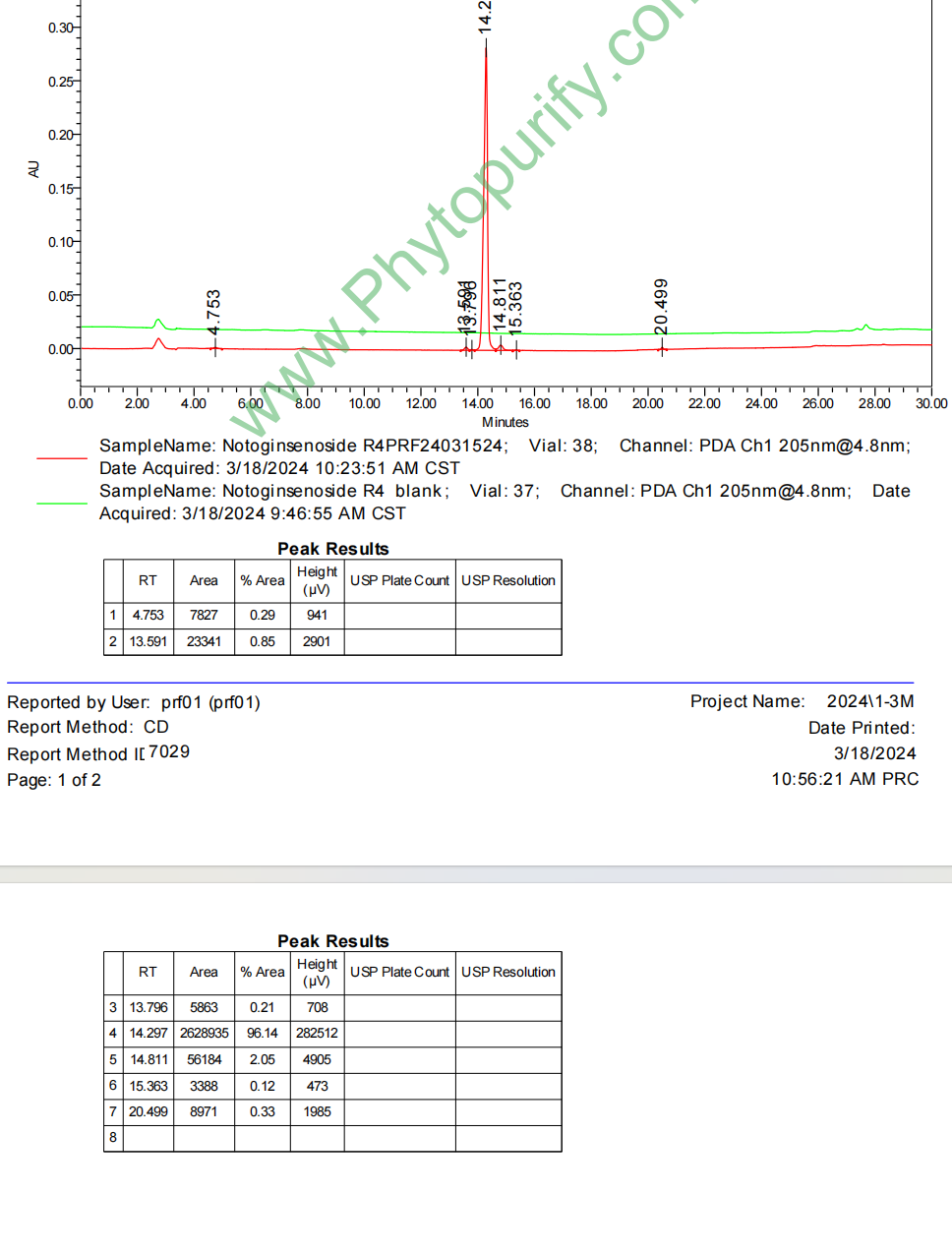
HPLC of Notoginsenoside R4
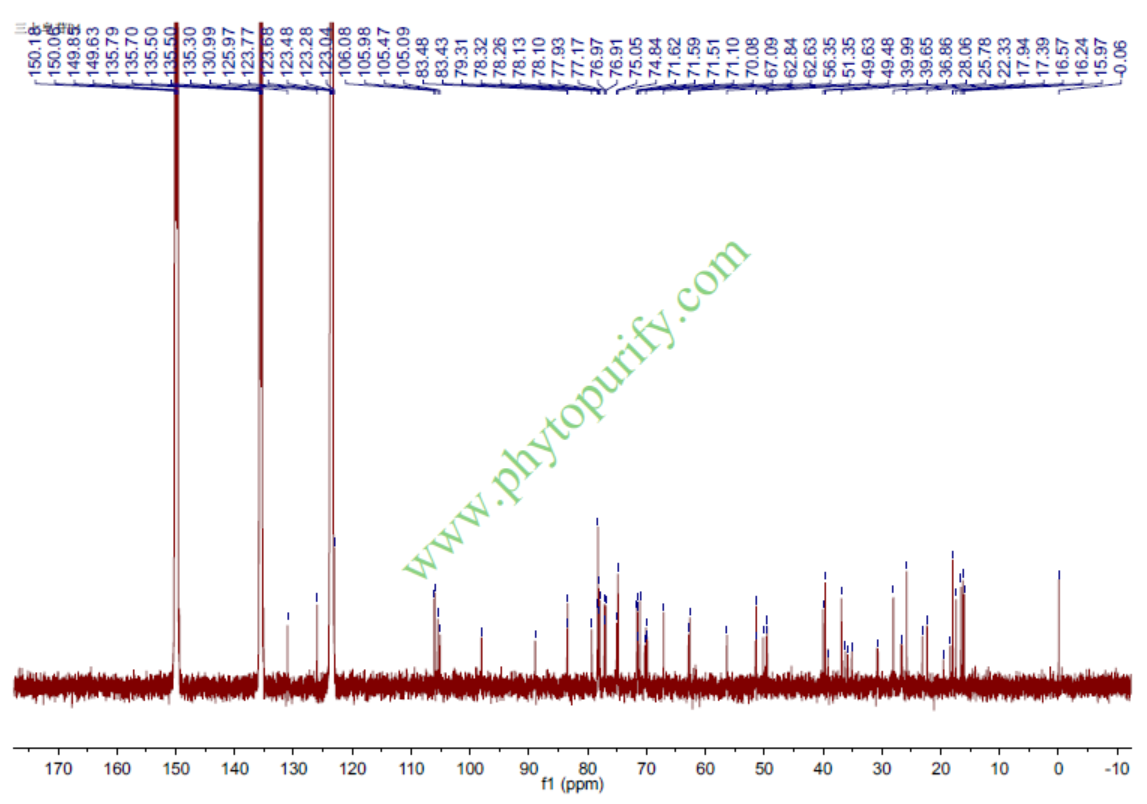
NMR of Notoginsenoside R4
Storage conditions:Short-term storage at 2~8℃, long-term storage at -20 ~ -80℃
436.2100
1.5698
1.5691
.3706
.4411
.0943
Low
67.3557
7.3160
Yes
No
No
No
No
No
0.0
Yes
No
No
No
Natural products, as an important source of drug discovery, play an irreplaceable role in the long history of human struggle against diseases. Among them, it comes from the ginseng genus in the Araliaceae family(Panax)Saponins, due to their extensive pharmacological activity and long history of medicinal use, have always been a hot topic in natural product chemistry and pharmacology research. Notoginsenoside R4 (NGR4), an important dammarane type triterpenoid saponin isolated from plants of the Panax genus, has gradually entered the field of researchers in recent years. Although it was discovered earlier, systematic research on NGR4 is relatively lagging behind compared to star molecules such as ginsenoside Rg1 and Rb1. However, with the advancement of modern separation technology and the deepening of molecular pharmacology, the unique chemical structure and potential biological activity of NGR4 are gradually being revealed, demonstrating potential applications in multiple disease fields such as immune regulation, anti-inflammatory, and anti-tumor.
NGR4 originally originated from Sanqi(Panax notoginseng)Isolation and identification from the rhizome of ginseng, also present in ginseng(Panax ginseng)Among other plants of the same genus. Its chemical structure belongs to the protopanaxadiol type (PPD) saponin, and the sugar chain is composed of four sugar groups, endowing it with unique physicochemical properties and biological activity. Early research mainly focused on its role as a component of total saponins in Panax notoginseng, exploring its synergistic effects with total extracts or other monomeric saponins. In recent years, thanks to the development of computer-aided drug design (CADD) technology, especially the application of molecular docking technology, researchers have found that NGR4 can bind well to multiple key proteins closely related to immune regulation and cell fate, such as signal transduction and transcription activator 3 (STAT3), protein kinase B (AKT1), HRas oncogene (HRAS), vascular endothelial growth factor A (VEGFA), and cysteine aspartate protease 3 (CASP3). These findings provide important molecular clues for a deeper understanding of the mechanism of action of NGR4 and suggest that it may exert pharmacological effects through multiple targets and pathways.
This article aims to provide a systematic review of the research status of Panax notoginseng saponin R4, covering its chemical structure and physicochemical properties, plant sources and extraction methods, pharmacological activity, mechanism of action and molecular targets, pharmacological evaluation and pharmacokinetic characteristics, and prospects for its clinical application, in order to provide comprehensive reference for the subsequent research and development of this natural product.
Panax notoginseng saponin R4 belongs to the Damane type tetracyclic triterpenoid saponin, and the precise analysis of its chemical structure is the basis for understanding its biological activity. The glycoside of NGR4 is 20 (S) - protopanaxadiol (PPD), which is one of the common glycoside types in ginsenosides of the Panax genus. Its structural feature is that sugar chains are connected to the C-3 and C-20 positions of the aglycone, respectively. Specifically, the C-3 sugar chain of NGR4 is β - D-glucopyranosyl - (1 → 2) - β - D-glucopyranosyl, while the C-20 sugar chain is β - D-xylopyranosyl - (1 → 6) - β - D-glucopyranosyl. Therefore, its complete chemical name is usually expressed as: 20 (S) - protopanaxadiol-3-O - β - D-glucopyranosyl - (1 → 2) - β - D-glucopyranosyl-20-O - β - D-xylopyranosyl - (1 → 6) - β - D-glucopyranosyl. The substitution mode of this tetrasaccharide group results in a molecular weight of up to 1241.4220 Da, significantly higher than many common ginsenoside monomers (such as Rb1 with a molecular weight of approximately 1109 Da).
From the perspective of physical and chemical properties, the high molecular weight and abundant hydroxyl (- OH) groups of NGR4 determine its high hydrophilicity. The calculated topological polar surface area (TPSA) is as high as 436.21 Å ², which is much higher than the recommended standard of less than 140 Å ² for oral drugs. This strongly indicates that its membrane permeability is poor and it is difficult to pass through the cell membrane through passive diffusion. Its oil-water partition coefficient (LogP) is 1.5698, which is in the moderate lipophilic range, but considering its huge molecular weight and polar surface area, the actual biofilm permeability may be very limited. The water solubility parameter (0.3706 mg/mL) indicates that its solubility in water is low, which to some extent limits its bioavailability. In addition, the predicted results show that NGR4 has a low ability to cross the blood-brain barrier (BBB), indicating that its pharmacological effects are mainly concentrated in peripheral tissues and may have a relatively small impact on the central nervous system. In the early safety assessment, the inhibitory risk of NGR4 on hERG potassium channels was negative, and the Ames test result was also 0.0, indicating that it does not have significant genetic toxicity, which provides preliminary safety assurance for its candidate drug.
The plant sources of Panax notoginseng saponin R4 are mainly concentrated in the Araliaceae family, Panax genus(Panax)Plants. Among them, Sanqi(Panax notoginseng)It is the main source of NGR4, with relatively high content in its roots and stems. In addition, ginseng(Panax ginseng)And American ginseng(Panax quinquefolius)It also contains this ingredient, but the content is usually lower than that of Sanqi. The biosynthetic pathway of NGR4 in plants belongs to the classical mevalonic acid (MVA) pathway of triterpenoid saponins. Through a series of enzymatic reactions, it undergoes cyclization from 2,3-oxidized squalene to form damagnenediol, which is then modified by hydroxylation, glycosylation, and other processes to ultimately form.
Due to the relatively low content of NGR4 in plants and its frequent coexistence with various structurally similar saponins, its extraction and purification pose certain challenges. The traditional extraction method is mainly based on solvent extraction. Given that NGR4 is a highly polar saponin, it is usually extracted using polar solvents such as water, methanol, ethanol, or their aqueous solutions. For example, the dried powder of Panax notoginseng rhizome is extracted by refluxing with a 70% -80% ethanol aqueous solution, and the solvent is recovered under reduced pressure to obtain the crude extract of total saponins. In order to improve the extraction efficiency of NGR4, modern extraction techniques such as ultrasound assisted extraction, microwave-assisted extraction, and enzyme assisted extraction have also been attempted to be applied. These methods can achieve higher extraction rates in a shorter period of time by disrupting cell walls or enhancing mass transfer processes.
The separation and purification of NGR4 monomer from crude total saponin extract usually requires the combination of multiple chromatographic techniques. Macroporous adsorption resin column chromatography (such as D101, AB-8 type) is a commonly used method for preliminary separation and purification of saponins. By gradient elution with different concentrations of ethanol water system, NGR4 containing fractions can be enriched. Subsequently, further fine separation is required using normal phase silica gel column chromatography, reverse phase ODS column chromatography, and high performance liquid chromatography (HPLC). Due to the structural similarity between NGR4 and its homologs (such as ginsenoside Rb1, Rd, Rg3, etc.), separation is difficult and often requires multiple repeated column chromatography processes and the use of specific solvent systems (such as chloroform methanol water system) for elution. Finally, high-purity NGR4 monomer can be obtained through preparative HPLC, and its structure can be confirmed by techniques such as nuclear magnetic resonance spectroscopy (NMR) and mass spectrometry (MS).
Although the research on Panax notoginseng saponin R4 is not as extensive as other ginsenosides, existing evidence has shown that it has various pharmacological activities worth noting, especially in the areas of immune regulation and anti-tumor potential.
Immune regulatory activity It is one of the most closely watched pharmacological effects of NGR4. The homeostasis of the immune system is crucial for maintaining the health of the body. Existing research suggests that NGR4 may exert regulatory effects by affecting the functions of various immune cells. For example, it may affect the polarization state of macrophages, regulating their transition towards pro-inflammatory (M1 type) or anti-inflammatory (M2 type) direction. In inflammation models, NGR4 has been observed to inhibit the production of pro-inflammatory cytokines such as tumor necrosis factor - α (TNF - α), interleukin-6 (IL-6), and interleukin-1 β (IL-1 β), while possibly promoting the expression of anti-inflammatory cytokines such as interleukin-10 (IL-10) and transforming growth factor - β 1 (TGFB1). In addition, NGR4 may also affect the activation and differentiation of T lymphocytes, particularly affecting the balance between regulatory T cells (Treg) and helper T cell 17 (Th17), which is of great significance for controlling autoimmune diseases and inflammatory responses. The molecular docking results suggest that it may target key nodes in immune pathways such as TLR4, STAT3, NFKB1, FOXP3, which is highly consistent with its immune regulatory activity.
Antitumor activity This is another important research direction for NGR4. The molecular docking results revealed potential interactions between NGR4 and multiple proteins closely related to tumor occurrence and development, such as STAT3, AKT1, HRAS, VEGFA, and CASP3. STAT3 and AKT1 are classic oncogenic signaling pathways, and their abnormal activation is closely related to the proliferation, survival, invasion, and metastasis of tumor cells. HRAS is a member of the RAS family of oncogenes, and its mutations are common in various cancers. VEGFA is a key factor in promoting tumor angiogenesis. CASP3 is the executor of cell apoptosis. The potential regulatory effect of NGR4 on these targets suggests that it may inhibit tumors through multiple pathways. Experimental studies have shown that NGR4 may inhibit tumor cell proliferation and induce apoptosis by suppressing the phosphorylation of STAT3 and AKT, blocking their downstream signaling pathways. Meanwhile, downregulating the expression of VEGFA may help inhibit the formation of tumor neovascularization, thereby limiting tumor growth and metastasis. In addition, NGR4 may directly initiate the apoptosis program by activating CASP3. These findings indicate that NGR4 is a potential natural product with multi-target anti-tumor activity.
Other pharmacological activities Preliminary studies also suggest that NGR4 may have anti-inflammatory, antioxidant, and neuroprotective effects. For example, in oxidative stress models, NGR4 can scavenge free radicals and increase the activity of intracellular antioxidant enzymes such as superoxide dismutase (SOD) and glutathione peroxidase (GSH Px), thereby reducing oxidative damage. Its potential protective effect on the cardiovascular system also deserves further exploration, which may be related to its anti-inflammatory and microcirculation improving properties.
The pharmacological activity of Panax notoginseng saponin R4 is closely related to its regulation of specific molecular targets. Modern molecular biology techniques, especially molecular docking and network pharmacology, provide powerful tools for revealing their mechanisms of action. According to existing research, the mechanism of action of NGR4 exhibits multi-target and multi pathway characteristics.
Regulation of core signaling pathways STAT3 and AKT1 are two key nodes in the NGR4 network. STAT3 is a core member of the JAK/STAT signaling pathway, involved in various physiological processes such as cell proliferation, differentiation, apoptosis, and immune response. STAT3 is continuously activated in many tumors and inflammatory diseases. NGR4 may inhibit the phosphorylation of STAT3 protein by directly binding to it, thereby blocking its translocation to the nucleus and the transcription of downstream target genes (such as Bcl-2, Cyclin D1, VEGFA). Similarly, AKT1 is a key kinase in the PI3K/AKT/mTOR signaling pathway, regulating cell growth, metabolism, and survival. The targeting effect of NGR4 on AKT1 may inhibit its kinase activity, thereby affecting downstream effector molecules such as mTOR and GSK-3 β, ultimately inhibiting tumor cell growth and inducing apoptosis.
Immune regulatory mechanism The immune regulatory effect of NGR4 involves multiple targets. TLR4 is a key receptor in the innate immune system that recognizes pathogen associated molecular patterns (PAMPs) and damage associated molecular patterns (DAMPs). NGR4 may regulate the downstream MyD88 dependent and independent signaling pathways by interacting with TLR4, thereby affecting the activation of NFKB1. NFKB1 is a core transcription factor in inflammatory response, regulating the expression of a large number of pro-inflammatory genes. NGR4 inhibits the activation of NFKB1, which is one of the important mechanisms by which it exerts anti-inflammatory effects. In addition, the potential impact of NGR4 on targets such as TGFB1, IL10, FOXP3, and CTLA4 suggests that it may be involved in regulating the differentiation and function of Treg cells. Treg cells are a key subpopulation of cells that maintain immune tolerance and suppress excessive immune responses, with FOXP3 being its signature transcription factor. NGR4 may play a protective role in autoimmune diseases and transplant rejection by upregulating the expression of FOXP3 and IL-10, promoting the generation of Treg cells. Meanwhile, the regulation of STAT4 and IFNG may affect Th1 type immune response.
Antitumor mechanism In addition to STAT3 and AKT1, NGR4's targeting effect on HRAS and VEGFA is also crucial. HRAS is a member of the RAS family, and its activation mutations can lead to sustained activation of signaling pathways such as MAPK and PI3K/AKT, driving tumorigenesis. NGR4 may inhibit RAS driven tumor growth by directly binding to HRAS and interfering with its interactions with downstream effector molecules. VEGFA is the main driver of tumor angiogenesis. NGR4 can inhibit tumor angiogenesis, cut off tumor nutrition and oxygen supply, and thus suppress tumor growth and metastasis by downregulating VEGFA expression. CASP3 is an executing protease for cell apoptosis. NGR4 may activate CASP3, initiate the classical mitochondrial apoptosis pathway or death receptor pathway, ultimately leading to irreversible apoptosis of tumor cells.
In summary, NGR4 forms a complex regulatory network by simultaneously acting on multiple targets such as STAT3, AKT1, HRAS, VEGFA, CASP3, TLR4, NFKB1, FOXP3, etc. This multi-target mode of action enables it to simultaneously intervene in multiple pathological processes such as inflammation, immunity, and tumors, but also increases the complexity of its mechanism of action research.
To develop Panax notoginseng saponin R4 from a natural product into a clinical drug, it is necessary to rigorously evaluate its drug like and pharmacokinetic (ADME) properties. As mentioned earlier, the molecular weight (1241.42 Da) and TPSA (436.21 Å ²) of NGR4 far exceed the Lipinski's Rule of Five threshold (MW<500, TPSA<140) of traditional oral drugs, which poses the primary challenge for its drug development.
absorb The high molecular weight and polarity of NGR4 make it difficult to be absorbed by the gastrointestinal tract through passive diffusion. Its water solubility (0.3706 mg/mL) is also relatively poor, further limiting its dissolution and absorption. Therefore, the oral bioavailability of NGR4 is expected to be very low. This may be one of the main reasons why there are currently few reports on the pharmacokinetics of NGR4 in vivo. To overcome this obstacle, it may be necessary to use drug delivery systems such as liposomes, nanoparticles, phospholipid complexes, or cyclodextrin inclusion complexes to enhance their solubility and membrane permeability. In addition, exploring non oral routes of administration, such as injection (intravenous, subcutaneous), transdermal, or nasal administration, may also be feasible strategies.
distribution The low blood-brain barrier permeability of NGR4 indicates its limited distribution in the central nervous system, which may limit its application in brain diseases and reduce central nervous system related side effects. Its high protein binding rate (presumably) and large molecular volume may result in its main distribution in plasma and extracellular fluid, making it difficult to enter cells.
Metabolism The metabolism of saponin compounds in the body usually involves the role of gut microbiota. After oral administration, NGR4 may first be gradually hydrolyzed by glycosidases produced by gut microbiota in the gastrointestinal tract, removing glycosides and generating secondary glycosides or aglycones (such as protopanaxadiol). These metabolites may have different pharmacological activities and pharmacokinetic characteristics from the prototype drug. For example, after deglycosylation, the molecular weight of metabolites decreases and their lipophilicity increases, making them more easily absorbed and entering cells. Therefore, the in vivo efficacy of NGR4 may be partially attributed to its active metabolites. The liver cytochrome P450 enzyme may also be involved in its metabolism, but the specific metabolic pathways and metabolites remain to be elucidated.
excretion Given its high polarity and high molecular weight, NGR4 and its metabolites are likely to be primarily excreted through bile into the intestine and ultimately excreted with feces. Renal excretion may not be its primary clearance pathway.
safety The preliminary toxicological predictions are encouraging. The negative risk of hERG inhibition indicates a low risk of causing QT interval prolongation in the heart. The Ames test result is 0.0, indicating no mutagenicity. These data provide preliminary support for the security of NGR4. However, comprehensive toxicological evaluation, including acute toxicity, long-term toxicity, reproductive toxicity, etc., is still an indispensable part of its preclinical research.
Although Panax notoginseng saponin R4 faces significant challenges in drug development, its unique pharmacological activity and multi-target mechanism of action still provide broad prospects for its clinical application.
Immune related diseases Given the strong immunomodulatory activity of NGR4, particularly its potential promotion of Treg cell differentiation and anti-inflammatory cytokine production, it has potential application value in autoimmune diseases (such as rheumatoid arthritis, inflammatory bowel disease, multiple sclerosis) and organ transplant rejection. By regulating immune balance and inhibiting excessive inflammatory responses, NGR4 or its derivatives may become a novel immunomodulatory agent. In addition, in the field of tumor immunotherapy, the effect of NGR4 on immune checkpoint related molecules such as CTLA4 and FOXP3 suggests that it may serve as an adjuvant drug for immune checkpoint inhibitors to enhance anti-tumor immune responses.
tumor therapy The inhibitory effect of NGR4 on multiple oncogenic signaling pathways such as STAT3, AKT1, HRAS, and VEGFA makes it a promising multi-target anti-tumor candidate drug. It may be applicable to various solid tumors, especially those that are resistant to traditional chemotherapy drugs or have RAS and STAT3 mutations. Combining NGR4 with chemotherapy drugs or targeted drugs may enhance therapeutic efficacy and reduce toxic side effects through synergistic effects. For example, the combined use of NGR4 and cisplatin may enhance the killing effect on tumor cells by simultaneously inhibiting AKT and activating CASP3.
Future research directions To promote the clinical translation of NGR4, future research should focus on the following key directions:
Panax notoginseng saponin R4, as a structurally unique dammarane type triterpenoid saponin in Panax plants, has shown remarkable research value in the fields of immune regulation and anti-tumor due to its multi-target action characteristics. Molecular docking technology revealed its potential binding ability with key signaling proteins such as STAT3, AKT1, HRAS, VEGFA, CASP3, as well as TLR4, NFKB1, FOXP3, providing a molecular level explanation for its broad pharmacological activity. However, the low oral bioavailability caused by its high molecular weight and high polarity is the biggest obstacle to its transition from laboratory to clinical application. The future research focus should be on breaking through this bottleneck through structural modification and advanced drug delivery technologies, while combining in-depth pharmacological and toxicological studies to systematically evaluate its potential as a drug. Despite the numerous challenges ahead, the unique chemical space and biological activity spectrum of NGR4 make it a valuable lead compound for the development of novel immunomodulators and anti-tumor drugs. With the continuous deepening of research, we have reason to expect that Panax notoginseng saponin R4 and its derivatives can play their due value in future clinical practice.
