


Product name: Ginsenoside Rh1
Synonym name: Sanchinoside B2
Catalogue No.: BP0667
Cas No.: 63223-86-9
Formula: C36H62O9
Mol Weight: 638.883
Botanical Source: Panax spp.
Physical Description: White powder
Type of Compound: Triterpenoids
Purity: 95%~99%
Analysis Method: HPLC-DAD or/and HPLC-ELSD
Identification Method: Mass, NMR
Packing: Brown vial or HDPE plastic bottle
Storage: Store in a well closed container, protected from air and light. Put into refrigerate or freeze for long term storage.
Whenever possible, you should prepare and use solutions on the same day. However, if you need to make up stock solutions in advance, we recommend that you store the solution as aliquots in tightly sealed vials at -20℃. Generally, these will be useable for up to two weeks.
The product could be supplied from milligrams to grams, up to kilograms
Inquire for bulk scale.
Descriptions:
Ginsenoside Rh1 has antiallergic action , may originate from its cell membrane-stabilizing and anti-inflammatory activities, and can improve the inflammation caused by allergies.[1]
Ginsenoside Rh1 (2065mg/kg, oral ) suppresseS body and epididymal fat weight gains and plasma triglyceride level in DIO mice, also inhibits the expressions of PPAR-γ, C/EBP-α, fatty acid synthase, adipocyte fatty acid-binding protein, as well as F4/80, CD68, tumor necrosis factor (TNF)-α, interleukin (IL)-6, and IL-1β in DIO mice by real time PCR analysis, suggests it may ameliorate obesity, by inhibiting adipocyte differentiation and inflammation.[2]
Ginsenoside Rh1 can upregulate glucocorticoid receptor (GR) level, suggests Rh1 may improve glucocorticoid efficacy in hormone-dependent diseases, it may enhance the effect of Dex in the treatment of MRL/lpr mice through regulating CD4+ T cells activation and Th1/Th2 balance.[3]
Ginsenoside Rh1 can inhibit MAPK and PI3K/Akt signaling pathways and downstream transcription factors such as NF-κB and AP-1, which play an important role in MMP gene expressions, suggests that ginsenoside Rh1 may have a therapeutic potential for malignant gliomas.[4]
Ginsenoside Rh1 inhibits IFN-gamma-induced JAK/STAT and ERK signaling pathways and downstream transcription factors, and thereby iNOS gene expression, thus, the inhibition of microglial activation by ginsenoside Rh1 may provide potential therapeutic strategy for various neuroinflammatory diseases.[5]
Ginsenoside Rh1(Rh1) has been reported to possess antiallergic and anti-inflammatory activities, treatment of Rh1 can decrease the levels of MCP-1 and CCR2 and the expression of VLA5 and activated β1 integrin on the cell surface, and attenuate the phosphorylation of MAPKs, the inhibitory effects of Rh1 on monocyte function should be regarded as a promising new anti-inflammatory response with a potential therapeutic role against inflammation-dependent diseases.[6]
References:
[1] Park E K, Choo M K, Han M J, et al. Int Arch Allergy Immu, 2004, 133(2):113-20.
[2] Gu W, Kim K A, Kim D H. Biol Pharm Bull, 2013, 36(1):102-7.
[3] Feng Y, Wang C, Cheng S, et al. Evid-based Compl Alt , 2014, 2015:1-8.
[4] Jung J S, Ahn J H, Le T K, et al. Neurochem Int, 2013, 63(2):80-6.
[5] Jung J S, Kim DHKim H S. Biochem Bioph Res Co, 2010, 397(2):323-8.
[6] Choi Y J, Yoon J H, Cha S W, et al. Fitoterapia, 2011, 82(6):911-9.
[7] Zheng‐Liang Ye, Chu‐Chu Hu, Xiao‐Hui Fan, et al. J Liq Chromatogr R T, 2005, 29(11):1575-87.
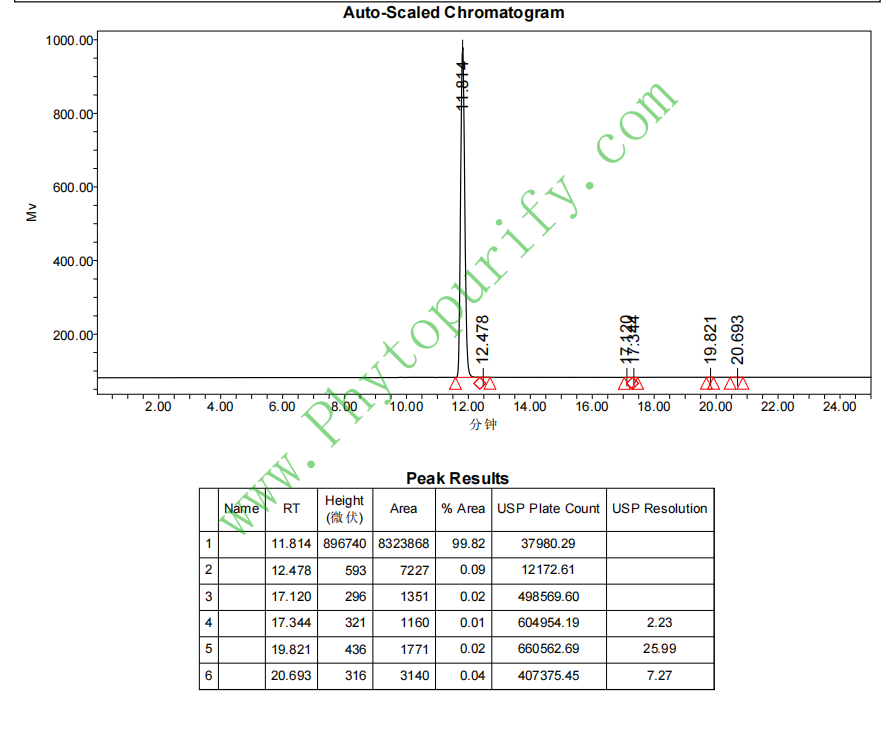
HPLC of Ginsenoside Rh1
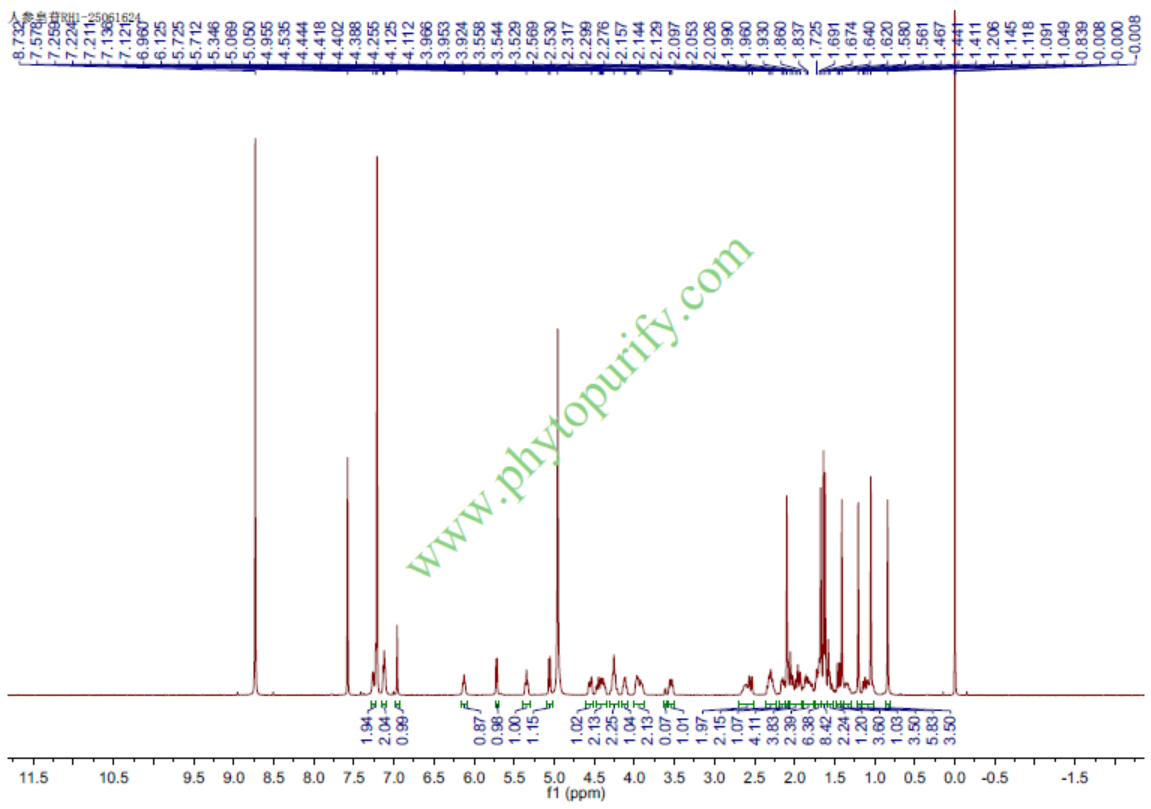
HNMR of Ginsenoside Rh1
Storage conditions:Short-term storage at 2~8℃, long-term storage at -20 ~ -80℃
160.0700
3.5866
3.5864
.0111
.6933
.3096
Low
73.4370
5.5310
No
No
No
No
No
No
0.0
Yes
No
No
No
Ginseng(Panax ginseng C. As a treasure of traditional medicine, the pharmacological activity of A. Mey. lies in a unique and diverse class of dammarane type tetracyclic triterpenoid saponins - ginsenosides. Among numerous ginsenosides, ginsenoside Rh1 (CAS number: 63223-86-9), as a rare metabolite of protopanaxadiol type saponins, has become a hot topic in natural product pharmacology research in recent years due to its extensive and significant pharmacological activities. Traditionally, ginsenoside Rh1 is considered as the active product of prototype saponins such as ginsenoside Rg1, which are metabolized by gut microbiota or liver in vivo, and also exists in the roots and stems of ginseng. Modern pharmacological research has revealed that ginsenoside Rh1 exhibits great potential in various aspects such as anti-inflammatory, antioxidant, immune regulation, neuroprotection, cardiovascular protection, and anti-tumor effects. Especially its interaction with the nuclear receptor peroxisome proliferator activated receptor gamma (PPAR - γ), nuclear factor kappa B (NF - κ B) signaling pathway, and various inflammatory factors (such as TNF - α, IL-6, IL-1 β) makes it of great research value in the prevention and treatment of metabolic diseases, cardiovascular diseases, and inflammation related diseases. This article aims to systematically review the chemical properties, plant sources, pharmacological activities, molecular mechanisms of action, pharmacological evaluation, and clinical application prospects of ginsenoside Rh1, in order to provide comprehensive scientific references for the in-depth research and development of this compound.
Ginsenoside Rh1, commonly known as (20S) - ginsenoside Rh1 or Prosapogenin A2, is a typical dammarane type tetracyclic triterpenoid saponin. Its molecular formula is C36H62O9 and its molecular weight is 638.8830. Its core structure is (20S) - protopanaxadiol (PPD), which is connected to a β - D-glucopyranose group through a glycosidic bond at the C-6 α position of the maternal nucleus. This specific glycosylation site (position 6) is a key structural feature that distinguishes it from other ginsenosides, such as Rg1 disaccharides at positions 6 and 20.
From a stereochemical perspective, ginsenoside Rh1 belongs to 3 β - hydroxy-4,4-dimethylsteroid derivatives and also has 12 β - hydroxyl groups. The multiple hydroxyl groups (especially at positions 3 and 12) and the sugar moiety in its structure determine its certain hydrophilicity. The calculated topological polar surface area (TPSA) is 160.0700 Å ², reflecting the large number of hydrogen bond donors and acceptors in the molecule. However, its large hydrophobic triterpenoid core results in overall amphiphilicity of the molecule, with a calculated lipid water partition coefficient (LogP) of 3.5866, indicating moderate to high lipophilicity. The water solubility data obtained from the experiment is relatively low, about 0.0111 mg/mL, indicating limited solubility in pure water. However, with the assistance of appropriate formulation techniques such as cyclodextrin inclusion, nanoemulsions, liposomes, etc., its solubility and bioavailability are expected to be improved.
In the preliminary evaluation of drug properties, the blood-brain barrier permeability of ginsenoside Rh1 was predicted to be "low", which is consistent with the characteristics of most ginsenosides, mainly attributed to its larger molecular weight and more polar groups. In terms of safety warning, the risk of hERG channel inhibition was assessed as' no ', and the Ames test result was 0.0, indicating that it may not have significant cardiac toxicity and genetic toxicity, but further in vitro and in vivo experiments are needed for verification.
Ginsenoside Rh1 mainly comes from plants of the Panax genus in the Araliaceae family, especially ginseng(Panax ginseng)And American ginseng(Panax quinquefolius). In fresh or processed ginseng roots (such as those prepared from red ginseng), the content of Rh1 is usually low, and it exists more as a degradation or metabolic product of other ginsenosides (such as ginsenoside Rg1, Re, Rb1, etc.). For example, in the processing of red ginseng, the steaming and drying steps may promote partial hydrolysis, deglycosylation, and isomerization of the original saponins, which may increase the relative content of rare saponins such as Rh1. In addition, Sanqi(Panax notoginseng)This component was also detected in the sample.
Extracting ginsenoside Rh1 from plant materials using conventional methods similar to other saponin extractions.Solvent extraction method It is the most commonly used method, usually using methanol, ethanol, or their aqueous solutions (such as 70% ethanol) for reflux extraction or ultrasound assisted extraction. Ethanol is widely used due to its high safety, low cost, and good selectivity for saponins. After the extraction solution is concentrated under reduced pressure, crude saponin extract is obtained.
Due to the low content of ginsenoside Rh1 in the crude extract and its coexistence with other saponins with similar structures Separation and purification It is the key and difficult point to obtain high-purity Rh1. At present, chromatographic technology is mainly used:
1. Column chromatography As a preliminary enrichment method, fillers such as macroporous adsorption resins (such as D101, AB-8), silica gel, and reverse phase silica gel (such as ODS) are often used for separation. Macroporous resin can effectively remove impurities such as sugars and proteins and enrich saponins using the adsorption desorption principle.
2. High performance liquid chromatography This is the core technology for obtaining high-purity ginsenoside Rh1. Reversed phase high performance liquid chromatography (RP-HPLC), especially using C18 columns and gradient elution with methanol water or acetonitrile water as mobile phases, can effectively separate Rh1 from its isomers or analogues. Preparation HPLC can be used for the preparation of pure products ranging from milligrams to grams.
3. Other Technologies High speed counter current chromatography (HSCCC), as a liquid-liquid distribution chromatography that does not require a solid carrier, has the advantages of high recovery rate and irreversible adsorption in separating natural products. It has also been successfully applied to the separation of ginsenoside Rh1.
In addition,Biotransformation method It is an important pathway for obtaining ginsenoside Rh1. By utilizing specific microorganisms (such as intestinal bacteria, fungi) or enzymes (such as β - glucosidase) to selectively hydrolyze the C-20 glycosyl group of the prototype ginsenoside (such as Rg1), Rh1 can be efficiently and directionally prepared, providing potential for large-scale production.
A large number of in vitro and in vivo studies have shown that ginsenoside Rh1 has multiple pharmacological activities, with its core being strong anti-inflammatory and immune regulatory effects, which extend to protective effects against various diseases.
1. Anti inflammatory and immune regulatory activity
This is one of the most highly anticipated activities of ginsenoside Rh1. In the lipopolysaccharide (LPS) - induced macrophage (such as RAW264.7) inflammation model, Rh1 can dose dependently inhibit the production of key pro-inflammatory mediators such as nitric oxide (NO) and prostaglandin E2 (PGE2), and significantly downregulate the protein and mRNA expression of inducible nitric oxide synthase (iNOS) and cyclooxygenase-2 (COX-2). More importantly, it can effectively inhibit the secretion of various pro-inflammatory cytokines, including tumor necrosis factor - α (TNF - α), interleukin-6 (IL-6), and interleukin-1 β (IL-1 β). In animal models, Rh1 has shown good anti-inflammatory effects in acute inflammation models such as xylene induced ear swelling in mice, carrageenan induced paw swelling in rats, and chronic inflammation models such as cotton ball induced granuloma.
2. Protective effect on the cardiovascular system
Ginsenoside Rh1 has shown potential in cardiovascular protection, especially in the prevention and treatment of hypertension. Research has shown that Rh1 can improve endothelial function, promote the release of nitric oxide (NO), and thus cause vasodilation. In the spontaneously hypertensive rat (SHR) model, Rh1 administration significantly reduced blood pressure. Its mechanism involves regulating the renin-angiotensin system (RAS), inhibiting abnormal proliferation and migration of vascular smooth muscle cells, and reducing vascular oxidative stress and inflammation. Its inhibition of TNF - α and regulation of PPAR - γ are essential to improve insulin resistance and vascular inflammation, which are the important pathological basis of hypertension and its complications (such as atherosclerosis).
3. Neuroprotective and anti-aging activities
Ginsenoside Rh1 can penetrate the blood-brain barrier (although with lower efficiency) and exert its effects in the central nervous system. In Alzheimer's disease cell models induced by β - amyloid protein (A β) or memory impairment mouse models induced by scopolamine, Rh1 exhibits effects of improving cognitive function, reducing neuronal apoptosis, and inhibiting neuroinflammation. The mechanism may be related to the activation of pathways related to energy metabolism and cellular stress, such as SIRT1 and AMPK, which in turn inhibit oxidative stress and mitochondrial dysfunction. These characteristics also suggest its potential in combating brain aging.
4. Antitumor activity
Rh1 can inhibit the growth and promote apoptosis of many cancer cell lines (such as lung cancer, liver cancer, colon cancer, breast cancer). Its anti-tumor mechanisms are diverse, including inducing cell cycle arrest (such as G1 phase), activating caspase cascade mediated apoptosis, inhibiting cancer cell migration and invasion (possibly related to regulating MMPs), and enhancing sensitivity to certain chemotherapy drugs. It is worth noting that its anti-tumor activity is often associated with regulating the immune microenvironment and inhibiting tumor associated inflammation.
5. Skin protection and anti photoaging
Local application of ginsenoside Rh1 can effectively combat skin damage caused by ultraviolet (UV) radiation. It can reduce UVB induced skin wrinkle formation, epidermal thickening, and collagen degradation by inhibiting the expression of matrix metalloproteinases (MMPs), enhancing antioxidant enzyme activity, and blocking inflammatory signaling pathways such as MAPK/AP-1 and NF - κ B.
The multiple pharmacological activities of ginsenoside Rh1 stem from its precise regulation of multiple key signaling pathways within cells. Its mechanism of action is complex, with the following core targets and pathways:
1. Inhibition of nuclear factor kappa B (NF - κ B) signaling pathway
NF - κ B is a central transcription factor that regulates inflammation, immunity, and cell survival. Ginsenoside Rh1 is an effective inhibitor of the NF - κ B pathway. Under stimulation such as LPS, Rh1 can prevent the degradation and phosphorylation of I κ B α, thereby inhibiting the translocation of NF - κ B p65 subunit (encoded by RELA gene) to the nucleus. This directly leads to the inhibition of transcription of numerous pro-inflammatory genes downstream, such as TNF, IL6, IL1B, COX-2, iNOS. This is one of the fundamental mechanisms by which it exerts a powerful anti-inflammatory effect.
2. Regulation of peroxisome proliferator activated receptor gamma (PPAR - γ)
PPAR - γ is a ligand activated nuclear receptor that plays a critical role in adipogenesis, glucose homeostasis, and inflammation inhibition. Research has shown that ginsenoside Rh1 can inhibit the excessive activation of PPAR - γ or act as a regulator. Moderately regulating PPAR - γ activity in metabolic disorders can help improve insulin sensitivity, and its anti-inflammatory effect is also related to PPAR - γ - mediated NF - κ B inhibition. In hypertension and atherosclerosis models, Rh1 alleviates vascular inflammation and endothelial dysfunction through PPAR - γ pathway.
3. Activation of AMP activated protein kinase (AMPK) and SIRT1 pathway
AMPK and SIRT1 are core sensors for cellular energy metabolism and stress response. Ginsenoside Rh1 can activate AMPK (encoded by PRKAA1, etc.) and SIRT1. AMPK activation can inhibit synthetic metabolism, promote catabolism, improve energy imbalance, and has anti-inflammatory and antioxidant effects. SIRT1, as an NAD+- dependent deacetylase, can be activated to deacetylate and regulate various transcription factors (such as p53, FOXOs, NF - κ B p65), thereby promoting cell survival, reducing oxidative stress, and inflammation. Rh1 plays an important role in neuroprotection, cardiovascular protection, and anti-aging by activating the AMPK/SIRT1 axis.
4. Regulation of hypoxia inducible factor-1 α (HIF-1 α)
HIF-1 α is a key transcription factor for cells to adapt to low oxygen environments, but it is often abnormally overexpressed in inflammation and tumors. Rh1 has been reported to inhibit the stability and transcriptional activity of HIF-1 α. This helps to cut off the energy supply to tumor cells (such as inhibiting glycolysis) and reduce the expression of pro-inflammatory and angiogenic factors driven by HIF-1 α.
5. Other related targets
- Inflammation related enzymes Rh1 can inhibit soluble epoxide hydrolase (EPHX2), which is responsible for degrading endogenous epoxyeicosaenoic acid (EETs) with anti-inflammatory and cardiovascular protective effects. Inhibiting EPHX2 can increase the levels of EETs, thereby assisting in their antihypertensive and anti-inflammatory effects.
- Ion channels and receptors The targets associated with hypertension also include endothelin A receptor (EDNRA) and potassium voltage-gated channel subfamily A member 5 (KCNA5). Rh1 may affect vascular tone by indirectly regulating the expression or function of these targets. Its potential impact on the nicotinic acetylcholine receptor alpha 7 subunit (CHRNA7) in neurons may be involved in its neuroprotective and anti-inflammatory effects.
In summary, ginsenoside Rh1 acts on multiple key nodes such as PPAR - γ, NF - κ B, AMPK, SIRT1, forming a synergistic network that jointly regulates biological processes such as inflammation, metabolism, oxidative stress, and cell apoptosis, thereby exerting its multifunctional pharmacological effects.
Despite the significant pharmacological activity of ginsenoside Rh1, there are certain challenges in its drug like and pharmacokinetic properties, which are also common issues faced by most natural saponin compounds.
absorb After oral administration of ginsenoside Rh1, its absorption is subject to multiple limitations. The medium molecular weight (~639 Da) and amphiphilic structure make it have moderate transmembrane permeability. More importantly, as a glycoside compound, it may be partially hydrolyzed by gastric acid in the gastrointestinal tract or metabolized by gut microbiota (although it is also a metabolite itself). Research has shown that the absorption rate of the prototype Rh1 in the intestine is not high, and its absolute bioavailability needs to be accurately determined, but it is expected to be low.
distribution Due to its LogP value indicating a certain lipophilicity, Rh1 may be distributed in lipid rich tissues. However, its high TPSA and multiple hydroxyl groups limit its ability to freely diffuse across membranes. The predicted low blood-brain barrier permeability suggests that its treatment for central nervous system diseases may require improved brain entry efficiency through pharmacological means, or rely on its indirect benefits in regulating peripheral inflammation.
Metabolism The metabolism of ginsenoside Rh1 in vivo is a key link in its pharmacokinetics. It is mainly metabolized in the liver through phase I (such as oxidation and reduction) and phase II (such as glucuronidation and sulfation) reactions. Its sugar moiety may be hydrolyzed to produce secondary glycosides or aglycones (such as protopanaxadiol, PPD). The activity of these metabolites may differ from the prototype and together constitute their overall pharmacological effect. Cytochrome P450 enzyme systems (CYPs) may be involved in its metabolic processes.
excretion The prototype drug and its metabolites are mainly excreted through the kidneys and urine, and some may also be excreted through bile and feces.
Formulation strategy In order to overcome the bottleneck of poor water solubility and low bioavailability, modern pharmaceutical technology has been widely studied
- Nano delivery system Such as liposomes, nanoemulsions, polymer nanoparticles, solid lipid nanoparticles, etc. These systems can effectively solubilize Rh1, protect it from degradation, and improve its oral bioavailability or delivery efficiency to specific tissues (such as inflammatory sites, tumors) by enhancing lymphatic absorption or passive targeting.
- Cyclodextrin inclusion complex The use of β - cyclodextrin or its derivatives to form inclusion complexes with Rh1 can significantly improve its water solubility and stability.
- Prodrug strategy By chemically modifying the hydroxyl group of Rh1, lipophilic or targeted prodrugs can be prepared to improve its absorption and distribution characteristics.
The preclinical pharmacokinetic study of the system (including ADME processes in different animal models) and the development of formulations based on the aforementioned techniques are necessary steps to promote the clinical application of ginsenoside Rh1.
The diverse pharmacological effects of ginsenoside Rh1 provide broad application prospects for its prevention and treatment of various diseases, but its transformation path is still full of opportunities and challenges.
Potential clinical application directions:
1. Inflammatory and autoimmune diseases Given its strong anti-inflammatory and immune regulatory abilities, Rh1 is expected to be developed for the treatment of rheumatoid arthritis, inflammatory bowel disease (such as ulcerative colitis), asthma, dermatitis, and other conditions. Its multi-target action characteristics may have better comprehensive efficacy and lower side effects than single target anti-inflammatory drugs.
2. Diseases related to metabolic syndrome: Through regulating PPAR - γ, AMPK and inhibiting inflammation, Rh1 shows potential in improving insulin resistance, reducing blood sugar and lipids, and protecting blood vessels. It can be used as an adjuvant or preventive agent for type 2 diabetes, non-alcoholic fatty liver disease, and the resulting hypertension and atherosclerosis.
3. Neurodegenerative diseases and cognitive impairment Its inhibition of neuroinflammation and activation of neuronal survival pathways make it of research value in the prevention and treatment of Alzheimer's disease, Parkinson's disease, and vascular dementia. Developing formulations that can effectively deliver into the brain is key.
4. neoadjuvant therapy Rh1 has weak direct anti-tumor activity, but its regulation of the tumor microenvironment, enhancement of immunity, inhibition of metastasis, and sensitization to chemotherapy drugs make it a potential adjuvant drug for comprehensive cancer treatment, used to alleviate the side effects of radiotherapy and chemotherapy and improve patients' quality of life.
5. Dermatology and Cosmetics Its anti photoaging, anti-inflammatory, and antioxidant properties make it an excellent candidate ingredient for functional cosmetics and topical medications for the skin, such as treating atopic dermatitis and psoriasis.
Challenges and Future Prospects:
1. Source and Supply The Rh1 content from natural sources is extremely low, and the cost of separation and purification is high. We need to vigorously develop in the future Synthetic Biology(such as heterologous synthesis using engineering microorganisms such as yeast) and Green Chemical Synthesis Route to achieve large-scale and sustainable production of Rh1.
2. Optimization of drug properties: Must go through the system Structural modification and Advanced Delivery System Research and development to address issues related to solubility, stability, and bioavailability. Designing Rh1 derivatives or analogues with better PK/PD properties is an important direction.
3. Deep exploration of mechanisms At present, the understanding of the mechanism of action of Rh1 is still mostly based on phenomenological associations, and it is necessary to use chemical biology methods (such as affinity fishing, proteomics) to find its direct target and draw more accurate molecular action network diagrams.
4. Preclinical and clinical research Urgent need to carry out activities that comply with international norms Systematic Toxicological Evaluation and Preclinical pharmacodynamic validation Confirm its efficacy and safety in animal models closer to human diseases, such as humanized mice and organoid models. Ultimately driving rigorous design clinical trial Verify its effectiveness and safety in specific indications.
Ginsenoside Rh1, as an important member of the ginseng active ingredient family, has demonstrated remarkable biological activity in anti-inflammatory, immune regulation, cardiovascular protection, neuroprotection, and anti-tumor fields due to its unique chemical structure and multi-target, multi pathway pharmacological mechanisms. The core mechanism revolves around the regulation of key signaling nodes such as NF - κ B, PPAR - γ, AMPK/SIRT1, forming a synergistic biological effect network. Although it is rare in natural products and faces challenges such as poor water solubility and low oral bioavailability, modern separation and purification technologies, biotransformation and synthesis methods, and innovative drug delivery strategies are providing powerful tools to overcome these obstacles. In the future, through in-depth basic research to clarify its precise targets, combined with systematic preclinical development and high-level clinical validation, ginsenoside Rh1 is expected to be successfully transformed from a potential natural compound into innovative drugs or functional products for the prevention and treatment of inflammation related diseases, metabolic diseases, and aging related diseases, contributing its unique value to the human health cause.
