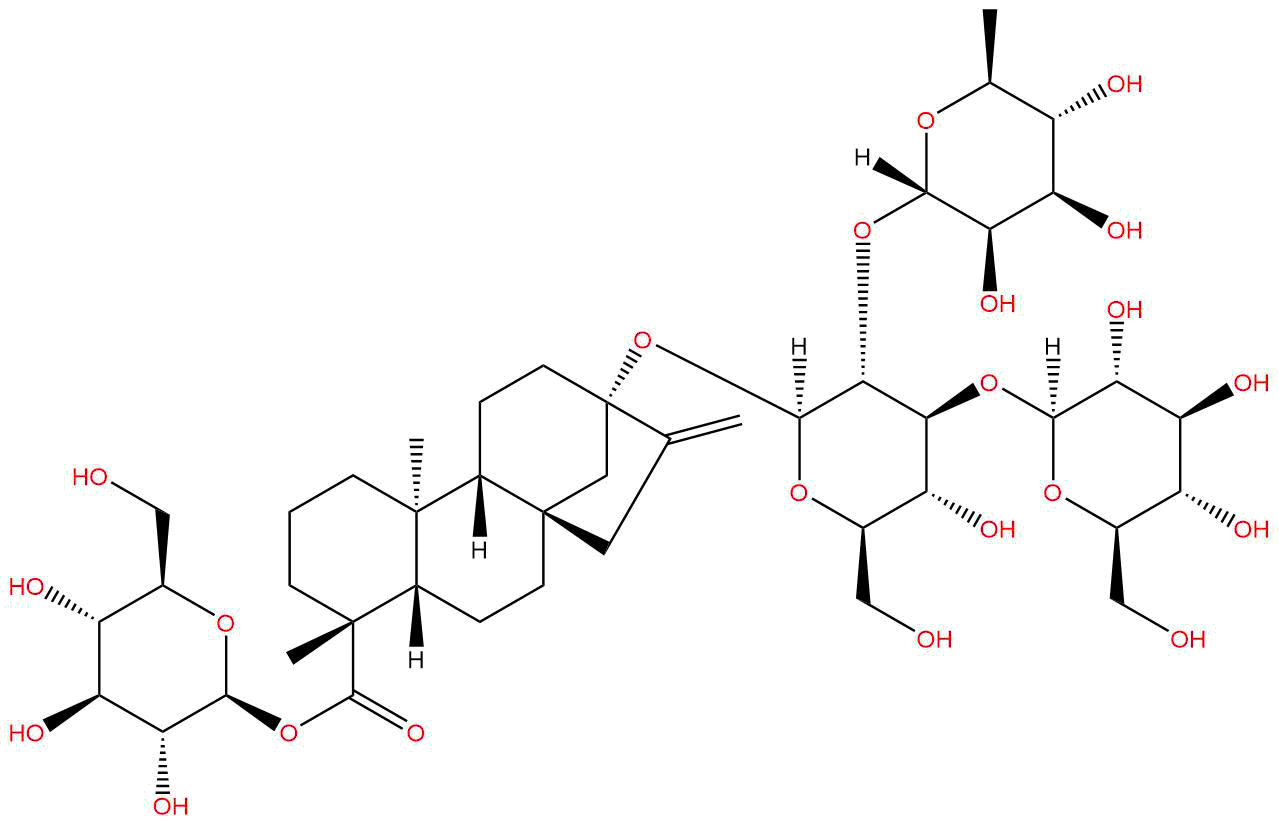


Synonym name: Dulcoside B
Catalogue No.: BP1199
Cas No.: 63550-99-2
Formula: C44H70O22
Mol Weight: 951.022
Botanical Source: Stevia rebaudiana
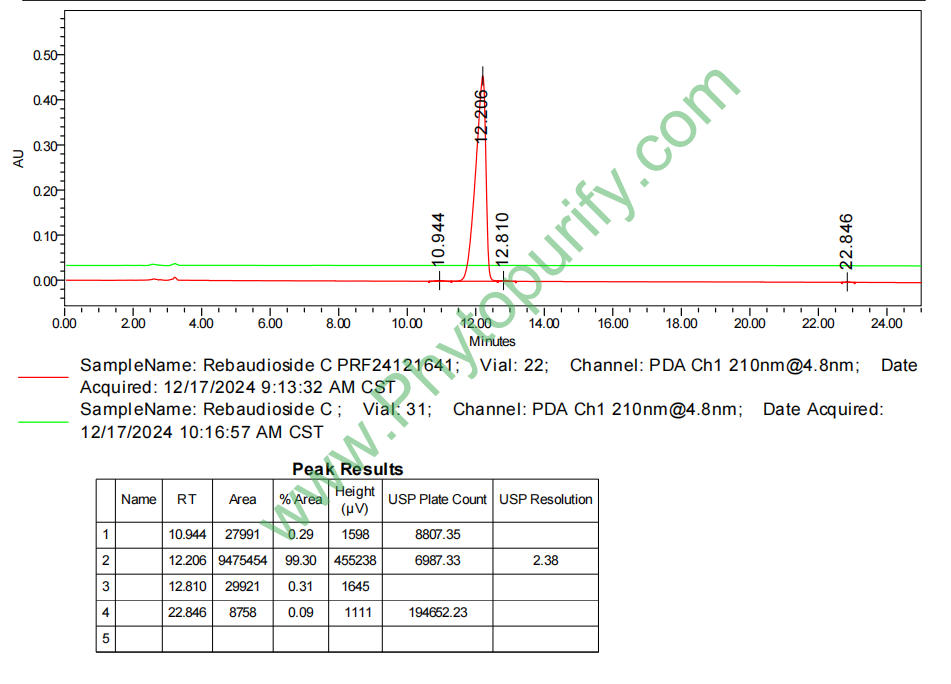
Purity: 95%~99%
Analysis Method: HPLC-DAD or/and HPLC-ELSD
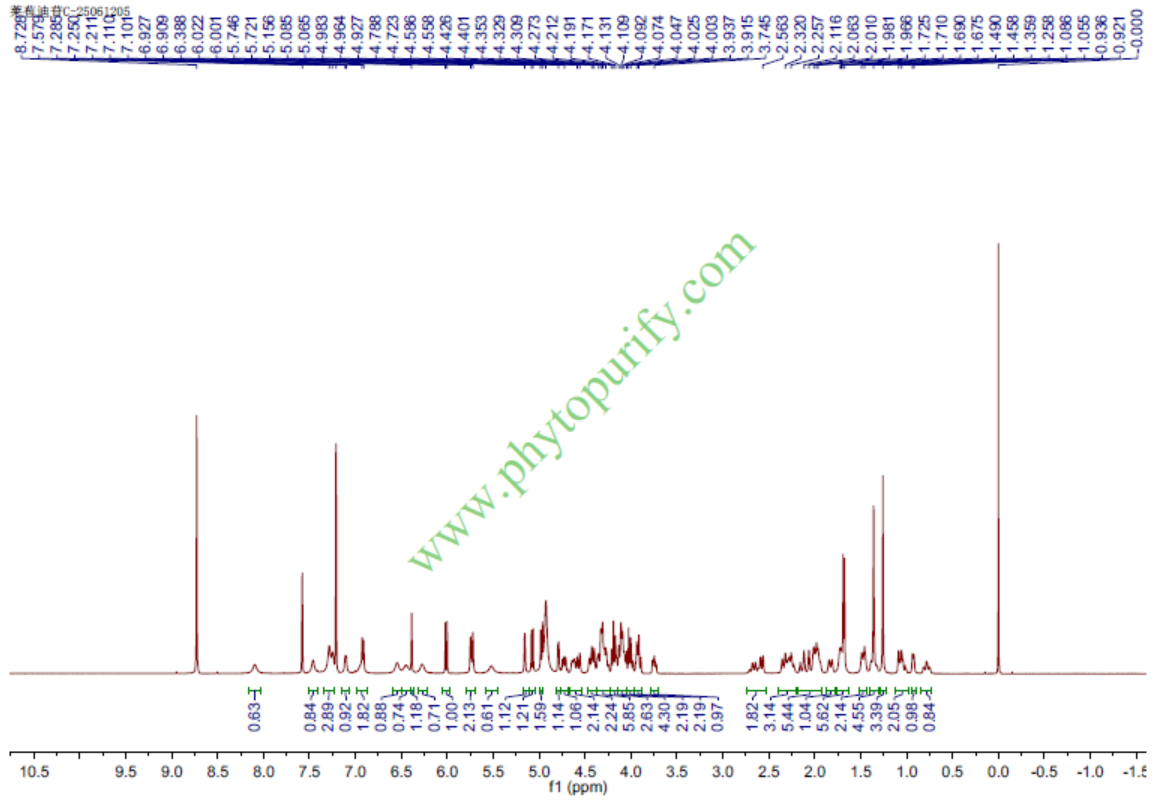
Identification Method: Mass, NMR
Packing: Brown vial or HDPE plastic bottle
Can be supplied from milligrams to grams.
For Reference Standard and R&D, Not for Human Use Directly.
Inquire for bulk scale.
Description:
Rebaudioside C belongs to the family of Steviol Glycosides. It is a natural constituent of the plant Stevia rebaudiana Bertoni and used as natural sweeteners to diabetics and others on carbohydrate-controlled diets.
References:
Food Chem. 2015 Apr 1;172:1-6.
Influence of drying method on steviol glycosides and antioxidants in Stevia rebaudiana leaves.
METHODS AND RESULTS:
The application of different drying conditions (hot air drying at 100 °C and 180 °C, freeze drying and shade drying) on steviol glycosides (stevioside, dulcoside A, rebaudioside A and Rebaudioside C) and antioxidants in Stevia leaves was evaluated. Stevioside, the major glycoside found in fresh leaves (81.2mg/g), suffered an important reduction in all cases, although shade drying was the least aggressive treatment. Considering the antioxidant parameters (total phenols, flavonoids and total antioxidants), the most suitable drying method was hot air at 180 °C, since it substantially increased all of them (76.8 mg gallic acid, 45.1mg catechin and 126 mg Trolox, all equivalent/g Stevia, respectively), with respect to those present in fresh leaves (44.4, 2.5 and 52.9 mg equivalent/g).
CONCLUSIONS:
Therefore, the ideal method for drying Stevia leaves depends on their final use (sweetener or antioxidant), although, hot air at 180 °C is the most recommendable if only one treatment has to be chosen.
Curr Pharm Des. 2016 Oct 21.
A Review on the pharmacology and toxicology of steviol glycosides extracted from Stevia rebaudiana.
Stevia rebaudiana Bertoni is a sweet and nutrient-rich plant belonging to the Asteraceae family. Stevia leaves contain steviol glycosides including stevioside, rebaudioside (A to F), steviolbioside, and isosteviol, which are responsible for the plant's sweet taste, and have commercial value all over the world as a sugar substitute in foods, beverages and medicines. Among the various steviol glycosides, stevioside, rebaudioside A and Rebaudioside C are the major metabolites and these compounds are on average 250-300 times sweeter than sucrose. Steviol is the final product of Stevia metabolism. The metabolized components essentially leave the body and there is no accumulation. Beyond their value as sweeteners, Stevia and its glycosdies possess therapeutic effects against several diseases such as cancer, diabetes mellitus, hypertension, inflammation, cystic fibrosis, obesity and tooth decay.
CONCLUSIONS:
Studies have shown that steviol glycosides found in Stevia are not teratogenic, mutagenic or carcinogenic and cause no acute and subacute toxicity. The present review provides a summary on the biological and pharmacological properties of steviol glycosides that might be relevant for the treatment of human diseases.
HPLC of Rebaudioside C
HNMR of Rebaudioside C
Storage conditions:Short-term storage at 2~8℃, long-term storage at -20 ~ -80℃
353.9000
-.1474
-.1474
1.7773
.4362
.3236
Low
57.5823
7.5922
No
No
No
No
Yes
No
0.0
Yes
No
No
Yes
Under the increasing pursuit of healthy diet by humans, finding safe, low calorie, and high sweetness natural sweeteners has become an important topic in the fields of food science and pharmacology. Stevioside, as a natural diterpenoid glycoside extracted from the Asteraceae plant Stevia rebaudiana, has attracted much attention due to its excellent sweet taste characteristics and potential physiological activity. Among them, rebaudin A has become the most widely commercialized ingredient due to its high sweetness and low aftertaste. However, stevia also contains various other glycosides, among which rebaudin C is one with unique chemical structure and potential pharmacological value. Rabodioside C, also known as durcoside B, has a sweetness about 20-30 times that of sucrose and is not as sweet as Rabodioside A, but its chemical structure contains the possibility of interaction with specific biological targets, which makes it go beyond the scope of simple taste regulators and shows its potential application in the management of metabolic diseases, especially diabetes. This article aims to provide a systematic review of the chemical properties, plant sources, pharmacological activities, mechanisms of action, medicinal properties, and clinical application prospects of rabidicin C, providing a comprehensive scientific perspective for the deep development and utilization of this natural product.
Ruibaodi glycoside C is a tetracyclic diterpenoid glycoside compound, with the chemical name 13- [(2-O - β - D-glucopyranosyl-3-O - β - D-glucopyranosyl - β - D-glucopyranosyl) oxy] kaempferol-16-ene-19-ate β - D-glucopyranosyl ester. Its CAS number is 63550-99-2, molecular formula is C44H70O23, and molecular weight is 951.0220.
Structurally, rebaudin C is composed of steviol alcohol as its aglycone backbone. Its key feature is that a linear triple sugar chain consisting of three glucose units (glucosyl glucosyl glucosyl) is connected at the C-13 position, while a single glucose unit is esterified at the C-19 position. Compared with the high sweetness of rebaudin A, rebaudin C lacks a β -1,2-linked glucose group at the terminal of the triple sugar chain at position C-13, which significantly affects its binding affinity with sweet taste receptors and sweetness intensity. Research has confirmed that its sweet taste activity is highly dependent on the double bond structure at positions C-16/C-17 and specific glycosidic ligand modifications, which serve as the molecular basis for its selective binding to the human sweet taste receptor heterodimer TAS1R2/TAS1R3 and activation of downstream signaling pathways.
In terms of physical and chemical properties, rebaudin C is a white to slightly yellow crystalline powder. The calculated lipid water partition coefficient LogP value is -0.1474, indicating its high hydrophilicity. The topological polarity surface area is as high as 353.9000 Å ², which is consistent with the presence of multiple hydroxyl and sugar ring structures in its molecule. It has good water solubility, with a calculated value of about 1.7773 mg/mL, and is easy to dissolve in aqueous systems. These properties determine its distribution characteristics in the body: it is difficult to penetrate the blood-brain barrier rich in lipid bilayers (predicted as low permeability), mainly distributed in the peripheral circulatory system. In addition, preliminary pharmacological risk assessment showed that the hERG channel inhibition risk was negative, and the Ames mutagenicity test result was also negative (0.0), indicating that it has good cardiac safety and genotoxicity safety profile.
Ruibaodi glycoside C naturally exists in the leaves of the Asteraceae plant Stevia rebaudiana. Stevia is native to the border region of Paraguay and Brazil in South America, and is now widely cultivated in multiple regions around the world. Among the dozens of steviol glycosides contained in stevia leaves, the content of rebaudin C is usually lower than that of rebaudin A and steviol glycosides, accounting for about 0.1% -0.6% of the dry leaf weight. Its specific content is affected by factors such as variety, planting conditions, harvest season, and processing technology.
The extraction and purification of rebaudin C from stevia leaves is a multi-step process, usually carried out simultaneously with the extraction of other stevia glycosides. The conventional extraction method begins with soaking dried stevia leaves in solvents such as water or ethanol to obtain a crude extract rich in various stevia glycosides. Subsequently, large molecular impurities such as proteins and chlorophyll are removed through coagulation, filtration, and other steps. The key challenge is how to efficiently separate rebaudin C after obtaining a preliminary purified glycoside mixture.
Traditional separation and purification techniques include crystallization and column chromatography. The crystallization method relies on the difference in solubility of different glycosides in different solvents and temperatures for repeated crystallization separation, but this method has low efficiency and is difficult to obtain high-purity single components. At present, industrialization and laboratory scale tend to adopt chromatographic technology. Macroporous adsorption resin chromatography is a commonly used preliminary enrichment method, which can group glycosides based on polarity differences. High performance liquid chromatography, especially preparative HPLC, is the standard method for obtaining high-purity rebaudin C. It often uses a C18 reverse phase chromatography column with water acetonitrile or water methanol as the mobile phase for gradient elution. In recent years, liquid-liquid distribution chromatography techniques such as high-speed countercurrent chromatography have also been applied to the separation of stevia glycosides due to their high recovery rate and large preparation capacity. In addition, biotransformation based on specific enzymes, such as β - glucosidase, selectively modifying other glycosides with higher content, such as steviol glycosides, to selectively generate rebaudin C has also become a promising green synthesis pathway.
The core pharmacological research of Ribadine C focuses on its hypoglycemic activity, which transforms it from a sweet substance to a natural product with potential therapeutic value. Numerous in vitro and in vivo studies have revealed its multiple roles in regulating glucose metabolism.
1. Hypoglycemic effect: In the streptozotocin induced diabetes rat model, long-term oral administration of rebaudioside C can significantly reduce the fasting blood glucose level and improve glucose tolerance, and its effect is positively correlated with the dose. This hypoglycemic effect is not achieved by stimulating acute insulin secretion, as it has not shown a strong pro insulin secretion effect in normal animal or ex vivo pancreatic experiments. This suggests that its mechanism of action tends to improve insulin resistance and regulate glucose utilization in peripheral tissues.
2. Improve insulin sensitivity: Research has shown that rebaudin C can enhance the responsiveness of insulin target tissues, such as adipose tissue and skeletal muscle, to insulin. In cell models of insulin resistance (such as palmitic acid-induced HepG2 cells) or animal models, treatment with ribavirin C can increase glucose uptake under insulin stimulation, reduce fasting insulin levels, and improve insulin sensitivity index.
3. Regulating lipid metabolism: Diabetes is often accompanied by lipid metabolism disorder. Ruibaodi glycoside C has shown a trend of reducing serum triglyceride, total cholesterol, and low-density lipoprotein cholesterol levels in animal experiments, while possibly increasing high-density lipoprotein cholesterol, which helps to comprehensively improve the metabolic syndrome phenotype.
4. Antioxidant and anti-inflammatory effects: Oxidative stress and chronic low-grade inflammation are the core pathological links of insulin resistance and diabetes complications. The study found that Rabadioside C has a certain antioxidant capacity, can reduce the level of malondialdehyde in the liver and kidney of diabetes animals, and enhance the activities of superoxide dismutase, glutathione peroxidase and other antioxidant enzymes. At the same time, it can also inhibit the expression of some pro-inflammatory cytokines (such as TNF - α, IL-6) and alleviate metabolic inflammation.
5. Inhibition of alpha glucosidase: In vitro enzymatic experiments have shown that rebaudin C has a mild to moderate inhibitory effect on intestinal alpha glucosidase, which is responsible for breaking down oligosaccharides into monosaccharides. This means that it may delay the digestion and absorption of carbohydrates, thereby reducing postprandial blood glucose peaks. Its mechanism of action is similar to the clinical drug acarbose, but its efficacy may be weaker.
The hypoglycemic effect of ribavirin C is a synergistic result of multiple targets and pathways, rather than relying on a single mechanism. Its molecular action network involves multiple key proteins and signaling pathways closely related to glucose homeostasis.
Core target analysis:
Peroxisome proliferator activated receptor gamma (PPARG): PPAR γ is a member of the nuclear receptor superfamily and plays a central regulatory role in adipocyte differentiation, lipid metabolism, and insulin sensitization. Ruibaodi glycoside C may act as a partial agonist or modulator of PPAR γ, activating the PPAR γ signaling pathway, promoting adipocyte differentiation and maturation, increasing the secretion of insulin sensitizing factors such as adiponectin, while inhibiting the release of free fatty acids and inflammatory factors from adipose tissue, thereby systematically improving insulin sensitivity.
Glucokinase (GCK): GCK is a glucose sensor in liver and pancreatic beta cells, catalyzing the phosphorylation of glucose to glucose-6-phosphate, and is the first rate limiting enzyme in glucose metabolism. Research has shown that rebaudin C may enhance the activity or expression of GCK directly or indirectly, promote liver uptake and utilization of glucose, and optimize the glucose sensing ability of beta cells, which helps maintain blood glucose homeostasis.
Insulin receptor substrate 1 (IRS1) and insulin signaling pathway: IRS1 is a key adaptor protein downstream of insulin receptors. Ruibaodi glycoside C has been shown to enhance the tyrosine phosphorylation level of IRS1 under insulin stimulation, thereby more effectively activating the classic insulin signaling pathway of phosphatidylinositol 3-kinase (PI3K)/protein kinase B (Akt). Activated Akt promotes the translocation of glucose transporter 4 (encoded by the SLC2A4 gene) to the cell membrane, thereby accelerating the uptake of glucose by skeletal muscle and adipocytes.
Glucose transporter 4 (SLC2A4/GLUT4): As mentioned above, by activating the insulin signaling pathway, rebaudin C ultimately upregulates the membrane translocation and function of GLUT4, which is its direct effector link in promoting peripheral tissue glucose utilization.
Dipeptidyl peptidase-4 (DPP4): DPP4 is an enzyme that can rapidly degrade intestinal insulinotropic hormones (such as GLP-1). There are studies suggesting that certain stevia glycosides may have mild DPP4 inhibitory activity. It is worth further exploring whether Ribadine C promotes insulin secretion and inhibits glucagon secretion in a glucose concentration dependent manner by inhibiting DPP4 and prolonging the half-life of endogenous GLP-1.
Insulin receptor (INSR): Ruibaodi glycoside C may maintain the normal structure and function of INSR and ensure the initiation of insulin signaling by improving cell membrane fluidity or reducing interference from inflammatory factors.
Signal pathway integration: Ruibaodi glycoside C integrates multiple signaling pathways by synergistically acting on the aforementioned targets: activating the PPAR γ pathway improves systemic metabolic status and insulin sensitivity; Enhance the insulin receptor-IRS1-PI3K Akt signaling axis, directly promoting glucose uptake; May regulate GCK and DPP4, assisting in glucose control from the perspectives of liver glucose metabolism and intestinal insulinotropic stimulation. This multi-target mode of action enables it to gently regulate blood glucose from multiple levels, potentially reducing the risk of side effects caused by potent single target interventions.
Based on its physical and chemical properties and preliminary biological data, Ribadine C exhibits certain potential for drug development, but its complete pharmacokinetic characteristics still require further in-depth research.
Absorption: As a highly hydrophilic and high molecular weight glycoside compound, the oral bioavailability of ribavirin C is expected to be low. Its absorption mainly occurs in the intestine, but intact molecules may be difficult to passively diffuse through the intestinal epithelial cell membrane. Its absorption mechanism may involve specific transporters on intestinal epithelial cells or depend on metabolic transformation of the colon microbiota. Research has shown that some steviol glycosides can be hydrolyzed by bacterial enzymes (such as β - glucosidase) in the intestine, removing some glycosides to produce glycosides such as steviol alcohol. These glycosides have enhanced lipid solubility, are more easily absorbed, and may contribute to some systemic activity. The specific metabolic conversion pathway and its impact on the activity of rabidic acid C still need to be clarified.
Distribution: Due to its high TPSA and low LogP values, it is expected that rebaudin C and its metabolites will have difficulty crossing the blood-brain barrier, resulting in extremely low exposure to the central nervous system, which reduces the risk of potential central neurotoxicity. After absorption, it may mainly be distributed in tissues and organs with abundant blood and high cell membrane permeability, such as the liver, kidneys, etc.
Metabolism: The metabolism of liver and intestinal microbiota is its main metabolic pathway. Liver metabolism may involve II phase metabolic reactions such as glucuronic acid binding and sulfation. As mentioned earlier, the hydrolysis of gut microbiota is a crucial step in metabolism. It is necessary to systematically study the main metabolite profiles of it in different species (including the human body).
Excretion: The prototype drug and its water-soluble metabolites are expected to be primarily excreted through the kidneys in urine. Part of it may enter the intestine through bile and undergo enterohepatic circulation.
Advantages and challenges of pharmaceutical properties:
* Advantage: ① Natural source, with a long history of safety (widely consumed as one of the components of stevia extract). ② Non central effects, low blood-brain barrier penetration. ③ The preliminary safety pharmacological evaluation (hERG inhibition negative, Ames test negative) is good. ④ Multi targeted effects may provide more physiological blood glucose regulation.
* Challenge: ① Oral bioavailability may be low, affecting its efficacy as a systemic drug. ② High molecular weight makes chemical synthesis or structural modification difficult. ③ As a sweetener ingredient, the relationship between its effective pharmacological dosage and daily intake as a food additive needs to be strictly defined. ④ A comprehensive study of human pharmacokinetics, long-term toxicology, and drug interactions is required.
The clinical application prospects of ribavirin C can be expanded in two main directions: as a functional food additive/dietary supplement and as a lead compound or component of novel hypoglycemic drugs.
1. Dietary management of diabetes and metabolic syndrome: This is the most direct and recent application direction. The use of rebaudioside C as a low calorie sweetener in special foods and drinks for diabetes patients can not only satisfy their desire for sweetness and reduce the intake of refined sugar, but also may generate mild auxiliary hypoglycemic and improve insulin resistance benefits through the above multi-target mechanism. It is particularly suitable for developing nutritional intervention products for patients with pre diabetes and early type 2 diabetes.
2. Supplementary ingredients for combination therapy: Given its unique multi-target mechanism of action (such as potential PPAR gamma regulation and insulin signaling enhancement), rebaudin C or specific steviol glycoside combinations based on it may be used as a supplement or adjuvant therapy to existing hypoglycemic drugs (such as metformin, DPP4 inhibitors, SGLT2 inhibitors) in the future, exerting synergistic effects at low doses or helping to reduce the dosage and side effects of certain drugs.
3. Development of new hypoglycemic drugs: The chemical structure of ribavirin C provides a valuable natural template for medicinal chemists. By rational structural modification of the glycoside backbone or glycosyl side chains, it is expected to enhance their affinity for key targets such as PPAR γ and GCK, improve their pharmacokinetic properties such as oral bioavailability, and thus develop novel small molecule hypoglycemic drugs with independent intellectual property rights.
4. Application exploration in non-alcoholic fatty liver disease: NAFLD is closely related to insulin resistance. The improvement of insulin sensitivity, regulation of lipid metabolism, and antioxidant properties of ribavirin C suggests its potential value in the prevention and treatment of NAFLD, and is worthy of preclinical research.
However, achieving these prospects requires overcoming the following challenges and conducting in-depth research:
* Clarify the dose-response relationship: It is necessary to accurately define the range between the sensory dose as a "food additive" and the effective pharmacological dose as a "physiological regulator" in animal and human studies.
* Obtaining high-level clinical evidence: At present, there is a lack of large-scale, randomized controlled, long-term human clinical trials to confirm its hypoglycemic efficacy and long-term safety.
* Refinement of mechanism of action: It is necessary to use techniques such as molecular docking and gene knockout/knockdown to more accurately elucidate its direct interaction mode and contribution weight with targets such as PPAR γ and GCK.
* Standardization and Quality Control: If used for drug development, it is necessary to establish industrial production and strict quality control standards for high-purity rebaudin C.
As a steviol glycoside with relatively low content but unique structure in Stevia rebaudioside C, it is gradually changing from a supporting role in the sweet world to a potential star in metabolic pharmacology. It not only provides a safe sweet taste option, but its hidden multi-target hypoglycemic pharmacological activity also opens a new window for us to develop natural hypoglycemic drugs. From a chemical structure perspective, its specific glycosylation pattern is crucial for its biological activity; From the perspective of its mechanism of action, it gently regulates glucose homeostasis through multiple nodes such as PPAR γ, insulin signaling pathway, GCK, etc., exhibiting different characteristics of action from existing drugs. Despite facing challenges such as bioavailability in drug development, its good initial safety and clear pleiotropic effects have laid a solid foundation for its subsequent development. In the future, through in-depth pharmacological research, rigorous clinical trials and reasonable pharmaceutical chemical design, Rabodioside C is expected to successfully transform from a natural sweet substance to an innovative functional component or drug lead compound for the prevention and auxiliary treatment of diabetes and its related metabolic diseases, achieving a leap in value from "sweet in the mouth" to "beneficial to the whole body".
