Introduction/Overview
Natural products, as an important source of drug discovery, play an irreplaceable role in the history of human disease treatment. Ginseng(Panax ginseng C. As a traditional precious medicinal herb, the core active ingredient of A. Mey., ginsenosides, has always been a hot topic in modern pharmacological research. There are various types of ginsenosides with different structures, among which the original ginsenosides of the three alcohol type have attracted much attention due to their significant biological activity. Ginsenoside Rs1, as a rare and structurally unique type of protopanaxatriol saponin, has acetylated glycosides attached to its molecular structure at positions C-3 and C-6, which is significantly different from common ginsenosides such as Rb1 and Rg1. This special chemical modification not only affects its physicochemical properties, but may also endow it with a unique pharmacological activity spectrum.
In recent years, with the continuous increase of the incidence rate of cancer, it has become a global scientific challenge to find efficient and low toxic anti-tumor drugs. Traditional chemotherapy drugs often suffer from serious toxic side effects and drug resistance issues. Therefore, it is of great strategic significance to explore anti-tumor lead compounds with multi-target and low toxicity characteristics from natural products. Preliminary studies have shown that ginsenoside Rs1 exhibits potential anti-tumor activity in various tumor models, involving multiple pathways such as inducing apoptosis, inhibiting invasion and metastasis, reversing drug resistance, and interacting with key tumor related targets such as MCL1, STAT3, and HIF1A. Although its research is still in the preclinical stage and far less in-depth than common saponins, existing evidence suggests that ginsenoside Rs1 is a candidate molecule worth further exploration. This article aims to systematically review the chemical properties, plant sources, pharmacological activities, mechanisms of action, pharmacological evaluation, and clinical application prospects of ginsenoside Rs1, in order to provide comprehensive academic references for the in-depth research and development of this compound.
Chemical structure and physicochemical properties
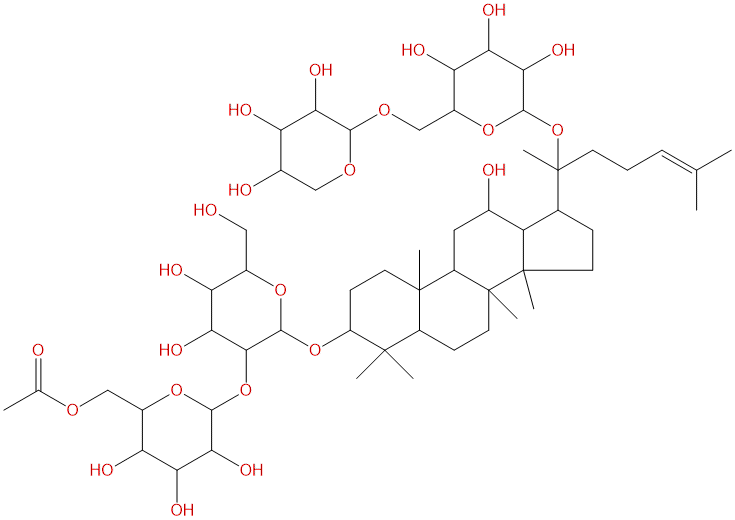
The chemical name of ginsenoside Rs1 is (3 β, 12 β) -3- [(O-6-Acetyl - β - D-Glucopyranosyl - (1 → 2) - β - D-Glucopyranosyl) oxy] -12- [(O - β - D-Glucopyranosyl - (1 → 2) - O - [β - D-Xylopyranosyl - (1 → 6)] - β - D-Glucopyranosyl) oxy] - dama-24-en-20-ol. Its CAS registration number is 87733-67-3.
Structurally, ginsenoside Rs1 belongs to the original panaxatriol type tetracyclic triterpenoid saponin. Its aglycone is 20 (S) - protopanaxatriol. Its structural specificity is mainly reflected in the acetylation modification of the sugar group: a disaccharide chain is connected at the C-3 position, and the terminal glucose group is acetylated at position 6 (- OCOCH3); At the C-6 position (note: referring to the C-6 position of the aglycone skeleton, non glycosylated C-6), there is a three sugar chain connected in sequence by glucose xylose glucose. This complex sugar chain structure with dual sites and acetylation results in a molecular weight of up to 1121.3180 Da, making it a member of the ginsenoside family with higher molecular weight and polarity.
Based on its structure, the theoretical lipid water partition coefficient (LogP) of ginsenoside Rs1 is 2.1416, indicating its lipophilicity but not high lipid solubility. Its topological polar surface area (TPSA) is as high as 363.1300 Å ², mainly attributed to the abundant hydroxyl and glycosidic oxygen atoms in the molecule, indicating its high molecular polarity and strong interaction ability with water molecules. The calculated water solubility is 0.1867 mg/mL, which belongs to the category of slight solubility. This is related to its large molecular weight and complex sugar chain structure. In practical applications, it may be necessary to improve its solubility through formulation techniques such as cyclodextrin inclusion and nanomaterialization. Preliminary pharmacological risk assessment shows that its ability to cross the blood-brain barrier is low, which limits its direct effects on central nervous system tumors, but may also reduce potential central nervous system side effects. In addition, existing prediction models suggest that it has no significant risk of hERG potassium channel inhibition (low risk of QT interval prolongation) and genetic toxicity (Ames test predicted negative), providing preliminary favorable clues for its safety evaluation.
Plant sources and extraction methods
Ginsenoside Rs1 is not the main saponin component in plants of the Panax genus, and its content is relatively low, making it a rare saponin. It mainly exists in ginseng(Panax ginseng)There are significant differences in the content of ginseng in different regions, growth years, and parts of the root and stem parts. In addition, in the same genus of plants, American ginseng(Panax quinquefolius)And Sanqi(Panax notoginseng)There are also trace detections in it. Due to its low natural content, obtaining a large amount of pure Rs1 directly from plant raw materials is costly and inefficient.
At present, obtaining ginsenoside Rs1 mainly through the following two pathways:
1. Plant extraction, separation and purification Starting from ginseng roots, after drying and crushing, heating reflux or ultrasound assisted extraction is carried out using methanol, ethanol or ethanol water mixed solvents. After vacuum concentration, the crude extract was extracted in stages using solvents such as petroleum ether, ethyl acetate, and n-butanol. Ginsenoside Rs1 was mainly enriched in the n-butanol fraction. Subsequently, a series of modern chromatographic techniques need to be used for fine separation, including macroporous adsorption resin column chromatography (such as D101, AB-8 type) for initial enrichment, followed by repeated purification using silica gel column chromatography, reverse phase silica gel column chromatography (such as ODS), high performance liquid chromatography (HPLC), and preparative liquid chromatography (pre HPLC) to obtain high-purity ginsenoside Rs1 monomer. The entire process is cumbersome and the yield is extremely low.
2. Biological transformation and structural modification This is currently a more promising strategy for obtaining rare saponin Rs1. Using abundant ginsenosides (such as Rb1, Rc, Rd, etc.) as substrates, the specific hydrolysis of microorganisms (such as specific bacteria, fungi) or enzymes (such as β - glucosidase, β - xylosidase) is utilized to selectively remove some sugar groups, and acetyl groups may be introduced through acetylation reactions, thereby directing the conversion to Rs1. In addition, the chemical semi synthetic method, which involves selective glycosylation and acetylation reactions on existing ginsenosides or precursors, is also an important research direction for laboratory preparation of Rs1. These methods can improve yield and provide a series of derivatives for structure-activity relationship research.
Pharmacological activity research
The pharmacological activity research of ginsenoside Rs1 is currently mainly focused on the anti-tumor field and has shown potential value in other aspects.
1. Antitumor activity
Numerous in vitro studies have shown that ginsenoside Rs1 has inhibitory effects on proliferation and induces apoptosis in various human tumor cell lines, and its efficacy is often superior to certain common saponins.
* liver cancer Research has shown that Rs1 can significantly inhibit the viability of human liver cancer HepG2 and SMMC-7721 cells, induce cell cycle arrest in the G0/G1 phase, and activate the caspase cascade reaction, leading to cell apoptosis.
* breast cancer Rs1 showed growth inhibition on estrogen receptor positive (ER+) MCF-7 cells and triple negative breast cancer MDA-MB-231 cells. Its function may be related to interfering with the estrogen signaling pathway and inducing non estrogen dependent apoptosis pathways.
* colorectal cancer In colorectal cancer cells such as HCT-116 and SW480, Rs1 not only inhibits proliferation, but also significantly weakens cell migration and invasion ability, indicating its potential for anti metastasis.
* Lung cancer Rs1 can induce apoptosis in non-small cell lung cancer A549 cells through the mitochondrial pathway.
* Drug resistance reversal Preliminary studies suggest that Rs1 may partially reverse multidrug resistance by downregulating the expression or function of P-glycoprotein (P-gp), increasing the accumulation of traditional chemotherapy drugs (such as doxorubicin) in drug-resistant tumor cells.
* In vivo research In a nude mouse transplant tumor model, intraperitoneal injection or gavage of ginsenoside Rs1 can dose dependently inhibit tumor growth, and has little effect on mouse body weight and major organ index, suggesting that its toxicity in vivo may be low.
2. Other potential activities
* Neuroprotective effect A few studies have reported that Rs1 may have a protective effect against β - amyloid protein induced neuronal damage through antioxidant and anti-inflammatory mechanisms, but its poor ability to cross the blood-brain barrier is an urgent bottleneck that needs to be overcome.
* Anti inflammatory and immune regulation Based on the commonality of ginsenosides, Rs1 may have a regulatory effect on the overactivation of immune cells such as macrophages, but its specific effects and mechanisms need to be clarified.
Mechanism of action and molecular targets
The anti-tumor effect of ginsenoside Rs1 involves a complex network of multiple pathways and targets, and some of its mechanisms of action have been preliminarily elucidated
-
Inducing apoptosis of tumor cells This is one of the core mechanisms of action of Rs1.
- Regulating Bcl-2 family proteins Rs1 can downregulate the expression of anti apoptotic proteins Bcl-2 and MCL1, while possibly upregulating the expression of pro apoptotic proteins such as Bax, leading to a decrease in mitochondrial membrane potential, release of cytochrome C, and activation of caspase-9 and caspase-3, triggering endogenous apoptotic pathways.
- Inhibition of STAT3 signaling pathway Signal transduction and transcription activator 3 (STAT3) is an important oncogenic transcription factor. Rs1 can inhibit the phosphorylation (activation) of STAT3, prevent its nuclear translocation, thereby downregulating the expression of downstream target genes (such as Survivor, Bcl xL, Cyclin D1), inhibiting cell proliferation and promoting apoptosis.
-
Inhibit tumor invasion and metastasis:
- Downregulate matrix metalloproteinases (MMPs)Rs1 can significantly reduce the expression and activity of MMP-2 and MMP-9. MMPs are key enzymes that degrade the extracellular matrix, and inhibition of their activity can effectively hinder the invasion and migration of tumor cells.
- Inhibition of HIF-1 α signaling pathway Hypoxia inducible factor-1 alpha (HIF1A) plays a central role in tumor adaptation to hypoxic microenvironment, promotion of angiogenesis, and metastasis. Rs1 may inhibit tumor angiogenesis and metastasis by suppressing the protein stability or transcriptional activity of HIF-1 α, reducing the production of angiogenic factors such as vascular endothelial growth factor (VEGF).
-
Interference with cell cycle progression Rs1 can block tumor cells in the G0/G1 or G2/M phase, and its mechanism may be related to the downregulation of cyclins such as Cyclin D1 and Cyclin B1, as well as the upregulation of cyclin dependent kinase inhibitors such as p21.
-
Affects DNA topoisomerase activity There are studies suggesting that Rs1 may directly or indirectly affect the activity of topoisomerase I (TOP1) and topoisomerase II alpha (TOP2A), interfere with DNA replication and repair, lead to DNA damage, and thus exert cytotoxic effects.
-
Regulating hormone related pathways In view of its structural characteristics, Rs1 may interfere with estrogen synthesis and signal transduction by interacting with estrogen receptor (ESR1) or affecting the activity of aromatase (CYP19A1), which is of great significance in the treatment of hormone dependent tumors (such as breast cancer and prostate cancer).
-
Regulating the MAPK signaling pathway The mitogen activated protein kinase (MAPK) pathway, especially ERK (MAPK1), is involved in cell proliferation, survival, and differentiation. Rs1 may regulate the phosphorylation level of this pathway, affecting downstream gene expression and thereby inhibiting tumor growth.
In summary, ginsenoside Rs1 forms a synergistic anti-tumor network by acting on multiple key targets such as MCL1, BCL2, STAT3, MMP2, TOP1, HIF1A, TOP2A, MAPK1, ESR1, CYP19A1, etc.
Evaluation of drug properties and pharmacokinetics
Although ginsenoside Rs1 exhibits good anti-tumor activity in vitro, its drug like and pharmacokinetic (PK) properties are key factors determining its successful development as a drug.
- absorb As a large molecule, highly polar, and low fat soluble saponin compound, the oral bioavailability of ginsenoside Rs1 is expected to be low. Its complex sugar chain structure may hinder its passive diffusion through intestinal epithelial cells, while microorganisms and enzymes in the intestine may hydrolyze it into secondary glycosides or aglycones before its absorption, altering its active form. Non oral routes (such as intravenous injection, intraperitoneal injection) may be a necessary choice to increase systemic exposure.
- distribution Its larger TPSA and lower LogP values indicate that its distribution volume may be limited, mainly distributed in blood and extracellular fluid, with poor permeability to tissues, especially adipose tissue and brain tissue (low blood-brain barrier permeability), which is consistent with the limited central effects observed in pharmacological activity studies.
- Metabolism Saponins mainly undergo hydrolysis (deglycosylation) and deacetylation metabolism in the body. The acetylated glycosylation of ginsenoside Rs1 at positions C-3 and C-6 is its distinguishing feature from other saponins and a potential metabolic site. The liver may be the main site of its metabolism, and CYP450 enzymes and esterases may be involved. The activity of its metabolites, such as deacetylated products and secondary saponins, needs further evaluation.
- excretion The prototype drug and its metabolites may be mainly excreted through the kidneys (urine) and/or bile (feces). Its larger molecular weight may affect glomerular filtration rate.
- Preliminary evaluation of safety Based on computational predictions, there is no significant risk of hERG inhibition and genotoxicity, providing support for early safety. However, comprehensive evaluations of acute toxicity, long-term toxicity, and reproductive toxicity still need to be conducted in subsequent research.
At present, research data on the pharmacokinetics of ginsenoside Rs1 system is very scarce, which is a major knowledge gap in its development process. In the future, it is necessary to establish sensitive and specific biological analysis methods (such as LC-MS/MS) to systematically study the drug time curves, absolute bioavailability, tissue distribution, metabolite identification, and excretion pathways under different administration routes in animal models (rats, mice, dogs, etc.), providing a basis for formulation design and clinical administration plans.
Clinical application prospects and prospects
Ginsenoside Rs1, as a natural rare saponin with multi-target anti-tumor activity, has broad clinical application prospects, but the road ahead is long and full of challenges.
Potential application directions:
1. Antitumor adjuvant therapy drugs As an adjuvant drug for chemotherapy, radiotherapy, or targeted therapy, utilizing its multi-target properties to enhance efficacy and overcome treatment resistance through possible resistance reversal effects, while utilizing its relatively low predictive toxicity to reduce the side effects of combination therapy.
2. Components of anti metastatic therapy strategies Regarding its inhibition of MMPs and HIF-1 α activity, its application value in preventing or treating tumor metastasis can be explored.
3. Intervention agents for hormone dependent tumors: Based on its potential role in ESR1 and CYP19A1, its role in the treatment or prevention of hormone dependent tumors such as breast cancer and prostate cancer can be further studied.
Challenges and future research directions:
1. Pharmacokinetic bottleneck Low solubility, low permeability, and low oral bioavailability are the primary issues that constrain its development. Future research needs to focus on the development of novel drug delivery systems, such as nanoparticles (liposomes, polymer nanoparticles), microemulsions, self microemulsions, phospholipid complexes, prodrug strategies, etc., to improve their stability, solubility, and targeting.
2. Deep analysis of the mechanism of action The existing mechanism research is still relatively scattered and preliminary. It is necessary to use techniques such as gene knockout/knockdown, chromatin immunoprecipitation (ChIP), proteomics, metabolomics, etc. to more accurately verify its direct target and elucidate the global signaling network it regulates.
3. Structure performance relationship and structural optimization Systematically study the relationship between the number of sugar groups, connection modes, acetylation sites, anti-tumor activity, metabolic stability, and drug formation. By rational structural modifications such as glycosylation, acetyl substitution, and glycoside modification, the pharmacokinetic properties can be improved while maintaining activity.
4. Preclinical systematic review Under standardized GLP conditions, complete the preclinical pharmacodynamics (including more tumor models and combination therapy studies), pharmacokinetics, and toxicology evaluations of the system, and provide a complete data package for its application for clinical trials.
5. Exploring the potential of combination therapy In depth study of its synergistic mechanism and optimal combination regimen with existing standard anti-tumor drugs such as paclitaxel, cisplatin, gefitinib, etc., to provide theoretical basis for clinical combination therapy.
Conclusion
Ginsenoside Rs1, as a rare saponin with unique structure and diverse activities in ginseng, has become a promising candidate molecule in natural anti-tumor drug research due to its multi pathway anti-tumor potential demonstrated by regulating multiple key targets such as MCL1, STAT3, HIF1A, MMP2, etc. Its relatively favorable preliminary safety prediction also adds confidence to its further development. However, its inherent pharmacological defects, particularly poor solubility and predicted low bioavailability, as well as incomplete pharmacokinetic and systemic toxicology data, constitute the main obstacles to its translation into clinical applications. Future research should adhere to the concept of "translational medicine", focus on breaking through the bottleneck of its delivery technology based on a deep understanding of its multidimensional mechanisms, and balance its activity and drug properties through structural optimization strategies. Only through interdisciplinary collaboration can the therapeutic potential of this natural molecule be fully unleashed, driving it from the laboratory to clinical practice and ultimately providing a new and better treatment option for cancer patients.