


Product name: Aristolochic acid A
Synonym name:
Catalogue No.: BP0192
Cas No.: 313-67-7
Formula: C17H11NO7
Mol Weight: 341.275
Botanical Source: Alkaloid from a wide range of Aristolochia spp. Also found in the Chinese drug Fang-chi, Asarum canadense var. reflexum, Bragantia wallichii (preferred genus name Thottea), and in the butterflies Pachlioptera aristolochiae and Battus archidamas
Physical Description: Yellow powder
Type of Compound: Miscellaneous
Purity: 95%~99%
Analysis Method: HPLC-DAD or/and HPLC-ELSD
Identification Method: Mass, NMR
Packing: Brown vial or HDPE plastic bottle
Storage: Store in a well closed container, protected from air and light. Put into refrigerate or freeze for long term storage.
Whenever possible, you should prepare and use solutions on the same day. However, if you need to make up stock solutions in advance, we recommend that you store the solution as aliquots in tightly sealed vials at -20℃. Generally, these will be useable for up to two weeks.
The product could be supplied from milligrams to grams, up to kilograms
Inquire for bulk scale.
Descriptions:
Aristolochic acid, a potent human carcinogen produced by Aristolochia plants, is associated with urothelial carcinoma of the upper urinary tract (UUC), exposure to aristolochic acid contributes significantly to the incidence of UUC in Taiwan and endemic (Balkan) nephropathy .[1]
DNA damage by aristolochic acid (AA) is not only responsible for the tumour development but also for the destructive fibrotic process in the kidney; AA is a powerful nephrotoxic and carcinogenic substance with an extremely short latency period, not only in animals but also in humans, therefore, all products containing botanicals known to or suspected of containing AA should be banned from the market world wide.[2,3]
Aristolochic acid can induce proximal tubule apoptosis and epithelial to mesenchymal transformation.[4]
Aristolochic acid induces tumors in rats and mice, activates mutations at codon 61 of the c-Ha- ras gene in thin-tissue sections of tumors. [5]
References:
[1] Chen C H, Dickman K G, Moriya M, et al. P Nat Acad Sci US A, 2012, 109(21):8241-6.
[2] Grollman A P, Shibutani S, Moriya M, et al. P Nat Acad Sci US A, 2007, 104(29):12129-34.
[3] Arlt V M, Stiborova M, Schmeiser H H. Mutagenesis, 2002, 17(4):265-77.
[4] Pozdzik A A, Salmon I J, Debelle F D, et al. Kidney International, 2008, 73(5):595-607.
[5] Schmeiser H H, Scherf H R, Wiessler M. Cancer Letters, 1991, 59(2):139-43.
[6] Zhu G, Wang Z, Wang Q, et al. China Pharmacy, 2006, 17(18):21-4.
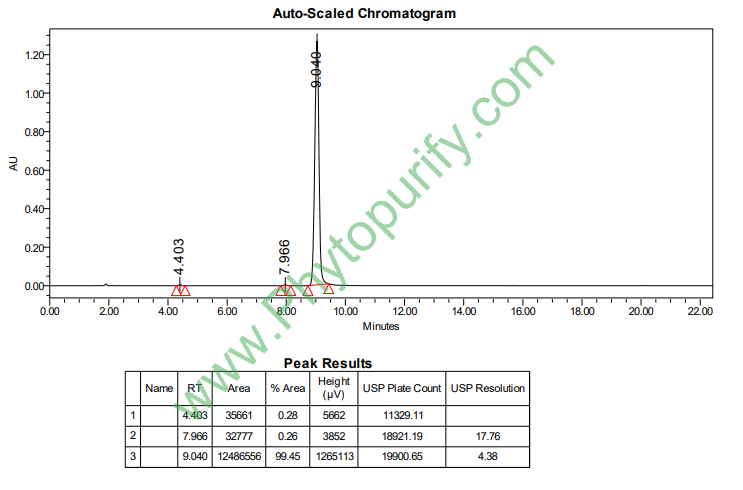
HPLC of Aristolochic acid A
Storage conditions:Short-term storage at 2~8℃, long-term storage at -20 ~ -80℃
108.1300
3.2448
.1609
.0770
2.2818
35.6753
Low
91.2777
2.5802
Yes
No
No
No
Yes
Yes
1.8
Yes
No
Yes
No
Aristolochic acid A (AA-A), CAS number 313-67-7, is the most representative and abundant type of aristolochic acid compounds. These compounds are mainly found in Aristolochiaceae and some Asarum plants. In traditional medical systems, especially in folk therapies in some parts of Asia, they have been used for a long time to treat various inflammatory diseases such as eczema, arthritis, gout, and as diuretics and analgesics. Its unique nitrophenanthrene chemical structure has attracted the attention of pharmacological research in history, in order to explore its potential therapeutic value such as anti-inflammatory and anti-tumor effects.
However, since the outbreak of the "Chinese Herbal Kidney Disease" (later renamed "Aristolochic Acid Kidney Disease") in the 1990s, the research paradigm of Aristolochic Acid A and its related compounds has undergone a fundamental shift. Numerous epidemiological and toxicological studies have confirmed that aristolochic acid A is a potent nephrotoxin and genotoxic carcinogen that causes progressive renal interstitial fibrosis, urothelial carcinoma, and liver cancer. Its toxic mechanism is closely related to the DNA adducts formed after metabolic activation, which have high mutagenicity and mutation characteristics ("AA mutation tags") have been widely detected in the genomes of related cancer patients.
Therefore, contemporary research on aristolochic acid A has shifted from early pharmacological exploration to in-depth analysis of its toxicity mechanism, development of biomarkers for related diseases, and public health risk prevention and control. Meanwhile, as a classic and mechanism specific genotoxic substance, aristolochic acid A has also been used as a tool drug in basic research to simulate specific types of organ damage and carcinogenic processes. This article aims to systematically review the chemical properties, plant sources, pharmacological and toxicological activities, molecular mechanisms of action, and pharmacological characteristics of aristolochic acid A. Based on its strong toxicity, it objectively examines the illusory potential of its "therapeutic" potential and focuses on exploring its scientific value and warning significance in toxicity mechanism research and disease association.
Aristolochic acid A is a nitro substituted derivative of phenanthrene carboxylic acid. Its system is named 8-methoxy-6-nitrophenanthro [3,4-d] [1,3] dioxolane-5-carboxylic acid. Its core structure is a phenanthrene ring, which is modified with functional groups at specific positions:
-At positions C-3 and C-4, a 1,3-dioxolane structure is formed by the cycloaddition of a methylenedioxy group (- O-CH2-O -).
-Connect a methoxy group (- OCH3) at position C-8.
-Connect a nitro group (- NO2) to the C-6 position of the nitrophenanthrene ring at position C-10 (phenanthrene ring number).
-Connect a carboxyl group (- COOH) to the C-5 position of the carboxylic acid phenanthrene ring at position C-1 (phenanthrene ring number).
Its molecular formula is C17H11NO7 and its molecular weight is 341.28. According to the analysis of the pharmacological parameters, the LogP of its lipid water partition coefficient is 3.24, indicating that the compound has moderate lipophilicity; The topological polar surface area (TPSA) is 108.13 Å ², reflecting the polarity brought by nitro, carboxyl, and ether oxygen atoms in its structure; Poor water solubility, approximately 0.077 mg/mL. These physicochemical properties determine its distribution and metabolic characteristics in organisms: moderate lipophilicity facilitates its penetration through cell membranes, but poor solubility may affect its absorption. It is worth noting that its blood-brain barrier permeability is predicted to be "low", which to some extent limits its direct toxicity to the central nervous system, but also suggests fundamental obstacles in the treatment of central nervous system diseases such as Huntington's disease mentioned later. The Ames test result is 1.8 (usually considered positive if the ratio is greater than 2). Although it does not meet the strong positive standard, combined with its clear in vivo genotoxicity mechanism, it has fully warned of its mutagenic risk. The inhibitory effect of hERG is' no ', indicating that its direct risk of causing QT interval prolongation in the heart is low, but its serious nephrotoxicity and carcinogenicity far outweigh concerns about cardiac toxicity.
Aristolochia acid A is present in almost all Aristolochia plants and is also a major toxic component in common Chinese medicines such as Aristolochia manshuriensis, Aristolochia fangchi, Aristolochia debilis roots, Aristolochia debilis stems and leaves, and Aristolochia contorta fruits. In addition, it has also been detected in some Asarum plants, but the content is usually lower than that of Aristolochia plants.
The traditional extraction method is mainly based on its acidity and solubility. The common process includes crushing dried plant materials and using methanol, ethanol, or aqueous ethanol for reflux or ultrasonic extraction. After concentration, the extract can be preliminarily purified by acid precipitation and alkali dissolution method using the carboxyl group characteristics of aristolochic acid A. The concentrated extract is suspended in water, and the pH is adjusted to acidity with dilute acid to precipitate or distribute the aristolochic acid components to the organic phase (such as ethyl acetate); After separating the organic phase, use a weak alkaline aqueous solution for back extraction to convert aristolochic acid into a water-soluble salt, thereby separating it from lipophilic impurities. Finally, acidifying the alkaline water layer can re precipitate the crude aristolochic acid.
Further purification relies on chromatographic techniques. Silica gel column chromatography is a commonly used method, which uses gradient elution systems such as chloroform methanol or dichloromethane methanol. High performance liquid chromatography (HPLC), especially preparative HPLC, is a key technology for obtaining high-purity aristolochic acid A standard. It usually uses a C18 reverse phase chromatography column and separates methanol water or acetonitrile water (often containing small amounts of formic acid or acetic acid) as the mobile phase. Due to the strong toxicity and carcinogenicity of aristolochic acid A, all extraction, separation, and purification operations must be carried out in specialized laboratories with strict protective measures, and all waste must be properly disposed of.
The pharmacological activity research of aristolochic acid A presents a complex "double-edged sword" characteristic, with some potential "benefits" observed in the early stages intertwined with its subsequently confirmed strong toxicity.
1. Anti inflammatory and immune regulatory activity:
Early research reported that aristolochic acid A exhibited anti-inflammatory effects in various animal inflammation models, such as carrageenan induced foot swelling in rats and acetic acid induced increased intra-abdominal capillary permeability in mice. Its mechanism is believed to be related to inhibiting leukocyte migration and reducing the release of inflammatory mediators. Modern molecular pharmacology research has partially revealed its mechanism, such as its ability to significantly inhibit the activity of transcription factor activator protein-1 (AP-1) and nuclear factor kappa B (NF - κ B). These two key transcription factors regulate the expression of numerous inflammatory factors (such as TNF - α, IL-1 β, IL-6), chemokines, and adhesion molecules, so their inhibition may bring about extensive anti-inflammatory effects. However, this inhibition is likely the result of its cytotoxicity or non-specific interference with cellular signaling pathways, rather than the ideal targeted anti-inflammatory effect.
2. Contradiction of anti-tumor activity:
Aristolochic acid A has shown cytotoxicity to some cancer cell lines in vitro, and can reduce the expression of BLCAP, a bladder cancer related gene, in human cells. In history, preparations containing aristolochic acid have even been briefly attempted for adjuvant therapy of tumors. But it is now clear that this "cytotoxicity" is homologous to its genotoxic carcinogenic mechanism. It forms DNA adducts through metabolic activation, leading to sustained DNA damage and mutation accumulation, ultimately inducing cancer. Therefore, any so-called "anti-tumor" activity of it lacks therapeutic selectivity and is accompanied by a high risk of carcinogenesis, making it of no clinical value.
3. Association with Huntington's disease related targets:
The provided target information list associates aristolochic acid A with Huntington's disease (HD), involving PTPRC (protein tyrosine phosphatase receptor type C, associated with immune cell activation), ABCB1 (P-glycoprotein, affecting drug distribution), TOP1 (topoisomerase I, affecting DNA replication), EDNRB (endothelin receptor B), DRD1/DRD2 (dopamine receptor D1/D2), AKT1 (protein kinase B, key survival signaling molecule), HNF4A (hepatocyte nuclear factor 4 alpha, regulating metabolism), CASP3 (caspase-3, apoptosis executor), HMOX1 (heme oxygenase-1, stress response protein). This association may stem from the hypothesis that aristolochic acid A may intervene in the pathological progression of HD by affecting these targets, such as regulating immune inflammation, cell apoptosis, oxidative stress, or neurotransmitter systems. For example, inhibiting NF - κ B (which interacts with pathways such as AKT1) may alleviate neuroinflammation; Adjusting DRD1/DRD2 may affect basal ganglia loop function.However, this association must be viewed with extreme caution. At present, there is no reliable evidence to support the use of aristolochic acid A for the treatment of HD. On the contrary, its strong neurotoxic potential (although BBB permeability is low, long-term systemic toxicity can indirectly affect the nervous system) and unacceptable carcinogenic risk completely rule out its possibility as a therapeutic drug. These target associations are more likely to be used to explain the complex network of their toxic effects or as clues for toxicology research.
4. Toxic activity:
This is the most core and clear "activity" of aristolochic acid A. Its toxicity is mainly manifested as:
- Renal toxicity: Causing aristolochic acid nephropathy, characterized by progressive tubular atrophy, interstitial fibrosis, and renal failure.
- Carcinogenicity: It is a clear Class I human carcinogen (recognized by the WHO International Agency for Research on Cancer), closely related to the occurrence of urothelial carcinoma, renal pelvis carcinoma, and liver cancer.
- Genotoxicity: By forming persistent DNA adducts, it leads to characteristic A: T>T: A transposition mutations.
The toxic mechanism of aristolochic acid A has been extensively studied, and its process can be divided into multiple levels: metabolic activation, molecular addition, cellular response, and tissue damage.
1. Metabolic activation and DNA adduct formation:
This is the starting event of its genotoxicity and carcinogenicity. Aristolochic acid A is catalyzed by nitroreductases (such as NAD (P) H: quinone oxidoreductase, cytochrome P450 reductase, etc.) in the body (mainly in the kidneys and liver), and its nitro group (- NO2) is reduced to nitroso (- NO) and hydroxylamine (- NHOH), ultimately generating highly active Aristolochian nitronium ion. This electrophilic nitrogen ion can covalently bind with the extracellular amino groups of DNA bases (mainly deoxyadenine dA and deoxyguanine dG) to form stable deoxyadenine adducts (dA AAI) and deoxyguanine adducts (dG AAI). Among them, dA AAI adducts are the main form and difficult to be effectively cleared by DNA repair systems, persisting in cells.
2. Mutations and carcinogenic processes:
Persistent DNA adducts can interfere with the normal reading of DNA polymerase during DNA replication, leading to replication errors. The characteristic mutation induced by aristolochic acid adducts is the A: T>T: A mutation. This unique mutation "fingerprint" has become a molecular marker for tracing the exposure history of aristolochic acid in tumor samples. When these mutations occur in key oncogenes (such as TP53, HRAS, etc.) or tumor suppressor genes, they drive malignant transformation of cells, ultimately leading to cancer. In the kidneys, exposed urinary tract epithelial cells are directly damaged and accumulate mutations; In the liver, indirect effects may occur through the "enterohepatic circulation" or systemic effects after kidney injury.
3. Cell stress, apoptosis, and fibrosis:
In addition to genotoxicity, aristolochic acid A can directly induce cellular stress. It can induce the production of reactive oxygen species (ROS), leading to oxidative damage. As mentioned earlier, it can affect signaling pathways such as NF - κ B and AP-1, which play a central role in cell survival, inflammation, and apoptosis. For example, inhibition of NF - κ B may promote apoptosis in certain contexts. It can also activate the p53 pathway to respond to DNA damage. In renal tubular epithelial cells, these stress signals ultimately lead to cell apoptosis, necrosis, or epithelial mesenchymal transition (EMT). Continuous renal tubular injury triggers inflammatory cell infiltration, releasing pro fibrotic factors (such as TGF - β), activating fibroblasts, and leading to excessive deposition of extracellular matrix, known as renal interstitial fibrosis, which is the main pathological feature of end-stage Aristolochic acid nephropathy.
4. Possible interactions with Huntington's disease related targets:
Although not used as a treatment basis, exploring its interaction with HD targets can help to comprehensively understand its toxicity network. For example:
- AKT1/CASP3: Aristolochic acid A may promote apoptosis of renal tubular cells by inhibiting AKT1 (pro survival signal) and activating CASP3 (apoptosis executor).
- HMOX1: As an oxidative stress response protein, its expression may be upregulated by ROS induced by aristolochic acid A, which is a compensatory protective response.
- PTPRC and Inflammation: May exacerbate renal inflammatory infiltration by affecting the function of immune cells (expressing PTPRC).
- ABCB1: As an efflux pump, its expression or function may affect the accumulation of aristolochic acid A and its metabolites in target cells (such as renal tubular epithelial cells), thereby affecting the toxicity intensity.
From the perspective of modern drug development standards, the pharmacological properties of aristolochic acid A are extremely poor, and its pharmacokinetic characteristics are closely related to its toxicity.
Absorption, distribution, metabolism, and excretion (ADME):
- Absorption: After oral administration, it can be absorbed from the gastrointestinal tract, but its poor water solubility may limit the absorption rate and degree.
- Distribution: After absorption, it is widely distributed throughout the body and can be found in various tissues due to its lipophilicity and binding properties with plasma proteins. Its concentration is usually highest in the kidneys, which directly explains its target organ toxicity. The low permeability of the blood-brain barrier limits its direct entry into the brain.
- Metabolism: As mentioned earlier, metabolic activation is a key step in its toxicity. It mainly undergoes reduction metabolism under the action of microsomal enzymes (nitroreductase) in the liver and kidneys, generating active nitrogen ions. In addition, phase II metabolic reactions such as demethylation (methoxy), glucuronic acid binding, or sulfuric acid binding may also occur, generating inactive excreta.
- Excretion: The prototype drug and its metabolites are mainly excreted through the kidneys and urine. Due to the presence of enterohepatic circulation, some complexes may be reabsorbed after being hydrolyzed by the gut microbiota, prolonging their residence time in the body and exacerbating toxicity.
Defects in drug properties:
1. Serious security issues: This is its insurmountable obstacle. Clear and potent genotoxicity and carcinogenicity, as well as irreversible nephrotoxicity, make it completely incompatible with any basic requirements for drug safety.
2. The treatment window is extremely narrow or even non-existent: Any weak "pharmacological effects" that may be observed are close to or have entered the toxic dose range, making it impossible to establish a safe and effective treatment window.
3. Physical and chemical property limitations: Poor water solubility affects formulation development and in vivo behavior prediction.
4. Poor pharmacokinetic properties: Excessive accumulation in the target organ (kidney) leads to metabolic activation and the production of highly toxic intermediates, resulting in prolonged exposure time due to enterohepatic circulation.
Therefore, all the pharmacological parameters and pharmacokinetic characteristics of aristolochic acid A collectively point to its essence as a "perfect" toxin rather than a drug.
Given that aristolochic acid A has been confirmed as a potent nephrotoxin and a Class I human carcinogen, its The clinical application prospect of directly using it as a therapeutic drug is zero, and it has been strictly prohibited for use in drugs and health products by the vast majority of countries worldwide Any attempt to develop it into a clinical drug is dangerous and unethical. The future direction should focus on the following aspects:
1. As a tool molecule for studying toxicity mechanisms:
Aristolochic acid A is a classic tool for studying chemical induced specific types of DNA damage (nitroaromatic hydrocarbon metabolic activation), characteristic mutation spectrum (A: T>T: A), chronic kidney disease (interstitial fibrosis mediated by tubular injury), and organ specific carcinogenesis (urothelial carcinoma, liver cancer). It has significant value in basic toxicology, pathology, and cancer biology research.
2. As a biomarker source for associated diseases:
The "molecular scars" left by exposure to aristolochic acid A - DNA adducts and their characteristic mutation profiles ("AA tags") - have become powerful biomarkers for tracing the history of aristolochic acid exposure and diagnosing aristolochic acid related kidney disease and cancer in forensic science and epidemiology. Through high-throughput sequencing technology, this mutation feature can be detected in the tumor tissue of patients, thereby clarifying the cause, guiding prognosis judgment and subsequent monitoring.
3. Warning cases of public health and drug regulation:
The tragedy of aristolochic acid A is the most profound lesson of 'nature does not equal safety'. It has promoted the reassessment and strengthening of regulation on the safety of traditional herbal medicines worldwide, and facilitated the development of a pharmacovigilance system. Continuously conducting public education and eliminating the illegal use of medicinal materials containing aristolochic acid is a long-term task in the field of public health.
4. Indirect insights from research on neurological diseases such as Huntington's disease:
Although aristolochic acid A itself is not a treatment option for HD, studying its interaction with HD related targets such as inflammatory pathways and apoptotic pathways may provide a side reference for understanding how environmental toxins exacerbate the pathological processes of neurodegenerative diseases. For example, studying whether the systemic inflammation it causes may worsen HD conditions by disrupting the blood-brain barrier or peripheral immune signaling. But this is purely a mechanism exploration and has nothing to do with therapeutic applications.
Aristolochic acid A is a natural product with a unique structure and clear source. Its research history is a paradigm shift from exploring potential medicinal value to thoroughly confirming toxicity. The limited anti-inflammatory activity observed in the early stages has become meaningless in the face of its confirmed and strong genotoxicity, nephrotoxicity, and carcinogenicity. The study of its mechanism of action reveals the complete pathway through which nitroaromatic hydrocarbon metabolism activation leads to DNA adduct formation and characteristic mutations, providing a classic model for the field of chemical carcinogenesis.
Currently, the only role of aristolochic acid A in clinical practice is as a toxic and carcinogenic substance that needs to be strictly avoided. Its value in scientific research lies in its role as a mechanistic tool molecule for toxicity science, molecular epidemiology, and cancer genomics research. For complex diseases such as Huntington's disease, their association with related targets can only serve as clues to understand the interaction between toxic complex networks or environmental factors and the disease, and should not be misunderstood as a treatment opportunity.
The case of aristolochic acid A serves as a profound warning to us that research on natural products must always adhere to the principle of balancing safety and effectiveness, based on rigorous scientific evidence, and abandon the fallacy that "pure natural means non-toxic". In the future, research on aristolochic acid A should continue to focus on elucidating the fine mechanisms of its toxic effects, developing more sensitive exposure biomarkers, and exploring how to intervene or repair the damage it causes, ultimately serving toxicity prevention and patient protection, rather than pursuing its illusory therapeutic illusions in vain.
