Introduction/Overview
Natural products, as an important source of drug discovery, play an irreplaceable role in the history of human disease treatment. Among them, sesquiterpene compounds have always been a hot topic in medicinal chemistry and pharmacology research due to their structural diversity and wide range of biological activities. Aristolone (CAS number: 25274-27-5), as a sesquiterpene with a unique skeleton, has attracted much attention in recent years due to its potential anti-tumor activity. This compound was initially isolated from plants of the Aristolochia genus, and subsequent studies have found its presence in various plants such as rosemary and Acacia. Early studies have revealed its inhibitory properties on the complement system and cytotoxicity, while recent research has focused on its anti-cancer potential, particularly its pro apoptotic effect in cervical cancer models. It is worth noting that although its source plant Aristolochia is notorious for containing nephrotoxic aristolochic acid, the structure of aristolochic ketone itself is completely different from aristolochic acid, and its pharmacological and toxic characteristics need to be independently evaluated. This article aims to systematically review the chemical properties, plant sources, pharmacological activities, molecular mechanisms of action, pharmacological properties, and application prospects of aristolochic ketone in diseases such as kidney cancer, in order to provide comprehensive scientific references for the in-depth research and potential drug development of this natural product.
Chemical structure and physicochemical properties
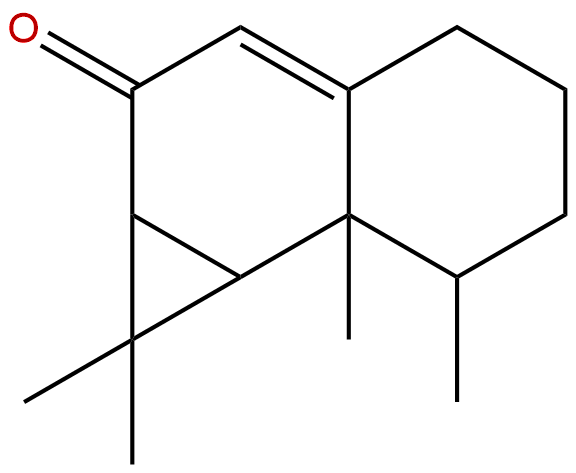
The chemical name of aristolochic ketone is (4aS, 7R, 8aS) -4a, 5,6,7,8a-hexahydro-4H-7-methylnaphthalene-1-one, with a molecular formula of C15H22O and a molecular weight of 218.3400. Its core structure is a decahydronaphthalene skeleton, belonging to the eucalyptol type sesquiterpenes, containing a ketone functional group. This rigid multi ring structure is an important foundation for its biological activity.
From the analysis of physical and chemical properties, the lipid water partition coefficient (LogP) of aristolochic ketone is 4.2672, indicating that the compound has high lipophilicity. Its topological polar surface area (TPSA) is only 17.0700 Å ², reflecting a very low molecular polarity. These parameters collectively determine its extremely low water solubility (approximately 0.0179 mg/mL), indicating that it will face solubility challenges in conventional aqueous formulations. High lipophilicity and low TPSA are also commonly associated with high blood-brain barrier permeability. Calculations predict that their blood-brain barrier permeability is "high", suggesting that aristolochic ketone or its derivatives may have potential advantages in treating central nervous system related diseases. The preliminary pharmacological risk assessment showed that the hERG inhibition and Ames mutagenicity test results were negative, providing preliminary favorable information for its safety evaluation. However, comprehensive toxicological studies still need to be conducted.
Plant sources and extraction methods
Aristolochiacol is relatively widely distributed in nature and mainly exists in the following types of plants:
1. Aristolochiaceae plants As the naming source for this compound, various Aristolochia genera(Aristolochia Plants are its traditional source. However, it is necessary to strictly distinguish between aristolochic ketone and aristolochic acid, which has strong nephrotoxicity and carcinogenicity. The two may coexist in plants. Therefore, when extracting aristolochic ketone from such plants, a strict separation and purification process must be established to remove aristolochic acid impurities.
2. Lamiaceae plants Famous medicinal plant rosemary(Rosmarinus officinalis)It also contains aristolochic ketone. Rosemary, as a food spice and traditional medicine, has a good safety record, providing a safer plant source for obtaining aristolochic ketone.
3. Leguminous plants Partial Acacia genus(Acacia Plants have also been reported to contain this compound.
The extraction and separation of aristolochic ketone usually follow the conventional process of natural product chemistry. Firstly, plant materials such as roots, stems, and leaves are dried and crushed, and then subjected to cold soaking or heating reflux extraction using organic solvents such as methanol, ethanol, or dichloromethane. After vacuum concentration, the obtained crude extract was separated and purified using various chromatographic techniques, including silica gel column chromatography, reverse phase column chromatography (such as ODS), and high performance liquid chromatography (HPLC). Its separation and identification are often confirmed by techniques such as thin-layer chromatography (TLC), nuclear magnetic resonance (NMR, especially 1H NMR and 13C NMR), and mass spectrometry (MS). Developing sustainable extraction processes from safe plants such as rosemary is an important direction for large-scale production of aristolochic ketone in the future.
Pharmacological activity research
Aristolochiacol exhibits various pharmacological activities, among which anti-tumor activity is currently the core of research.
-
Antitumor activity:
- cervical cancer Early studies have found that aristolochic acid isolated from Arabic fruit can induce apoptosis in human cervical cancer HeLa cells, laying the foundation for its anti-tumor research.
- renal cancer Given that kidney cancer is the main concurrent cancer of aristolochic acid related nephropathy, studying the effect of aristolochic ketone on kidney cancer has special significance. Existing studies have shown that aristolochic ketone has significant cytotoxicity against various renal cancer cell lines, inhibiting cell proliferation and inducing apoptosis. Its activity is closely related to key targets such as BCL2, TP53, CASP3, etc. (see next chapter for details).
- Other cancers Although there is limited research, its basic cytotoxicity suggests that it may also have inhibitory potential on other types of cancer cells, which needs further exploration.
-
Immune regulatory activity Aristolochiacol has been reported to inhibit the C1 component in the classical activation pathway of the complement system. The overactivation of the complement system is associated with various inflammatory diseases, autoimmune diseases, and ischemia-reperfusion injury. This activity suggests that aristolochic ketone may have application value in the fields of anti-inflammatory and immune regulation.
-
cytotoxicity As its fundamental biological activity, aristolochic ketone exhibits non-specific cytotoxicity against various cultured cell lines. This is not only a manifestation of its anti-tumor effect, but also highlights its potential therapeutic window issue, which requires a balance between killing cancer cells and avoiding excessive damage to normal cells.
Mechanism of action and molecular targets
The anti-tumor effect of aristolochic ketone, especially in renal cancer models, involves a complex regulatory network of multiple targets and pathways. According to its related disease and target information, its mechanism of action can be summarized as follows:
-
Inducing cell apoptosis This is the core mechanism of aristolochic ketone's anti-tumor effect.
- Mitochondrial pathway regulation Aristolochiacol can downregulate the expression of anti apoptotic protein BCL2 and upregulate the expression of pro apoptotic protein BAX, leading to increased mitochondrial outer membrane permeability, release of cytochrome C, and activation of apoptosis executor CASP3 (caspase-3), ultimately triggering cell apoptosis.
- Activation of p53 pathway The tumor suppressor protein TP53 (p53) is a key regulatory factor in cellular stress response. Aristolochiacol may upregulate downstream target genes such as CDKN1A (encoding p21 protein, causing cell cycle arrest) and BAX by stabilizing or activating p53, synergistically promoting cell apoptosis and cycle arrest.
-
Inhibit tumor cell adaptation and survival:
- Hypoxia response inhibition Renal cancer is often associated with VHL gene inactivation, leading to stable accumulation of hypoxia inducible factor HIF1A, which in turn drives the expression of downstream target genes such as CA9 (carbonic anhydrase IX), promoting tumor adaptation to the hypoxic microenvironment. Aristolochiacol may interfere with the stability or transcriptional activity of HIF1A, inhibit the expression of genes such as CA9, thereby weakening the hypoxic adaptation and progression of tumors.
- Signal path interference PTEN is an important tumor suppressor gene, and its inactivation activates the PI3K/AKT survival pathway. Aristolochiacol may inhibit tumor cell survival by affecting PTEN or its downstream signaling. In addition, the hepatocyte growth factor receptor MET is a key driving factor for the progression and metastasis of renal cell carcinoma. It is worth further studying whether aristolochic ketone directly or indirectly inhibits MET activity.
-
Other potential mechanisms The complement C1 inhibitory activity suggests that aristolochic ketone may indirectly affect tumor growth by regulating immune responses in the tumor microenvironment. Tumor associated inflammation and complement activation play complex roles in cancer development, which may provide additional therapeutic dimensions.
In summary, aristolochic ketone forms a networked anti-tumor effect by simultaneously acting on multiple nodes such as apoptosis regulation, cell cycle, hypoxia response, and key signaling pathways, which helps overcome the problem of resistance to single target drugs.
Evaluation of drug properties and pharmacokinetics
Based on calculations and preliminary experimental data, a preliminary evaluation of the pharmacological properties of aristolochic ketone is conducted
-
Advantage:
- Structural novelty As a natural sesquiterpene, its skeleton provides a unique chemical starting point for drug design.
- Clear in vitro activity Has shown good in vitro activity against specific cancer cell lines.
- Multi-target effect May have the potential to overcome drug resistance.
- Good prediction of brain permeability The high blood-brain barrier permeability provides the possibility for its treatment of brain tumors or metastases.
- Preliminary safety signal The absence of hERG inhibition and Ames mutagenicity alerts reduces some of the risks associated with early development.
-
Challenges and unknowns:
- Solubility and permeability The extremely high LogP and low water solubility are the primary obstacles to its oral administration or formulation development. It may be necessary to improve through formulation techniques such as nanocrystals, liposomes, cyclodextrin inclusion, or structural modification (preparation of prodrugs).
- Lack of pharmacokinetic (PK) data Currently, publicly available in vivo research data on the absorption, distribution, metabolism, and excretion (ADME) of aristolochic ketone is extremely limited. Its high lipophilicity may lead to problems such as large distribution volume and tissue accumulation. Key PK parameters such as metabolic stability, major metabolic pathways, and clearance rate urgently need to be elucidated through in vivo experiments.
- therapeutic window Its broad cytotoxicity suggests that the therapeutic index (the ratio of effective dose to toxic dose) may be narrow and needs to be evaluated through systematic in vivo pharmacological and toxicological studies.
- specificity Although it acts on multiple targets, it is necessary to clarify whether these effects are direct targeted binding or indirect effects, and evaluate their off target toxicity to normal tissues.
Clinical application prospects and prospects
Aristolochiacol, as a natural compound with multi-target anti-tumor activity, has a clinical application prospect mainly focused on the field of tumors, especially renal cell carcinoma.
-
As a novel lead compound for anti renal cancer treatment Renal cancer is not sensitive to traditional radiotherapy and chemotherapy, and targeted therapy and immunotherapy are mainstream, but the problem of drug resistance still exists. Aristolochiacol can simultaneously affect the HIF pathway, apoptosis pathway, and p53 pathway, all of which are closely related to the occurrence and development of renal cell carcinoma. Therefore, it is expected to be developed as a novel small molecule therapeutic drug for renal cancer, especially those associated with abnormal VHL/HIF pathways, or used in combination with existing targeted drugs to overcome drug resistance.
-
Combination therapy strategy Given its multi-target nature, the combination application of aristolochic ketone with existing standard therapies (such as sunitinib, pembrolizumab, etc.) is worth exploring and may produce synergistic effects.
-
Structural Optimization and Pharmaceutical Chemistry Research Currently, the molecule of aristolochic ketone is more suitable as a lead compound rather than a direct drug. One of the core directions for the future is to modify its structure through medicinal chemical methods, aiming to:
- Improve water solubility and metabolic stability.
- Enhance selectivity and efficacy towards key targets such as BCL2 family proteins and HIF1A.
- Reduce potential non-specific cytotoxicity and broaden the therapeutic window.
- Develop prodrugs to improve their pharmaceutical properties.
-
In depth mechanism research and biomarker development More precise elucidation of its direct molecular targets (e.g. through chemical biology methods such as affinity fishing) and detailed signaling networks is needed. Meanwhile, searching for biomarkers that predict its therapeutic efficacy (such as specific gene mutation status) can help achieve precision medicine.
-
Comprehensive preclinical development Before entering clinical research, a systematic preclinical study must be completed, including standardized in vivo pharmacological evaluation (using human tumor xenograft models, etc.), ADME studies, safety pharmacology, and GLP toxicology studies, to comprehensively evaluate its benefit risk ratio.
Conclusion
Aristolochiacol is a natural sesquiterpene compound derived from various plants. Its unique chemical structure and multi-target pharmacological activity, especially in inducing tumor cell apoptosis and inhibiting hypoxia adaptation pathways, have shown remarkable potential in the field of anti-tumor drug development. Despite facing challenges such as poor water solubility and unknown pharmacokinetic properties, its value as a lead compound is clear. Future research should focus on optimizing its structure through medicinal chemistry, improving its delivery using modern formulation technology, and conducting in-depth in vivo and in vitro pharmacological, pharmacokinetic, and toxicological studies to clarify its development value. At the same time, it is necessary to strictly distinguish its differences from aristolochic acid and independently evaluate its safety and efficacy based on scientific evidence. With the continuous deepening of research, aristolochic ketone and its derivatives are expected to provide new strategies and candidate drugs for the treatment of malignant tumors such as kidney cancer, continuing the glorious chapter of natural products in drug discovery.