Introduction/Overview
Aristolochic acids (AAs) are a class of naturally occurring compounds in the Aristolochia genus(Aristolochia)And Asarum genus(Asarum)Nitrophenanthrene carboxylic acid derivatives in plants. For a long time, this type of compound has attracted attention due to its significant nephrotoxicity and carcinogenicity, especially aristolochic acid I (AAI) and aristolochic acid II (AAII), which have been confirmed as the main pathogenic factors of Aristolochic Acid Nephropathy (AAN) and malignant tumors of the urinary system. However, the Aristolochic acid family has numerous members, and there are significant differences in their toxicological and pharmacological properties. Among them, Aristolochic acid D (AAD), also known as Aristolochic acid IVa, is gradually emerging from this "toxic shadow" and demonstrating unique pharmacological value.
Aristolochic acid D (CAS number: 17413-38-6) is derived from Aristolochia in India(Aristolochia indica L. Natural products obtained through separation. Unlike the widely criticized AAI and AAII, AAD has been proven in multiple studies to have no significant carcinogenicity or nephrotoxicity, making it a highly promising "safe member" of the aristolochic acid family. More importantly, AAD has been identified as an orally active phosphodiesterase 2 (PDE2) inhibitor (IC50: 4.673 μ M) and cyclin dependent kinase 2 (CDK2) inhibitor (IC50: 25 μ M). PDE2 is a key regulatory enzyme in the cyclic adenosine monophosphate (cAMP) and cyclic guanosine monophosphate (cGMP) signaling pathways, playing important roles in inflammatory response, cognitive function, and cardiovascular homeostasis; CDK2 is the core regulatory factor for the G1/S phase transition of the cell cycle and a classic target for the development of anti-tumor drugs.
Given the unique dual target inhibitory activity and relatively safe toxicity characteristics of AAD, it has become an emerging hotspot in the research fields of inflammatory diseases and tumor related diseases. This article aims to systematically review the chemical structure, plant origin, pharmacological activity, molecular mechanism, medicinal properties, and clinical application prospects of aristolochic acid D, in order to provide comprehensive scientific basis for the in-depth development and transformation research of this natural product.
Chemical structure and physicochemical properties
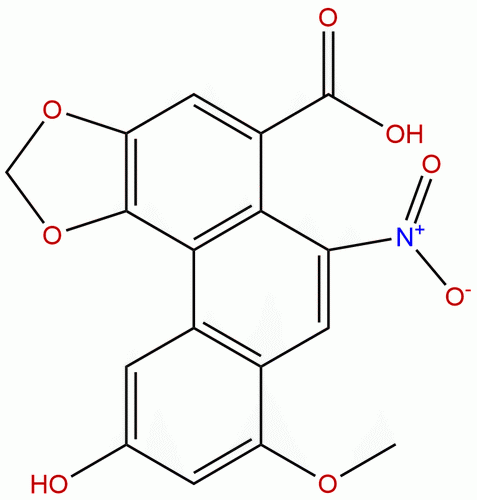
The chemical structure of aristolochic acid D belongs to a typical nitrophenanthrene carboxylic acid skeleton. Its parent nucleus is 1-phenylcarboxylic acid, and substituents such as methoxy (- OCH ∝), hydroxyl (- OH), nitro (- NO ₂), and carboxyl (- COOH) are attached to the C-3, C-4, C-6, and C-8 positions of the phenanthrene ring, respectively. Compared with aristolochic acid I (AAI, with methoxy group at C-8), AAD has an additional hydroxyl group at C-4, which may be the key reason for its significantly reduced toxicity. The presence of hydroxyl groups increases the polarity of molecules and their ability to form hydrogen bonds, which may affect their ability to form DNA adducts and metabolic activation pathways.
From the perspective of physicochemical properties, the molecular weight of AAD is 357.2740 Da, which meets the requirement of Lipinski's Rule of Five for molecular weight less than 500. Its lipid water partition coefficient LogP is 2.9879, indicating that the compound has moderate lipophilicity, which is beneficial for transmembrane transport and oral absorption. The topological polar surface area (TPSA) is 128.3600 Å ², which is slightly higher than the recommended upper limit of 140 Å ² for oral medications, indicating the possibility of some polarity barriers, but still within an acceptable range. The water solubility parameter is 0.2290 mg/mL, belonging to the category of slight solubility, which is related to the presence of polar groups such as carboxyl and hydroxyl groups. However, the overall water solubility is still low, which may pose certain challenges to the development of formulations.
It is worth noting that the blood-brain barrier (BBB) penetration ability of AAD has been evaluated as "low", indicating its limited distribution in the central nervous system, which may reduce central related side effects, but also limits its application in the treatment of brain diseases. In addition, hERG inhibition is predicted as' no ', indicating a low risk of causing cardiac QT interval prolongation and arrhythmia, which is an important cardiac safety indicator. The Ames test result is 1.8, although slightly higher than the negative control, it is far lower than strong mutagens such as AAI. Combined with in vivo research data, it is generally believed that AAD does not have significant genetic toxicity and carcinogenicity. These physicochemical properties and early safety assessment data together outline the profile of AAD as a relatively safe and orally viable natural lead compound.
Plant sources and extraction methods
Aristolochic acid D mainly comes from plants of the Aristolochia genus, among which Aristolochia from India(Aristolochia indica L. It is the most classic source. Aristolochia is a traditional medicinal plant used in Ayurvedic medicine in India to treat snake bites, inflammation, and digestive system diseases. In addition, AAD also exists in other Aristolochia species such as Aristolochia manshuriensis(Guanmutong)Aristolochia fangchi(Self Defense) and Asarum In plants such as Asarum, the content is usually low and often coexists with toxic components such as AAI and AAII.
The traditional method for extracting AAD usually involves organic solvent extraction combined with column chromatography separation. The typical process is as follows: after crushing the dried plant roots or stems, extract them by cold soaking or hot reflux with methanol or ethanol. After concentration of the extract, liquid-liquid extraction was carried out sequentially with petroleum ether, ethyl acetate, and n-butanol to remove lipid soluble impurities and sugars. The ethyl acetate or n-butanol extraction sites rich in aristolochic acids were further separated and purified by silica gel column chromatography, Sephadex LH-20 gel column chromatography or reversed phase C18 column chromatography. The elution system often uses chloroform methanol or methanol water gradient system. Due to the similarity in structure between AAD and other aristolochic acid analogues, separation is difficult and often requires the combination of preparative high-performance liquid chromatography (Pre HPLC) to obtain high-purity monomeric compounds.
In recent years, with the promotion of green chemistry concepts, some new extraction technologies have also been attempted for the extraction of AAD. For example, ultrasound assisted extraction (UAE) and microwave-assisted extraction (MAE) can significantly shorten extraction time and improve yield. In addition, due to the high polarity of aristolochic acid compounds, the use of deep eutectic solvents (DES) as extraction solvents has also shown good selectivity and extraction efficiency. In terms of detection and quantification, high-performance liquid chromatography-mass spectrometry (HPLC-MS/MS) is the mainstream method for analyzing AAD content. Its high sensitivity and specificity can achieve accurate quantification of trace AAD in complex matrices.
It is worth noting that due to the widespread presence of toxic ingredients such as AAI and AAII in Aristolochia plants, strict quality control standards must be established when extracting AAD from plants to ensure that there are no toxic Aristolochic acid residues in the final product. This is not only a basic requirement for pharmacological research, but also a safety threshold that must be crossed in future drug development.
Pharmacological activity research
anti-inflammatory activity
The anti-inflammatory activity of AAD is one of its most concerned pharmacological effects. Multiple in vitro and in vivo studies have shown that AAD can effectively inhibit the production and release of various inflammatory mediators. In a macrophage model stimulated by lipopolysaccharide (LPS), AAD significantly reduces the levels of pro-inflammatory cytokines such as tumor necrosis factor - α (TNF - α), interleukin-6 (IL-6), and interleukin-1 β (IL-1 β). Meanwhile, AAD can also inhibit the expression of inducible nitric oxide synthase (iNOS) and cyclooxygenase-2 (COX-2), thereby reducing the excessive production of nitric oxide (NO) and prostaglandin E2 (PGE2).
In animal models, oral administration of AAD can effectively alleviate carrageenan induced paw swelling in rats and acetic acid-induced increased intra-abdominal capillary permeability in mice, demonstrating anti-inflammatory effects comparable to the positive control drug indomethacin, but with significantly milder gastrointestinal side effects. In addition, in the colitis model induced by dextran sulfate sodium (DSS) in mice, the disease activity index (DAI) of the AAD treatment group was significantly reduced, and the pathological damage to colon tissue was alleviated, indicating its potential application value in the treatment of inflammatory bowel disease (IBD).
Antitumor activity
The inhibitory activity of AAD on CDK2 is the core mechanism of its anti-tumor effect. CDK2 overexpression or abnormal activation in various malignant tumors is a key checkpoint for cell cycle regulation. AAD competitively binds to the ATP binding site of CDK2, inhibiting its kinase activity and causing cell cycle arrest in the G1/S phase. In many tumor cell lines (such as breast cancer MCF-7, liver cancer HepG2, lung cancer A549 and colon cancer HCT-116), AAD showed a dose-dependent inhibitory effect on proliferation.
It is worth noting that the toxicity of AAD to normal cells is much lower than its selective toxicity to tumor cells. In normal liver cells L02 and renal epithelial cells HK-2, the IC50 value of AAD is significantly higher than that of tumor cells, which is consistent with its lack of nephrotoxicity and carcinogenicity. Further mechanistic studies have shown that AAD can induce apoptosis in tumor cells, manifested by activation of Caspase-3/9, increase in Bax/Bcl-2 ratio, and cleavage of PARP. In addition, AAD can also inhibit the migration and invasion ability of tumor cells, which may be related to the downregulation of matrix metalloproteinase (MMP-2/9) expression.
Comparison of toxicity with other aristolochic acids
One of the most notable features of AAD is its security. Compared with AAI and AAII, AAD did not show significant nephrotoxicity or carcinogenicity in vitro and in vivo. In HK-2 human renal proximal tubular epithelial cells, AAI can induce significant cytotoxicity and DNA damage at low micromolar concentrations, while AAD has almost no effect at the same concentration. In animal experiments, long-term gavage of AAI can lead to typical symptoms of aristolochic acid nephropathy in rats, including tubular atrophy, interstitial fibrosis, and increased renal function indicators (blood creatinine, urea nitrogen), while the kidney structure and function of AAD treated rats remain normal.
Regarding carcinogenicity, the mutagenicity of AAD in Ames test is much lower than that of AAI. More importantly, the ability of AAD to form adducts with DNA is extremely weak. The carcinogenicity of aristolochic acid is closely related to its formation of dA AII adducts with DNA after activation by nitroreductase metabolism in vivo. Due to the presence of the C-4 hydroxyl group, AAD may alter its metabolic pathway or reduce its reactivity with DNA, thereby avoiding genetic toxicity. This characteristic makes AAD the only member of the aristolochic acid family that combines pharmacological activity and safety, clearing the biggest obstacle for its drug development.
Mechanism of action and molecular targets
PDE2 inhibition and cAMP/cGMP signaling regulation
AAD has been identified as a PDE2 inhibitor with an IC50 value of 4.673 μ M. PDE2 is a dual substrate specific phosphodiesterase that can simultaneously hydrolyze cAMP and cGMP, playing a critical role in regulating intracellular nucleotide levels. PDE2 is expressed in various tissues, including the brain, heart, adrenal gland, and immune cells.
The inhibition of PDE2 by AAD leads to an increase in intracellular cAMP and cGMP levels. CAMP exerts anti-inflammatory and immunomodulatory effects by activating the protein kinase A (PKA) and cAMP response element binding protein (CREB) signaling pathways. For example, in macrophages, activation of the cAMP/PKA pathway can inhibit nuclear translocation of NF - κ B, thereby reducing transcription of pro-inflammatory cytokines. CGMP regulates vascular smooth muscle tone and platelet aggregation by activating protein kinase G (PKG). Therefore, AAD produces a synergistic anti-inflammatory effect by inhibiting PDE2 while enhancing two anti-inflammatory signaling pathways.
Compared with other PDE inhibitors, AAD has better selectivity for PDE2 than PDE4 and PDE5, which helps reduce non-specific side effects. For example, PDE4 inhibitors are often accompanied by gastrointestinal reactions such as nausea and vomiting, while PDE5 inhibitors may cause facial flushing and visual abnormalities. The PDE2 selective inhibition property of AAD provides a better safety window in anti-inflammatory therapy.
CDK2 inhibition and cell cycle regulation
The second key target of AAD is CDK2, with an IC50 value of 25 μ M. CDK2 is an important member of the cyclin dependent kinase family, which binds to Cyclin E or Cyclin A to drive cells from G1 phase to S phase and normal progression of S phase. Overactivation of CDK2 is an important driving factor for infinite cell proliferation in various cancers.
Molecular docking studies have shown that the phenanthrene ring skeleton of AAD can be embedded into the ATP binding pocket of CDK2. Its C-4 hydroxyl group forms hydrogen bonds with Glu81 and Leu83, while its C-8 carboxyl group undergoes electrostatic interactions with Lys33 and Asp145. These interactions stabilize the binding of AAD to CDK2 and competitively inhibit the entry of ATP. Cell experiments have confirmed that AAD treatment can lead to a decrease in CDK2 activity, a decrease in Rb protein phosphorylation levels, inhibition of E2F transcription factor release, and ultimately cause G1/S phase cell cycle arrest.
It is worth noting that the inhibitory activity of AAD on CDK2 (IC50=25 μ M) is weaker than its inhibitory activity on PDE2 (IC50=4.673 μ M), indicating that at physiological concentrations, anti-inflammatory effects may be its main pharmacological effect, while anti-tumor effects may require higher drug exposure. This difference also provides clues for the indication selection of AAD: low doses can be used for chronic inflammation, while high doses can be used for tumor treatment.
Relationship with renal toxicity related targets
Given the non-toxic nature of AAD, studying its interaction with classical nephrotoxicity related targets is of great significance. The nephrotoxicity mechanism of AAI involves multiple molecular events: firstly, AAI is metabolically activated in renal tubular epithelial cells, forming DNA adducts and activating p53 (TP53) - mediated DNA damage response; Secondly, AAI induces oxidative stress, activates NADPH oxidase (NOX2), and produces a large amount of reactive oxygen species (ROS); Finally, AAI upregulates the expression of renal injury molecule-1 (KIM-1/HAVR1) and neutrophil gelatinase associated lipocalin (NGAL/LCN2), and regulates the balance of apoptosis related proteins Bax, Bcl-2, and Caspase-3 (CASP3), ultimately leading to apoptosis and necrosis of renal tubular epithelial cells.
In contrast, AAD treatment did not affect the expression levels of the aforementioned key proteins. In HK-2 cells, AAD neither activates p53 nor induces an increase in Bax/Bcl-2 ratio, and there is no significant change in Caspase-3 activity. The expression of KIM-1 and NGAL remains at baseline levels. In addition, AAD does not induce the activation of NOX2, and intracellular ROS levels remain normal. These results explain the lack of nephrotoxicity in AAD at the molecular level. The C-4 hydroxyl group of AAD may hinder its effective metabolism by nitroreductase, or the metabolites lack the ability to form stable adducts with DNA, thereby avoiding subsequent toxic cascade reactions.
Evaluation of drug properties and pharmacokinetics
Analysis of drug properties
Based on the aforementioned physicochemical parameters, the overall pharmacological properties of AAD are good. The molecular weight (357.27 Da) and LogP (2.99) are both within the ideal range, indicating that it has reasonable lipophilicity, which is beneficial for oral absorption and membrane permeability. The TPSA (128.36 Å ²) is slightly higher, but still within an acceptable range, indicating a possible risk of resistance mediated by efflux transporters. The water solubility (0.229 mg/mL) is low and may need to be improved through formulation methods such as solid dispersions and lipid nanoparticles.
AAD contains multiple hydrogen bond donors (1 phenolic hydroxyl group and 1 carboxyl group) and hydrogen bond acceptors (nitro, methoxy, and carboxyl groups), meeting the requirements of hydrogen bond donors ≤ 5 and acceptors ≤ 10 in the five rules of pharmaceutical drugs. In addition, it has fewer rotatable bonds and stronger molecular rigidity, which is conducive to precise binding with target proteins.
Pharmacokinetic characteristics
At present, there is insufficient systematic research on the pharmacokinetics of AAD in vivo, but based on its physicochemical properties and preliminary animal experimental data, the following characteristics can be inferred:
absorb AAD has oral activity, indicating its ability to be absorbed through the gastrointestinal tract. Its moderate LogP value is conducive to passive diffusion, but the presence of carboxyl groups may lead to partial protonation in acidic gastric juice, which is beneficial for absorption; In the neutral environment of the intestine, it may exist in the form of ions and have limited absorption. Expected moderate oral bioavailability.
distribution AAD has a high TPSA and contains carboxyl groups, which may result in a higher binding rate with plasma proteins, especially albumin. Low BBB penetration indicates limited distribution in the central nervous system, mainly in the blood, liver, kidneys, and inflammatory tissues.
Metabolism The metabolic pathway of AAD remains to be elucidated. It is speculated that it may undergo a combination reaction of glucuronidation and sulfation (targeting phenolic hydroxyl and carboxyl groups), as well as O-demethylation (targeting methoxy groups). Unlike AAI, AAD's nitro reduction metabolism may be hindered, which is the key to its lack of genotoxicity.
excretion Aristolochic acid compounds are mainly excreted through the kidneys and bile. AAD has a moderate molecular weight and may be excreted through both glomerular filtration and tubular secretion. Its bound metabolites may enter the intestine through bile and undergo enterohepatic circulation.
safety assessment
The security of AAD is its biggest advantage. Compared with AAI, AAD exhibits significant advantages in the following aspects:
- No genetic toxicity Ames test negative, no DNA adduct formation
- No nephrotoxicity Not inducing damage to renal tubular epithelial cells and not activating the p53/NOX2 pathway
- No cardiac toxicity HERG inhibition negative, low risk of QT interval prolongation
- Treatment window width The effective anti-inflammatory dose is much lower than the toxic dose
These safety features make AAD the only member of the aristolochic acid family with the potential for preclinical development.
Clinical application prospects and prospects
Inflammatory diseases
Based on the PDE2 inhibitory activity and anti-inflammatory effect of AAD, it has potential application value in the following inflammatory diseases:
Inflammatory bowel disease (IBD)The effectiveness of AAD in DSS colitis model suggests that it can be used for the treatment of ulcerative colitis and Crohn's disease. PDE2 is highly expressed in intestinal immune cells. Inhibiting PDE2 can increase cAMP levels, suppress Th1/Th17 immune responses, and promote the production of anti-inflammatory factor IL-10.
Rheumatoid arthritis (RA)The anti-inflammatory effect of AAD on macrophages and fibroblast like synovial cells suggests its potential for RA treatment. Its oral activity makes it suitable for long-term use without the gastrointestinal and cardiovascular risks associated with traditional NSAIDs.
Acute lung injury/acute respiratory distress syndrome (ALI/ARDS)PDE2 is expressed in pulmonary endothelial cells and alveolar macrophages, and AAD may improve pulmonary edema and gas exchange function by inhibiting inflammatory cell infiltration and reducing oxidative stress.
tumor therapy
The CDK2 inhibitory activity of AAD gives it potential for development in the following tumor types:
breast cancer CDK2 plays an important role in estrogen receptor positive (ER+) breast cancer. AAD can be combined with endocrine therapy (such as tamoxifen) to overcome drug resistance.
liver cancer The activity of AAD in HepG2 cells suggests its potential for the treatment of hepatocellular carcinoma. Its non-toxic nature gives it an advantage in patients with liver dysfunction.
Combination therapy strategy Given the dual inhibition of PDE2 and CDK2 by AAD, a combination therapy can be designed. For example, in combination with immune checkpoint inhibitors (such as PD-1/PD-L1 antibodies), T cell anti-tumor immunity is enhanced by increasing cAMP levels; Combined with BCL-2 inhibitors, synergistically induce tumor cell apoptosis.
The advantages of security driven
The biggest clinical advantage of AAD lies in its safety. The CDK inhibitors currently used in clinical practice, such as palbociclib and ribociclib, often have side effects such as bone marrow suppression, gastrointestinal reactions, and liver dysfunction. PDE4 inhibitors (such as apremilast) pose risks of depression and weight loss. As a natural product, AAD's multi-target action may lead to better tolerance. More importantly, AAD has no nephrotoxicity or carcinogenicity, making it uniquely valuable in the maintenance treatment of chronic inflammation and tumors that require long-term medication.
Challenges and Future Directions
Despite its broad prospects, the clinical translation of AAD still faces multiple challenges:
-
Pharmacokinetic optimization The water solubility of AAD is low, and its oral bioavailability needs to be improved. Its absorption can be improved through prodrug design (such as carboxylic acid esterification) or nanoformulation technology.
-
Target selectivity enhancement The inhibitory activity of AAD on PDE2 and CDK2 is at the micromolar level, with moderate affinity. Improving activity through structural modifications, such as derivatization of C-4 hydroxyl groups, is an important direction in medicinal chemistry.
-
Comprehensive toxicological assessment Although AAD has no AAI like toxicity, its long-term safety still needs to be confirmed through standardized GLP toxicology studies, including reproductive toxicity, immunotoxicity, and chronic toxicity.
-
Large scale preparation process Extracting AAD from plants is inefficient and costly. Establishing chemical total synthesis or biosynthetic pathways is the key to achieving industrial production.
-
Accurate positioning of indications: Based on the dual target mechanism of AAD, diseases with high expression of PDE2 and CDK2 should be precisely selected, such as specific subtypes of breast cancer or refractory inflammatory diseases.
Conclusion
Aristolochic acid D, as an "outlier" in the Aristolochic acid family, provides valuable insights for the development of natural product drugs with its unique pharmacological activity and excellent safety. It breaks the inherent understanding that "aristolochic acid equals poison" and proves that through fine structural differences, toxicity and activity can be separated within the same family. The dual inhibitory mechanism of AAD on PDE2 and CDK2 has shown broad application prospects in the fields of inflammation and cancer. Its oral activity, non nephrotoxicity, and non carcinogenicity have laid a solid foundation for its clinical translation.
However, AAD still has a long way to go from natural products to clinical drugs. Future research should focus on: further elucidating its in vivo metabolic pathways and pharmacokinetic characteristics; Improve target affinity and selectivity through medicinal chemistry methods; Establish efficient and green preparation processes; And within the framework of precision medicine, screen the most suitable indication population. We have reason to believe that with further research, aristolochic acid D is expected to become a new generation of anti-inflammatory and anti-tumor drugs derived from traditional medicinal plants, bringing new treatment options to patients.