Anthropomorphic ginsenoside Rh2: Scientific analysis of a natural anti-tumor product derived from ginseng
1. Overview
Pseudoginsenoside Rh2 (CAS number: 1370264-16-6) is a traditional precious medicinal herb derived from ginseng(Panax ginseng)Triterpenoid saponins derived or synthesized from the middle. As a structural analogue of ginsenoside Rh2, it inherits a wide range of biological activities from ginsenosides and has demonstrated unique value in modern pharmacological research, particularly in the field of anti-tumor. Its product number BP3650 signifies that it has become a standard substance in the natural product research and drug development database.
As the "king of all herbs", ginseng's active ingredient ginsenosides have always been a research hotspot. Ginsenoside Rh2 is widely recognized for its significant anti-tumor activity, and its synthetic or structurally modified derivatives aim to optimize its pharmacological activity or improve its physicochemical properties. Existing research has clearly indicated that the anthropomorphic ginsenoside Rh2 has cytotoxicity and can induce mitochondrial pathway apoptosis in A549 lung cancer cells, which is closely related to the overactivation of the Ras/Raf/ERK/p53 signaling pathway. In addition, its different configurations (such as 20Z and 20E types) also exhibit antioxidant activity, indicating its multifaceted biological regulatory potential.
This article will provide a systematic and professional scientific interpretation of the ginsenoside Rh2 from multiple dimensions, including its chemical nature, source, pharmacological mechanism, drug evaluation, and future prospects, aiming to provide a rigorous reference for researchers in related fields.
2. Chemical structure and physicochemical properties
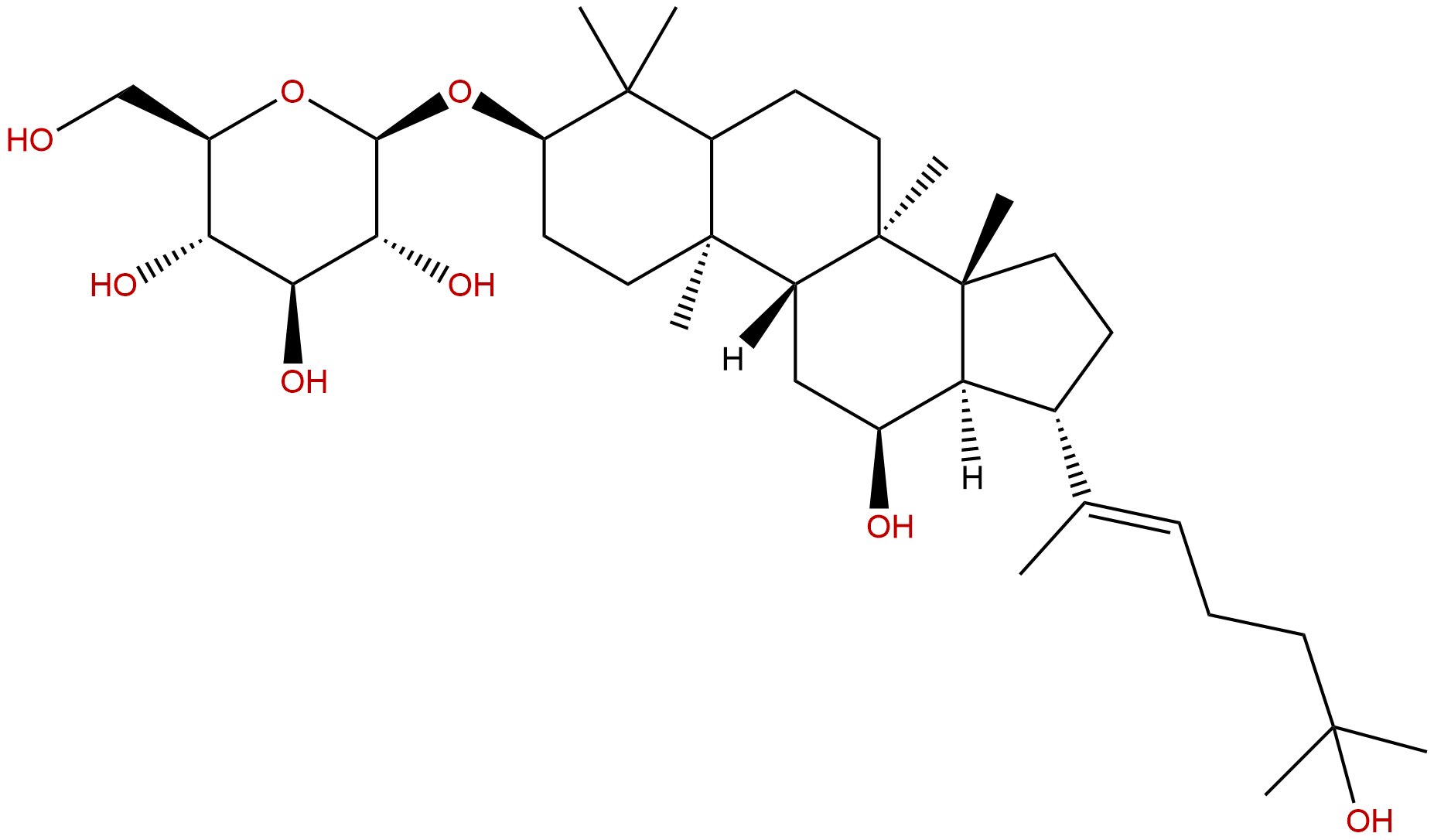
The molecular formula of anthropomorphic ginsenoside Rh2 is C36H62O8, with a molecular weight of 622.8840 g/mol. The basic skeleton of SMILES can be analyzed from its structural formula: it is a typical dammarane type tetracyclic triterpenoid saponin, connected to a sugar group (presumably a glucose group). The double bond configuration (such as position 20) in its structure has a significant impact on its biological activity, as mentioned in the description that there are differences in antioxidant activity between the (20Z) - and (20E) - configurations.
The key physicochemical parameters related to its pharmacological properties are as follows:
- Lipid water partition coefficient (LogP/LogD)All are 4.27. A value greater than 4 indicates that the compound has high lipophilicity. According to medicinal chemistry experience, excessively high LogP (>5) may lead to low solubility, rapid metabolism, or increased toxicity, while 4.27 is within a critical but acceptable range, indicating that its transmembrane permeability may be good, but water solubility will become a limiting factor.
- Topological Polarity Surface Area (TPSA): 139.84 Å ². TPSA is related to the hydrogen bonding ability of compounds and is an important indicator for predicting their intestinal absorption and blood-brain barrier penetration. Generally, compounds with TPSA>140 Å ² have poor oral absorption and are difficult to penetrate the blood-brain barrier. The TPSA of anthropomorphic ginsenoside Rh2 approaches this threshold.
- Water solubility Only 0.0054 mg/mL, belonging to the category of extremely insoluble in water. This is consistent with high LogP values and larger molecular structures, which are common challenges faced by most saponin compounds.
- Apparent permeability coefficient (Peff): 0.6917 cm/s × 10 ⁻⁴. This value can be used to predict human intestinal absorption, usually Peff>1.5 × 10 ⁻⁴ cm/s indicates good absorption. The Peff value of the anthropomorphic ginsenoside Rh2 is relatively low, indicating that its oral bioavailability may not be ideal.
These physicochemical properties collectively depict a typical natural product characteristic: clear activity, but solubility and permeability are the main physical barriers to its conversion into drugs.
3. Plant sources and traditional applications
The direct plant source of anthropomorphic ginsenoside Rh2 is ginseng(Panax ginseng C. A. Mey.)It belongs to the Araliaceae family. Ginseng has a medicinal history of thousands of years and is known as the "first essential medicine for tonifying qi" in traditional Chinese medicine. It has the effects of greatly tonifying qi, restoring pulse and strengthening the body, nourishing the spleen and lungs, generating fluids and nourishing blood, calming the mind and improving intelligence. Its application forms are diverse, including single decoction, compound preparation, soaking in wine or making into powder.
Traditionally, ginseng has been mainly used to treat critical symptoms such as qi deficiency and desire to escape, as well as symptoms such as spleen deficiency, insufficient food intake, lung deficiency, wheezing and coughing, fluid damage and thirst, internal heat and thirst, qi and blood deficiency, chronic illness and deficiency, palpitations and insomnia. Although ancient medical experts did not understand ginsenosides at the molecular level, modern pharmacological research has confirmed that ginsenosides are the core material basis for ginseng to play a role in "strengthening the body and strengthening the foundation", that is, regulating immunity, anti fatigue, anti stress, and improving cardiovascular function.
As a "mimetic" of ginsenoside Rh2, the research and development idea of anthropomorphic ginsenoside Rh2 originated from the structural optimization of natural active ingredients. This reflects the typical path of modern natural medicine research: discovering lead compounds from traditional medicinal plants, and then chemically synthesizing or modifying them in order to obtain new entities with stronger activity and better properties.
4. Pharmacological activity and mechanism of action
The most notable pharmacological activity of the anthropomorphic ginsenoside Rh2 is its anti-tumor effect. Existing descriptions indicate that it can induce mitochondrial apoptosis in A549 (human non-small cell lung cancer) cells and exert its effect by overactivating the Ras/Raf/ERK/p53 signaling pathway. By combining its known five key target proteins, we can outline a more refined network of action:
- TP53 (p53)Famous tumor suppressor gene. The anthropomorphic ginsenoside Rh2 activates the upstream of the Ras/Raf/ERK signaling pathway, ultimately leading to excessive activation of p53. Activated p53, as a transcription factor, can regulate the expression of a series of downstream genes and is the core hub for inducing cell cycle arrest and apoptosis.
- CDKN1A (p21/WAF1)One of the key downstream target genes of p53. P21 is a potent inhibitor of cyclin dependent kinases. Upregulation of its expression can lead to cell cycle arrest in the G1 phase, allowing cells sufficient time for DNA repair or apoptosis, which is an important mechanism for inhibiting tumor cell proliferation.
- BAX P53 regulated pro apoptotic protein. After BAX is activated, it will transfer to the outer membrane of mitochondria, leading to increased membrane permeability and the release of apoptotic factors such as cytochrome C, thereby initiating Mitochondrial apoptosis pathway(Endogenous apoptotic pathway).
- CASP3 (Caspase-3)It is the executor of cell apoptosis, known as the "death protease". In the mitochondrial apoptosis pathway, the release of cytochrome C activates Caspase-9, which in turn cleaves and activates Caspase-3. Activated Caspase-3 degrades various cytoskeletal and nuclear proteins, ultimately leading to cell apoptosis. The apoptosis induced by ginsenoside Rh2 is inevitably accompanied by the activation of Caspase-3.
- MYC A proto oncogene that typically promotes cell proliferation and growth. MYC is overexpressed in many tumors. The activation of p53 can indirectly or directly inhibit the activity or expression of MYC, thereby relieving its abnormal drive for cell proliferation and synergistically exerting anti-tumor effects.
Integration of mechanism of action The anthropomorphic ginsenoside Rh2 may trigger or mimic growth signals in some way (such as interacting with membrane receptors), leading to abnormal activation of Ras protein. Ras then activates Raf (MAPKKK), phosphorylates MEK (MAPKK), and ultimately activates ERK (MAPK). Normally, ERK signaling promotes cell proliferation and survival. However,Excessive and sustained activation of ERK can trigger a 'paradoxical effect' in certain cellular contexts, leading to induction of aging or apoptosis The anthropomorphic ginsenoside Rh2 takes advantage of this by overactivating ERK, which strongly activates p53. Activated p53 not only causes cell cycle arrest by upregulating p21, but also induces changes in mitochondrial membrane permeability by upregulating proteins such as BAX, releasing cytochrome C and activating Caspase-3, ultimately leading to irreversible apoptosis of tumor cells.
In addition, its antioxidant activity (possibly related to the clearance of free radicals, activation of Nrf2 pathways, etc.) may assist in its anti-tumor effect, as oxidative stress is also an important factor in the occurrence and development of tumors. Reducing oxidative damage can help protect normal cells and may enhance the sensitivity of chemotherapy drugs.
5. Evaluation of drug properties
Based on the provided pharmacokinetic parameters, we evaluated the potential of ginsenoside Rh2 as an oral drug using standards such as the Lipinski Rule of Five (Ro5)
- Molecular weight (MW):622.88 > 500 Da, Not compliant with Ro5 (MW<500). This is a common problem with many natural active saponin compounds.
- Lipid water partition coefficient (LogP)4.27, slightly higher than the ideal range recommended by Ro5 (LogP<5). High LogP is beneficial for penetrating cell membranes, but it can seriously affect water solubility.
- Number of hydrogen bond donors (HBD)Based on the molecular formula C36H62O8 and its structure, it can be inferred that the sugar moiety contains multiple hydroxyl groups, and the number of HBDs may be greater than 5, which does not comply with Ro5 (HBD<5).
- Number of hydrogen bond acceptors (HBA)There are 8 oxygen atoms in the molecule, and the number of HBA may be greater than 10, which does not comply with Ro5 (HBA<10).
- Number of rotatable keys The molecular structure is complex and has a large number of rotatable bonds, which is usually not conducive to oral bioavailability.
Analysis of other key parameters:
- absorb Caco-2 has a permeability of 0.4304 and Peff is 0.6917, both indicating its intestinal permeability poor The extremely low water solubility (0.0054 mg/mL) is the primary factor limiting its absorption. After oral administration, absorption may be slow and incomplete.
- distribution The plasma protein binding rate (PPB) is as high as 81.82%, which means that most of the drugs are bound to proteins in the blood, and the concentration of free drugs is low, which may affect the speed and degree of their distribution to target tissues. The blood-brain barrier permeability (BBB) is "low", which is consistent with its higher TPSA and molecular weight, indicating that it is difficult to treat central nervous system tumors.
- Metabolism and toxicity Ames test, chromosomal aberration test, hERG inhibition, skin/respiratory sensitization, phototoxicity, etc. are all negative or "none/no", indicating their Low risk of genetic toxicity and acute cardiac toxicity This is a positive signal. But the "Ser_LK" (serum alkaline phosphatase) index is "yes", indicating that potential effects related to the liver or bile duct may be observed in animal experiments, and further safety evaluation is needed.
Comprehensive Assessment Human like ginsenoside Rh2 is a typical natural lead compound with excellent activity but poor medicinal properties. It seriously violates multiple of Lipinski's five rules, and its extremely low water solubility and poor permeability are the main obstacles to its development as a traditional oral formulation. However, its clear anti-tumor mechanism and low genetic toxicity provide a basis for further optimization. Future research directions may include: ① Prodrug strategy Modify the hydroxyl groups on sugar or glycoside groups to produce precursor drugs with better water solubility; ② New drug delivery system Using delivery technologies such as nanoparticles, liposomes, and micelles to improve their solubility, stability, and targeting; ③ Simplification and Modification of Structure Under the premise of retaining the core pharmacophore, the molecule is trimmed and optimized to reduce molecular weight and polarity, and improve the properties of the drug like substance.
6. Research Status and Application Prospects
At present, research on ginsenoside Rh2 is still in the preclinical stage, mainly focusing on in-depth exploration of its mechanism of action and in vitro and in vivo pharmacological verification. The discovery that it induces tumor cell apoptosis through a unique mechanism (overactivation of the ERK/p53 pathway) provides a new approach for targeting tumor cell signaling transduction. At the same time, its antioxidant activity has also expanded its potential application scenarios, which may make a difference in anti-aging, neuroprotection and other fields.
However, as mentioned earlier, its inherent physicochemical property defects are the biggest bottleneck for clinical application. Therefore, the current and future research focus will inevitably tilt towards two directions: "formulation innovation" and "structural optimization":
- Formulation innovation Using advanced drug delivery technology to overcome its delivery challenges. For example, preparing phospholipid complexes of ginsenoside Rh2, encapsulating them in polymer nanoparticles, or actively targeting liposomes can not only improve their bioavailability, but also achieve targeted enrichment at tumor sites, enhance therapeutic efficacy, and reduce systemic toxicity.
- combination therapy Explore its synergistic effects with existing chemotherapy drugs, targeted drugs, or immunotherapy. Based on its ability to activate the p53 pathway, it may be particularly effective against wild-type p53 tumors or able to reverse certain drug resistance phenomena.
- Study on Structure Activity Relationship Systematically study the effects of different stereoconfigurations (such as 20Z/E), types and quantities of sugar groups on activity and properties, and guide the synthesis of derivatives with higher activity and better properties.
In summary, the anthropomorphic ginsenoside Rh2 is a lead compound with a clear anti-tumor mechanism discovered from the treasure trove of traditional Chinese medicine. It is like a piece of raw jade, although it appears rough due to issues such as poor water solubility and difficulty in oral absorption, it is entirely possible to transform it into an efficient and low toxicity anti-tumor new drug through the careful carving of modern medicinal chemistry and pharmaceutical technology, or as an important drug combination component, providing new choices for cancer treatment. The research process vividly illustrates the translational medicine path from traditional wisdom to modern innovative drugs.