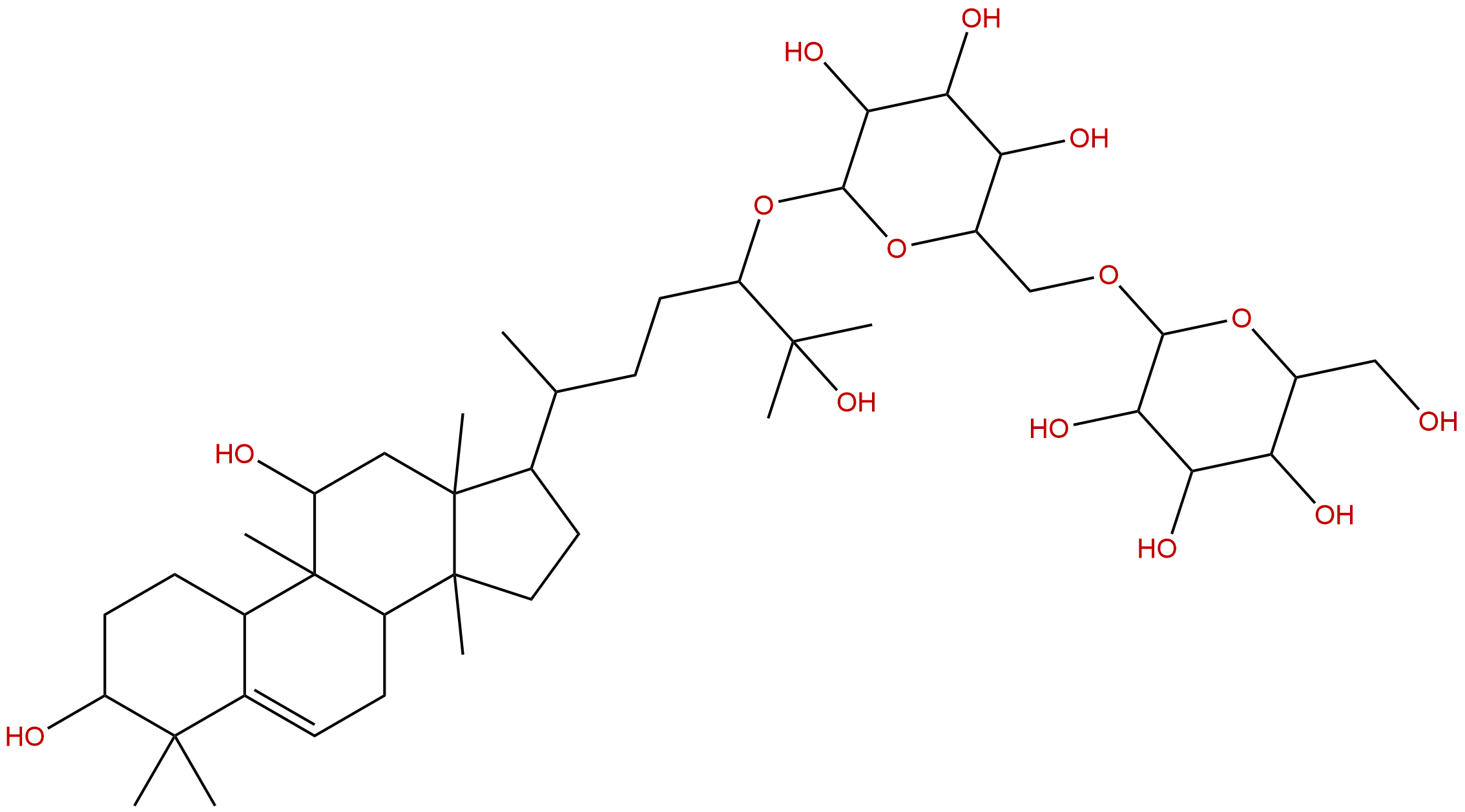


Product name: Mogroside IIa1
Synonym name: Mogroside IIA1
Catalogue No.: BP3506
Cas No.: 88901-44-4
Formula: C42H72O14
Mol Weight: 801.024
Botanical Source: Momordica grosvenorii and Siraitia siamensis; Luohanguo
Physical Description:
Type of Compound: Triterpenoids
Purity: 95%~99%
Analysis Method: HPLC-DAD or/and HPLC-ELSD
Identification Method: Mass, NMR
Packing: Brown vial or HDPE plastic bottle
The product could be supplied from milligrams to grams. Inquire for bulk scale.
We provide solution to improve the water-solubility of compounds, thereby facilitating the variety of activity tests and clinic uses.
For Reference Standard and R&D, Not for Human Use Directly.
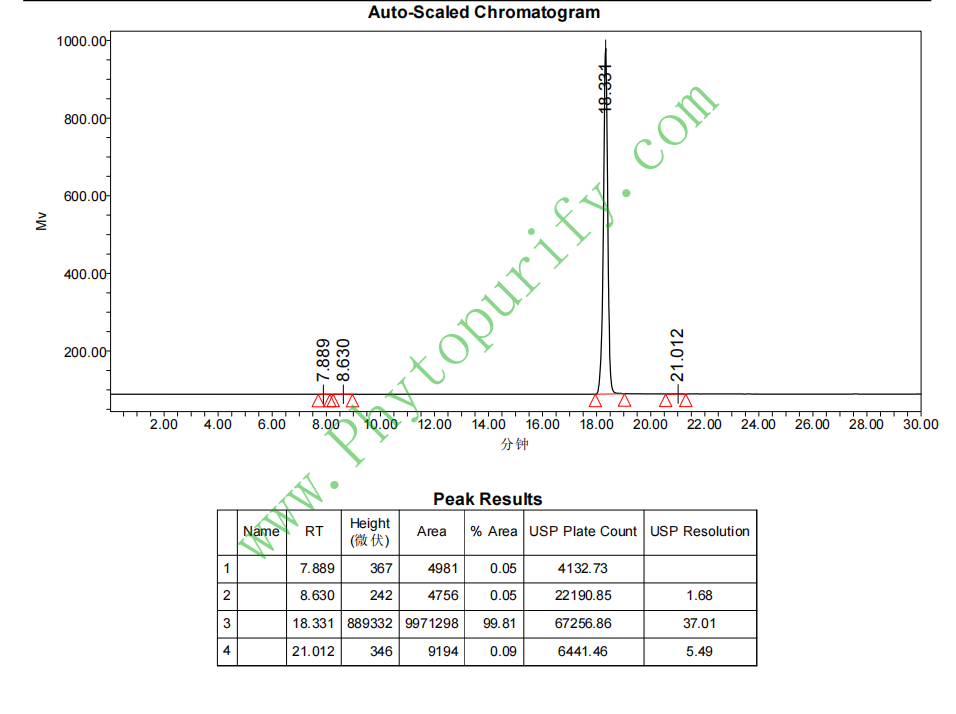
HPLC of Mogroside IIa1
Storage conditions:Short-term storage at 2~8℃, long-term storage at -20 ~ -80℃
239.2200
2.5431
2.5431
.0542
.4993
.6820
Low
71.5616
6.1247
No
No
No
No
No
No
0.0
Yes
No
No
Yes
Arhat IIa1 (Mogroside IIa1, CAS No. 88901-44-4) is a kind of fruit derived from the traditional medicinal plant Siraitia grosvenorii(Siraitia grosvenorii)Extract and isolate triterpenoid saponins. As one of the important members of a series of sweet glycosides in Siraitia grosvenorii, it is not only a natural, high sweetness, low calorie non sugar sweetener, but also has attracted much attention due to its extensive pharmacological activities. Research shows that Arhat fruit glycoside IIa1 has antioxidant, anti diabetes and anti-cancer biological activities. In recent years, its potential in the field of anti obesity is particularly remarkable. With the continuous increase of global obesity and related metabolic disease incidence rate, finding safe and effective natural intervention strategies has become a research hotspot. Because of its unique sweet taste and potential metabolic regulation function, Arhat fruit glycoside IIa1 is gradually changing from a simple food additive to a functional food component or drug lead compound with development potential. This article will provide a systematic and professional interpretation of this natural product from the aspects of its chemical structure, plant origin, pharmacological mechanism of action, medicinal evaluation, and research prospects.
The molecular formula of Arhat IIa1 is C42H72O14, and the molecular weight is 801.0240 g/mol. Its structure belongs to cucurbitane type triterpene saponin, and its parent nucleus is mogrol. A disaccharide chain (6-O - β - D-glucopyranosyl - β - D-glucopyranosyl) is connected to the 24 hydroxyl group of the parent nucleus through the (1 → 6) glycosidic bond. This structural feature can be clearly depicted through its SMILES string:CC(CCC(OC1OC(COC2OC(CO)C(O)C(O)C2O)C(O)C(O)C1O)C(C)(C)O)C1CCC2(C)C3CC=C4C(CCC(O)C4(C)C)C3(C)C(O)CC12CThe introduction of this disaccharide group is the key structural basis for its sweetness production and biological activity.
From the analysis of its pharmacological parameters, its physicochemical properties show that its topological polar surface area (TPSA) is as high as 239.22 Å ², which is mainly attributed to the presence of multiple hydroxyl and glycosidic oxygen atoms in the molecule, indicating its high hydrophilicity. Its lipid water partition coefficient (LogP/LogD) is 2.54, indicating that the molecule has a certain degree of lipophilicity, but overall leans towards amphiphilic properties. The water solubility parameter is 0.0542 (usually measured in mg/mL or mol/L, depending on the database definition), indicating that its solubility in water is moderately low, which is consistent with its larger molecular weight and multi hydroxyl structure. The permeability (Peff) of Caco-2 cells is 0.4993, which is a low value, indicating that its oral absorption may be limited, mainly due to its high TPSA and high molecular weight. The blood-brain barrier (BBB) penetration is evaluated as' low ', meaning it is less likely to enter the central nervous system, which may actually reduce the risk of central side effects for anti obesity drugs that primarily target peripheral metabolic targets. The plasma protein binding rate (PPB) is about 71.56%, which is moderately high and can affect its free drug concentration and in vivo distribution.
The plant source of Arhat IIa1 is single and clear, that is, Siraitia grosvenorii, a plant of Cucurbitaceae(Siraitia grosvenorii)Also known as' immortal fruit '. Momordica grosvenorii is native to Guangxi, Guangdong and other regions of China, and has a medicinal history of hundreds of years. In the traditional Chinese medicine theory, Momordica grosvenorii is cool in nature and sweet in taste. It belongs to the lung and large intestine meridians. It has the effects of clearing heat and moistening the lung, facilitating the pharynx and opening the voice, smoothing the intestines and relieving constipation. It is often used to treat lung heat and cough, sore throat and aphonia, intestinal dryness and constipation. Its dried fruit is often used for soaking in water for drinking, which is not only a commonly used refreshing beverage in folk culture, but also a traditional Chinese medicine.
Modern research reveals that the sweetness and pharmacological activity of Siraitia grosvenorii mainly come from the cucurbitane triterpene glycosides, namely mogrosides, which are rich in its fruits. At present, many kinds of Arhat fruit glycosides have been isolated and identified from momordica grosvenorii, including Arhat fruit glycoside II, III, IV, V, etc., of which momordica fruit glycoside V has the highest sweetness, about 250-300 times of sucrose. As one of them, Arhat IIa1 also contributes to the sweetness of Siraitia grosvenorii. Based on its natural, high sweetness and zero calorie characteristics, siraitia grosvenorii extract (the main sweet ingredient is siraitin V) has been approved by the US FDA as a "generally recognized safe" (GRAS) substance, which is widely used in the food and beverage industry as a natural sweetener worldwide, providing an ideal sugar substitute for diabetes patients and obese people. The application value of Siraitia grosvenorii has been greatly expanded and scientifically verified from the traditional cough relieving and expectorant to the modern healthy sweetener.
Current studies suggest that Arhat fruit glycoside IIa1 has a variety of pharmacological activities, especially its anti obesity effect. According to database information, its function involves multiple key targets closely related to energy metabolism and appetite regulation: leptin receptor (LEPR), adiponectin (ADIPOQ), fat mass and obesity related gene protein (FTO), melanocortin 4 receptor (MC4R), and neuropeptide Y (NPY). These targets form a complex network that collectively regulates the energy balance of the body.
Scientific explanation of the mechanism of action:
Regulating the Fat Factor Signaling Pathway (LEPR&ADIPOQ)Leptin is secreted by adipocytes and acts on the leptin receptor (LEPR) in the hypothalamus to suppress appetite and increase energy expenditure. Adiponectin (ADIPOQ) is also secreted by adipocytes and can enhance insulin sensitivity, promote fatty acid oxidation, and inhibit inflammation. Obesity often leads to "leptin resistance" and decreased levels of adiponectin. Studies have shown that Arhat fructoside may improve adipokine signal transduction by up regulating LEPR sensitivity or promoting the secretion of ADIPOQ, thereby fighting leptin resistance, improving insulin sensitivity and promoting metabolic health.
Affects energy metabolism and fat production (FTO)The FTO gene is the first gene confirmed by genome-wide association studies to be associated with obesity. FTO protein is a nucleic acid demethylase, and its overexpression promotes fat production and accumulation. Arhat fructoside may interfere with its lipogenic effect by inhibiting the activity or expression of FTO, thus reducing fat accumulation.
Regulating the central appetite circuit (MC4R&NPY)The melanocortin 4 receptor (MC4R) is a core element in regulating energy balance in the hypothalamus, and its activation can strongly suppress appetite and increase energy consumption. Neuropeptide Y (NPY) is one of the strongest appetite signals in the hypothalamus. The two functions are mutually antagonistic. Arhat may send a "satiety" signal to the hypothalamus and reduce food intake by activating MC4R signaling pathway and/or inhibiting the release or role of NPY.
Comprehensive mechanism and related diseases:
By linking these targets, Arhat fruit glycoside IIa1 may pass Dual pathway of peripheral central nervous system Play an anti obesity role.In the outer week It improves systemic metabolic status and insulin sensitivity by regulating the LEPR and ADIPOQ signals secreted by adipose tissue; At the same time, it may directly intervene in the metabolic program of adipocytes by inhibiting FTO.In the central nervous system It regulates appetite and energy expenditure set points by affecting the MC4R and NPY systems. Multi target synergistic effects enable it to combat obesity from multiple perspectives, including reducing energy intake (suppressing appetite), increasing energy expenditure (improving metabolic rate), and improving energy substrate utilization (promoting fat oxidation, improving glucose and lipid metabolism).
In addition, it antioxidant Activity helps alleviate oxidative stress associated with obesity;anti-diabetic Activity is directly related to improving insulin resistance; But anti-cancer Activity, especially for some obesity related cancers (such as breast cancer and colorectal cancer), may be related to its regulation of metabolic and inflammatory pathways. These activities together constitute the pharmacological basis of Arhat fruit glycoside IIa1 as a multifunctional natural product.
Based on the provided pharmaceutical parameters and in combination with the classic "Lipinski's Rule of Five, Ro5", the potential of Arhat fruit glycoside IIa1 as an oral drug was evaluated:
Conclusion: Arhat fruit glycoside IIa1 seriously violates three items in Ro5 (MW>500, HBD>5, HBA>10), and has extremely high TPSA. This is not Caco-2 has low permeability (0.6820)and The oral effective permeability (Peff) is only 0.4993 The highly consistent results indicate that Oral bioavailability is likely to be very low This is a common challenge faced by most natural saponin compounds.
Analysis of other pharmacological parameters:
- safety Ames test, chromosomal aberration test, hERG inhibition, skin/respiratory sensitization, phototoxicity, etc. were all negative or "none", indicating a low risk of genetic and cardiac toxicity. However, it should be noted that it may cause an increase in serum alkaline phosphatase (Ser_LK) and alanine aminotransferase (Ser_LT) (parameter display "Yes"), indicating potential liver effects at higher doses that need to be closely monitored in development.
- Distribution and Metabolism BBB penetration is low, making it suitable for developing peripheral drugs that do not act on the central nervous system. The plasma protein binding rate is moderately high, which may affect the efficacy of the drug.
Comprehensive Assessment: From the perspective of traditional small molecule chemical solid drugs, because of its low membrane permeability and low oral bioavailability caused by its too large molecular weight and too many polar groups, Arhat fruit glycoside IIa1 faces great challenges when it is directly developed into an oral drug. However, this does not mean that it has no practical value. Its development strategy may be more inclined towards:
1. As a functional food or health supplement ingredient By utilizing its natural and safe properties, it can be ingested in food form with relatively low requirements for bioavailability.
2. Prodrug modification Structural modification of its sugar group or parent nucleus to improve its lipid solubility and membrane permeability.
3. Study its active metabolites: Arhat may be hydrolyzed to aglycone (Siraitin) or monosaccharide glycoside under the action of intestinal flora. These secondary metabolites have smaller molecular weight and may have better absorption and activity, which is a potential research direction.
4. Exploration of non oral administration routes Develop formulations for local or inhalation administration.
At present, the research on momordica grosvenorii glycosides is mainly focused on the highest sweetness Arhat grosvenorii glycoside V. The research on its extraction process, sensory characteristics, safety assessment and some pharmacological activities (such as anti-inflammatory and antitussive) as a natural sweetener is relatively sufficient. In contrast, there are relatively few specialized studies on Arhat grosvenorii IIa1, and the data of its pharmacological activity are mostly derived from the research and inference of the total extract or mixed glycosides of Siraitia grosvenorii.
Current research status:
1. basic research The chemical structure, plant origin, and basic sweet taste characteristics have been identified. Cell and animal experimental evidence of its anti obesity, anti diabetes and other activities is accumulating, but the research on its mechanism of action is still in its infancy, especially the direct interaction evidence and signal pathway details of the above multiple targets need to be further clarified.
2. applied research As a part of the complex sweetener, it has been commercially applied. However, as a single active ingredient in drug development, progress is slow due to its drug properties.
Future research directions and application prospects:
1. Deep analysis of mechanism: Using molecular docking, surface plasmon resonance (SPR), gene knockout/knockout and other technologies, the direct interaction of Arhat fruit glycoside IIa1 with targets such as LEPR, FTO, and MC4R was confirmed at the molecular and cellular levels, and its downstream signal network map was drawn.
2. Structure performance relationship and structural optimization Systematically study the relationship between the number of sugar groups, connection modes, sweetness, and biological activity. Reasonably modifying its structure through chemical synthesis or biotransformation, while retaining its activity, significantly improving its oral bioavailability, is the key to pushing it towards drug development.
3. Study on the Interaction of Gut Microbiota: To further study the metabolic fate of Arhat fruit glycoside IIa1 in the intestine, identify its key microbial metabolites, and evaluate the activity and absorption of these metabolites. This may open up new pathways for explaining its in vivo effects and discovering better active molecules.
4. Preclinical and clinical research: Carry out systematic pharmacokinetic, pharmacodynamic and safety evaluation on the basis of optimized preparations or derivatives, and finally advance to clinical trials for metabolic diseases such as obesity and pre diabetes.
5. Development of Big Health Products At present, the most realistic prospect is still to act as High end natural sweeteners and functional food ingredients It is possible to develop customized food, drink or dietary supplements for specific populations (such as obese and diabetes patients), emphasizing the unique value of "sweet taste and health benefits coexist".
In short, Arhat fruit glycoside IIa1 is a precious gift given to us by nature. It ingeniously combines pleasant sweetness with potential metabolic health benefits. Despite the challenges in chemical space on the path of direct drug development, its clear multi-target mechanism of action and good safety characteristics continue to make it attractive in the fields of natural product research and the big health industry. Through interdisciplinary collaboration and innovation, we are expected to fully tap into and utilize the enormous potential of modern molecules in this ancient plant, providing new solutions to global metabolic health challenges.
