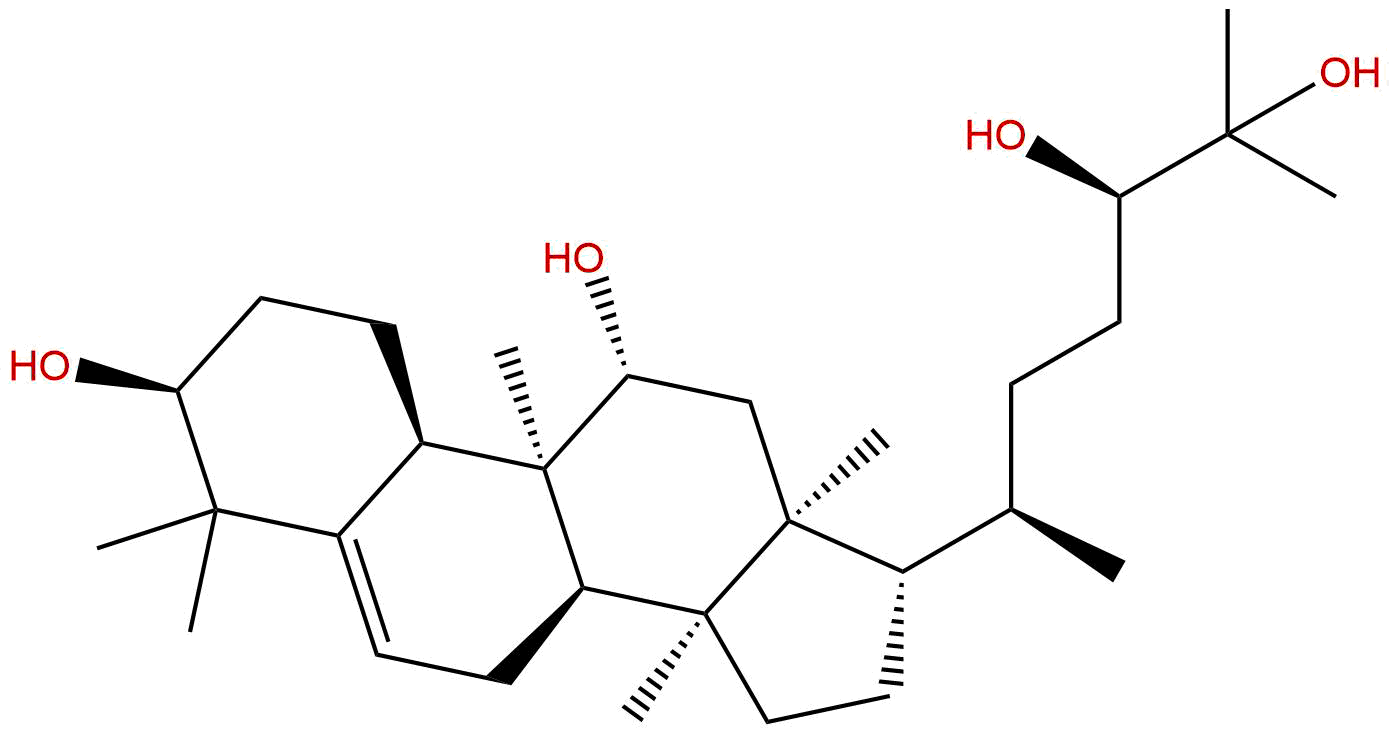


Product name: Mogrol
Synonym name:
Catalogue No.: BP1837
Cas No.: 88930-15-8
Formula: C30H52O4
Mol Weight: 476.742
Botanical Source:
Physical Description:
Type of Compound: Triterpenoids
Purity: 95%~99%
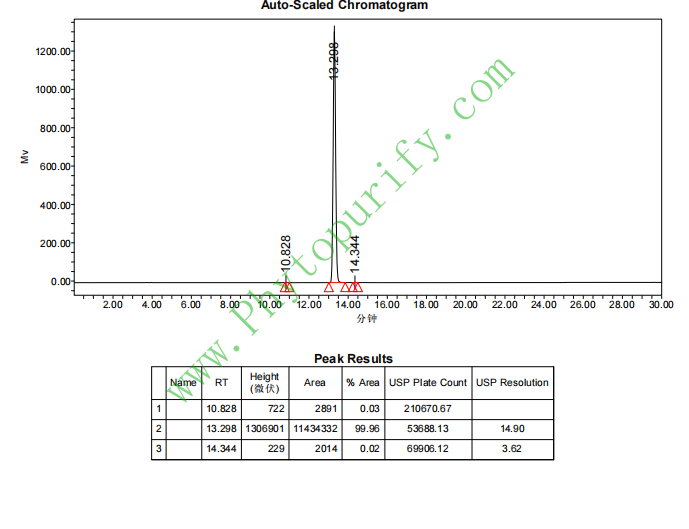
Analysis Method: HPLC-DAD or/and HPLC-ELSD
Identification Method: Mass, NMR
Packing: Brown vial or HDPE plastic bottle
The product could be supplied from milligrams to grams. Inquire for bulk scale.
We provide solution to improve the water-solubility of compounds, thereby facilitating the variety of activity tests and clinic uses.
For Reference Standard and R&D, Not for Human Use Directly.
Description:
Mogrol has exhibited anti-cancer activities, it suppressed leukemia cell growth via inhibition of the ERK1/2 and STAT3 pathways, in particular, through the suppression of p-ERK1/2 and p-STAT3. Mogrol significantly improved LPS-induced memory impairment in mice. It also suppressed adipogenesis by reducing CREB activation in the initial stage of cell differentiation and by activating AMPK signaling in both the early and late stages of this process.
References:
American Journal of Cancer Research,2015,5(4):1308-1318.
Mogrol represents a novel leukemia therapeutic, via ERK and STAT3 inhibition.
Unlike solid tumors, the primary strategy for leukemia treatment is chemotherapy. However, leukemia chemotherapy is associated with adverse drug effects and drug resistance. Therefore, it is imperative to identify novel agents that effectively treat leukemia while minimizing adverse effects.
METHODS AND RESULTS:
The Raf/MEK/extracellular regulated kinase (ERK) and signal transducer and activator of transcription 3 (STAT3) pathways have been implicated in leukemia carcinogenesis, and provide novel molecular targets for therapeutic intervention in cancer. Mogrol, a biometabolite of mogrosides found in Siraitia grosvenorii, has exhibited anti-cancer activities; however, the underlying mechanism of this effect remains unclear. To clarify its anti-cancer activity and mechanism of action, we treated K562 leukemia cells with Mogrol. Mogrol suppressed leukemia cell growth via inhibition of the ERK1/2 and STAT3 pathways, in particular, through the suppression of p-ERK1/2 and p-STAT3. Inhibition of these pathways suppressed Bcl-2 expression, thereby inducing K562 cell apoptosis. Furthermore, Mogrol enhanced p21 expression, resulting in G0/G1 cell cycle arrest.
CONCLUSIONS:
The findings provide new perspectives regarding the role of Mogrol in leukemia treatment.
PLoS ONE, 2016, 11(9):e0162252.
Mogrol Derived from Siraitia grosvenorii Mogrosides Suppresses 3T3-L1 Adipocyte Differentiation by Reducing cAMP-Response Element-Binding Protein Phosphorylation and Increasing AMP-Activated Protein Kinase Phosphorylation.
This study investigated the effects of Mogrol, an aglycone of mogrosides from Siraitia grosvenorii, on adipogenesis in 3T3-L1 preadipocytes.
METHODS AND RESULTS:
Mogrol, but not mogrosides, suppressed triglyceride accumulation by affecting early (days 0–2) and late (days 4–8), but not middle (days 2–4), differentiation stages. At the late stage, Mogrolincreased AMP-activated protein kinase (AMPK) phosphorylation and reduced glycerol-3-phosphate dehydrogenase activity. At the early stage, Mogrol promoted AMPK phosphorylation, inhibited the induction of CCAAT/enhancer-binding protein β (C/EBPβ; a master regulator of adipogenesis), and reduced 3T3-L1 cell contents (e.g., clonal expansion). In addition, Mogrol, but not the AMPK activator AICAR, suppressed the phosphorylation and activity of the cAMP response element-binding protein (CREB), which regulates C/EBPβ expression.
CONCLUSIONS:
These results indicated that Mogrol suppressed adipogenesis by reducing CREB activation in the initial stage of cell differentiation and by activating AMPK signaling in both the early and late stages of this process.
Journal of Asian Natural Products Research, 2019:1-15.
Mogrol attenuates lipopolysaccharide (LPS)-induced memory impairment and neuroinflammatory responses in mice.
This study aimed to evaluate whether Mogrol, a main bioactive ingredient of Siraitia grosvenorii, could attenuate LPS-induced memory impairment in mice.
METHODS AND RESULTS:
The behavioral tests and immunohistochemical analysis and Western blot were performed.
CONCLUSIONS:
The present results showed that oral administration of Mogrol (20, 40, 80 mg/kg) significantly improved LPS-induced memory impairment in mice. The results also indicated that Mogrol treatment significantly reduced the number of Iba1-positive cells, the nuclear NF-κB p65 and levels of TNF-α, IL-1β and IL-6 both in the hippocampus and frontal cortex of LPS-challenged mice.
HPLC of Mogrol
Storage conditions:Short-term storage at 2~8℃, long-term storage at -20 ~ -80℃
80.9200
5.5124
5.5129
.0015
3.0420
5.1997
Low
86.8125
5.1244
No
No
No
No
No
No
0.0
Yes
No
No
Yes
Siranol (Mogrol, CAS No. 88930-15-8) is a tetracyclic triterpene compound with important biological activities. It does not exist directly in plants, but is the main bioactive metabolite produced by a series of high sweetness components in siraitia grosvenorii, such as siraitoside V, after metabolism by intestinal flora in vivo. This discovery reveals that the traditional medicine and food homologous plant Momordica grosvenorii(Siraitia grosvenorii)The deep material basis of its health benefits: its core sweet ingredient itself may act as a "prodrug" and be transformed into more pharmacologically active siraitol in the body to play a role.
In recent years, with the in-depth study of natural products, siranol has attracted much attention due to its wide range of pharmacological activities. Existing research shows that it not only has a potential anti-tumor effect, can inhibit the growth of leukemia cells, but also shows remarkable potential in the prevention and treatment of metabolic diseases, especially type 2 diabetes. Its mechanism of action involves regulating multiple key cellular signaling pathways, including inhibiting ERK1/2 and STAT3 signaling, reducing CREB activity, and activating AMPK. These findings have pushed a traditional sweetener source ingredient to the center stage of modern pharmaceutical research, making it a model molecule that connects traditional wisdom with modern science. In this paper, we will make a systematic and professional popular science interpretation of siranol from its chemical nature, source, pharmacological mechanism, pharmaceutical properties and prospects.
The molecular formula of siranol is C30H52O4, and its molecular weight is 476.7420 g/mol. From a chemical classification perspective, it is a Tetracyclic triterpenoids Specifically, it belongs to the cucurbitane type triterpenoid. Its structural parent nucleus is cucurbitenol, characterized by the formal oxidation of the double bond on its side chain (positions 24-25), introducing two hydroxyl groups to form a 24R configuration of 24,25-dihydroxyl structure. This hydroxylation modification has a decisive impact on its water solubility and biological activity.
Through its SMILES string (C C@H[C@@H]1CC[C@@]2(C)[C@H]3CC=C4C@@H[C@@]3(C)C@H C [C @ @] 12C) can accurately describe its stereochemical structure, showing that it has multiple chiral centers and a complex stereoconfiguration, which is also the structural basis for natural products often having high selectivity and specific biological activity.
Analyzing its physicochemical properties from the parameters of drug properties:
- Fat solubility and water solubility: The calculated LogP value is 5.5124, indicating that siranol is a High lipid solubility Molecules. Its theoretical water solubility is extremely low, only 0.0015 mg/mL, which is consistent with its triterpenoid parent nucleus and longer hydrocarbon side chain structure. A high LogP value usually indicates good membrane permeability, but it may also bring problems such as poor water solubility and limited oral absorption.
- Polar Surface Area The topological polar surface area (TPSA) is 80.92 Å ². TPSA is closely related to the hydrogen bonding ability of molecules and is an important parameter for predicting drug absorption and permeability. Generally, drugs with TPSA>140 ∨ ² are not easy to penetrate the cell membrane, while the TPSA of siranol is in the medium low range, suggesting that its membrane permeability may be acceptable, which is consistent with the higher Caco-2 permeability data (5.1997).
- molecular weight:476.74 Da, Slightly higher than the recommended molecular weight of less than 500 Da in the "Lipinski Five Rules" commonly followed by conventional oral medications, but not significantly exceeding the limit, and many successful natural product drugs have molecular weights in this range.
These physical and chemical properties together determine the basic behavior of siranol in vivo, which is the starting point for understanding its pharmacological effects and evaluating its potential as a drug.
The source of siraitol is cucurbitaceae monk fruit(Siraitia grosvenorii)Also known as' immortal fruit ', it is mainly produced in Guangxi Zhuang Autonomous Region, China. The dried fruit of Siraitia grosvenorii is a dual-use substance with a long history in China. In traditional Chinese medicine theory, it is cool in nature, sweet in taste, and belongs to the lung and large intestine meridians Clearing heat and moistening lungs, promoting throat and opening sounds, smoothing intestines and promoting bowel movements Its efficacy is commonly used to treat symptoms such as lung heat, dry cough, sore throat, loss of voice, intestinal dryness, and constipation.
The most well-known feature of siraitia grosvenorii is that its fruit contains rich siraitia glycosides, its sweetness can reach more than 300 times of sucrose, and its calories are extremely low. Therefore, siraitia grosvenorii extract, as a natural, non nutritive, high-intensity sweetener, is widely used in the global food industry, especially for diabetes patients and obese people. However, traditional understanding of its "heat clearing" and "lung moistening" effects has mostly remained at the macro empirical level.
Modern research reveals the scientific logic behind the traditional application: mogroside itself is difficult to be directly absorbed in the gastrointestinal tract, but it can be specifically hydrolyzed by intestinal microbiota to remove sugar groups and release aglycones -Siraitol It is precisely this metabolite that is absorbed into the bloodstream and distributed throughout the body, thereby exerting a systemic biological regulatory effect. Therefore, the traditional efficacy of siraitia grosvenorii is likely to be achieved partly through the "ultimate active molecule" of siraitia grosvenorii alcohol. This perfectly embodies the modern scientific connotation of "medicine and food sharing the same origin": specific components in food undergo biological transformation in the body to produce compounds with therapeutic effects.
The pharmacological activities of siranol are diverse, and the research mainly focuses on the anti-tumor and metabolic regulation. Its function is not achieved through a single target, but through the synergistic action of multiple targets and pathways, reflecting the typical characteristics of the mechanism of action of natural products.
4.1 Antitumor activity and its mechanism
Early studies revealed the anticancer potential of siranol. It can effectively inhibit cell proliferation in leukemia cell models. Mechanism studies have shown that this effect is related to the inhibition of two key survival and proliferation signaling pathways:
- Inhibition of ERK1/2 pathway Extracellular signal regulated kinase 1/2 is the core of the MAPK signaling pathway, which responds to growth factor stimulation and promotes cell proliferation. Siranol can significantly reduce the level of its phosphorylated activated form (p-ERK1/2), thereby blocking the abnormal proliferation signal.
- Inhibition of STAT3 pathway Signal transduction and transcription activator 3 is another important oncogenic pathway, and sustained activation of STAT3 can promote tumor cell survival, proliferation, and immune escape. Siranol can also inhibit its phosphorylation (p-STAT3) and play an anti-tumor effect.
By dual inhibition of ERK1/2 and STAT3, siranol may have therapeutic significance for blood tumors and solid tumors that depend on these pathways.
4.2 Metabolism regulation and anti type 2 diabetes activity and its mechanism
This is the most promising direction in the study of siranol. Its potential to fight against type 2 diabetes is realized through precise regulation of multiple targets closely related to glucose and lipid metabolism:
Core target: Activation of AMPK AMP activated protein kinase (AMPK) is the "master switch" for cellular and systemic energy metabolism. When the cellular energy state is low (AMP/ATP ratio increases), AMPK is activated, promoting productivity processes such as glucose uptake and fatty acid oxidation, while inhibiting synthetic metabolism. Siranol proved to be able to Directly or indirectly activate AMPK The activated AMPK will produce a series of downstream effects:
Other related targets:
Integration of mechanism of action Type 2 diabetes is often accompanied by insulin resistance, excessive fat accumulation and chronic inflammation. Siranol cooperatively regulates downstream targets such as IRS1 and SLC2A4 by activating AMPK, a central regulator Increase peripheral glucose utilization, improve insulin signaling, and inhibit excess fat production Comprehensively improve metabolic disorders at multiple levels. It inhibits CREB and may regulate PPARG, further enhancing its anti obesity and lipid metabolism regulatory effects. This multi-target, networked mode of action may be more effective in fundamentally correcting complex metabolic syndrome than single target drugs.
Based on the provided pharmaceutical property parameters, we can make a preliminary assessment of the development prospect of siranol as a potential drug lead compound, and refer to the famous Lipinski's Five Rules Analyze the "Five Principles of Similar Drugs":
To sum up, in the Lipinski Five Rules, siranol violates the term "LogP<5", and its molecular weight is close to the upper limit. This poses a challenge for its direct development as an oral medication.
Analysis of other key parameters:
- Absorption and penetration Caco-2 has a permeability of 5.1997 and performs well, indicating good potential for intestinal absorption. The predicted effective permeability (Peff) of the human body is 3.0420 cm/s x 10 ^ -4, which belongs to moderate permeability. This is consistent with its high lipid solubility, but actual absorption may be limited by extremely low water solubility (dissolution limitation).
- distribution The plasma protein binding rate (PPB) is as high as 86.81%, which means that most of the drugs are bound to proteins in the blood, and the concentration of free drugs is low, which may affect their efficacy and tissue distribution. The blood-brain barrier (BBB) penetration is predicted to be "low", which is unfavorable for the treatment of central nervous system diseases, but for its main metabolic regulatory role, it may avoid central side effects and instead be an advantage.
- Metabolism and toxicity The key toxicity indicators such as Ames test, chromosomal aberration, and hERG inhibition were all negative or "none/no", indicating a preliminary indication Low risk of genetic toxicity and cardiac toxicity However, it should be noted that it caused positive signals for serum alkaline phosphatase (Ser_LK) and alanine aminotransferase (Ser_LT), indicating the possible existence of certain factors Hepatocellular impact or potential hepatotoxicity This is a security issue that must be rigorously evaluated in subsequent development.
Summary of Medicinal Properties: Siranol is an excellent lead compound with clear multi target pharmacological activity. The main bottleneck of its medicinal properties lies in Physicochemical properties Excessive LogP and low water solubility may lead to poor oral bioavailability. Future pharmaceutical chemistry optimization work is likely to focus on this point, such as improving its solubility and dissolution rate by preparing prodrugs (such as phosphate esters, amino acid esters), introducing hydrophilic groups through structural modification, or making suitable formulations (such as nanocrystals, liposomes, cyclodextrin inclusion complexes), while maintaining or enhancing its activity. Its preliminary safety data has certain advantages, but the impact on liver enzymes needs to be closely monitored.
At present, the research on siranol has gone from the early discovery of its activity to the exploration of its mechanism of action and some preclinical pharmacodynamic evaluation. Its anti diabetes, anti obesity and anti-tumor activities in cell and animal models have laid a solid scientific foundation for its application and development. Especially, as a candidate for the prevention or treatment of type 2 diabetes/metabolic syndrome, it regulates the mechanism of systemic metabolism by activating the AMPK network, which is highly consistent with the concept of modern diabetes treatment pursuing "root cause" and "multiple effects".
However, there are still some gaps and challenges in the research: firstly, most pharmacological data comes from in vitro cell experiments,Pharmacokinetic study of the system in vivo The absorption, distribution, metabolism, and excretion are not yet sufficient, and key information such as absolute bioavailability, major metabolic pathways, and main active forms in the body need to be clarified. Secondly, the existing pharmacological evidence needs to be further validated in large animal disease models, such as non-human primates. Finally, as mentioned earlier, its inherent pharmaceutical defects require strategic chemical or pharmaceutical approaches to overcome.
Looking into the future, the application prospects of siraitol may focus on the following directions:
1. As a lead compound for drugs: Through reasonable structural modification, while retaining its core pharmacophore (such as specific hydroxyl group), optimize its LogP, water solubility and metabolic stability, and develop innovative anti type 2 diabetes or anti-tumor drugs with independent intellectual property rights.
2. As a functional food additive or health food ingredient: Since it comes from generally recognized safe (GRAS) sirait, siraitol itself or its metabolite extract rich in this component is expected to be developed into a health food used to assist in regulating blood sugar and blood lipids. This may be a faster path for achieving conversion.
3. As a tool molecule Used to study the cross dialogue mechanism of AMPK, CREB and other related signaling pathways in metabolic diseases and cancer.
In a word, siraitol is a treasure molecule "excavated" from traditional medicinal plants. It bridges the gap between traditional applications and modern pharmacology, providing new candidate strategies for addressing the two global health challenges of tumors and metabolic diseases with its multi-target and multi efficacy characteristics. Although there is still optimization and validation work to be completed in the future, its enormous potential undoubtedly makes it a new star worthy of continuous attention in the field of natural product drug development.
