


Product Name: Kawain
Synonym name: Kawain; DL-Kawain, 3155-48-4
Catalogue No.: BP0829
Cas No.: 500-64-1
Formula: C14H14O3
Mol Weight: 230.263
Botanical Source: Occurs in Root of Piper methysticum
Purity: 95%~99%
Analysis Method: HPLC-DAD or/and HPLC-ELSD
Identification Method: Mass, NMR
Packing: Brown vial or HDPE plastic bottle
Can be supplied from milligrams to grams.
For Reference Standard and R&D, Not for Human Use Directly.
Inquire for bulk scale.
Description:
Kavain has anticonvulsive properties, attenuating vascular smooth muscle contraction through interactions with voltage-dependent Na+ and Ca2+ channels. Kawain is advanced glycation endproduct inhibitors, can increase the mean life span of Caenorhabditis elegans exposed to high glucose.
References:
Prog Neuropsychopharmacol Biol Psychiatry. 1997 May;21(4):697-706.
Effects of kawain and dihydromethysticin on field potential changes in the hippocampus.
1. The kava-pyrones Kawain and dihydromethysticin are constituents of Piper methysticum which exert anticonvulsant, analgesic and anxiolytic properties.
METHODS AND RESULTS:
3. Kawain and dihydromethysticin reduced reversibly the frequency of occurrence of fp in a concentration range from 5 to 40 mumol/l and 10 to 40 mumol/l, respectively. 4. Reduction of the fp frequency after addition of subthreshold concentrations of 5 mumol/l Kawain and 10 mumol/l dihydromethysticin indicated additive actions of both drugs. 5. Since the serotonin-1A agonist ipsapirone also exerts anxiolytic effects, subthreshold concentrations of Kawain or dihydromethysticin were combined with a subthreshold concentration of ipsapirone in another set of experiments. Combining Kawain and ipsapirone or dihydromethysticin and ipsapirone caused a reduction of the rate of fp to 0.76 and 0.81 of the baseline value, respectively.
CONCLUSIONS:
6. The findings suggest that (i) single constituents of Piper methysticum may have additive actions, (ii) that the two components Kawain and dihydromethysticin may enhance the effects of the anxiolytic serotonin-1A agonist ipsapirone and (iii) that activation of NMDA receptors and/or voltage dependent calcium channels may be involved in the elementary mechanism of action of some kava-pyrones.
Drug Metab Dispos. 2005 Oct;33(10):1555-63.
Pharmacokinetics and disposition of the kavalactone kawain: interaction with kava extract and kavalactones in vivo and in vitro.
METHODS AND RESULTS:
The oral pharmacokinetics of the kavalactone, Kawain (100 mg/kg), were determined in rats with and without coadministration of kava extract (256 mg/kg) to study the effect of the extract on drug disposition. Kawain was well absorbed, with >90% of the dose eliminated within 72 h, chiefly in urine. Compared with Kawain alone, coadministration with kava extract caused a tripling of KawainAUC(0-8 h) and a doubling of C(max). However, a 7-day pretreatment with kava extract (256 mg /kg/day) had no effect on the pharmacokinetics of Kawain administered on day 8.
CONCLUSIONS:
The 7-day pretreatment with kava extract only modestly induced hepatic P450 activities.
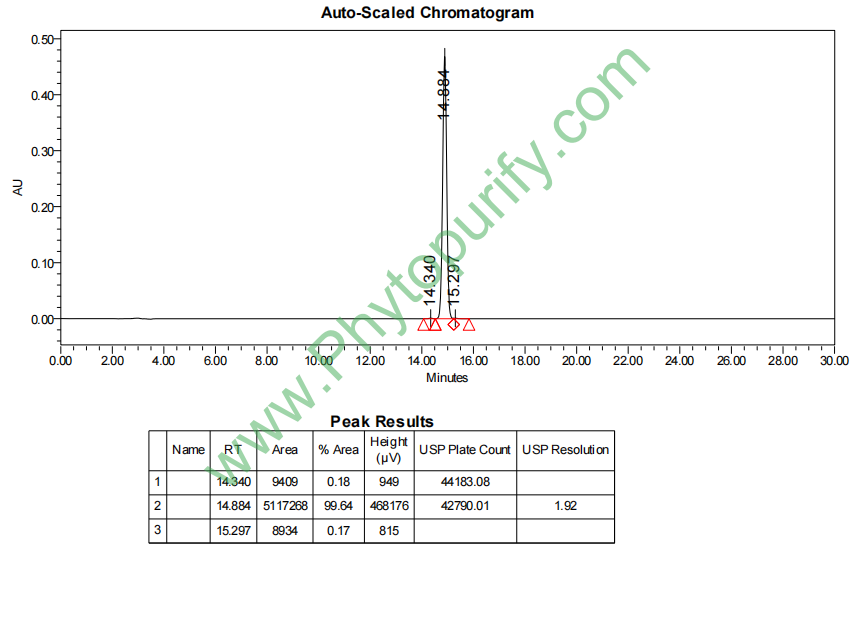
HPLC of Kavain
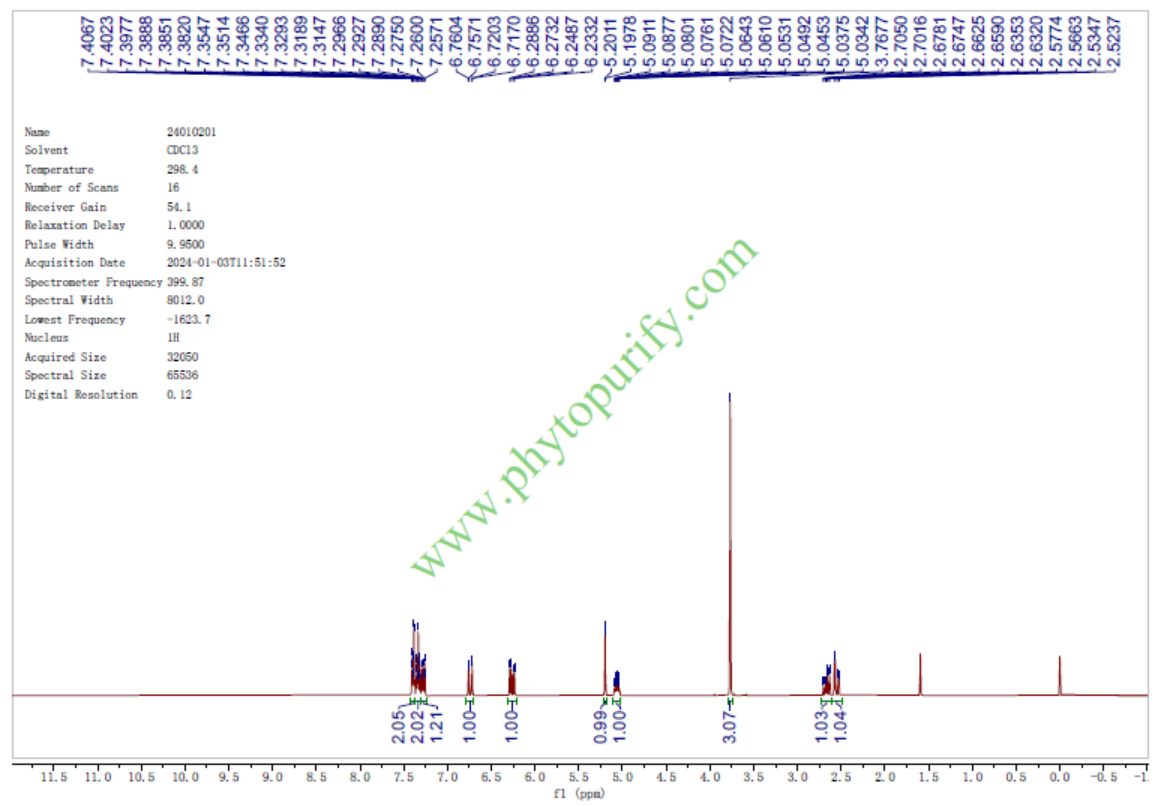
HNMR of Kawain
Storage conditions:Short-term storage at 2~8℃, long-term storage at -20 ~ -80℃
Kavain (CAS number: 500-64-1) is a natural product of kava lactones isolated from the traditional medicinal plant Piper methylsticum in the South Pacific region. Kava, as a traditional herb with a long history of use, has been widely studied for its significant anti anxiety and sedative effects. As one of the main active ingredients in kava, Zhujiaosu has been proven to have good anti anxiety effects on animals and humans, and has shown potential pharmacological activities in pain relief, neuroprotection, and other aspects. In recent years, with the in-depth analysis of its molecular mechanism of action, the research on the treatment of neuropsychiatric disorders with Zhujiaosu has gradually received attention.
This article aims to systematically review the chemical structure and physicochemical properties, plant sources and extraction methods, pharmacological activity and mechanism of action, pharmacological evaluation and pharmacokinetic characteristics of Zhujiaosu, and explore its clinical application prospects and future development directions, providing theoretical basis and research references for natural product pharmacology and new drug development.
The chemical name of Zhujiaosu is 5,6-dihydro-6-methyl-2H-pyran-2-one, a kava acid lactone with a molecular formula of C14H14O3 and a molecular weight of 230.2630. Its structure contains a typical kava lactone skeleton, which has a relatively balanced hydrophobicity and hydrophilicity. The LogP value is 2.9579, indicating that it has moderate lipid solubility and is beneficial for penetrating cell membranes and the blood-brain barrier (BBB). The topological polar surface area (TPSA) is 35.53 Å ², and a lower TPSA contributes to its good absorption and distribution in vivo.
Drunken pepper extract has low water solubility (0.1747 mg/mL), indicating limited solubility in aqueous phase, but good lipid solubility, which is beneficial for its stable existence in lipid environment. Its blood-brain barrier permeability is high, which conforms to the physicochemical characteristics of active drugs in the central nervous system. In addition, the hERG channel inhibition experiment showed a negative result, indicating a low risk of cardiac toxicity; The Ames mutagenicity test result is 0.0, indicating that its genetic toxicity risk is relatively low and has a good safety basis.
Drunken pepper extract mainly comes from Piper methylsticum Forst. f., a tropical shrub plant that grows in South Pacific island countries. The roots and rhizomes of Kava are traditionally used to prepare beverages and have pharmacological effects such as sedation, anti anxiety, and muscle relaxation. As one of the main active ingredients in kava, the content and extraction purity of Zhujiaosu directly affect the efficacy of kava preparations.
The commonly used extraction methods for naringenin include solvent extraction, ultrasound assisted extraction, and liquid-liquid partitioning. Traditionally, ethanol or methanol is used as solvents to extract the roots and stems of Kava, followed by purification through liquid-liquid extraction and column chromatography techniques. In recent years, supercritical CO2 extraction technology has been widely used for the extraction of naringenin due to its environmental friendliness, strong selectivity, and high extraction efficiency. This method can effectively avoid residual organic solvents, improve the purity and safety of the extract.
During the extraction process, temperature, solvent polarity, and extraction time are key factors affecting the yield and quality of berberine. Optimizing the extraction process not only helps to increase the yield of coumarin, but also provides technical support for its industrial production.
The pharmacological activities of Zhujiaosu mainly focus on anti anxiety, analgesic, and neuroprotective aspects, and related studies include in vitro cell models, animal experiments, and some clinical observations.
Anti anxiety effect
Drunken pepper extract exhibits significant anti anxiety effects by regulating the neurotransmitter balance in the central nervous system. Multiple animal behavioral experiments (such as opening experiments and maze tests) have shown that berberine can significantly reduce animal anxiety levels, with effects similar to benzodiazepines, but with fewer side effects. Its mechanism of action mainly involves the positive regulation of GABAA receptors, enhancing gamma aminobutyric acid (GABA) - mediated neural inhibitory signals.
Analgesic effect
Zhujiaosu has shown good analgesic effects in various pain models, involving multiple pain related targets. Research has shown that berberine can regulate TRPV1 and TRPA1 ion channels, inhibit the activity of prostaglandin synthesis enzymes PTGS1 and PTGS2, and alleviate inflammatory pain. In addition, its regulatory effects on opioid receptors (OPRD1, OPRM1, OPRK1) and dopamine D2 receptor (DRD2) suggest its potential application value in the management of neuropathic pain and chronic pain.
Neuroprotection and other effects
Drunken pepper extract also exhibits antioxidant and neuroprotective effects, which can alleviate nerve damage caused by oxidative stress. It may have an adjuvant therapeutic effect on depression and other neurological and psychiatric disorders by regulating the serotonin transporter protein (SLC6A4) and other neurotransmitter systems.
The pharmacological mechanism of Zhujiaosu is relatively complex, involving synergistic regulation of multiple targets:
GABAA receptor As a positive regulator of GABAA receptors, Zhujiaosu enhances GABA mediated chloride ion influx, promotes neuronal hyperpolarization, and exerts sedative and anti anxiety effects. This mechanism is similar to benzodiazepines, but the side effects of berberine are relatively mild and it is not easy to develop dependence.
TRPV1 and TRPA1 ion channels These two types of transient receptor potential channels play a crucial role in pain perception. Drunken pepper extract exerts analgesic effects by inhibiting the activity of TRPV1 and TRPA1, reducing the transmission of pain signals.
Prostaglandin synthase (PTGS1, PTGS2)Drunken pepper extract inhibits cyclooxygenase activity, reduces prostaglandin synthesis, alleviates inflammatory reactions and related pain.
Opioid receptor system (OPRD1, OPRM1, OPRK1)Drunken pepper extract may enhance the analgesic effect of endogenous opioid peptides and improve chronic pain status by regulating the activity of opioid receptors.
Dopamine D2 receptor (DRD2) and 5-hydroxytryptamine transporter (SLC6A4)The regulation of these neurotransmitter systems by Zhujiaosu may be involved in its anti anxiety and anti depression effects.
In summary, Zhujiaosu achieves its complex neural regulatory functions through multi-target and multi pathway synergistic effects.
Zuijiao Su has good medicinal properties:
Molecular weight and lipid solubility The molecular weight of 230.2630 and LogP 2.9579 both comply with Lipinski's rule, which is beneficial for oral absorption and in vivo distribution.
Blood-brain barrier infiltration The high BBB penetration ability enables Zhujiaosu to effectively act on the central nervous system, exerting anti anxiety and analgesic effects.
safety No hERG channel inhibition or mutagenicity, indicating low risk of cardiac toxicity and genetic toxicity, and good safety.
pharmacokinetics Existing studies have shown that after oral administration, Zhujiaosu is rapidly absorbed and has a moderate plasma half-life, which can maintain effective blood drug concentrations. Its metabolism is mainly carried out through the liver enzyme system, and the activity of metabolites still needs further research.
Despite its low water solubility, which limits its bioavailability, it is expected to improve its solubility and absorption efficiency through formulation techniques such as nanocarriers and liposomes.
As a natural product with multi-target effects, Zhujiaosu has shown great potential in anti anxiety and analgesic effects, and has broad clinical application prospects
Development of anti anxiety drugs The anti anxiety effect of Zhujiaosu is similar to that of traditional benzodiazepines, but with lower side effects and lower dependence risk. It is expected to become a new generation of safe and effective anti anxiety drugs.
Analgesic treatment Regarding inflammatory and neuropathic pain, Zhujiaosu provides a new treatment approach through multi-target regulation, which is particularly suitable for long-term management of chronic pain patients.
Assistive treatment for neurological and psychiatric disorders The regulation of dopamine and 5-hydroxytryptamine systems by berberine suggests its potential application value in depression, insomnia, and other neurological and psychiatric disorders.
Future research should focus on the clinical pharmacokinetics, formulation optimization, and long-term safety evaluation of Zhujiaosu. Meanwhile, based on its multi-target mechanism of action and combined with modern drug design techniques, the development of structurally modified derivatives to enhance their activity and selectivity will greatly promote their clinical translation.
As an important active ingredient in kava plants, Zhujiaosu has shown broad application prospects in the fields of anti anxiety and analgesia due to its unique chemical structure and multi-target pharmacological effects. Its good drug efficacy and safety provide a solid foundation for the development of new drugs. In the future, through in-depth mechanism research, pharmacokinetic optimization, and clinical validation, Zhujiaosu is expected to become an important candidate molecule in the development of natural product drugs, providing new treatment options for neurological and psychiatric disorders and pain management.
