


Product name: Methysticin
Synonym name:
Catalogue No.: BP0945
Cas No.: 495-85-2
Formula: C15H14O5
Mol Weight: 274.272
Botanical Source: Piper methysticum Forst
Physical Description:
Type of Compound: Miscellaneous
Purity: 95%~99%
Analysis Method: HPLC-DAD or/and HPLC-ELSD
Identification Method: Mass, NMR
Packing: Brown vial or HDPE plastic bottle
Storage: Store in a well closed container, protected from air and light. Put into refrigerate or freeze for long term storage.
Whenever possible, you should prepare and use solutions on the same day. However, if you need to make up stock solutions in advance, we recommend that you store the solution as aliquots in tightly sealed vials at -20℃. Generally, these will be useable for up to two weeks.
The product could be supplied from milligrams to grams
Inquire for bulk scale.
Chengdu Biopurify Phytochemicals Ltd. is a leading company in the research, development, manufacture and marketing of High Quality Phytochemicals and Extracts(especially Active Ingredients from Traditional Chinese Medicine,TCM), Natural Active Pharmaceutical Ingredients worldwide.
The main services:
A. Supply active ingredients and reference standards of TCM, from mgs to kgs scale
B. Custom extraction and purification, target Herb Active Ingredients
C. Custom synthesis and semi-synthesis for Natural Active Ingredients
D. CR(contract research), CM(contract manufacture) and PD(process development) services from lab scale, pilot scale to commercial scale(GMP is also available)
E. TCM compounds library for drug screen,more than 3000 compounds available, many of them are rare and unique.
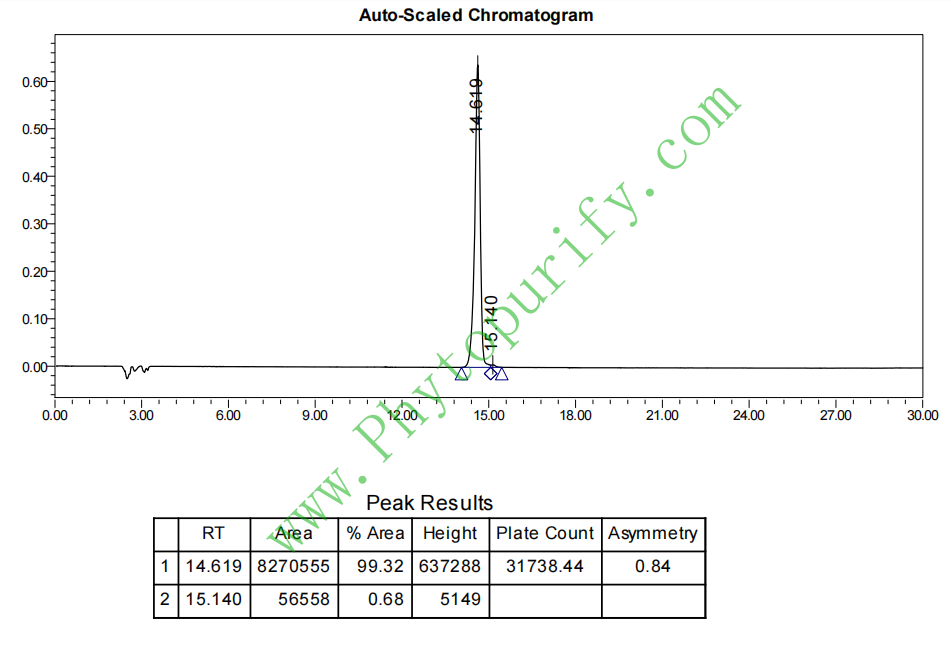
HPLC of Methysticin
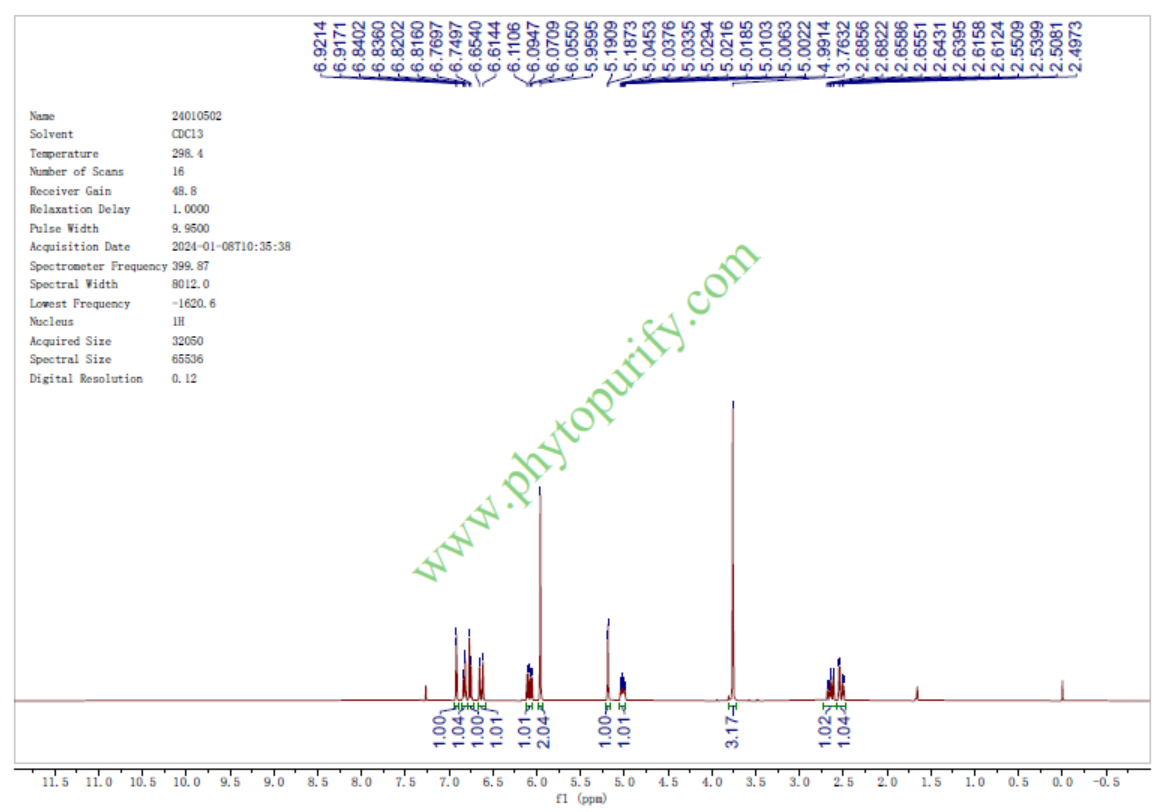
HNMR of Methysticin
Storage conditions:Short-term storage at 2~8℃, long-term storage at -20 ~ -80℃
Methionin (CAS number: 495-85-2) is a kava lactone compound mainly present in Piper methylsticum extracts. Kava, as a traditional herb in the South Pacific region, is widely used in folk medicine due to its unique sedative, anti anxiety, and analgesic effects. Anesthetic capsaicin, as an important active ingredient in kava extract, has received high attention in the fields of pharmacology and natural product chemistry in recent years due to its induction effect on cytochrome P450 enzyme system, especially CYP1A1, and its potential regulatory function on pain related targets.
This article aims to systematically review the chemical structure and physicochemical properties, plant sources and extraction methods, pharmacological activity and mechanism of action, pharmacological evaluation and pharmacokinetic characteristics of anesthetic capsaicin, and explore its clinical application prospects in the treatment of related diseases such as analgesia. By integrating existing literature, it is expected to provide theoretical basis and practical guidance for further research and development of anesthetic capsaicin.
Anesthetic capsaicin belongs to the class of kava lactones, with a molecular formula of C15H14O5 and a molecular weight of 274.2720. Its structural features include a benzene ring system containing multiple oxygen functional groups, with strong lipophilicity and certain polarity. Its LogP value is 2.0232, indicating that it has moderate lipid solubility, which is beneficial for transmembrane absorption and blood-brain barrier penetration. The topological polar surface area (TPSA) is 53.99 Å ², supporting its good bioavailability in vivo.
The low water solubility of anesthetic capsaicin (0.0936 mg/mL) limits its oral bioavailability to some extent, but its high blood-brain barrier permeability gives it the potential for central nervous system action. In terms of safety, the anesthetic capsaicin did not show hERG channel inhibitory activity, indicating a low risk of cardiac toxicity; The Ames test result is 0.3, indicating a low risk of genotoxicity.
Anesthetic capsaicin mainly exists in the roots and rhizomes of kava plants. Piper methylsticum is a plant in the Piperaceae family, native to the islands of the South Pacific. It is an important medicinal plant used in traditional local medicine to relieve anxiety, promote sleep, and relieve pain. The root of kava contains various kava lactones, among which the content of numbing capsaicin is relatively high and is one of its main active ingredients.
The commonly used methods for extracting anesthetic capsaicin include organic solvent extraction, supercritical fluid extraction, and liquid chromatography separation. Traditional extraction often uses ethanol or methanol as solvents, combined with ultrasound assisted extraction to improve extraction efficiency. Subsequently, separation and purification were carried out using liquid chromatography (such as HPLC) technology to ensure the purity and activity of the anesthetic capsaicin. In recent years, green extraction technologies such as supercritical CO2 extraction have gradually gained attention due to their environmental friendliness and high efficiency, providing new ideas for the industrial production of anesthetic capsaicin.
The pharmacological activity of anesthetic capsaicin is mainly concentrated in the central nervous system, especially showing significant effects in analgesia, anti anxiety, and neuroprotection. Its analgesic effect may be closely related to the regulation of multiple neurotransmitter systems and receptors.
Anesthetic capsaicin exerts analgesic effects by regulating various pain related targets. The targets involved include:
The multi-target mechanism of action endows anesthetic capsaicin with multidimensional regulatory potential in analgesic therapy.
Anesthetic capsaicin also exhibits the ability to induce cytochrome P450 enzyme CYP1A1, suggesting its potential impact on drug metabolism and detoxification processes. In addition, some studies have shown that it has anti-inflammatory, antioxidant, and neuroprotective effects, but the relevant mechanisms still need further clarification.
The mechanism of action of anesthetic capsaicin is complex, involving multiple signaling pathways and molecular targets. The induction of CYP1A1 by it may be mediated by aromatic hydrocarbon receptors (AhR), regulating the metabolic capacity of cells towards exogenous compounds. This mechanism not only affects pharmacokinetics, but may also participate in cellular antioxidant defense.
In terms of analgesic mechanism, anesthetics such as capsaicin directly or indirectly regulate TRPV1 and TRPA1 plasma channels to regulate the transmission of pain signals; Regulating neurotransmitter release and neuronal excitability by activating or antagonizing CNR1 and opioid receptors (OPRM1, OPRK1, OPRD1); Simultaneously affecting PTGS1/2 activity, reducing the production of inflammatory mediators, and alleviating inflammatory pain. Its regulation of SLC6A4 and DRD2 may improve pain related emotional disorders.
Molecular docking and in vitro experiments both support the high affinity between anesthetic capsaicin and the aforementioned targets, indicating that its multi-target synergistic effect is the basis for its significant pharmacological effects.
Anesthetic capsaicin has good pharmacological parameters. Its molecular weight of 274.27 conforms to Lipinski's rule, with a moderate LogP value, supporting good membrane permeability and oral absorption. The TPSA value is moderate, which is conducive to the penetration of the blood-brain barrier and meets the requirements for central nervous system activity. Although its water solubility is low, its bioavailability can be improved through formulation optimization.
In terms of safety, anesthetic capsaicin did not exhibit hERG channel inhibition, reducing the risk of cardiovascular toxicity; The Ames test results show that its genotoxicity is low and its safety is good.
Pharmacokinetic studies have shown that anesthetic capsaicin is rapidly absorbed after oral administration, with a moderate plasma half-life, and can effectively reach the central nervous system. Its metabolism is mainly through the liver cytochrome P450 enzyme system, especially the induction of CYP1A1, which may affect its own and co drug metabolism rates, indicating the need to pay attention to drug interactions in clinical applications.
Anesthetic capsaicin, as the active ingredient of kava extract, has the potential to become a new type of analgesic drug due to its multi-target analgesic effect and good central nervous system penetration ability. Its multi mechanism synergistic effect is expected to overcome the limitations of traditional single target analgesics, reduce drug resistance and side effects.
In addition, the induction of CYP1A1 by anesthetic capsaicin provides a new research direction for its drug metabolism regulation and detoxification treatment. In the future, its potential applications in neurodegenerative diseases, anxiety disorders, and chronic pain syndromes can be explored.
However, the clinical research on anesthetic capsaicin is still in its preliminary stage, and a large amount of work is still needed for systematic pharmacokinetics, safety evaluation, and clinical efficacy verification. The optimization of formulation technology, determination of dosage range, and long-term safety monitoring will be the focus of future research.
Anesthetic capsaicin, as a natural product of kava lactones, has shown broad application prospects in the fields of analgesia and treatment of central nervous system diseases due to its unique chemical structure and multi-target pharmacological activity. Its good pharmacological parameters and safety characteristics have laid the foundation for clinical development. In the future, through in-depth molecular mechanism research, pharmacokinetic analysis, and clinical trials, anesthetic capsaicin is expected to become an important breakthrough in the field of natural product pharmacology, promoting the transformation of natural drugs into modern drugs.
