

Product name: Flavokawain A
Synonym name: 64680-84-8
Catalogue No.: BP3145
Cas No.: 37951-13-6
Formula: C18H18O5
Mol Weight: 314.337
Botanical Source:
Physical Description:
Type of Compound: Chalcones
Purity: 95%~99%
Analysis Method: HPLC-DAD or/and HPLC-ELSD
Identification Method: Mass, NMR
Packing: Brown vial or HDPE plastic bottle
The product could be supplied from milligrams to grams. Inquire for bulk scale.
We provide solution to improve the water-solubility of compounds, thereby facilitating the variety of activity tests and clinic uses.
For Reference Standard and R&D, Not for Human Use Directly.
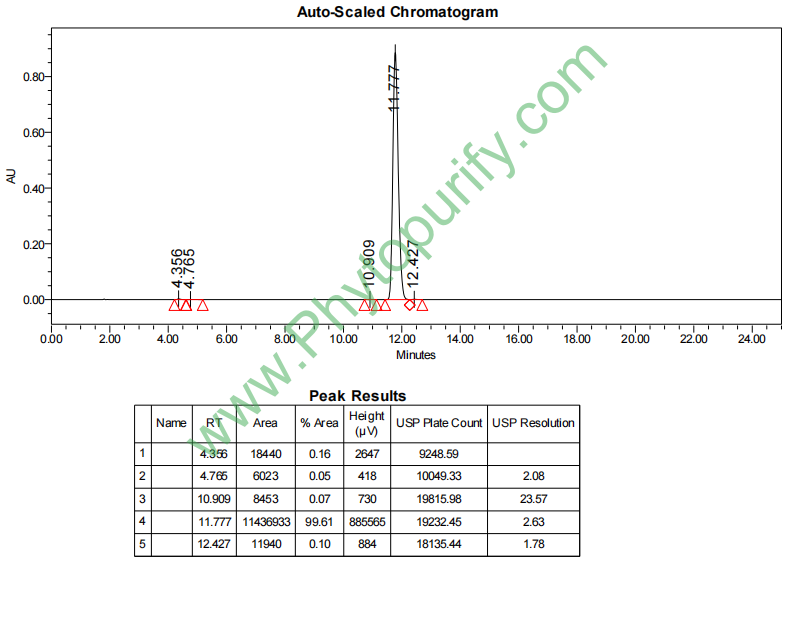
HPLC of Flavokawain A
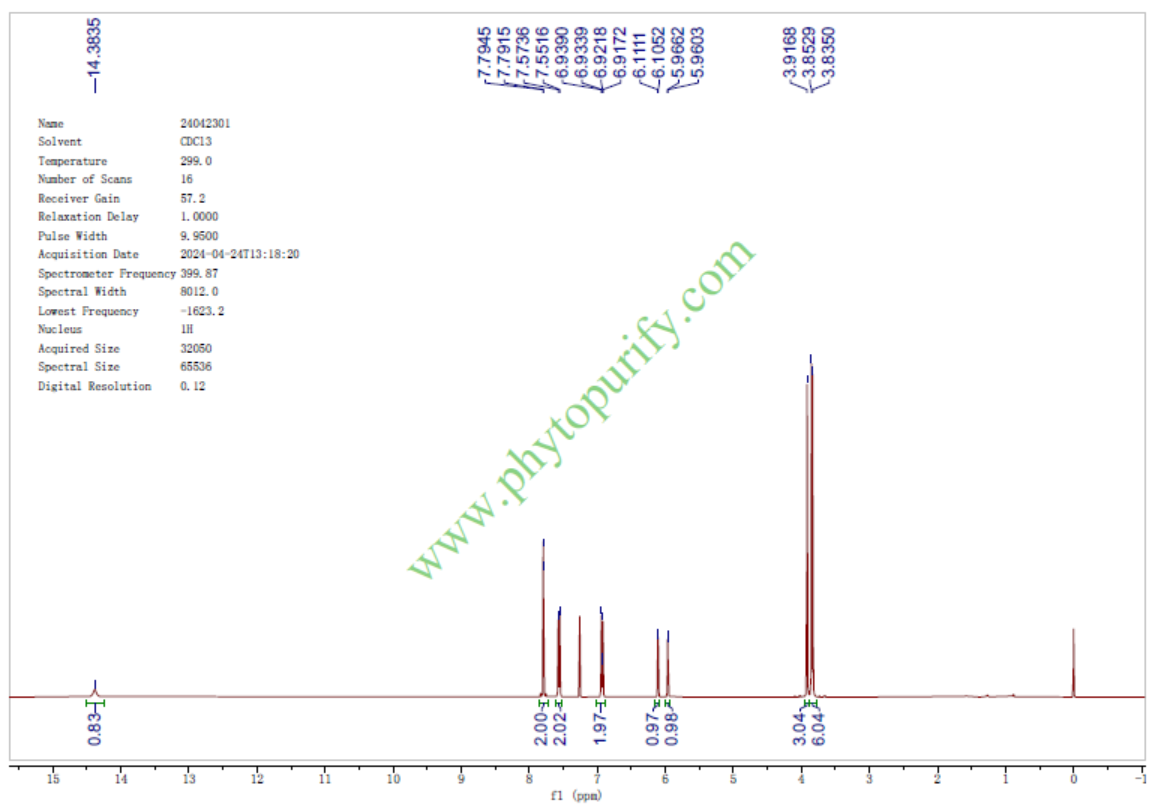
HNMR of Flavokawain A
Storage conditions:Short-term storage at 2~8℃, long-term storage at -20 ~ -80℃
64.9900
3.5627
3.5328
.0491
7.0945
27.9718
High
91.5310
2.0455
Yes
No
Yes
No
Yes
Yes
0.6
No
Yes
Yes
Yes
Natural products, as an important source of drug discovery, play an irreplaceable role in the long history of human fight against diseases. Among numerous natural compounds with biological activity, chalcone compounds have attracted much attention due to their structural diversity and extensive pharmacological activities. Flavokawain A (FKA), as a typical natural chalcone, was originally derived from the traditional medicinal plant kava pepper in the South Pacific islands(Piper methysticum The isolation and identification of Forst. f. have become a research hotspot in the field of natural product pharmacology in recent years due to their significant anti-cancer activity and potential neuropsychiatric regulatory effects.
Kava pepper has been used for hundreds of years in Pacific island cultures, traditionally used to prepare ceremonial drinks with calming, anti anxiety, and muscle relaxing effects. At the end of the 20th century and the beginning of the 21st century, scientists isolated a series of active ingredients from the roots and stems of kava pepper, among which flavokawain B, flavokawain B, and flavokawain C are the main chalcone components. It is worth noting that FKA not only retains the traditional anti anxiety activity of kava pepper, but also exhibits broad-spectrum anti-tumor effects. This dual pharmacological activity makes it an ideal lead compound for developing new therapeutic drugs.
In recent years, with the deepening of FKA research, its inhibitory effect on bladder cancer, prostate cancer, breast cancer, colorectal cancer and other malignant tumors has been confirmed by many studies. More importantly, the mechanism of action of FKA involves multiple signaling pathways, including inducing cell apoptosis, inhibiting cell proliferation, regulating cell cycle, and anti-inflammatory effects, exhibiting multi-target and multi pathway characteristics. At the same time, the regulatory effect of FKA on neurotransmitter system related targets such as monoamine oxidase A (MAOA) and serotonin transporter (SLC6A4) provides a new explanation for the molecular mechanism of its anti anxiety activity. This article will provide a systematic review of the research progress of kaempferol A from the aspects of chemical structure, plant origin, pharmacological activity, mechanism of action, pharmacological evaluation, and clinical application prospects.
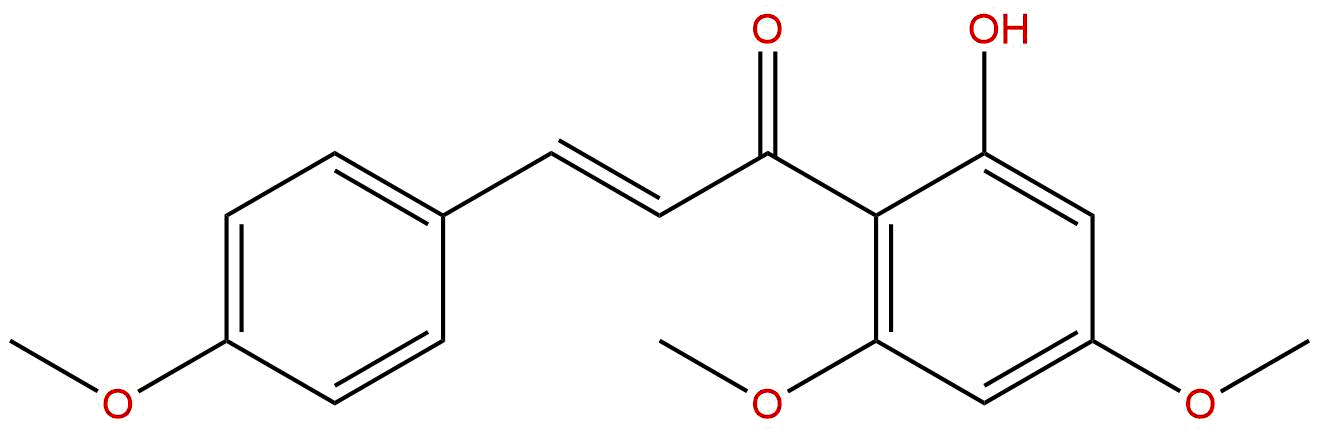
The chemical name of yellow kaempferol A is (E) -1- (2-hydroxy-4,6-dimethoxyphenyl) -3- (4-methoxyphenyl) propan-2-en-1-one, which belongs to typical chalcone compounds. The basic skeleton of chalcones is composed of two aromatic rings connected by an alpha, beta unsaturated carbonyl system, which endows this class of compounds with unique chemical and biological activities. The molecular formula of FKA is C ₁₈ H ₁₈ O ₅, the molecular weight is 314.3370 g/mol, and the CAS registration number is 37951-13-6.
From the structural details, FKA's A ring (2-hydroxy-4,6-dimethoxyphenyl) contains three substituents: one hydroxyl group is located at C-2 position, and two methoxy groups are located at C-4 and C-6 positions, respectively; The B ring (4-methoxyphenyl) contains a methoxy group in the para position. This specific substitution pattern results in significant differences in biological activity compared to other kaempferol chalcones, such as kaempferol B and C. It is worth noting that the α, β - unsaturated carbonyl system (i.e. the characteristic structure of chalcones) in FKA molecules is the receptor site for Michael addition reactions, which can covalently bind with nucleophilic groups (such as thiol groups of cysteine residues) in biomolecules. This may be the structural basis for its various pharmacological activities.
From the perspective of medicinal chemistry, the physicochemical properties of FKA have a significant impact on its pharmacological properties. According to computational chemistry analysis, the lipid water partition coefficient (LogP) of FKA is 3.5627, indicating that the compound has moderate lipophilicity, which is beneficial for its transmembrane transport and interaction with lipid soluble targets. The topological polar surface area (TPSA) is 64.9900 Å ², which meets the general requirements for oral medication (usually TPSA<140 Å ²), indicating its good intestinal absorption potential.
Water solubility is one of the key factors affecting the bioavailability of drugs. The water solubility value of FKA is 0.0491 mg/mL, which belongs to low water solubility compounds, which to some extent limits its oral bioavailability. However, moderate lipophilicity allows it to penetrate biofilms well, including the blood-brain barrier (BBB). The pharmacological parameters show that FKA has high blood-brain barrier permeability, which is of great significance for its application in central nervous system diseases such as anxiety disorders, but may also increase the risk of central nervous system related side effects.
In terms of safety prediction, the hERG inhibition assessment result was negative, indicating a low risk of FKA induced cardiac QT interval prolongation. The Ames test result is 0.6, indicating a relatively low genetic toxicity risk, but further toxicological research is still needed to verify. Overall, FKA has a certain pharmacological basis, but poor water solubility and potential metabolic instability may be key issues that need to be addressed in its clinical translation process.
Yellow kaempferol A is mainly derived from kaempferol, a plant of the genus kaempferol in the family Piperaceae(Piper methysticum Forst. f.)。 Kava pepper is a perennial shrub native to the western Pacific islands, including Fiji, Vanuatu, Samoa, Tonga, and other countries and regions. This plant is widely used in traditional medicine, and its roots are dried and ground to make beverages for relieving anxiety, improving sleep, relaxing muscles, and social rituals.
It is worth noting that the content and composition of chalcones in kava pepper are influenced by various factors, including plant variety, growth environment, harvesting time, and processing methods. Research has shown that there are significant differences in the content of FKA among different geographic sources of kava pepper varieties. Some noble varieties have relatively high FKA content, while medicinal varieties may contain a higher proportion of other chalcone components. In addition, the rhizome of kava pepper is the main accumulation site of FKA, while the content is lower in the aboveground parts (stem and leaves).
The extraction of FKA usually adopts organic solvent extraction method, and commonly used solvents include ethanol, methanol, ethyl acetate, etc. In the traditional extraction process, dried kava pepper root powder is soaked and extracted with 95% ethanol at room temperature or heating conditions. The extract is concentrated to obtain a total extract, which is then enriched with chalcones through liquid-liquid extraction (such as petroleum ether, chloroform, ethyl acetate, and other polar solvents).
Modern extraction techniques such as ultrasound assisted extraction, microwave-assisted extraction, and supercritical fluid extraction have also been applied to the extraction of FKA. Ultrasound assisted extraction utilizes the cavitation effect of ultrasound to destroy plant cell walls, improve solvent permeability, and achieve high extraction rates in a short period of time. Supercritical CO ₂ extraction has the advantages of being environmentally friendly and selective, making it particularly suitable for extracting thermosensitive components.
The separation and purification of FKA from the total extract of kava pepper usually requires the combination of multiple chromatographic techniques. Silica gel column chromatography is the most commonly used preliminary separation method, which uses solvent systems such as n-hexane ethyl acetate or chloroform methanol for gradient elution. Further purification can be achieved by preparative high-performance liquid chromatography (Prep HPLC) using a reverse phase C18 column with acetonitrile water or methanol water as the mobile phase to obtain FKA monomers with a purity of over 98%.
In recent years, high-speed countercurrent chromatography (HSCCC) has shown unique advantages as a liquid-liquid distribution chromatography technique in the separation of FKA. This method does not require a solid stationary phase, avoiding irreversible adsorption of the sample on the stationary phase, and has the characteristics of high recovery rate and good separation efficiency. In addition, molecular imprinting technology has also been explored for selective enrichment and separation of FKA.
The anti-tumor activity of FKA is one of its most concerned pharmacological effects. Multiple in vitro and in vivo studies have confirmed that FKA has significant inhibitory effects on proliferation and induces apoptosis in various human cancer cell lines.
FKA has the most outstanding achievements in bladder cancer research. Research shows that FKA can inhibit the proliferation of bladder cancer cells (such as T24, UMUC3, 5637, etc.) in a dose-dependent and time-dependent manner, and the IC ₀ value is usually within the range of 5-20 μ M. More importantly, FKA has relatively low toxicity to normal bladder epithelial cells (such as SV-HUC-1) and exhibits a certain degree of selectivity. In a xenograft mouse model, intraperitoneal injection of FKA (20-40 mg/kg) significantly inhibited tumor growth and no significant systemic toxicity was observed.
FKA also exhibits inhibitory effects on prostate cancer cells such as PC-3, DU145, and LNCaP. Research has found that FKA can induce prostate cancer cell cycle arrest in the G ₂/M phase and inhibit cell proliferation by upregulating the expression of cell cycle inhibitory proteins such as p21 and p27. In addition, FKA can also inhibit the androgen receptor (AR) signaling pathway, which has potential therapeutic value for castration resistant prostate cancer.
In addition to the tumors of the urinary system, FKA also showed antitumor activity in a variety of malignant tumors, such as breast cancer, colorectal cancer, lung cancer, liver cancer and osteosarcoma. It is worth noting that FKA is also effective against multidrug-resistant (MDR) cancer cell lines, suggesting that it may exert its effects through mechanisms different from traditional chemotherapy drugs, providing new ideas for overcoming clinical resistance problems.
One of the traditional uses of kava pepper is to relieve anxiety, and FKA, as one of its main active ingredients, has been experimentally validated for its anti anxiety effects. Animal behavior experiments (such as elevated maze test, light dark box test, social interaction test, etc.) have shown that FKA can significantly reduce anxiety like behavior in mice, and its effect is comparable to commonly used benzodiazepines (such as diazepam) in clinical practice, but no significant sedative and muscle relaxation side effects were observed.
FKA also exhibits significant anti-inflammatory and antioxidant activity. In a macrophage model stimulated by lipopolysaccharide (LPS), FKA can inhibit the production of pro-inflammatory cytokines such as TNF - α, IL-6, IL-1 β, and reduce the release of nitric oxide (NO) and prostaglandin E ₂ (PGE ₂). Its anti-inflammatory mechanism is related to the inhibition of nuclear factor kappa B (NF - κ B) and mitogen activated protein kinase (MAPK) signaling pathways. In addition, the phenolic hydroxyl structure of FKA endows it with certain free radical scavenging ability, which can alleviate oxidative stress damage.
Preliminary studies have shown that FKA also has antibacterial, antiviral, anti angiogenic, and neuroprotective activities. For example, FKA has inhibitory effects on pathogenic microorganisms such as Staphylococcus aureus and Candida albicans; In the ischemia-reperfusion injury model, FKA can reduce neuronal death and exert neuroprotective effects. These findings further expand the pharmacological application prospects of FKA.
The mechanism of FKA induced apoptosis in tumor cells involves multiple signaling pathways, among which the mitochondrial pathway (endogenous apoptosis pathway) is one of the core mechanisms.
Research has shown that FKA can upregulate the expression of pro apoptotic protein Bax, while downregulating the expression of anti apoptotic proteins Bcl-2 and Bcl xL, leading to an increase in the Bax/Bcl-2 ratio. This change causes Bax to translocate from the cytoplasm to the outer membrane of mitochondria, forming oligomeric pores, leading to a decrease in mitochondrial membrane potential (Δ PSI m) and release of cytochrome c. Cytochrome c released into the cytoplasm binds with Apaf-1 to form apoptotic bodies, which in turn activate caspase-9 and downstream caspase-3/7, ultimately leading to cell apoptosis. This mechanism has been fully verified in bladder cancer cells. FKA induces apoptosis of bladder cancer cells by intervening in Bax protein dependent and mitochondrial dependent apoptosis pathways, and inhibits tumor growth in mouse tumor models.
In addition to the mitochondrial pathway, FKA can also activate the death receptor pathway (exogenous apoptosis pathway). Research has found that FKA can upregulate the expression of death receptors Fas and TRAIL receptors DR4/DR5, promote the activation of caspase-8, and then transmit apoptotic signals to mitochondria through the cleavage of Bid protein, amplifying the apoptotic effect.
The regulatory effect of FKA on the cell cycle varies depending on the cell type. In prostate cancer and breast cancer cells, FKA plays a role mainly by inducing G ₂/M phase arrest, and its mechanism involves down-regulation of cyclin B1, CDK1 and up regulation of p21, p27 and other cell cycle inhibitor proteins. In some colorectal cancer cells, FKA mainly causes G ₀/G ₁ phase arrest. This difference may be related to the genetic background and signaling pathway status of different cell types.
FKA can inhibit the activation of NF - κ B, which is closely related to its anti-inflammatory and anti-tumor activities. FKA inhibits the phosphorylation and degradation of I κ B α, preventing the nuclear translocation of NF - κ B p65 subunit, thereby downregulating the expression of NF - κ B target genes such as Bcl-2, cyclin D1, MMP-9, VEGF, etc. Inhibition of the NF - κ B pathway not only directly induces apoptosis, but also enhances the sensitivity of tumor cells to chemotherapy drugs.
The PI3K/Akt/mTOR signaling pathway plays a critical role in cell survival, proliferation, and metabolism. FKA can inhibit Akt phosphorylation, reduce mTOR activity, and promote autophagy and apoptosis. It is worth noting that the inhibitory effect of FKA on Akt may be related to its upregulation of phosphatase PTEN expression.
The impact of FKA on the MAPK pathway is complex and varies among different research results. In most tumor cells, FKA can activate p38 MAPK and JNK, while inhibiting ERK phosphorylation. This differential regulation may be related to its induction of apoptosis.
The anti anxiety activity of FKA involves the regulation of multiple neurotransmitter systems. Analysis of pharmacokinetic parameters shows that FKA has high blood-brain barrier permeability, which provides conditions for its action in the central nervous system.
MAOA is a key enzyme that degrades monoamine neurotransmitters such as serotonin, norepinephrine, and dopamine. Research has shown that FKA can inhibit the activity of MAOA, thereby increasing the concentration of monoamine neurotransmitters in synaptic cleft and exerting anti anxiety and anti depression effects. This mechanism is similar to commonly used MAO inhibitor drugs in clinical practice.
FKA has multi-target regulatory effects on the serotonin system. Firstly, FKA can inhibit the activity of serotonin transporter (SLC6A4), reduce serotonin reuptake, and increase its concentration in synaptic cleft. Secondly, FKA has a regulatory effect on serotonin receptor 2A (HTR2A) and serotonin receptor 1A (HTR1A), among which the excitatory effect on HTR1A may be directly related to its anti anxiety effect.
FKA has a certain affinity for dopamine receptor D2 (DRD2), which may be related to its regulation of emotions and cognitive function. However, unlike typical antipsychotic drugs, FKA has a weaker effect on DRD2, which may be the reason why it causes fewer extrapyramidal side effects.
GABA is the main inhibitory neurotransmitter in the central nervous system. FKA can interact with multiple subunits of GABA_A receptors (including GABRA1, GABRB2, GABRG2) to enhance the inhibitory effect of GABA. This mechanism is similar to benzodiazepines, but the binding site of FKA may be different, thus avoiding typical sedative and tolerance side effects.
FKA can upregulate the expression of brain-derived neurotrophic factor (BDNF) and activate the phosphorylation of transcription factor CREB. The BDNF CREB signaling pathway plays a crucial role in neural plasticity, neuronal survival, and antidepressant/anti anxiety effects, which may be the molecular basis for FKA's long-term anti anxiety effects.
Based on the aforementioned physicochemical properties, the pharmacological characteristics of FKA can be summarized as follows: moderate molecular weight (314.34 Da), in accordance with Lipinski's five rules (molecular weight<500); LogP is 3.56, within the ideal range (1-5); The TPSA is 65.0 Å ², indicating good oral absorption potential; The low water solubility (0.049 mg/mL) is the main factor limiting its bioavailability; The blood-brain barrier has high permeability, which is beneficial for targeting the central nervous system; HERG inhibition has low risk and good cardiac safety; The Ames test results indicate a low risk of genetic toxicity.
Due to poor water solubility, the oral bioavailability of FKA may be low. Research has shown that the oral bioavailability of FKA in rats is approximately 10-20%, mainly limited by solubility and first pass metabolism. The use of novel drug delivery systems such as nano formulations, liposomes, and cyclodextrin inclusion complexes can significantly improve their oral absorption.
FKA has a high plasma protein binding rate (>90%) and mainly binds to albumin. Its apparent distribution volume is relatively large (>1 L/kg), indicating widespread tissue distribution. The high blood-brain barrier permeability enables it to reach effective concentrations in the central nervous system, which is crucial for its anti anxiety activity.
FKA is mainly metabolized by the cytochrome P450 enzyme system (CYP450) in the liver, and the main metabolic pathways include O-demethylation, hydroxylation, and glucuronic acid binding reaction. CYP1A2, CYP2C9, and CYP3A4 are the main subtypes involved in FKA metabolism. It is worth noting that FKA has a certain inhibitory effect on CYP450 enzymes and may undergo metabolic interactions with other drugs.
FKA and its metabolites are mainly excreted through bile and feces, with a small amount excreted through urine. Its elimination half-life is about 4-8 hours and requires multiple daily doses to maintain effective blood drug concentration.
To overcome the problems of poor water solubility and low bioavailability of FKA, various formulation strategies have been explored. Liposomal encapsulation can enhance the solubility and stability of FKA, and achieve tumor targeted delivery. Polymer nanoparticles (such as PLGA nanoparticles) can control drug release and prolong the duration of action. In addition, phospholipid complexes and self microemulsifying drug delivery systems (SMEDS) have also shown the potential to improve oral absorption of FKA.
The anti-tumor activity of FKA in various tumor models, especially its significant inhibitory effect on bladder cancer, laid the foundation for its clinical transformation. Compared with traditional chemotherapy drugs, FKA has the following advantages: a multi-target mechanism of action reduces the risk of drug resistance; Low toxicity to normal cells and wide treatment window; It can enhance the sensitivity of conventional chemotherapy drugs and has the potential for combination therapy.
However, the clinical development of FKA still faces many challenges. Firstly, the issues of poor water solubility and low oral bioavailability need to be addressed through formulation technology. Secondly, the in vivo metabolic characteristics and potential toxicity of FKA require systematic preclinical toxicological evaluation. In addition, the pharmacokinetic parameters and optimal administration regimen of FKA in the human body are yet to be determined.
FKA, as a natural candidate compound for anti anxiety, has unique advantages: its anti anxiety effect is comparable to traditional benzodiazepines, but with fewer side effects such as sedation, muscle relaxation, and tolerance; The multi-target mechanism of action (MAOA, SLC6A4, HTR2A, GABRA1, etc.) may make it effective for multiple subtypes of anxiety; Originating from traditional medicinal plants, it has a high acceptance rate among patients.
It is worth noting that the use of kava pepper extract has been restricted in Western countries due to reports of liver toxicity, but subsequent studies have shown that liver toxicity is mainly related to certain specific varieties or extraction processes, rather than kava pepper itself. As a single compound, FKA may have a lower risk of liver toxicity than crude extracts, but a systematic liver safety evaluation is still needed.
structural optimization Based on FKA chalcone skeleton, a series of derivatives were synthesized through rational drug design to improve water solubility, metabolic stability, and targeting selectivity. For example, introducing polar groups such as phosphate groups and amino acids can improve water solubility; Modifying α, β - unsaturated carbonyl groups into Michael addition receptors can regulate their reactivity.
Target confirmation Using chemical biology methods such as affinity chromatography, cell thermal transition analysis (CETSA), drug affinity reaction target stability (DARTS), etc., systematically identify the direct target of FKA, providing precise guidance for mechanism research and drug design.
combination therapy Explore the synergistic effects of FKA with conventional chemotherapy drugs (such as cisplatin, paclitaxel, 5-fluorouracil, etc.) or targeted drugs (such as sorafenib, imatinib, etc.), and optimize the combination therapy regimen.
Development of new formulations Develop targeted delivery systems (such as tumor microenvironment responsive nanoparticles, brain targeted liposomes, etc.) to enhance the therapeutic efficacy of FKA and reduce systemic toxicity.
Clinical translational research: After completing systematic preclinical pharmacodynamics, pharmacokinetics and toxicology evaluation, promote the clinical trial of FKA, and first explore its safety and initial efficacy in patients with locally advanced or metastatic bladder cancer.
Yellow kaempferol A, as a representative chalcone compound in kaempferol pepper, has shown significant value in the field of natural product drug development due to its unique chemical structure and multi-target pharmacological activity. From anti-tumor to anti anxiety, from inducing cell apoptosis to regulating the neurotransmitter system, the mechanism of action of FKA involves multiple signaling pathways and molecular targets, reflecting the characteristic of natural products with multiple targets and pathways.
In terms of anti-tumor, FKA induces apoptosis of bladder cancer cells through Bax dependent and mitochondrial dependent apoptosis pathways, and effectively inhibits tumor growth in animal models, providing new candidate molecules for the treatment of urinary system tumors. In terms of anti anxiety, the regulatory effects of FKA on multiple targets such as MAOA, SLC6A4, HTR2A, and GABRA1 reveal its unique mechanism that distinguishes it from traditional anti anxiety drugs, providing a structural template for the development of new anti anxiety drugs.
Although FKA has shortcomings in terms of poor water solubility and low oral bioavailability, these issues are expected to be resolved through strategies such as structural modification, formulation optimization, and combination therapy. With the deepening understanding of the pharmacological mechanism of FKA and the continuous advancement of medicinal chemistry research, this natural chalcone compound is expected to move from the laboratory to clinical practice, bringing new treatment options for cancer and anxiety patients.
From a broader perspective, the research history of FKA also provides us with important insights: traditional medicinal plants are valuable resources for discovering lead compounds, while modern pharmacology and medicinal chemistry techniques are key tools for transforming these natural products into clinical drugs. Today, with the increasing emphasis on the concepts of "returning to nature" and "green medicine", natural chalcone compounds represented by FKA will play a more important role in the field of new drug development.
