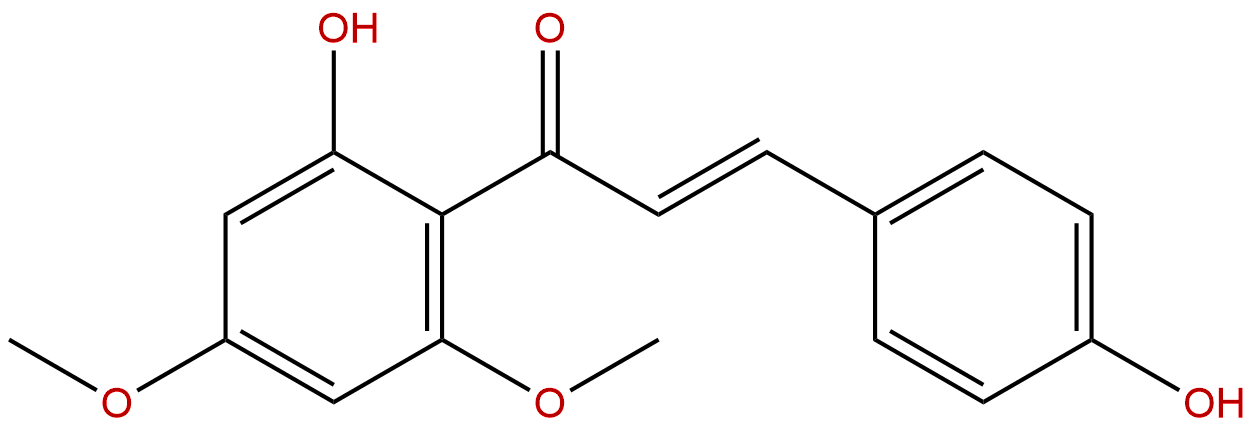


Product name: Flavokawain C
Synonym name:
Catalogue No.: BP3147
Cas No.: 37308-75-1
Formula: C17H16O5
Mol Weight: 300.31
Botanical Source:
Physical Description:
Type of Compound: Chalcones
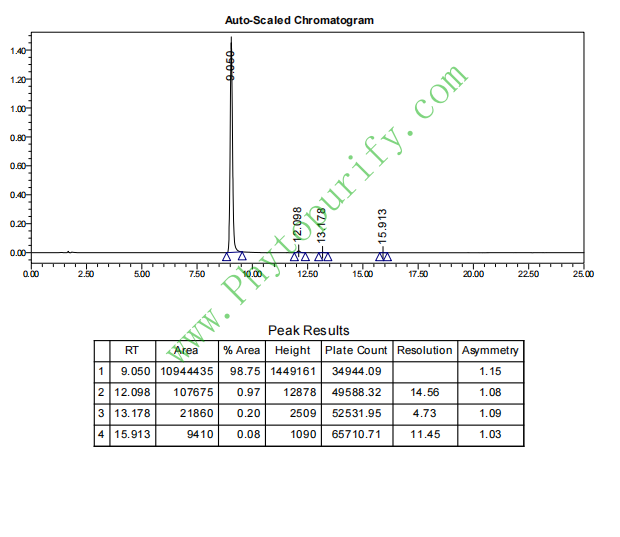
Purity: 95%~99%
Analysis Method: HPLC-DAD or/and HPLC-ELSD
Identification Method: Mass, NMR
Packing: Brown vial or HDPE plastic bottle
The product could be supplied from milligrams to grams. Inquire for bulk scale.
We provide solution to improve the water-solubility of compounds, thereby facilitating the variety of activity tests and clinic uses.
For Reference Standard and R&D, Not for Human Use Directly.
HPLC of Flavokawain C
Storage conditions:Short-term storage at 2~8℃, long-term storage at -20 ~ -80℃
75.9900
3.1820
3.1430
.0870
5.5459
24.9246
Low
91.1178
2.1471
Yes
No
Yes
No
Yes
Yes
0.6
No
Yes
Yes
Yes
Natural products have always been an important treasure trove for innovative drug discovery, among which chalcone compounds have attracted much attention due to their wide range of biological activities. Flavokawain C (FKC), with CAS number 37308-75-1, is a representative chalcone isolated from the traditional medicinal plant Piper methylsticum G. Forst. The root and stem of kava pepper have been used for a long time in the South Pacific Islands to prepare traditional beverages with sedative and anti anxiety effects, and the research on its active ingredients, kava lactones, has been relatively in-depth. However, as coexisting phenolic components, the biological potential of chalcones such as kaempferol C has only gradually been revealed in recent years. Research has shown that FKC exhibits significant cytotoxicity (IC50=12.75 μ M) against various human cancer cell lines, including colon cancer HCT 116 cells, indicating its strong anti-tumor potential. What is even more remarkable is that its pharmacological activity spectrum goes far beyond this, showing the potential to interact with multiple key targets (such as TRPV1, CNR1, OPRD1, PTGS1/2, etc.) in the field of analgesia, which may involve multi pathway synergistic mechanisms. This article aims to systematically review the chemical properties, plant sources, pharmacological activities, mechanisms of action, medicinal properties, and clinical application prospects of yellow kaempferol C, in order to provide comprehensive scientific references for the deep development and transformation research of this natural product.
The chemical name of yellow kaempferol C is (2E) -1- (2-hydroxy-4,6-dimethoxyphenyl) -3- (4-hydroxyphenyl) -2-propen-1-one, with a molecular formula of C17H16O5 and a molecular weight of 300.31 g/mol. Its core structure is the chalcone nucleus, which is an α, β - unsaturated ketone structure (styrene ketone), which is the key pharmacophore for its Michael addition reaction and interaction with nucleophilic groups (such as thiol groups) in biomolecules.
Specifically, its A ring is 2-hydroxy-4,6-dimethoxyphenyl, and its B ring is 4-hydroxyphenyl. The adjacent hydroxyl groups on the A ring can form intramolecular hydrogen bonds with carbonyl groups, stabilizing the overall conformation of the molecule and potentially affecting its electron distribution and reactivity. The phenolic hydroxyl group in the B-ring provides additional hydrogen bond donor sites, enhancing its potential for interaction with the target protein.
Based on the analysis of physicochemical parameters related to drug properties, the calculated lipid water partition coefficient (LogP) is 3.18, indicating that the compound has moderate lipophilicity and is conducive to transmembrane transport. The topologically polar surface area (TPSA) is 75.99 Å ², which is relatively low and usually favorable for cell infiltration. However, its water solubility is poor (about 0.087 mg/mL), which may pose challenges in formulation development and in vivo absorption. Moderate molecular weight, meeting the basic requirements of the five rules for generic drugs. Overall, FKC possesses the basic physicochemical characteristics as a lead compound, but its solubility is an important property that needs to be optimized.
Yellow kaempferol C mainly comes from the rhizomes and roots of the pepper plant kaempferol in the family Piperaceae. Kava pepper is a perennial shrub native to the islands of the South Pacific. Its medicinal parts are rich in two types of active ingredients: one is fat soluble kavalactones, such as naringenin, which is traditionally considered a sedative active substance; The second is chalcone compounds including kaempferol A, B, and C.
The extraction of FKC usually uses organic solvent extraction combined with chromatographic separation technology. The classic process is as follows:
1. Raw material pretreatment Crush the dried roots and stems of kava pepper to increase the extraction surface area.
2. Solvent extraction Polar organic solvents such as methanol, ethanol, or acetone are commonly used for leaching or reflux extraction. Due to the polarity of chalcones, alcohol solvents can effectively extract FKC and its analogues.
3. Concentration and Coarse Separation The crude extract can be obtained by recovering the solvent, and then gradient extraction can be carried out using solvents such as petroleum ether and ethyl acetate to preliminarily enrich phenolic components. FKC is mainly distributed in the ethyl acetate fraction.
4. Separation and purification: The ethyl acetate part was further separated and purified by silica gel column chromatography, Sephadex LH-20 gel column chromatography and high performance liquid chromatography (HPLC). Gradient elution is often performed using solvent systems such as n-hexane ethyl acetate or chloroform methanol, and monitored based on its UV absorption characteristics (chalcone has strong absorption at 300-400 nm), ultimately obtaining high-purity yellow kaempferol C.
Modern technologies such as high-speed countercurrent chromatography (HSCCC) have also been applied to efficiently separate such natural products. The extraction rate is greatly affected by plant species, place of origin, harvest season, and extraction process.
Yellow kaempferol C exhibits diverse pharmacological activities, with anti-tumor and analgesic effects being the focus of research.
Antitumor activity FKC exhibits broad-spectrum cytotoxicity against various human cancer cell lines. In addition to significantly inhibiting HCT 116 colon cancer cells (IC50=12.75 μ M), studies have reported that it also has growth inhibition and apoptosis inducing effects on breast cancer (MDA-MB-231), prostate cancer (PC-3, LNCaP), bladder cancer, liver cancer and other cancer cells. Its strength of action is usually superior to its analogues kaempferol A and B. Preliminary in vivo studies have shown that FKC can effectively inhibit tumor growth in xenograft tumor models and has a synergistic effect with certain chemotherapy drugs such as cisplatin.
Analgesic activity Although there are relatively fewer in vitro and in vivo studies directly targeting the analgesic effects of FKC compared to its anti-tumor research, its analgesic potential deserves further exploration based on the activity of its structural analogues and its predictive binding ability with multiple analgesic related targets. Kava pepper is traditionally used to relieve pain and muscle tension. Chalcone compounds generally have anti-inflammatory properties, and inflammation is an important trigger for pain. Therefore, FKC may exert analgesic effects through anti-inflammatory and direct action on pain perception pathways.
Other activities The study also suggests that FKC may have anti-inflammatory, antioxidant, anti anxiety, and neuroprotective activities. Its antioxidant activity originates from its phenolic hydroxyl structure, which can effectively scavenge free radicals. These multifaceted activities together constitute the potential therapeutic value foundation.
The pharmacological effects of kaempferol C, especially its anti-tumor and analgesic activities, involve the regulation of multiple molecular targets and signaling pathways.
1. Mechanism of anti-tumor effect:
* Inducing cell cycle arrest FKC can block cancer cells in the G2/M phase, and its mechanism is related to downregulation of cell cycle proteins (such as Cyclin B1, CDK1) and upregulation of cyclin dependent kinase inhibitors (such as p21).
* Inducing cell apoptosis This is one of the core mechanisms of its anti-tumor effect. FKC can induce apoptosis through the mitochondrial pathway (endogenous pathway), manifested by a decrease in mitochondrial membrane potential, release of cytochrome C, and activation of caspase-9 and caspase-3. At the same time, it can also regulate Bcl-2 family proteins (such as downregulating anti apoptotic proteins Bcl-2 and Bcl xL, and upregulating pro apoptotic protein Bax).
* Inhibit metastasis and invasion FKC can downregulate the expression of matrix metalloproteinases (MMP-2, MMP-9) and upregulate tissue metalloproteinase inhibitors (TIMP-1, TIMP-2), thereby inhibiting the migration and invasion ability of cancer cells.
* Regulating key signaling pathways FKC has been shown to inhibit the NF - κ B signaling pathway, reduce its nuclear translocation, and downregulate a series of genes related to proliferation, survival, inflammation, and metastasis. In addition, it also has regulatory effects on survival and stress signaling pathways such as PI3K/Akt and MAPK (such as ERK, JNK, p38).
* Inducing autophagy and endoplasmic reticulum stress Partial studies have shown that FKC can trigger protective autophagy and endoplasmic reticulum stress response, which are closely related to cell fate determination.
2. Pain related targets and potential mechanisms:
The analgesic potential of FKC is closely related to its potential action on multiple pain regulatory targets, including:
* Transient receptor potential channel TRPV1 (capsaicin receptor) and TRPA1 (mustard oil receptor) are important pain receptors involved in the signal transduction of thermal pain and inflammatory pain. The chalcone structure may intervene in the transmission of pain signals by regulating the activity of these ion channels.
* Endogenous cannabinoid system and opioid system The cannabinoid receptor CB1 (CNR1) and opioid receptor (OPRM1, OPRD1, OPRK1) are core targets for central and peripheral analgesia. FKC may act as a regulator to affect the function of these G protein coupled receptors.
* Cyclooxygenase PTGS1 (COX-1) and PTGS2 (COX-2) are key enzymes involved in prostaglandin synthesis and targets of nonsteroidal anti-inflammatory drugs. FKC may exert anti-inflammatory and analgesic effects by inhibiting COX activity, reducing the production of pain inducing substances such as prostaglandins.
* Monoamine neurotransmitter system Dopamine D2 receptor (DRD2) and serotonin transporter (SLC6A4) are involved in the emotional regulation and downregulation pathways of pain. The effects on these targets may contribute to the potential relief of anxiety and depression like states associated with pain by FKC.
FKC may produce comprehensive analgesic effects through multi-target and multi pathway synergistic effects, and may reduce the risk of addiction and respiratory depression caused by single potent opioid drugs.
Based on the provided parameters and existing research, the preliminary evaluation of the pharmacological properties of yellow kaempferol C is as follows:
Yellow kaempferol C, as a natural lead compound with multiple targets and activities, has broad development prospects, but also faces many challenges.
Prospect:
1. Development of anti-tumor drugs FKC can be used as a novel anti-tumor candidate drug, especially for solid tumors such as colorectal cancer. The characteristic of its multi mechanism action may help overcome tumor drug resistance. It is possible to explore its combination therapy with existing chemotherapy drugs to enhance efficacy and reduce toxic side effects.
2. Development of new analgesics FKC is expected to be developed for the treatment of refractory pain such as chronic inflammatory pain and neuropathic pain, based on its multi-target analgesic potential. Its non opioid and potentially anti-inflammatory and mood regulating properties meet the current demand for finding alternative opioid analgesics.
3. Chemical preventive agent Due to its antioxidant and anti-inflammatory properties, low-dose FKC or kava pepper extract rich in FKC may serve as chemopreventive agents for the prevention of diseases related to oxidative stress and chronic inflammation, such as early prevention of certain cancers.
4. Structural optimization and derivative development Using it as the parent nucleus for structural modification, optimizing its water solubility, metabolic stability, target selectivity, and efficacy, is an important direction in pharmaceutical chemistry research. For example, by introducing specific functional groups to enhance its selectivity towards a specific analgesic target (such as TRPV1 antagonist).
Challenges and Prospects:
1. Systematic pharmacodynamic and pharmacokinetic studies It is urgent to validate its efficacy in more comprehensive animal disease models, especially pain models, and complete systematic ADME/T studies to clarify its in vivo fate.
2. Comprehensive evaluation of safety Standardized preclinical toxicology studies are needed, including acute toxicity, long-term toxicity, reproductive toxicity, etc., especially to evaluate the safety of long-term use on organs such as the liver. The association report between traditional use of kava pepper and liver toxicity risk requires a careful evaluation of the liver toxicity of FKC.
3. Deep analysis of the mechanism of action Especially in terms of analgesia, it is necessary to confirm its direct interaction, mode of action (excitatory/antagonistic), and efficacy with targets such as TRPV1 and opioid receptors.
4. Resources and Sustainable Supply Direct extraction from plants has limited yield and requires the development of efficient chemical synthesis or biosynthetic pathways to meet future research and development needs.
Yellow kaempferol C is a highly valuable natural chalcone compound discovered from the traditional medicinal plant kaempferol. It not only exhibits clear cytotoxicity and multi pathway anti-tumor mechanisms against various cancer cells, but also demonstrates great potential as a novel multi-target analgesic due to its potential association with multiple pain key targets such as TRPV1, endocannabinoid system, opioid system, cyclooxygenase, etc. The moderate physicochemical parameters of its drug like properties have laid the foundation for further optimization. However, there is still a long way to go from lead compounds to candidate drugs and even clinical drugs. The current focus of research should be on thoroughly elucidating its molecular mechanisms of action, particularly those related to analgesia, completing systematic preclinical pharmacokinetic and safety evaluations, and overcoming its shortcomings such as poor water solubility through rational drug design strategies. With the continuous deepening of research, yellow kaempferol C is expected to provide a new candidate molecule with natural product characteristics for the fields of tumor and pain treatment, and also provide a successful example for modern drug development based on traditional medical knowledge.
