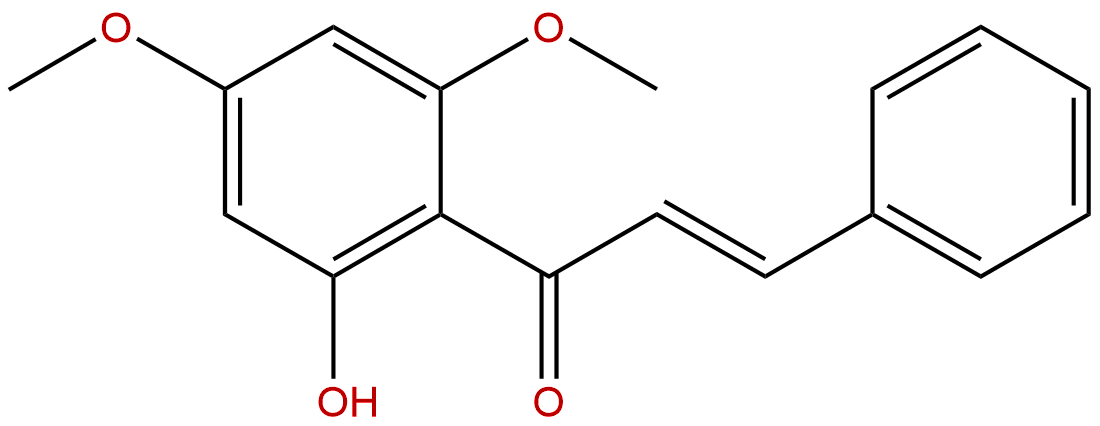


Product name: Flavokawain B
Synonym name:
Catalogue No.: BP3146
Cas No.: 1775-97-9
Formula: C17H16O4
Mol Weight: 284.311
Botanical Source:
Physical Description: Yellow powder
Type of Compound: Chalcones
Purity: 95%~99%
Analysis Method: HPLC-DAD or/and HPLC-ELSD
Identification Method: Mass, NMR
Packing: Brown vial or HDPE plastic bottle
The product could be supplied from milligrams to grams. Inquire for bulk scale.
We provide solution to improve the water-solubility of compounds, thereby facilitating the variety of activity tests and clinic uses.
For Reference Standard and R&D, Not for Human Use Directly.
Description:
Flavokawain B, the hepatotoxic constituent from kava root, induces GSH-sensitive oxidative stress through modulation of IKK/NF-κB and MAPK signaling pathways. Flavokawain B has potent anti-inflammatory, and anti-cancer activities, it can significantly inhibit production of NO and PGE2 in LPS-induced RAW 264.7 cells. Flavokawain B acts through ROS generation and GADD153 up-regulation to regulate the expression of Bcl-2 family members, thereby inducing mitochondrial dysfunction and apoptosis in HCT116 cells.
References:
Arch Biochem Biophys. 2014 Jul 15;554:44-54.
The chalcones cardamonin and flavokawain B inhibit the differentiation of preadipocytes to adipocytes by activating ERK.
We treated 3T3-L1 cells with a panel of 46 polyphenols and measured intracellular lipid accumulation by Sudan II staining. Four of them, including cardamonin and Flavokawain B, inhibited lipid We searched for polyphenols capable of inhibiting the lipid accumulation in 3T3-L1 cells, and investigated the mechanisms of two effective chalcones cardamonin and Flavokawain B on differentiation of preadipocytes.
METHODS AND RESULTS:
We treated 3T3-L1 cells with a panel of 46 polyphenols and measured intracellular lipid accumulation by Sudan II staining. Four of them, including cardamonin and Flavokawain B, inhibited lipid accumulation. In the further study, cardamonin and Flavokawain B inhibited lipid accumulation by downregulating the expression of CCAAT/enhancer binding protein (C/EBP)-β, C/EBPα, and peroxisome proliferator-activated receptor-γ (PPARγ) at both mRNA and protein levels. Cardamonin and Flavokawain B also increased phosphorylation of extracellular signal-regulated kinase (ERK) in the early phase of adipocyte differentiation. PD98059, an ERK inhibitor, restored C/EBPβ, PPARγ expression and intracellular lipid accumulation in adipocytes. Moreover, cardamonin and Flavokawain B also modulated the secretion of C-reactive protein, dipeptidyl peptidase IV, interleukin-6, tumor necrosis factor-α and fibroblast growth factor-21 in mature adipocytes.
CONCLUSIONS:
These results indicate that ERK activation and consequent downregulation of adipocyte-specific transcription factors are involved in the inhibitory effects of the chalcones cardamonin and Flavokawain B on adipocyte differentiation. Moreover, cardamonin and Flavokawain B are able to modulate secretion of adipokines in mature adipocytes.
Drug Des Devel Ther. 2015 Mar 6;9:1401-17.
In vivo antitumor and antimetastatic effects of flavokawain B in 4T1 breast cancer cell-challenged mice.
Flavokawain B (FKB) is a naturally occurring chalcone that can be isolated through the root extracts of the kava-kava plant (Piper methysticum). It can also be synthesized chemically to increase the yield. Flavokawain B is a promising candidate as a biological agent, as it is reported to be involved in a wide range of biological activities. Furthermore, Flavokawain B was reported to have antitumorigenic effects in several cancer cell lines in vitro. However, the in vivo antitumor effects of Flavokawain B have not been reported on yet.
METHODS AND RESULTS:
As presented in our study, Flavokawain B induced apoptosis in 4T1 tumors in vivo, as evidenced by the terminal deoxynucleotidyl transferase dUTP nick end labeling and hematoxylin and eosin staining of the tumor.Flavokawain B also regulated the immune system by increasing both helper and cytolytic T-cell and natural killer cell populations. In addition, Flavokawain B also enhanced the levels of interleukin 2 and interferon gamma but suppressed interleukin 1B. Apart from that, Flavokawain B was also found to inhibit metastasis, as evaluated by clonogenic assay, bone marrow smearing assay, real-time polymerase chain reaction, Western blot, and proteome profiler analysis.
CONCLUSIONS:
All in all, Flavokawain B may serve as a promising anticancer agent, especially in treating breast cancer.
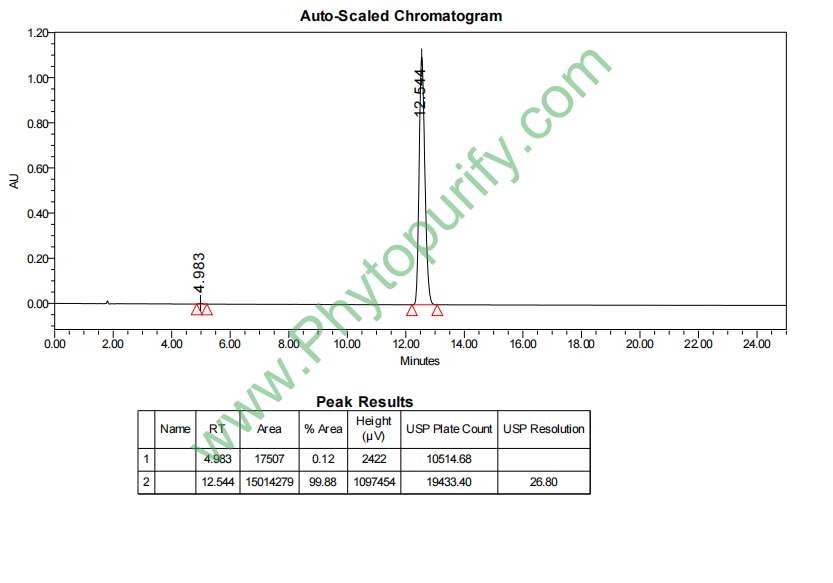
HPLC of Flavokawain B
Storage conditions:Short-term storage at 2~8℃, long-term storage at -20 ~ -80℃
55.7600
3.6725
3.6490
.0350
7.2174
44.6030
High
93.0904
2.0044
Yes
No
Yes
No
Yes
Yes
0.6
No
Yes
Yes
Yes
Natural products have always been an important source of innovative drug discovery, among which chalcone compounds have attracted much attention due to their wide range of biological activities. Flavokawain B (FKB), with CAS number 1775-97-9, is an orally active chalcone isolated from the traditional medicinal plant Piper methylsticum. Early research mainly focused on its anti-tumor potential, and found that it can induce cell apoptosis, inhibit key signaling pathways (such as NF - κ B, PI3K/Akt), and regulate matrix metalloproteinase (MMP-9) and reactive oxygen species (ROS) levels, exhibiting significant inhibitory activity on various tumor cells. In recent years, its pharmacological spectrum has been continuously expanding, especially in the field of central nervous system diseases, demonstrating remarkable antidepressant potential. Research has shown that FKB can act on multiple targets closely related to the pathophysiology of depression, including monoamine oxidase (MAO), glycogen synthase kinase-3 β (GSK3B), serotonin transporter (SLC6A4), and brain-derived neurotrophic factor (BDNF). This article aims to systematically review the chemical properties, plant sources, pharmacological activities, molecular mechanisms of action, pharmacological evaluation, and clinical application prospects of kaempferol B, in order to provide comprehensive scientific references for the deep development and transformation research of this natural product.
The chemical name of yellow kaempferol B is (2E) -1- (4-hydroxy-2-methoxyphenyl) -3-phenyl-2-propen-1-one, with a molecular formula of C17H16O3 and a molecular weight of 284.3110. Its core structure is a typical chalcone skeleton, which is an α, β - unsaturated ketone (styrylacetophenone) structure, where the A ring is 4-hydroxy-2-methoxyphenyl and the B ring is an unsubstituted phenyl group. This α, β - unsaturated ketone structure is a key pharmacophore for FKB to exert various biological activities, enabling it to act as a Michael addition receptor and interact covalently or non covalently with biomolecules such as thiol groups in proteins.
In terms of physicochemical properties, the lipid water partition coefficient (LogP) of FKB is 3.6725, indicating its good lipophilicity. Its topological polar surface area (TPSA) is 55.7600 Å ², which is relatively small. The water solubility is relatively low, about 0.0350 mg/mL, which is consistent with its hydrophobic characteristics. It is worth noting that its blood-brain barrier (BBB) permeability is predicted to be "high", which lays an important material foundation for its direct action on central nervous system targets and exerting neuropsychiatric activities such as antidepressant. In addition, preliminary pharmacological risk assessment showed that its mutagenicity risk in Ames test was low (result 0.6), and there was no significant hERG potassium channel inhibitory activity, indicating that its cardiotoxicity risk is small and has the potential for further development.
Yellow kaempferol B is mainly derived from the Piper methyl pepper plant in the family Piperaceae. The rhizome of Kava pepper is widely used in the South Pacific Islands to prepare the traditional drink "Kava wine" with sedative and anti anxiety effects. FKB is one of the various chalcones in kava pepper, coexisting with kava kaempferol A and C.
The extraction of FKB from plant materials is usually carried out using organic solvent extraction method. Dried and crushed root powder of kava pepper is commonly subjected to Soxhlet extraction or impregnation extraction using polar solvents such as methanol, ethanol, or acetone. After vacuum concentration, the crude extract is separated and purified using various chromatographic techniques such as silica gel column chromatography and high-performance liquid chromatography (HPLC) to obtain high-purity FKB monomers. With the development of synthetic chemistry, complete or semi synthetic routes for FKB have also been established, usually starting from corresponding aldehydes and ketones, and constructing its chalcone skeleton through Claisen Schmidt condensation reaction, which provides a guarantee for obtaining sufficient samples for further research.
Yellow kaempferol B exhibits diverse pharmacological activities, mainly focused on anti-tumor and antidepressant fields.
1. Antitumor activity:
A large number of in vitro and in vivo studies have confirmed that FKB has broad-spectrum growth inhibition and apoptosis promoting effects on prostate cancer, bladder cancer, breast cancer, lung cancer, liver cancer, stomach cancer, ovarian cancer and other malignant tumor cells. Its anti-tumor effect is mainly achieved by inducing cell cycle arrest (such as G2/M phase arrest) and triggering endogenous and exogenous apoptosis pathways. In addition, FKB can also inhibit the migration, invasion, and angiogenesis of tumor cells, demonstrating anti metastatic potential.
2. Antidepressant and neuroprotective activity:
This is an emerging and highly promising research direction for FKB. Preclinical studies have shown that FKB can significantly reduce animal immobility in various animal models of depression, such as chronic unpredictable mild stress models, forced swimming experiments, and tail suspension experiments, exhibiting antidepressant like behavioral effects comparable to the classic antidepressant fluoxetine. Its antidepressant effect is not limited to behavior improvement, but also manifests in combating stress-induced hippocampal neuron damage, promoting neurogenesis, and demonstrating neuroprotective properties. In addition to antidepressant effects, its ability to regulate the neurotransmitter system also suggests its potential application value in related diseases such as anxiety and cognitive impairment.
3. Anti inflammatory and antioxidant activity:
FKB effectively downregulates the expression of pro-inflammatory factors such as tumor necrosis factor - α (TNF - α) and interleukin-6 (IL-6) by inhibiting inflammatory core signaling pathways such as NF - κ B. Meanwhile, although it can promote the generation of ROS in tumor cells to induce apoptosis, it also exhibits certain antioxidant capacity in normal cells or inflammatory models, which can clear free radicals and alleviate oxidative stress damage. This anti-inflammatory and antioxidant property complements its anti-tumor and neuroprotective effects.
The multiple pharmacological activities of kaempferol B stem from its extensive regulation of cellular signaling networks, and its mechanism of action is complex and involves multiple targets.
1. Mechanism of anti-tumor effect:
* Inducing cell apoptosis: FKB can upregulate the expression of pro apoptotic protein Bax and downregulate the expression of anti apoptotic protein Bcl-2, leading to a decrease in mitochondrial membrane potential, release of cytochrome C, and activation of caspase-9 and caspase-3 cascade reactions. Meanwhile, it can also activate caspase-8 related to the death receptor pathway and cleave PARP protein, ultimately leading to cell apoptosis.
* Inhibition of critical survival signaling pathways: FKB can effectively inhibit the PI3K/Akt and MAPK (such as ERK, p38) signaling pathways, which play key roles in cell proliferation, survival, and drug resistance. In addition, it can inhibit the nuclear translocation and DNA binding activity of transcription factor NF - κ B, thereby suppressing the expression of a series of downstream genes related to cell survival, proliferation, inflammation, and metastasis.
* Inhibition of metastasis and angiogenesis: FKB downregulates the expression and activity of MMP-9, weakens the ability of tumor cells to degrade extracellular matrix, and inhibits invasion and metastasis. It can also inhibit the expression of vascular endothelial growth factor (VEGF) and exert anti angiogenic effects.
* Regulating autophagy and ROS: FKB can induce excessive generation of ROS in tumor cells, leading to oxidative stress-induced cell death. Its regulation of autophagy process also has duality, depending on cell type and microenvironment.
2. Mechanism of antidepressant action:
The antidepressant mechanism of FKB involves the regulation of the monoamine system, neurotrophic factors, and related signaling pathways.
* Inhibition of monoamine oxidase: FKB is a dual inhibitor of MAO-A and MAO-B, which can reduce the degradation of monoamine neurotransmitters (such as serotonin, norepinephrine, dopamine) in synaptic cleft, thereby increasing their concentration in the brain. This is one of the pathways of action of classic antidepressants.
* Regulating monoamine transporters and receptors: Research has shown that FKB may regulate the function of serotonin transporter (SLC6A4) and affect the reuptake of serotonin. Meanwhile, its regulatory effects on 5-HT1A receptor (HTR1A) and GABAA receptor (GABRA1) may also be involved in its anti anxiety and sedative effects.
* Activate the neurotrophic signaling pathway: FKB can activate cAMP response element binding protein (CREB) and upregulate the expression of its downstream target gene BDNF. The BDNF CREB pathway is crucial in neural plasticity, neuronal survival, and antidepressant effects. FKB can also inhibit the activity of GSK3 β, which is associated with depression and neurodegenerative diseases. Its inhibition can produce antidepressant and neuroprotective effects.
* Effects on catechol-O-methyltransferase (COMT): FKB may affect the activity of COMT, an enzyme responsible for degrading catecholamine neurotransmitters, and its regulation is also related to emotional stability.
Although yellow kaempferol B exhibits excellent in vitro biological activity, its pharmacological properties still need to be systematically evaluated.
Pharmacodynamics:
Existing research has confirmed that FKB has oral activity. Animal pharmacokinetic studies have shown that FKA can be absorbed into the systemic circulation after oral administration, but its absolute bioavailability may be affected by its low water solubility and first pass effect. It is widely distributed in the body, thanks to its good lipid solubility and high blood-brain barrier permeability, and can enter the central nervous system to exert direct effects. FKB is mainly metabolized in the body through the liver, involving II phase binding reactions such as glucuronidation and sulfation, as well as possible I phase oxidation reactions. Metabolites are mainly excreted through the kidneys. At present, there is a lack of data on the detailed pharmacokinetic parameters of it in the human body.
Security:
Preliminary toxicology studies have shown that FKB does not exhibit severe acute or subacute toxicity in experimental animals at effective anti-tumor or antidepressant doses. Its lack of hERG inhibitory properties is a positive signal. However, comprehensive evaluation is still needed for long-term toxicity, reproductive toxicity, and genetic toxicity (despite negative Ames test results). Special attention should be paid to the non-specific protein binding and potential hepatotoxicity risks that may arise from its alpha, beta unsaturated ketone structure, which are common challenges faced in the development of many chalcone compounds.
Formulation Challenge:
The low water solubility of FKB is the main bottleneck in its formulation development. To improve its oral bioavailability, advanced drug delivery technologies such as nanocrystals, liposomes, solid dispersions, cyclodextrin inclusion complexes, or self microemulsion delivery systems may be required.
Yellow kaempferol B, as a natural small molecule with multiple targets and functions, has broad clinical application prospects but is also full of challenges.
Prospect:
1. Development of anti-tumor drugs: FKB can be used as a monotherapy or in combination with existing chemotherapy drugs (such as paclitaxel, cisplatin, etc.) to enhance efficacy, overcome drug resistance, and reduce side effects. Its anti metastatic and anti angiogenic properties also make it promising for inhibiting tumor progression.
2. New type of antidepressant: In response to the problems of slow onset, insufficient efficacy, and multiple side effects of existing antidepressants, the multi-target mechanism of action of FKB (MAOI, BDNF upregulation, GSK3 β inhibition, etc.) may bring faster and more lasting therapeutic effects, especially for patients with refractory depression. Its high BBB permeability is a key advantage.
3. Combination therapy and disease modification: In neurodegenerative diseases such as Alzheimer's disease, the anti-inflammatory, antioxidant, GSK3 β inhibitory, and BDNF upregulation effects of FKB may provide potential for disease modification.
4. Chemical preventive agents: Due to its anti-inflammatory and antioxidant properties, FKB may be developed as a chemopreventive agent for preventing chronic inflammation related diseases, including certain cancers.
Challenges and Prospects:
1. Deep analysis of the mechanism of action: More precise clarification is needed on the molecular basis of FKB's selective action in normal and diseased cells, as well as its dominant target in the complex signaling network in vivo.
2. Optimization of drug properties: It is necessary to address its water solubility and metabolic stability issues through structural modification or formulation methods, and systematically complete preclinical safety evaluations.
3. Clinical translational studies: The biggest leap forward is from preclinical research to human clinical trials. Rigorous Phase I-III clinical trials need to be designed to validate its safety, pharmacokinetic characteristics, and effectiveness for specific indications (such as specific types of tumors or subtypes of depression) in humans.
4. Intellectual Property and Resources: It is crucial to ensure a stable supply of raw materials (such as plant extraction or chemical synthesis) and establish a comprehensive intellectual property protection system.
Future research should focus on rational design based on FKB structure, synthesizing derivatives or analogues with higher activity, stronger selectivity, and better drug properties, while actively exploring their application value as "enhancing efficacy and reducing toxicity" components in drug combination therapy.
Yellow kaempferol B is a multifunctional chalcone compound derived from traditional medicinal plants. It not only demonstrates strong potential in the field of anti-tumor by regulating the apoptosis pathway and inhibiting the NF - κ B/PI3K/Akt signaling axis, but also becomes a highly promising new antidepressant candidate due to its ability to penetrate the blood-brain barrier and act on multiple central nervous system targets such as MAO, GSK3 β, and BDNF. Its multi-target action characteristics conform to the concept of modern complex disease systemic therapy. Although there are still many challenges in drug development, mechanism specificity, and clinical translation, with in-depth research on its pharmacological efficacy, structure-activity relationship, and formulation technology, kaempferol B is expected to develop into a new drug or lead compound for the treatment of malignant tumors, depression, and other related diseases in the future, fully demonstrating the sustained vitality of natural products in innovative drug research and development.
