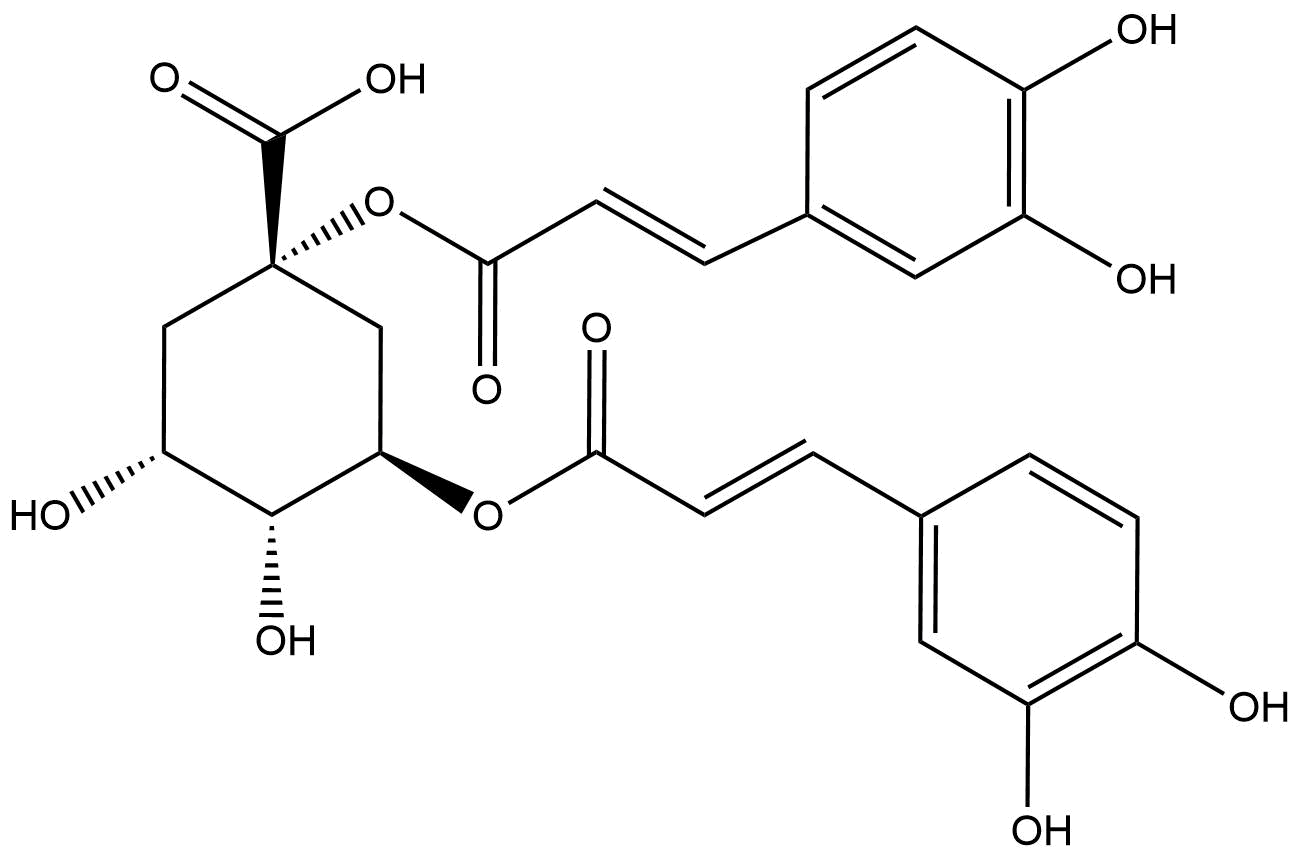


Product name: 1,5-Dicaffeoylquinic acid
Synonym name: Cynarin; Cynarine
Catalogue No.: BP0006
Cas No.: 19870-46-3
Formula: C25H24O12
Mol Weight: 516.455
Botanical Source: globe artichoke (Cynara scolymus), quince fruit (Cydonia oblonga), Caucasian whortleberry (Vaccinium arctostaphylos), Aster scaber and Ipomoea batatas (sweet potato) tubers
Physical Description:
Type of Compound: Phenylpropanoids
Purity: 95%~99%
Analysis Method: HPLC-DAD or/and HPLC-ELSD
Identification Method: Mass, NMR
Packing: Brown vial or HDPE plastic bottle
Storage: Store in a well closed container, protected from air and light. Put into refrigerate or freeze for long term storage.
Whenever possible, you should prepare and use solutions on the same day. However, if you need to make up stock solutions in advance, we recommend that you store the solution as aliquots in tightly sealed vials at -20℃. Generally, these will be useable for up to two weeks.
The product could be supplied from milligrams to grams, up to kilograms
Inquire for bulk scale.
Descriptions:
1,5-Dicaffeoylquinic acid (1,5-DQA), a caffeoylquinic acid derivative isolated from Aster scaber, has neuroprotective effects, can prevent Aβ(42)-induced neurotoxicity through the activation of PI3K/Akt followed by the stimulation of Trk A, then the inhibition of GSK3β as well as the modulation of Bcl-2/Bax.[1]
1,5-Dicaffeoylquinic acid has antioxidant activity, and is stronger than that of ascorbic acid.[2]
1,5-Dicaffeoylquinic Acid has protective effects against MPP~+ induces neurotoxicity of PC12 Cells, it (50 μmol/L) pretreatment can inhibit the MPP+-induced up-regulation of the expression of α-synuclein mRNA and protein.[3]
1, 5-Dicaffeoylquinic acid can mediate glutathione synthesis through activation of Nrf2 protects against OGD/reperfusion-induced oxidative stress in astrocytes.[4]
References:
[1] XIAO, Hai-bing, WANG, et al. Chinese Medl Jl, 2011, 124(17):2628-35.
[2] Slanina J, Paulová H, Humpa O, et al. Organic Chem, 1999, 72.
[3] Cao X, Xiao H, Li H. Acta Med Universit Sci Et Technol Huazhong, 2010, 39(4):435-38.
[4] Xu C, Xiao H, Zhang Y, et al. Brain Res, 2010, 1347(1):142-8.
[5] Dong Y, Zhang Y, Liu Y, et al. Chinese J Pharm, 2010, 41(6):447-9.
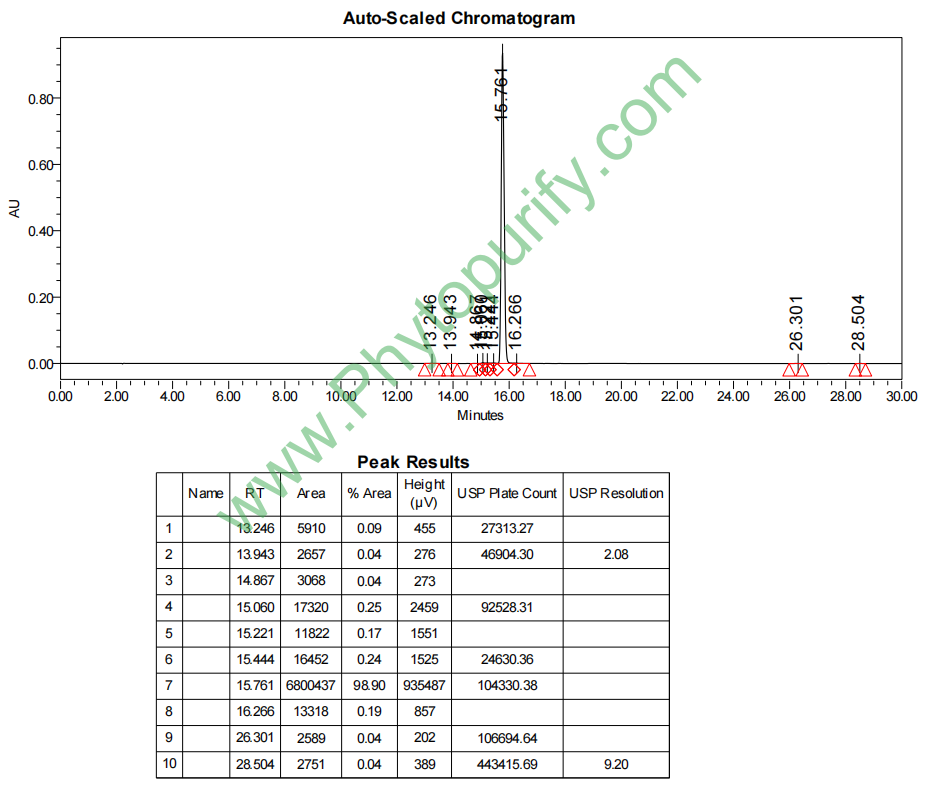
HPLC of 1,5-Dicaffeoylquinic acid
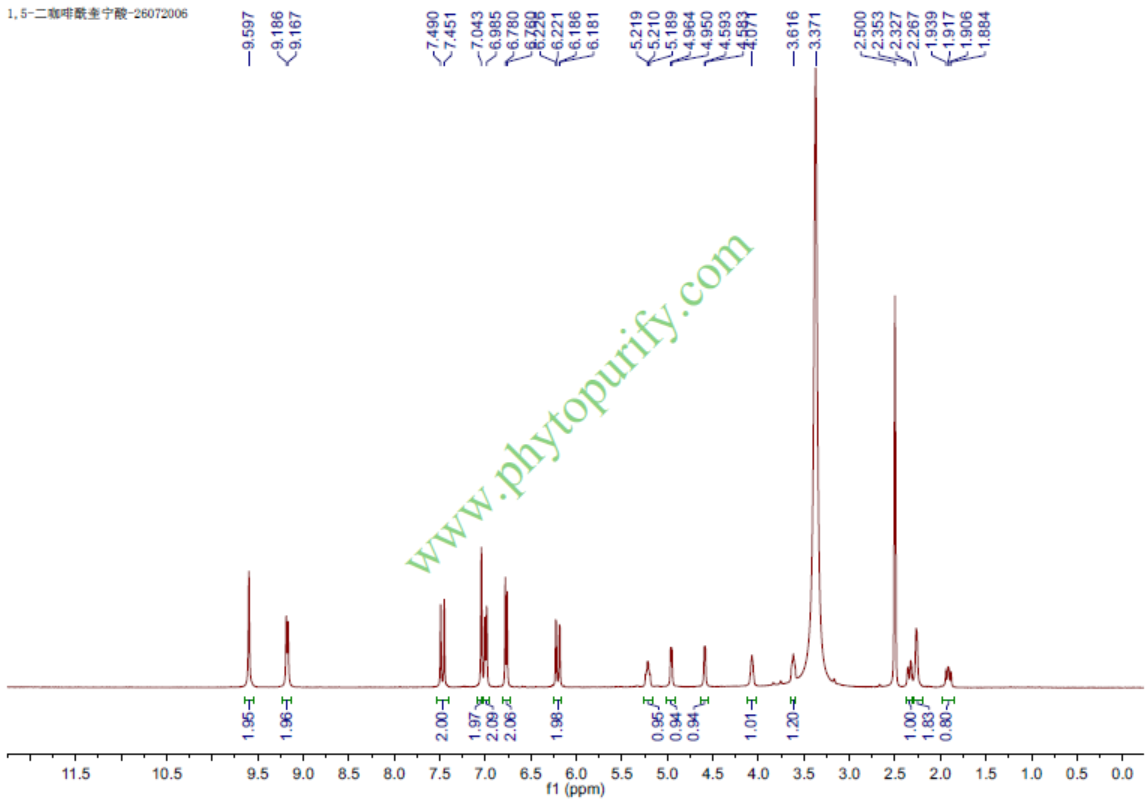
HNMR of 1,5-Dicaffeoylquinic acid
Storage conditions:Short-term storage at 2~8℃, long-term storage at -20 ~ -80℃
1,5-dicaffeoylquinic acid (Cynarine, CAS number: 30964-13-7) is an important natural derivative of caffeoylquinic acid, widely present in Asteraceae plants, especially medicinal plants such as Cynara scolymus. As a polyphenolic compound, 1,5-dicaffeoylquinic acid has received widespread attention in the field of natural product pharmacology in recent years due to its significant antioxidant activity and free radical scavenging ability. A large number of studies have shown that this compound shows good potential in the prevention and treatment of cardiovascular diseases, especially atherosclerosis, involving a variety of molecular targets and signal pathways.
This article aims to systematically review the chemical structure and physicochemical properties, plant sources and extraction methods, pharmacological activity and mechanism of action, pharmacological evaluation and pharmacokinetic characteristics of 1,5-dicaffeoylquinic acid, as well as its potential value in clinical applications, providing a theoretical basis and reference for subsequent related research.
1,5-dicaffeoylquinic acid is a derivative composed of two caffeoyl groups connected to quinic acid molecules via ester bonds. Its molecular formula is C25H24O12 and its molecular weight is 516.4550. Structurally, the quinic acid backbone provides multiple hydroxyl sites, giving the molecule strong hydrophilicity and multi hydroxyl characteristics.
In terms of physical and chemical properties, the LogP value of 1,5-dicaffeoylquinic acid is 1.2647, indicating its moderate lipid solubility, which is beneficial for membrane penetration. The polar surface area (TPSA) is as high as 211.28 Å ², reflecting its strong molecular polarity and a water solubility of 0.6256, indicating its good solubility in aqueous phase. In addition, the compound has low blood-brain barrier permeability, negative hERG channel inhibition test results, and 0 Ames mutagenicity test, indicating its high safety and good pharmacological basis.
1,5-dicaffeoylquinic acid is mainly present in Asteraceae plants, especially in the leaves of Cynara scolymus, where it is abundant. In addition, some wild plants of the Asteraceae family and traditional medicinal plants have also been reported. The compound in plants mostly exists in free or bound form, and its content is significantly affected by growth environment, harvesting time, and processing methods.
The extraction method often uses organic solvent extraction combined with liquid chromatography separation technology. Common extraction solvents include methanol, ethanol, and their aqueous solutions. Ultrasonic assisted extraction or reflux extraction is used to improve extraction efficiency. The extraction solution is concentrated, liquid-liquid partitioned, and purified by silica gel column chromatography, and the purity is ultimately determined by high performance liquid chromatography (HPLC) or mass spectrometry (MS). In recent years, supercritical CO2 extraction and membrane separation technologies have also been attempted to be applied to the extraction of this compound in order to achieve efficient and green separation.
1,5-dicaffeoylquinic acid has significant antioxidant activity and can effectively scavenge various free radicals, including hydroxyl radicals (· OH), superoxide anions (O2 · -), and hydrogen peroxide (H2O2). Both in vitro DPPH radical scavenging assay and ABTS+radical scavenging assay showed concentration dependent antioxidant capacity. Its antioxidant mechanism mainly relies on the hydrogen donor action of multiple phenolic hydroxyl groups in the molecule, which can stabilize free radicals and block lipid peroxidation chain reactions.
Inflammatory response is the pathological basis of various chronic diseases, and 1,5-dicaffeoylquinic acid exhibits good anti-inflammatory effects by inhibiting pro-inflammatory cytokines (such as TNF - α, IL-6) and nuclear factor kappa B (NF - κ B) signaling pathways. Cell experiments have shown that this compound can significantly reduce the expression of inflammatory mediators in macrophages and alleviate inflammatory damage.
In the atherosclerosis model, 1,5-dicaffeoylquinic acid plays a cardiovascular protective role by regulating lipid metabolism, inhibiting vascular endothelial cell damage and reducing oxidative stress. It can promote cholesterol reverse transport, increase high-density lipoprotein (HDL) function, reduce low-density lipoprotein (LDL) oxidation, and delay plaque formation.
In addition, 1,5-dicaffeoylquinic acid has also been preliminarily studied in liver protection, anti-tumor, and neuroprotection, demonstrating pharmacological potential with multiple targets and mechanisms.
The mechanism of action of 1,5-dicaffeoylquinic acid in atherosclerosis and related diseases involves several key molecular targets:
AMPK(PRKAA1)As a cellular energy sensor, AMPK activation promotes lipid metabolism balance and antioxidant defense. 1,5-dicaffeoylquinic acid can activate the AMPK signaling pathway, enhance cellular energy metabolism, and inhibit lipid accumulation.
EHMT2(EHMT2)A histone methyltransferase involved in gene expression regulation. This compound may affect the expression of inflammation and metabolism related genes by regulating epigenetic modifications mediated by EHMT2.
MCL1 and BCL2 These two anti apoptotic proteins play a crucial role in cell survival. 1,5-dicaffeoylquinic acid protects vascular endothelial cells from oxidative stress-induced apoptosis by regulating the expression of MCL1 and BCL2.
RECQ1 DNA helicase, involved in DNA repair. This compound may promote RECQ1 activity and enhance the cell's ability to repair oxidative damage.
LOX-1 Oxidizing low-density lipoprotein receptor mediates the formation of atherosclerotic plaque. 1,5-dicaffeoylquinic acid inhibits LOX-1 expression, reduces the internalization of oxidized LDL and inflammatory response.
ABCA1 ATP binding cassette transporter A1, a key cholesterol efflux protein. This compound promotes ABCA1 expression, enhances cholesterol efflux, and prevents lipid deposition.
IDO1 Indoleamine 2,3-dioxygenase 1 is involved in immune regulation. 1,5-dicaffeoylquinic acid may regulate IDO1 activity, modulate the immune environment, and alleviate inflammation.
The synergistic effect of the above targets constitutes the multi-dimensional mechanism basis for the prevention and treatment of atherosclerosis by 1,5-dicaffeoylquinic acid.
The pharmacological parameters of 1,5-dicaffeoylquinic acid show that it has good development potential. Moderate molecular weight (516.4550) and LogP (1.2647) are beneficial for in vivo distribution and cell membrane penetration. Although high TPSA values (211.28 Å ²) limit blood-brain barrier penetration, they reduce the risk of central nervous system side effects. The water solubility is 0.6256, indicating that it has a certain solubility in the aqueous phase, which is beneficial for the development of oral formulations.
In terms of safety, hERG channel inhibition is negative, reducing the risk of arrhythmia; Ames test negative, indicating no significant mutagenicity. There is limited research on pharmacokinetics in vivo, but preliminary data suggests that it is rapidly absorbed orally, has moderate bioavailability, mainly metabolized through the liver, and has diverse excretion pathways. Further systematic evaluation of its metabolic enzyme involvement and drug interaction risks is needed in the future.
In view of the multiple roles of 1,5-dicaffeoylquinic acid in antioxidation, anti-inflammatory and regulation of lipid metabolism, it has broad application prospects in the prevention and treatment of atherosclerosis and related cardiovascular diseases. Currently, based on its natural sources and good safety, 1,5-dicaffeoylquinic acid is considered an ideal candidate ingredient for functional foods, health supplements, and adjuvant therapy drugs.
Future clinical research should focus on the dosage range, long-term safety, and combined effects with existing cardiovascular drugs. In addition, by combining modern drug design techniques, structural optimization and nanocarrier delivery, it is expected to enhance its bioavailability and targeting, and promote its clinical drug translation.
As a natural caffeoylquinic acid derivative with significant antioxidant and free radical scavenging activities, 1,5-dicaffeoylquinic acid exhibits multi target and multi mechanism pharmacological activities, especially in the field of atherosclerosis prevention and treatment. Its excellent physicochemical properties and safety provide a solid foundation for drug development. With the in-depth analysis of molecular mechanisms and the advancement of pharmacokinetic research, 1,5-dicaffeoylquinic acid is expected to become an important research object and application resource in the fields of natural product pharmacology and cardiovascular disease treatment. Future research needs to further integrate the multidisciplinary forces of pharmacology, medicinal chemistry, and clinical medicine to promote their transition from laboratory to clinical applications.
