


Synonym name: Limone; Citrolimonin; Evodine; Dictamnolactone; Obaculactone
Catalogue No.: BP0866
Cas No.: 1180-71-8
Formula: C26H30O8
Mol Weight: 470.518
Botanical Source: oranges and other citrus fruits (Citrus spp.). Also from other Rutaceae spp., e.g. Evodia, Phellodendron, Dictamnus and Luvunga spp.
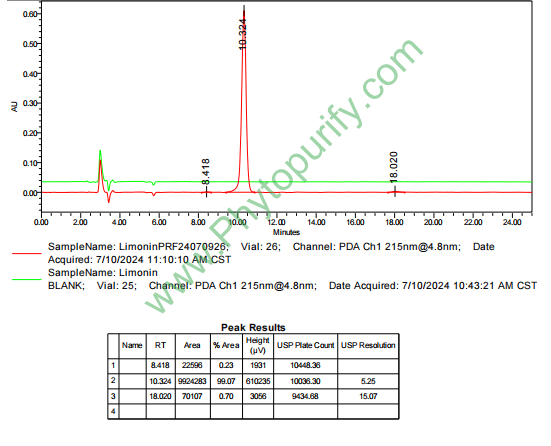
Purity: 95%~99%
Analysis Method: HPLC-DAD or/and HPLC-ELSD
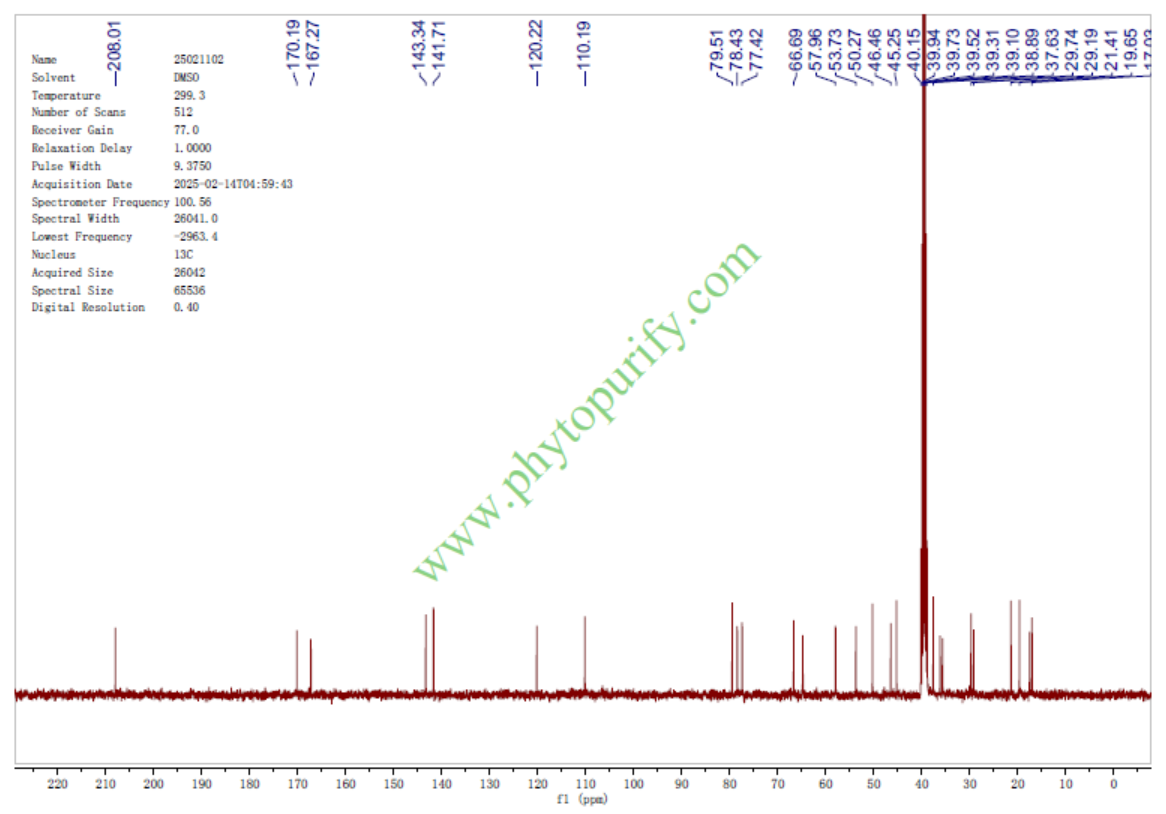
Identification Method: Mass, NMR
Packing: Brown vial or HDPE plastic bottle
Can be supplied from milligrams to grams.
For Reference Standard and R&D, Not for Human Use Directly.
Inquire for bulk scale.
Description:
Limonin is a widely used dietary supplement, one of the most prevalent citrus limonoids, which has antioxidant, anti-inflammatory, anticancer and anti-human immunodeficiency virus(HIV)activity. It induced a down regulation of TLR-2 ,TLR-4,TNF-α, TNF-α/IL-10,NF-κB and caspase. It showed the potent inhibition of CYP3A4, with IC50 values of 6.20 μM (CYP3A4/testosterone) and 19.10 μM (CYP3A4/midazolam).
References:
J Nat Sci Biol Med. 2013 Jan;4(1):126-33.
Influence of limonin on Wnt signalling molecule in HepG2 cell lines.
The role of Limonin as potent anti carcinogenic, apoptosis and chemotherapeutic agents has been supported by limited studies.
METHODS AND RESULTS:
In this study, Limonin is identified as a potent anti proliferative agent against human hepatoma HepG2 cells based on the cell viability study, LDH leakage assay. Induction of apoptosis in HepG2 cells by Limonin was evidenced by western blot analysis of Bax, Cyclin D1, Caspase 3 and Caspase9. Since Wnt signalling is involved in the initiation and sustaining of hepatocellular carcinoma we studied differential expression of LRP5, LRP6 and DKK wnt players.
CONCLUSIONS:
Limonin found to down regulate these players which forms a rationale for further investigation on effect on Limonin in cancer therapy.
Planta Med. 2003 Oct;69(10):910-3.
Effect of limonin and nomilin on HIV-1 replication on infected human mononuclear cells.
In the last years several plant-derived natural compounds have been screened for their anti-HIV activity in order to find lead compounds with novel structures or mechanisms of action. Among these, several triterpenoids have been found to exhibit an antiretroviral activity with different mechanisms of action.
METHODS AND RESULTS:
In this study the effect of two limonoids, Limonin and nomilin, on the growth of human immunodeficiency virus-1 (HIV-1) in culture of human peripheral blood mononuclear cells (PBMC) and on monocytes/macrophages (M/M) is described. Limonin and nomilin were found to inhibit the HIV-1 replication in all cellular systems used. A dose-dependent inhibition of viral replication was observed in PBMC isolated from healthy donors and infected with HIV-1 strain after incubation with Limonin and nomilin (EC (50) values: 60.0 microM and 52.2 microM, respectively). The two terpenoids inhibited at all concentrations studied the production of HIV-p24 antigen even when the PBMC employed were chronically infected (EC (50) values of 61.0 microM for Limonin and 76.2 microM for nomilin). Moreover, these compounds inhibited the HIV-1 replication even in infected M/M. In this cellular system the inhibitory effect was significant at the concentrations of 20 microM, 40 microM and 80 microM starting from day 14 and reached the maximum effect after 18 days of incubation. As regards the mechanism of action, Limonin and nomilin inhibit in vitro HIV-1 protease activity.
CONCLUSIONS:
In general, the results obtained point out a similar anti-HIV activity of Limonin and nomilin indicating that this activity is not drastically influenced by the structural difference between the two compounds.
Eur J Pharmacol. 2014 Oct 5;740:676-82.
Limonin attenuates hepatocellular injury following liver ischemia and reperfusion in rats via toll-like receptor dependent pathway.
Limonin has been shown to exhibit anti-inflammatory and antioxidant properties in the settings of chemically induced hepatic injury.
METHODS AND RESULTS:
The current study aimed to investigate the protective effects of Limonin on experimentally-induced hepatic ischemia reperfusion (I/R) injury in rats. Rats were injected IP with either DMSO or Limonin (100 mg/kg BW), 30 min before submission to 45 min of ischemia, followed by 1 h of reperfusion. Limonin ameliorated the deleterious effects of I/R as indicated by improvement in liver function tests, reduction of lactate dehydrogenase, reduction of oxidative stress, decrease in hepatocyte degeneration, and pyknosis. Furthermore, pretreatment of I/R rats with Limonin, induced a significant down regulation in the various elements of the toll like receptor (TLR)pathway including TLR-2 and TLR-4, myeloid differentiation factor 88 (MYD88) and toll/IR-1(TIR)-domain-containing adaptor protein inducing interferon-beta (TRIF) and the downstream effectors TNF-α, TNF-α/IL-10 ratio and nuclear factor-κB (NF-κB). It also increased the anti-inflammatory cytokine IL-10 and decreased the activity of the apoptotic marker, caspase-3.
CONCLUSIONS:
These data indicate that Limonin exerts antioxidant and anti-inflammatory effects in ischemic liver, thus, protecting hepatocytes against I/R injury in rats. The mechanism of these hepatoprotective effects appears to be related to the antioxidant and anti-inflammatory potential of Limonin mediated by the down regulation of TLR- signaling pathway.
HPLC of Limonin
NMR of Limonin
Storage conditions:Short-term storage at 2~8℃, long-term storage at -20 ~ -80℃
Limonin, CAS number 1180-71-8, is a natural bitter tetracyclic triterpenoid lactone widely found in citrus plants. As a typical bitter component in citrus fruits, limonin not only endows fruits with unique bitter characteristics, but also attracts widespread attention in the fields of pharmacology and natural product chemistry due to its diverse biological activities. In recent years, with the in-depth study of the pharmacological mechanisms of natural products, limonoid has become a potential candidate molecule for drug development due to its significant anti-tumor and antiviral activities, as well as its inhibitory effect on drug metabolizing enzyme CYP3A4.
Lemon bitter extract exhibits multiple functions in anti-tumor effects, such as inducing cancer cell apoptosis and inhibiting tumor cell proliferation, involving multiple key molecular targets such as MCL1, BCL2, STAT3, etc., demonstrating a complex and multi-target mechanism of action. In addition, its inhibitory effect on HIV-1 virus and effective inhibitory ability on CYP3A4 enzyme suggest its potential value in antiviral and drug interaction regulation. This article provides a systematic review of the chemical structure and physicochemical properties, plant sources and extraction methods, pharmacological activity and mechanism of action, pharmacological evaluation and pharmacokinetic characteristics of limonin, and prospects its clinical application prospects, providing theoretical basis and research direction for natural product pharmacology research and new drug development.
Lemon bitters belong to the tetracyclic triterpenoid lactone class, with a molecular formula of C26H30O8 and a molecular weight of 470.5180. Its chemical structural features include a typical four ring skeleton containing multiple oxygen functional groups, such as lactone rings and ketone groups, giving it unique chemical activity. The LogP value of limonin is 2.2542, indicating that it has moderate lipid solubility, which is beneficial for cell membrane penetration and in vivo distribution. The polar surface area (TPSA) is 104.57 Å ², indicating that it has a certain polarity that facilitates binding to biomolecule targets.
Low water solubility (0.0075 mg/mL) limits its solubility in aqueous media, which may affect its bioavailability. It is worth noting that limonin has a high blood-brain barrier permeability, suggesting that it may play a role in the central nervous system or affect neurological related diseases. In addition, limonin does not exhibit hERG channel inhibitory activity, reducing its potential risk of cardiac toxicity. The Ames test result is 0.9, indicating a low risk of genotoxicity and meeting safety requirements.
Lemonin is mainly distributed in the fruits of citrus plants, especially in the peels and seeds of lemons (Citrus limon), bitter oranges (Citrus aurantium), and grapefruits (Citrus paradisi), where the content is relatively high. Its content is significantly affected by factors such as variety, maturity, and growth environment. Traditionally, limonin has been widely studied as the main component of bitter taste in citrus fruits.
The methods for extracting limonin mainly include solvent extraction, ultrasound assisted extraction, and supercritical fluid extraction. Common solvents include ethanol, methanol, ethyl acetate, and acetone. Ethanol is widely used due to its high safety and extraction efficiency. The extraction process generally includes steps such as drying and crushing the fruit peel, solvent extraction, concentration, and purification. During the purification process, techniques such as silica gel column chromatography and reverse phase high-performance liquid chromatography (RP-HPLC) are commonly used to obtain high-purity limonin.
In recent years, green extraction technologies such as ultrasound assisted and microwave-assisted extraction have been introduced to improve extraction efficiency and reduce solvent usage, in line with the environmental trend of modern natural product extraction. In addition, the stability study of limonin has also promoted the optimization of its extraction process, ensuring the integrity and biological activity of its active ingredients.
Lemon bitter extract exhibits various significant pharmacological activities, mainly focused on anti-tumor and antiviral fields.
Lemon bitter extract exhibits inhibitory effects on various tumor cell lines, especially inducing apoptosis in human colon adenocarcinoma cells, with an IC50 of approximately 54.74 μ M. The mechanism of its anti-tumor activity involves multiple signaling pathways and molecular targets, including the regulation of anti apoptotic proteins MCL1 and BCL2, inhibition of transcription factor STAT3, and decreased activity of matrix metalloproteinase MMP2. Lemon bitter extract can also affect the DNA topoisomerases TOP1 and TOP2A of tumor cells, blocking the proliferation cycle of tumor cells. In addition, limonin has an inhibitory effect on the expression of HIF1A in the tumor microenvironment, reducing the tumor's ability to adapt to hypoxia and inhibiting tumor invasion and metastasis.
In both in vitro and in vivo models, limonoid has shown good anti-tumor effects, and when used in combination with traditional chemotherapy drugs, it can enhance drug efficacy and reduce the occurrence of drug resistance. Its regulation of MAPK1 and estrogen receptor ESR1 further enriches its molecular mechanism of anti-tumor activity.
Lemon bitter extract exhibits inhibitory effects on HIV-1 virus, with an EC50 of 60.0 μ M. Its antiviral mechanism may be related to interfering with the activity of key enzymes in the virus replication cycle, while blocking the invasion and spread of the virus by regulating the signaling pathways of host cells. In addition, the effective inhibition of CYP3A4 enzyme by limonin (IC50 of 6.2 μ M) suggests that it may affect the metabolism of antiviral drugs and pose potential drug interaction risks, but also provides regulatory strategies for combination therapy.
In addition, the activity of limonin in other viral models needs further exploration, and preliminary studies have shown that it has certain inhibitory potential against certain respiratory and hepatitis viruses.
The pharmacological activity of limonin is based on its ability to regulate multiple targets and pathways. Its main targets include anti apoptotic proteins, transcription factors, enzymes, and signaling molecules, forming a complex network of action.
In addition, as an effective inhibitor of CYP3A4, limonin affects the activity of drug metabolizing enzymes and may regulate the in vivo metabolism of various drugs, which has important pharmacokinetic significance.
The molecular weight of limonin is 470.5180, which is within the reasonable range of drug molecular weight. Its LogP value of 2.2542 indicates moderate lipid solubility, which is beneficial for cell membrane penetration and in vivo distribution. The TPSA is 104.57 Å ², which meets the polarity requirements of drug molecules and is conducive to binding to the target.
Low water solubility (0.0075 mg/mL) may limit oral bioavailability, and solubility needs to be improved through formulation technology. Its high blood-brain barrier permeability suggests a potential role in the central nervous system, but attention should also be paid to potential central neurotoxicity.
In terms of safety, limonin does not exhibit hERG channel inhibition, reducing the risk of cardiac toxicity. The Ames test result is 0.9, indicating no significant genotoxicity and meeting the drug safety requirements.
Pharmacokinetic studies have shown that limonoid has good stability and distribution characteristics in vivo, but its metabolic pathway has not been fully elucidated. As a CYP3A4 inhibitor, limonoid may affect the metabolism of itself and other drugs, indicating the need to carefully evaluate drug interactions when using combination therapy.
Lemon bitter extract exhibits broad clinical application potential due to its multi-target and multi mechanism anti-tumor and antiviral activities. Its ability to induce tumor cell apoptosis, inhibit tumor invasion and metastasis provides new molecular targets and treatment strategies for tumor therapy. The application prospects, especially in digestive system tumors such as colon cancer, deserve further research.
The anti-HIV-1 activity makes limonin a candidate molecule for antiviral drug development, especially in the context of increasingly severe virus resistance, where the multi-target action advantage of natural products is significant. In addition, the inhibitory effect of limonin on CYP3A4 suggests its potential application in drug metabolism regulation, but caution should also be exercised regarding the risk of drug interactions.
Future research should focus on pharmacokinetic optimization, formulation improvement, and preclinical safety evaluation of limonoid. At the same time, combining modern molecular biology techniques, we will deeply analyze its mechanism of action and explore more potential targets. The conduct of clinical trials will be a key step in verifying its efficacy and safety.
In addition, the structural modification and derivative development of limonin may enhance its activity and pharmacokinetic properties, providing new ideas for the design of novel anti-tumor and antiviral drugs. The combination of natural products and modern medicinal chemistry will promote the clinical application of limonoid.
As a typical citrus natural product, limonin has become a hot topic in natural product pharmacology research due to its unique chemical structure and diverse biological activities. Its multi-target regulatory ability in the fields of anti-tumor and antiviral provides valuable molecular framework and mechanism of action basis for the development of new drugs.
Despite challenges such as low water solubility and potential drug interactions, the good safety and pharmacological characteristics of limonoid make it highly valuable for development. In the future, through structural optimization, formulation improvement, and systematic pharmacokinetic and toxicological studies, limonoid is expected to become a competitive natural medicine or drug lead compound in clinical practice.
In summary, as a multifunctional natural product, limonoid not only enriches the pharmacological research content of natural products, but also provides new ideas and directions for the innovation of anti-tumor and antiviral drugs, which is worthy of continuous in-depth exploration in basic research and clinical translation.
