Introduction/Overview
Respiratory infection is one of the most common diseases worldwide, with diverse pathogens including viruses, bacteria, etc., posing a serious threat to human health. Although modern medicine has developed various antibiotics and antiviral drugs, the emergence of drug resistance, drug side effects, and the lack of specific drugs for some viral infections have made the search for new, safe, and effective treatment strategies an important direction in pharmacological research. In this context, natural products derived from plants have become valuable resources for innovative drug development due to their structural diversity, multi-target potential, and relatively low toxicity. 4-p-Menthan-1,8-diol, also known as terpenes, has attracted attention as a monoterpene compound of the menthone class due to its potential for relieving respiratory symptoms in traditional medicine. In recent years, with the development of molecular pharmacology and network pharmacology, its anti respiratory infection activity and its regulatory effect on key inflammatory targets such as TLR4, NF - κ B, TNF - α have gradually been revealed. This article aims to provide a systematic review of the chemical properties, plant sources, pharmacological activities, mechanisms of action, medicinal properties, and application prospects of 4-p-p-alkane-1,8-diol in the treatment of respiratory infections, in order to provide scientific basis for the deep development and clinical application of this natural product.
Chemical structure and physicochemical properties
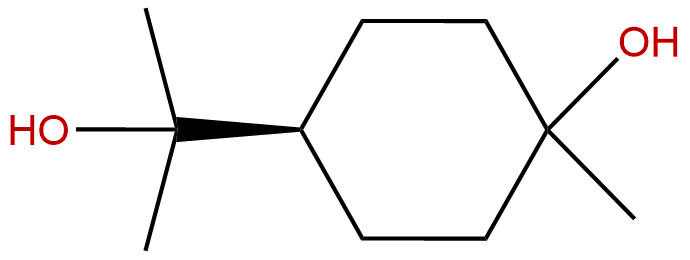
4-p-camphoran-1,8-diol, CAS number 565-48-0, is a bicyclic monoterpene diol. Its molecular formula is C10H20O2 and its molecular weight is 172.2680 g/mol. Structurally, it belongs to the derivative of p-menthane skeleton, specifically a saturated camphor structure with hydroxyl groups substituted at positions 1,8-. This dihydroxy modification increases its polarity compared to many monoterpene hydrocarbons.
The key physicochemical property parameters are as follows: the calculated lipid water partition coefficient (LogP) is 1.7095, indicating that the compound has moderate lipophilicity, which is conducive to transmembrane transport, but retains some water solubility. The topological polar surface area (TPSA) is 40.4600 Å ², reflecting the polarity characteristics brought by two hydroxyl groups. The theoretically calculated water solubility is about 5.9896 mg/L, which belongs to the range of slightly soluble to poorly soluble. This may need to be improved in actual formulation development through methods such as salt formation or the use of solubilizers. It is worth noting that the prediction shows that it has a high blood-brain barrier permeability, suggesting that it may have a potential role in inflammation or infection related to the central nervous system, but attention should also be paid to the risk of central side effects. In addition, the preliminary screening results of the key drug properties showed that the hERG inhibition risk was "no", and the Ames test mutagenicity prediction value was 0.0, indicating low risks of cardiac and genetic toxicity and a good safety starting point.
Plant sources and extraction methods
4-p-camphoran-1,8-diol is not widely distributed in the plant kingdom, and its main known sources are related to plants in the Lauraceae and Myrtaceae families. The presence of this component or its derivatives can be detected in the volatile oils of some Eucalyptus plants and some Cinnamomum plants. It often coexists with other monoterpenes such as eucalyptus oil, alpha terpineol, etc. in the essential oil of plants.
The extraction method mainly follows the conventional separation process of natural terpenoids:
1. Extract Firstly, crude essential oils are obtained from plant materials such as leaves and branches through steam distillation or simultaneous distillation extraction. 4-p-camphoran-1,8-diol, as an oxygen-containing monoterpene, exists in the medium polarity fractions of essential oils.
2. Separation and Purification The composition of crude essential oil is complex and requires further separation. Column chromatography is commonly used, using silica gel as the stationary phase and gradient elution with different ratios of petroleum ether ethyl acetate or n-hexane ethyl acetate to separate each component based on polarity differences. Due to the presence of two hydroxyl groups, 4-p-p-alkane-1,8-diol has a relatively high polarity and is usually eluted in solvents with a higher proportion of ethyl acetate.
3. Identification and enrichment The separated fractions are analyzed and identified by thin layer chromatography (TLC), gas chromatography-mass spectrometry (GC-MS), or high performance liquid chromatography (HPLC). GC-MS can be used for preliminary identification based on its specific mass spectrometry fragments and retention index, while HPLC (especially preparative HPLC) can be used for further purification to obtain high-purity monomeric compounds. Nuclear magnetic resonance (NMR, including 1H NMR and 13C NMR) is the authoritative method for determining its chemical structure.
At present, the large-scale acquisition of this compound still relies on plant extraction and separation, and although there are reports on the total synthesis pathway, it is not the mainstream production method.
Pharmacological activity research
A large number of in vitro and in vivo pharmacological studies have shown that the core pharmacological activity of 4-p-p-p-alkane-1,8-diol is concentrated in Anti inflammatory, immune regulating, and anti respiratory infections aspect.
-
anti-inflammatory activity In the lipopolysaccharide (LPS) - induced macrophage (such as RAW264.7 cells) inflammation model, 4-p-p-p-alkane-1,8-diol can significantly inhibit the excessive production of inflammatory mediators such as nitric oxide (NO) and prostaglandin E2 (PGE2). Animal model studies have also confirmed that it exhibits good anti-inflammatory effects in carrageenan induced mouse paw swelling models or LPS induced acute lung injury models, reducing tissue edema and inflammatory cell infiltration.
-
Immune regulation and anti respiratory infection activity This is its most distinctive pharmacological effect. Research has shown that the compound has a protective effect on infection models caused by various respiratory pathogens, such as respiratory syncytial virus, influenza virus, and certain Gram positive/negative bacteria. Its function is not to directly and effectively kill bacteria or viruses, but to regulate the host's immune response. For example, in a viral infection model, it can reduce the viral load in lung tissue, alleviate excessive inflammatory response caused by infection, and improve lung pathological damage. For bacterial respiratory infections, it can enhance the phagocytic function of macrophages, regulate cytokine balance, and promote infection clearance.
-
Mucus regulatory effect Respiratory infections are often accompanied by excessive secretion of mucus (such as high expression of MUC5AC protein), leading to airway obstruction. Preliminary research suggests that 4-p-p-p-alkane-1,8-diol may have an inhibitory effect on the overexpression of MUC5AC gene in airway epithelial cells, thereby helping to alleviate cough and sputum symptoms.
-
Other potential activities Based on its similarity in structure with certain neuroactive terpenes and prediction of high blood-brain barrier permeability, exploratory studies have focused on its potential sedative, anti anxiety, or neuroprotective effects. However, the correlation between these activities and respiratory diseases still needs further clarification.
Mechanism of action and molecular targets
The anti respiratory infection effect of 4-p-alkane-1,8-diol involves synergistic regulation of multiple targets and pathways, and its core mechanism revolves around Inhibition of pattern recognition receptor (PRR) mediated excessive inflammatory signaling pathway open.
-
Upstream target: Toll like receptors (TLR2/TLR4)TLR4 is a key receptor for recognizing bacterial LPS, while TLR2 recognizes multiple bacterial components. Research has shown that 4-p-p-p-alkane-1,8-diol can interfere with the binding of LPS to TLR4/MD2 complex or downregulate the membrane expression of TLR2/4, thereby inhibiting downstream signaling triggered by pathogen associated molecular patterns (PAMPs) at the source. This is the crucial starting step of its anti-inflammatory effect.
-
Core signal node: NF - κ B pathway NF - κ B is a central transcription factor in the inflammatory response. After activation by TLR and other receptors, the inhibitory protein I κ B is phosphorylated and degraded, and NF - κ B (such as p50/p65 dimer) enters the nucleus to initiate gene transcription. This compound has been shown to inhibit the phosphorylation and degradation of I κ B α, prevent the nuclear translocation of NF - κ B p65 subunit, and thus widely suppress the expression of downstream inflammatory factors at the transcriptional level.
-
Downstream effect molecule By inhibiting pathways such as NF - κ B, 4-p-p-alkane-1,8-diol significantly downregulates the production of a series of pro-inflammatory factors and mediators closely related to respiratory infection pathology
- cytokine Such as tumor necrosis factor - α (TNF - α), interleukin-1 β (IL-1 β), and interleukin-6 (IL-6). These factors are key mediators that trigger systemic inflammatory responses and local tissue damage.
- chemokine Such as CXCL8 (IL-8) and CXCL10. They are responsible for recruiting concentrated granulocytes, monocytes, and T cells to the site of infection, and excessive recruitment can lead to tissue damage.
- Cell adhesion molecules Such as intercellular adhesion molecule-1 (ICAM-1). Upregulation of its expression promotes adhesion and extravasation between white blood cells and vascular endothelial cells, exacerbating inflammatory infiltration.
- Mucin protein Like MUC5AC. Its expression is regulated by various pathways such as NF - κ B, and the inhibitory effect of this compound helps to reduce mucus hypersecretion.
-
Function characteristics In summary, the mechanism of action of 4-p-p-alkane-1,8-diol exhibits typical multi-target characteristics of natural products. It does not directly kill pathogens, but rather regulates the body's immune response to pathogens through a "host directed therapy" strategy, adjusting excessive and harmful inflammatory reactions to a more moderate and effective defense state, thereby alleviating symptoms, promoting tissue repair, and preventing secondary damage. This mechanism is particularly valuable for dealing with viral infections (in the absence of direct antiviral drugs) and alleviating inflammatory storms in bacterial infections.
Evaluation of drug properties and pharmacokinetics
Based on calculations and preliminary experimental data, a preliminary evaluation is conducted on the pharmacological properties of 4-p-p-alkane-1,8-diol
-
drug-likeness Its molecular weight is moderate (172), the LogP value is within the ideal range (1-3), and it conforms to Lipinski's five rules, indicating a good drug like basis. Moderate lipophilicity is beneficial for oral absorption and cell penetration.
-
Absorption, distribution, metabolism, excretion (ADME) prediction:
- absorb Moderate LogP and TPSA suggest that it may have good intestinal permeability, and oral bioavailability is worth looking forward to, but experimental verification is needed.
- distribution The predicted high blood-brain barrier permeability means that it is widely distributed in the body and may enter the central nervous system. This may have potential benefits for treating severe respiratory infections that may be accompanied by neuroinflammation (such as complications of certain viral encephalitis), but central side effects should also be monitored.
- Metabolism As a monoterpenoid compound, it is likely to be mainly metabolized through the liver cytochrome P450 enzyme system, undergoing hydroxylation, oxidation, and binding reactions (such as glucuronidation). Its metabolites, enzyme induction or inhibition potential are not yet clear and require further research.
- excretion Metabolites are expected to be primarily excreted through the kidneys and urine.
-
Preliminary Safety Assessment The calculation prediction shows no hERG potassium channel inhibitory activity and genotoxicity (Ames test negative), which is a positive early safety signal. However, comprehensive safety evaluation still requires preclinical studies on acute toxicity, long-term toxicity, reproductive toxicity, and other factors.
-
Pharmacokinetic Challenge Although the calculation parameters are optimistic, monoterpenes usually have problems such as fast metabolism in vivo, short half-life, and difficulty in maintaining blood drug concentration. The actual oral absorption degree, first pass effect, absolute bioavailability, and main active form (prototype drug or metabolite) in vivo all need to be elucidated through standardized pharmacokinetic studies (such as in rat or dog models).
Clinical application prospects and prospects
4-p-camphoran-1,8-diol has shown unique application potential in the field of respiratory infection prevention and control, with both development prospects and challenges.
Application Prospects:
1. As a novel anti-inflammatory and immunomodulatory agent Developed for the treatment of viral upper respiratory tract infections (such as common cold, influenza), acute bronchitis, etc., aimed at relieving symptoms such as cough, sputum, sore throat, etc., controlling excessive inflammation, rather than directly antiviral therapy. Can be used as an effective ingredient in compound cold medicine.
2. Adjuvant treatment for severe respiratory infections In the adjuvant treatment of bacterial pneumonia, acute exacerbation of chronic obstructive pulmonary disease, and even acute respiratory distress syndrome, the use of its anti-inflammatory effect, combined with antibiotics, may improve prognosis and reduce tissue damage.
3. Inhalation formulation development Develop inhalation solutions, dry powder inhalers, or nebulizers targeting its respiratory tract, which can directly act on the airway and alveoli, increase local drug concentration, reduce systemic exposure and side effects.
4. Structural optimization and derivative development Using it as a lead compound, structural modifications (such as esterification, etherification, introduction of other pharmacophores) are carried out to improve its water solubility, metabolic stability, affinity for specific targets, or reduce potential central effects, in order to obtain better candidate drugs.
Challenges and Prospects Faced:
1. Intensity and selectivity of action As a natural monomer, the inhibitory strength of its individual target may not be as strong as that of highly efficient synthetic inhibitors. It is necessary to clarify whether it produces strong effects through weak coordination of multiple targets, or whether optimization is needed to increase potency.
2. Comprehensive preclinical and clinical research Currently, research is mostly focused on in vitro and animal models. It is necessary to complete preclinical pharmacological, pharmacokinetic, and toxicological studies of the system, and ultimately validate its effectiveness and safety in humans through rigorous randomized controlled clinical trials.
3. Intellectual Property and Industrialization Clarifying its optimal plant source and establishing economically efficient extraction, purification, or synthesis processes are the foundation of industrialization. At the same time, it is necessary to lay out patents related to the use of compounds, formulation processes, etc.
4. Role in the Modernization of Traditional Chinese Medicine Many medicinal plants containing such ingredients are used in traditional medicine to treat "exogenous cough". In depth research on the mechanism of action of 4-p-p-alkane-1,8-diol can provide molecular level explanations for the scientific connotation of related traditional Chinese medicine formulas, promote the modernization and international recognition of traditional Chinese medicine.
Conclusion
As a natural source of p-menthane-1,8-diol monoterpene diol, it has shown remarkable potential in the field of respiratory disease drug development due to its unique anti-inflammatory, immunomodulatory, and anti respiratory infection activities, as well as its multi-target mechanism acting on the TLR4/NF - κ B key inflammatory signaling pathway. Its good drug like parameters and preliminary safety predictions have laid a positive foundation for its further development. However, the road from natural compounds to successful drugs is still long, and there is an urgent need to conduct in-depth research on their pharmacokinetic characteristics, systematic toxicology evaluation, and ultimately human clinical trials. In the future, through innovative formulation technology, rational structural optimization, and exploration of combined applications with traditional therapies, 4-p-p-p-pentadecane-1,8-diol is expected to provide a natural and novel treatment option for respiratory infections worldwide, while also contributing to the scientific principles of related traditional drugs.