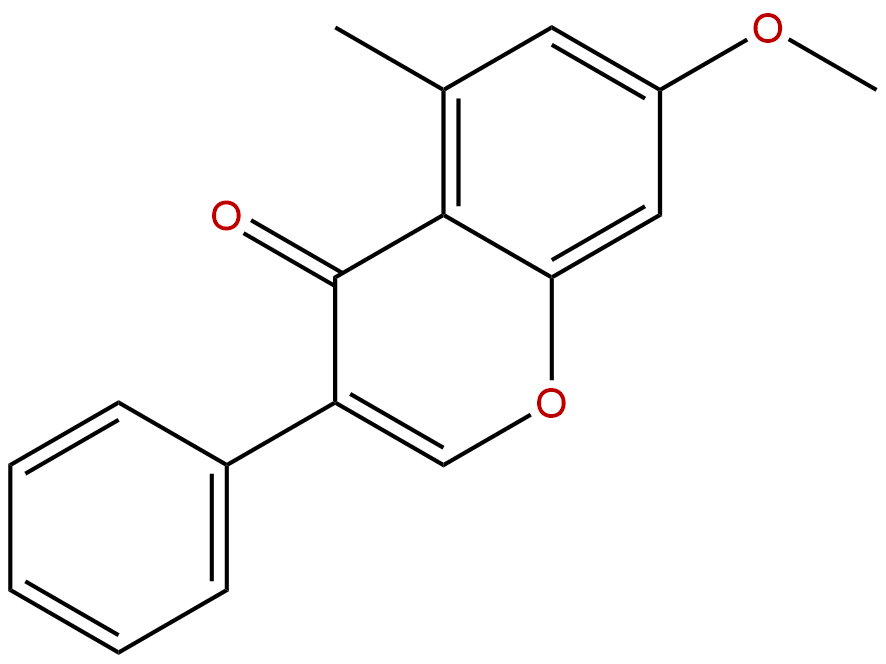


Product name: 5-Methyl-7-methoxyisoflavone
Synonym name:
Catalogue No.: BP3036
Cas No.: 82517-12-2
Formula: C17H14O3
Mol Weight: 266.296
Botanical Source:
Physical Description:
Type of Compound: Flavonoids
Purity: 95%~99%
Analysis Method: HPLC-DAD or/and HPLC-ELSD
Identification Method: Mass, NMR
Packing: Brown vial or HDPE plastic bottle
The product could be supplied from milligrams to grams. Inquire for bulk scale.
We provide solution to improve the water-solubility of compounds, thereby facilitating the variety of activity tests and clinic uses.
For Reference Standard and R&D, Not for Human Use Directly.
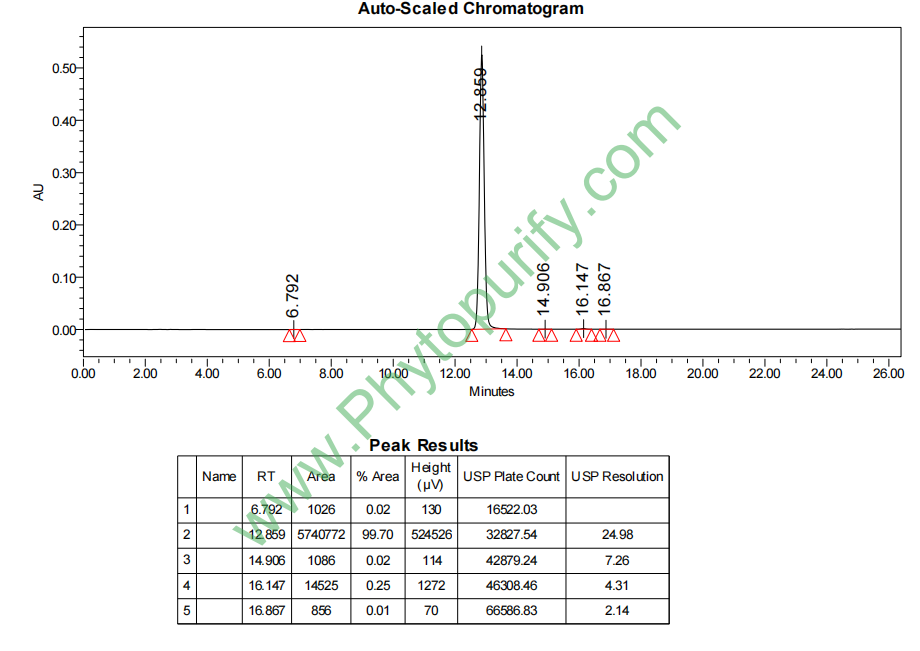
HPLC of 5-Methyl-7-methoxyisoflavone
Storage conditions:Short-term storage at 2~8℃, long-term storage at -20 ~ -80℃
39.4400
3.4333
3.4333
.0019
6.0729
65.8817
High
93.8768
1.9978
Yes
No
Yes
No
Yes
Yes
1.2
No
Yes
No
No
5-methyl-7-methoxyflavone (CAS number: 82517-12-2), as an artificially modified derivative of isoflavones, has attracted widespread attention in the fields of pharmacology and sports nutrition in recent years. Isoflavones are a class of polyphenolic compounds widely present in leguminous plants, known as "phytoestrogens" due to their structural similarity to endogenous estrogens. However, 5-methyl-7-methoxyflavone is not directly isolated from nature in large quantities, but is a synthetic product obtained by chemical modification (methylation and methoxylation) of the natural isoflavone skeleton. Its product number is BP3036, molecular formula is C17H14O3, and molecular weight is 266.2960 g/mol.
Although it is a synthetic product, its design inspiration may have come from the study of the structure-activity relationship of natural isoflavones. Existing research describes it as a type with Regenerative myelin sheath activity Oral administration antioxidant More notably, it has been reported in the field of sports science to have "energy enhancing" properties that promote synthetic metabolism, enhance muscle mass, and endurance, even surpassing the known isoflavone derivative Ipriflavone. In addition, it has also been found to be Aromatase (CYP19A1) and Nuclear factor kappa B (NF - κ B) These inhibitors are closely related to hormone metabolism, inflammation, and various chronic diseases. Its plant origin has been traced back to Citrus aurantium This suggests that its structure may simulate certain active ingredients in citrus plants. This article will systematically review this multifunctional compound from the perspectives of chemistry, pharmacology, drug properties, and prospects.
The chemical structure of 5-methyl-7-methoxyflavone is based on the classical isoflavone skeleton (3-phenylchromenone). The SMILES expression is "COc1cc (C) c2c (=O) c (- c3ccc3) coc2c1", which clearly describes its structural features: a methyl group (- CH3) is introduced at position 5 of the isoflavone core, and a methoxy group (- OCH3) is introduced at position 7. This modification significantly alters its physicochemical properties and biological activity.
From the analysis of the provided pharmacological parameters:
- Molecular weight (MW):266.30 g/mol, Far below 500 Da, it meets the standards for small molecule drugs.
- Lipid water partition coefficient (LogP/LogD)All are 3.43. This indicates that the compound has moderate lipophilicity and tends to distribute in a lipid environment. Generally, a LogP value between 1-5 is considered acceptable for oral medication, with a value of 3.43 indicating good membrane permeability and intestinal absorption potential.
- Topological Polarity Surface Area (TPSA): 39.44 Å ². TPSA is an important parameter for predicting molecular permeability, such as intestinal absorption and blood-brain barrier penetration. Generally, compounds with TPSA<60 Å ² have good membrane permeability. This value indicates that 5-methyl-7-methoxyflavone has low polarity, which is beneficial for its transmembrane transport.
- Water solubility Only 0.0019 (unit not specified, usually in mg/mL or mol/L), it belongs to compounds that are extremely insoluble in water. This is consistent with the higher LogP value and is a difficult point to consider in the development of its oral formulation, which may require improvement of its dissolution rate through formulation techniques such as solid dispersion, cyclodextrin inclusion, etc.
- Blood-brain barrier permeability (BBB)Annotated as' high '. Combined with its moderate LogP and lower TPSA, this compound indeed has the potential to penetrate the blood-brain barrier, providing a structural basis for its central nervous system related activities, such as potential neuroprotective or regenerative myelin sheath effects.
These physicochemical properties collectively determine the pharmacokinetic behavior of the compound and serve as the material basis for its subsequent biological activity.
According to database information, the plant sources of 5-methyl-7-methoxyflavone are listed as Immature Bitter Orange, namely the Rutaceae plant sour orange(Citrus aurantium L. Dry young fruits. Zhi Shi is a commonly used Qi regulating medicine in traditional Chinese medicine, which has the effects of breaking qi, eliminating accumulation, resolving phlegm, and dispersing phlegm. It is commonly used to treat gastrointestinal stagnation, chest obstruction, and chest nodules. Modern pharmacological studies have shown that Fructus Aurantii contains abundant flavonoids (such as hesperidin and neohesperidin), alkaloids (such as sinomenine), and volatile oils, which have various effects such as regulating gastrointestinal motility, strengthening the heart, increasing blood pressure, and antioxidation.
It should be clarified that 5-methyl-7-methoxyflavone, as a specific structure of isoflavone derivative, is not the main or characteristic component in Fructus Aurantii. The flavonoids naturally present in Fructus Aurantii are mostly flavones or flavonoid glycosides (such as naringin), rather than isoflavones. Therefore, this association in the database may have the following meanings: 1) The compound is designed to simulate the active structure of certain flavonoids in Fructus Aurantii; 2) It may exist in trace amounts or as metabolites in the complex extract of Fructus Aurantii immaturus; 3) There is an indirect philosophical connection between its biological activity (such as promoting metabolism) and the traditional efficacy of "breaking qi and eliminating accumulation" of Fructus Aurantii in regulating energy metabolism in the body. Anyway, this association provides clues for exploring natural analogues or precursors of the compound.
5-methyl-7-methoxyflavone exhibits multi-target and multi pathway pharmacological activity, and its mechanism of action is complex and interrelated.
4.1 Effects of Synthetic Metabolism and Exercise Enhancement
This is one of the most noteworthy activities of the compound. The description states that it is a "nonsteroidal synthetic metabolite isoflavone" that has a superior ability to enhance muscle mass and endurance compared to isoflavones. The mechanism may involve multiple targets:
- Inhibition of aromatase (CYP19A1)Aromatase is a key enzyme that catalyzes the conversion of androgens (such as testosterone) into estrogens. Inhibiting this enzyme can reduce the metabolic loss of testosterone, thereby relatively increasing testosterone levels in the body. Testosterone is the main male hormone that is crucial for promoting protein synthesis, increasing muscle mass, and strength. Therefore, by inhibiting CYP19A1, this compound may indirectly exert a "pro synthetic metabolism" effect.
- Acting on gonadotropin receptors (FSHR, LHB)FSHR (follicle stimulating hormone receptor) and LHB (luteinizing hormone beta subunit, which is a part of LH) are key components of the hypothalamic pituitary gonadal axis, regulating the synthesis and secretion of sex hormones. Although the direct interaction mechanism between isoflavones and these targets is not yet clear, it may indirectly affect the secretion of endogenous testosterone by affecting the feedback regulation of this axis.
- Antioxidant and anti-inflammatory properties As an antioxidant and NF - κ B inhibitor, it can alleviate oxidative stress and inflammatory reactions caused by high-intensity exercise, thereby accelerating recovery and reducing muscle damage. This may also be one of the mechanisms by which it enhances endurance performance.
4.2 Neuroprotection and Myelin Regeneration
The activity of regenerating myelin sheaths is another major highlight. Myelin sheath is a lipid insulating layer wrapped around nerve fibers, and its damage or loss is a core pathological feature of various neurological diseases, such as multiple sclerosis. The mechanism of regenerating myelin sheaths may include:
- Antioxidant and anti-inflammatory properties NF - κ B is a core transcription factor that regulates inflammatory responses, and its excessive activation can exacerbate neuroinflammation and damage to oligodendrocytes (myelin forming cells). Inhibition of NF - κ B can create a favorable microenvironment for myelin regeneration. Meanwhile, antioxidant activity can protect nerve cells from damage caused by reactive oxygen species.
- Potential estrogen receptor (ESR1/ESR2) regulatory effects The database shows that its targets include estrogen receptors alpha and beta (ESR1/ESR2). Research has shown that the estrogen signaling pathway plays an important role in neuroprotection, promoting differentiation of oligodendrocyte precursor cells, and myelin repair. This compound may promote myelin regeneration by simulating or regulating estrogen like effects.
4.3 Regulating Blood Lipids and Reducing Fat
The description mentions that it can maintain low cholesterol levels and be used for weight loss. The mechanism may include: 1) indirectly regulating lipid metabolism by affecting sex hormone metabolism; 2) Its antioxidant and anti-inflammatory effects help improve chronic low-grade inflammation associated with metabolic syndrome; 3) It is possible to directly regulate the breakdown or synthesis metabolism of adipocytes through unknown targets.
4.4 Related Diseases - Menopausal Syndrome
This compound is associated with menopausal syndrome. Menopausal syndrome is caused by a sudden drop in estrogen levels due to ovarian dysfunction, leading to a series of symptoms such as hot flashes, osteoporosis, and emotional fluctuations. 5-methyl-7-methoxyflavone may act through the following mechanisms:
- Plant estrogen like effects As a derivative of isoflavones, it may act in a dual mode of weak agonist/antagonist, selectively binding to ESR1/ESR2, partially compensating for estrogen deficiency and relieving symptoms such as hot flashes.
- Inhibit bone resorption Yipu flavonoids have been used to prevent and treat osteoporosis, and their derivatives may retain the effects of inhibiting osteoclast activity and promoting osteogenesis.
- Improve metabolism and mood Its regulation of blood lipids, antioxidant properties, and potential neuroprotective effects can help alleviate metabolic disorders and neurological symptoms associated with menopause.
Based on the provided pharmacokinetic parameters, we evaluated its development potential by combining the Lipinski's Rule of Five and toxicity data
5.1 Analysis of Drug Properties (Lipinski Rule)
1. Molecular weight<500 Da: 266.30,Comply with。
2. LogP ≤ 5:3.43,Comply with。
3. Number of hydrogen bond donors (HBD): From the structural formula, the ketone carbonyl and ether oxygen atoms of isoflavones do not form strong hydrogen bond donors. The typical HBD of isoflavones is 0-1,Should comply with(Usually<5).
4. Number of hydrogen bond acceptors (HBA): There are three oxygen atoms in the molecule (one carbonyl and two ether oxygen), HBA=3,Comply with(Usually<10).
In summary, 5-methyl-7-methoxyflavone fully complies with Lipinski's five rules, indicating its good oral absorption potential.
5.2 Pharmacokinetic properties
- absorb The permeability of Caco-2 cells is 65.88 (unit not provided, usually × 10 ⁻⁶ cm/s), which is a high value. Combined with high predicted effective permeability (Peff: 6.07), it indicates good intestinal absorption.
- distribution The plasma protein binding rate (PPB) is as high as 93.88%, which means that the concentration of free drugs in the blood is low, which may affect their immediate efficacy, but may also prolong their half-life. High BBB penetration enables it to act on central targets.
- Metabolism and excretion The parameters are not directly provided, but as a CYP19A1 inhibitor, it may also affect other CYP450 enzymes, posing a risk of drug drug interactions.
5.3 Toxicity risk assessment
This is the main hidden danger in its medicinal properties:
- Genotoxicity The Ames test value is 1.2 (usually>2 is positive, but caution should be exercised when approaching the threshold), and Chromosome aberration test positive This is a serious warning signal indicating that the compound may have potential risks of mutagenicity or carcinogenesis, and is a key issue that needs to be investigated and avoided in drug development.
- Organ toxicity If hERG inhibition is' no ', it is good news, which means the risk of prolonged QT interval in the heart is lower. but Respiratory sensitization (Resp_Sens) is "Yes",Photo_tox is rated as' yes',Elevated serum gamma glutamyltransferase (Ser_GGT) is "Yes"All of these indicate the presence of specific organ toxicity and adverse reaction risks. Elevated GGT often indicates possible involvement of the liver and gallbladder system.
- Maximum Recommended Treatment Dose (MRTD)Annotated as "Yes" indicates that there is a therapeutic window within an acceptable toxicity range, but it needs to be strictly defined.
Conclusion Structurally, this compound has good drug like properties and potential for oral absorption and brain distribution. However, it Clear chromosomal aberration toxicity and other organ toxicity signals This is the main obstacle to its conversion into clinical drugs. Any subsequent development must be based on comprehensive and in-depth preclinical toxicology research.
At present, there is relatively limited publicly available and authoritative academic research literature on 5-methyl-7-methoxyflavone, with a large amount of information coming from the field of exercise supplements and descriptions in commercial databases. It mainly appears in the market as a dietary supplement ingredient, especially attracting attention from bodybuilding and strength training groups, utilizing its claimed effects of promoting synthetic metabolism and enhancing athletic performance.
Research status:
1. Weak basic research Most pharmacological activity descriptions (such as regenerating myelin sheaths, superior to ipratropium, etc.) lack systematic preclinical research data published in authoritative journals (such as animal models, in-depth studies of cellular mechanisms) to support their efficacy and specificity.
2. Preliminary exploration of mechanism The multi-target mechanism of action is only speculated and correlated, lacking direct molecular docking, receptor function experiments, and other evidence to clarify how it precisely regulates targets such as ESR1/2 and FSHR.
3. Lack of security data As a supplement, its long-term safety has not been rigorously evaluated. The toxicity risks revealed by the drug properties parameters may be overlooked in practical use.
Application prospects and future directions:
1. As a research tool molecule The unique "regenerative myelin" activity claimed by this compound makes it a lead compound for exploring new mechanisms and targets of nonsteroidal small molecules promoting myelin regeneration, providing ideas for the development of drugs for demyelinating diseases such as multiple sclerosis.
2. Repositioning and structural optimization Due to its toxicity, it is difficult to directly develop it into a drug. Future research can focus on:
- Study on Structure Activity Relationship The system changes the position and quantity of its methyl and methoxy groups to search for derivatives that retain activity (such as NF - κ B inhibition, CYP19A1 inhibition) but eliminate genetic toxicity.
- Prodrug design Design prodrugs to improve bioavailability in response to its poor water solubility.
- Exploring new therapeutic fields Under strict monitoring, investigate its potential value in hormone dependent tumors (by inhibiting aromatase), neurodegenerative diseases, and other areas.
3. Strengthen supervision and rational cognition For the use as a dietary supplement, stricter quality monitoring and consumer education are urgently needed to clarify its potential risks and avoid blind use.
In summary, 5-methyl-7-methoxyflavone is a chemical entity with interesting multiple biological activities, and its structure provides valuable templates for medicinal chemists. However, there is still a long way to go from "supplement ingredients" to "clinical drugs", and the core challenge lies in solving their safety issues through scientific means while confirming their efficacy. Future research needs to unveil its mysterious veil and clarify its true therapeutic value and risk boundaries within a rigorous scientific paradigm.
