


Synonym name: Barosmin; Diosmetin-7-O-rutinoside
Catalogue No.: BP0508
Cas No.: 520-27-4
Formula: C28H32O15
Mol Weight: 608.549
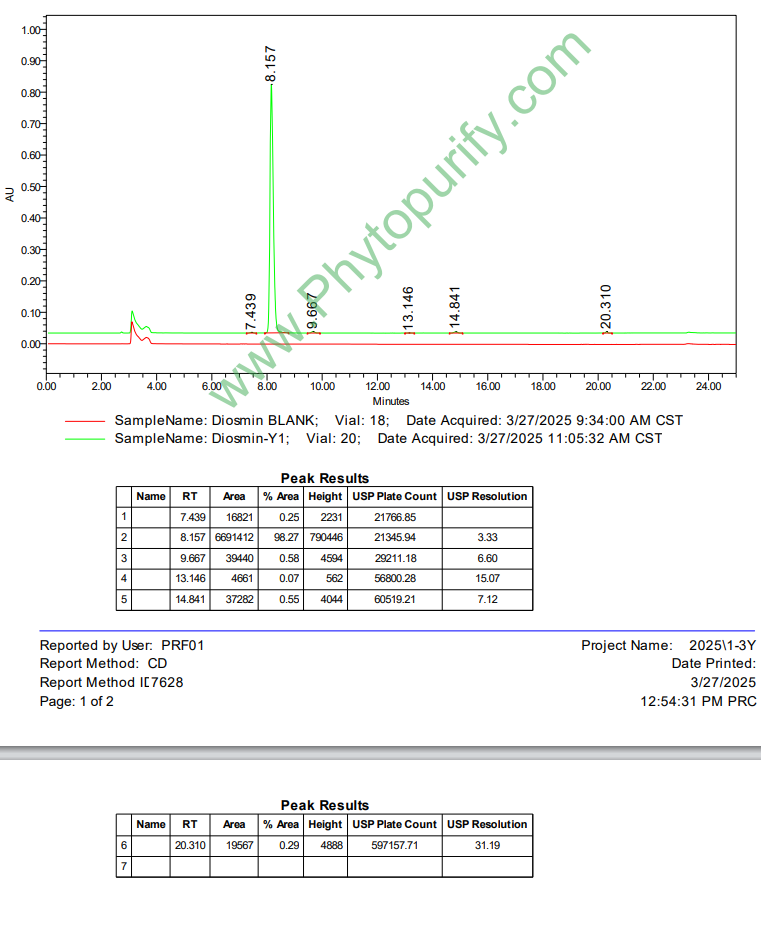
Purity: 95%~99%
Analysis Method: HPLC-DAD or/and HPLC-ELSD
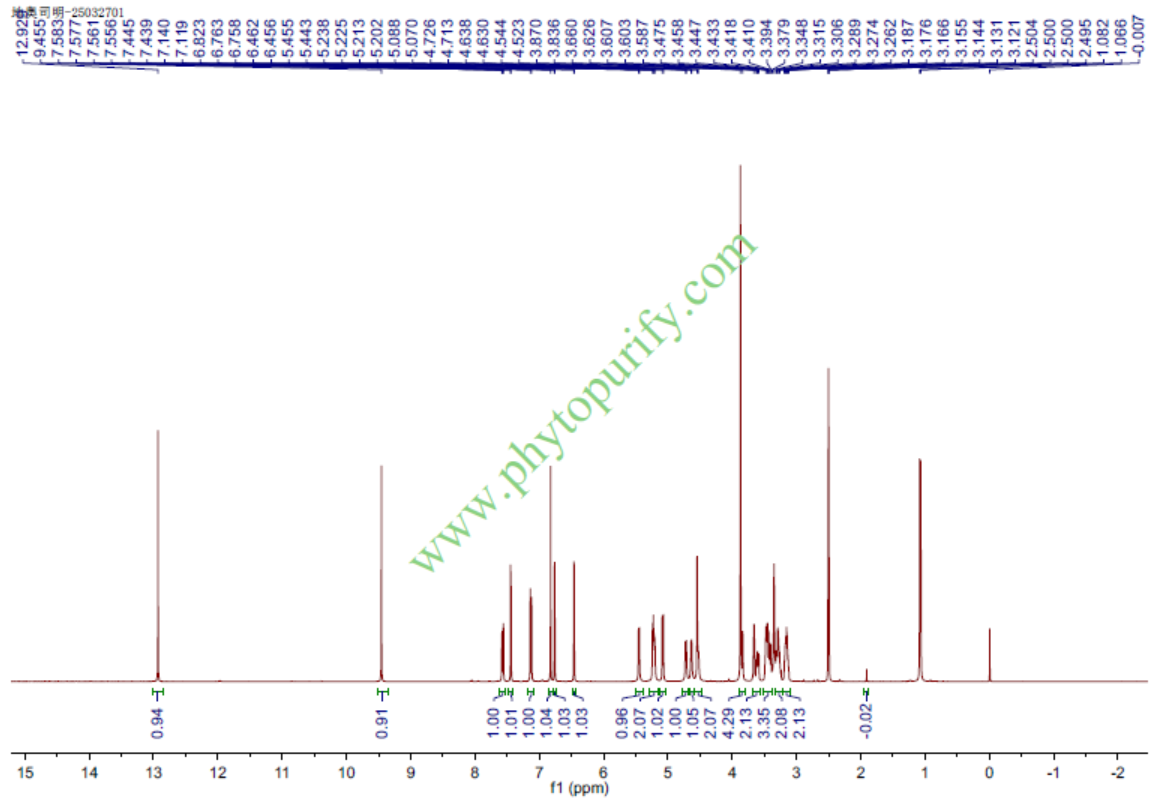
Identification Method: Mass, NMR
Packing: Brown vial or HDPE plastic bottle
Can be supplied from milligrams to grams.
We provide the impurities of Diosmin, including the follow compounds:
HPLC of Diosmin
HNMR of Diosmin
Storage conditions:Short-term storage at 2~8℃, long-term storage at -20 ~ -80℃
Diosmin (CAS number: 520-27-4) is a flavonoid compound naturally present in citrus fruits and belongs to the class of flavonoid disaccharide derivatives. As a functional bioactive molecule, diosmin has shown great potential in the prevention and treatment of vascular related diseases such as venous insufficiency due to its significant antioxidant and anti-inflammatory properties. In recent years, with the in-depth study of its molecular mechanism of action, it has been found that diosmin can exert pharmacological effects by regulating various inflammatory and vascular homeostasis related targets, especially its function as an aryl hydrocarbon receptor (AhR) agonist, providing a new perspective on its mechanism of action in vascular pathology.
This review aims to systematically summarize the chemical structure and physicochemical properties, plant sources and extraction methods, pharmacological activity and mechanism of action, pharmacological evaluation and pharmacokinetic characteristics of diosmin, as well as its prospects and development directions in clinical applications. The goal is to provide comprehensive and in-depth reference materials for researchers in the field of natural product pharmacology.
Diosmin is a flavonoid disaccharide derivative, whose chemical structure is based on the Diosmetin skeleton, with a 6-O - (α - L-rhamnopyranose) - β - D-glucopyranose moiety connected by a glycosidic bond at position 7. Its molecular weight is 608.5490 and its molecular formula is C28H32O15. The structure of diosmin contains functional groups such as monomethoxyflavone, rutin, and dihydroxyflavone, which endow it with multiple biological activities.
In terms of physical and chemical properties, the LogP value of diosmin is about -0.0599, indicating its strong hydrophilicity, water solubility of 2.6865, and polar surface area (TPSA) of 238.2 Å ², indicating its high polarity and good water solubility. Its blood-brain barrier penetration ability is relatively low, indicating that it mainly acts on the peripheral vascular system rather than the central nervous system. The hERG channel inhibition experiment showed that diosmin had no significant risk of cardiac toxicity, and the Ames mutagenicity test result was 0.6, indicating low genetic toxicity and good safety.
Diosmin mainly exists in the peel and fruit of citrus plants, especially in bitter oranges (Citrus aurantium), sweet oranges (Citrus sinensis), and pomelos (Citrus paradisi). Its content is greatly influenced by factors such as variety, maturity, and growth environment. Traditionally, the extraction of diosmin relies on organic solvent extraction and separation purification techniques.
Common extraction methods include:
In recent years, green extraction techniques such as supercritical CO2 extraction and microwave-assisted extraction have also been attempted to be applied to the extraction of diosmin, in order to improve yield and purity while reducing environmental pollution.
The pharmacological activity of diosmin is mainly reflected in its antioxidant, anti-inflammatory, and vascular protective effects, especially in the treatment of venous insufficiency and related vascular diseases.
Diosmin can effectively eliminate free radicals, inhibit lipid peroxidation, and protect cell membranes and endothelial cells from oxidative damage. Its antioxidant mechanism involves activating the endogenous antioxidant enzyme system, such as superoxide dismutase (SOD), glutathione peroxidase (GPx), etc., reducing the level of reactive oxygen species (ROS), thereby alleviating cellular damage caused by oxidative stress.
Diosmin exerts significant anti-inflammatory effects by inhibiting the release of inflammatory mediators and activating inflammatory signaling pathways. Research has shown that diosmin can downregulate the expression of pro-inflammatory cytokines (such as TNF - α, IL-1 β, IL-6) and adhesion molecules (ICAM-1, VCAM-1, SELE), alleviate vascular wall inflammation, improve vascular permeability and blood circulation.
Diosmin is particularly important in the treatment of venous insufficiency. It enhances the structural integrity of the vascular wall by regulating the vasomotor function, inhibiting the activity of matrix metalloproteinases (MMP2, MMP9), promoting the synthesis of collagen proteins (COL1A1, COL3A1). Meanwhile, diosmin can also promote the activity of nitric oxide synthase (NOS3), increase the release of nitric oxide (NO), improve vasodilation function, reduce venous pressure and vascular stasis.
In addition, the regulation of PECAM1, a vascular endothelial cell adhesion molecule, by diosmin helps to reduce leukocyte adhesion and inflammatory exudation, further protecting vascular function.
The mechanism of action of diosmin is complex, involving multiple signaling pathways and molecular targets, mainly including:
As an agonist of aromatic hydrocarbon receptors, diosmin can regulate transcriptional activity within cells, affecting inflammatory responses and cellular metabolism. After activation, AhR can regulate the expression of various genes, participate in immune regulation and detoxification processes, and thus exert anti-inflammatory and antioxidant effects.
MMPs play a crucial role in vascular remodeling and inflammation processes. Diosmin inhibits the expression and activity of MMP2 and MMP9, reduces collagen degradation, maintains the integrity of the vascular basement membrane, and prevents damage to the vascular wall structure.
ACE is an important enzyme that regulates vascular constriction and blood pressure. Diostigmine partially inhibits ACE activity, which helps to reduce angiotensin II levels, alleviate vascular constriction, and improve venous function.
Diosmin promotes endothelial nitric oxide synthase (eNOS, NOS3) activity, increases NO production, dilates blood vessels, improves hemodynamics, and reduces vascular wall pressure.
Diosmin downregulates the expression of adhesion molecules on the surface of vascular endothelial cells, inhibits the adhesion and infiltration of white blood cells to the vascular wall, reduces inflammatory reactions, and protects endothelial function.
By regulating the synthesis and degradation of collagen, diosmin enhances the mechanical strength and elasticity of blood vessel walls, preventing varicose veins and vasodilation.
The pharmacological parameters of diosmin show that it has good safety and potential clinical application value.
After oral administration, diosmin is mainly hydrolyzed into its active ingredient lignin in the intestine, and then absorbed into the bloodstream. Its bioavailability is limited by the hydrolysis efficiency of glycoside structure and intestinal microbial metabolism. Diosmin and its metabolites are mainly metabolized by the liver and partially excreted by the kidneys. Moderate half-life, suitable for daily medication.
Diosmin, as a safe and effective natural product, has been widely used in the treatment of venous insufficiency, hemorrhoids, chronic venous diseases, and related inflammatory vascular diseases. It works synergistically through multiple targets and mechanisms to improve vascular wall structure and function, alleviate inflammation and oxidative stress, significantly alleviate symptoms, and improve patients' quality of life.
In the future, the clinical application prospects of diosmin are mainly reflected in the following aspects:
Diosmin, as a natural flavonoid disaccharide derivative, has shown significant value in the fields of vascular protection and anti-inflammatory due to its unique chemical structure and multi-target pharmacological effects. Its good safety and pharmacological properties make it an ideal candidate drug for the treatment of venous insufficiency and related diseases. In the future, by deepening its mechanism of action research and optimizing drug formulations, diosmin is expected to have greater potential in clinical treatment, promoting the development and application of natural product pharmacology.
In summary, diosmin is not only an important active ingredient in citrus fruits, but also a key molecule in natural product pharmacology research and vascular disease treatment, which deserves continuous attention and in-depth exploration.
