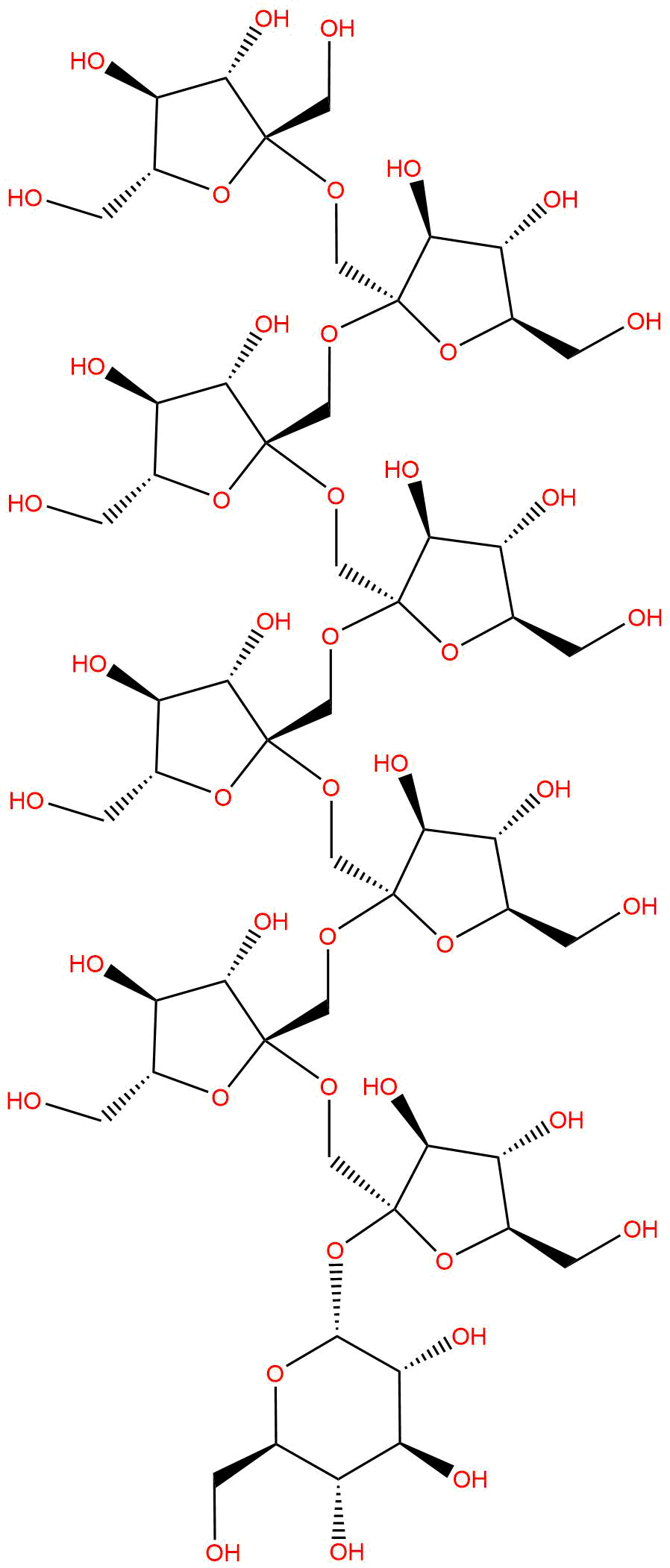


Product name: Fructo-oligosaccharide DP9 / GF8
Synonym name:
Catalogue No.: BP4066
Cas No.: 143625-74-5
Formula: C54H92O46
Mol Weight: 1477.28
Botanical Source:
Physical Description: White powder
Type of Compound: Oligose
Purity: 95%~99%
Analysis Method: HPLC-DAD or/and HPLC-ELSD
Identification Method: Mass, NMR
Packing: Brown vial or HDPE plastic bottle
Storage: Store in a well closed container, protected from air and light. Put into refrigerate or freeze for long term storage.
Whenever possible, you should prepare and use solutions on the same day. However, if you need to make up stock solutions in advance, we recommend that you store the solution as aliquots in tightly sealed vials at -20℃. Generally, these will be useable for up to two weeks.
The product could be supplied from milligrams to grams
Inquire for bulk scale.
For Reference Standard and R&D, Not for Human Use Directly.
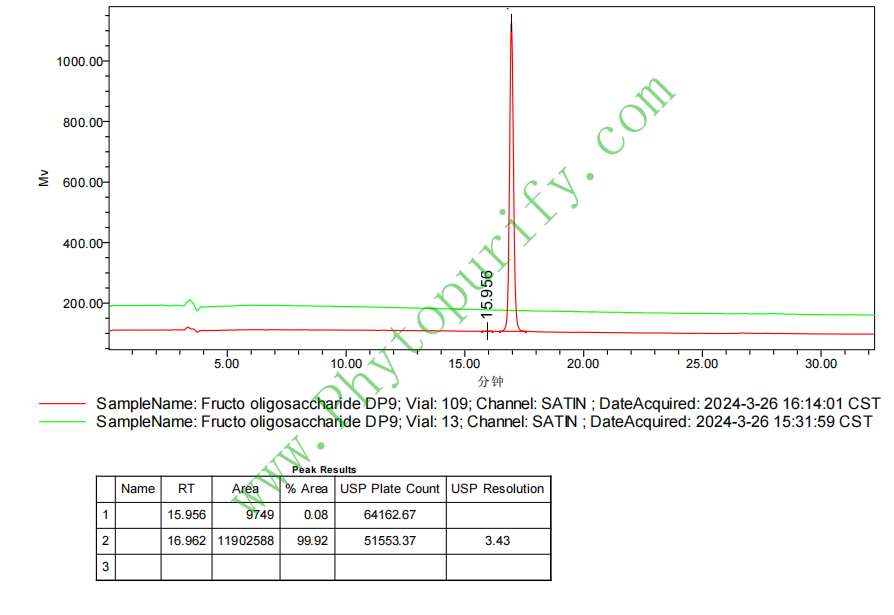
HPLC of Fructo-oligosaccharide DP9 / GF8
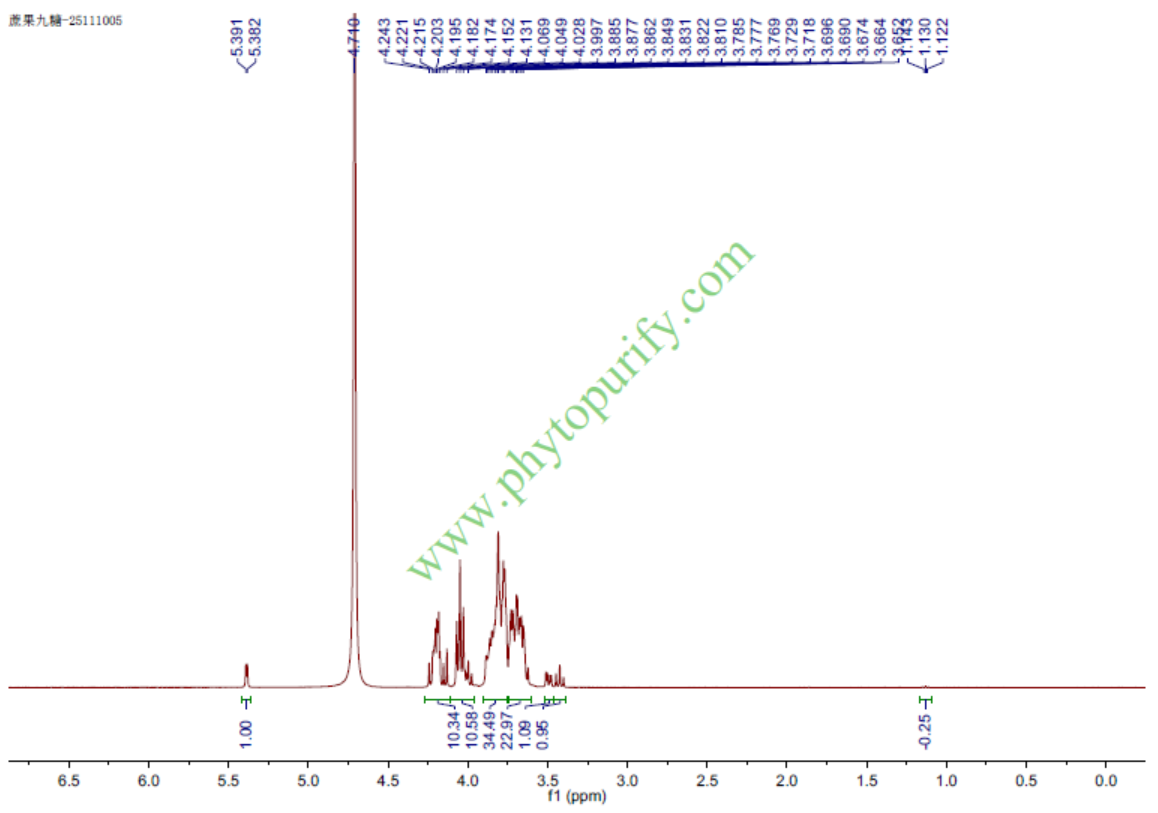
HNMR of Fructo-oligosaccharide DP9 / GF8
Storage conditions:Short-term storage at 2~8℃, long-term storage at -20 ~ -80℃
Fructo oligosaccharides DP9 (FOS DP9, CAS number 143625-74-5) is an oligofructose composed of nine fructose units connected by β - (2 → 1) glycosidic bonds. It belongs to the mid to long chain members of the fructo oligosaccharides (FOS) family. As a typical prebiotic, cane nine sugar has received widespread attention in the fields of food, nutrition, and medicine in recent years due to its unique physiological functions and good safety. Its main mechanism of action includes regulating intestinal microbiota balance, enhancing intestinal barrier function, regulating immune response, and anti-inflammatory effects, involving multiple molecular targets such as TLR4, TLR2, MUC2, IL22, OPLN, ZO1, GPR43, GPR41, CLDN1, and Bifidobacterium genus (BIFIDO).
This review aims to systematically summarize the chemical structure and physicochemical properties, plant sources and extraction methods, pharmacological activity and mechanism of action, pharmacological evaluation and pharmacokinetic characteristics of sugarcane nine sugar. Combined with current clinical application research, it explores its potential value and development direction in the prevention and treatment of intestinal related diseases in the future.
Sugarcane nine sugar is an oligofructose composed of nine fructose units, with a molecular formula of C54H90O45 and a molecular weight of approximately 1477.2840 Da. Its structural characteristics are linear β - (2 → 1) - linked fructose chains, typically ending with a glucose unit (GF8 structure), and it has high water solubility and low fat solubility. The LogP value is -5.2334, indicating its strong polarity and difficulty in penetrating lipid membranes, which is consistent with its physiological positioning as a gut prebiotic. The extremely large topological polar surface area (TPSA 743.58 Å ²) further demonstrates its hydrophilicity and lower cell membrane permeability.
The physicochemical properties of cane nine sugar determine its stability and bioavailability in the gastrointestinal tract. Its high water solubility (29.47 mg/mL) ensures good solubility in the intestine, which is beneficial for being utilized as a prebiotic by gut microbiota. Its low blood-brain barrier permeability and lack of hERG channel inhibition demonstrate good safety and low risk of neurotoxicity. The Ames test result (0.9) showed no significant mutagenicity.
Sucrose mainly exists in various plants, especially in the roots and stems of plants rich in fructooligosaccharides such as sugarcane (Saccharum officinarum) and chicory (Cichorium intybus). Sugarcane juice and chicory root extract are the main raw materials for industrial production of sugarcane fructose. Although the content of natural fructooligosaccharides is limited, the large-scale preparation of high-purity cane nine sugar can be achieved through enzymatic synthesis and biological fermentation technology.
Traditional extraction methods include water extraction, alcohol precipitation, and membrane separation techniques. Modern technology often uses fructosyltransferase to catalyze the conversion of sucrose into fructooligosaccharides, which are then purified by ultrafiltration, nanofiltration, and chromatography to obtain high-purity cane nine sugar. This method has high efficiency, uniform product, and is suitable for industrial production.
As a prebiotic, cane nine sugar mainly promotes the growth of beneficial gut microbiota (such as bifidobacteria and lactobacilli) through selective promotion, regulates gut microbiota, and exerts multiple pharmacological activities.
Numerous in vitro and animal studies have shown that cane sugar can significantly promote the proliferation of Bifidobacterium and lactobacilli, inhibit the growth of pathogenic bacteria, and maintain the balance of gut microbiota. It promotes the production of probiotic metabolites such as short chain fatty acids (SCFAs), improves the intestinal environment, and enhances intestinal health.
Sucrose can enhance the integrity of the intestinal barrier, prevent harmful substances and pathogens from invading, and alleviate intestinal inflammation by regulating the expression of tight junction proteins (such as OCTN, ZO1, CLDN1) in intestinal epithelial cells.
Sucrose can activate the intestinal immune system, regulate the TLR2 and TLR4 signaling pathways, promote the secretion of anti-inflammatory cytokine IL-22, regulate intestinal immune homeostasis, and have potential anti-inflammatory and immune regulatory effects.
By activating GPR43 and GPR41 receptors, cane sugar promotes short chain fatty acid mediated metabolic signaling, regulates energy metabolism, and improves metabolic syndrome related indicators.
The biological effects of cane nine sugar are mainly achieved through the metabolism of gut microbiota and the interaction of host molecular targets.
As pattern recognition receptors, TLR2 and TLR4 play a crucial role in intestinal immunity. Sugarcane nine sugar regulates the expression and activity of these two receptors, affects the downstream NF - κ B signaling pathway, regulates inflammatory response, and maintains immune balance.
MUC2 is the main component of the intestinal mucus layer, which protects the intestinal epithelium from pathogen invasion. Sucrose promotes the expression of MUC2 and enhances the mucosal barrier function.
These proteins maintain tight connections between intestinal epithelial cells and prevent increased intestinal permeability. Sugarcane nine sugar repairs damaged intestinal barriers by upregulating the expression of these proteins.
As receptors for short chain fatty acids, GPR41 and GPR43 mediate the signal transduction of sucrose metabolites, regulating immune responses and energy metabolism.
Sucrose selectively promotes the growth of Bifidobacterium, enhances its metabolic activity, produces beneficial metabolites, and indirectly affects host health.
The pharmacological evaluation of sugarcane nine sugar shows that it has good safety and biocompatibility. Its high molecular weight and polarity determine that after oral administration, it is mainly limited to the gastrointestinal tract and difficult to be absorbed into the systemic circulation, which conforms to the pharmacokinetic characteristics of prebiotics.
No hERG channel inhibition, Ames test negative, indicating no significant risk of cardiac toxicity and mutagenicity. Preclinical toxicology studies have not shown significant toxic side effects.
Sugarcane nine sugar is difficult to be digested and absorbed by gastrointestinal enzymes, mainly fermented and utilized by intestinal microorganisms in the colon, producing metabolic products such as short chain fatty acids, and exerting local and systemic effects.
Its metabolism mainly relies on gut microbiota and is not directly metabolized by host enzymes. The unabsorbed portion is excreted through feces.
Sucrose, as a safe and effective prebiotic, has shown potential in various clinical studies to improve intestinal function, alleviate irritable bowel syndrome (IBS), inflammatory bowel disease (IBD), and promote intestinal health in children. In addition, its role in regulating immunity and metabolism provides new ideas for the adjuvant treatment of metabolic syndrome, allergic diseases, and immune related diseases.
Future research should focus on:
These studies will promote the widespread application of cane nine sugar in the fields of functional foods and biomedicine.
As a typical prebiotic, cane nine sugar exhibits significant pharmacological activities in regulating intestinal microbiota, enhancing intestinal barrier, regulating immunity and metabolism due to its unique chemical structure and excellent physicochemical properties. Its mechanism of action involves multiple key molecular pathways and targets, reflecting a complex host microbe interaction network. The drug efficacy evaluation shows that it has good safety and is suitable for long-term oral use. With the increasing emphasis on the importance of intestinal health, sugarcane fructose has broad prospects for clinical and functional food applications. Future research will further reveal its potential therapeutic value and application models, promoting it as an important natural product for the prevention and treatment of intestinal diseases and related metabolic diseases.
