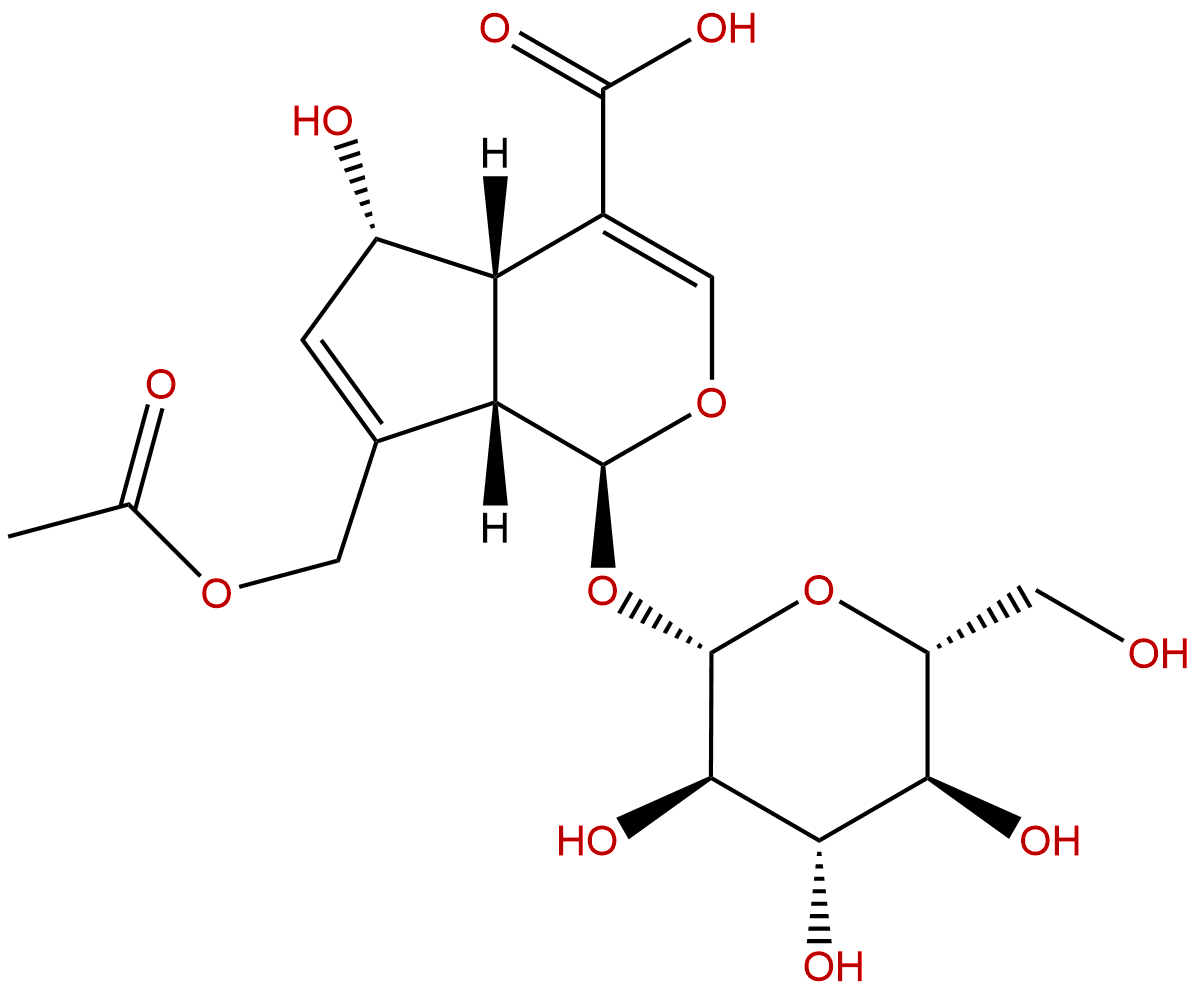


Product name: Asperulosidic acid
Synonym name:
Catalogue No.: BP1668
Cas No.: 25368-11-0
Formula: C18H24O12
Mol Weight: 432.378
Botanical Source: "Rubia peregrina and Rubia tinctorum; Gardenia jasminoides, Plantago lagopus and Mussaenda pubescens. Component of Zhi Zi"
Physical Description: Powder
Type of Compound: Iridoids
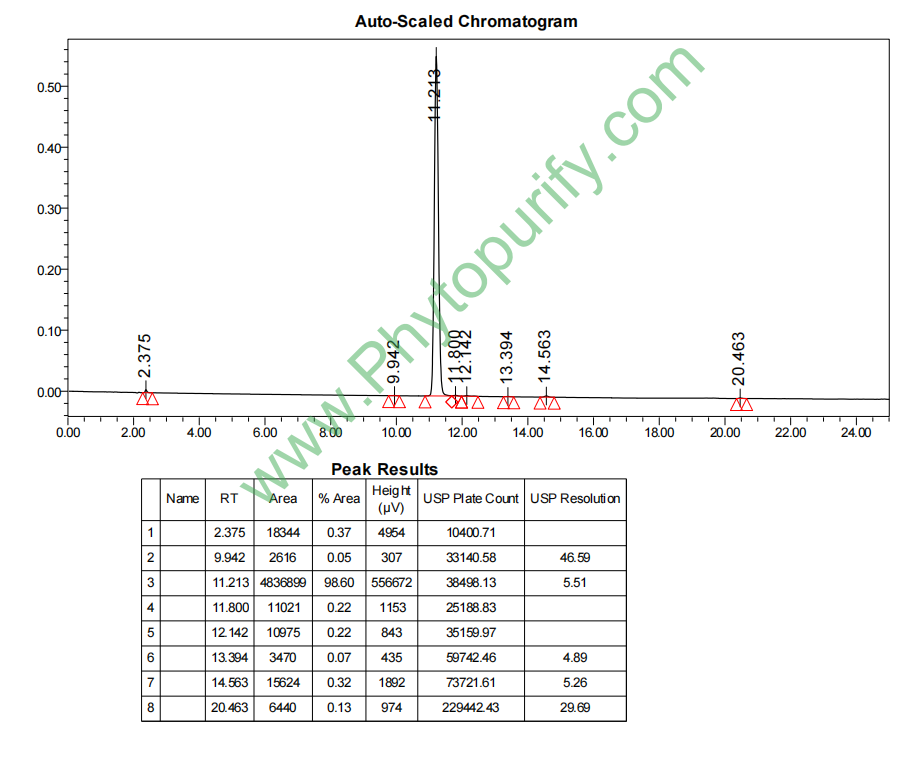
Purity: 95%~99%
Analysis Method: HPLC-DAD or/and HPLC-ELSD
Identification Method: Mass, NMR
Packing: Brown vial or HDPE plastic bottle
The product could be supplied from milligrams to grams. Inquire for bulk scale.
We provide solution to improve the water-solubility of compounds, thereby facilitating the variety of activity tests and clinic uses.
For Reference Standard and R&D, Not for Human Use Directly.
Description:
Asperulosidic acid has been recently used in chinese medicine as a useful drug against some tumors. It has anticlastogenic activity, since the anticlastogenic irridoids have an alpha-unsaturated carbonyl group, this structure is considered to play an important role in the anticlastogenicity. Asperulosidic acid can inhibit the seed germination and growth of seedlings of large crabgrass. Asperulosidic acid, and 6-O-(beta-D-glucopyranosyl)-1-O-octanoyl-beta-D-glucopyranose are effective in suppressing 12-O-tedtradecanoylphorbol-13-acetate (TPA)- or epidermal growth factor (EGF)-induced cell transformation and associated AP-1 activity.
References:
Yakugaku Zasshi. 1981 Jul;101(7):657-9.
Two novel glycosides from the fruits of Morinda citrifolia (noni) inhibit AP-1 transactivation and cell transformation in the mouse epidermal JB6 cell line.
The fruit juice of Morinda citrifolia (noni), a plant originally grown in the Hawaiian and Tahitian islands, has long been used by islanders to treat diseases, including cancer.
METHODS AND RESULTS:
Two novel glycosides, 6-O-(beta-D-glucopyranosyl)-1-O-octanoyl-beta-D-glucopyranose and Asperulosidic acid, extracted from the juice of noni fruits, were used to examine their effects on 12-O-tedtradecanoylphorbol-13-acetate (TPA)- and epidermal growth factor (EGF)-induced AP-1 transactivation and cell transformation in mouse epidermal JB6 cells.
CONCLUSIONS:
The results indicated that both compounds were effective in suppressing TPA- or EGF-induced cell transformation and associated AP-1 activity. TPA- or EGF-induced phosphorylation of c-Jun, but not extracellular signal-regulated kinases or p38 kinases, was also blocked by the compounds, indicating that c-Jun N-terminal kinases were critical in mediating TPA- or EGF-induced AP-1 activity and subsequent cell transformation in JB6 cells.
J.Weed Sci.Tech., 1986, 31:280-6.
Plant Growth Inhibitors in Catchweed Seeds and Their Allelopathy.
METHODS AND RESULTS:
Two Asp-related iridoidglucosides, compounds A and B were isolated from the dormant seeds of catchweed. By chemical analysis, compound A was identified as Asperulosidic acid which was derived from Asp through the cleavage of a lactone ring, and compound B as deacetyl Asperulosidic acid produced through the deacetylation of Asperulosidic acid. Asperulosidic acid inhibited the seed germination and growth of seedlings of large crabgrass and alfalfa to the same degree as Asp, but did not inhibit white clover, while deacetyl Asperulosidic acid showed lower inhibitory effect on the tested plants than Asp and Asperulosidic acid. Furthermore, Asperulosidic acid showed similar inhibitory activity to Asp on the germination of catchweed seeds themselves.
CONCLUSIONS:
Since these compounds were only detected in the exudate obtained from the seed coat of catchweed seeds, inhibition of the germination and growth of lettuce placed together with catchweed seeds may be due to iridoidglucosides liberated from the latter seeds which have been soaked in water.
HPLC of Asperulosidic acid
Storage conditions:Short-term storage at 2~8℃, long-term storage at -20 ~ -80℃
192.4400
-1.3452
-3.0363
33.8676
.5389
.3497
Low
33.6437
4.7897
Yes
No
No
No
No
No
0.0
Yes
Yes
Yes
Yes
In the field of natural product chemistry and pharmacology research, iridoid compounds have attracted much attention due to their structural diversity and wide range of biological activities. Asperulosidic acid (ASPA, CAS number: 25368-11-0) is one of the representative iridoid glycosides, mainly isolated from the traditional medicinal plant Hedyotis diffusa Willd. Hedyotis diffusa is commonly used in traditional Asian medicine, especially in traditional Chinese medicine, for clearing heat and detoxifying, diuresis and reducing swelling, anti-tumor effects, etc. Its modern pharmacological research is based on its active ingredients such as ASPA.
In recent years, with the deepening understanding of the mechanisms of inflammation and tumor development, the anti-inflammatory, antioxidant, and anti-tumor activities of ASPA have gradually been revealed, demonstrating potential medicinal value. Research has shown that ASPA can inhibit the production of pro-inflammatory cytokines such as tumor necrosis factor alpha (TNF - α) and interleukin-6 (IL-6) by regulating key signaling pathways such as nuclear factor kappa B (NF - κ B) and mitogen activated protein kinase (MAPK), thereby exerting a protective effect in various inflammation related disease models. Of particular note is its potential application in kidney diseases such as nephritis, involving the regulation of multiple targets such as STAT3, Selectin P (SELP), and the galectin family (LGALS3/8/9), providing new lead compounds for the development of novel anti-inflammatory and renal protective drugs.
This article aims to systematically review the chemical structure, plant origin, pharmacological activity, mechanism of action, pharmacological characteristics, and clinical application prospects of coumarin acid, in order to provide comprehensive academic references for the in-depth research and development of this compound.
Caryophyll acid is a monoterpene compound belonging to the iridoid glycoside family. Its molecular formula is C18H24O12 and its molecular weight is 432.3780. Its core structure consists of a ten membered cyclohexene ether terpene ring system connected to a glucose unit through a glycosidic bond. This structure contains multiple hydroxyl groups, one carboxyl group, and one ether bond, which have a decisive impact on its physicochemical properties and biological activity.
From the analysis of physical and chemical properties, the topological polar surface area (TPSA) of ASPA is as high as 192.440 Å ², which is mainly attributed to the abundant hydroxyl and carboxyl groups in its molecule, which are strong hydrogen bond donors and acceptors. The calculated lipid water partition coefficient (LogP) is -1.3452, indicating that the compound has a high degree of hydrophilicity. Consistent with this, its predicted water solubility value is 33.8676 mg/mL, which belongs to the category of easily soluble in water. These properties determine the distribution characteristics of ASPA in organisms: high hydrophilicity and large polar surface area typically result in weaker ability to penetrate the cellular lipid bilayer, and predicted "low" penetration of the blood-brain barrier, making it difficult to enter the central nervous system. In addition, preliminary pharmacological risk assessment showed that the hERG inhibition risk was "no", and the Ames test result was 0.0, suggesting that it may not have significant cardiac or genetic toxicity, providing preliminary positive signals for its safety evaluation.
The main natural source of coumarin acid is from plants in the Rubiaceae family, among which Hedyotis diffusa Willd is the most famous and well studied. The whole plant of Hedyotis diffusa is used as medicine and widely distributed in East Asia such as China, Japan, and South Korea. ASPA also exists in the same genus of plants, including Asperula odorata and some other plants in the Rubiaceae family, but its content varies depending on the species, place of origin, harvest season, and location.
The extraction of ASPA from plant materials is usually carried out using solvent extraction method. The common process is as follows: first, grind the dried Hedyotis diffusa whole plant, and then extract it with a polar solvent. Methanol, ethanol, or ethanol water mixed solutions are commonly used extraction solvents because they can effectively dissolve iridoid glycosides. In order to improve extraction efficiency, modern technologies such as ultrasound assisted extraction (UAE), microwave-assisted extraction (MAE), and pressurized liquid extraction (PLE) have also been applied, which can shorten extraction time and reduce solvent consumption.
After filtration and concentration, the crude extract needs to be further separated and purified to obtain high-purity ASPA. Column chromatography techniques, such as silica gel column chromatography, reverse phase silica gel (such as ODS) column chromatography and Sephadex LH-20 column chromatography, are often used for preliminary separation. High performance liquid chromatography (HPLC), especially preparative HPLC, is a key step in obtaining chromatographically pure ASPA. C18 reverse phase chromatography columns are commonly used, with methanol water or acetonitrile water (usually containing small amounts of formic acid or acetic acid to improve peak shape) as the mobile phase for gradient elution. During the extraction and purification process, attention should be paid to controlling temperature, avoiding light, and pH values, as some iridoid glycosides are sensitive to heat, light, and acid-base conditions, and may undergo structural degradation or transformation.
Numerous in vitro and in vivo pharmacological studies have confirmed that coumarin acid has multiple biological activities, mainly including anti-inflammatory, antioxidant, and anti-tumor effects.
1. Anti inflammatory activity: The anti-inflammatory effect of ASPA is one of its main pharmacological characteristics. In the lipopolysaccharide (LPS) - induced macrophage (such as RAW 264.7 cells) inflammation model, ASPA can dose dependently inhibit the excessive production of nitric oxide (NO), prostaglandin E2 (PGE2), and key pro-inflammatory cytokines TNF - α, IL-6, and IL-1 β. In animal models, ASPA showed significant inhibitory effects on acute inflammation models such as xylene induced ear swelling in mice, carrageenan induced paw swelling in rats, and chronic inflammation models such as cotton ball induced granuloma. Its anti-inflammatory potency is comparable to some classic nonsteroidal anti-inflammatory drugs, but it may exert its effects through different mechanisms.
2. Antioxidant activity: The phenolic hydroxyl groups in the ASPA structure endow it with the ability to scavenge free radicals. Research has shown that ASPA exhibits certain antioxidant activity in DPPH radical, ABTS radical cation, and superoxide anion scavenging experiments. In the cellular oxidative stress model, ASPA can enhance the activity of intracellular antioxidant enzymes such as superoxide dismutase (SOD) and glutathione peroxidase (GSH Px), while reducing the levels of reactive oxygen species (ROS) and malondialdehyde (MDA), thereby protecting cells from oxidative damage. This antioxidant effect is closely related to its anti-inflammatory and anti-tumor activities, as oxidative stress is an important driving factor for inflammation and tumor development.
3. Antitumor activity: ASPA exhibits growth inhibition and pro apoptotic effects on various cancer cell lines. Research has reported that ASPA can inhibit the proliferation of human liver cancer cells (such as HepG2, SMMC-7721), colon cancer cells (such as HCT-116), lung cancer cells, etc., and induce cell cycle arrest (such as G2/M phase arrest) and apoptosis. Its anti-tumor mechanism involves inducing endogenous mitochondrial apoptosis pathways, increasing the expression of pro apoptotic proteins (such as Bax), reducing the expression of anti apoptotic proteins (such as Bcl-2), and activating the caspase cascade reaction. It is worth noting that ASPA has relatively low toxicity to certain normal cells, suggesting that it may have some selectivity.
4. Protective effect on kidney disease: Due to its powerful anti-inflammatory and antioxidant properties, ASPA has attracted attention for its application in kidney disease models. In adenine induced chronic kidney disease models or immune complex induced glomerulonephritis models, ASPA administration can significantly improve renal function indicators (such as reducing serum creatinine and urea nitrogen), alleviate renal tissue pathological damage (such as reducing inflammatory cell infiltration, inhibiting mesangial proliferation and fibrosis), and its effect is closely related to inhibiting local renal inflammation and oxidative stress.
Caryophyll acid exerts pharmacological effects, especially anti-inflammatory and renal protective effects, involving precise regulation of multiple signaling pathways and intervention of multiple molecular targets.
1. Inhibition of core signaling pathways:
* NF - κ B pathway: NF - κ B is a core transcription factor that regulates inflammatory responses. In the resting state, NF - κ B binds to the inhibitory protein I κ B and exists in the cytoplasm. When stimulated by LPS, I κ B is phosphorylated and degraded, allowing NF - κ B (usually p65/p50 dimer) to enter the nucleus and initiate transcription of genes such as TNF - α, IL-6, IL-1 β, PTGS2 (encoding COX-2), etc. Research has shown that ASPA can effectively inhibit the phosphorylation and degradation of I κ B α, thereby preventing the nuclear translocation of NF - κ B p65 subunit and ultimately downregulating the expression of a series of downstream pro-inflammatory mediators.
* MAPK pathway: The MAPK family (including ERK, JNK, p38) plays a crucial role in cellular stress and inflammatory responses. ASPA has been shown to inhibit the phosphorylation (activation) of JNK, ERK, and p38 proteins in LPS induced macrophages. The inhibition of the MAPK pathway and the inhibition of the NF - κ B pathway often work together to suppress the amplification of inflammatory signals.
2. Key molecular target regulation:
In the context of diseases such as nephritis, the role of ASPA involves a broader target network:
* Inflammatory related targets: Direct inhibition TNF and IL6 The generation of is a direct manifestation of its anti-inflammatory effect. Meanwhile, ASPA can be lowered PTGS2 The expression of cyclooxygenase-2 reduces the synthesis of PGE2. Correct IL1B The inhibition of interleukin-1 β also contributes to its anti-inflammatory effect.
* Transcription factor STAT3: STAT3 is an important node connecting inflammation and tumors. Continuous activation of STAT3 promotes cell proliferation, survival, and participation in chronic inflammation. ASPA can inhibit the phosphorylation activation of STAT3, which may play an important role in its anti-tumor and anti fibrotic effects.
* Adhesive molecule SELP (P-selectin): SELP mediates the initial adhesion between white blood cells and endothelial cells, which is a critical step in the early stages of inflammation. ASPA may indirectly downregulate the expression of SELP by inhibiting upstream signals such as NF - κ B, thereby reducing the recruitment of white blood cells to inflammatory sites such as glomeruli.
* The galectin family (LGALS3, LGALS8, LGALS9): Galectin is a type of β - galactoside binding protein that is involved in cell adhesion, proliferation, apoptosis, and immune regulation. LGALS3 is highly expressed in renal fibrosis and inflammation, promoting fibroblast activation and macrophage infiltration. ASPA may exert anti fibrotic and renal protective effects by intervening in inflammatory signals, downregulating the expression or function of proteins such as LGALS3. LGALS8 and LGALS9 are also associated with cellular stress and immune regulation, and may be potential targets of ASPA action.
In summary, ASPA has constructed a synergistic network through multiple targets and pathways, from inhibiting early inflammatory signals (MAPK), blocking core transcriptional activation (NF - κ B, STAT3), to reducing the production of effector molecules (cytokines, adhesion molecules, lectins). This provides a solid molecular basis for its treatment of complex inflammatory diseases such as nephritis.
Although coumarin acid has shown good biological activity, its development into a drug still requires systematic pharmacological evaluation and pharmacokinetic studies.
Drug Evaluation: Based on its calculated physicochemical parameters, ASPA belongs to compounds with high hydrophilicity and low fat solubility. This property has both advantages and disadvantages: the advantage is good water solubility, making it easy to make into injectable and other dosage forms; The disadvantage is that oral bioavailability may be low because it is not easily able to penetrate the intestinal epithelial cell membrane and may become a substrate for efflux transporters such as P-glycoprotein. Low blood-brain barrier penetration means it is not suitable for the treatment of central nervous system diseases, but it may avoid central side effects for the treatment of peripheral inflammation (such as nephritis). The preliminary toxicity warning (hERG negative, Ames negative) is positive, but complete preclinical toxicology studies (such as acute toxicity, long-term toxicity, reproductive toxicity, etc.) are still needed to confirm its safety.
Pharmacokinetic studies: At present, there are relatively limited reports on pharmacokinetic studies of the ASPA system, which is often a weak link in the research of active ingredients in natural products. Based on the general characteristics of iridoid glycosides, it can be inferred that:
1. Absorption: After oral administration, ASPA may undergo hydrolysis (deglycosylation) under the action of gut microbiota to convert into aglycones, which have increased lipid solubility and may be more easily absorbed. The absorption degree of the prototype drug ASPA needs to be determined experimentally.
2. Distribution: Due to its high hydrophilicity, the distribution of ASPA in the body may be mainly limited to blood and extracellular fluid, making it difficult to enter adipose tissue or cells. The kidney, as an excretory and potentially functional organ, deserves attention to drug concentration.
3. Metabolism: ASPA may undergo phase II metabolic reactions in the liver and intestines, such as glucuronic acid binding or sulfation, to increase its water solubility for excretion.
4. Excretion: The prototype drug and its metabolites are likely to be primarily excreted through the kidneys and urine.
In the future, it is necessary to use technologies such as liquid chromatography-mass spectrometry (LC-MS/MS) to establish sensitive and specific biological sample analysis methods, and to conduct in-depth research on the absolute bioavailability, tissue distribution, metabolite identification, and excretion pathways of ASPA in different animal models, providing a basis for dosage form design and optimization of administration regimens.
As a natural compound with clear anti-inflammatory, antioxidant, and anti-tumor activities, the clinical application prospects of coumarin acid mainly focus on inflammation related diseases.
1. Potential treatment directions:
* Kidney disease: In view of its extensive inhibitory effect on nephritis related targets (STAT3, SELP, LGALS3, etc.) and pathways (NF - κ B, MAPK), ASPA is most promising to develop into a new drug for treating inflammatory kidney diseases such as acute and chronic glomerulonephritis, interstitial nephritis, and even diabetes nephropathy. It can be explored as an adjuvant drug, combined with existing immunosuppressants or RAS inhibitors, to enhance efficacy and reduce side effects.
* Other inflammatory diseases: The anti-inflammatory mechanism of ASPA is universal and worthy of further exploration, including arthritis (rheumatoid arthritis, osteoarthritis), inflammatory bowel disease (ulcerative colitis, Crohn's disease), and skin inflammation (such as dermatitis).
* Tumor adjuvant therapy: Its anti-tumor activity and inhibition of tumor related pathways such as STAT3 suggest that it may be used as a tumor chemopreventive agent or in combination with chemotherapy drugs to enhance sensitivity and reduce toxicity. However, its anti-tumor efficacy, selectivity, and in vivo effects require further research verification.
2. Challenges and prospects:
* Optimization of drug properties: The pharmacokinetic properties of natural ASPA itself may not be ideal. Future research can improve its lipid solubility, metabolic stability, and oral bioavailability through structural modifications such as prodrug preparation and synthetic derivatives. For example, esterification or etherification of its carboxyl or hydroxyl groups may improve membrane permeability without significantly affecting activity.
* Formulation development: Due to its good water solubility, injections can be developed for the control of acute inflammation. To improve oral efficacy, the development of novel drug delivery systems based on nanotechnology (such as liposomes, polymer nanoparticles, solid lipid nanoparticles) or self microemulsions can be considered to enhance their gastrointestinal absorption and targeting.
* Deep exploration of mechanisms: Using proteomics, metabolomics, and gene editing techniques, further elucidate the direct evidence and precise patterns of the interaction between ASPA and targets such as LGALS3 and LGALS8/9, and discover its new mechanism of action.
* Preclinical and clinical studies: Current research mostly remains at the stage of cell and animal models. It is urgent to carry out standardized preclinical safety evaluations and subsequent clinical trials in accordance with the requirements of Good Laboratory Practice (GLP) and Good Clinical Practice (GCP) to confirm its effectiveness and safety in humans.
As one of the key active ingredients in traditional herbs such as Hedyotis diffusa, coumarin acid is a successful case of modern natural product pharmacology research moving from traditional experience to scientific interpretation. Its clear chemical structure and diverse pharmacological activities, especially its anti-inflammatory effect by inhibiting the NF - κ B/MAPK/STAT3 signaling axis and regulating multiple targets such as TNF, IL6, LGALS3, provide strong scientific basis for its treatment of inflammatory diseases such as nephritis. Although there are still many challenges in drug development, systemic pharmacokinetics, and clinical translation, with the continuous deepening of research on cyclohexene ether terpenes and the cross integration of disciplines such as medicinal chemistry and pharmacy, through structural optimization, dosage form innovation, and in-depth mechanism of action research, caryophyll acid is expected to gradually develop from a promising lead compound into a new type of drug with clinical application value, providing new options for the treatment of inflammation related diseases. Continuous and in-depth research on it will not only contribute to the development of new drugs, but also further reveal the scientific connotation of traditional Chinese medicine and promote the modernization process of traditional Chinese medicine.
