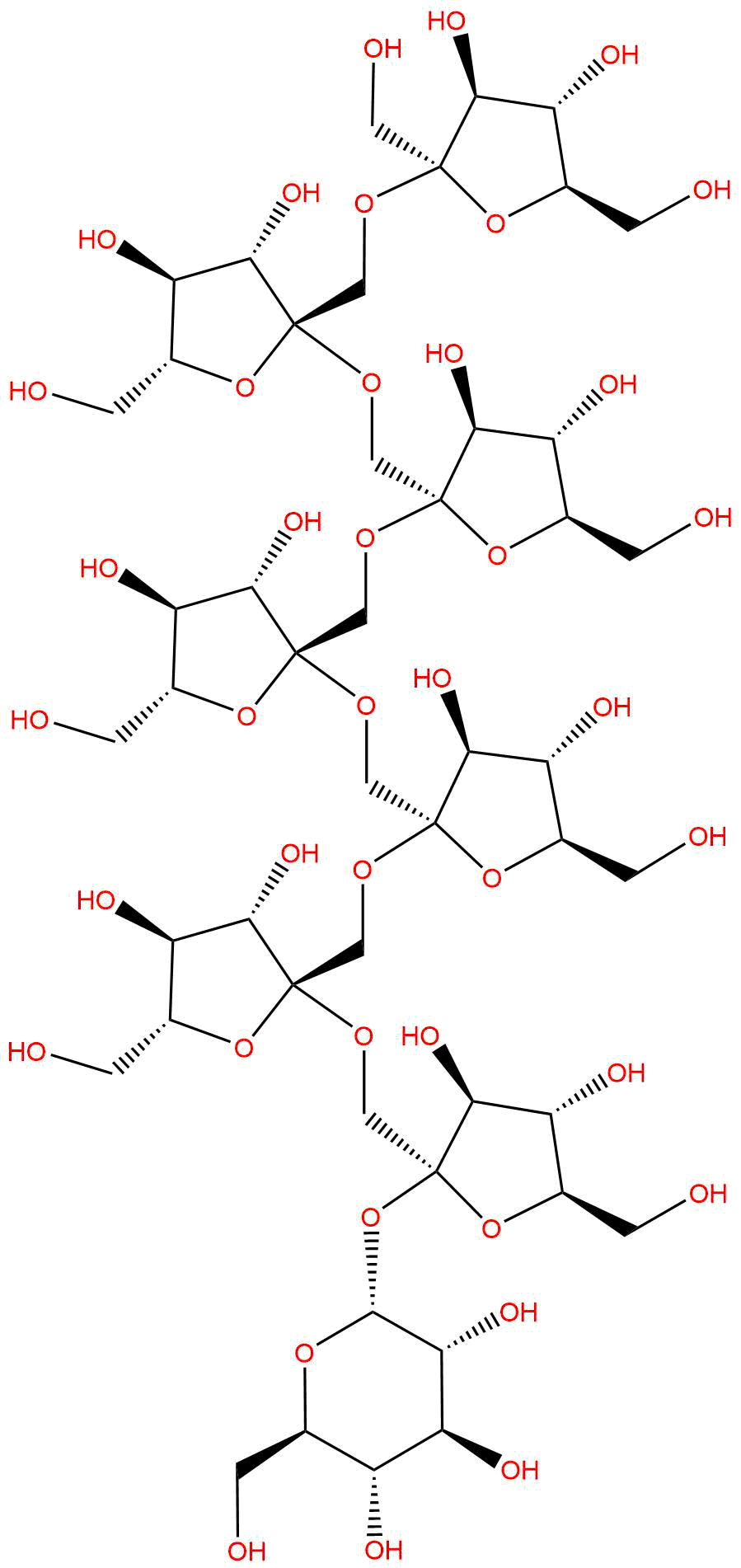


Product name: Fructo-oligosaccharide DP8 / GF7
Synonym name: α-D-Glucopyranoside, O-β-D-fructofuranosyl-(2-1)-O-β-D-fructofuranosyl-(2-1)-O-β-D-fructofuranosyl-(2-1)-O-β-D-fructofuranosyl-(2-1)-O-β-Dfructofuranosyl-(2-1)-O-β-D-fructofuranosyl-(2-1)-β-D-fructofuranosyl
Catalogue No.: BP4065
Cas No.: 62512-21-4
Formula: C48H82O41
Mol Weight: 1315.14
Botanical Source:
Physical Description: White powder
Type of Compound: Oligose
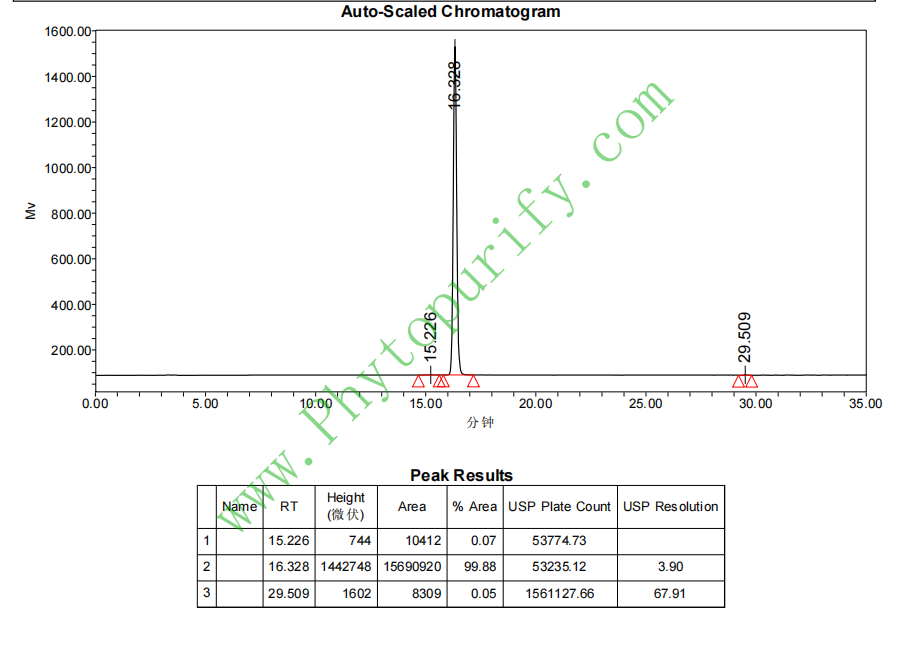
Purity: 95%~99%
Analysis Method: HPLC-DAD or/and HPLC-ELSD
Identification Method: Mass, NMR
Packing: Brown vial or HDPE plastic bottle
Storage: Store in a well closed container, protected from air and light. Put into refrigerate or freeze for long term storage.
Whenever possible, you should prepare and use solutions on the same day. However, if you need to make up stock solutions in advance, we recommend that you store the solution as aliquots in tightly sealed vials at -20℃. Generally, these will be useable for up to two weeks.
The product could be supplied from milligrams to grams
Inquire for bulk scale.
For Reference Standard and R&D, Not for Human Use Directly.
HPLC of Fructo-oligosaccharide DP8 / GF7
Storage conditions:Short-term storage at 2~8℃, long-term storage at -20 ~ -80℃
664.4300
-5.0193
-5.0193
31.0797
.4298
.1689
Low
18.1556
7.3657
Yes
No
No
No
Yes
No
0.9
Yes
Yes
Yes
Yes
Fructo oligosaccharides DP8 (FOS DP8 or GF7) is a type of low molecular weight fructose formed by connecting fructose units with β - (2 → 1) glycosidic bonds. It belongs to the category of prebiotics and is a natural product. As a functional oligosaccharide, cane fruit octasaccharides have attracted widespread attention in the fields of intestinal health, immune regulation, and prevention and treatment of metabolic diseases in recent years due to their unique physiological activity and safety. Probiotics selectively promote the growth of beneficial gut microbiota, such as Bifidobacterium, indirectly regulating host immune response and gut barrier function, becoming an important means of regulating gut microbiota balance. As a typical prebiotic, sugarcane octasaccharides involve multiple molecular targets, including tight junction proteins of intestinal epithelial cells (such as OCLN, ZO1, CLDN1), immune regulatory factors (such as IL22), pattern recognition receptors (such as TLR2, TLR4), and short chain fatty acid receptors (such as GPR41, GPR43), exhibiting significant intestinal protection and immune regulatory functions.
This article provides a systematic review of the chemical structure and physicochemical properties, plant sources and extraction methods, pharmacological activity research, mechanism of action and molecular targets, pharmacological evaluation, and pharmacokinetic characteristics of sugarcane octasaccharides. Finally, it explores their clinical application prospects and development trends, aiming to provide theoretical basis and practical guidance for research in natural product pharmacology and functional food fields.
Sugarcane octasaccharides belong to fruit polysaccharide oligosaccharides, with a molecular formula of (C6H10O5) n, a degree of polymerization (DP) of 8, and a molecular weight of approximately 1315.1430 Da. Its structure consists of a sucrose molecule (glucose fructose) as the starting unit, connecting 7 fructose residues to form a linear β - (2 → 1) fructose chain. This structure endows it with high water solubility (31.08 mg/mL) and a LogP value of -5.0193, exhibiting strong hydrophilicity and extremely low lipid solubility, making it difficult to passively diffuse into cells through lipid membranes.
The extremely high polarity of sugarcane octasaccharides is reflected in their topological polar surface area (TPSA) of 664.43 Å ², indicating the presence of a large number of hydroxyl and oxygen atoms on their surface, which can form a rich hydrogen bonding network and promote binding with water molecules. In addition, sugarcane octasaccharides are not easily able to penetrate the blood-brain barrier, and the hERG channel inhibition test result is negative. The Ames mutagenicity test score is 0.9, indicating a low risk of genetic toxicity and good safety.
Sugar cane octasaccharides have high chemical stability, good heat and acid resistance, and are suitable for oral administration and food additive applications. Its structural specificity prevents it from being degraded by human digestive enzymes and allows it to reach the colon intact for fermentation and utilization by intestinal probiotics, producing bioactive metabolites such as short chain fatty acids (SCFAs).
Sugarcane octasaccharides are mainly found in various plants, especially in the rhizomes or fruits of sugarcane (Saccharum officinalis), onion (Allium cepa), garlic (Allium sativum), chicory (Cichorium intybus) and other plants. Sugarcane juice is an important raw material for industrial scale production of octasaccharide, because it contains rich fructan precursors.
Industrial extraction typically involves the following steps:
In recent years, the combination of green extraction technologies such as ultrasound assisted extraction, microwave-assisted extraction, and enzyme catalyzed extraction has significantly improved the yield and purity of sugarcane octasaccharides, reduced production costs, and promoted their widespread application in the fields of food and medicine.
The main pharmacological activities of cane eight sugar are concentrated in the maintenance of intestinal health and immune regulation, including:
Sugar cane octasaccharides, as prebiotics, significantly promote the growth of Bifidobacterium spp. and Lactobacillus spp., and improve the structure of gut microbiota. Probiotics ferment sugarcane octasaccharides to produce short chain fatty acids (SCFAs) such as acetic acid, propionic acid, and butyric acid, which regulate intestinal pH, inhibit pathogen growth, and maintain intestinal microbiota balance.
Sucrose can upregulate the expression of tight junction proteins (such as OCTN, ZO1, CLDN1) in intestinal epithelial cells, enhance intestinal barrier integrity, reduce intestinal permeability, prevent harmful substances and inflammatory factors from entering the bloodstream, and alleviate intestinal inflammatory reactions.
By regulating the signaling pathways of pattern recognition receptors TLR2 and TLR4, cane sugar can activate the innate immune system of the intestine, promote the secretion of anti-inflammatory cytokine IL-22, and enhance the immune defense function of the intestinal mucosa. In addition, SCFAs induced by sugarcane bagasse regulate inflammatory responses by mediating immune cell activity through GPR41 and GPR43 receptors.
Sugarcane octasaccharides and their metabolites have the ability to inhibit the release of pro-inflammatory cytokines and oxidative stress responses, alleviate symptoms of intestinal inflammatory diseases such as inflammatory bowel disease (IBD), and demonstrate potential therapeutic value.
Sugarcane octasaccharide can participate in host energy metabolism and improve insulin sensitivity by regulating intestinal flora and SCFAs levels, which has the potential to prevent obesity and type 2 diabetes.
The biological effects of sugarcane octasaccharides are mainly achieved through the regulation of intestinal microbiota and the interaction of host molecular targets
As pattern recognition receptors, TLR2 and TLR4 recognize gut microbiota and their metabolites, regulating immune responses. Sugarcane octasaccharides promote the growth of beneficial bacterial communities, indirectly regulate TLR signaling, reduce the production of inflammatory factors, and maintain immune homeostasis.
These proteins are key molecules that maintain the intestinal epithelial barrier function. Sugarcane octasaccharides promote their expression, strengthen intercellular connections, prevent intestinal barrier damage, and reduce the occurrence of intestinal leakage syndrome.
IL-22 is an important cytokine for intestinal epithelial cell repair and antibacterial defense. Sugarcane eight sugar promotes IL-22 secretion, enhances intestinal mucosal repair and resistance to pathogenic bacteria.
These two G protein coupled receptors are the main receptors of SCFAs, mediating the regulation of energy metabolism and immune response in SCFAs. Sugarcane octasaccharides regulate inflammation and metabolic pathways by promoting the production of SCFAs, activating GPR41 and GPR43.
As the main probiotic genus, Bifidobacterium utilizes sugarcane bagasse to produce beneficial metabolites and promote intestinal health. The selective fermentation characteristics of sugarcane octasaccharides promote the increase of BIFIDO abundance, forming a virtuous cycle.
The pharmacological evaluation of sugarcane octasaccharides shows that they have good safety and biocompatibility:
At present, there is a lack of systematic clinical pharmacokinetic data for cane fruit eight sugar. Future research needs to further clarify its in vivo metabolic pathways, half-life, and biological activity of metabolites.
With the deepening of the relationship between gut microbiota and overall health, cane fruit eight sugar, as a safe and effective prebiotic, has shown broad clinical application potential:
Sugarcane octasaccharides have an adjuvant therapeutic effect in inflammatory bowel disease (IBD), irritable bowel syndrome (IBS), and infectious diarrhea. It reduces inflammation and improves symptoms by regulating gut microbiota and enhancing barrier function.
Sugarcane octasaccharides can regulate immune balance, reduce the incidence of allergic reactions, and are suitable for auxiliary prevention of allergic diseases.
By improving the intestinal flora and promoting the production of SCFAs, bagueoctaose is expected to be used as an adjuvant treatment for obesity, diabetes and abnormal lipid metabolism.
Sugar cane octasaccharides, as natural oligosaccharides, are widely used in infant formula, health foods, and sports nutrition products to promote intestinal health and immune function.
In the future, sugarcane bagasse can be combined with probiotics, drugs, or other functional ingredients to exert synergistic effects and improve treatment efficacy.
Although clinical research on sugarcane octasaccharides is still in its early stages, its clinical translation and industrialization prospects are worth looking forward to as technology advances and mechanism research deepens.
Sugarcane octasaccharides, as a structurally clear and functionally diverse prebiotic oligosaccharide, have shown broad application prospects in the fields of intestinal health maintenance, immune regulation, and prevention and treatment of metabolic diseases due to their excellent water solubility, safety, and intestinal targeting properties. It exerts significant biological effects through multiple mechanisms such as regulating gut microbiota, enhancing intestinal barrier, and activating immune signaling pathways. In the future, combining modern molecular biology and pharmacological techniques, in-depth analysis of the mechanism of action and in vivo metabolic characteristics of sugarcane octasaccharides will provide a solid foundation for their clinical applications. At the same time, the development of efficient green extraction processes and standardized preparation technologies will promote their widespread application in functional food and pharmaceutical fields. In summary, as a model of natural products, cane eight sugar has important scientific research value and application potential, and deserves continuous attention and in-depth research.
