


Synonym name:
Catalogue No.: BP0457
Cas No.: 14259-55-3
Formula: C16H22O11
Mol Weight: 390.341
Botanical Source: Rubia peregrina and Rubia tinctorum
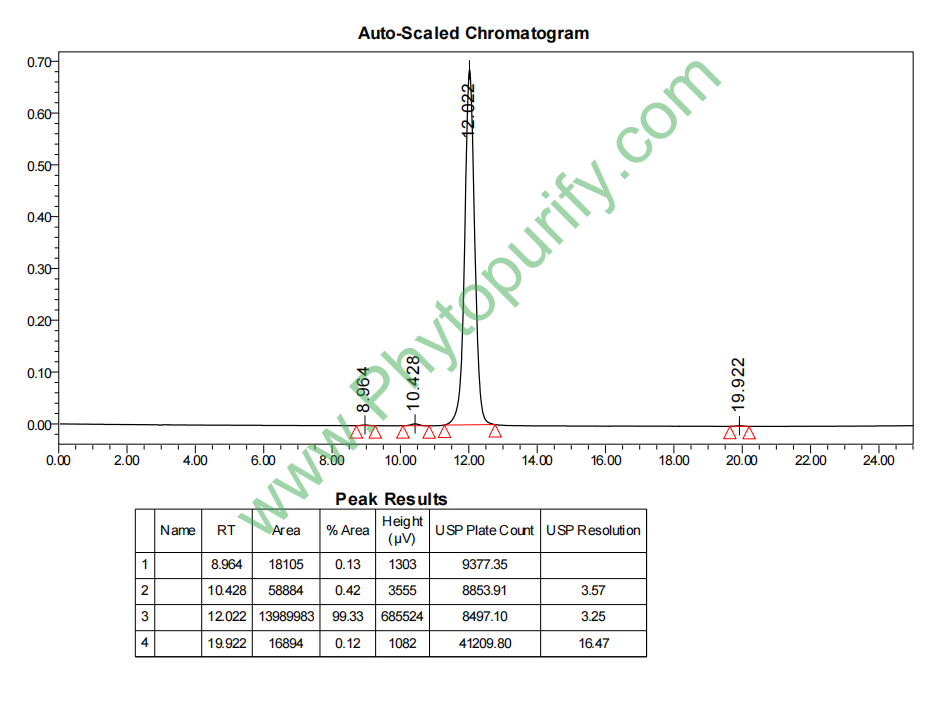
Purity: 95%~99%
Analysis Method: HPLC-DAD or/and HPLC-ELSD
Identification Method: Mass, NMR
Packing: Brown vial or HDPE plastic bottle
Can be supplied from milligrams to grams.
For Reference Standard and R&D, Not for Human Use Directly.
Inquire for bulk scale.
Description:
Deacetylasperulosidic acid inhibits the reduction of ear swelling, and also cancels the suppression of IL-2 production along with the activation of natural killer cells in the same manner as that of Noni-ext. Deacetylasperulosidic acid may increase catalase activity.
References:
Nat Prod Commun. 2014 Apr;9(4):445-50.
Activation of cell-mediated immunity by Morinda citrifolia fruit extract and its constituents.
Morinda citrifolia, commonly known as noni, is a traditional natural medicine in French Polynesia and Hawaii. Functional foods derived from M. citrifolia fruit have been marketed to help prevent diseases and promote good health.
METHODS AND RESULTS:
The objective of this study was to assess the effects of M. citrifolia fruit on cell-mediated immunity. In the picryl chloride-induced contact dermatitis test, M. citrifolia fruit extract (Noni-ext) inhibited the suppression of cell-mediated immunity by immunosuppressive substances isolated from freeze-dried ascites of Ehrlich carcinoma-bearing mice (EC-sup). In addition, Noni-ext inhibited reduction of IL-2 production in EC-sup-treated mice and activated natural killer cells in normal mice.
CONCLUSIONS:
These results suggest that Noni-ext has multiple effects on the recovery of cell-mediated immunity. Furthermore, we investigated the active principles of Noni-ext and identified an iridoid glycoside, Deacetylasperulosidic acid. Oral administration of Deacetylasperulosidic acid inhibited the reduction of ear swelling, and also cancelled the suppression of IL-2 production along with the activation of natural killer cells in the same manner as that of Noni-ext.
HPLC of Deacetylasperulosidic acid
Storage conditions:Short-term storage at 2~8℃, long-term storage at -20 ~ -80℃
186.3700
-1.7182
-3.4524
55.1060
.4556
.3693
Low
31.3245
4.8283
Yes
No
No
No
No
No
0.0
Yes
Yes
Yes
Yes
Natural products, as an important treasure trove for drug discovery and development, play an irreplaceable role in the long history of human fight against diseases. Among them, iridoid compounds have always been a hot topic in medicinal chemistry and pharmacology research due to their structural diversity and wide range of biological activities. Deacetylasperlosidic acid (DAA, CAS number: 14259-55-3), as an important iridoid glycoside, has attracted much attention since its discovery due to its significant antioxidant, anti-inflammatory, and potential chemopreventive activities. DAA is a tropical plant called Morinda officinalis(Morinda citrifolia One of the main active ingredients in the fruit of the plant, commonly known as Nori fruit, is also an important material basis for its traditional medicinal value. In recent years, with the deepening of modern pharmacological research techniques, DAA has shown remarkable potential in liver protection, immune regulation, and anti-tumor fields. Its mechanism of action has gradually evolved from describing phenomena to analyzing molecular targets and signaling pathways. Especially its significant protective effect in oxidative stress-related liver injury models suggests that it may exert its effects by regulating key antioxidant pathways such as nuclear factor E2 related factor 2 (NRF2). This article aims to systematically review the chemical properties, plant sources, pharmacological activities, molecular mechanisms of action, pharmacological evaluation, and clinical application prospects of DAA, in order to provide comprehensive scientific references for the in-depth research and future development of this natural product.
Deacetylated coumarinic acid is a monoterpenoid compound of the cyclic iridoid glycosides. Its chemical name is (1S, 4aS, 7S, 7aR) -1- (β - D-glucopyranosyl) -1,4-a, 5,6,7,7a - hexahydro-7-hydroxy-7-hydroxymethylcyclopentano [c] pyran-4-carboxylic acid. Its molecular formula is C16H22O11 and its molecular weight is 390.3410 g/mol.
Structurally, the core skeleton of DAA is a cyclopentane pyran ring system, which is a characteristic structure of cyclohexene ether terpenes. Its C-1 position is connected to a β - D-glucosyl group through a glycosidic bond, which is a manifestation of its glycosidic form. The C-7 position is connected to a hydroxymethyl group (- CH2OH) and also carries a hydroxyl group, while the C-4 position is replaced by a carboxyl group (- COOH). Compared with its acetylated precursor coumarin acid, DAA lacks the acetyl group at position C-10 (6 '- OH of the glucose group), which has a significant impact on its physicochemical properties and biological activity.
Based on its chemical structure, DAA exhibits typical hydrophilic characteristics. The calculated lipid water partition coefficient (LogP) is -1.7182, indicating that the compound has high hydrophilicity and is not easily soluble in lipid media. Its topological polar surface area (TPSA) is as high as 186.3700 Å ², mainly attributed to the abundant hydroxyl, carboxyl, ether, and glycosidic bonds in the molecule, which provide a large number of hydrogen bond acceptor and donor sites. The high TPSA and negative LogP values jointly determine the excellent water solubility of DAA, with a calculated value of approximately 55.1060 mg/mL, which is beneficial for its development and application in aqueous formulations. However, these characteristics also limit its transmembrane diffusion ability, especially its ability to pass through the blood-brain barrier (BBB) is predicted to be "low", which means it may face challenges in direct treatment of central nervous system diseases. From the preliminary indicators of drug safety, DAA showed no risk of hERG potassium channel inhibition in the calculation model (predicted as "no"), indicating a low potential risk of cardiac toxicity; Meanwhile, the predicted value of the Ames test is 0.0, indicating that it may not have direct genetic toxicity. These preliminary pharmacological parameters provide a favorable starting point for the subsequent development of DAA.
The main natural source of deacetylated coumarin acid is the Euphorbia plant in the Rubiaceae family, which belongs to the Euphorbia genus(Morinda citrifolia L. The fruit is commonly known as the Nori fruit. Nori fruit has been used for over two thousand years in traditional medicine in tropical regions such as Polynesia, for the treatment of various diseases such as infections, inflammation, and pain. DAA, as a characteristic ingredient and one of the main active substances in Noli juice and fruit extracts, is considered an important indicator for evaluating the quality of Noli products.
In addition to Morinda officinalis, DAA also exists in other plants of the same family, such as gardenia(Gardenia jasminoides)And chicken droppings vine(Paederia scandens)But the content is usually lower in these plants. The content of DAA in Morinda officinalis fruit varies with fruit maturity, origin, climate, and processing methods. Usually, it can be accurately quantified using high-performance liquid chromatography (HPLC) or liquid chromatography-mass spectrometry (LC-MS) techniques.
Solvent extraction is commonly used to extract DAA from plant materials. Due to its good water solubility and high polarity, the most commonly used extraction solvents for DAA are water, methanol, ethanol, or their mixed solutions in different proportions. Traditional extraction techniques include:
1. Extraction method Mix dry or fresh Nori fruit powder with a solvent, soak and stir at room temperature or heating.
2. Ultrasound assisted extraction Using the cavitation effect of ultrasound to destroy plant cell walls and accelerate solute diffusion can significantly improve extraction efficiency and shorten extraction time.
3. Microwave assisted extraction Microwave heating can rapidly heat up the interior of plants, causing cell rupture and efficient release of target components.
The crude extract after extraction usually contains impurities such as sugars, proteins, other iridoids, and pigments, which require further purification. The purification steps may include:
- liquid-liquid extraction Using the polarity of DAA, enrich the aqueous phase extracted from non-polar solvents such as petroleum ether and ethyl acetate with water or dilute alcohol solution.
- Macroporous adsorption resin chromatography This is a common method for purifying iridoid glycosides, such as using AB-8, D101 and other types of resins, removing impurities by water washing, and then gradient elution with different concentrations of ethanol solution to collect DAA rich fractions.
- Preparation type high-performance liquid chromatography For obtaining high-purity DAA monomers for rigorous pharmacological and mechanistic studies, preparative HPLC is currently the most effective method, typically using a reverse phase C18 chromatography column with methanol water or acetonitrile water (often containing a small amount of formic acid or phosphoric acid to adjust pH) as the mobile phase for separation.
Optimizing extraction and purification processes is crucial for achieving large-scale preparation of DAA and ensuring its quality controllability as a raw material or health product ingredient.
A large number of in vitro and in vivo studies have revealed the broad and diverse pharmacological activities of DAA, laying the foundation for its potential therapeutic applications.
1. Antioxidant and chemopreventive activity
One of the core biological activities of DAA is its strong antioxidant capacity. Research has shown that DAA can effectively scavenge free radicals such as DPPH and ABTS, and significantly enhance the activity of endogenous antioxidant enzymes in cells, especially superoxide dismutase (SOD). This antioxidant property is directly related to its chemopreventive potential. Early studies have found that DAA can inhibit DNA damage induced in vitro by carcinogens such as 4-nitroquinoline-1-oxide (4NQO). More importantly, in hamster ovary cells and mouse in vivo models, DAA exhibits antigenic activity that inhibits chromosome aberration induction, suggesting that it may prevent mutations and carcinogenesis by protecting the integrity of genetic material.
2. Liver protective effect
Liver protection is the most extensively studied pharmacological activity direction of DAA in recent years. DAA has shown significant protective effects in various experimental liver injury models. For example, in the acute liver injury model induced by acetaminophen (APAP) in mice, DAA pretreatment can dose dependently reduce serum alanine aminotransferase (ALT) and aspartate aminotransferase (AST) levels, alleviate liver tissue pathological damage (such as necrosis and inflammatory infiltration). In the liver fibrosis model induced by carbon tetrachloride (CCl4) or thioacetamide, DAA not only improves liver function indicators, but also significantly inhibits the activation of hepatic stellate cells, reduces collagen deposition, and thus delays or even reverses the process of liver fibrosis. Its liver protective effect is believed to be the result of the synergistic effects of its antioxidant, anti-inflammatory, and anti fibrotic properties.
3. Immune regulatory activity
DAA has a regulatory effect on the immune system. Research has shown that DAA can inhibit the production of interleukin-2 (IL-2) in T lymphocytes. IL-2 is a key cytokine for T cell proliferation and activation, and its inhibition may imply that DAA has the potential to regulate excessive immune responses. In addition, DAA can also inhibit the activation of natural killer (NK) cells. This dual regulatory effect on innate and adaptive immunity suggests that DAA may have practical value in the treatment of autoimmune or inflammatory diseases, but its specific effects may be highly dependent on dosage and pathological environment.
4. Anti inflammatory activity
Inflammation is the common pathological basis of various chronic diseases. DAA has been shown to have anti-inflammatory effects in various cell models. It can inhibit the excessive production of nitric oxide (NO), prostaglandin E2 (PGE2), as well as pro-inflammatory mediators such as tumor necrosis factor - α (TNF - α) and interleukin-6 (IL-6) in macrophages induced by stimuli such as lipopolysaccharide (LPS). Its anti-inflammatory mechanism is closely related to the inhibition of classical inflammatory signaling pathways such as nuclear factor kappa B (NF - κ B) and mitogen activated protein kinase (MAPK) activation.
5. Other potential activities
Preliminary studies also suggest that DAA may have the potential of neuroprotection, anti diabetes and anti obesity, but the evidence in these fields is still insufficient and needs more research to confirm.
The multiple pharmacological activities of DAA stem from its regulation of multiple key signaling pathways and molecular targets within cells. The core mechanisms revealed by current research mainly revolve around antioxidant stress and anti fibrosis.
1. Activate the NRF2/ARE antioxidant defense pathway
This is the core mechanism by which DAA exerts antioxidant and chemopreventive effects. Nuclear factor E2 related factor 2 (NRF2) is a central regulatory factor of cellular antioxidant response. At rest, NRF2 binds to its inhibitory protein Keap1 and is degraded by ubiquitination. When stimulated by oxidative stress or activators such as DAA, NRF2 dissociates from Keap1, translocates to the nucleus, and binds to antioxidant response elements (ARE), initiating downstream transcription of a series of phase II detoxifying enzymes and antioxidant proteins.
DAA has been proven to effectively activate the NRF2 signaling pathway. The result is the upregulation of the expression of various key antioxidant and cell protective proteins, including:
- antioxidant enzyme Superoxide dismutase 1/2 (SOD1, SOD2), catalase (CAT), glutathione peroxidase 1 (GPX1).
- Phase II detoxifying enzyme Quinone oxidoreductase 1 (NQO1).
- Heme oxygenase-1 (HMOX1)Has powerful antioxidant, anti-inflammatory, and anti apoptotic functions.
Through the synergistic effect of this series of proteins, DAA significantly enhances the ability of cells to clear reactive oxygen species (ROS) and resist oxidative damage, which directly explains its protective effects in models such as liver injury and chemoprevention.
2. Inhibit the TGF - β 1/Smad pro fibrotic pathway
In the liver fibrosis model, the anti fibrotic effect of DAA is closely related to its inhibition of the transforming growth factor - β 1 (TGFB1) signaling pathway. TGFB1 is the most potent cytokine that drives the activation of hepatic stellate cells (HSCs) into myofibroblasts. Activated HSCs express a large amount of alpha smooth muscle actin (ACTA2) and secrete extracellular matrix (such as collagen), leading to fibrosis.
Research has shown that DAA treatment can downregulate the expression of TGFB1 and inhibit the phosphorylation (activation) of downstream Smad2/3, thereby blocking TGFB1 signaling. This leads to a decrease in the expression of the activation marker ACTA2 in HSCs, a reduction in the synthesis of collagen I and III, and ultimately inhibits the progression of liver fibrosis.
3. Regulating matrix metalloproteinases (MMPs)
The reversal of liver fibrosis involves the degradation of extracellular matrix, which is mainly carried out by the matrix metalloproteinases (MMPs) family, and their activity is regulated by tissue metalloproteinase inhibitors (TIMPs). Research has shown that DAA can downregulate the expression of tissue inhibitor of metalloproteinase-1 (TIMP-1) and may indirectly affect the activity balance of MMP-9 (gelatinase B), thereby creating a favorable microenvironment for the degradation of fibrotic matrix and promoting the absorption of fibrous tissue.
4. Inhibit inflammatory signaling pathways
The anti-inflammatory effect of DAA is partially achieved by inhibiting the NF - κ B and MAPK pathways. It can reduce the degradation of I κ B α induced by inflammatory stimuli, thereby inhibiting the nuclear translocation and DNA binding activity of NF - κ B p65 subunit. Meanwhile, it can also inhibit the phosphorylation of p38 MAPK and JNK. The inhibition of these pathways leads to a decrease in the expression of downstream pro-inflammatory cytokine genes such as COX-2, iNOS, TNF - α, IL-6, etc.
In summary, DAA forms a synergistic network from antioxidant defense, anti-inflammatory to anti fibrosis through multi-target and multi pathway action, providing a solid molecular pharmacology basis for its treatment of complex oxidative stress-related diseases such as drug-induced liver injury, metabolism related liver disease, liver fibrosis, etc.
Although DAA has shown good biological activity in preclinical studies, its successful development as a drug depends on its pharmacological properties, namely its absorption, distribution, metabolism, excretion (ADME) characteristics and safety as a drug in the body.
1. Preliminary pharmacokinetic study
At present, research on the pharmacokinetics of DAA systems is relatively limited, mainly based on animal experiments. Due to its high hydrophilicity and large polar surface area, the oral bioavailability of DAA may face challenges. Cycloterpenoid glycosides may undergo hydrolysis in the gastrointestinal tract by the action of gastric acid and gut microbiota enzymes (especially β - glucosidase), producing glycosides. Glycosides have higher lipid solubility and may be more easily absorbed, but their biological activity may differ from that of the original glycoside. The distribution of absorbed DAA or its metabolites in the body may be mainly concentrated in high perfusion organs such as the blood, liver, and kidneys, and difficult to enter the brain (consistent with predictions of low blood-brain barrier penetration). Its excretion pathway may mainly be through the kidneys in the form of prototype or metabolic complexes (such as glucuronic acid complexes, sulfate complexes). Detailed key PK parameters such as absolute bioavailability, plasma protein binding rate, major metabolic enzymes, and half-life need to be further studied through more standardized radioactive labeling or high-sensitivity LC-MS/MS methods.
2. Advantages and challenges of pharmaceutical properties
Advantage:
- High potential for safety Preliminary calculations predict no hERG inhibition or genotoxicity risk, providing a good expectation for its safety.
- Excellent water solubility Beneficial for making injectable or oral liquid formulations, improving the convenience of administration.
- Clear natural sources As the main component of traditional medicinal plants, it has a long history of human consumption, which reduces some of the risks of early development.
challenge:
- Oral absorption and bioavailability High hydrophilicity may lead to poor passive transmembrane absorption and lower oral bioavailability. This is the main obstacle to its development as an oral medication.
- Metabolic stability As a glycoside compound, it is susceptible to enzymatic hydrolysis in the intestine and liver, and may undergo rapid metabolic inactivation or conversion into other active forms.
- Formulation and delivery strategy New drug delivery systems need to be developed to improve oral absorption, such as nanoemulsions, liposomes, solid dispersions, or prodrug strategies (such as esterification modification to enhance lipid solubility).
- Lack of research on system PK/PD A complete ADME study is needed to clarify its in vivo fate and establish a quantitative relationship between plasma exposure and drug efficacy.
Based on its unique pharmacological activity and multi-target mechanism of action, DAA has broad clinical application prospects in multiple disease fields, but also faces many challenges.
1. Potential clinical application directions
- Liver disease field This is the most promising application direction for DAA. For non-alcoholic fatty liver disease (NAFLD)/non-alcoholic fatty liver disease (NASH), drug-induced liver injury (DILI), and liver fibrosis associated with chronic viral hepatitis, DAA's multiple effects of antioxidant, anti-inflammatory, and anti fibrotic precisely target their core pathological processes. It may be used as an adjuvant therapy in combination with existing therapies to delay disease progression and promote liver tissue repair.
- Metabolic diseases In view of the core role of oxidative stress and chronic inflammation in type 2 diabetes, obesity and their complications, DAA may be used to improve insulin resistance, protect pancreatic beta cells and prevent and treat complications such as diabetes nephropathy.
- Chemical prevention As a dietary supplement or functional food ingredient, it is used for cancer chemoprevention in high-risk populations, especially for digestive tract tumors related to oxidative stress.
- Inflammation and autoimmune diseases More detailed research is needed to define the window of its immune suppression/regulation, which may be applicable to certain specific types of autoimmune diseases, but potential immune suppression risks need to be monitored.
2. Future research prospects
- In depth mechanism research Using techniques such as gene knockout/knock in animals, proteomics, metabolomics, etc., further clarify the core targets and network regulatory relationships of DAA, especially its specific mechanisms in different organs and disease models.
- Optimization of drug properties in the system Conduct comprehensive preclinical ADME research. We will focus on tackling the oral delivery challenges and significantly improve its bioavailability through formulation techniques (such as nanotechnology, prodrug design) or structural modifications (moderately increasing lipid solubility while retaining pharmacophores).
- Confirmation of preclinical safety and efficacy According to the requirements of Good Clinical Practice (GLP) for drug non clinical research, complete safety evaluations of acute toxicity, long-term toxicity, reproductive toxicity, etc., and verify their efficacy in animal models that are closer to human diseases (such as humanized mouse NASH models).
- Exploration of clinical research After completing sufficient preclinical research, early clinical studies may be considered to explore its safety, tolerability, and initial efficacy as an adjuvant therapy or dietary supplement for liver disease.
- Source and Sustainable Production In addition to extracting from plants, exploring the use of synthetic biology techniques such as microbial cell factories for green and sustainable biosynthesis of DAA to address issues such as limited plant sources and quality fluctuations.
As a natural iridoid glycoside derived from the traditional medicinal plant Euphorbia officinalis, deacetylated quercetin (DAA) has become a highlight molecule in natural product pharmacology research due to its significant multiple pharmacological activities such as antioxidant, anti-inflammatory, anti fibrosis, and immune regulation. The study of its mechanism of action has gone beyond simple observation of phenomena and delved into the synergistic effects of multiple targets, such as activating the NRF2 antioxidant pathway and inhibiting the TGF - β 1 pro fibrotic pathway. This provides a solid theoretical basis for its application in oxidative stress-related diseases, especially in the field of liver disease. Although it faces challenges in drug development, especially in oral absorption, its excellent water solubility and good preliminary safety prediction lay a favorable foundation for its further development. In the future, through interdisciplinary collaboration, combined with modern medicinal chemistry, pharmacy, systems biology, and clinical medicine, DAA is expected to be developed from a potential natural active molecule into a new candidate drug or important functional supplement for the treatment of major chronic diseases such as liver fibrosis and metabolic liver disease, and contribute its unique value to human health by optimizing its drug properties, elucidating its precise mechanism of action, and promoting clinical translational research.
