| Catalog No | Package | Original Price | Price | Inventory | Quantity | Operating |
|---|---|---|---|---|---|---|
| SBP01190-5mg | 5mg | $290.00 | Sign in |
|


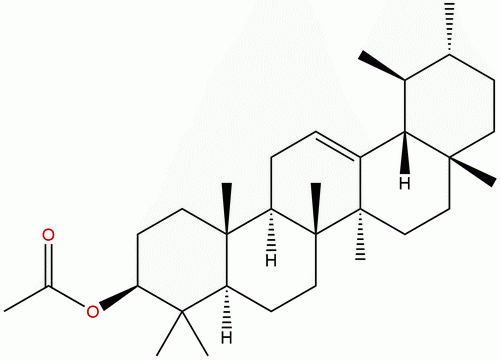
Product name: α-Amyrin acetate
Synonym name:
Catalogue No.: SBP01190
Cas No.: 863-76-3
Formula: C32H52O2
Mol Weight: 468.766
Botanical Source:
Type of Compound:
Purity: 95%~99%
Analysis Method: HPLC-DAD or/and HPLC-ELSD
Identification Method: Mass, NMR
Packing: Brown vial or HDPE plastic bottle
Storage: Store in a well closed container, protected from air and light. Put into refrigerate or freeze for long term storage.
Whenever possible, you should prepare and use solutions on the same day. However, if you need to make up stock solutions in advance, we recommend that you store the solution as aliquots in tightly sealed vials at -20℃. Generally, these will be useable for up to two weeks.
The product could be supplied from milligrams to grams
Inquire for bulk scale.
For Reference Standard and R&D, Not for Human Use Directly.
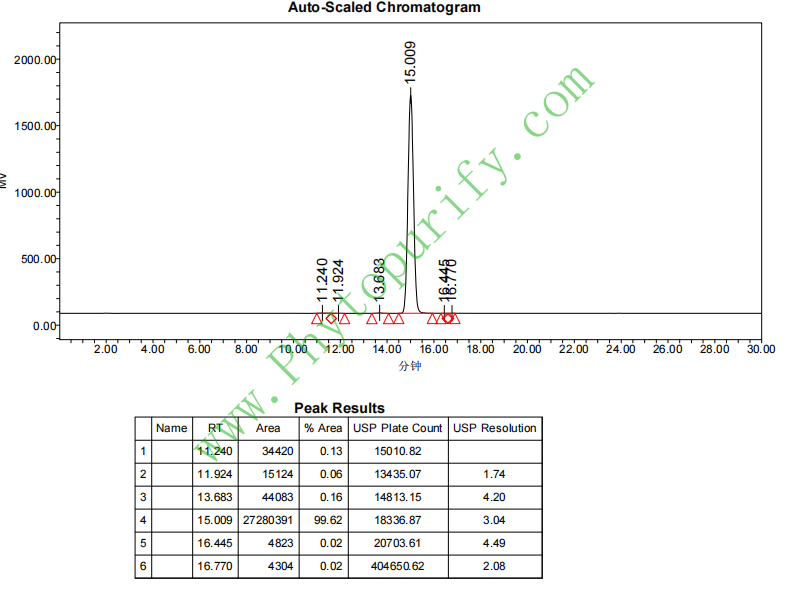
HPLC of α-Amyrin acetate
Storage conditions:Short-term storage at 2~8℃, long-term storage at -20 ~ -80℃
26.3000
8.9199
8.9188
.0002
9.6809
4.6904
High
92.0375
4.7212
No
No
No
No
No
No
0.0
No
No
No
No
Alpha amyrin acetate is a naturally occurring pentacyclic triterpenoid with significant biological activity. Its CAS number is 863-76-3, molecular formula is C32H52O2, and molecular weight is approximately 468.77 g/mol. This compound is an acetylated derivative of alpha aromatic resin alcohol, mainly derived from mulberry plants Mulberry white skin(Morus alba Separated from the cortex. In recent years, with the in-depth study of the pharmacological effects of natural products, α - cinnamyl alcohol acetate has attracted much attention due to its wide range of biological activities. Existing research indicates that it not only exhibits significant anti-inflammatory Active and effective Inhibit cancer cell proliferation and induce cell apoptosis And in Regulating blood sugar levels The aspect shows potential. This makes it a valuable chemical probe or lead compound for studying the pathogenesis and potential treatment strategies of cancer (such as breast cancer) and metabolic diseases (such as diabetes). This article will systematically introduce this natural triterpenoid compound from its chemical structure, plant origin, pharmacological mechanism, medicinal evaluation, and research prospects.
Alpha aromatic resin alcohol acetate belongs to the oleane type pentacyclic triterpenoid compounds. Its chemical structure is based on a highly methylated five ring skeleton (rings A, B, C, D, E), forming acetate on the C-3 hydroxyl group. Its SMILES string (CC (=O) O [C @ H] 1CC [C @] 2 (C) [C @ H] 3CC=C4 [C @ @ H] 5 C@@HC@H CC [C @] 5 (C) CC [C @ @] 4 (C) [C @] 3 (C) CC [C @ H] 2C1 (C) C) accurately describes its complex stereochemical configuration, and the presence of multiple chiral centers (represented by the @ symbol) determines its specific three-dimensional spatial structure, which is crucial for its specific recognition and binding with biological targets.
From the provided pharmacological parameters, its physicochemical properties exhibit typical lipophilic natural triterpenoid characteristics:
- Molecular weight (MW):468.77 g/mol, Slightly higher than conventional small molecule drugs (usually<500 Da), but still within an acceptable range.
- Lipid water partition coefficient (LogP/LogD)All are close to 9 (LogP: 8.92), indicating that the compound Extremely lipophilic The water solubility is extremely poor (only 0.0002 mg/mL). This is a common problem among many triterpenoid compounds, which can seriously affect their oral bioavailability and formulation development.
- Topological Polarity Surface Area (TPSA)26.30 Å ², a small value, mainly comes from the oxygen atoms of ester bonds, which is consistent with its high lipophilicity.
- Permeability Caco-2 cells have high permeability (4.69) and effective permeability (Peff: 9.68) data, combined with their high lipophilicity and low TPSA, it is predicted that they have Good intestinal absorption potential At the same time, it The blood-brain barrier (BBB) penetration is predicted to be 'high'It suggests that it may have the potential to act on the central nervous system.
- Plasma protein binding rate (PPB)As high as 92.04%, it means that after entering the bloodstream, the vast majority of drugs will bind to plasma proteins (mainly albumin), which may affect their free concentration, tissue distribution, and efficacy.
An important natural source of alpha aromatic resin alcohol acetate is Mulberry white skin, namely mulberry tree(Morus alba L. Dry root bark. Mulberry trees have a long history of cultivation and application in China and even East Asia. Their leaves (mulberry leaves) are used for raising silkworms, their fruits (mulberries) are edible, and their root bark (mulberry bark) is a traditional Chinese medicinal herb.
In traditional Chinese medicine theory, mulberry bark is sweet and cold in nature, and belongs to the lung meridian. Its main efficacy is Purging the lungs, relieving asthma, promoting diuresis, and reducing swelling In clinical practice, it is commonly used to treat symptoms such as lung heat cough and asthma, edema and fullness, and difficulty urinating. Modern plant chemistry research reveals that mulberry bark is rich in various bioactive compounds, including flavonoids, alkaloids, polysaccharides, and triterpenoids. Alpha aromatic resin alcohols and their acetates are important triterpenoid components. The traditional applications of "purging the lungs" (clearing lung heat) and "diuresis" (anti-inflammatory, regulating metabolism) have been compared with the modern research revealing the efficacy of α - coumarin acetate Anti inflammatory and blood sugar regulating There is a potential correlation between pharmacological effects. This reflects the mutual verification between traditional experience and modern science, and provides a basis for searching for active lead compounds from traditional medicines.
The pharmacological activities of α - aromatic resin alcohol acetate are diverse, and its core role is related to anti-inflammatory and antitumor Closely related. The target information provided by the database (TNF, PTGS2, NFKB1, IL6, IL1B) provides clear clues for us to understand their mechanism of action. These targets are not isolated proteins, but together form a core signaling network closely related to inflammation and cancer.
(1) Anti inflammatory mechanism:
Inflammation is the fundamental response of the body to injury or infection, but chronic inflammation is a driving factor for many diseases such as arthritis, metabolic syndrome, and cancer. The targets of α - cinnamyl alcohol acetate almost cover key nodes in the inflammatory pathway:
- Pro-inflammatory cytokines TNF (tumor necrosis factor - α), IL6 (interleukin-6), and IL1B (interleukin-1 β) are classic pro-inflammatory cytokines that play a central amplifying role in the inflammatory cascade. Inhibiting the production or activity of these cytokines is an important strategy for anti-inflammatory drugs.
- Inflammatory mediator synthase:PTGS2, Cyclooxygenase-2 (COX-2) is a key enzyme that catalyzes the synthesis of prostaglandins. Prostaglandins are important inflammatory mediators involved in pain, fever, and vasodilation. Selective inhibition of COX-2 is the basis of action for many nonsteroidal anti-inflammatory drugs, such as celecoxib.
- Core transcription factors NFKB1 (nuclear factor kappa B p105/p50 subunit) is a core component of the NF - κ B signaling pathway. The NF - κ B pathway is the "master switch" that regulates inflammation, immunity, cell survival, and proliferation. External stimuli such as TNF and IL-1 can activate NF - κ B, allowing it to enter the nucleus and initiate transcription of a series of inflammation related genes such as TNF, IL6, IL1B, PTGS2, etc.
Therefore, alpha aromatic resin alcohol acetate is likely to pass through Directly or indirectly inhibit the activation of the NF - κ B signaling pathway Thus Downstream inhibition of the expression of pro-inflammatory cytokines such as TNF, IL6, IL1B, as well as the activity of PTGS2 (COX-2)Ultimately, it exerts a powerful anti-inflammatory effect. This multi-target mode of action may result in a wider anti-inflammatory spectrum and lower resistance risk compared to single target inhibitors.
(2) Mechanism of anti-tumor action:
Chronic inflammation is closely related to the occurrence and development of tumors (tumor microenvironment). The above-mentioned inflammation related targets (especially NF - κ B, TNF, IL-6) are abnormally activated in various cancer cells, promoting proliferation, inhibiting apoptosis, inducing angiogenesis, and metastasis. Therefore, the anti-inflammatory mechanism of alpha cinnamyl alcohol acetate is complementary to its anti-tumor activity.
- Inhibition of proliferation and induction of apoptosis Research shows that α - aromatic resin alcohol acetate can inhibit the proliferation of cancer cells such as breast cancer. The mechanism may include: downregulating the pro survival genes regulated by the NF - κ B pathway by inhibiting it; By affecting other signaling pathways such as PI3K/Akt and MAPK, it leads to cell cycle arrest (such as G0/G1 phase arrest) and ultimately initiates apoptosis through the mitochondrial pathway or death receptor pathway.
- Multi target collaboration The regulation of targets such as TNF and IL-6 not only inhibits the tumor associated inflammatory environment, but also directly affects the survival signals of cancer cells.
(3) Hypoglycemic potential:
Type 2 diabetes is closely related to low-grade chronic inflammation and insulin resistance. Inflammatory factors such as TNF - α and IL-6 can interfere with insulin signaling. Therefore, alpha cinnamyl alcohol acetate may help improve insulin sensitivity and lower blood sugar levels through its anti-inflammatory effects. In addition, triterpenoids are often found to regulate the activity of enzymes related to glucose and lipid metabolism, which may also be a component of their hypoglycemic mechanism.
Drug efficacy assessment aims to determine the likelihood of an active compound developing into a drug. We combined Lipinski's Rule of Five (Ro5) with the provided parameters to analyze alpha resin alcohol acetate:
According to the classic Ro5, alpha aromatic resin alcohol acetate is LogP seriously exceeds the standard It is classified as a compound with poor drug properties. This specifically means:
- Poor solubility Extremely low water solubility (0.0002 mg/mL) will result in difficulty in oral absorption, making it difficult to achieve effective blood drug concentrations. This is the primary challenge in formulation development.
- Risks associated with high lipophilicity High LogP compounds are prone to accumulate in adipose tissue, which may lead to long half-life, difficult clearance, and increased non-specific tissue toxicity risk.
- Metabolism and toxicity Highly lipophilic compounds are usually more easily metabolized by cytochrome P450 enzymes. Although preliminary toxicity predictions (Ames test negative, no chromosomal abnormalities, no hERG inhibition, no elevated organ toxicity markers) indicate good safety, comprehensive preclinical toxicology evaluation is still needed.
Positive aspects:
-Good predictive permeability (Caco-2, Peff) and BBB penetration indicate strong biofilm penetration once dissolution and absorption issues are resolved.
-There are no obvious warning signals of genetic toxicity and cardiac toxicity, indicating a good safety starting point.
Conclusion Alpha aromatic resin alcohol acetate is a compound with Excellent lead compounds with clear multi-target pharmacological activity But it The extremely poor solubility and high lipophilicity are the biggest bottlenecks for its conversion into drugs Future pharmaceutical chemistry optimization work may need to focus on its implementation Structural modification For example, introducing polar groups (such as hydroxyl, carboxyl, glycosides), preparing prodrugs, or developing salts to improve their LogP and water solubility while preserving their core pharmacophores and activity as much as possible.
At present, research on alpha aromatic resin alcohol acetate is still mainly in progress Preclinical stage A large number of studies have focused on in vitro cell models and a small number of animal models, confirming its potential in anti-inflammatory, anti-tumor (especially breast cancer, colon cancer, etc.) and regulating glucose metabolism. Its multi-target effect on the inflammatory core pathway gives it unique advantages in treating complex diseases related to chronic inflammation.
Future research directions may include:
1. Deepening the mechanism of action Using techniques such as molecular docking and surface plasmon resonance (SPR), accurately elucidate its direct binding mode and site with key targets such as NF - κ B and COX-2. Carry out more research on signaling pathways and draw a complete intracellular action network map.
2. Pharmaceutical Chemistry Optimization As mentioned earlier, a systematic structural modification will be carried out to address the shortcomings of its medicinal properties. Synthesize a series of derivatives or analogues and conduct structure-activity relationship (SAR) studies in order to obtain candidate molecules with comparable or superior activity and significantly improved physicochemical properties (especially LogP and solubility).
3. Application of Formulation Technology Before chemical modification, advanced drug delivery technologies can be attempted to overcome its solubility issues, such as manufacturing nanocrystal、liposome、micelle or Solid dispersion To improve its oral bioavailability.
4. Preclinical development Conduct standardized pharmacokinetic (ADME), pharmacodynamic, and long-term toxicity evaluations on the selected candidate compounds or formulations to provide data support for their potential clinical studies.
5. Expand the field of diseases Based on its anti-inflammatory and neural permeability, its application value in neuroinflammatory related diseases (such as Alzheimer's disease, Parkinson's disease), autoimmune diseases, and more types of cancer can be explored.
In summary, as a natural product derived from the traditional medicinal plant mulberry bark, α - cinnamyl alcohol acetate has shown great potential as a leading compound for the treatment of inflammation related diseases and cancer due to its multi-target and multifunctional properties. Despite facing challenges in drug formulation, it is expected to be modified or delivered into a novel therapeutic drug, or at least provide important structural templates and mechanistic insights for related drug design, through the intervention of modern medicinal chemistry and pharmacology methods. In depth research on it is a vivid practice that connects traditional medical wisdom with modern innovative drug development.
