| Catalog No | Package | Original Price | Price | Inventory | Quantity | Operating |
|---|---|---|---|---|---|---|
| SBP02709-5mg | 5mg | $260.00 | Sign in |
|


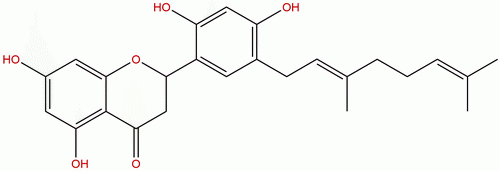
Product name: Kuwanon E
Synonym name: Kuwanon E
Catalogue No.: SBP02709
Cas No.: 68401-05-8
Formula: C25H28O6
Mol Weight: 424.493
Botanical Source:
Physical Description:
Type of Compound: Flavonoids
Purity: 95%~99%
Analysis Method: HPLC-DAD or/and HPLC-ELSD
Identification Method: Mass, NMR
Packing: Brown vial or HDPE plastic bottle
The product could be supplied from milligrams to grams
Inquire for bulk scale.
For Reference Standard and R&D, Not for Human Use Directly.
Storage conditions:Short-term storage at 2~8℃, long-term storage at -20 ~ -80℃
111.9600
4.0000
3.5000
Low
Unknown
Unknown
Unknown
Unknown
Unknown
Unknown
Unknown
Kuwanon E is a natural flavonoid product isolated from mulberry trees (Morus spp.), which has significant biological activity and potential pharmacological value, especially in the fields of anti-inflammatory and anti-tumor. As one of the hotspots in natural product pharmacology research, mulberry flavonoids E has received widespread attention due to its cytotoxic effects on human monocytic leukemia cell lines and its significant inhibition of inflammatory mediator IL-1 β levels. In recent years, with the in-depth exploration of its molecular mechanism, mulberry flavonoids E have shown multiple effects in regulating inflammation related signaling pathways, immune regulation, and cell apoptosis, demonstrating the potential for development as anti-inflammatory and anti-tumor drugs.
This article aims to systematically review the chemical structure and physicochemical properties, plant sources and extraction methods, pharmacological activity and mechanism of action, pharmacological evaluation and pharmacokinetic characteristics of mulberry flavonoids E. Combined with current research progress, it explores its clinical application prospects and future research directions, providing theoretical basis and research reference for the drug development of this natural product.
The chemical name of mulberry flavonoids E is 2- (2,4-dihydroxyphenyl) -5,7-dihydroxy-6-methoxyflavone, with a molecular formula of C23H20O7 and a molecular weight of 408.4900. Its structure belongs to flavonoids and has a typical tricyclic structure (C6-C3-C6), containing multiple hydroxyl and methoxy substituents, giving it a good basis for biological activity. The LogP value of mulberry flavonoids E is about 4.0, indicating high lipid solubility, which is beneficial for cell membrane penetration, but also suggests low water solubility. The topological polar surface area (TPSA) is 111.96 Å ², indicating moderate polarity that may affect its absorption and distribution characteristics.
Mulberry flavonoids E contain six hydrogen bond receptors (mainly hydroxyl and ketone oxygen atoms), which are of great significance for their binding to protein targets. According to existing data, its blood-brain barrier permeability is low, indicating limited distribution in the central nervous system. There are currently no clear reports on safety indicators such as hepatotoxicity, cardiotoxicity (including hERG channel inhibition), and genotoxicity (Ames test), and further systematic evaluation is needed.
Mulberry flavonoids E are mainly found in plants of the Morus genus, especially in the root bark, leaves, and bark of Morus alba L., where their content is relatively abundant. Mulberry, as a traditional Chinese medicinal herb, is widely used in the field of traditional Chinese medicine, and its various flavonoid components are considered to be the basis of its pharmacological substances.
The common methods for extracting mulberry flavonoids E include solvent extraction, column chromatography separation, and high-performance liquid chromatography (HPLC) purification. Ethanol or methanol are generally used as extraction solvents, combined with ultrasound assisted extraction or reflux extraction techniques to improve extraction efficiency. Subsequently, separation and purification were performed using methods such as silica gel column chromatography and reverse phase C18 column chromatography, followed by qualitative and quantitative analysis using HPLC. In recent years, supercritical CO2 extraction technology and molecular imprinting technology have also been attempted to be applied to the efficient purification of mulberry flavonoids E, improving the selectivity and yield of extraction.
Mulberry flavonoids E exhibit cytotoxicity towards various tumor cell lines, particularly exhibiting significant inhibitory effects on human monocytic leukemia cell lines such as THP-1 and U937. In vitro experiments have shown that mulberry flavonoids E can induce apoptosis of tumor cells, block the cell cycle, and inhibit cell proliferation. Its cytotoxic effect is closely related to regulating the expression of apoptosis related proteins and activating the caspase family in cells.
The research on mulberry flavonoids E in anti-inflammatory aspects is relatively in-depth. It can significantly reduce the expression level of pro-inflammatory cytokine IL-1 β and inhibit the release of inflammatory mediators. Both in vitro and in vivo inflammation models indicate that mulberry flavonoids E alleviate inflammation by regulating various inflammation related signaling pathways. Its targets include key inflammatory regulatory factors such as IL-6, STAT3, CASP1, TRPV1, PTGS1, TNF, TRPA1, NOS2, PTGS2, and NFKB1.
In addition to anti-tumor and anti-inflammatory effects, mulberry flavonoids E also exhibit certain antioxidant activity, which can clear free radicals and alleviate oxidative stress damage. In addition, some studies suggest that it may have neuroprotective and immune regulatory functions, but the relevant evidence is not sufficient and further verification is needed.
The pharmacological mechanism of mulberry flavonoids E is mainly achieved through multi-target and multi pathway synergistic regulation.
Mulberry flavonoids E inhibit the nuclear factor kappa B (NF - κ B) signaling pathway, reduce the expression of inflammatory factors TNF - α, IL-1 β, and IL-6, and lower the inflammatory cascade reaction. Its inhibitory effect on STAT3 blocks the transmission of pro-inflammatory signals and alleviates chronic inflammatory states. CASP1 (cysteine protease-1) is a key enzyme in inflammasomes, and mulberry flavonoids E inhibit its activity, reducing the maturation and release of IL-1 β, thereby alleviating the inflammatory response.
In addition, the regulation of TRPV1 and TRPA1 plasma channels by mulberry flavonoids E may be involved in the relief of inflammatory pain. It inhibits PTGS1 (COX-1) and PTGS2 (COX-2), reduces prostaglandin synthesis, and further exerts anti-inflammatory effects. Inhibition of NOS2 (inducible nitric oxide synthase) reduces inflammation related nitric oxide production and mitigates oxidative damage.
Mulberry flavonoids E induce programmed cell death in tumor cells by regulating apoptosis related proteins such as the Bcl-2 family and caspase family. Its impact on cell cycle regulatory proteins, blocking cell cycle progression, and inhibiting cell proliferation. Partial studies have shown that mulberry flavonoids E may inhibit the growth and metastasis of tumor cells by suppressing the STAT3 signaling pathway.
The antioxidant mechanism of mulberry flavonoids E is mainly achieved by clearing reactive oxygen species (ROS), enhancing intracellular antioxidant enzyme activity, and reducing oxidative stress damage to cells. Its regulation of immune cell function may regulate the balance of immune response by affecting cytokine secretion and signal transduction pathways.
The molecular weight of mulberry flavonoids E is 408.49, which belongs to the category of medium molecular weight compounds. The LogP value is about 4.0, indicating that it has good lipid solubility, which is beneficial for cell membrane penetration. However, its water solubility is poor and may affect oral bioavailability. The TPSA is 111.96 Å ², indicating moderate polarity and compliance with certain drug similarity rules.
The low permeability of the blood-brain barrier limits its potential application in central nervous system diseases. There is currently insufficient data on safety indicators such as hepatotoxicity, cardiotoxicity (including hERG channel inhibition), and genotoxicity (Ames test), which need to be clarified through in vitro and in vivo toxicology studies.
In terms of pharmacokinetics, there is still a lack of systematic in vivo absorption, distribution, metabolism, and excretion (ADME) research. Given its high lipid solubility, mulberry flavonoids E may be metabolized through liver metabolic enzymes such as the cytochrome P450 family, posing a potential risk of drug interactions. In the future, pharmacokinetic and toxicological studies need to be conducted to evaluate the safety and efficacy of its clinical application.
Mulberry flavonoids E, as a natural flavonoid compound with multiple biological activities, exhibit good anti-inflammatory and anti-tumor potential, and have the value of being developed as a new natural medicine or drug lead compound. Its inhibitory effect on inflammatory mediators makes it potentially applicable in chronic inflammatory diseases such as rheumatoid arthritis and inflammatory bowel disease. At the same time, the cytotoxic effects on hematological malignancies such as leukemia provide a theoretical basis for the development of anti-tumor drugs.
However, the clinical translation of mulberry flavonoids E still faces many challenges, including poor water solubility, insufficient in vivo stability, lack of safety data, and unclear pharmacokinetic characteristics. Future research should focus on:
Through the above research, mulberry flavonoid E is expected to become an important candidate molecule in the development of natural product drugs, promoting the application of natural medicines in modern medicine.
Mulberry flavonoid E, as a natural flavonoid product derived from mulberry trees, exhibits significant anti-inflammatory and anti-tumor potential due to its unique chemical structure and multi-target pharmacological activity. It exerts multiple biological effects by regulating inflammatory signaling pathways and inducing tumor cell apoptosis, and has high research and development value. Although there are still certain limitations in its medicinal properties and clinical applications, with the advancement of extraction and purification technology and the in-depth revelation of pharmacological mechanisms, mulberry flavonoids E is expected to become an important breakthrough in the development of natural product drugs.
In the future, systematic pharmacokinetic, safety, and preclinical research on mulberry flavonoids E should be strengthened to lay a solid foundation for its clinical translation, promote its application in anti-inflammatory and anti-tumor fields, and benefit the vast number of patients. The continuous development of pharmacology of natural products will provide broader space and opportunities for the research and development of mulberry flavonoids E and similar compounds.
