


Product name: Epimedin C
Synonym name: Baohuoside VI
Catalogue No.: BP0547
Cas No.: 110642-44-9
Formula: C39H50O19
Mol Weight: 822.81
Botanical Source: Epimedii folium
Physical Description:
Type of Compound: Flavonoids
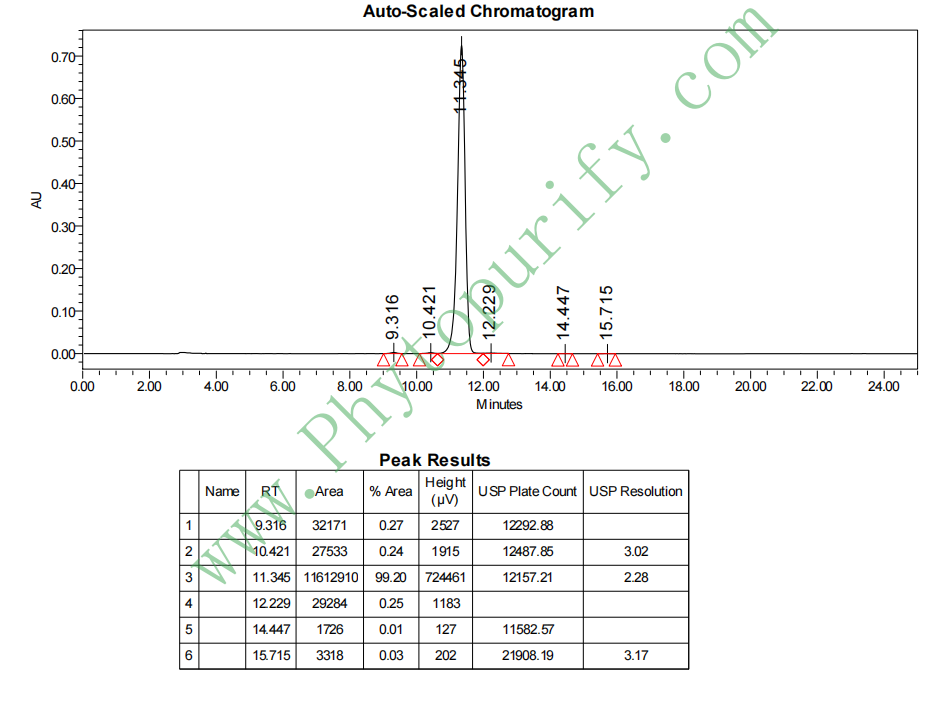
Purity: 95%~99%
Analysis Method: HPLC-DAD or/and HPLC-ELSD
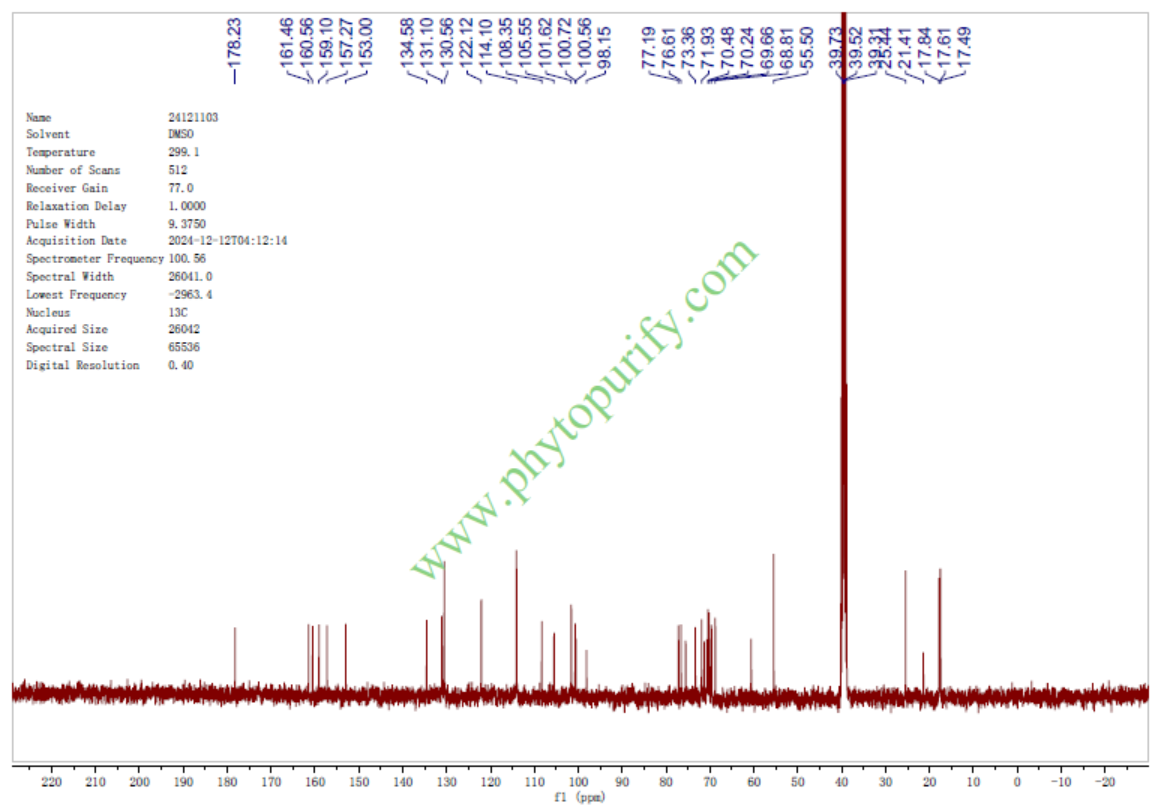
Identification Method: Mass, NMR
Packing: Brown vial or HDPE plastic bottle
Storage: Store in a well closed container, protected from air and light. Put into refrigerate or freeze for long term storage.
The product could be supplied from milligrams to grams
Inquire for bulk scale.
Description:
Epimedin C and diphylloside A have antiinflammation effect, can reduce the swelling of the rats foot induced by egg. The accumulation of epimedinsA, B, C, and icariin in a traditional medicinal plant could be suppressed by light stress.
References:
Acta Physiol Plant, 2013, 35(11):3271-5.
Light stress suppresses the accumulation of epimedins A, B, C, and icariin in Epimedium, a traditional medicinal plant.
Epimedium is well-known in China and East Asia due to high content of flavonoid derivatives, including icariin, Epimedin A, epimedin B, and Epimedin C, hereafter designated as bioactive components, which have been extensively utilized to cure many diseases. So far, the molecular mechanism of the bioactive components biosynthesis remains unclear.
METHODS AND RESULTS:
In the present study, the effect of light stress (24 h illumination) on the accumulation of bioactive components and the expression of flavonoid genes in Epimedium was investigated. Under light stress, the structural genes CHS1, CHI1, F3H, FLS, DFR1, DFR2, and ANS were remarkably up-regulated while CHS2 and F3′H were significantly down-regulated. For transcription factors, the expression of Epimedium MYB7 and TT8 were increased while Epimedium GL3, MYBF, and TTG1 expression were depressed. Additionally, the content of bioactive components was significantly decreased under light stress.
CONCLUSIONS:
Our results suggested that the decrease of bioactive compounds may be attributed to transcripts of late genes (DFRs and ANS) increased to a higher level than that of early genes (FLS and CHS1).
Chinese Journal of Modern Applied Pharmacy, 2012(3):198-201.
Antiinflammatory Effect of Epimedin C and Diphylloside A of Epimedium Wushanense T.S.Ying.s.
To study the antiinflammatory effect of Epimedin C and diphylloside A of Epimedium wushanense T.S.Ying.s on rats.
METHODS AND RESULTS:
Effect of Epimedin C and diphylloside A on swelling foot of rats induced by egg was assayed,degree of swelling was calculated,and compared with distilled water or indomethacin. Swelling of the rats foot induced by egg was reduced by Epimedin C and diphylloside A,and there was significant difference,compared with distilled water;and there was significant difference of Epimedin C in high dosage,compared with indomethacin,but there was no significant difference of Epimedin C in low dosage.
CONCLUSIONS:
Epimedin C and diphylloside A have antiinflammation effect.
HPLC of Epimedin C
NMR of Epimedin C
Storage conditions:Short-term storage at 2~8℃, long-term storage at -20 ~ -80℃
297.1200
.8952
.8904
2.3811
.4088
.3512
Low
80.3014
5.5372
Yes
No
Yes
No
No
No
0.0
Yes
Yes
Yes
Yes
Osteoporosis is a systemic bone disease characterized by reduced bone mass, destruction of bone microstructure, and increased bone fragility, and has become an increasingly serious public health problem worldwide. At present, first-line treatment drugs such as bisphosphonates and selective estrogen receptor modulators are effective, but long-term use often accompanies adverse reactions such as mandibular necrosis and cardiovascular risk. Therefore, searching for efficient and low toxicity anti osteoporosis lead compounds from traditional medicinal plants has become an important direction for new drug development. Epimedium, as a traditional Chinese medicine for tonifying the kidneys and strengthening bones, has been widely recognized for its anti osteoporosis effects. Epimidin C is one of the most abundant flavonol glycosides in Epimedium plants and a key active substance for its pharmacological effects. In recent years, with the deepening application of modern pharmacology and molecular biology techniques, significant progress has been made in the basic and translational research of Chaohuoding C in the field of anti osteoporosis, demonstrating enormous potential for development. This article aims to systematically review the chemical properties, plant sources, pharmacological activities, molecular mechanisms of action, medicinal properties, and clinical application prospects of Chaohuoding C, in order to provide comprehensive scientific references for the in-depth research and development of this compound.
Chaohuoding C, chemical name icariin C, CAS number 110642-44-9, is an isopentenyl flavonol glycoside compound. Its molecular formula is C ∝₉ H ₅₀ O ₂₀, and its molecular weight is 822.8100. Its basic parent nucleus is 8-isopentenyl kaempferol, and the sugar moiety is connected to the hydroxyl groups at positions 3 and 7 of the parent nucleus. The specific structure is kaempferol-3-O - α - L-rhamnoside - (1 → 2) - α - L-rhamnoside-7-O - β - D-glucoside. This unique isopentenyl substitution and complex glycosylation structure are key features that distinguish it from other flavonoids in Epimedium, such as icariin, and profoundly affect its physicochemical properties and biological activity.
From the analysis of parameters related to drug properties, the lipid water partition coefficient (LogP) of Chaohuoding C is 0.8952, indicating that it has a certain degree of lipophilicity, but overall it still leans towards hydrophilicity. Its topological polar surface area (TPSA) is as high as 297.1200 Å ², which is mainly attributed to the abundant hydroxyl and sugar structures in the molecule, resulting in strong polarity. Its water solubility value is 2.3811 (usually referring to logS or related solubility parameters), indicating that it has some solubility in water, but the complex sugar chain structure may limit its solubility at high concentrations. These physicochemical properties determine the absorption and distribution characteristics of Chaohuoding C in the body: its blood-brain barrier permeability is predicted to be "low", which means it is difficult to enter the central nervous system. This may actually reduce the potential risk of central side effects for anti osteoporosis drugs that mainly act on the peripheral skeletal system. In addition, preliminary toxicity prediction data showed no inhibition of hERG potassium channels (hERG inhibition: No), and the Ames test result was 0.0 (indicating no mutagenicity), providing preliminary computer simulation evidence for its good safety.
Chaohuoding C mainly comes from various plants of the Epimedium genus in the Berberidaceae family, such as Epimedium koreanum Nakai, Epimedium sagittatum (Sieb. et Zucc.) Maxim., Epimedium pubescens Maxim., and Epimedium wushanense T.S. Ying. Among them, Korean Epimedium is considered to be one of the species with the highest content of Chaohuoding C and is often used as a source of high-quality medicinal materials. The content of Chaohuoding C in plants is significantly affected by factors such as species, place of origin, harvest season, and medicinal parts (usually leaves).
The extraction and separation methods follow the conventional process of phytochemistry and are continuously optimized to improve efficiency and purity. The commonly used methods currently include:
1. Solvent extraction method The most commonly used initial extraction method. Usually, ethanol aqueous solution (such as 70% -95% ethanol) or methanol is used for reflux extraction or ultrasound assisted extraction. Ethanol is widely used due to its safety, low cost, and high efficiency in extracting flavonoids.
2. Purification and Separation Technology After vacuum concentration, the crude extract is enriched and purified using macroporous adsorption resins (such as AB-8 and D101), and gradient elution is often performed using ethanol water solutions of different concentrations. Further fine separation relies heavily on modern chromatographic techniques, including silica gel column chromatography, polyamide column chromatography, as well as high-performance liquid chromatography (HPLC) and high-speed countercurrent chromatography (HSCCC). Preparation HPLC is currently the most reliable method for obtaining high-purity monomers of Chaohuoding C.
3. Identification Method: The structure identification of compounds mainly depends on spectroscopic technologies, such as ultraviolet spectrum (UV), infrared spectrum (IR), mass spectrum (MS, especially electrospray ionization mass spectrometry ESI-MS can provide accurate molecular weight) and nuclear magnetic resonance spectrum (NMR, including ¹ H-NMR and ¹ ³ C-NMR). By analyzing their spectral data and comparing with literature or standards, chaohodine C can be accurately identified.
The pharmacological activity research of Chaohuoding C mainly focuses on the skeletal system, and its anti osteoporosis effect has been fully validated by in vitro and in vivo experiments, demonstrating multi-target and multi link action characteristics.
1. Promote bone formation:
Chaohuoding C can significantly promote the differentiation, proliferation, and mineralization functions of osteoblasts. In cell experiments, it can upregulate the expression of osteoblast specific markers such as type I collagen (COL1A1), osteocalcin (BGLAP), alkaline phosphatase (ALP), and osteopontin. Animal models (such as ovariectomy induced postmenopausal osteoporosis rat model and glucocorticoid induced osteoporosis model) have shown that oral administration of Chaohuoding C can effectively increase bone density (BMD), improve the microstructure of bone trabeculae (such as increasing the number and thickness of bone trabeculae and reducing separation), and enhance the biomechanical properties of bones (such as maximum load and elastic modulus).
2. Inhibit bone resorption:
Chaohuoding C has inhibitory effects on the differentiation and bone resorption activity of osteoclasts. It can inhibit the differentiation of osteoclast precursor cells into mature osteoclasts induced by receptor activator of nuclear factor kappa B ligand (RANKL), and reduce the activity of tartrate resistant acid phosphatase (TRAP) and tissue protease K (CTSK) in mature osteoclasts, thereby inhibiting the formation of bone resorption pits.
3. Regulating bone metabolism balance:
The effect of Chaohuoding C is not limited to unidirectional promotion or inhibition, but is also reflected in the regulation of the overall balance of bone metabolism. It can affect the bone marrow microenvironment by regulating the signaling dialogue between osteoblasts and osteoclasts (such as the OPG/RANKL/RANK system), creating a more favorable microenvironment for bone formation.
4. Other potential activities:
In addition to its core anti osteoporosis effect, research also suggests that Chaohuoding C may have the potential to have anti-inflammatory, antioxidant, cardiovascular protection, and cognitive function improvement effects. These activities are related to the basic properties of its flavonoids and may have an improving effect on chronic inflammation and oxidative stress associated with osteoporosis, but further research is needed to confirm this.
The mechanism of action of Chaohuoding C against osteoporosis is complex, involving multiple signaling pathways and molecular targets, reflecting the advantages of natural products with multi-target effects.
1. Core signaling pathway:
* BMP/Smad/RUNX2 pathway This is the key pathway through which Chaohuoding C promotes osteogenic differentiation. Research has shown that Chaohuoding C can activate bone morphogenetic protein (BMP) signaling, promote phosphorylation of Smad1/5/8, and upregulate the expression of downstream core transcription factors RUNX2 and Osterix (SP7). RUNX2 is the main regulator of osteoblast differentiation, and its activation directly drives the transcription of a series of osteogenic related genes, such as COL1A1 and BGLAP.
* Wnt/β - catenin pathway This pathway is crucial in bone formation. Chaohuoding C can stabilize β - catenin, promote its nuclear entry, and activate osteogenic gene transcription by inhibiting the expression of sclerosing protein (SOST), a Wnt pathway inhibitor, to release its inhibition on the Wnt pathway. At the same time, it can also upregulate the expression of Wnt pathway related ligands (such as Wnt3a, Wnt10b).
* OPG/RANKL/RANK pathway This is the core pathway that regulates bone resorption. Chaohuoding C can promote the secretion of osteoprotegerin (OPG, encoded by TNFRSF11B gene) by osteoblasts and bone marrow stromal cells, while inhibiting the expression of RANKL. OPG acts as a bait receptor, competitively binding to RANKL, thereby blocking the binding of RANKL to its receptor RANK, inhibiting the differentiation and activation of osteoclasts.
2. Key molecular targets:
According to the provided target information, the action of Chaohuoding C involves the following key proteins:
* Facilitate bone targets:
* RUNX2 and SP7 (Osterix)Core transcription factors for osteogenic differentiation.
* COL1A1 and BGLAP (osteocalcin)A marker protein for the function of osteoblasts and the formation of bone matrix.
* VDR (Vitamin D Receptor)Participate in calcium and phosphorus metabolism and bone homeostasis regulation.
* ESR1 (estrogen receptor alpha)Mediating estrogen like effects is crucial for maintaining postmenopausal bone mass. Chaohuoding C may exert partial excitatory effects as a plant estrogen.
* Inhibiting bone targets:
* CTSK (Cathepsin K)The key bone matrix degrading enzyme secreted by osteoclasts is an important target for anti bone resorption drugs.
* TNFRSF11B (OPG)Cytokines that negatively regulate osteoclastogenesis.
* SOST (sclerosing protein)Wnt pathway inhibitors, whose downregulation helps promote bone formation.
* Other related targets:
* MMP9 (matrix metalloproteinase-9)Participate in extracellular matrix remodeling, play a role in bone development and osteoclast migration, and its activity is precisely regulated.
Chaohuoding C synergistically acts on multiple targets and pathways mentioned above, comprehensively regulating bone metabolism balance from both promoting osteogenesis and inhibiting osteoclastogenesis. This may be the molecular basis for its significant therapeutic effect and minimal potential side effects.
Although the pharmacological activity of Chaohuoding C is clear, its pharmacological properties, especially pharmacokinetic properties, are important considerations for its successful development as a modern drug.
1. Absorption, distribution, metabolism, and excretion (ADME):
* absorb Chaohuoding C has a high molecular weight and polarity, and its oral bioavailability is usually low. Studies have shown that its absorption in the intestine may involve passive diffusion and active transport, but the complex glycosylation structure may affect its transmembrane transport efficiency. The gut microbiota may participate in the hydrolysis of its glycosidic bonds, generating deglycosylated aglycones (such as noricariin), which have increased lipophilicity, are more easily absorbed, and may exert activity.
* distribution Animal pharmacokinetic studies have shown that Chaohuoding C is widely distributed in rats after oral administration, but specific distribution data in skeletal tissue is not yet sufficient. Its blood-brain barrier permeability is low, as mentioned earlier.
* Metabolism Chaohuoding C mainly undergoes phase I metabolism (such as deglycosylation and hydroxylation) and phase II metabolism (such as glucuronidation and sulfation) in the body. The liver is its main metabolic site, and the cytochrome P450 enzyme system and uridine diphosphate glucuronosyltransferase may be involved. Its metabolites may have different or similar activities to the prototype drug.
* excretion Chaohuoding C and its metabolites are mainly excreted through the kidneys with urine, and some are excreted through bile and feces.
2. Challenges and strategies for drug development:
The pharmaceutical challenges faced by Chaohuoding C mainly include low oral bioavailability, fast metabolism in vivo, and possibly short half-life. To overcome these obstacles, researchers are exploring various strategies:
* Structural modification Modify its sugar or isopentenyl groups through chemical methods to enhance its lipid solubility and metabolic stability.
* Formulation technology New drug delivery systems such as nanocrystals, liposomes, solid dispersions, and phospholipid complexes are used to improve their solubility and intestinal permeability, while delaying their release and metabolism.
* Prodrug design Prepare it as a prodrug that is activated in specific areas (such as the intestine or bones) to enhance targeting and bioavailability.
At present, there is still relatively limited preclinical pharmacokinetic and toxicological research data on the Chaohuoding C system, and a more comprehensive ADME and safety evaluation under GLP standards is needed to lay a solid foundation for its clinical translation.
Chaohuoding C, as a natural active molecule derived from traditional Chinese medicine, has unique advantages and broad prospects in the development of anti osteoporosis drugs.
1. Development direction:
* New anti osteoporosis drugs It is expected to develop into an innovative oral anti osteoporosis traditional Chinese medicine or herbal medicine with novel mechanisms of action, multi-target synergy, and high safety. Especially suitable for postmenopausal osteoporosis and senile osteoporosis.
* Drug combination components As a core active ingredient, it can be combined with other natural products with synergistic effects (such as ingredients in Fructus Psorale and Eucommia ulmoides) or low-dose Western medicine to form compound preparations, achieving increased efficacy and reduced toxicity.
* Bone repair material additive Load it into bone tissue engineering scaffold materials or bone cement, locally release it, promote bone integration around the implant, and use it for bone defect repair after orthopedic surgery.
2. Challenges faced:
* Deep analysis of the mechanism of action Although multiple pathways are known, the cross-talk between each pathway and the initial molecular targets upstream (such as membrane receptors) still need to be clarified.
* Optimization of drug properties As mentioned earlier, its low bioavailability is a key bottleneck restricting its development and requires joint research and development in pharmaceutical science and medicinal chemistry.
* Lack of clinical evidence Current research mainly focuses on the preclinical stage, lacking rigorously designed human clinical trials (stages I-III) to confirm its effectiveness and safety.
* quality control Obtaining high-purity Chaohuoding C from plants in a stable, efficient, and large-scale manner, and establishing a comprehensive quality control standard from raw materials to finished products, is a prerequisite for industrialization.
3. Future prospects:
Future research should focus on: 1) utilizing proteomics, chemical proteomics, and other technologies to systematically discover their direct targets of action; 2) Strengthen pharmacological evaluation based on pathological models and systematic preclinical pharmacokinetic/toxicological research; 3) Actively exploring advanced drug delivery strategies; 4) Promote early clinical trials and obtain human data. With the deepening of interdisciplinary integration, Chaohuoding C is expected to successfully transform from a traditional active ingredient into a modern anti osteoporosis drug with international competitiveness, providing a new "Chinese solution" for global bone health.
Chaohuoding C is a key flavonoid glycoside component in Epimedium that exerts anti osteoporosis effects. Its chemical structure is unique and its pharmacological activity is clear. It acts on a series of key targets such as RUNX2, VDR, ESR1, SOST, CTSK, etc. by synergistically regulating multiple signaling pathways closely related to bone metabolism, including BMP/Smad/RUNX2, Wnt/β - catenin, and OPG/RANKL/RANK, restoring bone homeostasis through a dual pathway of promoting bone formation and inhibiting bone resorption. Although it faces challenges in developing drug properties in terms of oral bioavailability, these obstacles are expected to be overcome through the intervention of modern pharmaceutical chemistry, pharmacy, and other technologies. In summary, Chaohuoding C is a highly promising lead compound for anti osteoporosis. The continuous and in-depth mechanism research, pharmacological optimization, and clinical translation exploration of Epimedium not only help clarify the traditional pharmacological connotation of "tonifying kidney and strengthening bone", but also have the potential to give birth to an innovative class of bone disease treatment drugs derived from traditional Chinese medicine and facing the world, which has important scientific significance and clinical application value.
