


Synonym name:
Catalogue No.: BP0037
Cas No.: 135293-13-9
Formula: C33H40O14
Mol Weight: 660.669
Botanical Source:
Purity: 95%~99%
Analysis Method: HPLC-DAD or/and HPLC-ELSD
Identification Method: Mass, NMR
Packing: Brown vial or HDPE plastic bottle
Can be supplied from milligrams to grams.
For Reference Standard and R&D, Not for Human Use Directly.
Inquire for bulk scale.
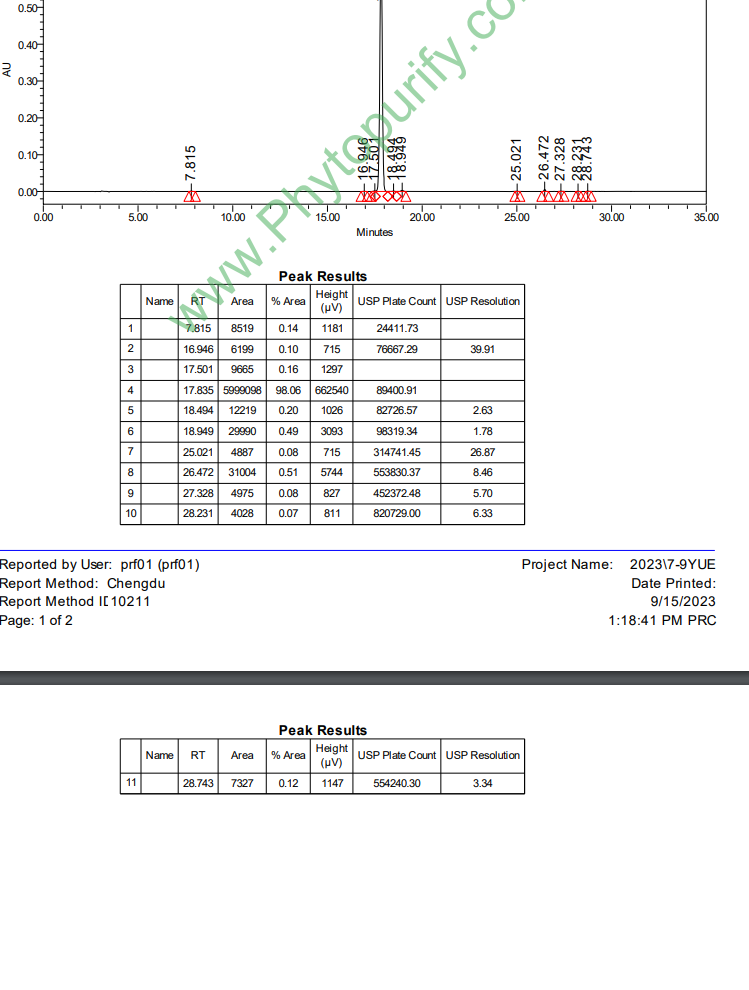
HPLC of 2"-O-rhamnosyl icariside II
Storage conditions:Short-term storage at 2~8℃, long-term storage at -20 ~ -80℃
226.7800
-1.5000
-2.5000
Low
No
No
No
No
No
No
No
2 '' - O-rhamnosyl icariside II (CAS number 135293-13-9) is a natural product derived from plants of the Epimedium genus, belonging to the flavonoid glycoside derivatives. As an important member of the active ingredients in the Epimedium series, rhamnose icariin II has received widespread attention in the field of natural medicine research in recent years due to its unique chemical structure and diverse biological activities. Especially in the prevention and treatment of cardiovascular diseases, especially heart failure, it shows potential therapeutic value. Heart failure, as a major cause of death and disability worldwide, has a complex pathogenesis involving multiple signaling pathways and molecular targets. Murine glycosylated icariin II exhibits multi-target and multi mechanism therapeutic potential by regulating key targets such as AMPK, EHMT2, APP, PTPN1, MAOA, ESR2, ABCB1, ALOX15, ABCG2, and FEN1.
This article aims to systematically review the chemical structure and physicochemical properties, plant sources and extraction methods, pharmacological activity and mechanism of action, pharmacological evaluation and pharmacokinetic characteristics of icariin II, and explore its clinical application prospects in related diseases such as heart failure, providing theoretical basis and research direction for subsequent basic research and clinical translation.
The molecular formula of icariin II with rhamnose group is C31H44O15, with a molecular weight of 660.66, belonging to the flavonoid glycoside class. Its structural feature is that the core structure of flavonoids is connected by rhamnose glycosides, specifically the 2 '' hydroxyl group is modified by rhamnose to form a 2 '' - O-rhamnoside bond. This structure endows it with good water solubility and high polarity.
In terms of physicochemical properties, the LogP value of rhamnose icariin II is about -1.5, indicating its strong hydrophilicity and difficulty in freely diffusing through lipid membranes, which may affect its absorption and distribution in vivo. Its topological polar surface area (TPSA) is as high as 226.78 Å ², with up to 14 hydrogen bond acceptors, further supporting its high polarity characteristics. The compound has low blood-brain barrier permeability, indicating limited direct action in the central nervous system. In addition, icariin II derived from rhamnose showed negative results in liver toxicity, cardiac toxicity, hERG channel inhibition, and Ames mutagenicity tests, demonstrating good safety and low toxicity risk.
Murine glycosylated icariin II is mainly found in plants of the Epimedium genus, especially Epimedium spp. (Epimedium), which are abundant in content. Epimedium, as a traditional Chinese medicinal herb, is widely distributed in China, Japan, South Korea, and other East Asian regions. It has always been used to tonify the kidneys, strengthen yang, strengthen muscles and bones, and treat cardiovascular diseases.
The common methods for extracting icariin II from rhamnosus include:
1. Solvent extraction Using ethanol or methanol aqueous solution (usually 70% ethanol) for extraction, combined with ultrasound assisted extraction or reflux extraction, to improve extraction efficiency.
2. Liquid phase separation Preliminary separation and purification were carried out using methods such as silica gel column chromatography and reverse phase C18 column chromatography.
3. High performance liquid chromatography (HPLC)Further purification and quantitative analysis are conducted to ensure the purity and content of icariin II in the extract.
4. Structural Identification Modern analytical techniques such as mass spectrometry (MS) and nuclear magnetic resonance (NMR) were used to confirm its structure.
In recent years, green extraction techniques such as supercritical CO2 extraction and microwave-assisted extraction have also been attempted to be applied to the extraction of flavonoid glycosides from Epimedium, aiming to improve yield and environmental friendliness.
The pharmacological activity research of icariin II derived from rhamnose mainly focuses on its cardiovascular protective effect, especially its intervention potential for heart failure. Numerous in vitro and in vivo experiments have shown that this compound has multiple biological effects, including antioxidant, anti-inflammatory, energy metabolism regulation, and cell apoptosis.
Antioxidant effect
During the pathological process of heart failure, oxidative stress levels significantly increase, leading to myocardial cell damage. Murine glycosylated icariin II activates the AMPK signaling pathway, enhances the activity of intracellular antioxidant enzymes such as SOD and CAT, reduces ROS levels, and thus alleviates oxidative damage.
anti-inflammatory effect
This compound can inhibit the activation of inflammatory signaling pathways such as NF - κ B in myocardial cells and inflammatory cells, reduce the release of pro-inflammatory cytokines (such as TNF - α, IL-6), and alleviate the inflammatory response of myocarditis.
Regulating energy metabolism
AMPK, as a key regulatory factor of cellular energy metabolism, is an important target of icariin II in rhamnosus. By activating AMPK, it promotes fatty acid oxidation and glucose metabolism, improves myocardial energy supply, and enhances myocardial function.
Anti apoptotic effect
Murine glycosylated icariin II can regulate the expression of Bcl-2 family proteins, inhibit myocardial cell apoptosis, and protect myocardial structural integrity.
In addition, some studies have reported its improvement of endothelial function, lipid regulation, and anti fibrotic effects, further supporting its cardiovascular protective potential.
The pharmacological effects of icariin II derived from rhamnose are achieved through the synergistic action of multiple targets and signaling pathways. The main targets and their mechanisms are as follows:
AMPK(PRKAA1)
AMP activated protein kinase is a core regulatory factor in energy metabolism. Murine glycosylated icariin II activates AMPK, promotes energy metabolism balance, inhibits myocardial hypertrophy and fibrosis, and improves cardiac function.
EHMT2 (Histone Methyltransferase 2)
As an epigenetic regulatory factor, EHMT2 regulates myocardial gene expression and inflammatory response. Murine glycosylated icariin II may affect the epigenetic status of myocardial cells and alleviate pathological remodeling by regulating EHMT2 activity.
APP (amyloid precursor protein)
APP and its metabolites are involved in cell apoptosis and inflammation in cardiovascular diseases. Murine glycosylated icariin II may regulate APP expression and reduce myocardial cell damage.
PTPN1 (protein tyrosine phosphatase 1B)
PTPN1 regulates the insulin signaling pathway and inflammatory response, affecting myocardial metabolism. The regulation of PTPN1 by rhamnose icariin II can help improve metabolic abnormalities.
MAOA (monoamine oxidase A)
Participate in neurotransmitter degradation and oxidative stress response. Its regulation helps alleviate oxidative damage to the heart.
ESR2 (estrogen receptor beta)
By regulating estrogen signaling and affecting myocardial protective mechanisms, rhamnose icariin II may exert cardioprotective effects through ESR2 mediated pathways.
ABCB1 and ABCG2 (ATP binding cassette transporters)
Participating in drug efflux and cell protection, regulating its activity can help improve the resistance of myocardial cells to harmful substances.
ALOX15 (Lipoxygenase 15)
Participating in lipid metabolism and inflammatory response, regulating its activity can help alleviate cardiac inflammation and fibrosis.
FEN1 (ribozyme 1)
Participating in DNA repair and cell proliferation may affect the repair and regeneration of myocardial cells.
In summary, icariin II, a glycosylated derivative of rhamnosus, synergistically regulates energy metabolism, inflammatory response, oxidative stress, and cell apoptosis in cardiomyocytes by modulating the aforementioned multiple targets, thereby exerting a cardioprotective effect.
The pharmacological analysis of icariin II derived from rhamnosus showed that it has certain advantages and challenges:
Molecular weight and polarity
The molecular weight of 660.66 is relatively large, the TPSA is as high as 226.78, and there are many hydrogen bond receptors, indicating that its oral bioavailability may be limited and difficult to passively diffuse through the cell membrane.
LogP value
Negative values (-1.5) indicate strong hydrophilicity and poor lipid solubility, which may affect intestinal absorption and tissue distribution.
Low blood-brain barrier permeability
Restricting its direct effects in the central nervous system, but for cardiovascular targets, low blood-brain barrier permeability helps reduce central side effects.
safety
No hepatotoxicity, cardiotoxicity, or hERG inhibition, and Ames test negative, indicating good safety and low mutagenic risk.
Pharmacokinetic characteristics
At present, there is limited systematic pharmacokinetic research on icariin II derived from rhamnosus. Preliminary data indicates that its oral absorption is slow, with a moderate half-life in the body, mainly through liver metabolism and renal excretion. Further research is needed in the future on its metabolic pathways, metabolites, and in vivo distribution characteristics.
Formulation development
Given its high polarity and limited bioavailability, modern formulation technologies such as nanocarriers, liposome encapsulation, and solid dispersions can be used to improve its pharmacokinetic properties and increase its effective concentration in vivo.
The application prospects of rhamnose icariin II in heart failure and related cardiovascular diseases are broad. Its multi-target and multi mechanism mode of action meets the treatment needs of complex diseases, especially in energy metabolism regulation, antioxidant and anti-inflammatory aspects, which have significant advantages.
Future clinical translation needs to focus on the following aspects:
Preclinical safety and efficacy verification
The systematic toxicological evaluation and animal model study of traditional Chinese medicine efficacy lay the foundation for clinical trials.
Pharmacokinetic and Formulation Optimization
Enhance oral bioavailability, improve drug distribution in the body, and ensure clinical therapeutic concentration.
Combination therapy strategy
Evaluate the synergistic or synergistic effects of existing heart failure treatment drugs to reduce drug tolerance and side effects.
Precision Medicine Applications
Individualized treatment strategies based on molecular targets are used to screen suitable patient populations and improve treatment outcomes.
Expand indication research
Explore its potential applications in metabolic syndrome, neurodegenerative diseases, and tumors, in addition to heart failure.
As a natural flavonoid glycoside with unique structure and multiple biological activities, rhamnose icariin II has shown great potential in the prevention and treatment of cardiovascular diseases such as heart failure. It exerts multiple mechanisms of action such as antioxidant, anti-inflammatory, energy metabolism regulation, and anti apoptosis by regulating key molecular targets such as AMPK, and has good safety and pharmacological basis. In the future, through in-depth pharmacological mechanism research, pharmacokinetic optimization, and preclinical validation, it is expected to promote its clinical application and become an important candidate for the development of natural product drugs. Continuous interdisciplinary collaboration will promote the widespread application of rhamnose icariin II in modern medicine, benefiting a wide range of patients.
