Introduction/Overview
Osteoporosis is a systemic bone disease characterized by reduced bone mass, destruction of bone microstructure, and increased bone fragility. It is one of the main risk factors for fractures, disability, and death in the elderly. With the acceleration of the aging process of the global population, its incidence rate has increased year by year, which has become a serious public health challenge. At present, first-line clinical treatment drugs such as bisphosphonates, selective estrogen receptor modulators, RANKL inhibitors, etc., although effective in inhibiting bone resorption, have limited effects in promoting bone formation, and long-term use may be accompanied by adverse reactions such as mandibular necrosis, atypical femoral fractures, and cardiovascular risk. Therefore, exploring new lead compounds with dual activities of inhibiting bone resorption and promoting bone formation from natural products has become an important direction for drug development.
Epimedium plants are known in traditional Chinese medicine for their effects of tonifying kidney yang and strengthening muscles and bones. They are commonly used to treat conditions such as osteoporosis and rheumatism. Modern pharmacological studies have shown that total flavonoids of Epimedium are the main active site for its anti osteoporosis effect. Baohuoside V, as a unique flavonoid glycoside isolated from Epimedium plants, has attracted much attention in recent years due to its significant promotion of bone activity and anti bone resorption potential in vitro and animal models. Its function involves regulating osteoblast differentiation, inhibiting osteoclastogenesis, regulating bone metabolism related signaling pathways and key targets, exhibiting multi-target and multi pathway characteristics. This article aims to systematically review the chemical properties, plant sources, pharmacological activities, molecular mechanisms of action, pharmacological evaluation, and clinical application prospects of Baohuo glycoside V, in order to provide comprehensive scientific references for the in-depth research and development of this compound.
Chemical structure and physicochemical properties
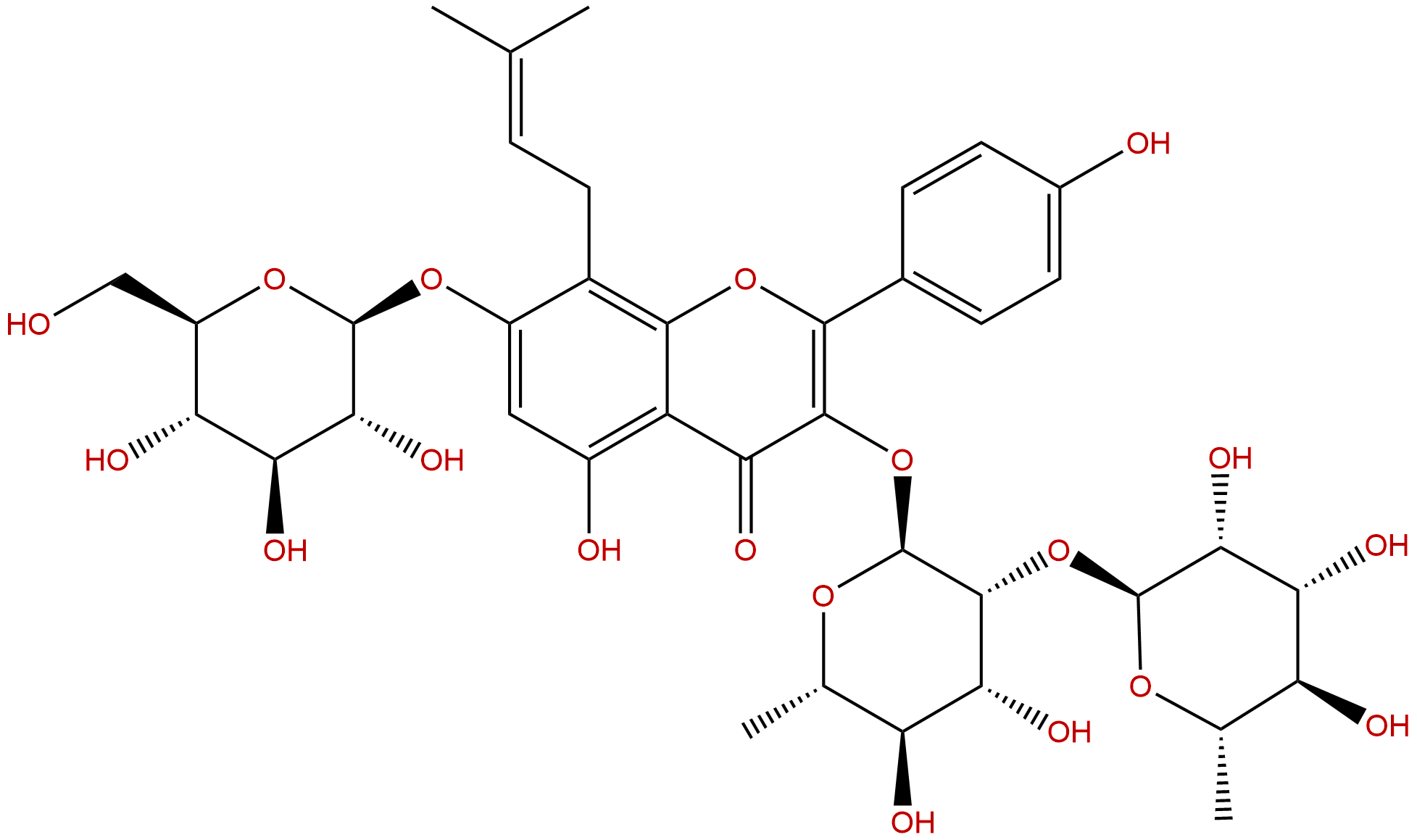
Baohuo glycoside V (CAS number: 118544-18-6) is a flavonol glycoside compound, with the chemical name: kaempferol-3-O - α - L-rhamnopyranosyl - (1 → 2) - [α - L-rhamnopyranosyl - (1 → 6)] - β - D-rhamnopyranosyl glucoside. Its molecular formula is C ∝₉ H ₅₂ O ₂₀, and its molecular weight is 808.7830.
Structurally, Baohuo glycoside V is composed of kaempferol as its aglycone. Shannai phenol is a classic flavonol skeleton with three benzene ring structures A, C, and B. Its 3-hydroxyl group is connected to a complex trisaccharide chain through a glycosidic bond. The sugar chain consists of a β - D-glucose core, which is connected to an α - L-rhamnose at positions 2 and 6 via glycosidic bonds, forming a unique dual rhamnosylglucoside structure. This special glycosylation pattern, especially the introduction of xylose, has a decisive impact on its water solubility, bioavailability, and interaction with target proteins.
Based on its chemical structure, Baohuo glycoside V exhibits typical flavonoid glycoside physicochemical properties. The calculated lipid water partition coefficient (LogP) is 0.5315, indicating that the compound has moderate lipophilicity but overall leans towards hydrophilicity. Its topological polar surface area (TPSA) is as high as 308.1200 Å ², mainly attributed to the abundant oxygen atoms on hydroxyl and sugar groups in the molecule, which are the main sources of hydrogen bond donors and acceptors, resulting in strong molecular polarity. The theoretically calculated water solubility value is 3.2962 (LogS), indicating a certain solubility in water. However, the complex sugar chain structure may limit its solubility behavior. These physicochemical parameters collectively determine the absorption and distribution characteristics of Baohuo glycoside V in living organisms. For example, higher polarity and TPSA are often unfavorable for passive transmembrane diffusion, indicating that their oral bioavailability may face challenges. Meanwhile, its blood-brain barrier permeability is predicted to be "low", suggesting that its main pharmacological effects may be concentrated in peripheral tissues, especially the skeletal system.
Plant sources and extraction methods
Baohuo glycoside V mainly comes from plants of the Epimedium genus in the Berberidaceae family. The literature clearly reports that it Epimedium davidii It was isolated for the first time from the dried whole plant. In fact, various plants in the Epimedium genus, such as Korean Epimedium, Soft haired Epimedium, Wushan Epimedium, etc., all contain abundant flavonoids. However, there are differences in the chemical composition spectra of different species, the same species, different parts, and different origins. Baohuo glycoside V, as a specific component of Epimedium flavonoids, has a relatively low content and is one of the potential key components for Epimedium to exert its "strong muscle and bone" effect.
Extracting and isolating baohuo glycoside V from plant materials usually follows the conventional process of natural product chemistry and is purified using modern chromatographic techniques.
1. Extract Solvent extraction method is often used. After crushing the dried Epimedium herb, heat reflux extraction or ultrasound assisted extraction is performed using methanol, ethanol, or a certain concentration of ethanol water solution (such as 70% ethanol). These polar solvents can effectively leach flavonoid glycosides from plant cells.
2. Coarse separation The extract is concentrated under reduced pressure to obtain a paste. The extract is often suspended in water and subjected to liquid-liquid extraction using organic solvents such as petroleum ether and ethyl acetate to remove chlorophyll, oil, and impurities with small or large polarity. Baohuo glycoside V is usually enriched in the n-butanol extraction site or aqueous layer.
3. Refining and Purification After obtaining the parts rich in flavonoids, column chromatography technology needs to be used for separation. Macroporous adsorption resins (such as D101, AB-8), silica gel, polyamide or dextran gel (such as Sephadex LH-20) are often used as stationary phases. Gradient elution is performed using solvent systems such as chloroform methanol and methanol water in different ratios. Due to the presence of multiple sugar groups and high polarity in the structure of Baohuo glycoside V, the use of methanol water or acetonitrile water systems for high-performance liquid chromatography preparation on reverse phase chromatography (such as ODS-C18) is a key step in obtaining high-purity monomers. Modern technologies such as high-speed countercurrent chromatography are also applied for the rapid separation of such polar flavonoid glycosides.
The optimization of extraction processes, such as solvent selection, temperature, time, and the use of new technologies such as microwave and supercritical fluid extraction, aims to improve the yield and purity of Baohuo glycoside V, providing a material basis for its pharmacological research and subsequent development.
Pharmacological activity research
The pharmacological activity research of Baohuo glycoside V mainly focuses on the skeletal system, especially its anti osteoporosis effect, while also showing potential activities in anti-inflammatory and antioxidant aspects.
1. Promote bone differentiation and mineralization activity
This is the core pharmacological effect of Baohuo glycoside V. Multiple in vitro studies have confirmed that Baohuo glycoside V can significantly promote the proliferation, differentiation, and mineralization nodule formation of pre osteoblasts (such as MC3T3-E1 and hFOB 1.19 cells). In induction medium, the concentration of non cytotoxic baohuo glycoside V can dose dependently enhance alkaline phosphatase activity, which is a key marker of early differentiation of osteoblasts. Further research shows that it can upregulate bone specific transcription factors such as RUNX2 and SP7 The expression of and promotion of downstream osteogenic related genes, including COL1A1 The expression of type I collagen, the main component of bone matrix, and osteocalcin. Animal experiments, such as the ovariectomy induced osteoporosis rat model, also support this conclusion. Gavage of Baohuo glycoside V can effectively increase bone density, improve bone trabecular microstructure, and increase serum bone formation marker levels.
2. Anti bone resorption activity
Osteoporosis is the result of an imbalance between bone formation and bone resorption. Baohuo glycoside V not only promotes bone formation, but also inhibits excessive bone resorption. Research has shown that it can inhibit the differentiation of osteoclast precursor cells into mature osteoclasts induced by nuclear factor kappa B receptor activator ligand. Its mechanism includes inhibiting the expression of osteoclast specific genes such as protease K and tartrate resistant acid phosphatase, and inducing osteoclast apoptosis. This pro apoptotic effect is related to its regulation of Bcl-2 family proteins, such as MCL1、BCL2、BCL2L1)The balance is related.
3. Estrogen like activity
Estrogen deficiency is the main cause of postmenopausal osteoporosis. The chemical structure of Baohuo glycoside V is partially similar to estrogen, and studies have shown that it can interact with estrogen receptor alpha(ESR1)Weak to moderate binding occurs and activates transcription activity mediated by estrogen response elements. This selective estrogen receptor modulator like property may exert estrogen like protective effects in bone tissue, with a lower risk of side effects on tissues such as the breast and endometrium.
4. Other activities
In addition, Baohuo glycoside V also exhibits certain anti-inflammatory and antioxidant activities. It can inhibit the production of inflammatory factors induced by lipopolysaccharides, and its antioxidant effect may help clear reactive oxygen species in the bone microenvironment, reducing oxidative stress damage to osteoblasts. These auxiliary activities collectively provide a favorable microenvironment for its bone protective effect.
Mechanism of action and molecular targets
The anti osteoporosis effect of Baohuo glycoside V involves a complex molecular network, and its multi-target properties are the basis for its comprehensive therapeutic effect. The mechanisms revealed by current research mainly revolve around the following key targets and pathways:
1. Regulating Bcl-2 family proteins and inducing osteoclast apoptosis The extension of osteoclast lifespan will exacerbate bone resorption. Baohuo glycoside V can downregulate anti apoptotic proteins in osteoclasts MCL1 and BCL2 The expression may also affect BCL2L1 The activity of Bcl xL activates mitochondrial pathway apoptosis, accelerating osteoclast apoptosis and inhibiting bone resorption.
2. Activate the classic bone signaling pathway:
* BMP/Smad pathway Baohuo glycoside V may strongly activate osteogenic transcription factors by upregulating the expression of bone morphogenetic proteins or phosphorylating Smad1/5/8 RUNX2 And its downstream target genes SP7 This is one of the core mechanisms by which it promotes bone differentiation.
* Wnt/β - catenin pathway This pathway is crucial for the differentiation and function of osteoblasts. Research has shown that Baohuo glycoside V may activate Wnt target genes by inhibiting the activity of glycogen synthase kinase-3 β, stabilizing β - catenin, and promoting its nuclear translocation, such as RUNX2、CYCLIN D1)Transcription promotes osteogenesis.
3. Regulating key enzymes and factors in bone metabolism:
* AKR1B1 Aldehyde reductase. The enzyme plays a significant role in the complications of diabetes and is also related to abnormal bone metabolism. Baohuo glycoside V may improve the metabolic microenvironment of osteoblasts by inhibiting AKR1B1, reducing the production of inflammatory mediators and oxidative stress products.
* LDHA Lactate dehydrogenase A. In hypoxic or abnormally metabolized bone microenvironments, LDHA activity increases, promoting lactate production and glycolysis, which may affect osteoclast function and bone matrix homeostasis. Inhibition of LDHA may be a potential pathway for Baohuo glycoside V to regulate bone cell energy metabolism.
* TNFRSF11B That is, osteoprotegerin. It is a decoy receptor of RANKL, which can competitively inhibit the binding of RANKL and RANK, thereby suppressing osteoclastogenesis. Baohuo glycoside V may indirectly exert its anti bone resorption effect by upregulating the expression of OPG.
4. Genomic effects mediated by estrogen receptor 1 (ESR1)As mentioned earlier, Baohuo glycoside V can act as a ligand for ER α, activate classical genomic pathways, upregulate the expression of bone protection related genes, and simulate the protective effect of estrogen on bones.
5. Promote bone matrix synthesis: By directly increasing COL1A1 The expression of genes, Baohuo glycoside V promotes the synthesis of type I collagen, providing the necessary organic matrix framework for bone mineralization.
In summary, Baohuo glycoside V acts on MCL1、BCL2、RUNX2、SP7、ESR1 By targeting multiple targets and synergistically regulating the balance between osteogenesis and osteoclastogenesis, its mechanism of action network covers multiple levels such as cell differentiation, apoptosis, metabolism, and signal transduction.
Evaluation of drug properties and pharmacokinetics
Although Baohuo glycoside V exhibits excellent pharmacological activity, its drug like and pharmacokinetic properties are the key bottlenecks for its successful development as a drug.
Analysis of drug properties parameters:
According to the provided parameters, the molecular weight of Baohuo glycoside V (808.78) far exceeds the upper limit of 500 recommended by Lipinski's "Five Rules", and its glycosylation structure leads to a large number of hydrogen bond donors/acceptors, resulting in a very high TPSA value (308.12 Å ²). These features strongly suggest that it Oral absorption may be poor A moderate LogP value (0.53) indicates that it is not highly lipophilic, but its enormous polarity and molecular size severely limit its ability to passively diffuse across the gastrointestinal epithelial cell membrane. The theoretical water solubility is acceptable, but the main problem is the low permeability of biological membranes in practice. In addition, it Low blood-brain barrier permeability However, for the treatment of osteoporosis, this is not a disadvantage, but may actually reduce central nervous system side effects.HERG inhibition negative and Ames test negative It is an important safety positive signal, indicating a low risk of cardiac toxicity and genetic toxicity.
Pharmacokinetic challenges and strategies:
At present, there are few reports on the pharmacokinetic studies of the Baohuo glycoside V system. However, based on the research of icariin flavones (such as icariin) with similar structures, it can be inferred that it faces challenges:
1. Poor oral absorption Flavonoids with high polarity and molecular weight generally have lower absorption rates in the gastrointestinal tract.
2. Significant first pass effect After absorption, the sugar base is easily hydrolyzed in the gut microbiota and liver, and converted into aglycones (such as naringenin) or secondary glycosides with lower degree of deglycosylation. The activity, distribution, and toxicity of these metabolites may differ from the prototype drug, making the pharmacological substance basis more complex.
3. distribution and elimination The prototype drug may mainly be distributed in tissues with abundant blood flow, but it is difficult to enter deep bone tissue. Its excretion pathway may mainly be through the kidneys and bile.
Improvement strategy:
* Prodrug modification Esterification, alkylation, and other modifications of sugar or phenolic hydroxyl groups are carried out to prepare lipophilic prodrugs, improve membrane permeability, and hydrolyze them into active forms in vivo.
* New drug delivery system Develop drug delivery systems such as nanoparticles, liposomes, microemulsions, and solid dispersions to encapsulate baohuo glycoside V, enhance its solubility and stability, and promote intestinal lymphatic transport or targeted delivery.
* Exploration of administration routes Consider non oral routes such as transdermal administration, injection administration (but with solubility and stability issues), or topical application to bones (such as drug delivery in bone implant materials).
* Pharmacokinetic study It is urgent to conduct comprehensive in vivo ADME research to clarify its blood drug concentration time curve, tissue distribution (especially bone tissue), major metabolites, and excretion pathways, providing a basis for dosage form design and clinical administration plans.
Clinical application prospects and prospects
Baohuo glycoside V, as a natural compound with clear multi-target anti osteoporosis activity, has broad clinical application prospects, but the road ahead is long and full of challenges.
Potential application directions:
1. Development of anti osteoporosis drugs This is the most core direction. Baohuo glycoside V has a dual effect of promoting bone formation and inhibiting bone resorption, which is superior to most current drugs with a single mechanism of action. It is expected to be developed into a new oral or injectable formulation for the treatment of postmenopausal osteoporosis, senile osteoporosis, and even glucocorticoid induced osteoporosis.
2. Bone repair material additive Load it into bone repair materials such as bone cement, bioceramics, polymer scaffolds, etc., and locally release it at the site of fracture or bone defect, directly promoting new bone formation and accelerating healing.
3. Functional or health food As one of the standardized active ingredients of Epimedium extract, it is used to develop health products that contribute to bone health. But it is necessary to clarify its effective dosage and long-term safety.
4. combination therapy Combined with existing anti osteoporosis drugs (such as low-dose bisphosphonates, teriparatide, etc.), it may produce a synergistic effect, reduce the dosage and side effects of each drug, and improve the efficacy.
Challenges and Future Research Prospects:
1. Bioavailability bottleneck As mentioned earlier, this is the biggest obstacle to its development. The future research focus must be on pharmaceutical strategies, significantly improving their in vivo exposure and target tissue delivery efficiency through innovative formulation technologies.
2. In depth study on the mechanism of action At present, the understanding of targets is still mostly based on in vitro studies and bioinformatics predictions. It is necessary to use techniques such as gene knockout/knock in animals, chromatin immunoprecipitation, proteomics, etc. to verify its direct target in a more complex in vivo environment and elucidate its complete signaling network for regulating bone metabolism.
3. Comprehensive preclinical safety evaluation Before advancing to clinical trials, standardized GLP toxicology studies must be completed, including long-term toxicity, reproductive toxicity, carcinogenicity, etc., to ensure their safety.
4. Research on active metabolites Clarify the main metabolites of Baohuo glycoside V in vivo and evaluate its pharmacological activity and toxicity. The ultimate effect may be the prototype drug, metabolites, or their combinations.
5. Clinical trial validation After addressing the aforementioned issues, phase I (safety, pharmacokinetics), phase II (efficacy exploration), and phase III (large-scale efficacy verification) clinical trials will be gradually conducted to ultimately demonstrate its efficacy and safety in patients.
Conclusion
Baohuo glycoside V is a highly promising lead compound for anti osteoporosis discovered from the traditional Chinese medicine Epimedium. Its unique chemical structure endows it with multi-target properties, which can synergistically promote osteogenic differentiation, inhibit osteoclast resorption, and provide auxiliary benefits in anti-inflammatory and antioxidant aspects by regulating key factors such as RUNX2, SP7, Bcl-2 family proteins, ESR1, etc. These solid pharmacological studies provide strong scientific evidence for their treatment of osteoporosis.
However, its enormous molecular weight, extremely high polarity, and complex sugar based structure also pose serious challenges in terms of drug efficacy, especially its extremely low oral bioavailability. This requires researchers to not only focus on activity discovery, but also shift their research focus to the fields of pharmacy, pharmacokinetics, and formulation technology innovation. Overcoming absorption and delivery barriers through strategies such as prodrug design and development of novel delivery systems is the only way to transform active molecules into actual drugs.
In summary, Baohuo glycoside V represents a successful case in the modernization research of traditional Chinese medicine - from clinical experience to clear identification of active ingredients, and then to in-depth explanation of the mechanism of action. Although there are still many scientific and technological challenges to be solved in the future, with the deepening of interdisciplinary cooperation, Baohuo glycoside V is expected to become a new member of the anti osteoporosis drug family with Chinese characteristics and multiple advantages, contributing Chinese wisdom to the solution of global bone health problems.