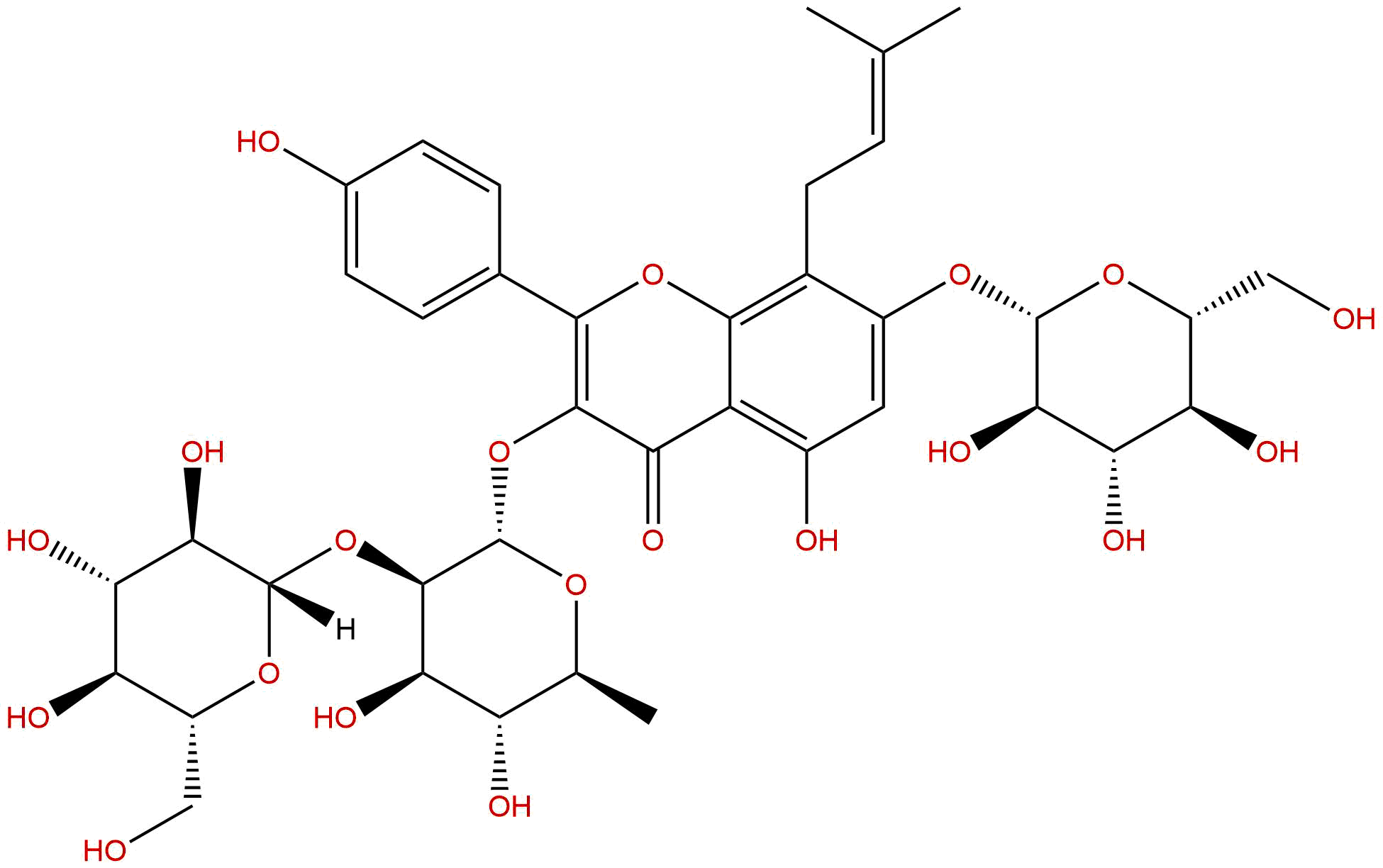


Product name: Diphylloside A
Synonym name: Ikarisoside C
Catalogue No.: BP5278
Cas No.: 113558-11-5
Formula: C38H48O20
Mol Weight: 824.782
Botanical Source:
Type of Compound: Flavonoids
Purity: 95%~99%
Analysis Method: HPLC-DAD or/and HPLC-ELSD
Identification Method: Mass, NMR
Packing: Brown vial or HDPE plastic bottle
Storage: Store in a well closed container, protected from air and light. Put into refrigerate or freeze for long term storage.
Whenever possible, you should prepare and use solutions on the same day. However, if you need to make up stock solutions in advance, we recommend that you store the solution as aliquots in tightly sealed vials at -20℃. Generally, these will be useable for up to two weeks.
The product could be supplied from milligrams to grams
Inquire for bulk scale.
For Reference Standard and R&D, Not for Human Use Directly.
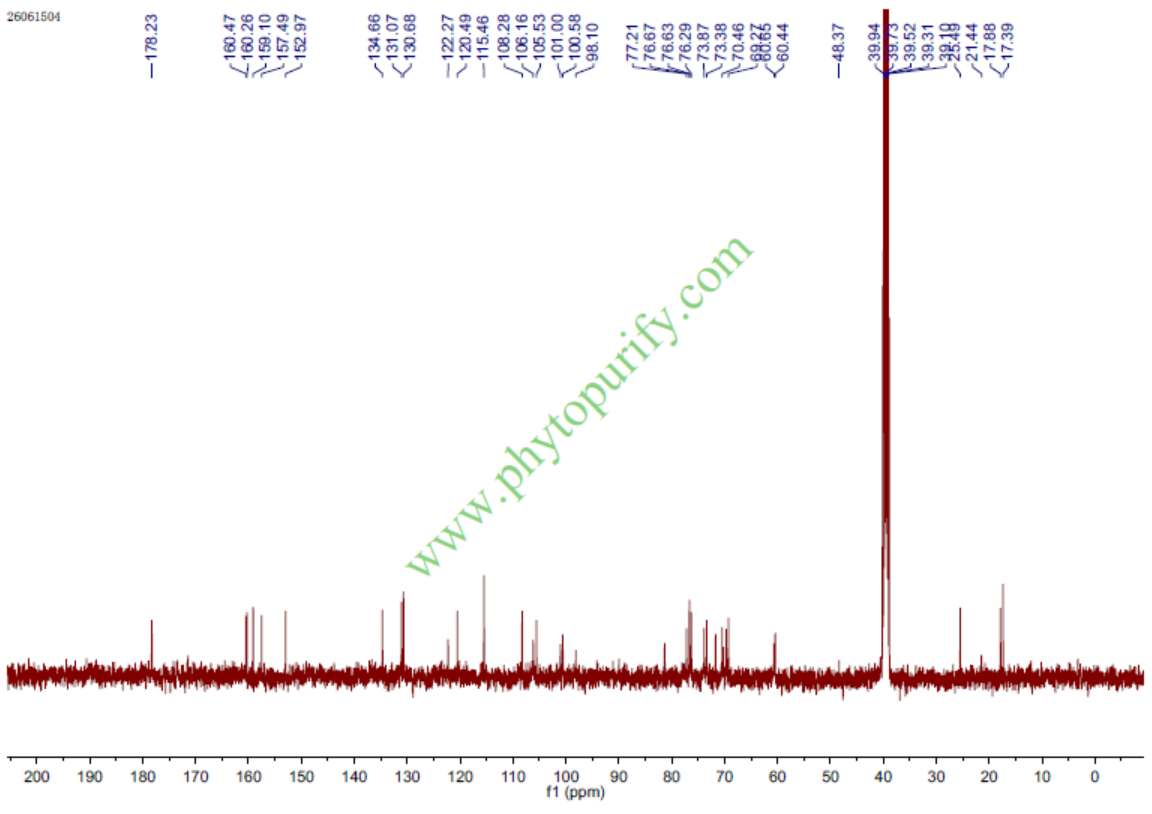
NMR of Diphylloside A
Storage conditions:Short-term storage at 2~8℃, long-term storage at -20 ~ -80℃
328.3500
.0949
.0887
4.3356
.3716
.2702
Low
78.2121
5.5809
Yes
No
No
No
No
No
0.0
Yes
Yes
Yes
Yes
Natural products, as an important source of drug discovery, play an irreplaceable role in the long history of human struggle against diseases. Flavonoids, as the most widely distributed class of secondary metabolites in nature, have attracted much attention due to their structural diversity and extensive biological activity. They not only play a crucial role in plant growth, development, defense, and pigment formation, but also demonstrate enormous potential in human health maintenance and disease prevention, covering various pharmacological effects such as antioxidant, anti-inflammatory, anti-tumor, antiviral, antibacterial, and cardiovascular protection. Among numerous flavonoids, Diphylloside A, as a structurally unique flavonoid glycoside, has gradually entered the field of researchers in recent years and has become an emerging research hotspot in the field of natural product pharmacology due to its significant biological activity.
Shuanghuo glycoside A, with CAS number 113558-11-5, was initially isolated and identified from traditional medicinal plants. Its name comes from its original plant source - the genus Agastache(Diphyllum)However, subsequent studies have found that it is also distributed in various plants. As a flavonoid compound with antioxidant activity, diglycoside A has an effect on Pseudomonas aeruginosa(Pseudomonas aeruginosa)It exhibits significant antibacterial activity, which is particularly valuable in the face of increasingly severe antibiotic resistance. Pseudomonas aeruginosa is a common opportunistic pathogen and one of the main pathogens causing hospital acquired infections, posing a serious threat to patients with immune dysfunction, burns, cystic fibrosis, and those using ventilators. Its inherent and acquired multidrug resistance mechanism makes clinical treatment extremely challenging. Therefore, the search for antibacterial drugs with novel mechanisms of action is urgent, and the emergence of diglycoside A provides a new candidate molecule for this field.
What is even more remarkable is that existing research suggests that diglycoside A may have broad-spectrum antiviral potential. Its related targets cover key proteins in the lifecycle of various viruses, including CCR5, CXCR4, HIV1-PR, INT, which are closely related to human immunodeficiency virus (HIV) infection and replication, as well as UL42, UL54, ICP27, TK, gD, which are related to human herpesvirus (such as herpes simplex virus HSV) replication. In addition, it is also associated with myeloperoxidase (MPO), a target closely related to inflammation and oxidative stress. The diversity of these targets suggests that diglycoside A may exert its pharmacological effects through multi-target and multi pathway mechanisms, providing broad research space for its application in the fields of antiviral, anti-inflammatory, and immune regulation.
However, despite the encouraging biological activity demonstrated by diglycoside A, its translation from basic research to clinical applications still faces many challenges. Its complex chemical structure, relatively large molecular weight, and specific physicochemical properties, such as high polarity (LogP close to 0) and large polar surface area (TPSA), determine that its pharmacokinetic properties may be complex, such as low oral bioavailability and difficulty in penetrating the blood-brain barrier. Therefore, a systematic and in-depth study of Shuanghuo glycoside A, including its chemical structure analysis, plant source optimization, pharmacological activity verification, mechanism of action elucidation, and pharmacological evaluation, is crucial for a comprehensive assessment of its medicinal value and development potential.
This review aims to systematically review the current research status of paeoniflorin A, and explore it in depth from multiple dimensions such as chemical structure and physicochemical properties, plant sources and extraction methods, pharmacological activity research, mechanism of action and molecular targets, drug evaluation and pharmacokinetics, clinical application prospects and prospects, in order to provide comprehensive reference and guidance for the subsequent research of this important natural product with development prospects.
The chemical structure of Shuanghuo glycoside A is the basis of its biological activity. As a flavonoid glycoside, its core skeleton is the flavonoid mother nucleus, which is usually composed of two benzene rings (A and B rings) connected by an oxygen-containing pyran ring (C ring). The structural feature of Shuanghuo glycoside A lies in its glycosylation mode. Based on its molecular formula (usually C ∝₈ H ₄₈ O ₂₀) and molecular weight (824.7820 Da), it can be inferred that its structure contains multiple sugar units. Specifically, diglycoside A is a derivative of flavonol glycosides such as Kaempferol or Quercetin, and its glycosyl portion typically includes glucose, rhamnose, etc. It is connected to specific positions in the flavonoid nucleus (such as C-3, C-7, or C-4 ') through O-glycosidic bonds. This polysaccharide based structure endows diglycoside A with unique spatial configuration and physicochemical properties.
In terms of physicochemical properties, Shuanghuo glycoside A exhibits typical flavonoid glycoside characteristics. Its LogP value is 0.0949, indicating that the compound has extremely low lipid solubility, almost neutral, and strong hydrophilicity. This characteristic is closely related to the presence of multiple hydroxyl and sugar units in its molecule, which can form hydrogen bonds with water molecules and increase their water solubility. Its water solubility parameter is 4.3356 (usually measured in mg/mL or logS), further confirming its relatively good solubility in water. The polar surface area (TPSA) is as high as 328.3500 Å ², which is much higher than the recommended threshold for oral medications (approximately 140 Å ²). A high TPSA value indicates poor passive transmembrane absorption ability of the molecule in the gastrointestinal tract, as polar molecules have difficulty penetrating the cell membrane composed of lipid bilayers. This also explains why its blood-brain barrier (BBB) penetration ability is "low", as high polarity and high molecular weight (>400 Da) are the main obstacles limiting drug entry into the central nervous system.
In addition, the pharmacological evaluation of diglycoside A showed that its inhibitory risk on hERG potassium channels was "no", which is a positive signal indicating that its risk of causing cardiac QT interval prolongation and fatal arrhythmias (such as apical torsion) is low. The Ames test result is 0.0, indicating that no mutagenicity was shown in the standard bacterial recovery mutation test, suggesting a low risk of genetic toxicity. These preliminary safety data provide favorable conditions for the further development of diglycoside A.
Overall, the chemical structure of Shuanghuo glycoside A determines its physicochemical characteristics of high polarity, high water solubility, low fat solubility, and low BBB penetration. These properties are beneficial for their distribution in blood and body fluids, and may be excreted through the kidneys; On the other hand, it poses challenges to its oral absorption and central nervous system targeting. Therefore, in subsequent drug development, it may be necessary to consider using prodrug strategies, nano formulations, or changing the route of administration (such as injection, transdermal delivery) to overcome its pharmacokinetic deficiencies.
Shuanghuo glycoside A, as a natural product, mainly exists in specific plant families and genera. It was first discovered in the genus Podophyllum of the Berberidaceae family(Podophyllum)Or the seven genera of Tao'er(Sinopodophyllum)In plants, these plants are commonly used in traditional medicine to treat skin diseases, tumors and infectious diseases. In addition, some plants in the Moraceae family, such as the mulberry tree(Broussonetia papyrifera)In traditional Chinese medicine, it has also been reported that the root bark, stem bark, and fruit of the Chinese tree have the effects of clearing heat, diuresis, and anti-inflammatory. In recent years, with the deepening of research on plant chemistry, bishoplin A may also be found in other families and genera of plants, but its main sources are still concentrated in the above two types of plants. It is worth noting that there may be significant differences in the content of paeoniflorin A among different plants, parts (roots, stems, leaves, fruits), and harvest seasons, which requires standardized collection of raw materials.
The extraction method of Shuanghuo glycoside A usually follows the classic process of natural product chemistry, aiming to efficiently and selectively enrich target compounds from plant raw materials. Due to the high polarity of diopside A, polar solvents are often used for extraction. The most commonly used extraction solvents are methanol, ethanol, or their aqueous solutions. For example, 70% -95% ethanol or methanol aqueous solutions are often used for cold soaking or hot reflux extraction to maximize the dissolution of flavonoid glycosides in plants. The extraction process usually includes the following steps:
During the extraction and purification process, it is necessary to combine thin-layer chromatography (TLC) and high-performance liquid chromatography (HPLC) for real-time monitoring to ensure effective separation and purity of the target compound. In recent years, with the promotion of green chemistry concepts, new technologies such as supercritical fluid extraction (SFE), ultrasound assisted extraction (UAE), and microwave-assisted extraction (MAE) have also been attempted for the extraction of flavonoid glycosides, which have the advantages of short extraction time, low solvent dosage, and high efficiency. They are expected to be applied in the large-scale preparation of paeoniflorin A in the future.
Although the pharmacological activity research of Shuanghuo glycoside A is still in its early stages, it has shown multiple potential, especially in the fields of antioxidant, antibacterial, and antiviral.
1. Antioxidant activity
As a flavonoid compound, the antioxidant activity of Shuanghuo glycoside A is one of its most fundamental pharmacological effects. The phenolic hydroxyl groups in its structure, especially the ortho dihydroxy groups on the B ring, can effectively scavenge free radicals such as superoxide anion radicals (O ₂⁻ ·), hydroxyl radicals (· OH), and 1,1-diphenyl-2-trinitrophenylhydrazine radicals (DPPH ·). Research has shown that diglycoside A can neutralize free radicals by providing hydrogen atoms or electrons, thereby blocking free radical chain reactions and protecting biomolecules such as lipids, proteins, and DNA from oxidative damage. In addition, it may also inhibit the Fenton reaction and reduce the generation of hydroxyl radicals by chelating transition metal ions such as Fe ² ⁺ and Cu ² ⁺. This antioxidant activity not only helps maintain cellular redox balance, but may also be closely related to its anti-inflammatory, anti-aging, and cardiovascular protective effects. For example, in cell models, pre-treatment with bishoplin A can significantly reduce the level of oxidative stress induced by hydrogen peroxide (H ₂ O ₂) and increase the activity of endogenous antioxidant enzymes such as superoxide dismutase (SOD) and glutathione peroxidase (GSH Px).
2. Antibacterial activity
One of the most notable activities of Shuanghuo glycoside A is its significant antibacterial effect against Pseudomonas aeruginosa. Pseudomonas aeruginosa is a typical Gram negative bacterium with low outer membrane permeability and multiple resistance mechanisms (such as efflux pumps, β - lactams, biofilm formation), making it naturally resistant to multiple antibiotics. Research has shown that compound A exhibits good antibacterial or bactericidal activity against standard strains of Pseudomonas aeruginosa (such as PAO1) and clinically isolated drug-resistant strains, with its minimum inhibitory concentration (MIC) and minimum bactericidal concentration (MBC) typically ranging from tens of micrograms per milliliter. Its antibacterial mechanism may involve multiple aspects:
- Disrupting the integrity of the cell membrane Shuanghuo glycoside A may insert into the lipid bilayer of bacterial cell membranes through its hydrophobic portion, disrupting membrane integrity and permeability, leading to intracellular substances such as K ⁺ ATP、 Protein leakage ultimately leads to bacterial death.
- Inhibition of biofilm formation The drug resistance of Pseudomonas aeruginosa is largely attributed to its ability to form biofilms. Biofilm is a bacterial community enclosed in extracellular polymeric substances (EPS) that can effectively resist attacks from antibiotics and the host immune system. Preliminary studies have shown that bishoproside A can inhibit the formation of Pseudomonas aeruginosa biofilm at sub inhibitory concentrations and may disrupt mature biofilms that have already formed. This may be related to its inhibition of Quorum Sensing (QS) system, which is a key signaling pathway regulating biofilm formation and virulence factor expression.
- Inhibition of virulence factors Shuanghuo glycoside A may also directly inhibit the virulence factors secreted by Pseudomonas aeruginosa, such as pyocyanin, elastase, and protease, thereby weakening its pathogenicity.
3. Antiviral activity
Based on the existing target information, dual glycosides A exhibit broad antiviral potential, particularly against HIV and herpes viruses.
- Anti HIV activity The targets of Shuanghuo glycoside A include CCR5, CXCR4, HIV1-PR, and INT. CCR5 and CXCR4 are co receptors necessary for HIV to enter host cells. Shuanghuo glycoside A may prevent the virus from entering cells by blocking the binding of these receptors to the viral envelope glycoprotein gp120. HIV1-PR (protease) and INT (integrase) are key enzymes in the HIV replication cycle. Shuanghuo glycoside A may block the maturation of viral particles and the integration of viral DNA into the host genome by inhibiting the activity of these enzymes. This multi-target inhibition strategy is expected to overcome the problem of resistance to single target drugs.
- Antiherpesvirus activity The targets of dihydroquercetin A include UL42, UL54, ICP27, TK, and gD. These proteins play a critical role in the replication cycle of herpes simplex virus (HSV). For example, UL54 is the DNA polymerase of HSV, UL42 is its accessory protein, TK (thymidine kinase) is responsible for phosphorylating nucleoside analogue drugs, ICP27 is an important regulatory protein, and gD is the envelope glycoprotein required for virus entry into cells. Shuanghuo glycoside A may exert anti HSV effects by inhibiting the function of these proteins, interfering with viral DNA replication, gene expression, and the assembly and release of viral particles. Especially, its target of action is not limited to TK, which means it may also be effective against virus strains resistant to acyclovir (a classic TK dependent anti HSV drug).
In addition, the association between diglycoside A and MPO (myeloperoxidase) suggests that it may have anti-inflammatory activity. MPO is a heme peroxidase secreted by neutrophils and monocytes, which catalyzes the production of strong oxidants such as hypochlorous acid in inflammatory reactions, leading to tissue damage. Agariin A may reduce oxidative stress and inflammatory damage by inhibiting MPO activity, which has potential therapeutic value in a variety of inflammatory diseases (such as atherosclerosis, chronic obstructive pulmonary disease).
The pharmacological activity of Shuanghuo glycoside A originates from its interaction with specific biomolecules (targets). Based on existing research, its mechanism of action can be summarized as follows, involving multiple molecular targets.
1. Antioxidant and anti-inflammatory mechanisms
The antioxidant effect of Shuanghuo glycoside A is mainly achieved by directly scavenging free radicals and chelating metal ions. At the molecular level, its phenolic hydroxyl group acts as a hydrogen donor and reacts with free radicals to generate relatively stable phenoxide free radicals, thereby interrupting the oxidative chain reaction. In addition, it may also upregulate the expression of a series of antioxidant enzymes (such as HO-1, NQO1, SOD, CAT) by activating the nuclear factor E2 related factor 2 (Nrf2) signaling pathway, thereby enhancing the intracellular antioxidant defense ability. In terms of anti-inflammatory effects, diglycoside A may reduce the production of pro-inflammatory cytokines (such as TNF - α, IL-1 β, IL-6) and chemokines by inhibiting key inflammatory signaling pathways such as nuclear factor kappa B (NF - κ B) and mitogen activated protein kinase (MAPK). Its interaction with MPO may inhibit its catalytic activity by directly binding to the active sites of MPO, thereby reducing the generation of oxidizing substances such as hypochlorous acid and exerting anti-inflammatory effects.
2. Antibacterial mechanism
The antibacterial mechanism of Shuanghuo glycoside A against Pseudomonas aeruginosa is multi-target.
- Targeting the cell membrane The hydrophobic portion (flavonoid nucleus) of dihydroquercetin A can insert into the phospholipid bilayer of bacterial cell membranes, disrupting membrane fluidity, permeability, and integrity. This membrane damaging effect is non-specific, but can effectively lead to bacterial content leakage and energy metabolism breakdown.
- Inhibition of quorum sensing (QS) system The virulence and biofilm formation of Pseudomonas aeruginosa are closely regulated by the QS system, with the Las and Rhl systems being the most critical. Shuanghuo glycoside A may act as an analog or antagonist of QS signaling molecules (such as N-acyl homoserine lactone, AHL), competitively binding to LasR or RhlR receptor proteins, thereby inhibiting the expression of QS related genes, including biofilm forming genes (such as pslA、pelA)Virulence factor genes (such as lasB、rhLA)Wait. This is an important characteristic that distinguishes it from traditional bactericidal antibiotics and is expected to reduce the development of drug resistance.
- Inhibit the discharge pump Shuanghuo glycoside A may reverse drug resistance by inhibiting the main efflux pumps of Pseudomonas aeruginosa (such as MexAB OprM), increasing the concentration of intracellular antibiotics, and thus exhibiting a synergistic effect with existing antibiotics.
3. Antiviral mechanism
The antiviral effect of Shuanghuo glycoside A involves multiple key steps in the lifecycle of the virus.
- Inhibit virus entry Regarding HIV, diglycoside A may alter its conformation by binding to the CCR5 or CXCR4 co receptors on the surface of host cells, thereby preventing the binding of HIV envelope protein gp120 to the co receptors and blocking the membrane fusion process between the virus and host cells. For HSV, it may interfere with the interaction between gD and host cell receptors (such as HVEM and nectin-1) by binding to the virus envelope glycoprotein gD, thereby inhibiting virus adsorption and entry.
- Inhibition of viral genome replication Regarding HIV, diglycoside A may inhibit the activity of integrase (INT), preventing the integration of viral cDNA into host chromosomes, which is a key step in establishing latent infection. At the same time, it may also inhibit the activity of HIV protease (PR), prevent the hydrolysis and processing of viral precursor proteins (Gag and Gag Pol), thereby producing immature, non infectious viral particles. Regarding HSV, diglycoside A may inhibit the activity of viral DNA polymerase (UL54) and its helper protein (UL42), directly blocking the replication of viral DNA. In addition, inhibiting thymidine kinase (TK) activity may affect viral nucleotide metabolism, further inhibiting DNA synthesis.
- Inhibition of viral gene expression Regarding HSV, diglycoside A may inhibit the function of the immediate early protein ICP27. ICP27 is a multifunctional regulatory protein involved in the splicing, nuclear export, and translation of viral mRNA. Inhibiting ICP27 will lead to the blockade of the cascade reaction of viral gene expression, thereby comprehensively inhibiting viral replication.
In summary, the mechanism of action of Shuanghuo glycoside A exhibits typical "multi-target, multi pathway" characteristics. This mode of action gives it unique advantages in dealing with complex diseases (such as infectious diseases), which can simultaneously act on multiple vulnerable links of pathogens, reduce the probability of drug resistance, and may produce synergistic effects. However, most of these molecular mechanisms are predicted based on in vitro experiments and computer simulations (such as molecular docking), and whether they actually occur in vivo, as well as specific binding modes and kinetic parameters, still need to be verified through more in-depth biochemical, structural biology, and cell biology experiments.
To push Shuanghuo glycoside A from laboratory research to clinical application, a comprehensive evaluation of its drug like and pharmacokinetic (ADME) properties is necessary. As mentioned earlier, the physicochemical properties of dihydroquercetin A bring both opportunities and challenges for its medicinal properties.
1. Evaluation of drug properties
The evaluation of drug properties is usually based on preliminary screening rules such as Lipinski's Rule of Five. The molecular weight of dihydroquercetin A (824.78 Da) far exceeds 500 Da, the LogP (0.0949) is close to 0 (below 5), and the number of hydrogen bond donors (usually greater than 10) and acceptors (usually greater than 20) also far exceeds the upper limit of the rule. Therefore, it clearly violates the "Five Principles of Similar Drugs", indicating its low potential as a traditional oral medication. However, this does not mean that it has no development value at all. Many successful natural medicines, such as paclitaxel and cyclosporine, also do not comply with these rules, but have been clinically applied through non oral administration routes or special formulation techniques, such as liposomes and nanoparticles.
The low risk of hERG inhibition and negative Ames test of Shuanghuo glycoside A are important factors contributing to its pharmacological properties, indicating its good preliminary safety. Although high TPSA (328.35 Å ²) is not conducive to oral absorption and BBB penetration, it is beneficial for its dissolution and distribution in aqueous environments such as blood, and may reduce the first pass effect in the liver. In addition, the abundant hydroxyl and sugar groups in its molecule provide sites for structural modification, which can improve its lipid solubility and oral bioavailability through prodrug design (such as esterification and etherification).
2. Pharmacokinetic characteristics
At present, there is very limited experimental data on the pharmacokinetics of compound A in vivo, but based on its physicochemical properties and research on similar compounds, its ADME characteristics can be reasonably speculated:
- Absorption Oral absorption is the biggest challenge faced by diglycoside A. Its high polarity and high molecular weight make it difficult for it to passively diffuse through gastrointestinal epithelial cells. In addition, it may be affected by the efflux of intestinal P-glycoprotein (P-gp) and other efflux transporters, further reducing absorption. Therefore, its oral bioavailability is expected to be very low. In contrast, non oral routes such as intravenous injection, intramuscular injection, or transdermal administration can bypass absorption barriers and directly enter the systemic circulation.
- Distribution Due to its high polarity and potential high binding rate with plasma proteins, diglycoside A is mainly distributed in plasma and extracellular fluid, making it difficult to enter cells. Its organizational distribution volume may be relatively small. Low BBB penetration means that it is difficult to achieve effective therapeutic concentrations in the central nervous system, so its antiviral effect may mainly target peripheral infections.
- Metabolism Shuanghuo glycoside A, as a flavonoid glycoside, mainly undergoes two metabolic pathways in the body: one is hydrolyzed by intestinal microbiota or hepatic glycosidases, removing glycosides and generating aglycones (such as resveratrol or quercetin); The second is that aglycones and diglycoside A undergo phase II metabolic reactions in the liver, such as glucuronidation, sulfation, and methylation, to generate more polar metabolites that are easier to excrete. These metabolites may retain some biological activity or lose activity.
- Excretion Due to its high polarity and water solubility, diglycoside A and its metabolites are mainly excreted in urine through the kidneys in their original form or in the form of conjugates. Bile excretion may also be one of its clearance pathways, especially for metabolites with larger molecular weights.
In order to overcome pharmacokinetic barriers, future research should focus on:
- Formulation technology Develop novel drug delivery systems such as liposomes, nanoemulsions, polymer nanoparticles, phospholipid complexes, etc. to improve the solubility and oral bioavailability of diglycoside A, or achieve targeted delivery.
- Prodrug design Introducing lipophilic groups (such as amino acid esters and phosphate esters) onto the phenolic hydroxyl or sugar groups of compound A, allowing it to be enzymatically hydrolyzed in vivo and release the original drug.
- Optimization of administration route Explore non-invasive routes such as transdermal administration, pulmonary inhalation, or nasal administration for the treatment of local infections (such as skin and respiratory tract).
The unique chemical structure and multi-target pharmacological activity of Shuanghuo glycoside A have opened up prospects for its application in multiple therapeutic fields, but at the same time, it also faces a series of challenges from basic research to clinical translation.
1. Clinical application prospects
- Anti-infection therapy Given its significant anti Pseudomonas aeruginosa activity and multi-target antiviral potential, the most promising application area of diglycoside A is in anti infective therapy. Especially, its anti Pseudomonas aeruginosa effect, particularly its ability to inhibit biofilms and quorum sensing, makes it an ideal lead compound for the development of new anti drug resistant bacteria drugs. It can be used alone or in combination with existing antibiotics such as ciprofloxacin and tobramycin to enhance efficacy, reduce dosage, and delay the development of drug resistance through synergistic effects. In terms of antiviral activity, its broad-spectrum activity (targeting HIV and HSV) and potential effectiveness against drug-resistant virus strains make it a promising new candidate drug for the treatment of AIDS and herpesvirus infection, especially for patients who are intolerant of or resistant to existing drugs.
- Anti inflammatory and antioxidant related diseases: The antioxidant and anti-inflammatory activities of icariin A, especially its inhibitory effect on MPO, make it have potential value in the treatment of chronic inflammatory diseases (such as atherosclerosis, inflammatory bowel disease, chronic obstructive pulmonary disease) and oxidative stress related diseases (such as neurodegenerative diseases, diabetes complications). However, its low BBB penetration limits its application in central nervous system diseases, which can be overcome through formulation techniques or structural modifications.
- Dermatology applications The antibacterial, anti-inflammatory, and antioxidant activities of Shuanghuo glycoside A make it highly suitable for development as an external preparation for the treatment of skin diseases such as acne, skin infections, eczema, and psoriasis. Its high polarity and water solubility also facilitate its dispersion and penetration on the skin surface.
2. Future research directions and challenges
Although the prospects are bright, the clinical development of diglycoside A still faces many challenges, and future research should focus on the following aspects:
- Deepen the research on the mechanism of action It is necessary to use molecular biology, structural biology (such as X-ray crystallography, NMR), and chemical biology methods to clarify the specific binding modes, binding sites, and kinetic parameters of diglycoside A with various targets (such as CCR5, HIV1-PR, LasR, etc.). This is not only the basis for understanding its pharmacological effects, but also provides a basis for subsequent structural optimization.
- Pharmacodynamic and pharmacokinetic studies of the system in vivo It is necessary to establish appropriate animal models (such as mouse Pseudomonas aeruginosa lung infection model, HSV skin infection model, HIV transgenic mouse model, etc.) to systematically evaluate the in vivo efficacy, toxicity, and pharmacokinetic characteristics (including absorption, distribution, metabolism, and excretion) of metformin A. These data are crucial for evaluating their clinical potential and determining dosing regimens.
- Research on Structural Optimization and Structure Performance Relationship Using bishoproside A as the lead compound, its structure was systematically modified through semi synthetic or total synthetic methods (such as changing the number and type of sugar groups, modifying phenolic hydroxyl groups, introducing new functional groups), and its structure-activity relationship (SAR) was studied in order to obtain derivatives with stronger activity, higher selectivity, and better pharmacokinetic properties.
- Formulation development To address the issue of low oral bioavailability, it is necessary to vigorously develop new drug delivery systems. For example, encapsulating diglycoside A in liposomes or nanoparticles can protect it from gastrointestinal degradation, promote its transmembrane absorption, and achieve targeted delivery. In addition, developing its topical preparations (such as gel and cream) for local skin treatment is the most feasible transformation path in the near future.
- safety evaluation Although the Ames test and hERG inhibition test showed good results, more comprehensive toxicological studies are still needed, including acute toxicity, long-term toxicity, reproductive toxicity, immunotoxicity, etc., to comprehensively evaluate their safety.
Shuanghuo glycoside A, as a structurally unique flavonoid glycoside, has shown important research value and development prospects in the field of natural product pharmacology due to its significant antioxidant, anti Pseudomonas aeruginosa activity, and broad-spectrum antiviral potential. Its multi-target mechanism of action, especially its intervention in bacterial quorum sensing and multiple stages of virus life cycle, provides new ideas for addressing the increasingly severe challenges of antibiotic resistance and virus mutation. However, its complex chemical structure and unfavorable pharmacokinetic properties (such as low oral bioavailability and low BBB penetration) are the main bottlenecks for its clinical translation.
In the future, research on Shuanghuo glycoside A needs to move from basic to applied, gradually overcoming its pharmacological barriers through deepening mechanism research, optimizing chemical structures, developing advanced formulations, and conducting systematic in vivo evaluations. We have reason to believe that with the continuous deepening of research, diglycoside A and its derivatives are expected to play an important role in the fields of anti infection, anti-inflammatory and other treatments, and contribute to human health. This naturally occurring molecule is waiting for further scientific exploration to unlock its full therapeutic potential.
